Security gaps can hurt more than compliance. They can damage consumer trust, expose sensitive data, and slow down recoveries. According to IBM's 2025 Cost of a Data Breach Report, the global average cost of a data breach reached $4.40 million, highlighting the financial impact of weak security controls.
For collection agencies and legal recovery firms, balancing recovery performance with strict data protection requirements is not optional. You need systems that help you collect efficiently without increasing compliance risk.
In this guide, we compare the 5 best SOC 2 compliant debt collection platforms for 2026, reviewing their security credentials, collections capabilities, compliance features, and overall fit for modern recovery teams.
Quick look:
Third-party collection agencies handle large volumes of sensitive consumer information every day, including payment details, personal identifiers, account records, and communication histories. SOC 2 (System and Organization Controls 2) is a security framework developed by the American Institute of Certified Public Accountants (AICPA).
It evaluates how organizations manage customer data. A SOC 2 compliant platform demonstrates that appropriate controls are in place to safeguard information, manage access, monitor systems, and reduce operational risk.
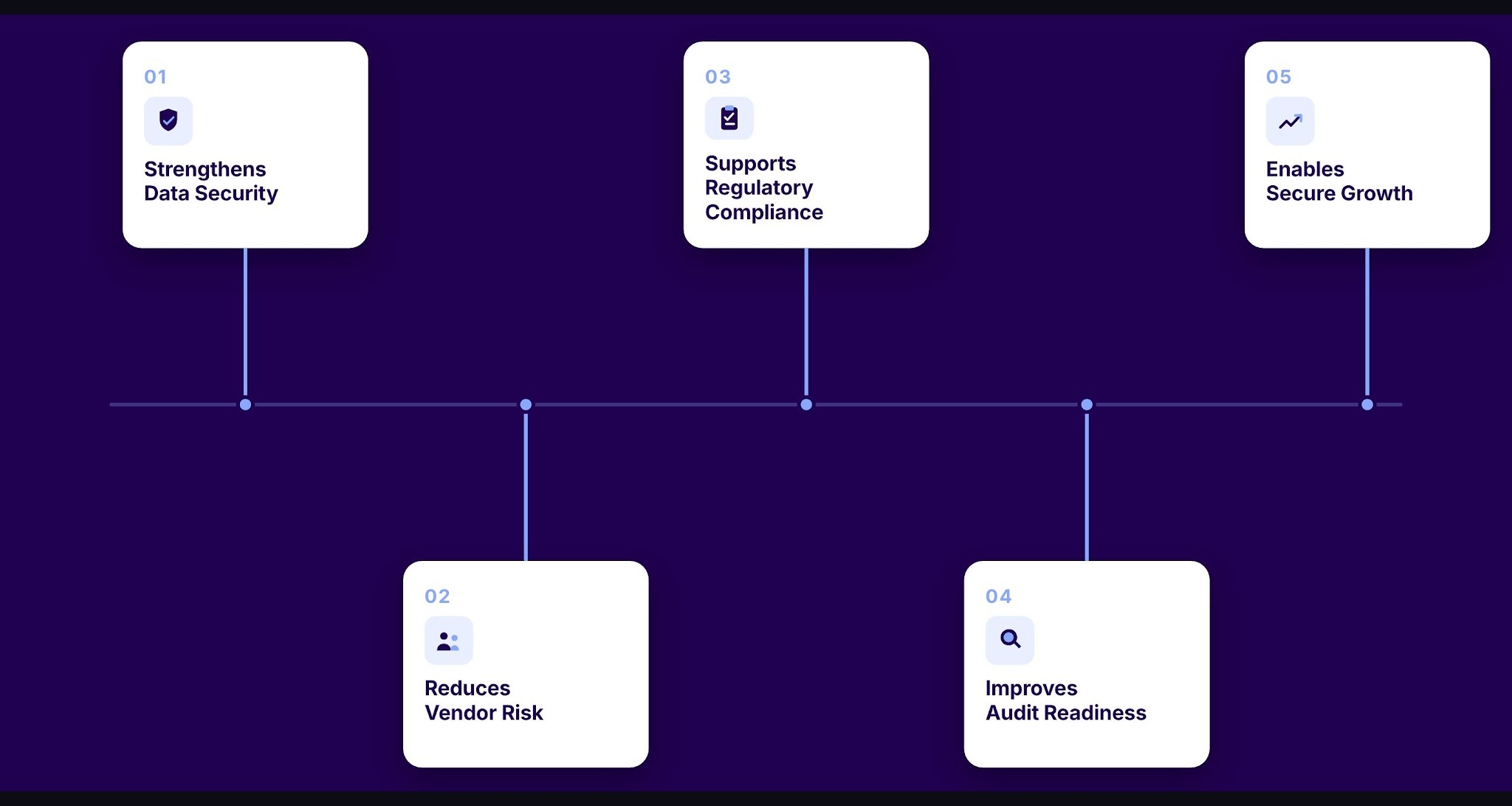
For collection agencies, SOC 2 compliance provides several important advantages:
SOC 2 compliance is an important foundation, but certifications alone do not stop cyber threats. Agencies must also implement practical safeguards that actively monitor, detect, and respond to risks as they emerge.
In the next section, we examine how a secure agency protects against active threats while maintaining efficient recovery operations.
Suggested Read: SOC 2 Type II Certification: A Non-Negotiable for Debt Collection in 2026
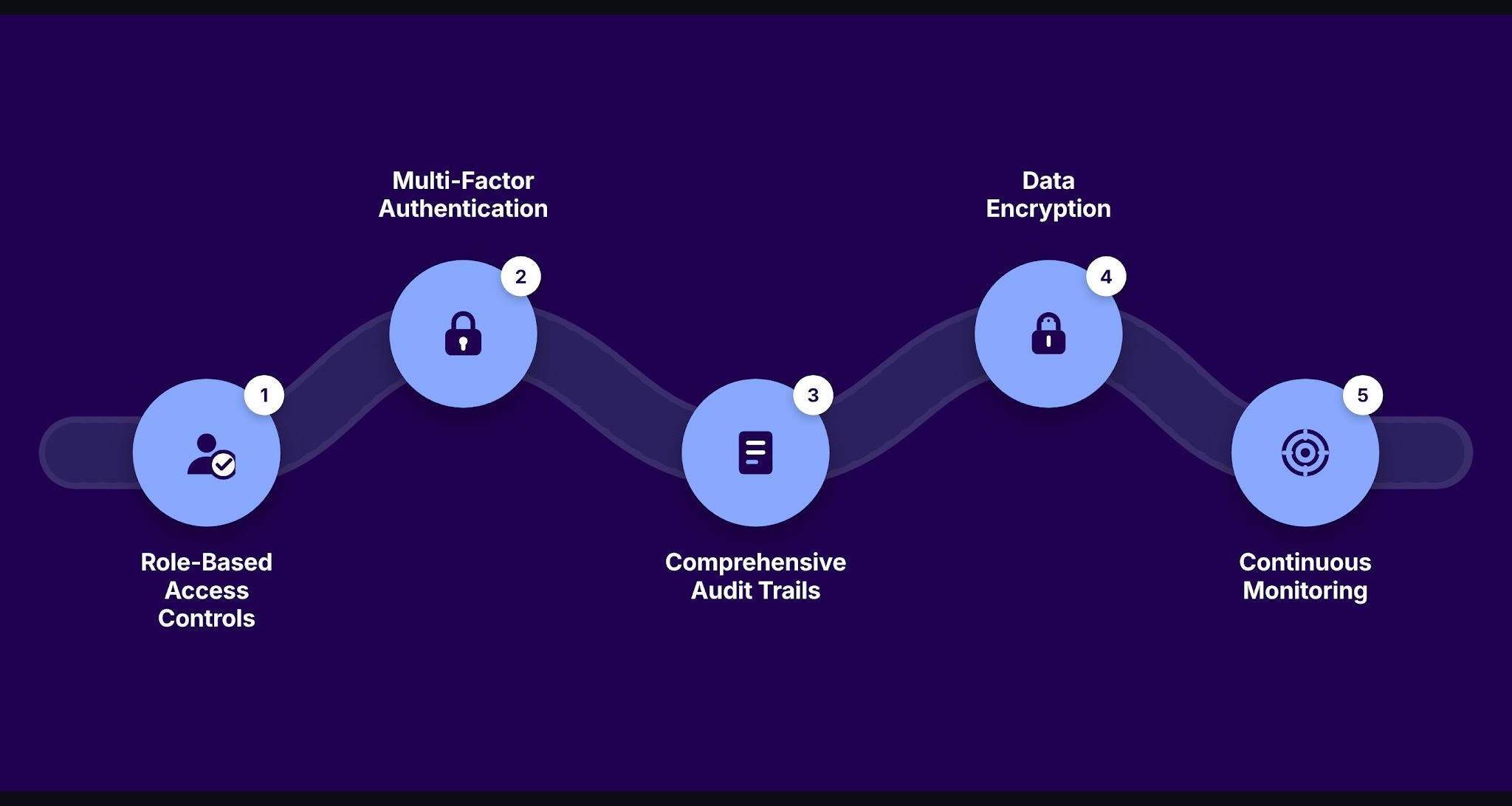
Collection agencies face threats from phishing attacks, credential theft, ransomware, unauthorized access, and third-party vulnerabilities. A secure agency combines technology, policies, and operational controls to reduce risk and protect data throughout the collections lifecycle.
While SOC 2 compliance provides a strong base, agencies should also look for platforms that support the following security measures:
The effectiveness of these protections often depends on the software platform an agency chooses. Security features, compliance controls, and operational safeguards can vary significantly from one provider to another.
In the next section, we compare the five best SOC 2 compliant debt collection platforms for 2026 and examine how each solution approaches security, compliance, and recovery performance.
Suggested Read: 5 Best SOC 2 Compliant Debt Collection APIs Agencies Trust (2026 Picks)
Finding the right SOC 2-compliant debt collection platform requires more than checking a certification box. Agencies, law firms, and debt buyers need solutions that combine strong security controls with recovery-focused functionality, automation, reporting, and consumer engagement tools.
The platforms below stand out for their security posture, collection features, and ability to support recovery operations.
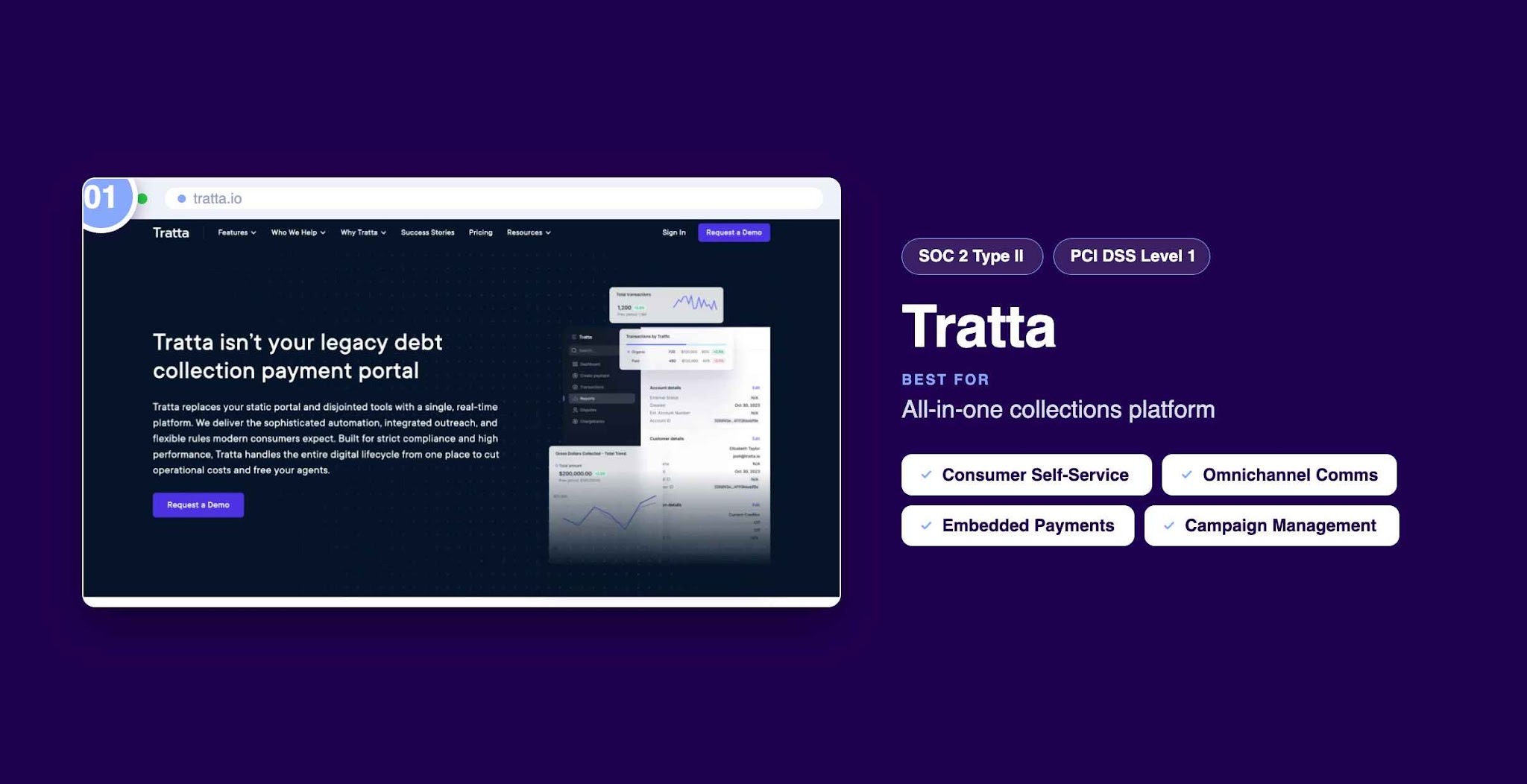
Tratta is a cloud-based debt collection platform built for collection agencies, law firms, debt buyers, and creditors. While the platform is known for its consumer self-service and payment capabilities, it also places a strong emphasis on security, compliance, and risk management.
Tratta maintains a SOC 2 Type 2 report (prepared in accordance with AICPA attestation standards) and is assessed as a PCI DSS Level 1 Service Provider with a full Report on Compliance, independently validated by Prescient Security under PCI DSS v4.0.1. These independently-validated controls protect sensitive consumer and payment data across collections workflows.
Key Security Features
Why We Chose It
Many collection platforms offer compliance features, but Tratta integrates security controls directly into daily collections workflows. From payment processing and communications to reporting and administration, the platform is designed to help agencies maintain compliance without adding operational complexity.
Its combination of SOC 2 Type II compliance, PCI certification, auditability, and role-based controls makes it one of the strongest security-focused platforms available to the collections industry.
Best For
Collection agencies, debt buyers, creditors, and law firms that need enterprise-grade security controls alongside advanced recovery and payment capabilities.
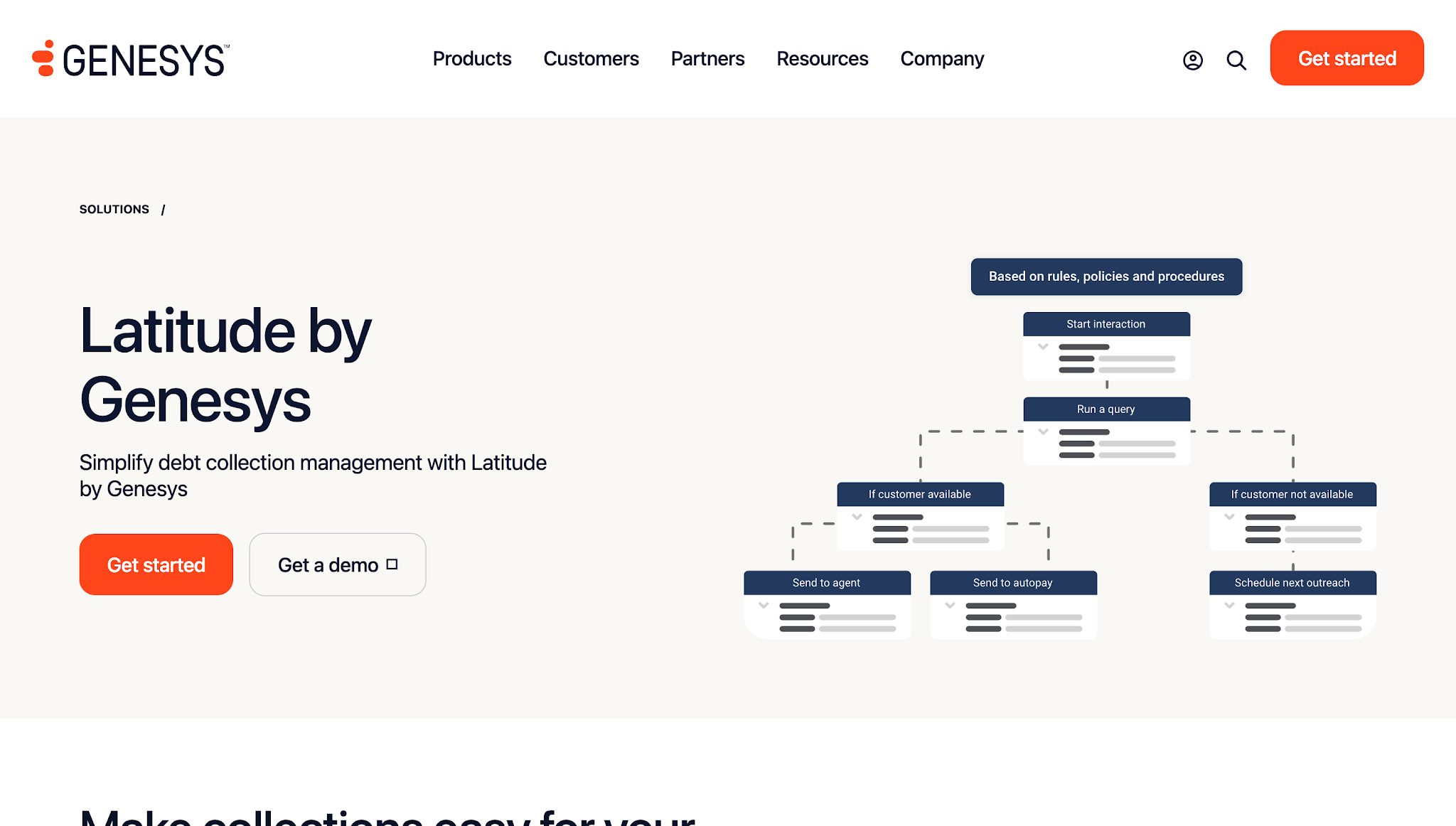
Latitude by Genesys is a long-established debt collection and recovery platform used to manage pre-charge-off and post-charge-off accounts. The platform provides administrative controls, user permissions, workflow management, and centralized account management capabilities for collection operations.
Key Security Features
Why We Chose It
Latitude has been a recognized name in the collections industry for years and provides the governance controls that larger collection operations often require. Its strengths lie in structured account management, user permissions, workflow oversight, and operational control. Agencies with complex collection processes may benefit from its mature administrative capabilities and established security practices.
Best For
Large collection agencies, enterprise recovery teams, and organizations seeking extensive account management and operational oversight capabilities.
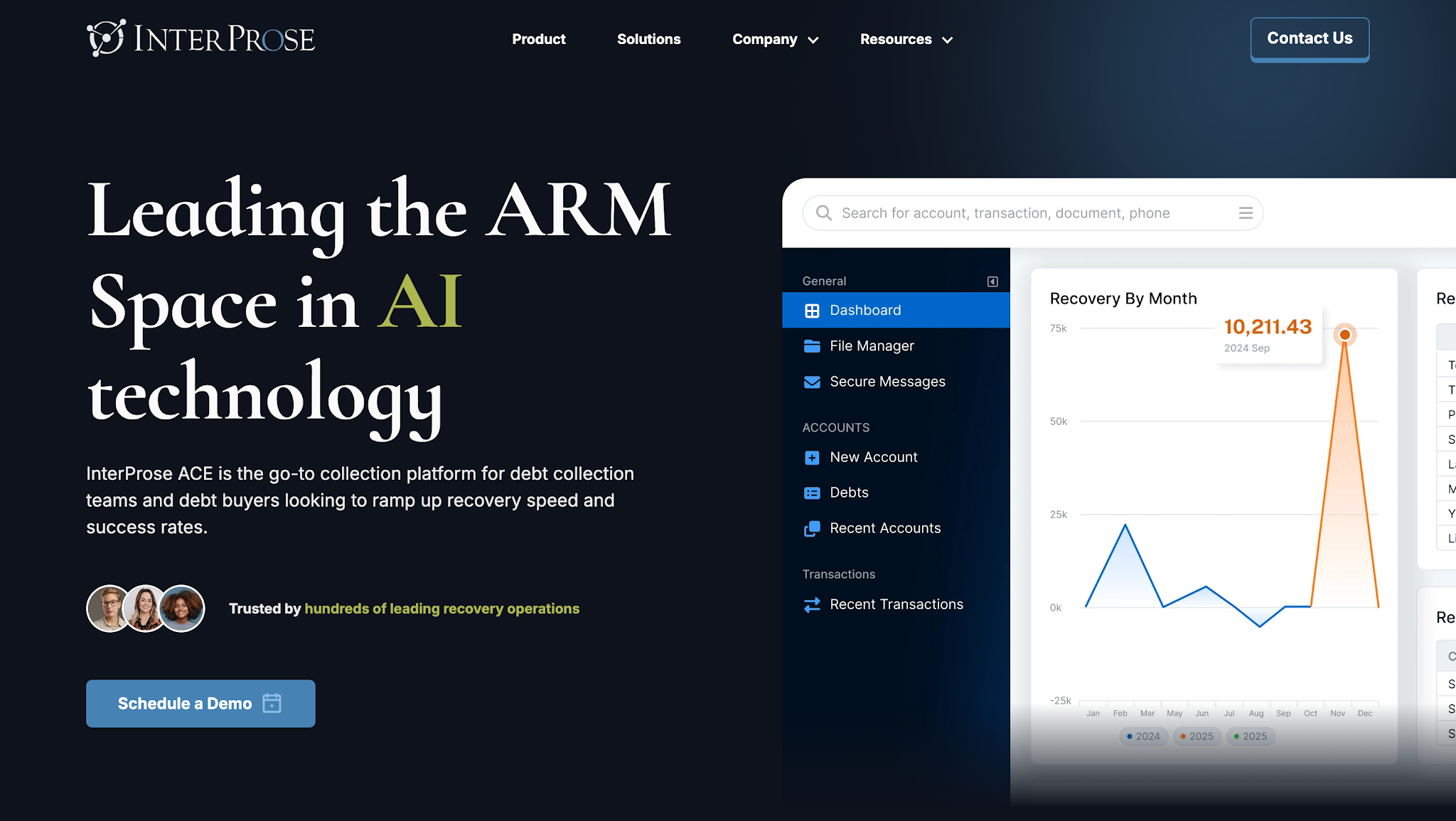
InterProse ACE is a cloud-based debt collection platform built specifically for third-party collection agencies, debt buyers, and servicers. The platform combines collections management, consumer engagement, automation, compliance controls, and security tools within a single environment. Its compliance-first approach and emphasis on independent security validation make it a strong option for agencies that prioritize risk management.
Key Security Features
Why We Chose It
InterProse ACE stands out for combining security validation, compliance automation, and agency-focused functionality. The platform places significant emphasis on independent testing and audit readiness, helping agencies strengthen security posture while reducing compliance burdens.
Best For
Third-party collection agencies seeking strong compliance controls, security validation, and cloud-based collections management.
C&R Debt Manager is an enterprise collections and recovery platform used by agencies and creditors worldwide. The platform is delivered as a cloud-native SaaS solution and emphasizes security, compliance assurance, scalability, and operational resilience. It is SOC 2 Type II and PCI DSS Level 1 certified.
Key Security Features
Why We Chose It
Few collection platforms publicly demonstrate the breadth of security certifications that C&R provides. Its combination of SOC 2 Type II, PCI DSS Level 1, and ISO 27001 certifications makes it one of the strongest security-focused options in the collections market.
Best For
Third-party agencies handling large account volumes and seeking independently validated security and compliance controls.
Artiva RM is a collections management platform widely used across the accounts receivable management industry. The platform helps agencies manage collection workflows, payments, reconciliation processes, and compliance activities while integrating closely with payment technologies.
Key Security Features
Why We Chose It
Artiva RM earns its place because of its strong focus on payment security, compliance management, and workflow automation. Agencies that process high payment volumes can benefit from its integrated controls and visibility across payment operations.
Best For
Third-party collection agencies seeking stronger payment controls, reconciliation visibility, and compliance-focused workflow management.
While platform-level certifications are important, true data protection depends on the technical controls operating behind the scenes. In the next section, we examine what happens when a data breach occurs in a collection environment and why prevention is significantly less costly than recovery.
Suggested Read: Debt Collection and Secure Payment Portal
Depending on the circumstances, a breach can trigger requirements under federal and state laws, client contracts, and industry security standards.
These can be in the form of:
A breach often reveals weaknesses that should have been addressed earlier through stronger controls, better oversight, and more secure technology. Choosing a platform with proven security practices can significantly reduce these risks before they become costly problems.
Suggested Read: 2026 Guide to PCI-Compliant Card-Not-Present Debt Payments for Agencies
SOC 2 compliant platforms do not provide the same level of protection, functionality, or compliance support. Some focus primarily on security controls, while others combine security with payment processing, consumer self-service, communications management, and recovery automation.
When evaluating a solution, consider the following factors:
The best SOC 2 compliant debt collection platform is one that protects sensitive data while helping agencies maintain compliance, improve operational efficiency, and strengthen recovery outcomes. Security and collections performance should work together, not compete with one another. Agencies that assess both areas carefully are better positioned to reduce risk, satisfy clients, and support long-term growth.
Data breaches can trigger regulatory scrutiny, damage client relationships, disrupt operations, and create high financial costs. You need a platform with proven compliance controls.
Tratta helps agencies strengthen security without sacrificing recovery performance. Its SOC 2 Type II certification, PCI DSS Level 1 Service Provider attestation, payment tokenization, audit logging, role-based permissions, and secure consumer self-service tools help agencies protect sensitive data.
See how Tratta combines security, compliance, and recovery management in a single solution. Schedule a demo today.
A SOC 2 compliant debt collection platform is software that has implemented controls designed to protect sensitive data based on the Trust Services Criteria of security, availability, processing integrity, confidentiality, and privacy. These platforms help collection agencies demonstrate strong data security practices and audit readiness.
SOC 2 compliance helps agencies protect consumer information, reduce cybersecurity risks, strengthen client confidence, and support vendor due diligence requirements. It also demonstrates that security controls are operating effectively over time.
No, SOC 2 compliance is not a legal requirement under federal debt collection laws. However, many creditors, debt buyers, law firms, and enterprise clients increasingly expect their collection partners to maintain recognized security standards.
A secure platform should include role-based access controls, multi-factor authentication, encryption, audit trails, payment tokenization, activity monitoring, secure APIs, and disaster recovery capabilities.
When evaluating a SOC 2 compliant debt collection platform, review its certification status, security controls, compliance features, payment security measures, integration capabilities, audit support, and ability to support your collection workflows without creating operational bottlenecks.