A SOC 2 compliant debt collection API helps agencies secure sensitive data, automate workflows, and stay audit-ready as operations scale. Security gaps in your collections stack are not always obvious until something breaks. A missing audit trail, an exposed API, or a poorly secured payment flow can quickly become a compliance risk and erode trust.
According to Mordor Intelligence, the debt collection software market is projected to exceed $5.57 billion in 2026, as agencies adopt more digital, API-driven systems. This creates a real challenge. You need tools that can handle growth without increasing risk.
In this article, we compare five platforms that combine compliance, integrations, and performance, so you can choose the right fit for your agency.
Brief look:
SOC 2 ensures security but not performance. It protects data and auditability, but does not guarantee better recovery outcomes or operational efficiency in collections.
Five platforms compared: Tratta, InterProse, Telrock, MEGA, and C&R Software. Each offers different strengths across compliance, APIs, and operational workflows.
Tratta leads in full-stack, API-first design. It combines payments, communication, and data into one system, reducing risk and improving recovery performance.
Enterprise tools prioritize control over flexibility. Platforms like Telrock and C&R focus on governance and scale, often requiring more complex setup and management.
The right platform balances compliance with usability. Strong systems integrate security, automation, and payments without adding operational friction or fragmented workflows.
What Is SOC 2 Compliance in Debt Collection APIs?
SOC 2 compliance refers to a framework developed by the American Institute of Certified Public Accountants (AICPA) that evaluates how well a system protects data against key trust principles such as security, availability, and confidentiality.
In the context of debt collection, this becomes even more important. APIs connect your payment systems, communication channels, and consumer data, which means a single vulnerability can expose multiple touchpoints at once.
SOC 2 compliance ensures the following in collection systems:
Secure Data Handling: Protects sensitive consumer and payment data across every interaction
Controlled Access and Permissions: Ensures only authorized users and systems can access critical information
Audit Trails and Monitoring: Tracks all actions for accountability and regulatory review
Encrypted Data Transfers: Secures data moving between systems, especially through APIs
Consistent System Availability: Ensures uptime and reliability for collection operations
SOC 2 compliance sets the base, but not all platforms implement it equally. In the next section, we compare five solutions that combine security, integrations, and performance for modern collection agencies.
Top Platforms Offering Secure and Compliant Collection APIs for Agencies
Choosing the right platform is about finding a system that can secure data, support integrations, and improve recovery performance at scale. The platforms here are designed for third-party collection agencies. They have strong compliance frameworks and APIs that support contemporary, digital-first operations.
Before diving deeper, here is a quick side-by-side comparison of the five platforms:
Platform
SOC 2 Alignment
API Capability
Core Strength
Best Fit
Tratta
High
API-first architecture
Full-stack (payments, communication, and data)
Modern, performance-driven agencies
InterProse
High
Flexible APIs
Workflow control & compliance
Structured, regulated environments
Telrock
High
Enterprise-grade APIs
Enterprise scale & governance
Large, complex operations
MEGA
High
API-driven communication workflows
AI-driven engagement
Outreach-focused teams
C&R Software
High
Enterprise integration APIs
Deep compliance & system control
Large, regulated enterprises
Each of these platforms takes a different approach to balancing security, integrations, and operational performance. In the sections below, we break down how they actually work and where they fit best.
1. Tratta
Tratta is an API-first collections platform built for agencies that need to secure payments, communications, and data flows within a SOC 2–aligned environment. It replaces fragmented integrations with a single, controlled layer, reducing risk across every API interaction.
Why It Stands Out
Secures data across every API interaction, not just storage layers
Eliminates compliance gaps caused by disconnected tools
Reduces audit exposure across payments, communication, and workflows
Enables scalable integrations without increasing risk
Improves recovery performance while maintaining audit readiness
Key Features
Consumer Self-Service Payment Portal: Allows consumers to view accounts, choose payment options, and resolve balances without agent involvement, increasing conversion rates while reducing operational load.
Payments and Merchant Services: Provides embedded payment processing with support for cards, ACH, and flexible plans, ensuring secure, compliant transactions across all touchpoints.
Multilingual Payment IVR: Enables automated voice-based payments in multiple languages, improving accessibility and reducing dependency on live agents.
Omnichannel Communications: Centralizes SMS, email, and voice interactions, ensuring consistent, compliant messaging across all consumer touchpoints.
Campaign Management: Automates outreach using segmentation, triggers, and scheduling, helping agencies run targeted, high-performing collection strategies.
Reporting and Analytics: Delivers real-time dashboards and insights to track recovery performance, consumer behavior, and campaign effectiveness.
Customization and Flexibility: Allows agencies to configure workflows, messaging, and rules to match specific operational and compliance requirements.
Integrations: Offers REST APIs and system integrations that connect seamlessly with CRMs, payment gateways, and internal tools.
Security and Compliance: Includes built-in controls such as audit trails, role-based access, and data protection mechanisms aligned with industry standards.
Contact Center: Provides a unified interface for agent interactions, communication tracking, and account management within the same system.
Limitations
Requires workflow adjustments for agencies moving from legacy systems. May feel too comprehensive for teams seeking a lightweight, standalone API solution.
Best For
Built for agencies scaling digital collections where secure integrations and audit readiness are critical. A strong choice for teams that want to improve recovery performance without increasing compliance risk across APIs.
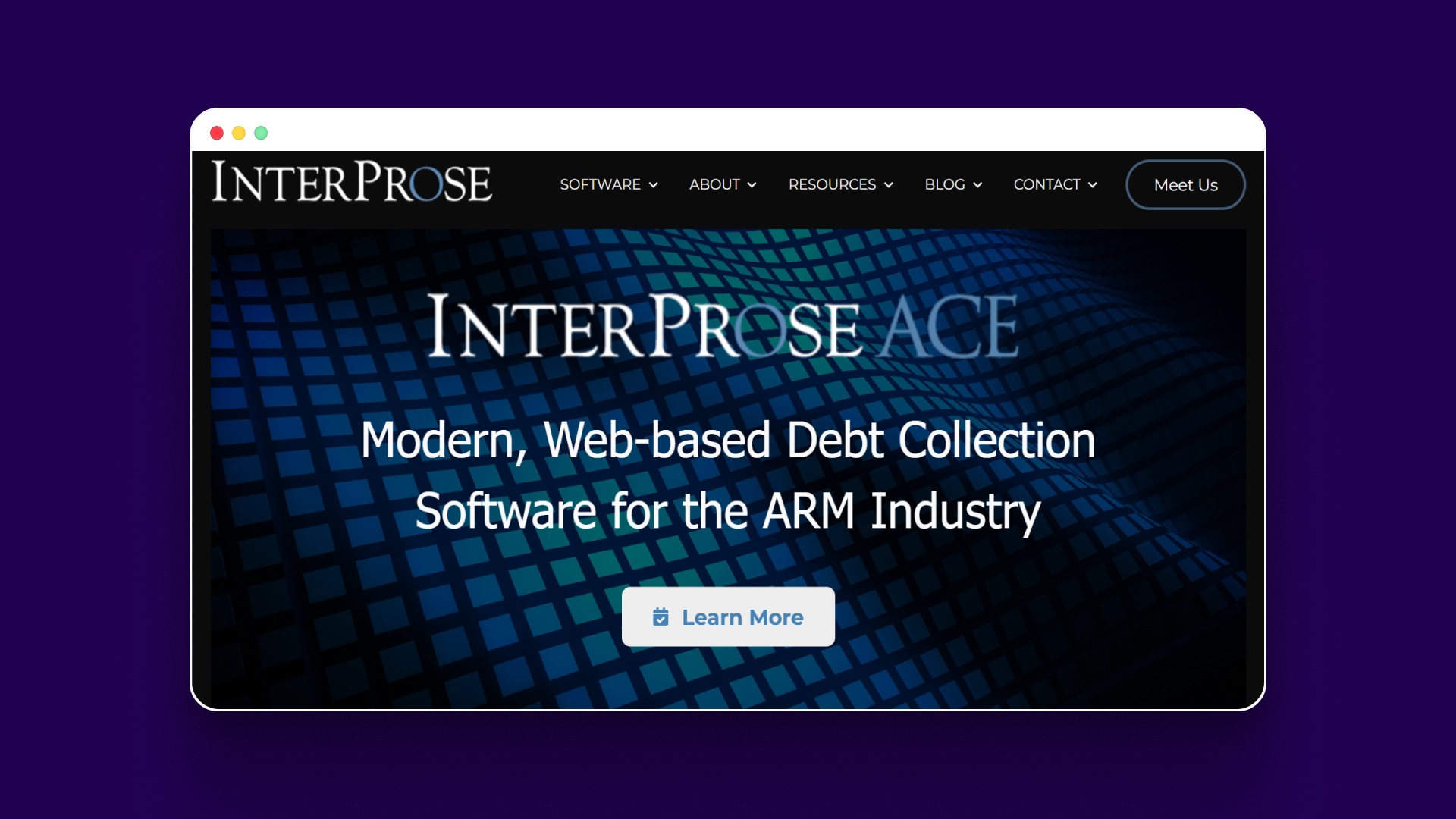
2. InterProse
InterProse provides a structured collection platform built for agencies and law firms that require strict workflow control, compliance tracking, and portfolio management. Its architecture supports secure integrations while maintaining visibility and auditability across systems.
Why It Stands Out
Enforces strict control over data access and workflow execution
Supports SOC 2 Type II attestations, along with PCI and HIPAA-aligned controls and regular penetration testing
Reduces compliance risk in rule-driven collection environments
Maintains consistency across large, regulated portfolios
Vendor-agnostic architecture with flexible API integrations across systems
Emphasizes governance, control, and operational consistency
Key Features
Workflow Management: Enables highly configurable collection processes, allowing agencies to define rules, queues, and account handling logic across portfolios.
Compliance Controls: Tracks regulatory requirements, consent, and communication history to support audits and reduce legal exposure.
Account and Portfolio Management: Centralizes debtor data, account status, and activity history for better operational oversight.
Reporting and Analytics: Provides detailed performance reporting across accounts, agents, and recovery strategies.
Integrations: Supports flexible, vendor-agnostic API integrations with CRMs, payment processors, and legal platforms.
Limitations
Not built as an API-first platform. May require additional configuration to support highly real-time or developer-driven integrations. May also require integrations to support advanced payment workflows and consumer self-service experiences.
Best For
A practical choice for agencies and law firms that prioritize control, compliance, and structured operations. Works well where auditability and governance matter more than speed, flexibility, or consumer-facing digital experiences.
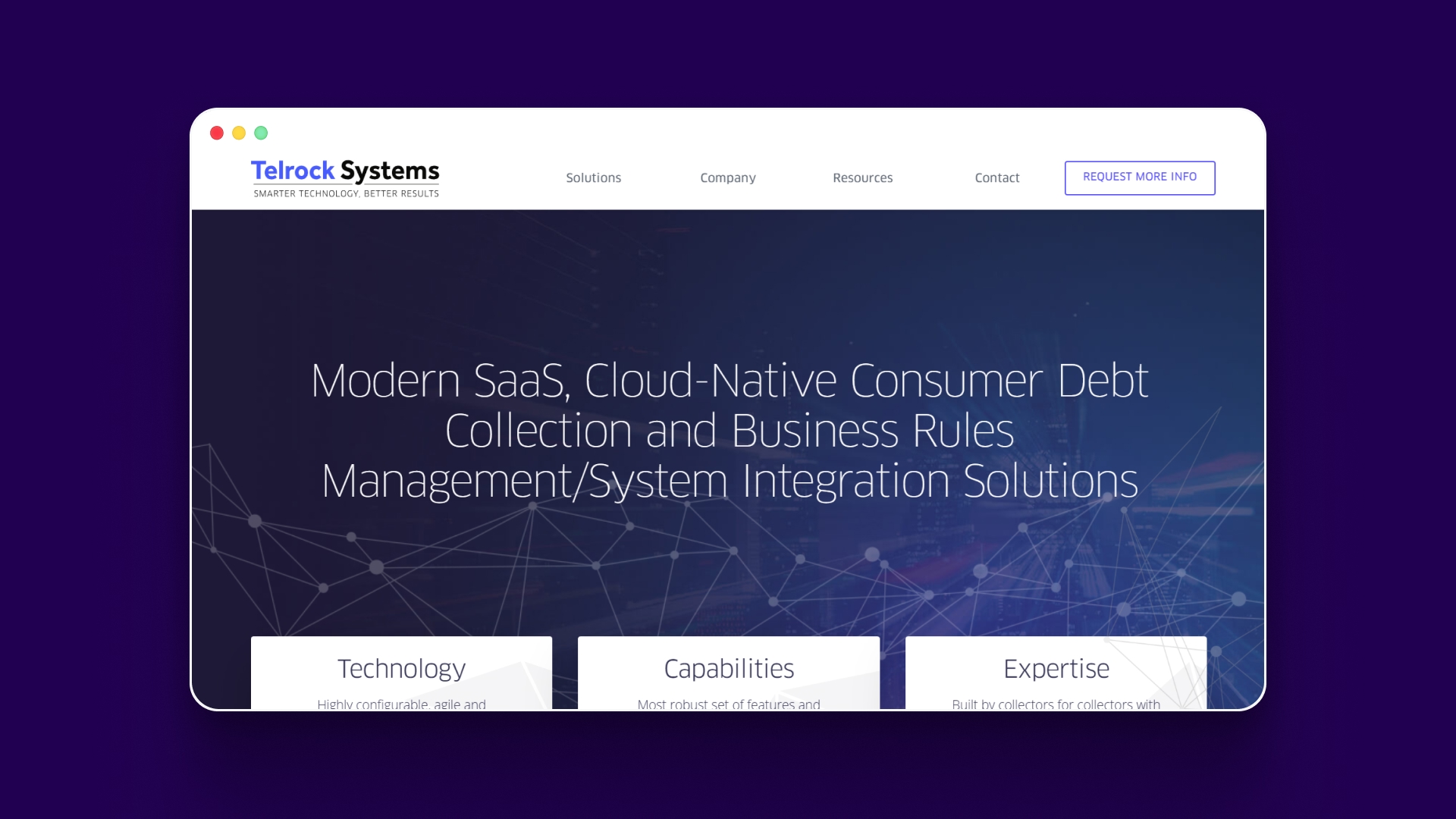
3. Telrock
Telrock offers an enterprise collections platform built for agencies that need secure, auditable control over large-scale operations and system integrations. It operates within SOC 2 and PCI DSS–certified environments, with independent audits ensuring strong data governance and traceability.
Why It Stands Out
Extends SOC 2 principles across workflows and integrations
Maintains strict audit trails for every API-driven interaction
Reduces risk when connecting multiple enterprise systems
Enforces strong data governance across operations
Proven to support large-scale environments, with platforms like Optimus
Key Features
End-to-End Collections Management: Manages the full lifecycle from account intake to resolution within a single system.
Advanced Workflow Automation: Automates decisioning, task allocation, and account progression based on predefined rules.
Compliance and Audit Controls: Tracks communication, actions, and permissions to support regulatory requirements and audits.
Data and Performance Analytics: Provides deep insights into recovery performance, agent activity, and operational trends.
Integration Framework: Supports integrations with enterprise systems, enabling data synchronization across platforms.
Limitations
API flexibility is more structured than developer-first platforms. Implementation timelines can be longer due to configuration and compliance alignment.
Best For
Well-suited for large agencies managing complex portfolios with strict compliance requirements. A strong fit where secure integrations, auditability, and data control take priority over scale, governance, and operational control.
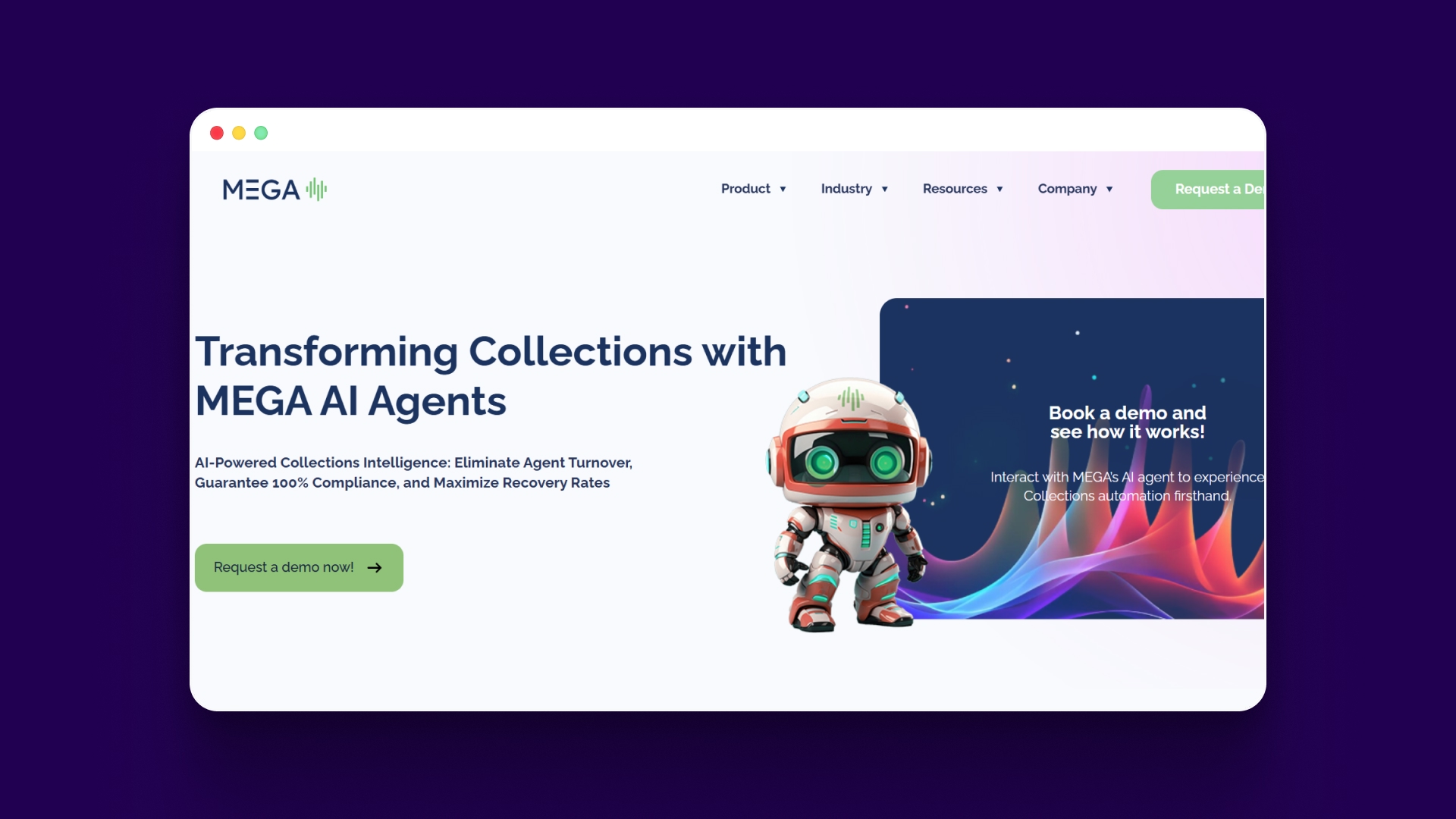
4. MEGA
MEGA offers an AI-driven platform that supports API-based communication workflows within SOC 2–certified environments, with additional support for global data privacy frameworks such as GDPR and CCPA. It is designed for agencies that want to automate outreach while maintaining secure, auditable data handling across integrated systems.
Why It Stands Out
Reduces compliance risk in high-volume outreach where violations are most likely
Maintains audit trails across every consumer interaction automatically
Enables AI-driven engagement without exposing sensitive data across APIs
Strengthens control over messaging across integrated communication channels
Helps agencies scale outreach while maintaining secure, compliant data handling standards
Key Features
AI-Powered Communication: Automates conversations across SMS, email, and chat while maintaining controlled, trackable interactions.
Dynamic Workflow Automation: Adjusts outreach strategies based on behavior while preserving consistency and auditability.
Omnichannel Engagement: Coordinates communication across channels within a unified, governed framework.
Performance Optimization: Uses data insights to refine outreach while maintaining secure access and data handling standards.
Integration Capabilities: Connects with CRMs and external systems through APIs while maintaining structured data exchange.
Limitations
Requires additional payment systems and a full compliance infrastructure. API capabilities are more focused on communication than end-to-end collections workflows.
Best For
Works well for agencies focused on improving engagement through automation within a controlled environment. A strong fit for teams layering intelligent communication on top of existing, compliant payment and data systems.
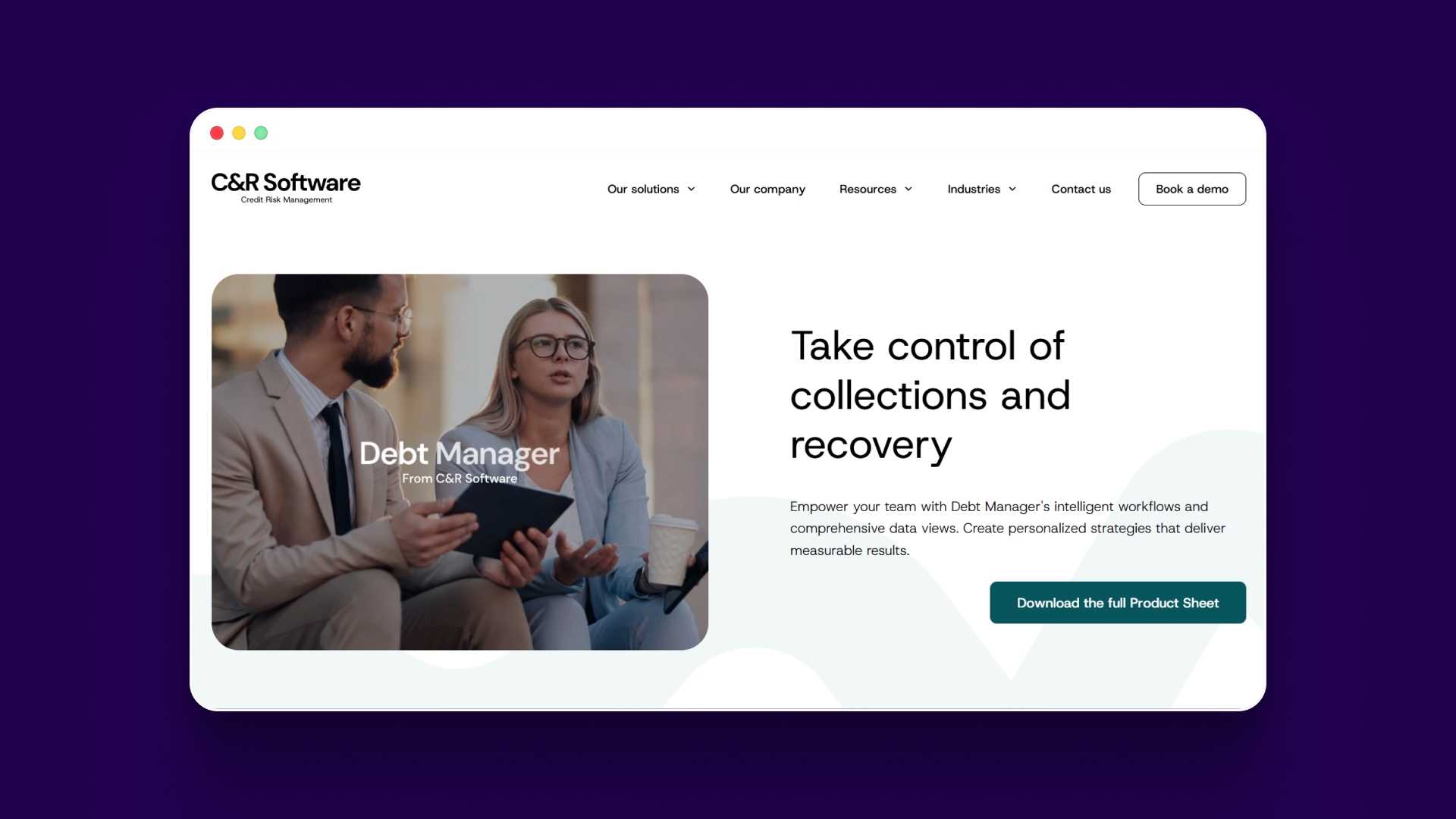
5. C&R Software
C&R Software delivers an enterprise collections platform built for organizations that need strict security, auditability, and large-scale API integrations. It operates within SOC 2 Type II–certified environments, meets PCI DSS Level 1 and ISO 27001:2022 standards, and is widely used as a system of record in complex, regulated environments.
Why It Stands Out
Operates within a fully SOC 2 Type II–certified environment
Maintains audit trails across all workflows and integrations
Reduces compliance risk in multi-system, high-volume setups
Supports secure scaling across regions and regulatory frameworks
Built for environments where data governance is non-negotiable
Key Features
Complete Lifecycle Management: Handles the entire collections process within one system, ensuring controlled data flow across every stage.
Advanced Decisioning Engine: Uses analytics and AI to guide collection strategies while maintaining traceability and compliance.
Compliance and Audit Controls: Embeds regulatory requirements into workflows with detailed logs for every action and interaction.
Payment and Account Management: Supports structured payment handling with full audit trails across transactions and adjustments.
Integration and Open Architecture: Connects with enterprise systems through APIs while maintaining secure, governed data exchange.
Limitations
May require alignment with existing enterprise systems and workflows to fully leverage its capabilities, particularly in complex, multi-system environments.
Best For
Best suited for large agencies and enterprises managing complex, regulated portfolios. A strong fit for organizations that need a scalable, cloud-based system of record with advanced decisioning, auditability, and cross-system integration.
Across these platforms, SOC 2 alignment plays a critical role in securing data and maintaining audit readiness. Some systems are highly compliant, yet still rely on fragmented workflows, limited automation, or disconnected payment experiences. The next section covers must-have features in a secure debt collection platform.
Why Compliance Alone Does Not Guarantee Performance
SOC 2 compliance ensures your systems are secure, auditable, and aligned with data protection standards. But it does not guarantee that your operations are efficient, scalable, or optimized for recovery.
What else matters:
Combined Workflows: Systems should connect payments, communication, and data in one flow to avoid operational gaps.
Operational Flexibility: Platforms should adapt to your workflows without forcing rigid structures.
The goal is not just to stay compliant, but to turn compliance into a framework for better performance. In the next section, we break down which platforms stand out based on different agency needs and use cases.
Final Recommendations for SOC 2–Compliant Debt Collection Software
Some platforms are better suited for structured environments, while others are designed for scale, flexibility, or engagement. The right choice depends on your operational priorities.
Here is how they compare by use case:
Tratta is ideal for agencies that want an API-first, full-stack platform to combine payments, communication, and data, reducing operational complexity and supporting scalable growth
C&R Software may be a strong fit for large enterprises that need a system of record with deep auditability and established infrastructure
Telrock works well for organizations prioritizing governance, control, and large-scale operational stability
InterProse is well-suited for agencies and law firms that require structured workflows and strict compliance tracking
MEGA is a good choice for teams focused on AI-driven communication and high-volume outreach automation
Choosing the right platform comes down to how well it aligns with your operational needs. A system that fits your workflows, integrates cleanly with your existing stack, and maintains strong security and auditability will always outperform one that simply checks compliance boxes.
Conclusion
Choosing the wrong platform can quietly increase your risk. Fragmented APIs, disconnected payment systems, and inconsistent audit trails can lead to compliance gaps, failed audits, and lower recovery performance. Many tools meet SOC 2 requirements on paper, but still leave critical exposure across workflows.
If you want a simpler, more secure way to manage collections, Tratta brings everything into one place without added complexity. It helps you scale confidently while keeping your data, workflows, and integrations under control. Schedule a free demo today.
Frequently Asked Questions
1. How long does SOC 2 compliance take for a collections platform?
SOC 2 compliance typically takes several months, depending on audit scope and readiness. Platforms already built with compliance controls can achieve certification faster compared to those retrofitting security practices.
2. Do APIs increase compliance risk in debt collection systems?
Yes, APIs can increase risk if not properly secured. Poorly managed integrations may expose sensitive data, making strong authentication, encryption, and audit logging essential for maintaining compliance.
3. Can small collection agencies benefit from SOC-2 compliant platforms?
Smaller agencies benefit by reducing legal risk, improving client trust, and enabling secure scaling. SOC 2 compliant platforms also simplify operations by embedding security and compliance into everyday workflows.
4. Is SOC 2 compliance required for working with creditors or enterprises?
Many large creditors and enterprise clients expect SOC 2 compliance as a baseline. It demonstrates strong data protection practices and is often required during vendor evaluation and onboarding processes.
5. How often are SOC 2 audits conducted for compliance maintenance?
SOC 2 audits are typically conducted annually. Ongoing monitoring and internal controls must be maintained throughout the year to ensure continued compliance and readiness for future audits.
Note: This information is not legal advice. Tratta recommends that you consult with your legal counsel to make sure that you comply with applicable laws in connection with your collection and outreach activities.
Sign up for our monthly newsletter
Debt collection insights that keep you compliant and competitive.
Thank you! Your submission has been received!
Oops! Something went wrong while submitting the form.


.jpg)