Recovering payments should not require more effort than acquiring accounts. Yet many collection agencies are stuck in slow cycles, juggling follow-ups, disconnected systems, and consumers who drop off right before completing a payment. If you are seeing delays pile up despite constant outreach, the problem is not effort. It is the system.
This shift is already underway. The accounts receivable software market, valued at $3.80 billion in 2024, is expected to reach $11.79 billion by 2031. That growth reflects a clear move toward faster, automated, payment-first collections.
In this article, we break down 10 accounts receivables software options for agencies in 2026 that help you reduce delays, improve recovery rates, and get paid faster with modern workflows.
Collection agencies handle large volumes of accounts, but turning those into timely payments remains a challenge. The right accounts receivable software shifts the focus from tracking debt to driving faster payments.
Here is how an accounts receivable platform helps agencies:
In the next section, we break down the key features to look for in accounts receivable software that actually helps agencies get paid faster.
Suggested Read: Solving Common Accounts Receivable Challenges and Problems
For collection agencies, the right platform should go beyond tracking balances and actively support faster, more consistent payment conversion.
Here are the features that make the biggest difference:
These features define how effectively a platform can support collections. The next step is understanding which tools actually deliver on them.
Suggested Read: AR Automation Accuracy: Boost Collections and Reduce Errors
Many platforms manage receivables, but they don't all help accelerate payments for collection agencies. The tools below are chosen for their ability to reduce delays, improve conversion rates, and help agencies recover faster through automated workflows.
Quick comparison table:
These AR management software for collection agencies are discussed in greater detail below:
.jpg)
Tratta is a payments-first collections platform designed to help agencies accelerate recovery through automation and self-service. It brings together communication, payment processing, and workflow management into a single system, reducing friction and improving payment completion rates.
Unlike traditional accounts receivables software that focuses on tracking balances, Tratta is built to drive payment conversion. It enables faster payments through low-friction experiences designed for modern collections.
Key Features:
Best For: Agencies focused on improving payment conversion and reducing reliance on manual follow-ups
Why We Picked It: Its payment-first architecture directly addresses delays in collections by making it easier for consumers to complete payments
.png)
FICO Debt Manager is an enterprise-grade collections platform designed to optimize recovery strategies through data-driven decisioning. It combines segmentation, workflow automation, and analytics to manage the full receivables lifecycle. This helps agencies prioritize the right accounts and improve overall recovery rates.
Key Features:
Limitations:
Best For: Enterprise agencies focused on data-driven collections and large-scale operations
Why We Picked It: Its strong decisioning capabilities help agencies focus efforts where they are most likely to drive payments
.jpg)
Experian PowerCurve Collections is an accounts receivable platform that helps agencies manage and recover outstanding balances more efficiently. It uses data and automation to organize accounts, prioritize collections, and improve follow-ups. This helps agencies move accounts through the receivables cycle faster and improve payment timelines.
Key Features:
Limitations:
Best For: Agencies looking to manage large receivables portfolios and speed up collections
Why We Picked It: It helps agencies organize receivables better and act faster on accounts that are more likely to pay
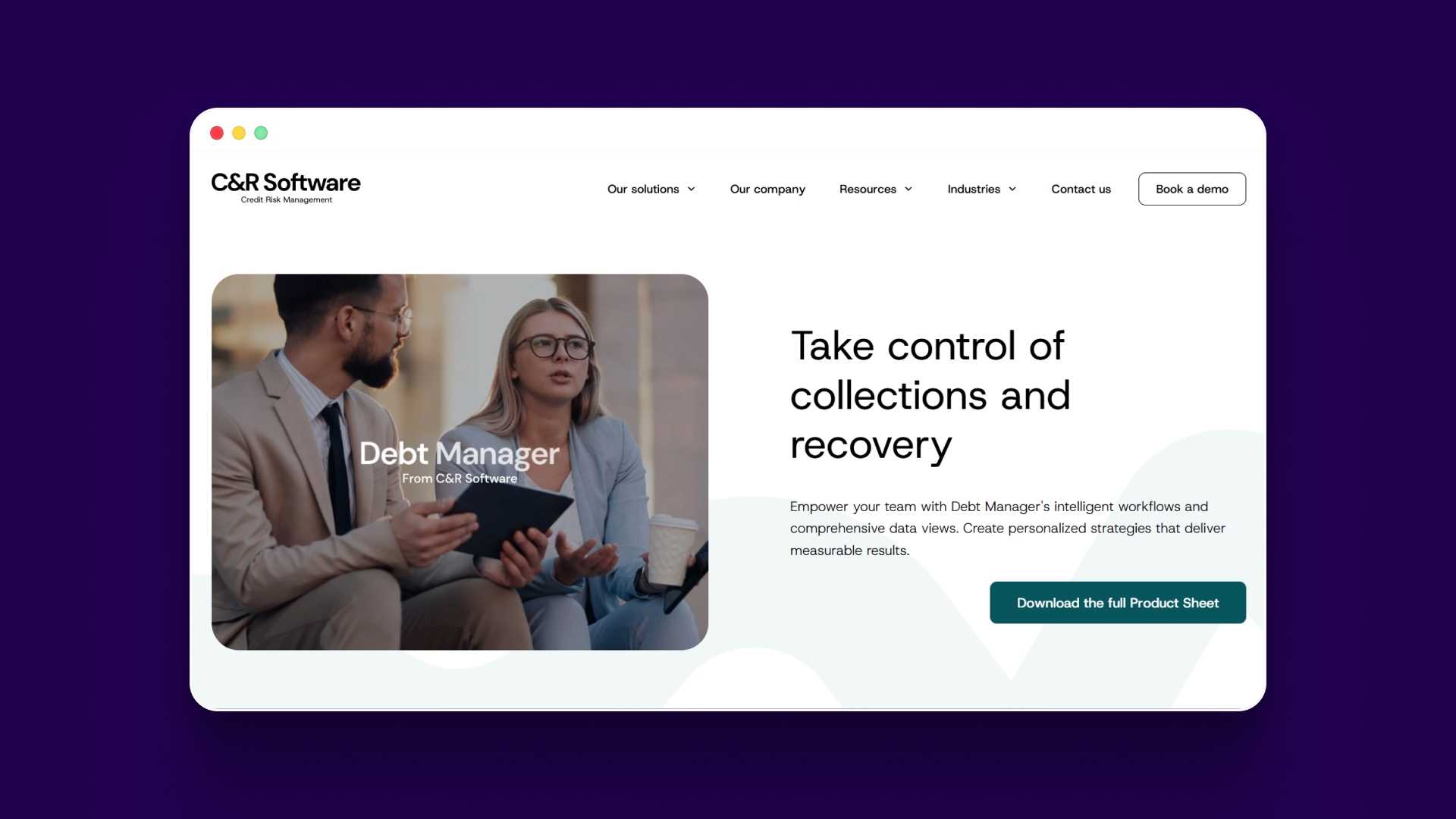
C&R Software offers an accounts receivable program to help agencies manage the full collections lifecycle. It organizes accounts, automates workflows, and supports consistent follow-ups across the receivables process. This helps agencies reduce delays and move accounts toward payment faster.
Key Features:
Limitations:
Best For: Agencies managing large receivables portfolios with structured collection workflows
Why We Picked It: It provides a complete receivables workflow that helps agencies manage accounts efficiently and reduce time to payment
.jpg)
Genesys Latitude is an accounts receivable collections software designed to help agencies manage and recover outstanding balances more efficiently. It supports account tracking, payment handling, and structured workflows across the collections process. This helps agencies keep receivables organized and move accounts toward payment faster.
Key Features:
Limitations:
Best For: Agencies looking for a stable system to manage receivables and standard collection workflows
Why We Picked It: It provides a reliable structure for managing receivables and maintaining consistent collection processes
.jpg)
CGI Credit Studio is a collections platform designed to help agencies manage and recover outstanding accounts receivable across the full lifecycle. It organizes accounts, automates workflows, and tracks payments within a centralized system. This helps agencies stay consistent in collections, though payment speed improvements depend on how the platform is configured.
Key Features:
Limitations:
Best For: Large agencies managing high-volume receivables and complex collection workflows
Why We Picked It: It helps agencies bring structure and control to receivables, improving consistency across the collections process
.png)
Quantrax is a collections platform that works as accounts receivable software. It is designed to help agencies manage outstanding balances and improve recovery workflows. It focuses on organizing accounts, tracking payments, and supporting day-to-day collection activities. This helps agencies process receivables more efficiently and maintain a steady payment flow.
Key Features:
Limitations:
Best For: Small to mid-sized agencies needing a reliable system to manage receivables and collections
Why We Picked It: It provides dependable receivables tracking and workflow support for agencies with traditional collection processes
.jpg)
Collect! is an accounts receivable and collections platform designed to help agencies track, manage, and recover outstanding balances. It focuses on account organization, payment tracking, and structured workflows across the collections process.
Key Features:
Limitations:
Best For: Agencies looking for a straightforward system to manage receivables and collection workflows
Why We Picked It: It offers reliable receivables tracking and structured workflows for consistent collections management
.jpg)
JST CollectMax is an accounts receivable and collections platform designed to help agencies manage and recover outstanding balances, especially in legal collections. It organizes accounts, tracks payments, and supports structured workflows across the receivables process. Agencies get to maintain control over accounts and move them through collections efficiently.
Key Features:
Limitations:
Best For: Agencies handling legal collections and structured receivables workflows
Why We Picked It: It supports receivables management within legal collections, helping agencies stay organized and consistent
.jpg)
Kuhlekt offers AR automation for credit collections. It is designed to help agencies manage and recover outstanding balances with a focus on automation and digital workflows. It combines account management, communication, and payment capabilities into a unified system.
Key Features:
Limitations:
Best For: Agencies looking for a modern, flexible platform to manage receivables and improve payment timelines
Why We Picked It: It brings a more digital and automated approach to receivables, helping agencies move accounts toward payment faster
After comparing platforms, the next step is to understand what actually affects recovery speed and consistency. This is discussed in the next section.
Suggested Read: 2026 Guide to Law Firm Accounts Receivable Software
The right choice depends on how well a system supports your workflows, reduces friction, and helps convert receivables into payments.
Here are the key questions to ask:
Tratta checks off on all these questions by combining automation, self-service, and integrated payment capabilities into a single platform. Reducing friction and enabling faster payments helps agencies move receivables through the cycle more efficiently and improve overall recovery speed. Call us to learn more.
Delayed payments rarely come down to effort. Most agencies already have the outreach, the volume, and the intent in place. The real issue is systems that track receivables but do not actively help convert them into payments, leading to slower recovery cycles and missed opportunities.
Tratta approaches this differently by focusing on how accounts receivable move through the collection process. It connects communication, workflows, and payments, enabling agencies to manage accounts more effectively and reduce recovery delays.
If your current setup is slowing down collections, it may be time to evaluate a more connected approach. Schedule a free demo today.
Accounts receivables software goes beyond invoicing by helping agencies track, manage, and recover outstanding balances through workflows, communication, and payment systems designed specifically for collections and faster recovery.
An accounts receivable program usually includes account tracking, payment recording, follow-up workflows, and reporting tools that help agencies manage outstanding balances and maintain consistency across the collections process.
An accounts receivable platform helps agencies organize accounts, monitor payment progress, automate follow-ups, and streamline collections, ensuring receivables move efficiently from outstanding balances to completed payments.
Receivables management software improves collections by organizing accounts, automating workflows, and providing visibility into payment activity, helping agencies act faster and reduce delays in the recovery process.
AR management software is used by agencies and businesses to track, manage, and recover receivables, ensuring accounts are handled systematically and payments are collected in a timely manner.
Accounts receivable accounting software is useful for tracking balances and financial records, but agencies often need additional tools for workflows, communication, and payment handling to support effective collections.
AR collections software should include account tracking, automated workflows, payment processing, communication tools, and reporting capabilities to help agencies manage receivables and improve recovery timelines.
Accounts receivable collections software focuses on managing and recovering outstanding balances, while CRM tools primarily manage customer relationships and lack specialized features for handling receivables and payments.
Yes, even small agencies benefit from automation by reducing manual tasks, improving consistency in follow-ups, and helping manage receivables more efficiently without increasing operational workload.
AR tools improve payment timelines by organizing receivables, enabling consistent follow-ups, and simplifying payment processes, allowing agencies to move accounts through the collections cycle more efficiently.