What Is IVR Payment Processing in Debt Collection? 2026 Guide
Strategies for Debt Collection
What Is IVR Payment Processing in Debt Collection? 2026 Guide
Published on:
August 3, 2026
Payments often fail at the point of intent. A consumer is ready to pay, calls in, and gets stuck in queues or rigid processes. That delay leads to drop-offs, missed payments, and unnecessary strain on agents handling routine transactions.
The shift toward automation is accelerating. The Interactive Voice Response market is projected to reach$9.26 billion by 2032, reflecting growing demand for scalable, self-service payment systems. A secure IVR payment system addresses this gap by enabling consumers to complete payments instantly through an inbound, guided experience.
In this guide, you will learn what IVR payment processing is, how it works in debt collection, and how it helps improve efficiency and payment completion in 2026.
A structured IVR payment channel supports multiple methods. It handles card payments, ACH transfers, recurring payments, and pay-by-phone in a single unified flow.
IVR systems solve key collection challenges. They reduce call congestion, eliminate payment friction, improve consistency in compliance, and optimize agent utilization.
Self-service IVR works best for transaction execution. Agents handle complex interactions, while IVR efficiently manages high-volume, repeatable payment scenarios.
The right technology should integrate IVR with payments and compliance. This ensures real-time processing, full visibility, and scalable inbound payment workflows.
What Is an IVR Payment Channel in Debt Collection?
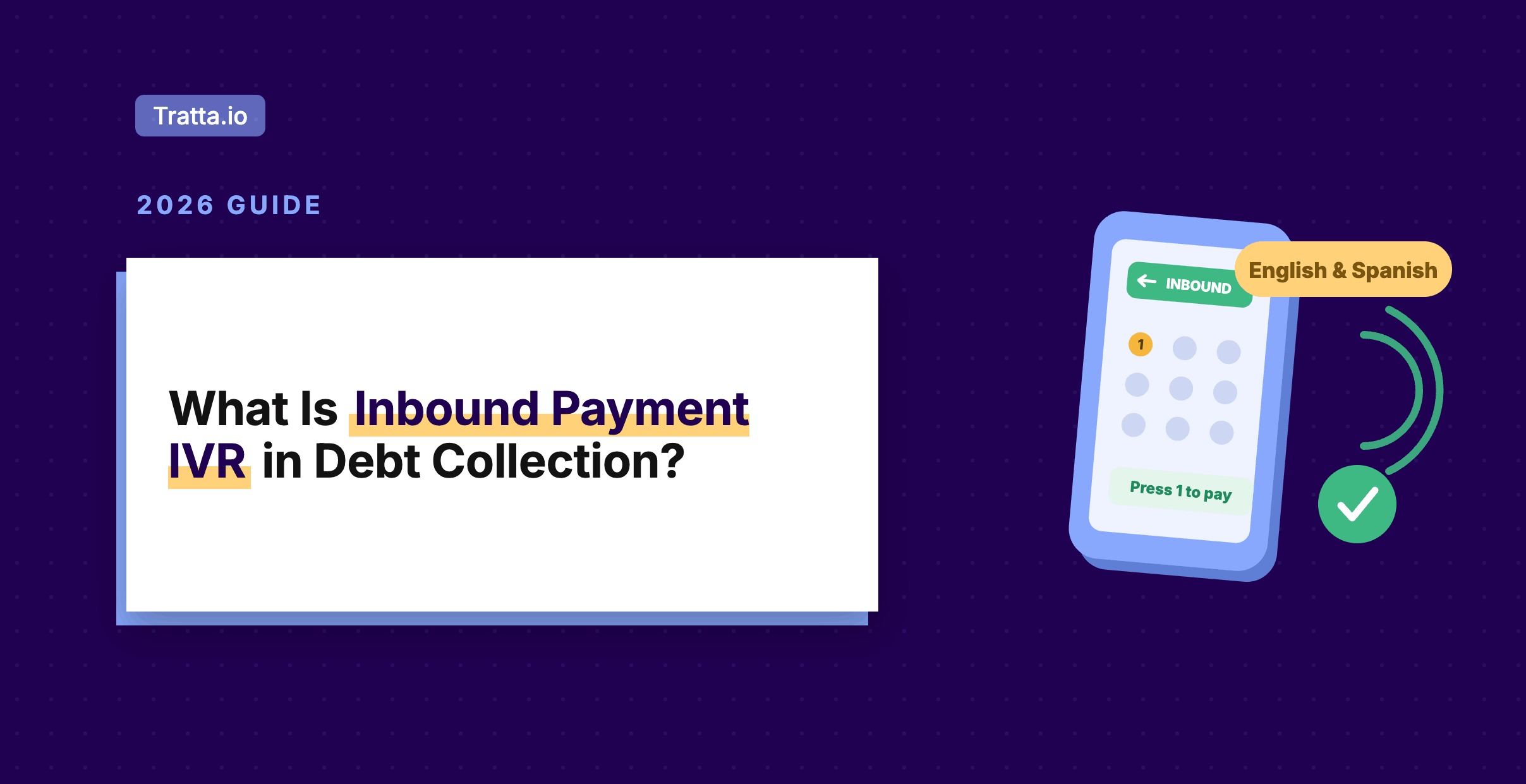
AnIVR payment system is an automated phone-based system that allows consumers to complete payments without speaking to an agent. It is an interactive voice response payment method in which callers follow guided prompts to complete a secure transaction.
In debt collection, this means a consumer can initiate a payment through IVR at any time, making it a reliable, inbound-first solution.
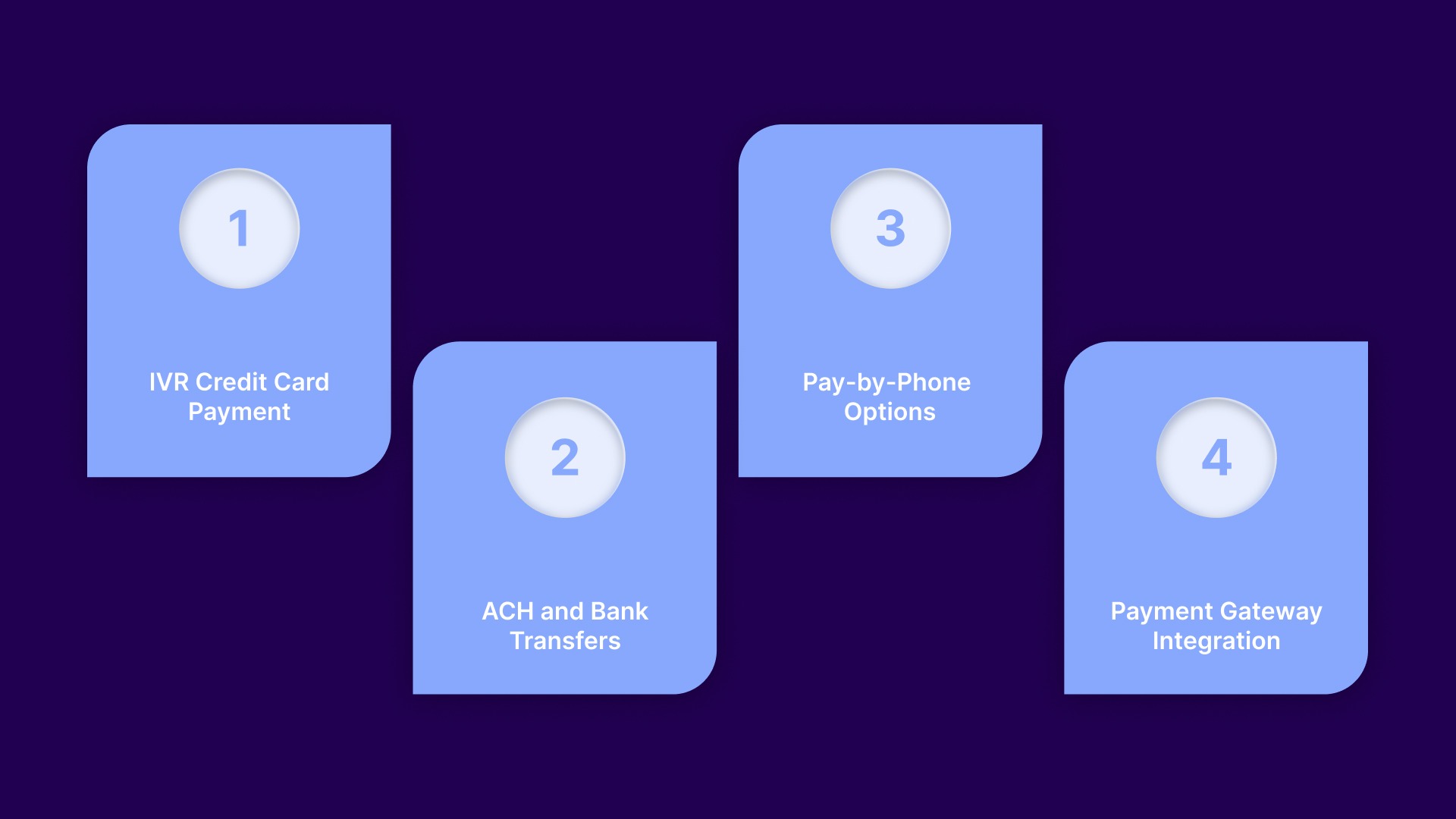
These payment methods are supported by IVR:
IVR Credit Card Payment: Processes card transactions securely, including real-time authorization and validation
ACH and Bank Transfers: Enables direct debit and account-based payments through automated flows
Pay-by-Phone Options: Allows consumers to complete payments instantly through guided phone interactions
Payment Gateway Integration: Connects with payment gateways to handle authorization, processing, and settlement
This is why IVR payment technology is becoming central to next-generation collections. It simplifies how payments are initiated, processed, and completed without adding operational complexity. In the next section, we explore how payments are processed within these systems.
How Does IVR Payment Processing Work for Collection Agencies?
IVR payments allow collection agencies to handle payments through a structured, automated flow. Instead of relying on agents, consumers follow guided prompts to complete transactions quickly, reducing delays and improving consistency.
Call Initiation and Access A consumer calls a dedicated number to begin the payment process. This ensures transactions can start immediately without waiting for agent availability.
Account Identification and Verification The system verifies the caller using account details or secure prompts. This ensures payments are accurately linked and compliant.
Payment Selection and Method Choice Consumers choose how they want to pay, such as by card or bank transfer. This flexibility allows them to complete transactions in a way that suits them.
Transaction Processing and Authorization The system securely processes the payment in real time. Authorization and validation happen instantly to avoid delays.
Confirmation and Record Creation Once completed, the system confirms the payment and logs the transaction. This creates a consistent and traceable record for the agency.
Optional Plan Setup and Billing Flows More advanced setups allow consumers to create payment plans or manage recurring payments. This reduces the need for agent involvement in routine tasks.
Tratta enhances this process by offering an inbound-first system designed for collections. It connects payment handling with reporting, compliance, and consumer self-service in one place. This allows agencies to manage high payment volumes efficiently while maintaining control and consistency.Book a free demo today.
Challenges Solved by IVR Payment Processing Solutions for Agencies
Debt collection workflows often break at the intersection of timing, compliance, and operational scale. Interactive voice response payment systems address these gaps by introducing structured, automated payment flows that align with how consumers actually engage.
Limitations tackled by debt collection IVR payment processing:
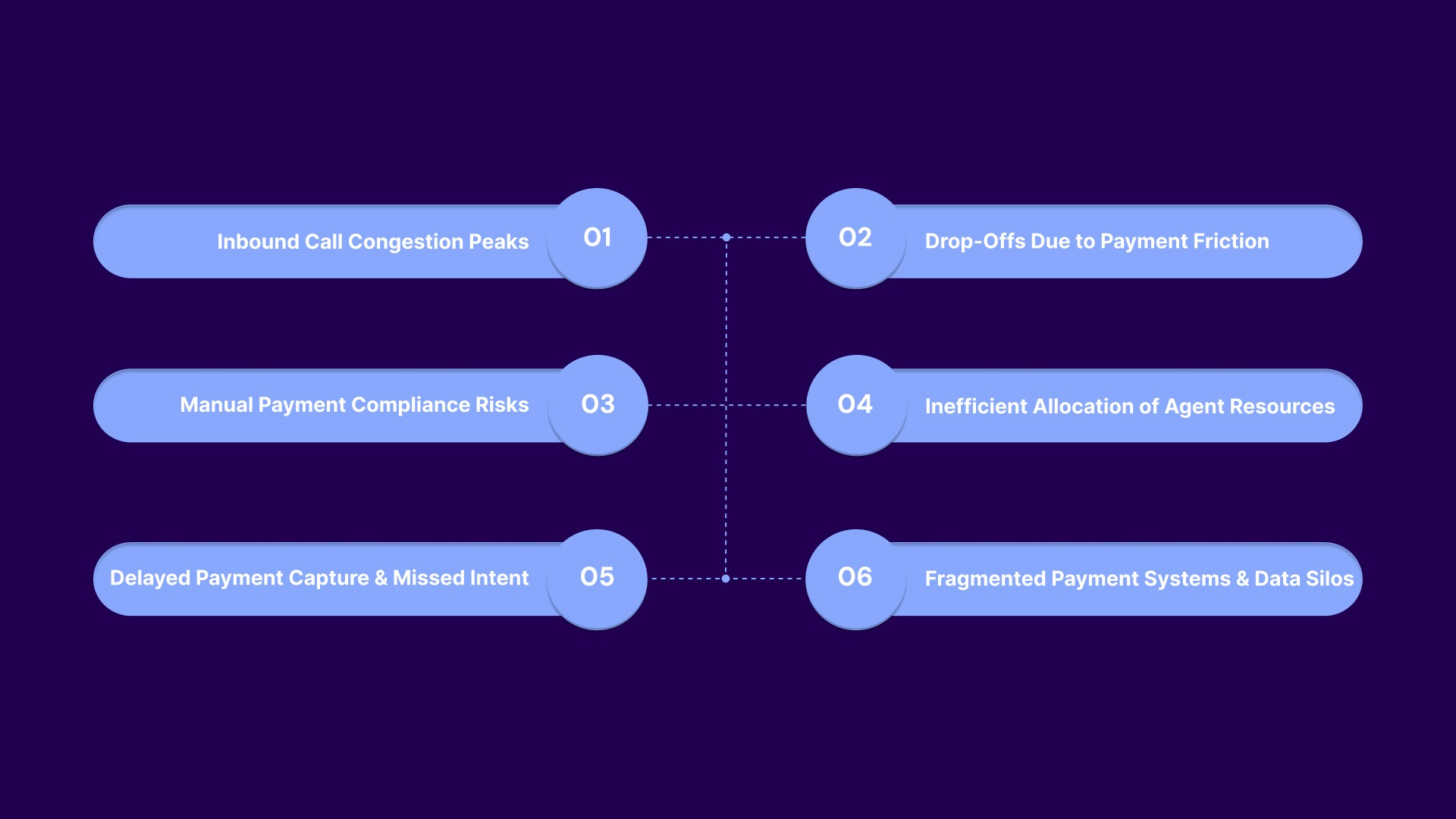
1. High Inbound Call Congestion During Payment Peaks
Payment spikes, often triggered by reminders, billing cycles, or deadlines, can overwhelm contact centers. This leads to long wait times, abandoned calls, and lost payment opportunities.
The following capabilities help IVR systems absorb peak volumes without disrupting payment flow:
Routes payment-ready callers directly into automated flows
Eliminates queue dependency for routine transactions
Handles concurrent payment sessions without capacity limits
2. Drop-Offs Due to Payment Friction
Consumers entering payment flows often encounter delays, unclear steps, or multiple handoffs. These interruptions increase abandonment rates at critical conversion points.
Here is how IVR reduces friction and improves completion rates:
Provides guided, step-by-step payment prompts
Removes the need for agent transfers during transactions
Standardizes the flow to minimize confusion and errors
3. Compliance Risks in Manual Payment Handling
Agent-led payment collection introduces variability in how disclosures, validations, and confirmations are delivered. This inconsistency increases exposure to regulatory and audit risks.
IVR systems enforce structured workflows that reduce compliance gaps:
Standardizes disclosures and validation steps across all interactions
Logs every interaction for auditability and traceability
Minimizes human error in sensitive payment handling processes
4. Inefficient Allocation of Agent Resources
Agents spend significant time handling routine payment transactions instead of focusing on complex cases. This limits productivity and increases operational costs.
IVR shifts repetitive tasks away from agents through:
Automation of end-to-end payment transactions
Reduction in call handling time for simple payments
Reallocation of agents to high-value or dispute-related interactions
5. Delayed Payment Capture and Missed Intent
When consumers are ready to pay but cannot complete transactions instantly, intent is lost. Delays between decision and action directly impact recovery rates.
IVR ensures payments are captured at the moment of intent through:
Always-available payment access via inbound channels
Immediate transaction initiation without agent dependency
Continuous availability beyond standard operating hours
6. Fragmented Payment Systems and Data Silos
Disjointed systems for call handling, payments, and reporting create inefficiencies and visibility gaps. This fragmentation slows reconciliation and limits performance insights.
IVR integrates payment workflows into a unified system by:
Connecting payment processing with interaction tracking
Centralizing transaction data for reporting and analysis
Enabling consistent workflows across all inbound payment channels
The real impact becomes clearer when you look at how IVR is applied in real collection scenarios. In the next section, we explore practical use cases where these systems drive measurable outcomes.
IVR payment systems can be deployed across multiple stages of the collection lifecycle to capture payments, reduce friction, and streamline workflows.
These are:
Payment Completion Consumers call in after receiving a reminder or deciding to resolve their balance. IVR allows them to complete the payment instantly without waiting for an agent. This ensures that payment intent is captured as it occurs, reducing drop-offs.
After-Hours Payment Processing Many consumers prefer to make payments outside standard business hours. IVR ensures payments can be completed anytime without requiring staffing coverage. This extends collection windows without increasing operational costs.
Payment Plan Setup and Management IVR can guide consumers through setting up structured repayment plans. It allows selection of installment amounts, frequencies, and confirmation without agent intervention. This simplifies recurring payment management at scale.
Missed Call and Callback Scenarios When consumers return missed calls or respond later, IVR provides an immediate payment path. This avoids routing them through queues or requiring agents to be available. It helps convert delayed engagement into completed payments.
Balance Inquiry and Payment Follow-Through Consumers often call to check balances before making a payment decision. IVR can provide account details and immediately transition into a payment flow. This reduces friction between inquiry and action.
Multi-Account or Portfolio Payments For consumers managing multiple debts, IVR can present consolidated options. It enables the selection of specific accounts or bundled payments within one session. This improves usability and encourages higher payment completion.
Tratta enables agencies to operationalize these use cases through an inbound, configurable IVR layer. Its multilingual IVR reduces confusion by allowing consumers to complete payments in their preferred language. Features such as SMS-enabled access and passwordless portal entry make it easy to complete the call-to-payment process.Call us to learn more.
Agent-Led vs Self-Service IVR Payment Experiences for Debt Collection
Payment handling in debt collection typically falls into two models: agent-led interactions andself-service IVR flows. While both can facilitate transactions, they differ significantly in scalability, consistency, and how effectively they capture payment intent.
Comparison table:
Aspect
Agent-Led Payments
Self-Service IVR Payments
Availability
Limited to operating hours and agent capacity
Available 24/7 without dependency on staffing
Scalability
Constrained by the number of agents
Handles concurrent payment sessions at scale
Payment Speed
Slower due to queues and interaction time
Faster with direct, guided payment flows
Consistency
Varies by agent handling and process adherence
Standardized flows across all interactions
Compliance Control
Relies on agent training and execution
Built-in validation, disclosures, and logging
Cost Efficiency
Higher due to staffing and call handling time
Lower due to automation of routine payments
Consumer Experience
Dependent on agent interaction quality
Predictable, self-directed experience
While both agent-led and self-service IVR models play a role in debt collection, their effectiveness depends on where they are applied within the workflow.
The following should help you use the right approach to the right stage of the collection lifecycle:
Agent-led interactions handle early-stage engagement, while IVR is better suited for payment completion
Disputes and negotiations require agents, but finalized payments can shift to IVR
High-value accounts are typically agent-managed, while high-volume accounts benefit from IVR
Dynamic, regulated conversations need agents, while structured transactions fit IVR
First-time interactions may involve agents, but repeat payments are more efficiently handled through IVR
The operational advantages are clear, but consistency alone is not enough in regulated environments. In the next section, we examine how these systems help enforce compliance across debt collection workflows.
How Inbound IVR Payment Systems Support Compliance in Debt Collection
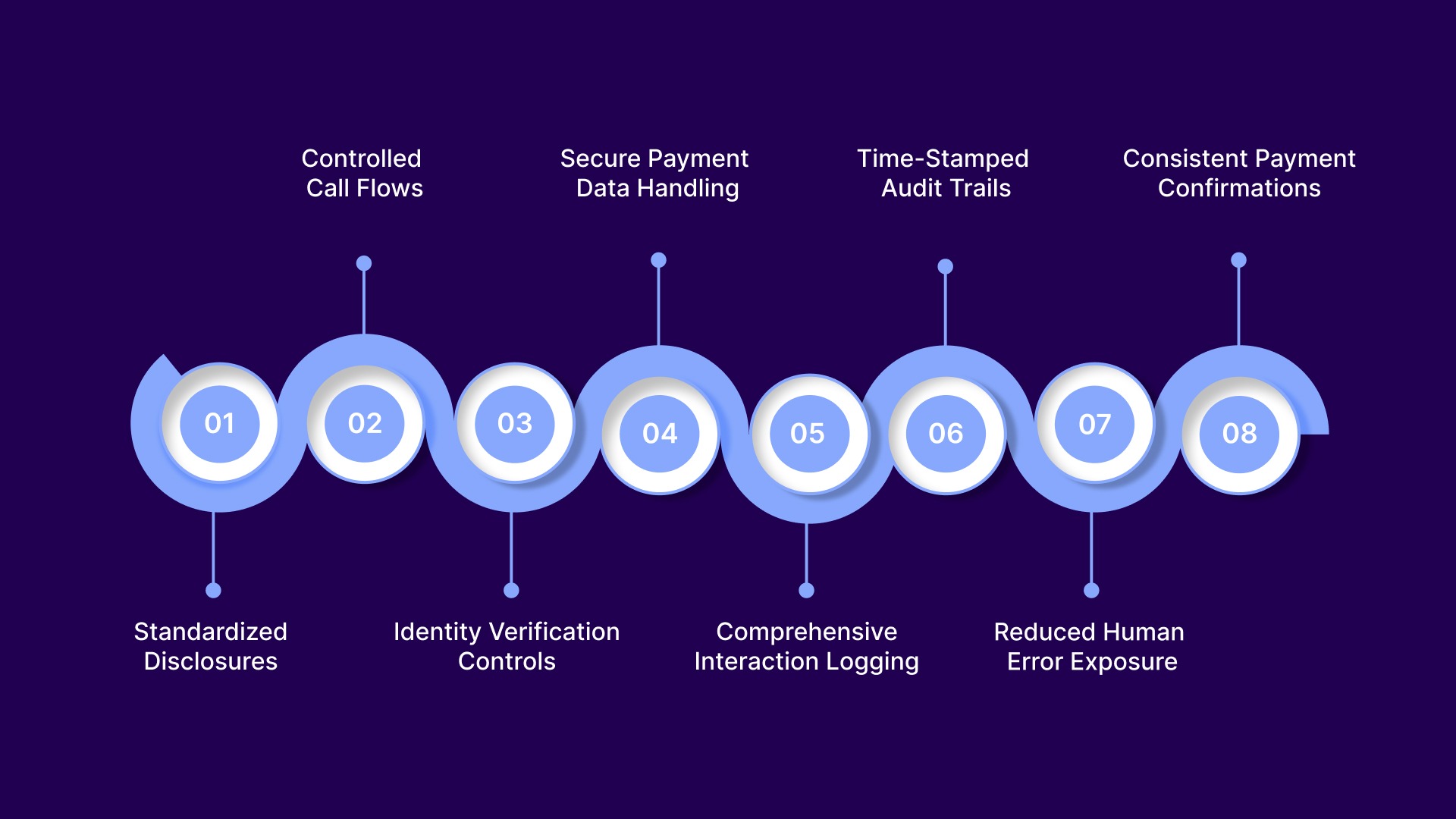
Inbound IVR payment systems bring structure to payment interactions by standardizing disclosures, controlling data handling, and creating verifiable audit trails. This becomes critical in environments governed by statutes.
These are:
Standardized Disclosures: Ensure every caller receives the required information under FDCPA and Regulation F without variation
Controlled Call Flows: Prevent unauthorized statements or deviations that could create compliance risk
Identity Verification Controls: Validate the caller's identity before account access to meet consumer protection requirements
Secure Payment Data Handling: Protect sensitive information and align with PCI DSS during payment capture
Comprehensive Interaction Logging: Maintain detailed records for audits, disputes, and regulatory review
Time-Stamped Audit Trails: Verify exactly when disclosures and confirmations were delivered
Reduced Human Error Exposure: Limit compliance risks by minimizing agent involvement in payment handling
Consistent Payment Confirmations: Ensure accurate and standardized communication of transaction outcomes
Compliance becomes significantly easier when the underlying system is designed correctly. In the next section, we outline practical implementation tips and best practices to ensure IVR payment workflows are both effective and compliant.
Implementation Tips and Best Practices for Debt Collection IVR Payment Processing
Implementing IVR payment processing in debt collection requires more than basic setup. The system must align with how consumers initiate payments, how compliance is enforced, and how transactions move across systems.
Best practices include:
Design Payment Flows: Structure flows to move users quickly from entry to payment completion. Avoid unnecessary menu layers that delay transactions or create confusion.
Enable First Resolution: Ensure consumers can complete payments within a single interaction. Removing dependencies on transfers or callbacks reduces drop-offs.
Verify Identity Early: Place authentication at the beginning of the flow to prevent errors later. This ensures secure access and smoother transaction handling.
Standardize Compliance Messaging: Embed required disclosures directly into the flow to ensure consistency. This reduces variability and strengthens regulatory adherence.
Ensure Real-Time Processing: Process and confirm payments instantly to avoid uncertainty or delays. Immediate feedback improves trust and completion rates.
Execution matters, but the underlying system ultimately determines how well these practices hold up at scale. In the next section, we examine how the right technology shapes IVR payment solutions in debt collection.
Enable Inbound IVR Payment Processing with Tratta
Tratta is a payments-first platform built for debt collection, combining IVR, payment processing, and consumer self-service into one system. It enables agencies to handle inbound payments efficiently while maintaining control, consistency, and compliance across every interaction.
The platform offers an inbound multilingual payment IVR designed for direct payment completion. It supports language selection, SMS entry points, and passwordless access to reduce friction. Payments are processed and posted in real time, with full tracking across systems.
Beyond IVR, Tratta offers the following features:
Consumer Self-Service Platform: Provides a portal where consumers can view balances, select payment options, and complete transactions independently. Extends payment access beyond calls while maintaining consistency across channels.
Payments and Merchant Services: Processes transactions securely, including authorization, settlement, and reconciliation within one system. Ensures accurate financial tracking and reduces dependency on third-party tools.
Contact Center: Enables agents to handle complex interactions while staying connected to the same system as IVR and payments. Ensures continuity when calls move between automated and agent-assisted workflows.
Omnichannel Communications: Connects phone, SMS, and digital touchpoints into a unified interaction layer. Ensures all inbound engagement is tracked and aligned with payment workflows.
Reporting and Analytics: Provides real-time visibility into payment activity, completion rates, and system performance. Supports operational decisions through structured data and insights.
Secure Debt Collection Compliance Software: Enforces standardized workflows with built-in audit trails and data controls. Helps agencies align with regulatory requirements and reduce compliance risk.
REST APIs: Enable flawless integration with systems of record, payment processors, and external tools. Ensures data consistency and real-time synchronization across platforms.
Campaigns: Allows configuration of logic that drives consumer engagement and payment behavior. Supports structured workflows, including reminders, follow-ups, and payment paths.
Customization and Flexibility: Allows agencies to configure payment flows, rules, and interaction logic based on operational needs. Ensures the system adapts to different portfolios, strategies, and compliance requirements.
Tratta is designed to remove friction from every stage of the payment process while maintaining control, visibility, and compliance. Every subscription includes a dedicated onboarding specialist who configures your payment rules, integrates your systems of record, customizes your consumer portal, and sets up your workflows.
Conclusion
An IVR payment system that is poorly designed or disconnected from core workflows can create more problems than it solves. Payment flows become confusing, compliance risks increase, and consumers drop off before completing transactions. This can lead to missed revenue, higher operational costs, and limited visibility into payment performance.
Tratta addresses these challenges with an inbound-first IVR system that is fully integrated with payment processing, compliance controls, and reporting. Its structured, real-time payment flows ensure consistency, reduce friction, and allow agencies to capture payments efficiently at scale.
Start simplifying your payment workflows with a system built for real collection environments. Schedule a free demo today.
Frequently Asked Questions
1. What is IVR for payment?
IVR for payments allows consumers to complete transactions through an automated phone system using voice or keypad inputs, without speaking to an agent.
2. Is IVR payment safe?
Yes, a secure IVR payment system uses encryption, tokenization, and PCI-compliant processes to protect sensitive financial data during transactions.
3. What is the IVR payment option?
An IVR payment option enables users to choose how they want to pay, such as by card or bank transfer, within an automated phone flow.
4. How does an IVR online transaction work?
An IVR online transaction involves a caller entering payment details through a phone system, which processes the transaction in real time.
5. What are IVR payments used for?
IVR payments are commonly used for debt collection and other transactions where consumers prefer phone-based self-service.
6. What is IVR payment processing?
IVR payment processing solutions handle the authorization, validation, and completion of payments within an automated phone system.
7. How does IVR credit card payment work?
An IVR credit card payment lets users enter card details via phone prompts, which are securely processed through integrated payment gateways.
8. What is IVR pay by phone?
IVR pay by phone allows consumers to call a number and complete payments instantly through guided prompts without waiting for an agent.
9. What is IVR payment software?
IVR payment software powers automated phone-based payment systems, enabling secure transactions, workflow automation, and integration with backend systems.
Note: This information is not legal advice. Tratta recommends that you consult with your legal counsel to make sure that you comply with applicable laws in connection with your collection and outreach activities.
Sign up for our monthly newsletter
Debt collection insights that keep you compliant and competitive.
Thank you! Your submission has been received!
Oops! Something went wrong while submitting the form.