Customer communication in debt collection is changing quickly. According to the Consumer Financial Protection Bureau (CFPB), debt collection remains one of the most common categories of consumer financial complaints in the United States. This puts increasing pressure on agencies to deliver clearer, more accessible, and compliant communication.
At the same time, call volumes continue to rise. Collection agencies and credit-focused organizations still rely heavily on phone calls to resolve accounts, yet many systems were designed for basic call routing rather than modern consumer interactions.
Advanced IVR systems are helping close this gap by allowing consumers to check balances, review payment options, and complete payments through automated phone interactions.
For organizations managing large account portfolios, this shift helps reduce operational pressure while giving consumers faster access to the information they need.
In this article, we explain what advanced IVR systems are, how they work, and why they are becoming an essential part of modern collections operations.
Advanced Interactive Voice Response (IVR) systems are automated phone platforms that allow consumers to access account information, make payments, and complete account actions using voice commands or keypad inputs without speaking to an agent.
Traditional IVR systems mainly focused on routing calls through fixed menu options. Callers often had to navigate several prompts before reaching the right department or an agent.
Advanced IVR systems extend these capabilities by supporting intelligent routing, system integrations, and self-service workflows. Instead of simply directing calls, they allow consumers to complete tasks such as verifying account information, checking balances, or making payments during the call.
Traditional and advanced IVR systems function differently. Here's how:
Advanced IVR platforms typically support functions such as:
Because these systems operate continuously, consumers can access account information or complete payments at any time without waiting for a live representative.
Research from PwC shows that 82% of U.S. consumers prefer resolving simple issues through automated systems, while reserving human interaction for more complex situations.
To understand their impact, it’s important to see why advanced IVR systems have become essential for collection agencies and credit-focused organizations.
Collection agencies and credit-focused organizations often manage large portfolios of consumer accounts. Payment reminders, billing notices, and settlement communications can quickly trigger spikes in inbound calls.
Credit issuers face similar challenges. Banks, lenders, and credit card providers receive frequent calls related to account balances, payment confirmations, billing dates, and repayment options. When agents must handle every request manually, queues grow quickly, and operational costs increase.
In many cases, callers are not seeking complex assistance. They simply want to complete routine tasks such as:
When every request requires an agent, response times increase and support teams spend valuable time answering repetitive questions instead of focusing on negotiations, disputes, or complex account issues.
Advanced IVR systems help address this challenge by automating routine interactions. Callers can check account details, review payment options, or complete payments through guided prompts, while more complex requests are routed to the appropriate team.
For organizations managing large portfolios, this automation improves operational efficiency while giving consumers faster access to the information they need.
To better understand how these systems support these outcomes, it helps to look at how advanced IVR platforms work during a typical call interaction.
If you’re exploring ways to modernize collections and payment workflows, platforms like Tratta integrate IVR, secure payment processing, and consumer self-service tools within a unified digital collections environment.
Advanced IVR systems follow a structured call flow that identifies the caller’s request and directs them to the appropriate action. This process allows consumers to access account information or complete payments without waiting for an agent.
A typical interaction includes the following steps:
1. Call Initiation: The consumer calls the organization’s service or payment number. The IVR system answers automatically and begins the interaction with a greeting.
2. Identity Verification: The system confirms the caller’s identity to protect account information. This may include verifying details such as an account number, phone number, or date of birth.
3. Request Recognition: The caller selects an option using the keypad or states their request. Many modern IVR systems also use speech recognition to interpret common requests.
4. Self-Service Options: Once the request is identified, the system provides relevant services such as balance inquiries, payment processing, payment plan information, and account updates
5. Secure Payment Processing: If the caller chooses to make a payment, the IVR guides them through secure prompts to enter payment details and complete the transaction.
6. Agent Escalation: If human assistance is required, the system routes the call to the appropriate agent or department.
Modern IVR systems combine telephony infrastructure, speech recognition, and system integrations to retrieve account information and process transactions in real time.
Behind this workflow are several core technologies that allow IVR systems to automate requests, route calls, and process payments efficiently.
Suggested Read: Intelligent IVR System: An Introduction for Call Centers
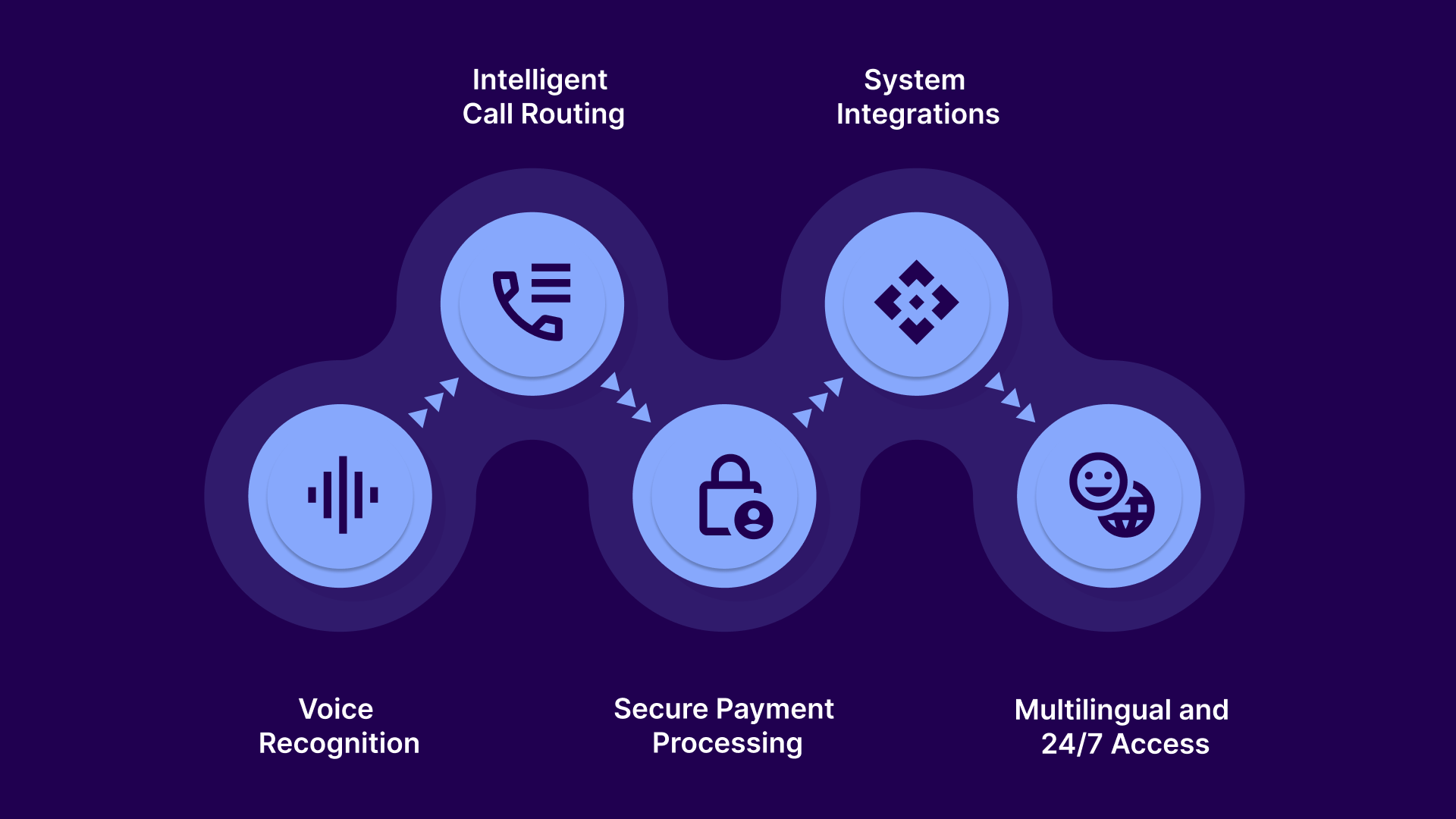
Advanced IVR platforms include capabilities that help organizations manage high call volumes, process payments securely, and support consumer self-service. These features allow collection agencies to handle routine requests automatically while agents focus on more complex cases.
Many modern IVR systems allow callers to speak their request instead of navigating long menu structures.
Advanced IVR systems analyze the caller's request and route the interaction to the appropriate service.
Accurate routing ensures callers reach the right service quickly while agents focus on cases that require direct assistance.
Automated payment functionality is an essential feature in collections environments. IVR systems allow consumers to complete payments through voice prompts or keypad inputs without speaking to an agent.
Common payment methods include:
These systems allow organizations to accept payments over the phone while protecting sensitive financial information.
Advanced IVR platforms connect with internal systems that support account management and payment processing.
Typical integrations include:
These connections allow the IVR system to retrieve account information and provide accurate responses during the call.
IVR systems operate continuously, allowing consumers to access account services at any time.
Consumers can:
Many systems also support multiple languages, improving accessibility for diverse consumer groups.
While these features support everyday operations, modern IVR platforms also rely on additional technologies that improve security, authentication, and overall call experience.
Also Read: Best Online Payment Processing Services in 2024
Advanced IVR Capabilities That Improve Consumer Interactions
Advanced IVR systems use modern telephony technologies to make automated phone interactions more natural, secure, and efficient. These capabilities help organizations handle routine requests while improving the overall caller experience.
These technologies are not only technical improvements. In collections operations, they enable practical workflows that allow consumers to resolve account issues quickly and securely.
Also Read: Understanding Text to Pay: A Simple Solution For Businesses
Advanced IVR systems support many routine interactions in collections operations. A large share of inbound calls involves simple requests that can be resolved without agent involvement. Automating these tasks helps reduce call volume while giving consumers faster access to account services.
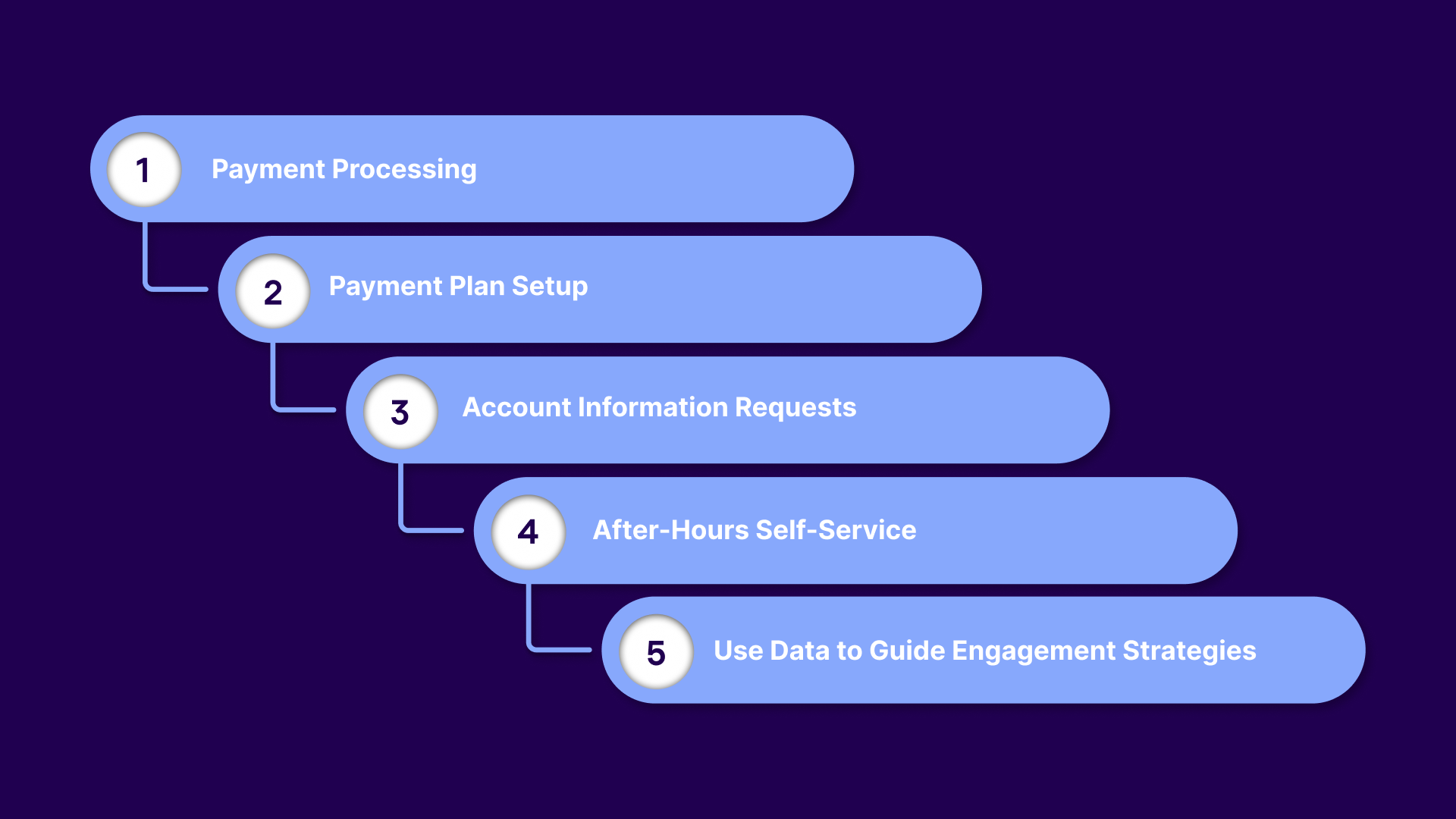
IVR systems allow consumers to complete payments through automated prompts without speaking to an agent.
A typical payment flow may include:
Automated payments reduce agent workload and help organizations process transactions more quickly.
IVR systems can also guide callers through available payment arrangements.
Callers may be able to:
This allows consumers to set up payment plans independently while reducing the number of calls that require agent assistance.
Many callers simply want to verify account details. IVR systems can provide information such as:
Providing this information automatically reduces repetitive inquiries for support teams.
IVR systems operate continuously, allowing consumers to manage their accounts outside standard business hours.
Callers can:
Continuous access improves convenience for consumers while creating more opportunities for payment completion.
Credit issuers often receive calls from consumers checking billing statements, minimum payment amounts, or recent transactions. IVR systems can automatically provide information such as:
Automating these interactions helps collection teams manage call volumes more efficiently while giving consumers simple ways to resolve their accounts.
Advanced IVR systems help collection teams manage high call volumes while giving consumers easier access to account information and payment options. Key benefits include:
However, achieving these benefits depends on how the IVR system is designed and implemented.
Also Read: Optimizing IVR for Better Self-Service: Best Practices and Benefits
Implementing an IVR system requires thoughtful design to ensure callers can resolve issues quickly without confusion. A clear structure, secure payment handling, and reliable system integrations are key to making the system effective.
As organizations improve their IVR strategies, these systems increasingly become part of a broader digital communication ecosystem.
Modern collections operations rely on multiple communication channels to engage consumers and resolve accounts efficiently. Advanced IVR systems play an important role in this ecosystem by supporting automated phone interactions alongside other digital tools.
IVR typically works alongside channels such as:
For example, a consumer may receive a payment reminder through SMS, review their balance in a payment portal, and then call to complete the payment through IVR.
Platforms like Tratta help bring these channels together within a single environment. Tratta provides a digital collections platform that combines consumer self-service portals, multilingual payment IVR, integrated payment processing, and omnichannel communication tools to support account resolution and payment workflows.
By connecting communication channels, payment systems, and account data, platforms like Tratta allow organizations to offer consumers flexible ways to access account information and complete payments while maintaining efficient and compliant collections operations.
Advanced IVR systems have become an essential tool for collection agencies managing high call volumes. By automating routine interactions such as balance inquiries, payment processing, and account updates, agencies can reduce agent workload and provide a more convenient experience for consumers.
When integrated with digital communication channels and secure payment systems, IVR becomes an important part of a modern collections strategy. It allows organizations to support self-service interactions while maintaining consistent and compliant communication practices.
To see how these capabilities work in practice, explore the Tratta platform, which connects IVR, consumer self-service tools, and integrated payment workflows in a single environment.
You can also schedule a free demo to see how Tratta helps organizations improve efficiency while offering consumers flexible ways to resolve their accounts.
An advanced IVR system is an automated phone platform that allows callers to interact using voice commands or keypad inputs. It supports tasks such as checking balances, making payments, or accessing account information without requiring agent assistance.
Advanced IVR systems automate common requests like balance inquiries and payment processing. This reduces call center workload and allows agents to focus on negotiations, disputes, and other complex account interactions.
Yes. Advanced IVR systems allow consumers to complete payments securely using voice prompts or keypad inputs. Most platforms support credit cards, debit cards, and bank transfers while following industry security standards.
IVR systems can support compliance by using structured workflows for identity verification, approved messaging, and interaction logging. These features help organizations maintain consistent communication practices under regulations such as the FDCPA.
IVR works alongside channels such as SMS reminders, email notifications, and payment portals. When integrated together, these tools give consumers multiple ways to access account information and complete payments conveniently.