Debt recovery teams face growing pressure to increase collection performance while managing rising labor costs, tighter compliance requirements, and changing consumer expectations. Traditional agent-led calling models often struggle to scale efficiently, leading to low contact rates, inconsistent outreach, and higher operational expenses.
As a result, organizations are adopting automated collection calls to improve reach without adding operational burden. According to research, organizations that use advanced automation and voice-driven digital engagement have achieved up to a 10% improvement in recovery rates and a 40% reduction in operational costs.
These gains reflect a broader shift toward intelligent, self-service, compliance-first automation. This guide explains how automated collection calls work, why they outperform traditional dialing strategies, and how they can drive higher debt recovery rates.
Quick look:
Automated collection calls are technology-driven, rules-based voice interactions that support compliant, consistent, and self-service engagement across the debt recovery lifecycle.
They combine intelligent dialing logic, IVR, and automated workflows to reach consumers, deliver information, and enable secure payments. These systems minimize the need for live agent involvement in routine interactions.
Automated collection calls do not include:
Instead, they focus on structured, consumer-friendly voice engagement that supports transparency, choice, and secure self-service. In the next section, we look at where these calls are most impactful.
Suggested Read: Effortless Payment Collection with Automated Software Solutions
Automated calling can support nearly every stage of the collections workflow. This allows agencies and creditors to standardize engagement, improve responsiveness, and scale outreach without increasing staffing levels.
Common use cases include:
Tratta complements your existing dialer by providing secure digital and inbound self-service options for consumers to review accounts and complete payments. Built-in controls help maintain consistent regulatory compliance across every interaction. Schedule a demo to learn more.
The global intelligent outbound call systems market is projected to grow at a CAGR of 14.72% through 2033. In debt recovery, this growth is driven by the need for scalable engagement, stronger compliance enforcement, and higher payment conversion rates.
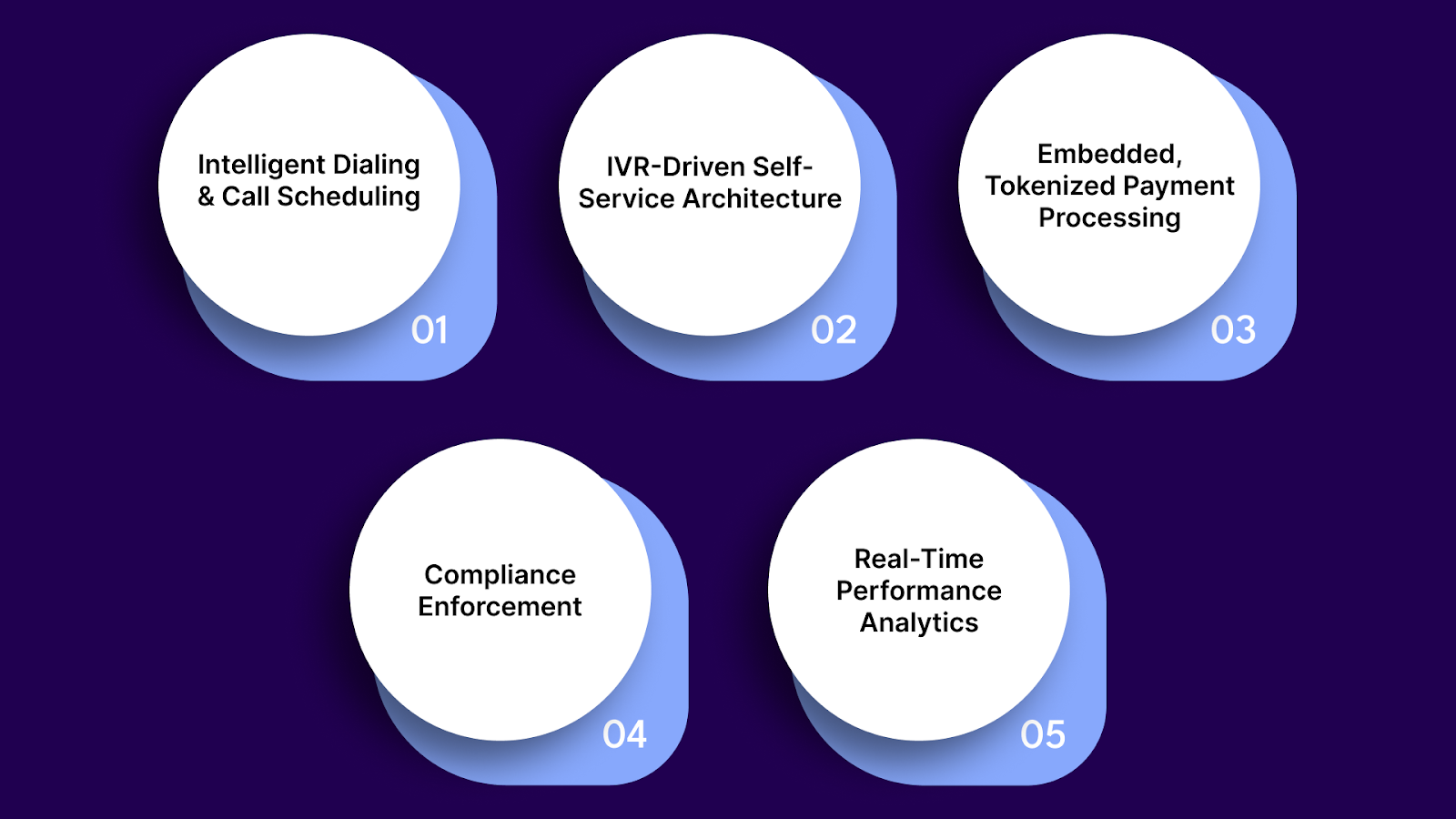
To achieve consistent performance, automated call programs must be built on a combination of technology, data logic, and regulatory controls.
Core components include:
The next step is understanding how this infrastructure directly translates into higher payment conversion and improved debt recovery performance.
Suggested Read: National Grid TCPA Settlement over Abusive Automated Calls
Automated calling improves payment collection by reshaping how, when, and why consumers engage, rather than increasing outreach volume. When executed properly, it aligns behavioral timing, decision simplicity, and secure transaction execution within a single engagement flow.
This is how it can help your recovery stats:
Automated calling platforms analyze engagement history, response latency, and time-of-day patterns to identify optimal contact windows. This concentrates outreach during periods of highest responsiveness, reducing wasted attempts.
To operationalize behavioral timing, apply:
IVR-driven self-service structures consumer decision paths into limited, actionable options. This minimizes hesitation, reduces abandonment, and shortens resolution cycles. Consumers are more likely to complete payments when choices are simple, direct, and time-bound.
To reduce cognitive friction, implement:
Automated call flows integrate verification, balance disclosure, and payment authorization into a single interaction. This eliminates channel switching and reduces payment drop-off. Compression of the transaction path significantly improves completion rates.
To compress payment execution, deploy:
Consistent disclosures, controlled call timing, and transparent messaging establish consumer trust. Trust reduces resistance and increases willingness to resolve balances. Compliance becomes a conversion enabler rather than a regulatory constraint.
To reinforce trust through compliance, ensure:
Automated calling systems detect payment intent signals through IVR inputs, call behavior, and engagement timing. These signals allow real-time escalation to digital self-service portals or live agents when payment probability peaks. You can convert partial intent into completed transactions by acting before momentum decays.
To operationalize intent capture and escalation, implement:
Automated calling only improves recovery when consumers have a clear, immediate way to resolve their accounts after they respond. Without that path, even successful connections fail to convert into payments.
Tratta ensures consumers can move directly from contact to secure self-service resolution through digital payment and account access workflows. This reduces agent workload, shortens payment cycles, and maintains consistent compliance across every interaction. Talk to us to learn more.
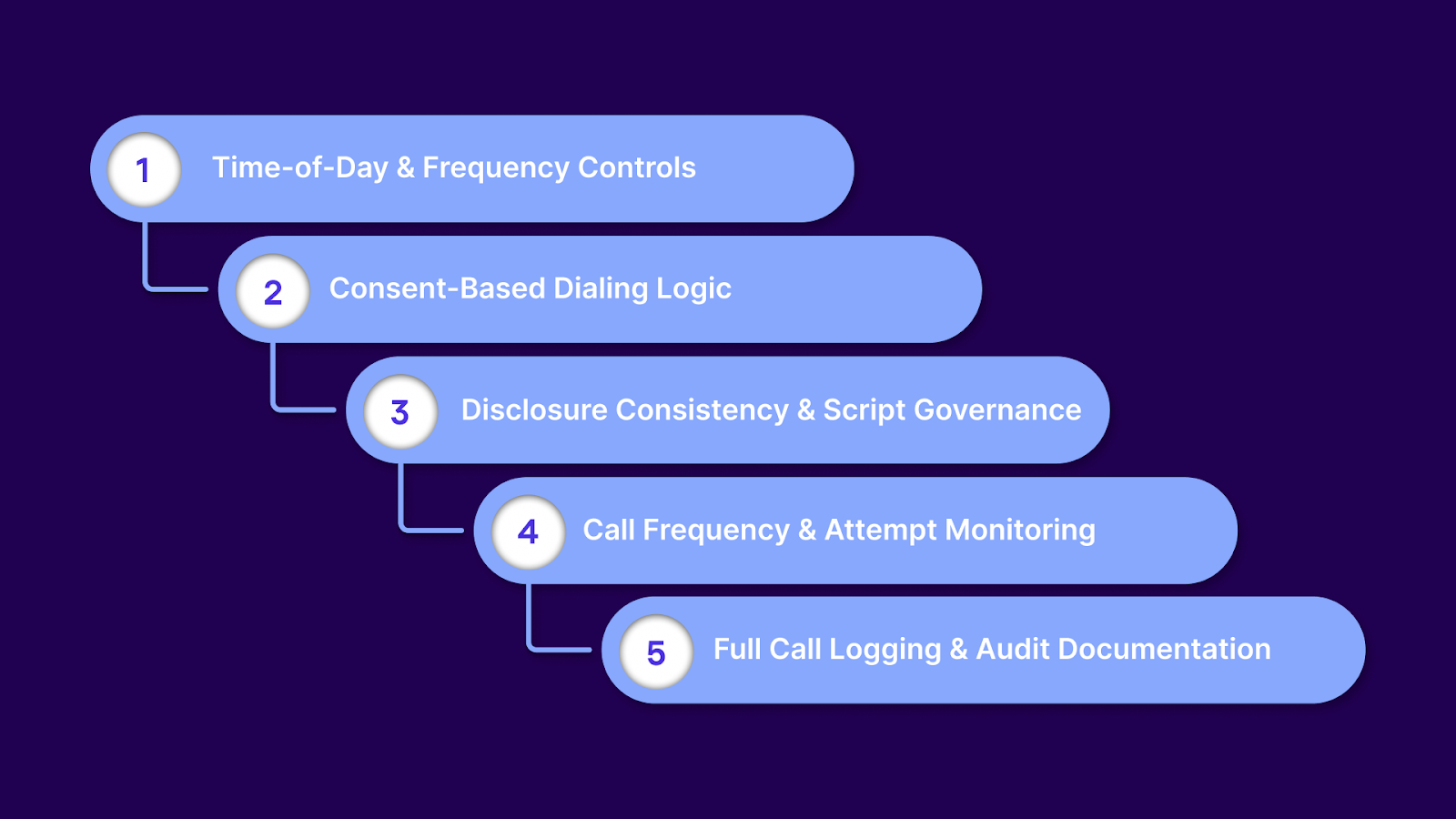
Automated call workflows reduce compliance exposure by embedding regulatory enforcement directly into outreach execution rather than relying on manual agent judgment.
Well-designed automated call workflows prevent regulatory errors by enforcing:
The next section examines the most common mistakes agencies make when implementing automated collection calling programs and how to avoid them.
Suggested Read: Effective Listening and Coaching for Debt Collection Success
Many agencies approach automation as a cost-reduction tactic rather than as a system for revenue and compliance optimization. This results in poor results and elevated legal exposure. The most common failures stem from flawed design logic, weak segmentation, and insufficient regulatory safeguards.
Table showing common mistakes vs. optimized execution
These failures often result in lower engagement, higher complaint volumes, increased regulatory risk, and lower payment conversion rates. In many cases, automation becomes operational noise rather than a performance lever.
To avoid these pitfalls, agencies should apply the following best practices:
Achieving this level of orchestration requires infrastructure that combines voice, compliance, payments, and analytics within a single operational framework.
Suggested Read: Automated Debt Collection Communication and Dialer Software
Tratta is a compliance-first digital collections platform built to increase recovery through intelligent engagement and frictionless self-service payments. It combines omnichannel communication, regulatory enforcement, and secure payment processing within a single operational infrastructure.
For agencies running automated calling programs, Tratta serves as a parallel resolution channel. It enables consumers to securely review accounts and complete payments via inbound and digital self-service options. The platform works alongside existing dialer systems without replacing or controlling the calling process.
Core features include:
Tratta enables secure, self-service payments through inbound calls initiated by consumers. It provides a direct path to resolution without agent involvement while maintaining consistent compliance across diverse consumer populations. This removes friction at the highest-conversion moment in the recovery process.
Tratta connects SMS, email, and portal messaging into coordinated engagement flows that support your broader contact strategy. Consumer actions across these channels are tracked to guide timely, relevant follow-ups. This ensures consistent communication without over-contact or consumer fatigue.
Tratta Campaigns automate outreach sequencing and engagement logic across SMS, email, and portal channels using behavior-driven workflows. Follow-ups adjust dynamically based on consumer actions and payment activity. This precision targeting improves engagement quality and payment probability without relying on call volume.
Tratta integrates ACH and card payment processing directly into inbound IVR and digital self-service experiences. Tokenized payment flows enable immediate, secure transaction completion without channel switching. This reduces abandonment and accelerates cash flow realization.
Tratta’s self-service portal provides secure digital resolution pathways for consumers to complete payments, enroll in plans, and review account details independently. These capabilities operate continuously alongside your broader contact strategy. This continuity significantly improves completion rates and reduces operational burden.
Tratta provides real-time visibility into engagement behavior, payment activity, and conversion metrics across channels. These insights allow agencies to continuously optimize outreach timing, messaging logic, and recovery strategy. Performance becomes data-driven rather than intuition-based.
Tratta operates on a security-first architecture with PCI DSS Level 1 and SOC 2 Type II compliance. Tokenization ensures sensitive payment data is never exposed during IVR or digital transactions. FDCPA, TCPA, and Regulation F safeguards are embedded directly into communication workflows.
Tratta enables full customization of inbound IVR experiences, messaging logic, payment flows, and consumer-facing interfaces. Agencies can tailor disclosures, payment prompts, and branding to match internal policies and compliance requirements.
Tratta integrates directly with CRMs, collection systems, and accounting platforms to enable real-time data synchronization. Engagement and payment workflows remain fully aligned with system-of-record data. This eliminates reconciliation gaps and workflow fragmentation.
These capabilities strengthen the resolution, payment, and compliance layers that operate alongside your calling infrastructure. The result is higher payment conversion, reduced regulatory exposure, and consistent performance across high-volume collection environments.
Automated collection calling can improve contact quality and create opportunities for faster payment resolution. Without a clear path to resolve accounts after contact, agencies often face rising labor costs, fragmented engagement, and increased compliance exposure.
Tratta fits into this ecosystem by strengthening the digital resolution, payment, and compliance layers that operate alongside your calling infrastructure. Instead of treating voice as the primary recovery tool, Tratta ensures consumers have immediate, secure self-service options that improve consistency and predictability across the collections lifecycle.
Discover what intelligent, compliant engagement looks like in practice. Schedule a demo today.
Yes. Collection agencies use automated calls to improve contact rates, deliver consistent disclosures, enable IVR payments, reduce agent workload, and enforce regulatory controls across large account portfolios.
Unanswered calls typically trigger alternate communication methods such as SMS, email, letters, or portal notifications, along with continued outreach within legally permitted contact frequency and regulatory limits.
Consumers can request cessation of communication under the FDCPA, but agencies must still send legally required notices and may pursue lawful remedies to recover outstanding debt.
Yes. Automated collection calls are legal when agencies comply with FDCPA, TCPA, Regulation F, consent requirements, call timing rules, frequency limits, and disclosure obligations.
Automated calls handle routine engagement and payments, while agents focus on complex accounts, disputes, hardship cases, and escalations, improving operational efficiency and recovery performance.