Collection teams make constant decisions. Should an agency pursue older accounts? Is litigation worth the cost? Will new communication tools improve recovery performance?
These questions often lead to a broader one: Are collections efforts generating a strong return on investment? Industry data shows that collection agencies typically recover 20–30% of delinquent debt, depending on portfolio characteristics and account age.
Without clear ROI measurement, it becomes difficult for agencies and credit teams to determine whether their recovery strategies are financially sustainable.
To truly maximize results, organizations should start by understanding how collections return on investment is calculated, and which operational factors impact it most. In this guide, we’ll break down the essential metrics and reveal how agencies can actively track and boost their recovery performance.
Collections return on investment (ROI) measures the financial return generated from debt recovery compared with the cost required to recover those funds. It helps organizations determine whether their collection efforts are financially efficient and sustainable.
In simple terms, it answers a key question: Are collection activities generating more value than they cost to run?
For collection agencies, law firms, and credit-focused organizations managing delinquent accounts, this metric supports decisions around portfolio performance, recovery strategies, and resource allocation.
Once the concept is clear, the next step is understanding how collections ROI is calculated in practice.
Calculating collections return on investment involves comparing the amount recovered from delinquent accounts with the cost required to recover that debt.
Collections ROI = (Total Amount Recovered − Total Collection Cost) ÷ Total Collection Cost
This formula shows how much return is generated for every dollar spent on collection activities.
Collection costs may include:
In this example, the collections program generates $3 in return for every $1 spent on recovery efforts.
While the formula itself is simple, the real value of ROI comes from understanding the operational metrics that influence recovery performance.
Collection agencies, law firms, and credit-focused organizations run recovery operations that require significant resources. Consumer outreach, compliance oversight, payment processing, and reporting all contribute to operational costs. Measuring collections ROI helps determine whether these activities generate sustainable financial results.
a) Rising Operational Costs: Collections programs rely on several operational components, including staffing, compliance management, legal processing, communication systems, and payment infrastructure. As these costs increase, organizations must evaluate whether their recovery strategies continue to generate sufficient financial returns.
b) Regulatory Requirements: Debt collection is a regulated industry. Agencies must comply with federal and state laws that govern consumer communication, disclosures, and documentation. The Consumer Financial Protection Bureau (CFPB) oversees many of these requirements, including Regulation F, which sets standards for debt collection communications. Compliance obligations add operational complexity and increase the need for clear performance measurement.
c) Data-Driven Recovery Decisions: Tracking collections ROI helps organizations evaluate recovery strategies, identify effective communication channels, allocate resources to high-value accounts, and adjust outreach based on performance data.
Consistent measurement provides a clearer view of recovery performance. To evaluate this performance effectively, organizations rely on several key operational metrics.
Suggested Read: Collecting Debt through Collection Software Systems
Collections ROI depends on several operational indicators that show how efficiently a collections program converts effort into recovered revenue. Monitoring these metrics helps collection agencies, law firms, and credit organizations evaluate recovery performance and identify areas for improvement.

The recovery rate measures the percentage of assigned debt that an organization successfully collects.
Recovery Rate = Total Amount Collected ÷ Total Debt Assigned
Example:
Industry averages for collection agencies typically range between 20% and 30%, depending on portfolio quality and account age.
While higher recovery rates generally improve ROI, this metric alone does not reflect the cost required to achieve those recoveries.
This metric evaluates the operational efficiency of a collections program by measuring the cost required to recover each dollar.
Cost per Dollar Collected = Total Collection Cost ÷ Total Amount Collected
Example:
In this example, the organization spends $0.20 to recover every dollar of debt. Lower costs per dollar collected typically lead to stronger ROI.
The Collection Effectiveness Index (CEI) measures how effectively receivables are collected during a specific period. It is calculated as (Total Amount Collected during the period ÷ Total Collectible Balance) × 100, providing a percentage that reflects overall collection performance.
Higher CEI values often indicate:
Days Sales Outstanding (DSO) measures the average number of days required to collect payment after a debt becomes due.
Lower DSO values generally indicate:
An accounts receivable (AR) aging report categorizes outstanding balances based on how long they remain unpaid.
Older accounts typically require more effort to recover and often produce lower returns. Monitoring aging trends helps collections teams prioritize outreach before recovery becomes more difficult.
While these metrics help measure collections performance, several operational and portfolio-related factors also influence recovery outcomes.
Suggested Read: Advanced Collection Software Strategies for 2026
Several operational and portfolio factors affect how efficiently a collections program converts effort into recovered revenue. Here are the common factors:
Recovery probability generally declines as accounts age. Collection success rates often drop once accounts exceed 90–180 days past due.
Key considerations include:
The characteristics of a debt portfolio also affect recovery performance.
Important factors include:
Higher-quality portfolios usually produce stronger recovery rates.
Consumer communication plays an important role in repayment behavior. Many consumers prefer digital communication channels.
Common outreach methods include:
Providing multiple communication options increases the likelihood of engagement.
Repayment becomes less likely when payment processes are complicated or unclear. A clear and accessible payment experience encourages resolution.
Effective payment experiences often include:
Operational workflows and system infrastructure also affect collections performance.
Common challenges include:
Improving system integration and reporting visibility helps organizations manage collections more efficiently and track recovery outcomes more accurately.
Even when these factors are well understood, collections ROI can still decline if certain operational challenges or measurement mistakes remain unaddressed.
Even experienced collections teams can misinterpret ROI when important cost or performance data is incomplete. Avoiding these mistakes helps ensure recovery performance is evaluated accurately.
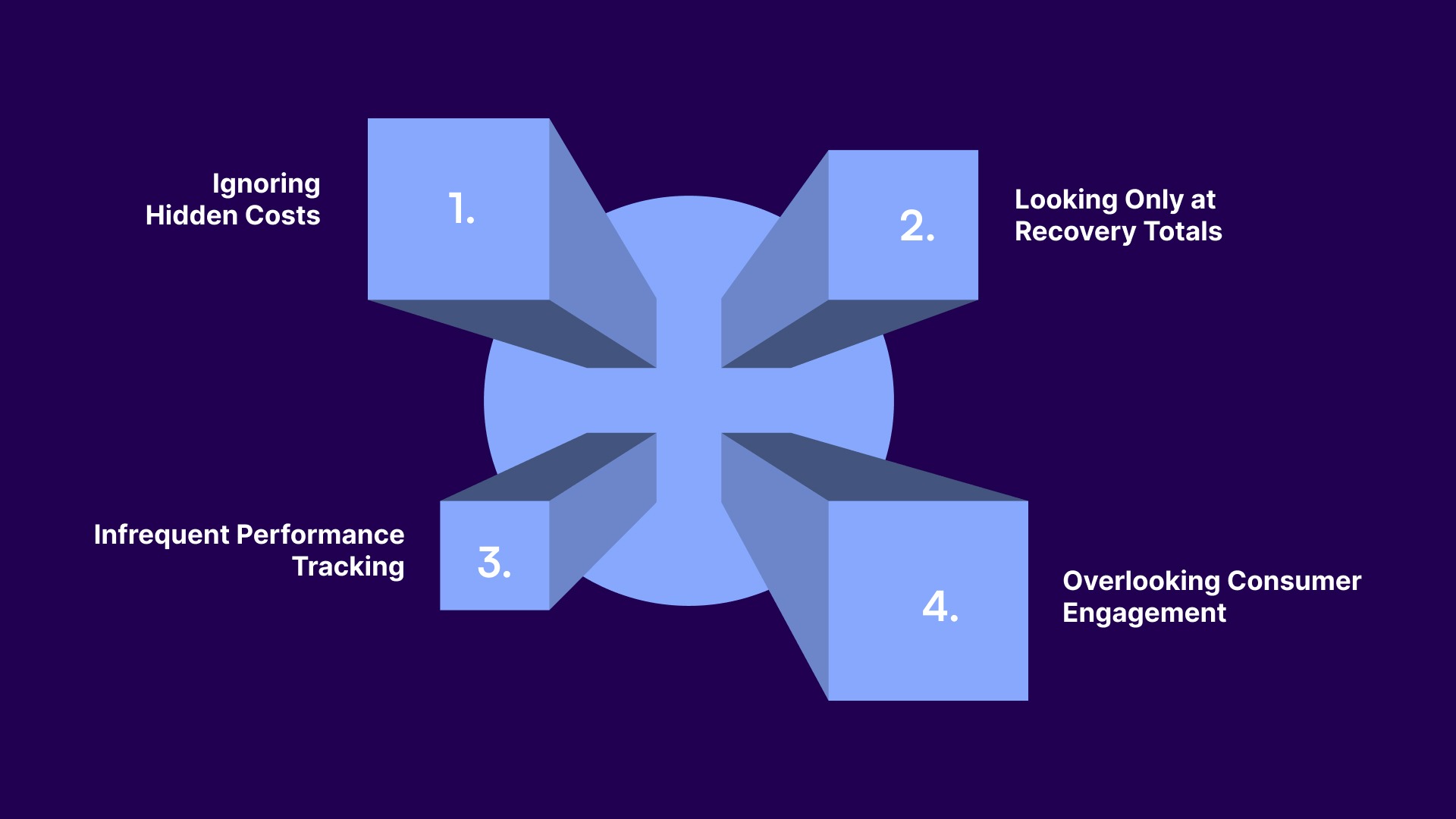
Collections expenses extend beyond staff salaries. Costs such as compliance monitoring, payment processing fees, communication systems, and software maintenance are often overlooked. When these expenses are excluded, ROI calculations may appear higher than the actual return.
High recovery amounts do not always indicate strong financial performance. Recovery results must be evaluated alongside operational costs.
For example
Without considering costs, recovery figures alone can give a misleading view of profitability.
Collection performance should be reviewed regularly. Consistent tracking helps teams identify trends, detect inefficiencies, and adjust strategies earlier. Organizations that benchmark collection metrics over time often improve operational efficiency and control collection costs.
Centralized analytics tools can help address this challenge. Platforms like Tratta provide reporting dashboards that allow teams to monitor recovery performance, communication outcomes, and payment activity across portfolios. Book a free demo to learn more.
Consumer experience also affects repayment outcomes. When communication is unclear or payment options are limited, consumers may delay resolution.
Clear communication and accessible payment options can encourage faster repayment while supporting compliant collection practices.
Recognizing these challenges allows organizations to focus on strategies that improve recovery efficiency and strengthen overall ROI.
Improving collections ROI requires operational efficiency, clear performance data, and convenient repayment options for consumers. The following strategies can help collection agencies and credit teams strengthen recovery performance while controlling costs.
Many consumers prefer resolving balances independently rather than interacting with an agent. Self-service payment portals allow consumers to:
These options improve convenience, reduce agent workload, and often lead to faster payment resolution.
Not all accounts require the same collection strategy. Segmenting portfolios helps teams focus on accounts with stronger recovery potential.
Common segmentation factors include:
This approach allows agencies to allocate resources more effectively.
Modern collection programs use multiple communication channels to reach consumers. These may include:
Automation helps maintain consistent outreach while reducing manual workload.
Connecting payment infrastructure with collections workflows improves operational efficiency. Key benefits include:
When payment systems are integrated with collections platforms, organizations gain clearer visibility into recovery performance.
Many agencies struggle to track performance across communication channels and payment systems. Digital collections platforms such as Tratta help centralize these processes, allowing teams to monitor collections ROI and consumer engagement within a single environment.
Also Read: 7 Ways Collection Technology Solutions Improve Debt Recovery

Technology helps organizations manage collection operations more efficiently by improving visibility into recovery performance. Digital collections platforms bring communication tools, payment systems, and reporting into a single environment, allowing teams to monitor recovery results more clearly.
For collection agencies, law firms, and credit organizations managing large portfolios, this integration reduces manual work and improves operational visibility. It also supports consumer-friendly repayment options that encourage faster account resolution.
Common capabilities of digital collections platforms include:
These capabilities help organizations track collection performance more accurately and identify opportunities to improve recovery efficiency.
Platforms such as Tratta support this approach by providing a digital-first infrastructure that connects communication tools, payment systems, and reporting dashboards. Rather than operating as a collections agency, Tratta provides technology that helps organizations manage receivables while giving consumers secure and convenient ways to resolve outstanding balances.
Collections return on investment helps organizations evaluate whether their recovery efforts generate sustainable financial results. By tracking recovery performance alongside operational costs and portfolio trends, collection agencies, law firms, and credit organizations gain clearer insight into the efficiency of their collections programs.
As collections operations grow more complex, better data visibility and accessible payment options become increasingly important. Digital collections platforms that combine communication tools, payment systems, and performance analytics help teams monitor recovery outcomes while offering consumers secure and convenient ways to resolve outstanding balances.
To see how a digital-first approach can support performance visibility and consumer engagement, explore Tratta’s collections platform. Schedule a demo to learn more!
A good collections ROI means the revenue recovered from delinquent accounts significantly exceeds the operational costs required to collect it. The ideal ROI varies based on portfolio quality, recovery strategies, and collection expenses.
Collection agencies can improve ROI by engaging accounts earlier, prioritizing high-probability recoveries, and using multichannel communication such as SMS, email, and payment portals. Regularly monitoring recovery metrics also helps identify more effective strategies.
Collections ROI should include all costs related to recovery operations. This typically includes staff salaries, compliance management, communication tools, legal expenses, payment processing fees, and collections technology.
Tracking collections ROI helps credit organizations understand whether their recovery strategies are financially effective. It allows teams to evaluate performance, allocate resources more efficiently, and improve overall recovery outcomes.
Digital collections platforms centralize communication, payment processing, and reporting data. This helps organizations monitor recovery performance, track consumer engagement, and evaluate which strategies generate the strongest financial returns.