Debt recovery has become more complex than ever. Collection teams must balance rising account volumes, strict compliance requirements, and consumers who prefer digital payment options over traditional calls. Manual workflows and disconnected systems make this even harder, slowing recovery and increasing operational risk.
The industry is responding with technology. The global debt collection software market is projected to reach about $7.54 billion by 2031, driven by growing demand for automation, analytics, and digital payment infrastructure. For agencies, this shift is changing how accounts are managed and recovered.
In this article, we explore seven ways collection technology solutions improve debt recovery, from automation and data insights to digital payments and compliance-driven workflows.
Technology solutions in debt collection refer to digital platforms designed to manage the operational and compliance demands of contemporary debt recovery. They connect account management, communication workflows, payment processing, and reporting systems into structured processes that help agencies recover balances more efficiently.
These systems exist because the operational environment has become far more complex than traditional call-and-payment models. Common challenges faced by collection agencies include:
These challenges explain why agencies are investing heavily in technology-driven collections infrastructure. The next section explains how technology is improving debt recovery.
Suggested Read: Advanced Collection Software Strategies for 2026
Latest platforms influence how accounts move through recovery stages, how consumers engage with repayment options, and how agencies maintain compliance at scale. Investing in collection technology software allows agencies to turn fragmented operations into structured recovery systems.
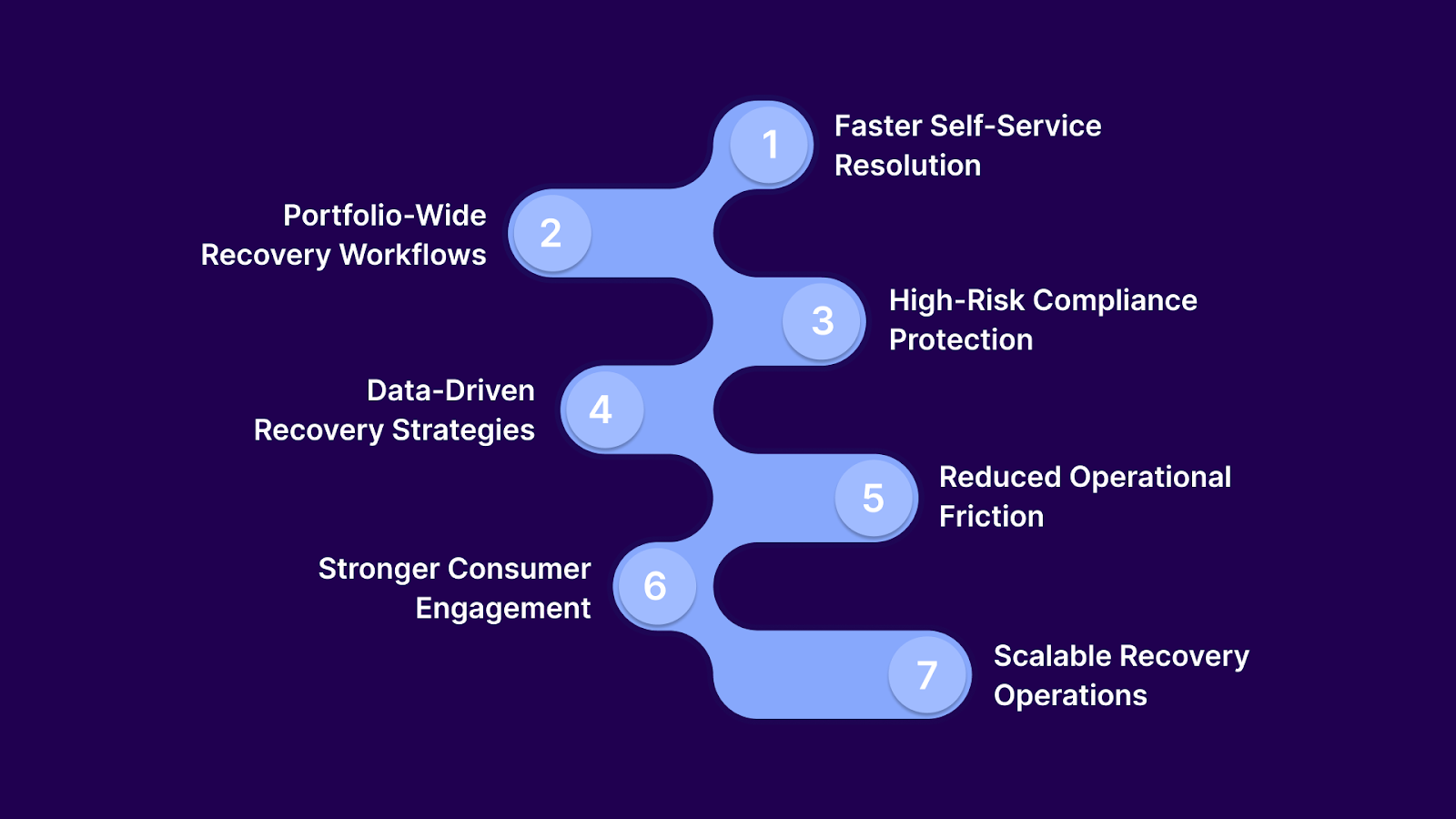
These are a few ways collection platforms help in debt recovery:
Consumers are more likely to resolve accounts when they can review balances and make payments without agent intervention. Digital portals allow them to access account details, evaluate settlement options, and complete payments on their own schedule. This reduces friction and accelerates account resolution.
Key operational advantages include:
Collection agencies manage portfolios with varying risk levels, legal statuses, and payment histories. Technology platforms introduce structured workflows that guide accounts through predefined recovery stages. This prevents inconsistent handling and improves operational discipline.
Key operational advantages include:
Debt collection operates under strict federal and state regulations governing consumer communication and documentation. Technology solutions embed compliance safeguards into daily workflows. This reduces the risk of improper outreach and incomplete records.
Key operational advantages include:
Collection technology enables agencies to analyze account behavior, payment trends, and engagement activity. Instead of relying solely on collector intuition, teams can use real data to refine recovery strategies. This improves portfolio prioritization and decision-making.
Key operational advantages include:
Manual reconciliation between systems slows down collection workflows and introduces errors. Technology platforms reduce this friction by coordinating account data, payment updates, and reporting activity. Teams spend less time managing systems and more time managing recovery.
Key operational advantages include:
Consumers are more responsive when communication occurs through channels they actually use. Technology solutions enable agencies to reach consumers through multiple engagement channels while maintaining communication records. This increases the likelihood of response and payment action.
Key operational advantages include:
As portfolios grow, manual processes quickly become unsustainable. Collection technology enables agencies to handle larger account volumes without proportionally increasing staff. Automation and workflow management make growth operationally manageable.
Key operational advantages include:
Tratta combines payment infrastructure, compliance controls, consumer engagement tools, and analytics within a collections-focused environment. For agencies seeking to improve recovery operations, Tratta provides technology designed specifically for regulated debt collection workflows. Book a free demo today.
B2B collections operate differently from consumer debt recovery. Payment cycles are longer, invoices are often disputed, and balances may involve multiple stakeholders within the debtor organization.
Technology helps agencies manage these complexities by improving visibility into payment activity and structuring follow-ups across longer recovery timelines. This is how technology improves B2B debt recovery:
These operational advantages highlight why selecting the right technology platform matters as much as adopting one. The next step is understanding what to evaluate when choosing collections software.
Suggested Read: Effortless Payment Collection with Automated Software Solutions
Choosing collections software is not simply a technology decision. The platform will shape how accounts move through recovery workflows, how payments are processed, and how compliance is maintained across the organization. The right system should strengthen operational control without adding complexity to daily collection activity.
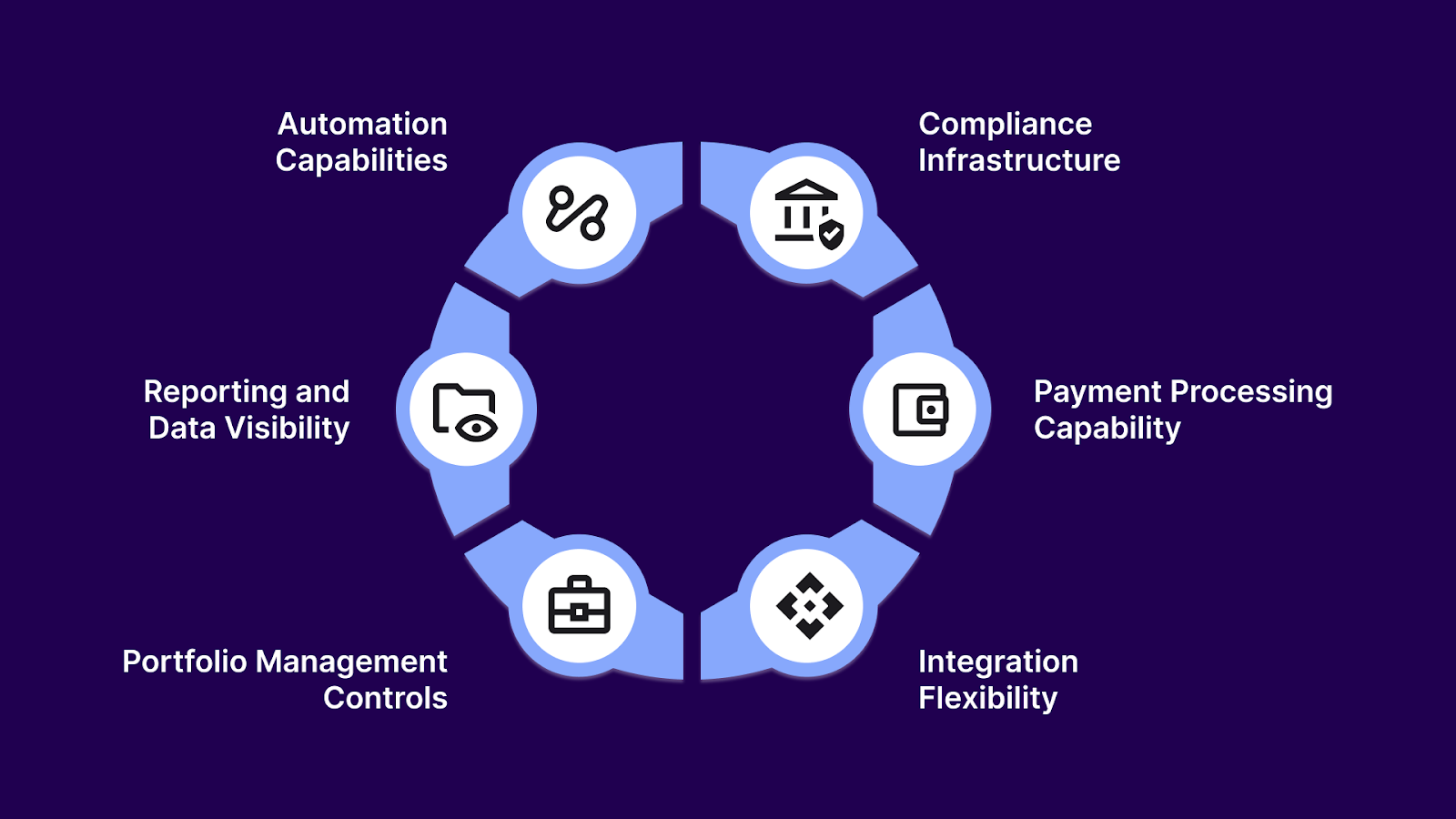
When evaluating a solution, agencies should consider:
Tratta is designed with these evaluation criteria in mind. The system brings payment processing, compliance controls, consumer engagement, and reporting into a collections-focused environment rather than a generic financial platform. This allows agencies to adopt technology that supports real recovery workflows instead of forcing teams to adapt around disconnected tools. Call us today to learn more.
Agencies often discover that operational habits, legacy systems, and internal processes slow adoption even when the technology itself is strong. Recognizing the following obstacles early helps organizations implement new platforms more effectively:
Addressing these challenges prepares agencies to extract full value from technology investments. The next step is establishing operational practices that maximize the effectiveness of collection technology platforms.
Suggested Read: Collecting Debt through Collection Software Systems
Agencies that treat technology as an operational framework rather than a standalone tool tend to see stronger results. The real gains come from how agencies configure workflows, align teams, and use data to guide recovery strategies.
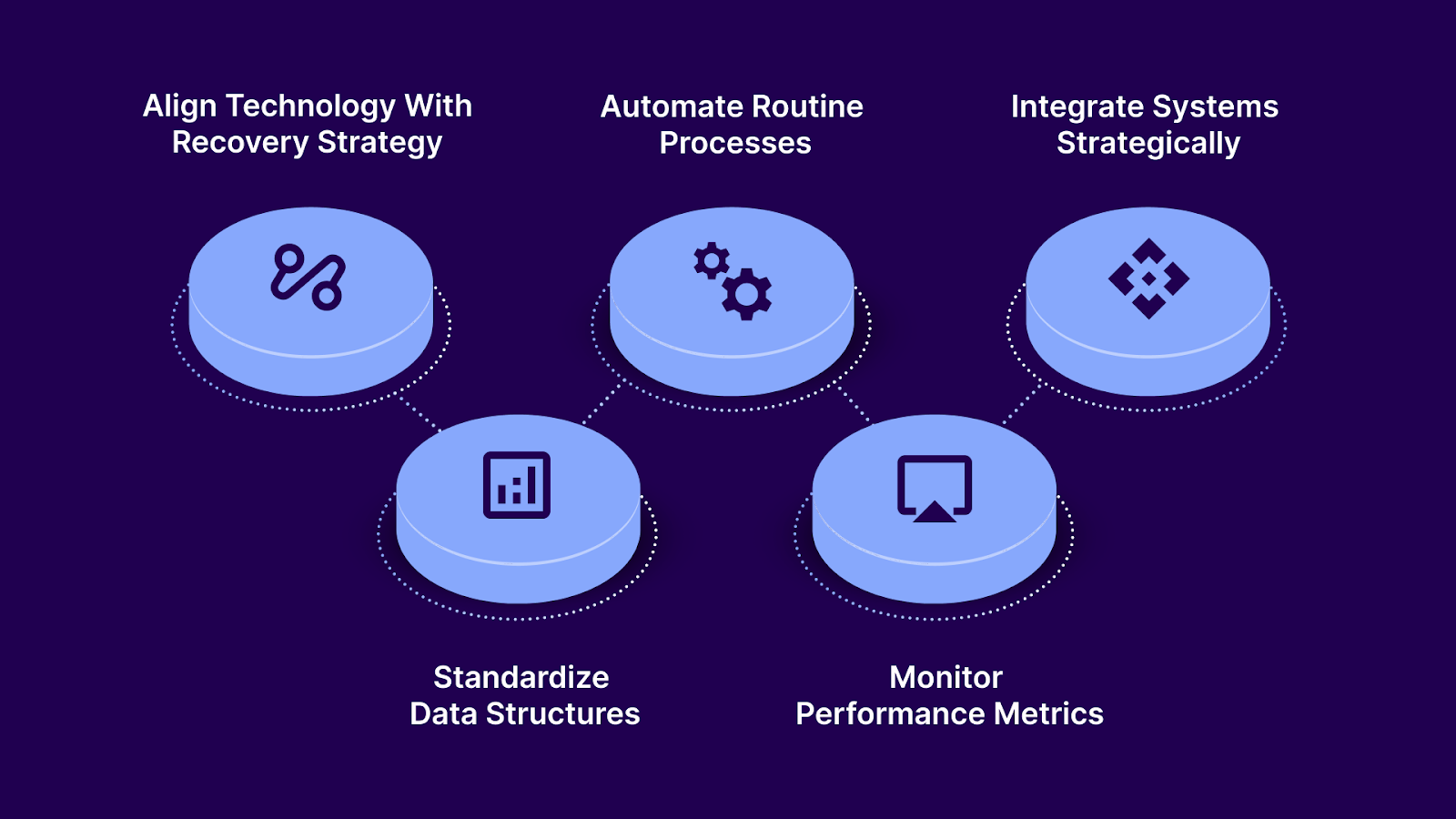
Best practices include:
Tratta helps agencies implement structured workflows while maintaining clear oversight of portfolio activity. This is explained in greater detail in the next section.
Suggested Read: How Technology Is Changing Debt Collection
Tratta is a collections technology platform designed to support debt collection agencies, credit issuers, debt buyers, and recovery-focused law firms. Rather than functioning as a generic financial tool, it is designed around the operational realities of debt recovery. It integrates consumer engagement, payment execution, compliance oversight, and portfolio analytics into a single system.
Core features include:
Tratta allows consumers to review balances, explore repayment options, and resolve accounts through a secure digital portal. This removes friction from the payment process and allows consumers to act when they are most ready to pay. As a result, agencies can increase payment activity without relying entirely on collector outreach.
The platform supports multiple payment methods, including ACH, debit, and credit card transactions. This flexibility allows consumers to choose the payment option that works best for them. Faster and easier payment execution leads to quicker balance resolution.
Tratta offers automated payment options through an interactive voice response system that supports multiple languages. Consumers can complete payments without speaking to an agent, improving accessibility. This expands recovery opportunities across diverse consumer groups.
The platform enables agencies to communicate through channels such as email, SMS, and phone. Meeting consumers through their preferred communication methods improves engagement rates. Better engagement directly increases the likelihood of payment resolution.
Tratta allows agencies to create targeted outreach campaigns based on account characteristics and payment behavior. Automated messaging can prompt consumers to review accounts or accept settlement options. This structured outreach increases response rates across portfolios.
Real-time reporting tools provide visibility into portfolio performance and consumer payment activity. Agencies can analyze recovery trends and adjust strategies accordingly. Data-driven decisions help improve overall collection efficiency.
The platform allows agencies to configure workflows, policies, and operational rules to match their recovery strategies. This flexibility ensures the system supports existing processes instead of forcing teams into rigid structures. Customized workflows improve operational consistency across teams.
Tratta connects with other operational systems through APIs, including case management platforms and communication tools. Integration allows data to move seamlessly between systems without manual reconciliation. This reduces administrative workload and improves operational accuracy.
The platform incorporates strong security standards and a compliance-focused design. Built-in safeguards protect sensitive consumer data and support regulatory requirements. This reduces operational risk while maintaining trust with clients and regulators.
Debt recovery continues to change as technology reshapes how agencies operate. Tratta adapts alongside these changes, introducing new features as regulatory requirements, payment behaviors, and portfolio complexities shift.
Many agencies still rely on fragmented systems, manual follow-ups, and outdated processes to manage debt recovery. These gaps slow down payment resolution, increase compliance exposure, and force collectors to spend valuable time on administrative work instead of on recovery strategy.
Tratta helps agencies strengthen recovery operations by connecting payments, communication workflows, reporting, and compliance controls in one operational environment. This allows teams to manage portfolios more efficiently while creating better payment experiences for consumers.
If your agency is exploring ways to optimize debt recovery, the right technology can improve operational efficiency. Contact us to see how Tratta supports digital collections, consumer engagement, and structured recovery workflows.
Collection technology solutions are digital platforms that help agencies manage accounts, automate communication, process payments, and track recovery performance while maintaining compliance with regulations governing debt collection activities.
These systems streamline workflows, enable digital payments, automate follow-ups, and provide data insights. This helps agencies engage consumers more effectively and resolve accounts faster.
Yes. Sophisticated platforms document communication activity, store account records, and enforce operational controls. This helps agencies maintain proper documentation and reduce regulatory risk during the debt recovery process.
Many solutions are designed to support debt collection agencies as well as law firms handling recovery work, offering tools for payment processing, account management, and compliance monitoring.
Implementation timelines vary depending on integrations, data migration, and system configuration. Many agencies roll out technology gradually to ensure smooth adoption and minimal disruption to operations.