Using Predictive Analytics in Accounts Receivable Data to Improve Collections
Accounts receivable management (ARM)
Using Predictive Analytics in Accounts Receivable Data to Improve Collections
Published on:
August 3, 2026
Prioritizing the right accounts often feels like guesswork. Agencies chase low-yield balances while high-value accounts slip through, slowing recovery and increasing write-offs. That pressure is pushing change. The global collections analytics market is projected to reach USD 8.90 billion by 2033.
If you are dealing with inconsistent outcomes and limited visibility, the problem is not effort; it is prioritization. This article explains how predictive analytics in accounts receivable data helps agencies identify at-risk accounts, refine strategies, and improve collections performance without adding operational complexity.
Quick look:
Predictive analytics improves prioritization. Agencies use it to rank accounts by likelihood of recovery, reducing guesswork and focusing effort where it delivers results.
Accounts receivable data drives strategy execution. Segmentation, timing, and outreach decisions are shaped by account behavior, balance, and engagement patterns.
Outcomes improve through smarter decision-making. Better targeting, adaptive strategies, and continuous learning lead to higher recovery rates and operational efficiency.
Limitations depend on data quality and expectations. Predictive insights support decisions but do not guarantee outcomes or replace compliance and human oversight.
Platforms enable scalable, insight-led collections. Technology helps agencies apply analytics, automate workflows, and maintain consistency across portfolios.
What Is Predictive Analytics in Accounts Receivable for Collection Agencies?
Predictive analytics is the use of historical and real-time data to identify patterns and guide decisions. In accounts receivable, it helps agencies move from reactive collections to data-informed prioritization, using structured inputs to understand risk, timing, and potential recovery.
For collection agencies, this is not about complex AI systems. It is about organizing and interpreting available data so that decisions across portfolios are consistent, explainable, and scalable.
Predictive analytics in AR is built on a few core components:
Data Inputs: Account balances, aging, payment history, and debtor information
Behavioral Signals: Engagement patterns such as response rates, past interactions, and payment activity
Segmentation Frameworks: Rules or logic used to group accounts by risk, stage, or characteristics
Scoring or Ranking Logic: Methods used to assess the likelihood of payment or recovery potential
Historical Performance Data: Past recovery outcomes used to inform future prioritization
Operational Triggers: Conditions that initiate actions such as outreach or escalation
These components work together to create a structured view of accounts, allowing agencies to act with more clarity and less reliance on manual judgment. In the next section, we look at how collection agencies use accounts receivable data to translate these inputs into actionable collection strategies.
How Collection Agencies Use Accounts Receivable Data to Drive Collection Strategies
Once accounts receivable data is structured and segmented, it serves as the basis for how agencies plan and execute collections. Instead of applying the same approach across all accounts, agencies use AR data to tailor strategies to risk, value, and the likelihood of recovery.
Collection agencies typically use AR data to drive strategy in the following ways:
Portfolio Segmentation: Agencies divide accounts by balance size, delinquency stage, and payment behavior. This helps ensure that high-value or high-probability accounts receive more focused attention.
Prioritization of Accounts: Not all accounts are worked equally, and AR data helps determine where effort should be concentrated. Agencies focus on accounts with higher recovery potential to improve overall performance.
Channel Selection: AR data and past engagement patterns guide whether outreach happens via calls, SMS, email, or other channels. This increases the chances of reaching consumers through the most effective touchpoints.
Timing of Outreach: Agencies use payment history and behavioral trends to decide when to initiate contact. Well-timed outreach improves response rates and reduces unnecessary follow-ups.
Strategy Alignment: Different accounts require different approaches, such as reminders, payment plans, or settlement offers. AR data helps match the right strategy to each account profile.
Performance Monitoring: Agencies track how accounts move through the collection lifecycle using AR data. This allows them to refine strategies and adjust efforts based on real outcomes.
Tratta enables agencies to apply accounts receivable data through segmentation and automated workflows. It provides real-time reporting and visibility into performance, helping teams execute consistent, insight-led collection strategies across portfolios. Request a free demo.
How Predictive Analytics Improves Collection Outcomes in Accounts Receivable
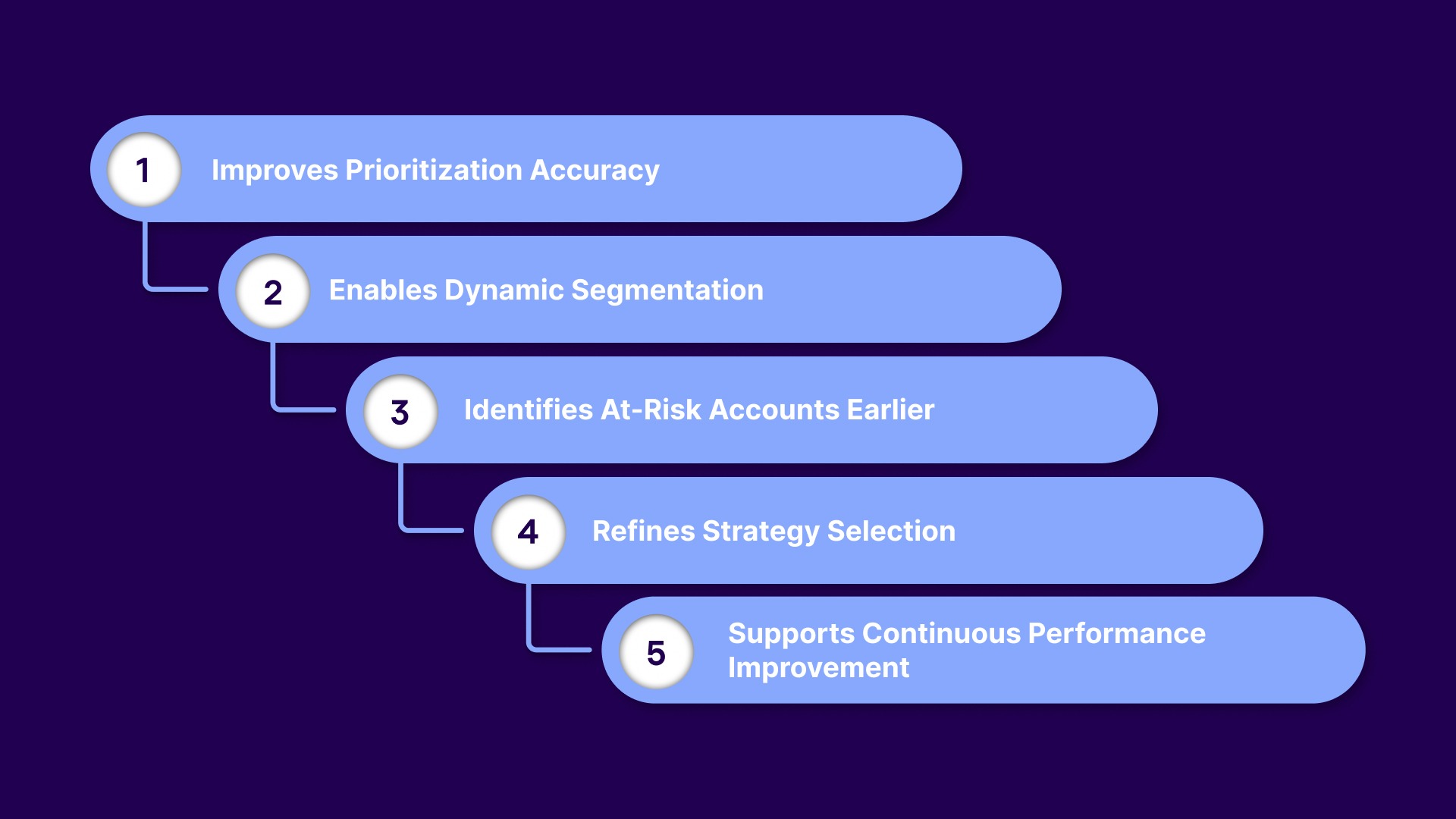
Predictive analytics strengthens how agencies make decisions within accounts receivable by improving the accuracy of prioritization, segmentation, and strategy selection. It builds on existing data-driven workflows, helping teams act with greater consistency and clarity across portfolios.
The impact becomes clear across these areas:
1. Improves Prioritization Accuracy
Instead of relying on static rules, predictive analytics ranks accounts based on the likelihood of recovery. This helps agencies focus their efforts where they are most likely to deliver results.
Key improvements include:
Uses historical payment behavior to assess recovery potential
Identifies high-probability accounts earlier in the cycle
Reduces time spent on low-yield accounts
Supports more consistent decision-making across portfolios
2. Enables Dynamic Segmentation
Traditional segmentation often relies on fixed categories that do not adapt to changing behavior. Collection analytics allows segments to evolve as new data becomes available.
Key improvements include:
Updates account groupings based on recent activity
Reflects changes in engagement and payment trends
Supports more responsive campaign strategies
Aligns segmentation with real-time conditions
3. Identifies At-Risk Accounts Earlier
Predictive analytics helps agencies detect accounts that are likely to deteriorate before they become harder to recover. This allows for earlier intervention and better control over outcomes.
Key improvements include:
Flags declining engagement or missed payment patterns
Surfaces those accounts that are likely to roll into deeper delinquency
Enables proactive outreach before risk escalates
Helps reduce long-term recovery challenges
4. Refines Strategy Selection
Different accounts require different approaches, and predictive analytics improves how those strategies are matched. It uses past outcomes to guide which tactics are more likely to work.
Key improvements include:
Aligns outreach type with account behavior
Supports better use of payment plans and settlements
Reduces reliance on one-size-fits-all approaches
Improves consistency in execution
5. Supports Continuous Performance Improvement
Predictive analytics allows agencies to learn from outcomes and refine strategies over time. This creates a feedback loop that strengthens decision-making.
Key improvements include:
Tracks which strategies drive better recovery rates
Uses performance data to inform future actions
Highlights areas for operational improvement
Builds a more adaptive collections process
In the next section, we examine the common misconceptions and where agencies need to be cautious when applying these insights.
Common Misconceptions About Predictive Analytics in Collections
Predictive analytics can improve decision-making in collections, but it is often misunderstood or overestimated. Many agencies expect it to deliver certainty or to fully replace manual judgment, leading to poor implementation and unrealistic expectations.
Table showing top misconceptions:
Misconception
Reality
Why It Matters
Predictive analytics guarantees payment outcomes
It estimates likelihood, not certainty
Overreliance can lead to poor prioritization decisions
It requires advanced AI or complex models
Many systems use rules-based or statistical logic
Agencies can adopt it without heavy technical investment
It replaces agents and manual decision-making
It supports, not replaces, human judgment
Teams still need oversight and strategic input
More data automatically means better results
Data quality matters more than data volume
Inaccurate or incomplete data weakens outcomes
It works instantly after implementation
It improves over time with feedback and data
Agencies must allow for refinement and learning
To get real value from predictive analytics, agencies need a structured and practical approach. The focus should remain on improving decision quality, not chasing complexity.
Ensure account data is accurate, complete, and consistently updated
Apply predictive insights to specific use cases like prioritization or segmentation
Review outcomes regularly and refine logic based on performance
Use insights to guide decisions while maintaining human oversight
Align all strategies with compliance requirements
In the next section, we look at what collection agencies should consider when selecting platforms that support data-driven collections and predictive insights.
What Collection Agencies Should Look for in Data-Driven Collections Platforms
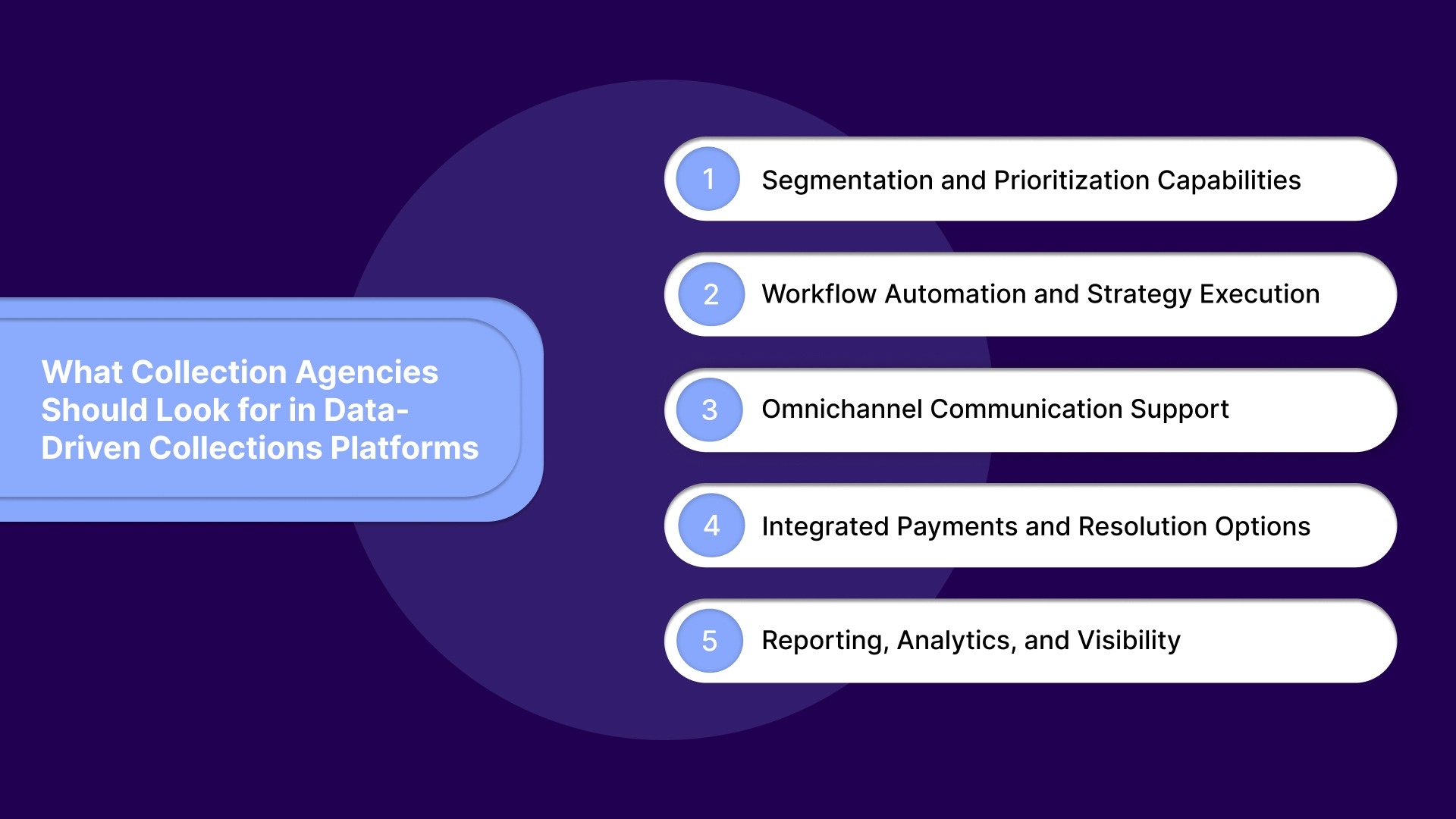
Choosing the right platform determines how effectively agencies can turn accounts receivable data into consistent collection outcomes. The focus should be on capabilities that support prioritization, execution, and visibility without adding unnecessary complexity.
These are a few features you should not compromise on:
1. Segmentation and Prioritization Capabilities
Core requirements:
Dynamically group accounts based on balance, behavior, and delinquency stage
Rank accounts using configurable rules or likelihood-based scoring
Continuously update groupings as new engagement signals emerge
Support targeted approaches across different account cohorts
2. Workflow Automation and Strategy Execution
What to expect:
Trigger-based workflows for outreach, follow-ups, and escalation
Automated campaign execution across segmented portfolios
Consistent application of strategies without manual intervention
Flexibility to adjust workflows based on operational needs
3. Omnichannel Communication Support
Essential capabilities:
Outreach across SMS, email, phone, and IVR channels
Centralized tracking of all communication activity
Support for two-way interactions and response handling
Channel selection based on engagement patterns
4. Integrated Payments and Resolution Options
Critical features:
Support for full payments, partial payments, and structured plans
Settlement options aligned with account profiles
Consumer self-service for faster resolution
Seamless payment processing within the platform
5. Reporting, Analytics, and Visibility
What matters most:
Real-time dashboards for recovery and performance tracking
Visibility into account-level and portfolio-level outcomes
Custom reporting aligned with operational needs
Measurement of strategy effectiveness across segments
As agencies evaluate these capabilities, the next step is understanding how platforms differ in the way they generate and apply predictive insights. In the next section, we will look at the key criteria for comparing predictive analytics platforms.
How to Compare Predictive Analytics Platforms for Identifying At-Risk Accounts in Accounts Receivable
Not all platforms approach predictive analytics in the same way, especially when it comes to identifying at-risk accounts. For collection agencies, the focus should be on how well a platform translates data into actionable prioritization, not just how advanced the analytics sound.
When comparing platforms, agencies should evaluate:
Risk Identification Approach: Whether the platform uses clear logic to flag at-risk accounts based on behavior, payment history, and engagement patterns
Prioritization Transparency: How easily teams can understand and trust how accounts are ranked or scored
Dynamic Data Handling: Ability to update risk signals as new data and interactions are captured
Segmentation Flexibility: Support for grouping accounts based on evolving risk profiles and portfolio needs
Workflow Integration: How seamlessly risk insights feed into outreach, campaigns, and follow-ups
Reporting and Traceability: Visibility into why accounts are flagged and how decisions impact outcomes
Ease of Adoption: Whether the platform fits into existing workflows without heavy technical overhead
The goal is to select a platform that consistently identifies at-risk accounts and supports timely action. Strong platforms combine clarity, adaptability, and integration to improve decision-making without adding operational friction.
How Tratta Helps Agencies Execute Data-Driven Collections
Tratta is a cloud-based debt collection platform built to help agencies manage the full collections lifecycle from outreach to payment. While predictive analytics platforms focus on identifying risk, Tratta focuses on executing collection strategies consistently using those insights.
It centralizes data, communication, and workflows so teams can execute consistent, insight-led strategies across portfolios.
These features enable data-driven execution:
Consumer Self-Service Portal Enables consumers to view balances, choose payment options, and resolve accounts independently. This reduces agent workload while accelerating recovery through convenient, always-available engagement channels.
Omnichannel Communications Supports outreach across SMS, email, phone, and IVR within a unified system. This ensures consistent messaging, better engagement tracking, and improved response rates across different consumer touchpoints.
Tratta Campaigns Allows agencies to automate outreach, follow-ups, and escalation using predefined logic. This improves consistency, reduces manual effort, and ensures strategies are executed uniformly across segmented account portfolios.
Payments and Merchant Services Integrates payment processing directly into the platform, supporting full payments, partial payments, and plans. This simplifies resolution and ensures seamless tracking of transactions and account status updates.
Reporting and Analytics Provides real-time visibility into performance, account activity, and recovery trends. This helps agencies monitor outcomes, refine strategies, and make informed decisions based on actual portfolio behavior.
Security and Compliance Maintains detailed logs of communications, payments, and account interactions. This supports audit readiness, ensures regulatory alignment, and reduces risk across all collection activities.
REST APIs Enables integration with external systems such as CRMs and accounting platforms. This ensures data flows seamlessly across tools, reducing silos and supporting more connected, efficient operations.
Contact Center Provides agents with a centralized workspace to manage consumer interactions, account activity, and payment discussions. This improves productivity by giving teams immediate access to account information and resolution tools.
Customization and Flexibility Allows agencies to configure workflows, payment settings, consumer experiences, notifications, and branding without development resources. This helps teams adapt the platform to operational requirements while maintaining consistency across portfolios and clients.
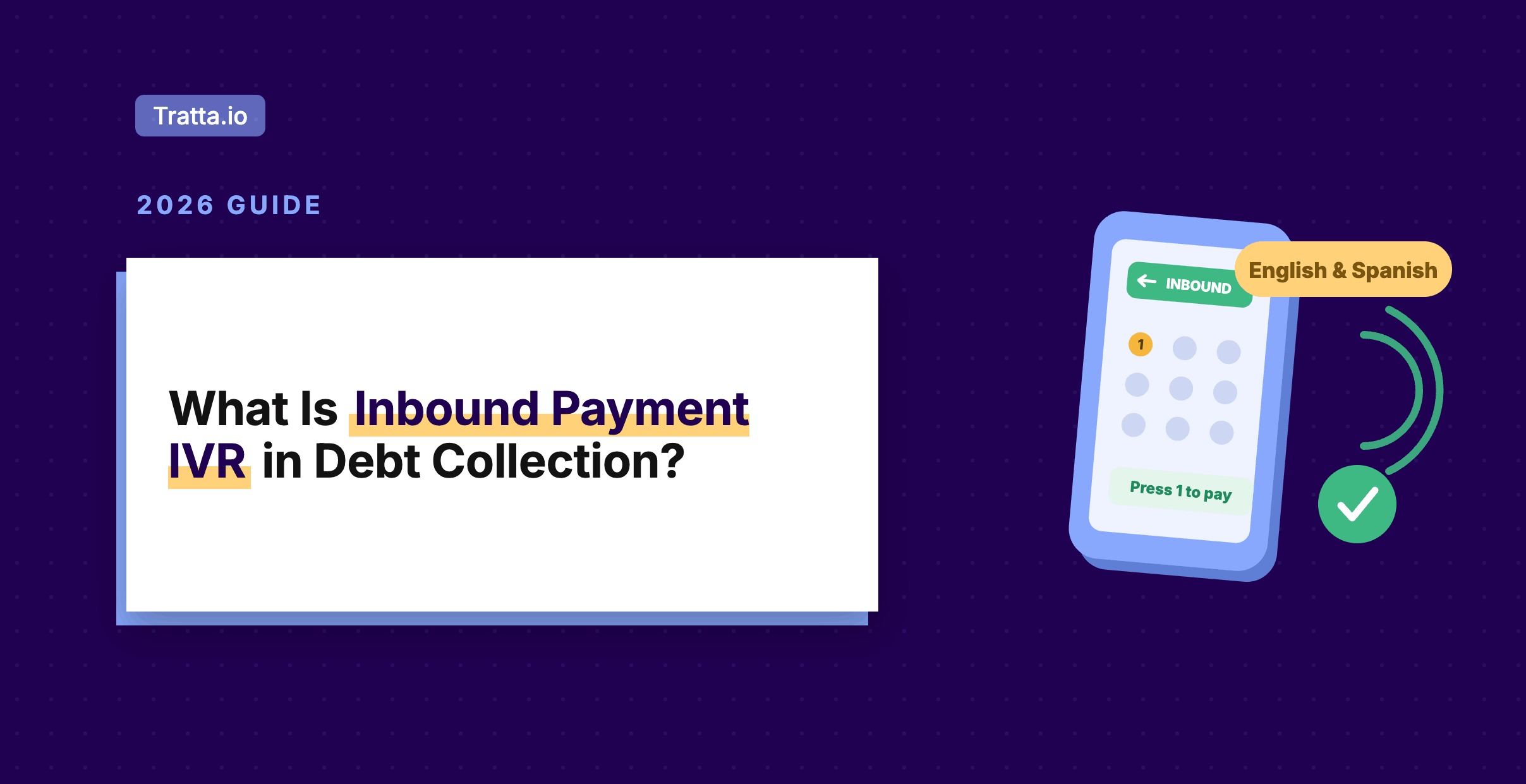
Multilingual Payment IVR Allows consumers to verify accounts, review balances, and make payments through an inbound automated phone system. This expands accessibility, reduces communication barriers, and helps agencies improve recovery rates.
Tratta stands out by combining execution, visibility, and control within a single platform. It enables agencies to act on insights without adding operational complexity or relying on fragmented systems. For teams focused on consistency and scale, it offers a practical way to make data-driven collections work.
Conclusion
When collection strategies rely on static rules and fragmented systems, agencies struggle to prioritize the right accounts at the right time. Effort gets spread thin, high-value opportunities are missed, and recovery outcomes become inconsistent. This leads to higher operational costs, slower resolution cycles, and increased compliance risk.
Tratta addresses these challenges by centralizing data, automating workflows, and enabling consistent, insight-led execution across portfolios. It brings together segmentation, communication, payments, and reporting into one platform, giving agencies the visibility and control needed to act with precision.
Start building a more consistent, data-driven collections process today. Book a demo to see how Tratta fits into your workflows.
Frequently Asked Questions
1. How can collection agencies measure the impact of predictive analytics on recovery rates?
Agencies can track changes in recovery rates, resolution timelines, and account prioritization efficiency. Comparing performance before and after implementation helps quantify the actual impact.
2. How often should predictive models or scoring logic be updated in collections?
They should be reviewed regularly based on new payment data and portfolio changes. Continuous refinement ensures insights remain relevant as consumer behavior evolves.
3. Can predictive analytics help reduce compliance risks in third-party collections?
Indirectly, yes. By improving targeting and timing, agencies can reduce unnecessary outreach and maintain more controlled, consistent communication practices.
4. How does predictive analytics for accounts receivable support multi-channel collection strategies?
It helps identify which channels are more effective for specific account segments. This allows agencies to align outreach methods with consumer behavior and improve engagement rates.
5. What role does historical data play in predictive analytics for collections?
Historical data provides the foundation for identifying patterns in payment behavior and recovery outcomes. The more accurate and complete the data, the more reliable the insights.
Note: This information is not legal advice. Tratta recommends that you consult with your legal counsel to make sure that you comply with applicable laws in connection with your collection and outreach activities.
Sign up for our monthly newsletter
Debt collection insights that keep you compliant and competitive.
Thank you! Your submission has been received!
Oops! Something went wrong while submitting the form.