Omnichannel Debt Collection Outreach Automation Guide for Higher Recovery
Strategies for Debt Collection
Omnichannel Debt Collection Outreach Automation Guide for Higher Recovery
Published on:
March 25, 2026
Your outreach may look busy, but it is often working against you. An agent calls a consumer who has already responded to an email, while an automated SMS goes out minutes later without awareness of that interaction. Channels operate in silos, creating duplication, inconsistent messaging, and increased compliance risk.
Over time, this reduces contact efficiency and slows recovery. The shift away from this model is already underway. Recent market research shows the omnichannel debt negotiation platforms market is projected to grow at a 13.70% CAGR, reaching USD 9.10 billion by 2033, reflecting the rapid adoption of coordinated outreach systems.
You are likely dealing with this disconnect daily. Scaling outreach without losing control is not easy. In this article, we break down omnichannel debt collection outreach automation and how it helps you improve recovery through structured, synchronized engagement.
Quick look:
Omnichannel outreach automation synchronizes all communication channels. Instead of siloed SMS, email, and calls, agencies use a unified system to create continuous, context-aware consumer journeys.
Fragmented outreach leads to lower recovery and higher risk. Duplicate messages, inconsistent timing, and lack of coordination reduce engagement and increase compliance exposure.
Automation improves recovery through timing, context, and coordination. Trigger-based workflows, cross-channel sequencing, and consumer preference mapping drive higher response and faster resolution.
Execution depends on core system components. Orchestration layers, decision engines, workflow automation, and centralized data ensure structured and scalable outreach.
Effective strategies focus on behavior-driven engagement. Channel preference, trigger-based communication, time optimization, cross-channel follow-ups, and self-service options improve outcomes.
What Is Omnichannel Outreach Automation in Debt Collection?
Omnichannel outreach automation in debt collection is the process of coordinating all consumer communications across channels into a single, synchronized system. Instead of running SMS, email, calls, and IVR independently, automation ensures that every interaction is connected, contextual, and triggered in real time by activity.
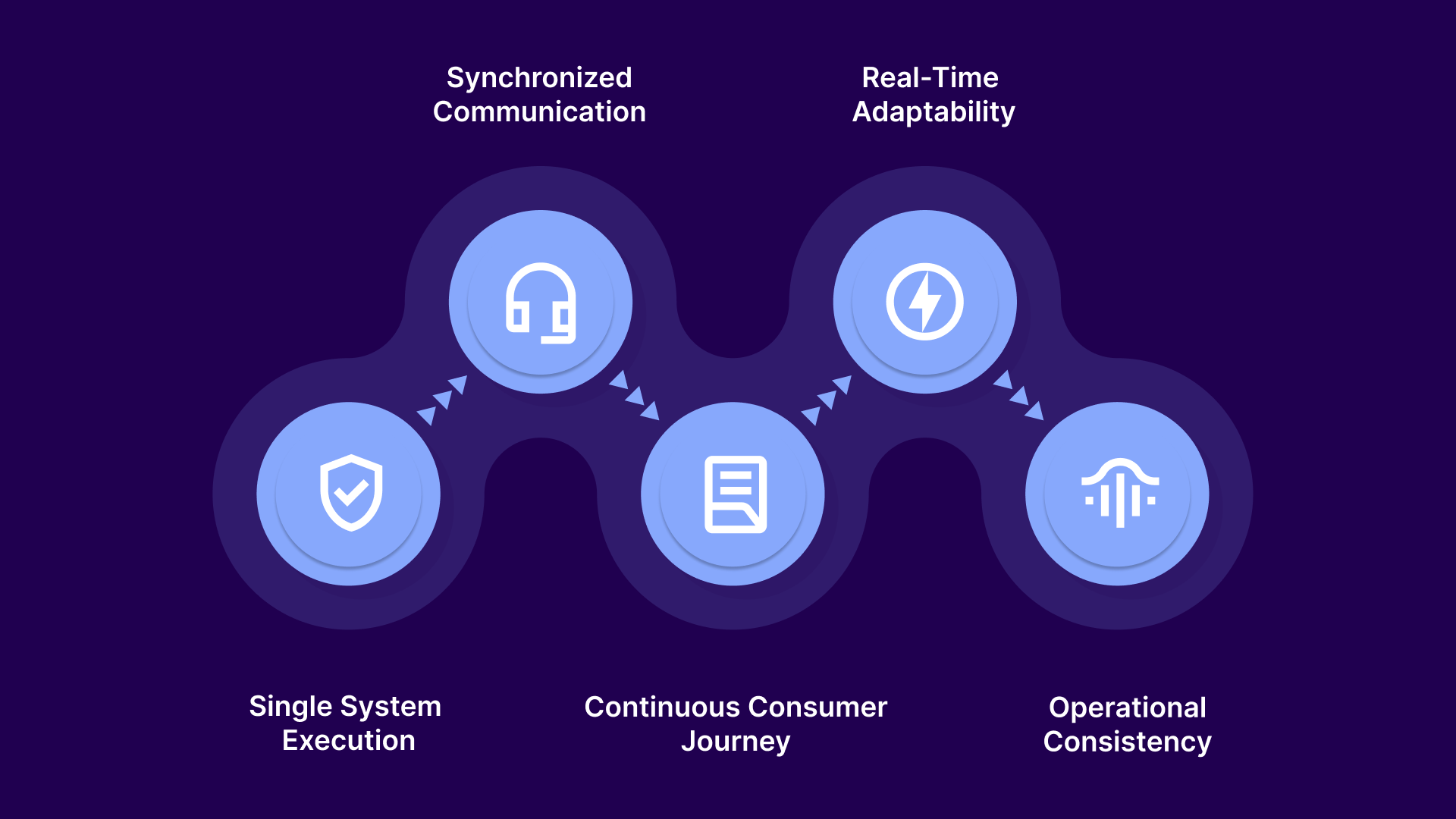
Key characteristics of omnichannel outreach automation include:
Single System Execution: All outreach is managed through one unified platform instead of multiple disconnected tools.
Synchronized Communication: Channels are coordinated to avoid duplication and conflicting messages.
Continuous Consumer Journey: Interactions are treated as part of a single flow rather than isolated touchpoints.
Real-Time Adaptability: Outreach adjusts dynamically based on consumer behavior and responses.
Operational Consistency: Every account follows the same structured logic, reducing variability.
This level of coordination fundamentally changes how outreach performs, directly influencing engagement, timing, and overall recovery outcomes. In the next section, we break down how omnichannel automation directly improves recovery rates.
How Does Omnichannel Automation Improve Recovery Rates
Omnichannel debt collection improves recovery by aligning outreach with consumer behavior, timing, and context, rather than relying on volume or repetition.
This is how omnichannel automation drives better recovery outcomes:
Higher Contact Effectiveness: Consumers are reached on the channels they are most likely to engage with. This increases the chances of meaningful interaction rather than missed or ignored outreach.
Improved Timing Precision: Automated triggers ensure communication happens at the right moment based on behavior or account status. This reduces delays and improves response rates.
Reduced Message Fatigue: Coordinated outreach prevents duplicate or conflicting messages across channels. This creates a more controlled and less intrusive consumer experience.
Faster Resolution Cycles: Continuous, connected communication keeps consumers engaged throughout the process. This shortens the time from first contact to payment.
Better Consumer Experience: Interactions feel consistent and informed rather than repetitive or disconnected. This builds trust and increases willingness to resolve debt.
Increased Payment Conversions: Relevant, well-timed outreach improves the likelihood of payment actions. This directly impacts overall recovery performance.
Tratta enables this by unifying communication across channels like email, SMS, self-service IVR, and more into a single system. It combines smart channel routing, personalized messaging, and automated workflows to ensure each consumer is contacted in the right way at the right time. Schedule a free demo.
Essential Components of Omnichannel Outreach Automation
Omnichannel outreach automation requires specific infrastructure layers that control how communication is triggered, routed, and optimized across channels. Without these components, coordination breaks down into disconnected actions rather than structured workflows.
The core components that enable omnichannel outreach automation include:
Channel Orchestration Layer
Routes and prioritizes communication across channels based on predefined logic. This ensures the system determines which channel to use and when, rather than relying on static sequences.
Trigger and Decision Engine
Evaluates real-time inputs such as consumer actions, account changes, or inactivity. This allows the system to dynamically decide the next best action instead of following fixed schedules.
Workflow Automation Framework
Defines step-by-step communication flows across the lifecycle of an account. This controls sequencing, escalation paths, and interaction timing.
Data Unification Layer
Aggregates account data, communication history, and payment activity into a single source of truth. This enables accurate decision-making across all channels.
Performance Optimization Engine
Continuously analyzes engagement and response patterns to refine outreach logic. This supports ongoing improvement in timing, channel selection, and messaging effectiveness.
In the next section, we move from system design to execution and explore five omnichannel communication strategies that directly increase debt recovery.
5 Omnichannel Communication Strategies to Increase Debt Recovery
Recovery improves when agencies apply clear, structured communication strategies that effectively leverage omnichannel capabilities. The focus shifts from simply reaching consumers to engaging them in the right way, at the right time, through the right channel.
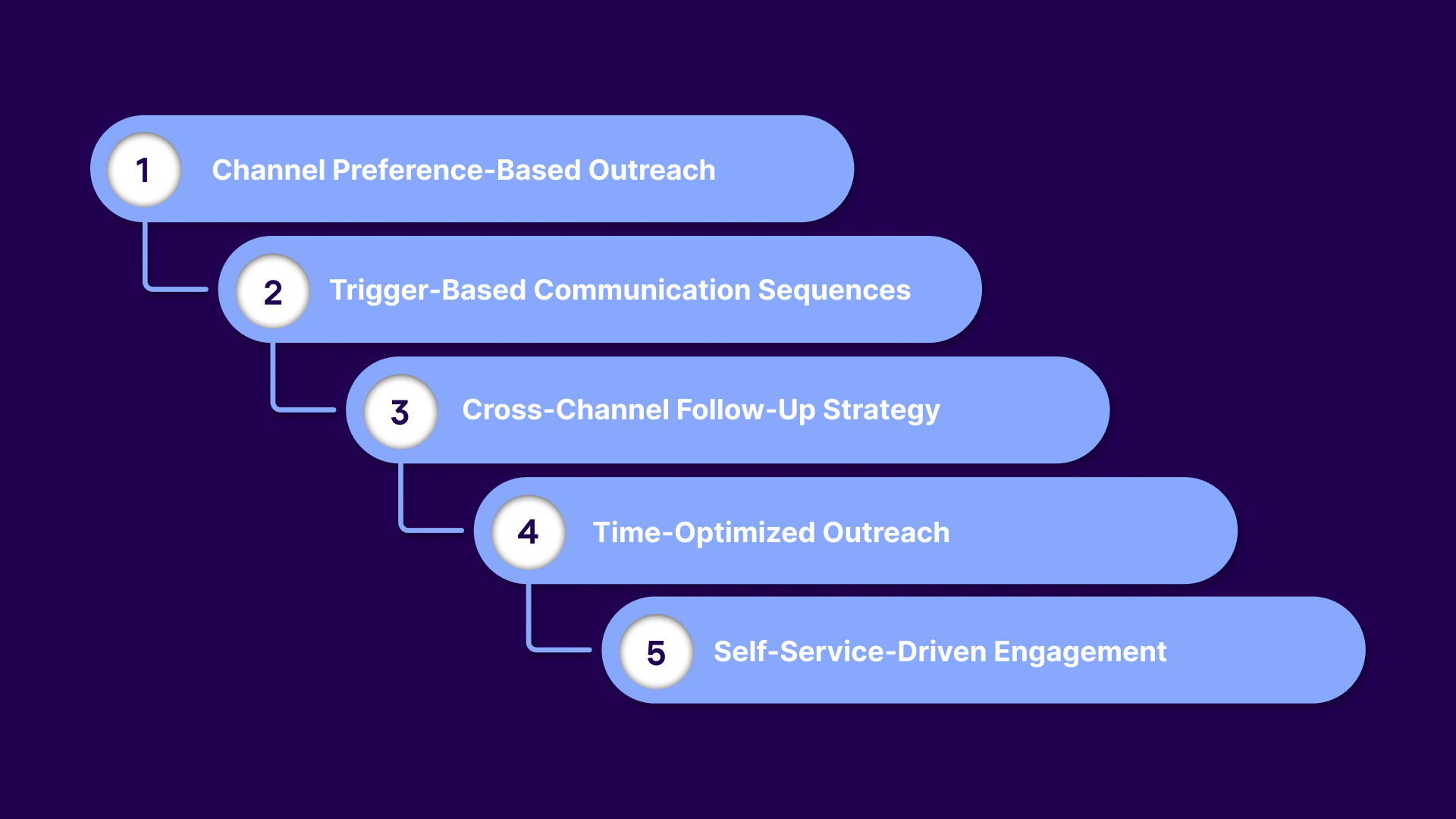
These are a few strategies to improve recovery rates with omnichannel communication:
1. Channel Preference-Based Outreach
Consumers are more likely to respond when contacted through their preferred channels. Ignoring this leads to lower engagement and wasted outreach efforts.
To implement this effectively:
Track Channel Engagement History: Identify which channels each consumer responds to most frequently.
Prioritize High-Response Channels: Start outreach on channels with proven engagement.
Adapt Based on Behavior: Shift channels dynamically if engagement patterns change.
2. Trigger-Based Communication Sequences
Static schedules often miss the right moment to engage. Trigger-based outreach ensures communication aligns with real-time consumer behavior and account activity.
To apply this approach:
Set Behavioral Triggers: Initiate outreach based on actions like missed payments or link clicks.
Use Inactivity Triggers: Re-engage consumers after defined periods of no response.
Automate Escalation Paths: Adjust communication intensity based on engagement levels.
3. Cross-Channel Follow-Up Strategy
Following up across channels increases the chances of engagement without overloading a single touchpoint. This ensures continuity while maintaining visibility across interactions.
To structure follow-ups effectively:
Sequence Channels Strategically: Move from one channel to another based on response.
Avoid Duplicate Messaging: Ensure each follow-up reflects previous interactions.
Maintain Context Across Channels: Keep messaging consistent and informed.
4. Time-Optimized Outreach
Timing plays a critical role in whether a consumer engages or ignores outreach. Poor timing can reduce effectiveness even if the message and channel are correct.
To optimize timing:
Analyze Response Patterns: Identify when consumers are most likely to engage.
Schedule Outreach Windows: Align communication with high-response time periods.
Adjust for Time Zones and Behavior: Ensure outreach timing reflects consumer context.
5. Self-Service-Driven Engagement
Giving consumers control over how they resolve debt increases engagement and reduces friction. Self-service options complement outreach by enabling immediate action.
To enable this strategy:
Provide Easy Payment Access: Include direct links to payment portals in all communications.
Offer Flexible Payment Options: Allow consumers to choose plans that suit their situation.
Reduce Dependency on Agents: Enable resolution without requiring live interaction.
Tratta enables these strategies through its omnichannel communication and automation capabilities. Campaign Management allows agencies to design and execute structured, trigger-based outreach flows across channels using segmentation, scheduling, and conditional logic. Get in touch with us to learn more.
7 Steps to Implement an Effective Omnichannel Debt Collections Strategy
Omnichannel outreach requires a structured approach to integrating systems, defining workflows, and aligning communication with consumer behavior. Without a clear implementation plan, agencies risk creating more complexity instead of improving recovery outcomes.
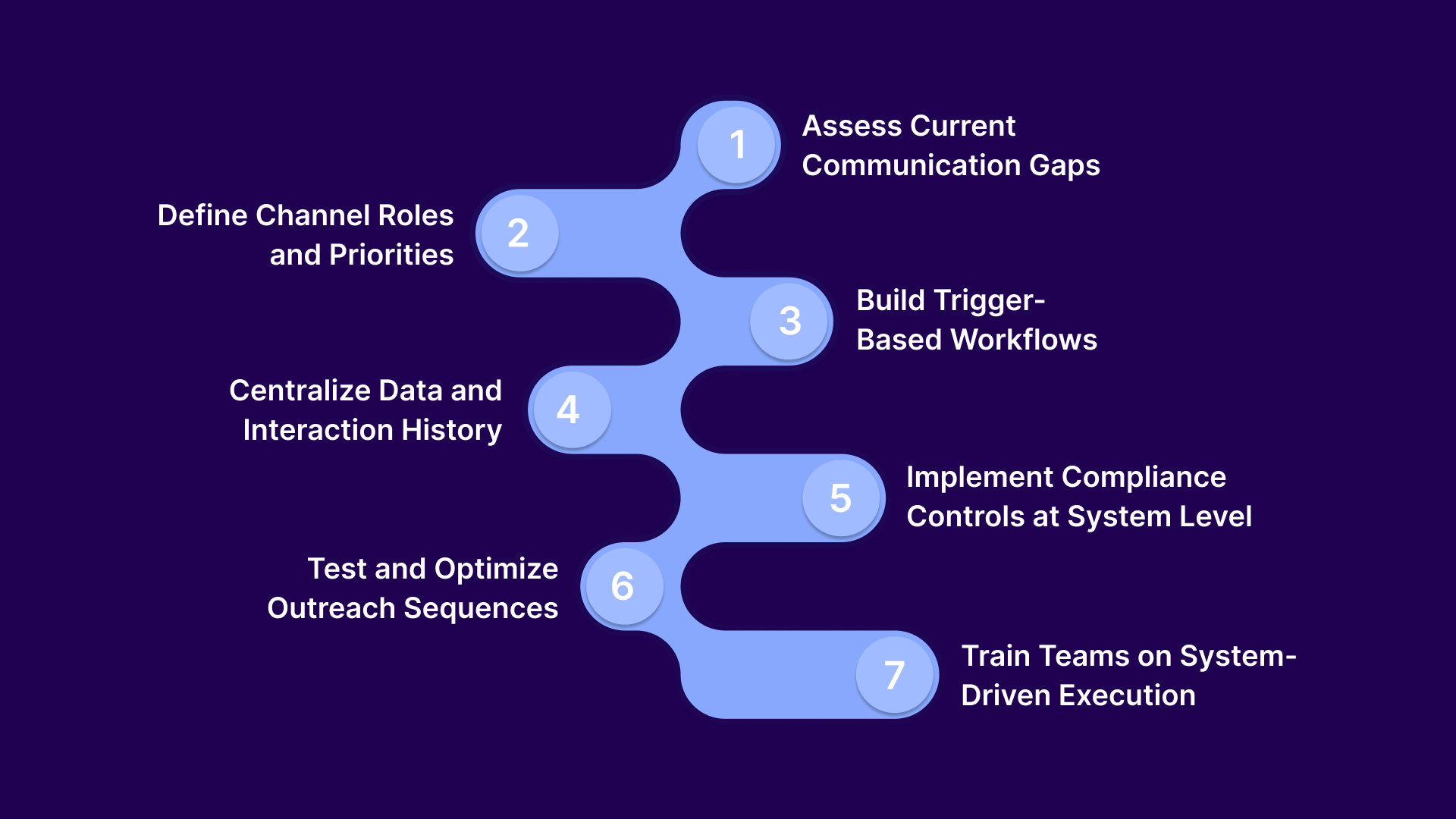
The following steps outline how to build an effective omnichannel debt collection strategy:
Assess Current Communication Gaps: Identify where channels operate in silos and where duplication or inefficiencies occur. This helps define what needs to be combined and optimized.
Define Channel Roles and Priorities: Assign clear roles to each channel based on use case, urgency, and consumer preference. This ensures each channel is used strategically rather than interchangeably.
Build Trigger-Based Workflows: Replace static schedules with event-driven logic tied to consumer actions and account status. This improves the timing and relevance of outreach.
Centralize Data and Interaction History: Consolidate all accounts, communication, and payment data into a single system. This enables consistent, context-aware decision-making.
Implement Compliance Controls at System Level: Embed rules for timing, frequency, and disclosures into workflows. This ensures compliance is enforced automatically across all channels.
Test and Optimize Outreach Sequences: Continuously evaluate performance across channels and adjust sequencing, timing, and messaging. This improves engagement and recovery over time.
Train Teams on System-Driven Execution: Shift focus from manual outreach to managing and monitoring automated workflows. This ensures consistency and reduces human error.
A well-implemented strategy turns omnichannel outreach into a controlled, scalable system rather than a collection of disconnected efforts. In the next section, we examine the common challenges agencies face when implementing omnichannel debt collection strategies.
Challenges and Solutions in Implementing Omnichannel Debt Collections
Implementing omnichannel outreach requires an operational shift that introduces integration, compliance, and execution challenges. Without the right structure, agencies often end up with more complexity instead of better outcomes.
Table showing the most common challenges and how to address them:
Challenge
Impact
Solution
Disconnected Systems
Fragmented communication and inconsistent data across channels
Integrate all channels into a unified platform with a centralized data layer
Lack of Coordination
Duplicate or conflicting messages sent to consumers
Implement orchestration logic to control sequencing and channel usage
Compliance Complexity
Increased risk of violations across multiple touchpoints
Embed compliance rules into workflows and automate enforcement
Data Silos
Incomplete visibility into consumer interactions
Consolidate interaction history into a single source of truth
Manual Processes
Inconsistent execution and higher operational effort
Shift to trigger-based automation and predefined workflows
Channel Overload
Excessive outreach leading to consumer fatigue
Apply frequency caps and intelligent channel prioritization
These challenges are not isolated. They often overlap, making it difficult to fix one issue without addressing the underlying system design.
To address these challenges effectively, consider the following practical tips:
Start with System Integration: Ensure all communication and data flows through a single platform before scaling outreach.
Prioritize Workflow Design: Define clear sequencing and escalation paths across channels.
Enforce Compliance Through Systems: Avoid relying on agents to manually manage regulatory requirements.
Monitor Performance Continuously: Use data to identify gaps and refine outreach strategies.
Control Outreach Intensity: Balance engagement with frequency limits to avoid fatigue and complaints.
Ultimately, overcoming these challenges depends on having the right infrastructure in place. In the next section, we explore how using the right technology enables agencies to simplify implementation, maintain compliance, and scale omnichannel outreach effectively.
Enable Omnichannel Outreach Automation with Tratta
Tratta is a digital-first debt collection platform that brings together communication, payments, workflows, and analytics into a single system. It enables agencies to move from fragmented outreach to structured, automated, and compliant engagement at scale.
The omnichannel communications feature allows agencies to connect with consumers across SMS, email, voice, and more in a single environment. Combined with automation capabilities, it supports trigger-based outreach, channel coordination, and consistent execution, ensuring every interaction is timely, contextual, and compliant.
Beyond this, Tratta offers a range of features that support end-to-end collection operations:
Consumer Self-Service Payment Portal: Allows consumers to view accounts and complete payments independently. This reduces agent workload while enabling faster, user-driven resolution.
Payments and Merchant Services: Supports secure, flexible payment options, including full, partial, and plan-based payments. This ensures transparent and compliant transaction handling.
Multilingual Payment IVR: Enables automated voice-based payments in multiple languages. This improves accessibility while maintaining structured payment interactions.
Campaign Management: Allows agencies to design and execute structured, trigger-based outreach flows across channels using segmentation, scheduling, and conditional logic. This ensures consistent and scalable communication workflows.
Reporting and Analytics: Provides real-time visibility into engagement, performance, and outcomes. This helps agencies refine strategies and improve recovery rates.
Customization and Flexibility: Enables configuration of workflows, messaging, and operational rules. This ensures alignment with agency-specific processes and compliance requirements.
Integrations: Connects seamlessly with existing systems to maintain consistent and accurate data across platforms. This reduces errors caused by fragmented information.
Security and Compliance: Includes audit trails, consent tracking, and secure infrastructure. This supports regulatory adherence and strengthens audit readiness.
Contact Center: Centralizes agent interactions and communication tracking in one interface. This improves visibility and ensures consistent handling of consumer conversations.
Tratta’s impact is not just theoretical. Agencies using the platform see measurable improvements in engagement, automation, and recovery performance. This is highlighted in the following real-world example.
Case Study: MS Fuel Card
MS Fuel Card (Shell Group) implemented Tratta to modernize its recovery process. The company moved from manual, call-heavy workflows to a fully automated, omnichannel system that connected email, SMS, and self-service payments.
Key results from the implementation include:
$650,000 Recovered in 7 Months: Significant increase in recovery compared to their previous system
2x Increase in Card Payments: Driven by easier, omnichannel payment access
Omnichannel Engagement: Consumers could respond via email or SMS and complete payments instantly through embedded links
Improved Consumer Experience: Self-service and channel flexibility increased convenience and response rates
This case highlights how omnichannel outreach combined with automation and self-service can directly improve recovery outcomes while reducing operational friction.
Conclusion
Without a structured omnichannel strategy, outreach quickly becomes inconsistent and inefficient. Disconnected systems lead to duplicate messages, missed interactions, and increased compliance risk, all of which reduce engagement and slow recovery.
Tratta addresses these challenges by unifying communication, automation, and workflows into a single system. It enables agencies to execute coordinated, compliant outreach at scale while maintaining full visibility and control over every interaction.
Simplify your outreach and improve recovery with a system built for modern collections. Book a demo to see how Tratta fits into your workflow.
Frequently Asked Questions
1. What channels are typically included in omnichannel debt collection?
Omnichannel debt collection commonly includes SMS, email, voice calls, IVR, and sometimes web portals. The key is not the number of channels, but how well they are coordinated within a single system.
2. How is omnichannel outreach different from multichannel outreach?
Multichannel uses multiple communication channels independently, while omnichannel connects them into a unified, synchronized workflow. This ensures each interaction is contextual and builds on previous touchpoints.
3. Can omnichannel automation reduce operational costs?
Yes, by automating workflows and reducing manual intervention, agencies can lower staffing pressure and improve efficiency. It also minimizes redundant outreach, saving both time and resources.
4. How long does it take to implement omnichannel outreach automation?
Implementation timelines vary based on system complexity and integration requirements, but most agencies can begin seeing results within a few weeks to a few months. A phased rollout is often the most effective approach.
5. Does omnichannel outreach work for all types of debt portfolios?
Yes, but strategies may vary based on debt type, consumer behavior, and regulatory requirements. Segmentation is essential to ensure outreach aligns with the characteristics of each portfolio.
Note: This information is not legal advice. Tratta recommends that you consult with your legal counsel to make sure that you comply with applicable laws in connection with your collection and outreach activities.
Sign up for our monthly newsletter
Debt collection insights that keep you compliant and competitive.
Thank you! Your submission has been received!
Oops! Something went wrong while submitting the form.