Collection agencies face mounting pressure to recover more while operating under tighter margins, stricter compliance requirements, and rising consumer expectations. Manual workflows, fragmented systems, and call-heavy engagement models no longer scale efficiently, leading to broken payment plans, delayed recoveries, and increased regulatory risk.
Reflecting this shift, the global debt collection software market is projected to expand by USD 3.01 billion each year, growing at a compound annual rate of 8.8%. Agencies are increasingly investing in automation, analytics, and digital payment infrastructure.
This growth underscores a broader industry transition toward advanced debt management solutions that unify automation, omnichannel engagement, embedded payments, compliance controls, and performance analytics into a single operational framework.
In this article, we examine 7 advanced debt management solutions for collection agencies and compare how each platform supports scalable recovery and operational efficiency.
Quick look:
An advanced debt management software automates, coordinates, and controls the entire debt recovery lifecycle. This allows agencies to scale collection activity without increasing staffing, compliance exposure, or process complexity.
Instead of relying on disconnected tools for dialing, messaging, payments, compliance, and reporting, you operate from a single system that improves recovery performance while reducing operational risk.
Advanced debt management software helps collection agencies by:
In the next section, we look at 7 of the best advanced debt management solutions available to collection agencies today.
Suggested Read: Why Piecemealing Your Debt Collections Platform Is a Losing Strategy
The platforms below represent the strongest technology options available today for modern, high-volume debt collection operations. We evaluated platforms based on automation depth, payment execution capabilities, compliance controls, omnichannel engagement, reporting strength, and enterprise scalability.
Quick comparison table:
Each solution included in this list demonstrates a proven ability to improve recovery performance while reducing operational and regulatory risk.
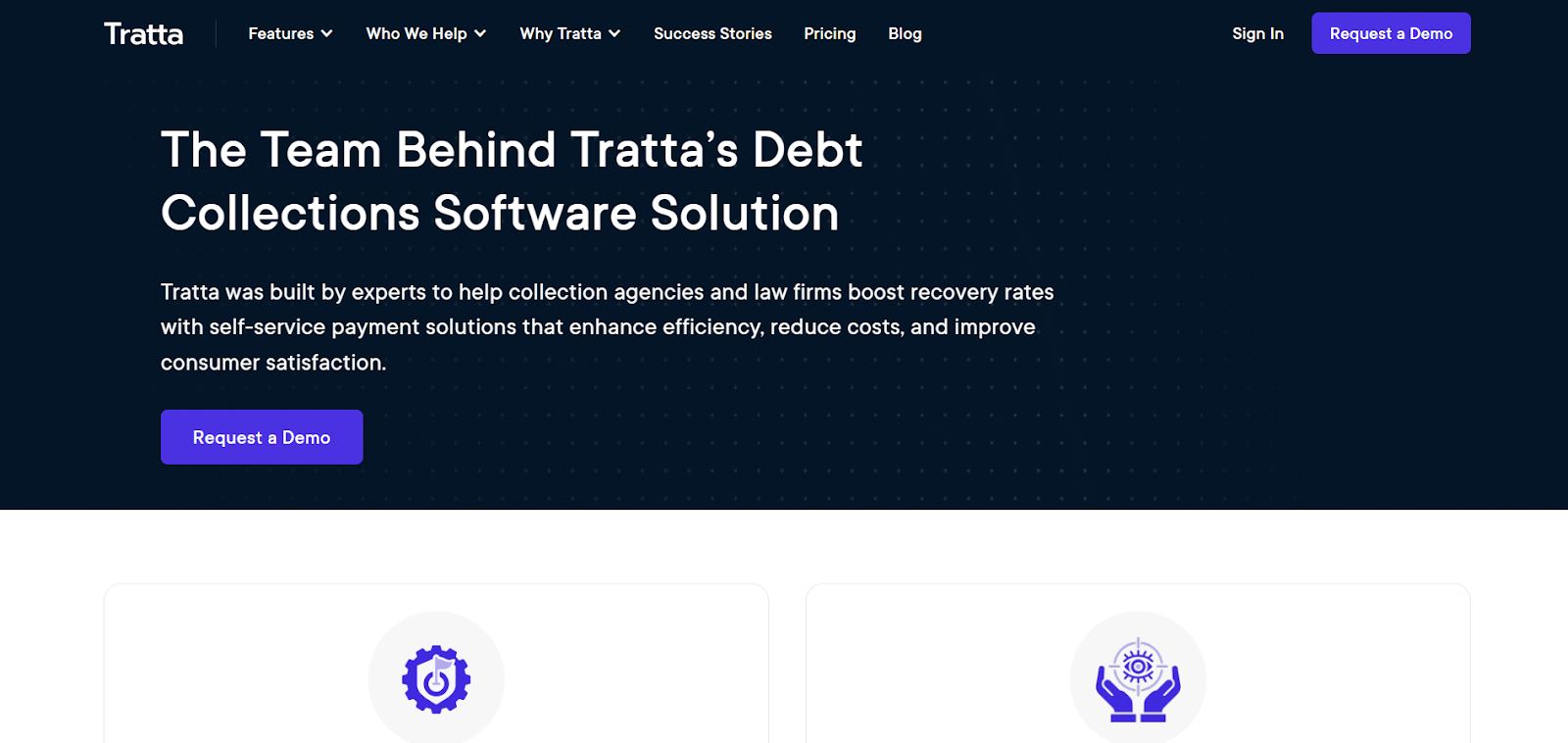
Tratta is built for collection agencies seeking strategic control over the entire debt recovery operation, not just incremental process improvements. It aligns consumer engagement, payment execution, compliance governance, and performance intelligence into a single operating model.
This allows leadership teams to standardize recovery strategy, improve financial predictability, and scale operations with confidence across portfolios, channels, and regulatory environments.
Converts consumer interaction from reactive calls into structured self-resolution workflows. Consumers can view balances, manage settlement options, schedule payments, upload documents, and resolve accounts independently. This shifts recovery from collector-driven pressure to consumer-driven completion.
Integrates ACH, card, and check processing directly into engagement and follow-up workflows. This eliminates friction between outreach and transaction execution, enabling immediate settlement when payment intent is at its peak. Agencies gain faster cash realization and tighter financial control across portfolios.
Provides automated, voice-based payment access across multiple languages, expanding reach and improving right-party contact rates. This ensures accessibility across diverse consumer populations without increasing staffing. Payment execution becomes scalable, inclusive, and operationally efficient.
Orchestrates SMS, email, IVR, and secure portal messaging into unified, compliance-controlled engagement flows. This ensures consistent timing, tone, and regulatory enforcement across every consumer touchpoint. Agencies move from fragmented outreach to coordinated recovery execution.
Automates recovery strategies across the full account lifecycle, from early engagement to settlement and long-term repayment. Campaign logic adapts dynamically based on consumer behavior and payment outcomes. This enables precision recovery execution at scale, without manual intervention.
Delivers real-time insight into portfolio performance, payment behavior, campaign effectiveness, and compliance activity. Leadership gains immediate visibility into recovery drivers and operational bottlenecks. Strategic decisions become data-driven rather than assumption-based.
Allows agencies to configure workflows, engagement cadence, settlement logic, and messaging based on portfolio type and recovery strategy. This ensures operational alignment without sacrificing compliance. Agencies retain strategic control while benefiting from platform automation.
Provides easy connectivity with agency CRMs, core collection systems, accounting platforms, and creditor data feeds. This ensures uninterrupted data synchronization across the recovery ecosystem. Agencies preserve existing infrastructure while modernizing execution layers.
Embeds FDCPA, CFPB Regulation F, TCPA, PCI DSS, and SOC 2 safeguards directly into system workflows. Compliance becomes an operational constant rather than a post-process check. This significantly reduces regulatory risk while maintaining audit-grade accountability.
The practical impact of these advanced capabilities is best understood through real-world deployment. The following case study illustrates how Tratta’s advanced debt management architecture translates into tangible operational and financial outcomes.
A fleet card issuer (Shell Group) managing high-volume commercial accounts implemented Tratta to modernize payment execution and follow-up automation.
Within seven months, the company recovered an additional $650,000 compared to its prior manual workflows. Card payments nearly doubled to 40 percent of total transactions, while agent interactions fell sharply as consumers shifted to self-service resolution.
Suggested Read: Debt Recovery Case Management Software for Smarter Workflows
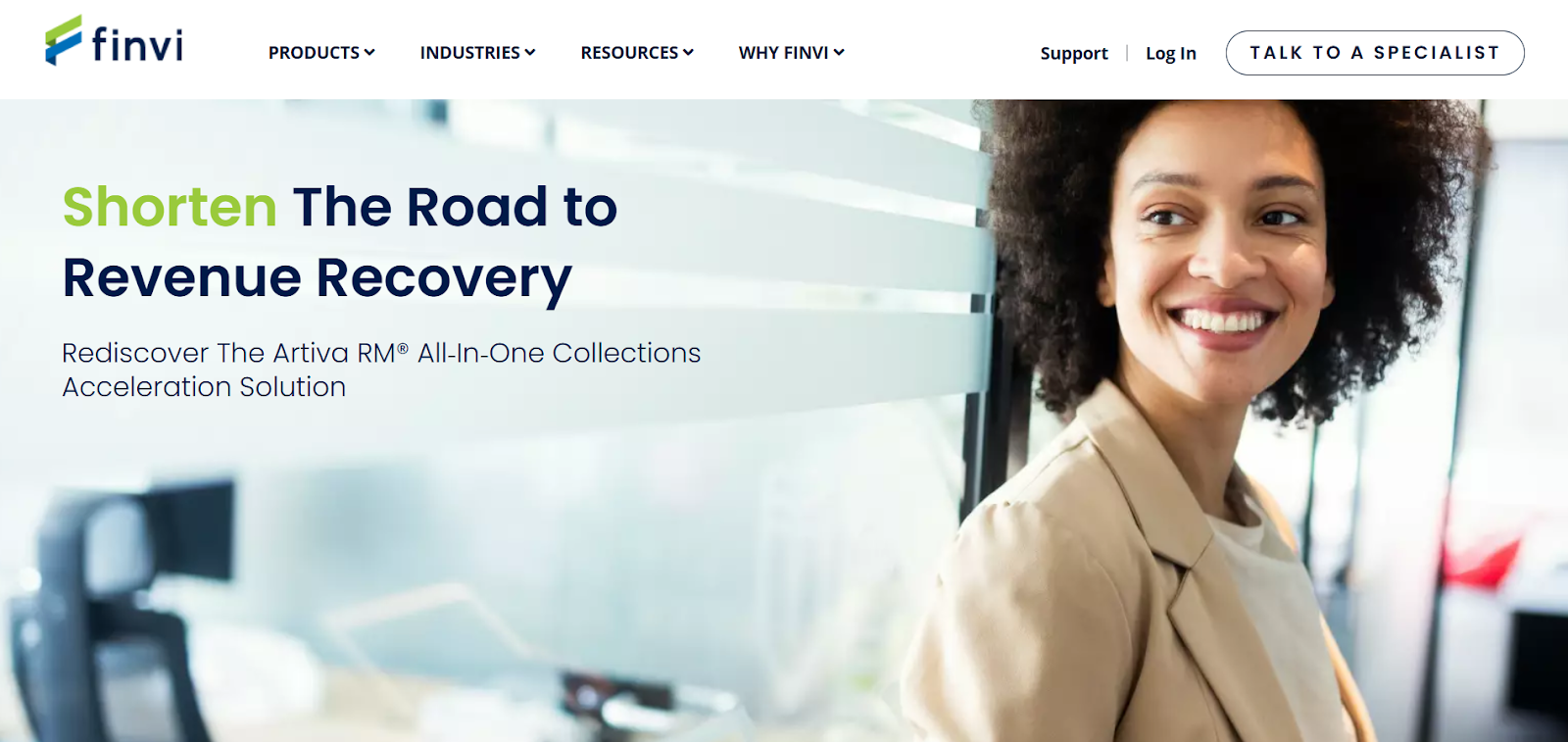
source:Finvi Artiva
Finvi Artiva is an enterprise-grade debt management and collections platform designed for high-volume agencies, financial institutions, and healthcare revenue cycle operations. It delivers workflow automation, omnichannel engagement, embedded payments, and compliance controls within a unified operational environment.
Artiva is particularly suited for organizations managing complex portfolios, multi-channel strategies, and large agent teams.
While Finvi Artiva delivers strong enterprise capabilities, its operational complexity can limit agility for agencies seeking rapid deployment and streamlined execution. Teams prioritizing speed, usability, and real-time payment orchestration may find lighter, more execution-focused platforms better aligned with modern recovery demands.
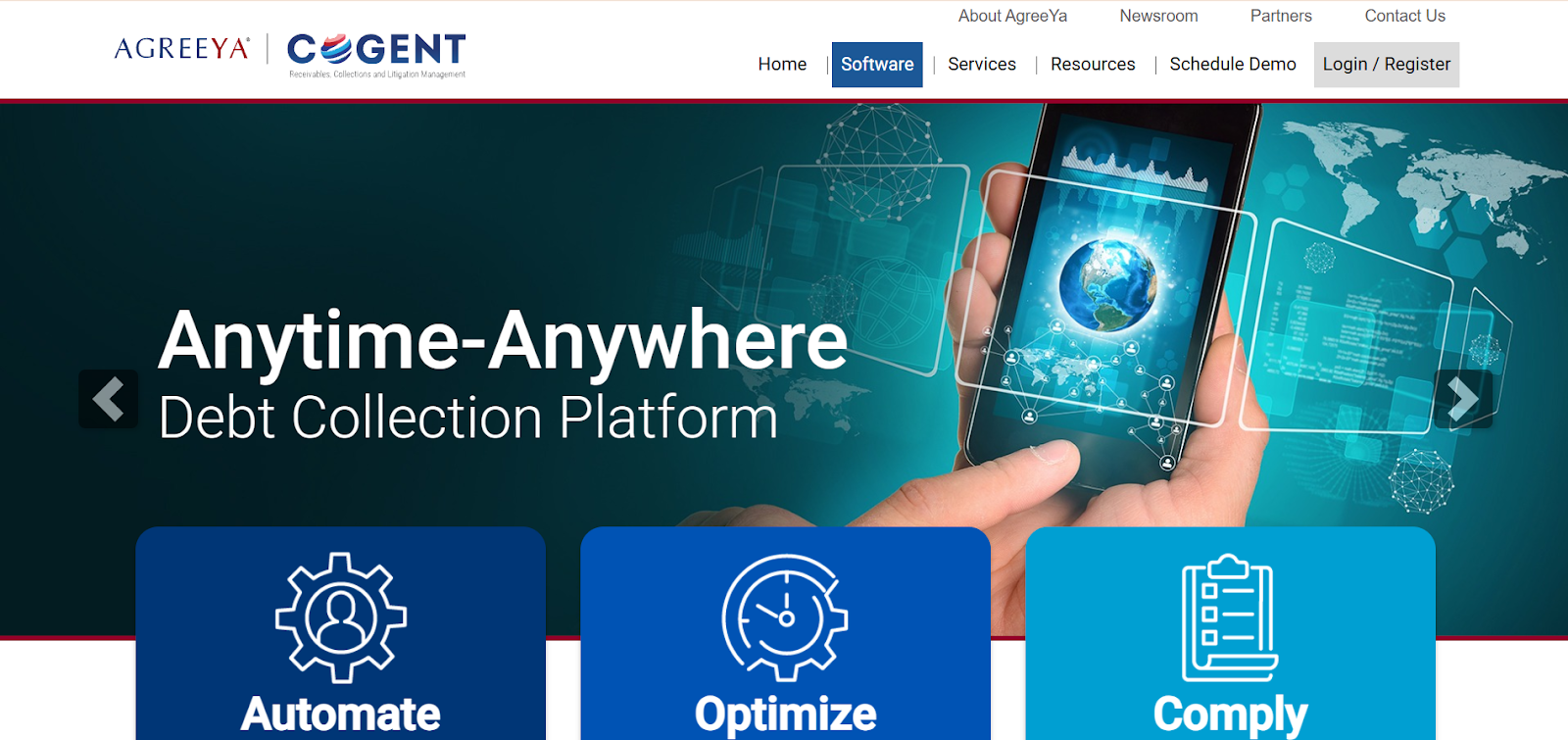
source:Cogent Collect
Cogent Collect is a cloud-based debt collection and receivables management platform designed for agencies and law firms that require structured workflow automation and legal-grade process controls.
The platform emphasizes case management, compliance tracking, and operational standardization across high-volume portfolios. It is commonly used in environments where legal collections, litigation workflows, and regulatory documentation are tightly integrated with recovery operations.
Cogent Collect is a dependable choice for litigation-centric operations but is less suited for agencies optimizing for speed, payment conversion, and consumer self-resolution. In high-volume environments where recovery velocity matters most, operational agility often outweighs procedural depth.
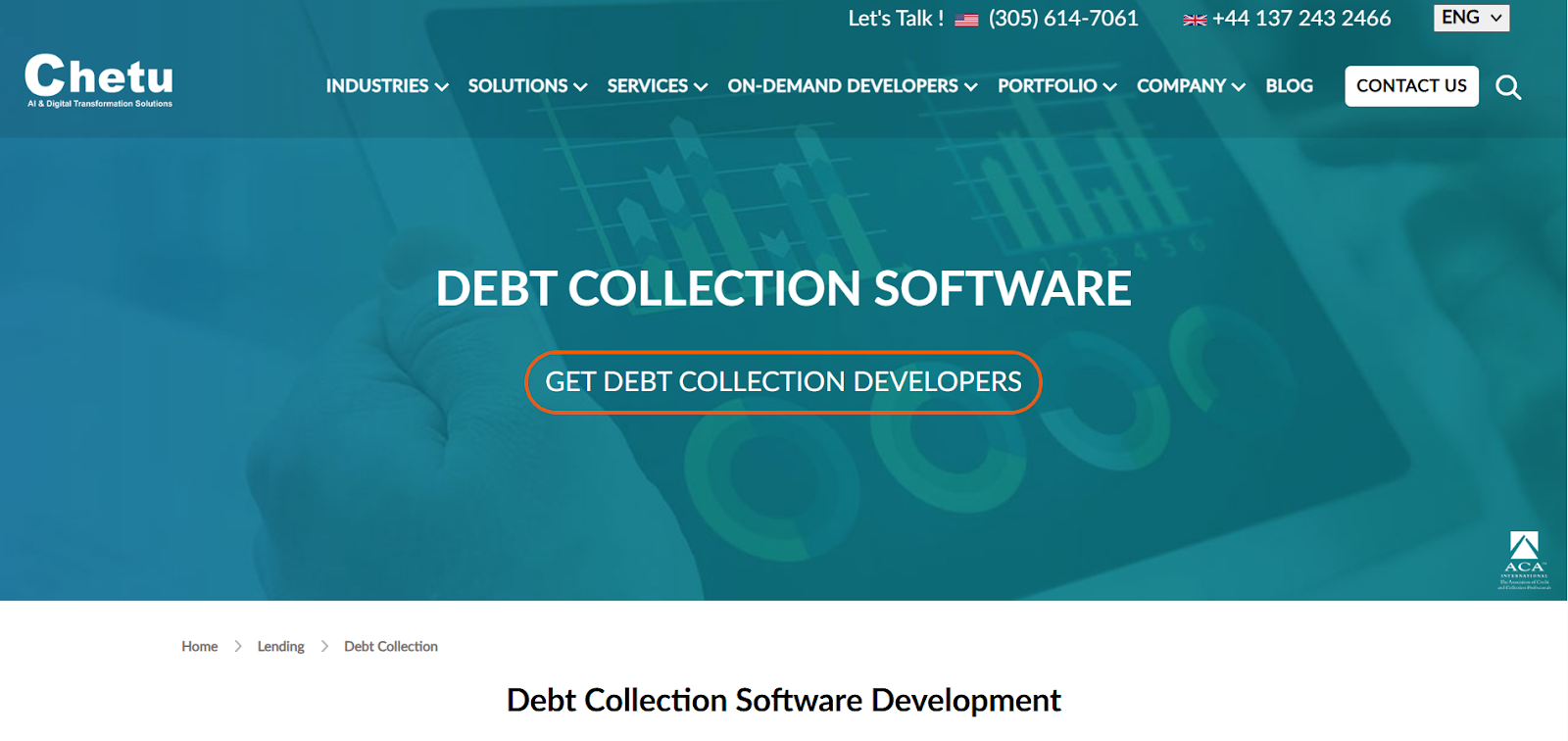
source:Chetu
Chetu provides custom-built advanced debt management software for collection agencies that require deep workflow customization and system-level control. Rather than offering a rigid SaaS product, Chetu designs tailored debt recovery platforms aligned to an agency’s operational structure, compliance needs, and portfolio complexity.
This makes it a strong fit for agencies with unique processes, non-standard recovery strategies, or proprietary compliance workflows.
Chetu is best suited for agencies that view technology as a strategic infrastructure investment rather than a packaged software purchase. For teams prioritizing speed of deployment, ease of use, and continuous feature evolution, modern SaaS platforms may offer faster operational returns.
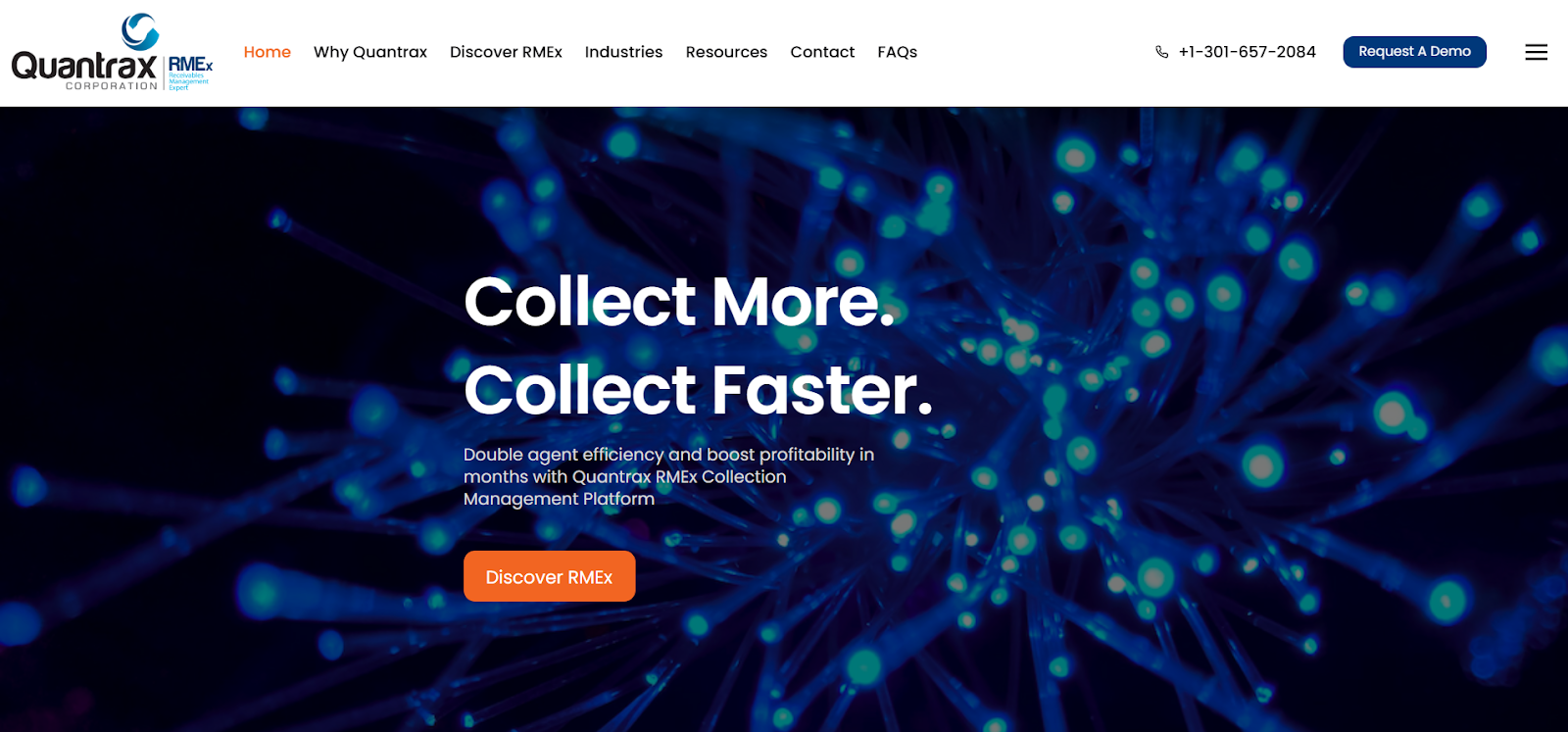
source:Quantrax
Quantrax is a highly configurable enterprise collections and workflow platform designed for agencies that require deep process control, regulatory rigor, and operational customization.
Its strength lies in managing complex account lifecycles, legal workflows, and compliance-driven operations within a single system. The platform is particularly well-suited for agencies handling diverse portfolios, litigation-heavy accounts, and multi-state regulatory complexity.
Quantrax prioritizes process governance, legal integration, and regulatory precision. For teams optimizing for speed, digital-first engagement, and rapid payment execution, this level of procedural depth can introduce friction into daily recovery activity.
source:Beyond ARM
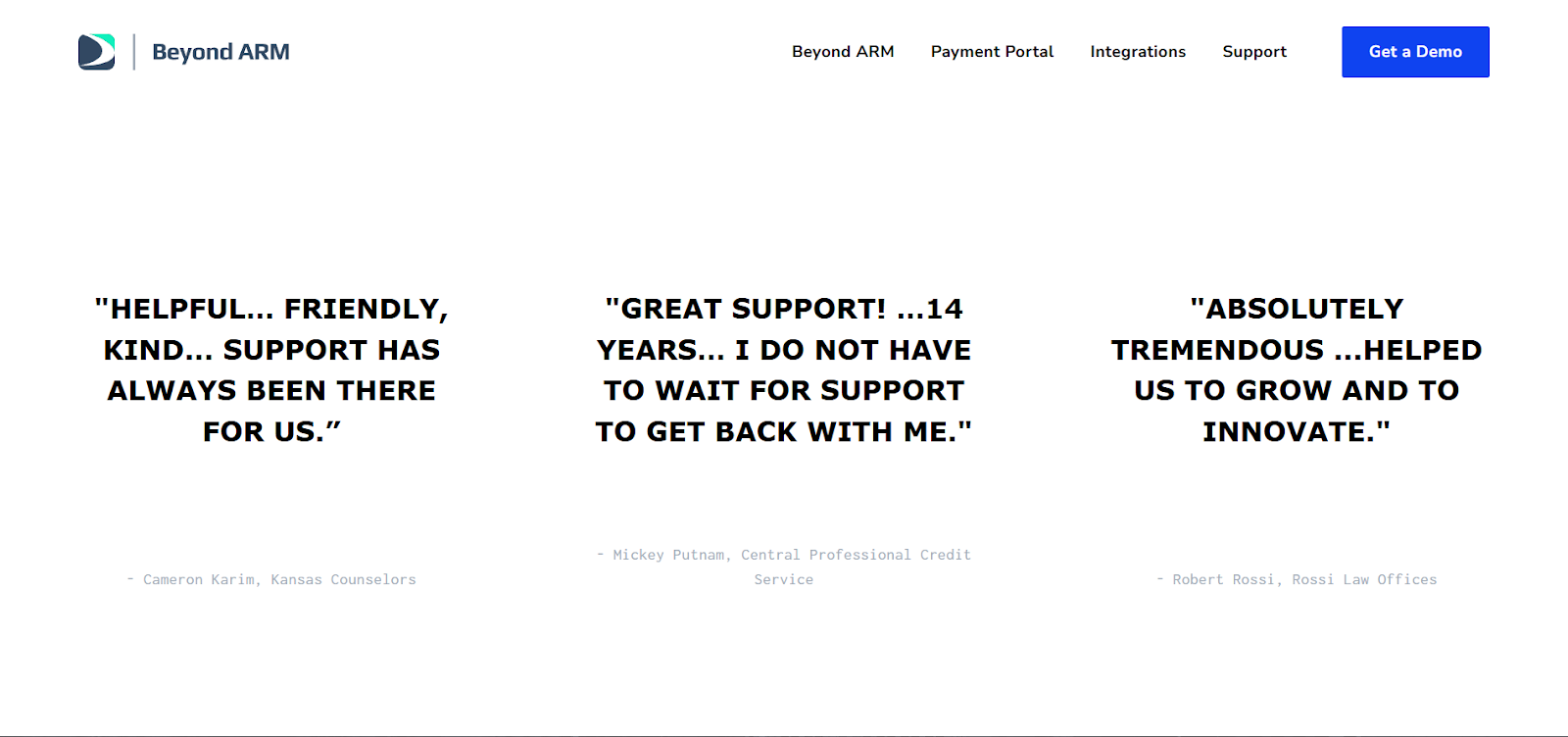
Beyond ARM is a cloud-based collections and debt management platform purpose-built for U.S. collection agencies managing regulated, high-volume portfolios. It emphasizes workflow automation, compliance control, and portfolio visibility, enabling agencies to operate complex recovery programs without operational fragmentation.
The platform is widely adopted by agencies seeking a modern alternative to legacy collections systems while maintaining regulatory rigor.
Beyond ARM delivers dependable core collections execution and compliance governance, making it a trusted operational backbone for many agencies. However, as consumer engagement shifts toward self-service and real-time payments, agencies increasingly seek platforms that offer deeper automation and experience-driven resolution.
source:Simplicity Collect
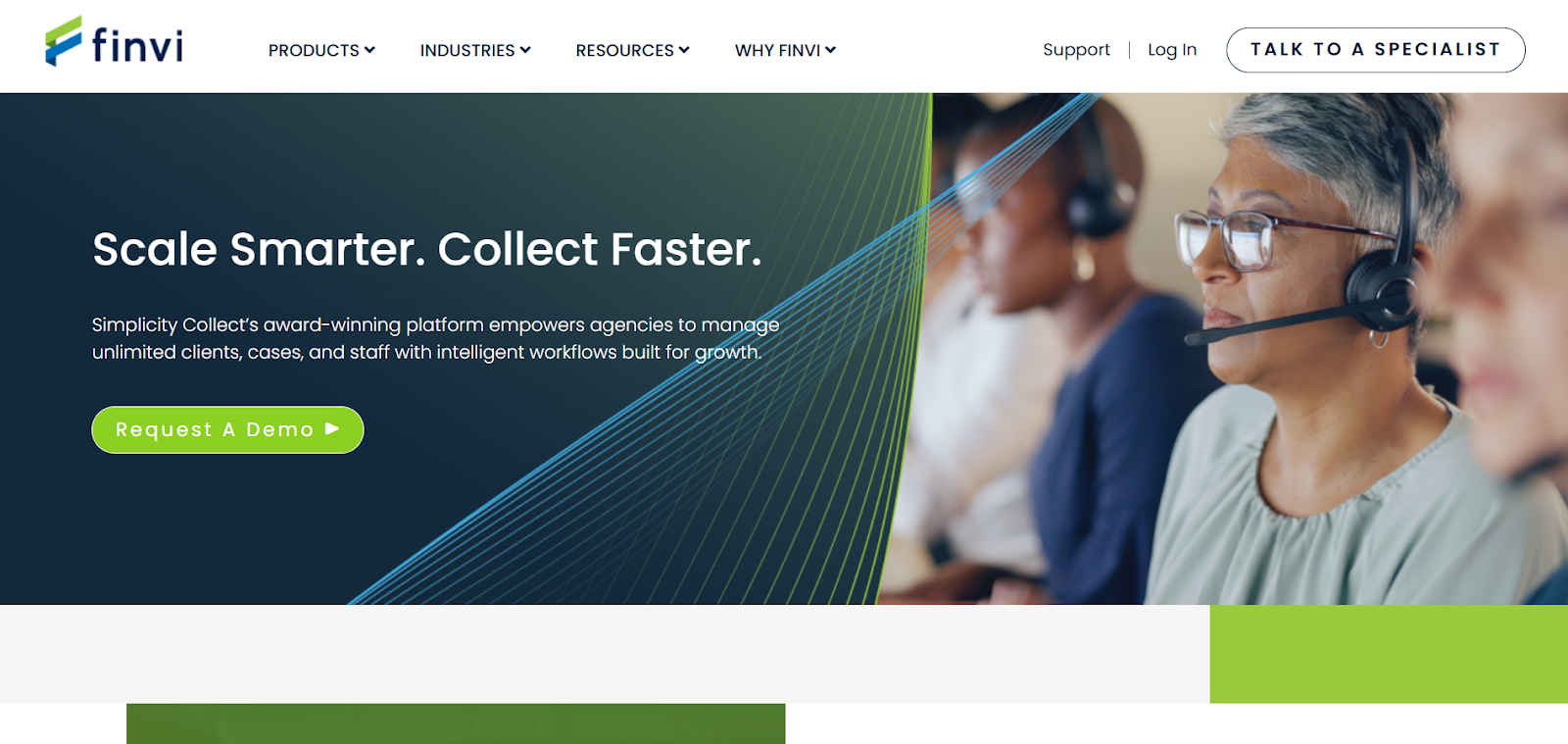
Simplicity Collect is designed for collection agencies that prioritize operational efficiency, compliance governance, and workflow automation. The platform simplifies complex recovery processes by combining account management, digital engagement, payments, and regulatory controls into a single operational environment.
Simplicity Collect works best for agencies focused on speed, usability, and operational clarity, where fast execution and compliance reliability outweigh deep customization.
Suggested Read: Debt Management and Recovery Software Platform
Choosing a debt management platform is a strategic decision that directly shapes recovery performance, compliance posture, and operational scalability. To make the right choice, agencies should evaluate software based on execution impact, operational flexibility, and risk control, not on feature volume.
You should focus on:
The right debt management software reshapes how recovery operates across every stage of the lifecycle. It enables agencies to collect more, faster, and with greater regulatory confidence.
Without advanced debt management software, collection agencies often rely on fragmented systems, manual follow-ups, and inconsistent workflows. This leads to delayed recoveries, broken payment plans, rising compliance exposure, and operational inefficiencies that compound as volumes increase.
Tratta addresses these challenges by combining consumer engagement, automated follow-up, compliance governance, and performance intelligence into a single operational platform. Its execution-first architecture enables agencies to standardize recovery strategy, improve financial predictability, and scale collections operations.
Explore how automated campaigns, embedded payments, and real-time intelligence can improve recovery outcomes. Talk to us today.
Automation ensures consistent follow-up, timely reminders, and structured escalation based on consumer behavior. This reduces missed payments, improves promise-to-pay adherence, and shortens recovery timelines. Agencies typically see higher liquidation with lower operational effort.
While not mandatory, advanced platforms significantly reduce compliance risk by embedding FDCPA, Regulation F, and TCPA controls directly into workflows. This prevents over-contact, improper disclosures, and unauthorized communications. Automated compliance enforcement also strengthens audit readiness.
Agencies should prioritize workflow automation, embedded payments, compliance-by-design architecture, omnichannel engagement, and real-time performance analytics. These capabilities directly impact recovery performance and regulatory safety. Feature volume alone is less important than execution quality.
Implementation timelines vary based on platform complexity and agency size. Cloud-based platforms typically deploy within weeks, while enterprise systems can take several months. Faster deployment enables agencies to realize recovery improvements sooner.
Advanced platforms reduce manual tasks such as follow-ups, payment processing, and compliance checks, allowing collectors to focus on higher-value recovery work. Automated workflows streamline daily operations and eliminate repetitive actions. This leads to higher account resolution per agent, lower burnout, and more predictable performance outcomes.