Debt Collection & Recovery Software

5 Ways to Use a Debt Collection Management Software for Higher Recovery

Published on:
February 16, 2026

Despite rising workloads, many collection agencies still struggle to turn accounts into actual payments. Fragmented tools, manual follow-ups, and limited visibility into payment status waste time and leave money on the table.

With the global debt collection agencies market projected to reach $35.32 billion by 2030 at a 3.2 % CAGR, the pressure to improve efficiency and recovery outcomes has never been greater.

In this blog, we explore five ways debt collection management software can increase your recovery rates. We explain how to use automation, payment visibility, consumer self-service, omnichannel communication, and real-time reporting to shorten cycles and capture more dollars.

Brief look:

  • Collections software organizes recovery work. It centralizes accounts, payments, communication, and reporting into one operational system.
  • Operational gaps reduce recovery. Spreadsheets, manual tracking, and fragmented tools slow follow-ups and create payment confusion.
  • Intentional system use improves outcomes. Task queues, payment tracking, and communication history guide daily recovery action.
  • Automation and visibility shorten cycles. Accounts move faster when events trigger action and payment stages are clearly tracked.
  • Connected systems drive better recovery performance. When workflows, payments, and reporting work together, agencies recover more with less effort.

What Is a Debt Collection Management Software?

Debt collection management software is the operational system agencies use to run day-to-day recovery work from one place. It replaces scattered tools and manual tracking with a structured environment that manages accounts, activities, payments, and communication in a single workflow.

How it differs from other systems:

  • CRM Systems: Designed for sales pipelines and customer relationships, not delinquent accounts, payment recovery, or follow-up workflows.
  • Accounts Receivable (AR) Software: Focuses on invoicing and billing before accounts become overdue, not post-delinquency recovery.
  • Spreadsheets, Dialers, and Payment Portals: Often used as makeshift systems, but they do not provide a unified view of accounts, payments, and communication needed for collections.

Understanding this distinction makes it easier to see why agencies rely on dedicated collection systems rather than adapting tools built for other purposes. In the next section, we look at the key reasons agencies make this shift.

Suggested Read: Comparison of Best Debt Collection Software

Reasons to Shift to a Debt Collection Software

Many agencies do not feel the need for dedicated software until operational strain becomes visible.

Common reasons agencies move to a dedicated collection management system:

  • Scattered Account Information: Data lives across spreadsheets, dialers, and payment portals with no single source of truth.
  • Manual Promise Tracking: Promises to pay and follow-ups are handled through individual tracking rather than system workflows.
  • Time Spent Searching for Status: Agents spend valuable time searching for status updates instead of contacting consumers.
  • Unclear Payment Progress: Payment stages between authorization and settlement are difficult to interpret.
  • Manual Reporting Effort: Reports require compiling data from multiple systems and reconciling inconsistencies.
  • Fragmented Communication History: Interactions across channels are hard to trace in one continuous timeline.

Tratta addresses these operational gaps by bringing accounts, payments, communication, and reporting into one connected system. With everything visible in one place, agents spend more time collecting and less time managing systems. Schedule a demo today.

5 Ways to Increase Agency Debt Recovery Rates

Debt collection management software improves recovery only when agencies use it intentionally. The platform must guide daily action, not just store account data. When used correctly, it eliminates the delay between consumer intent and agency response.
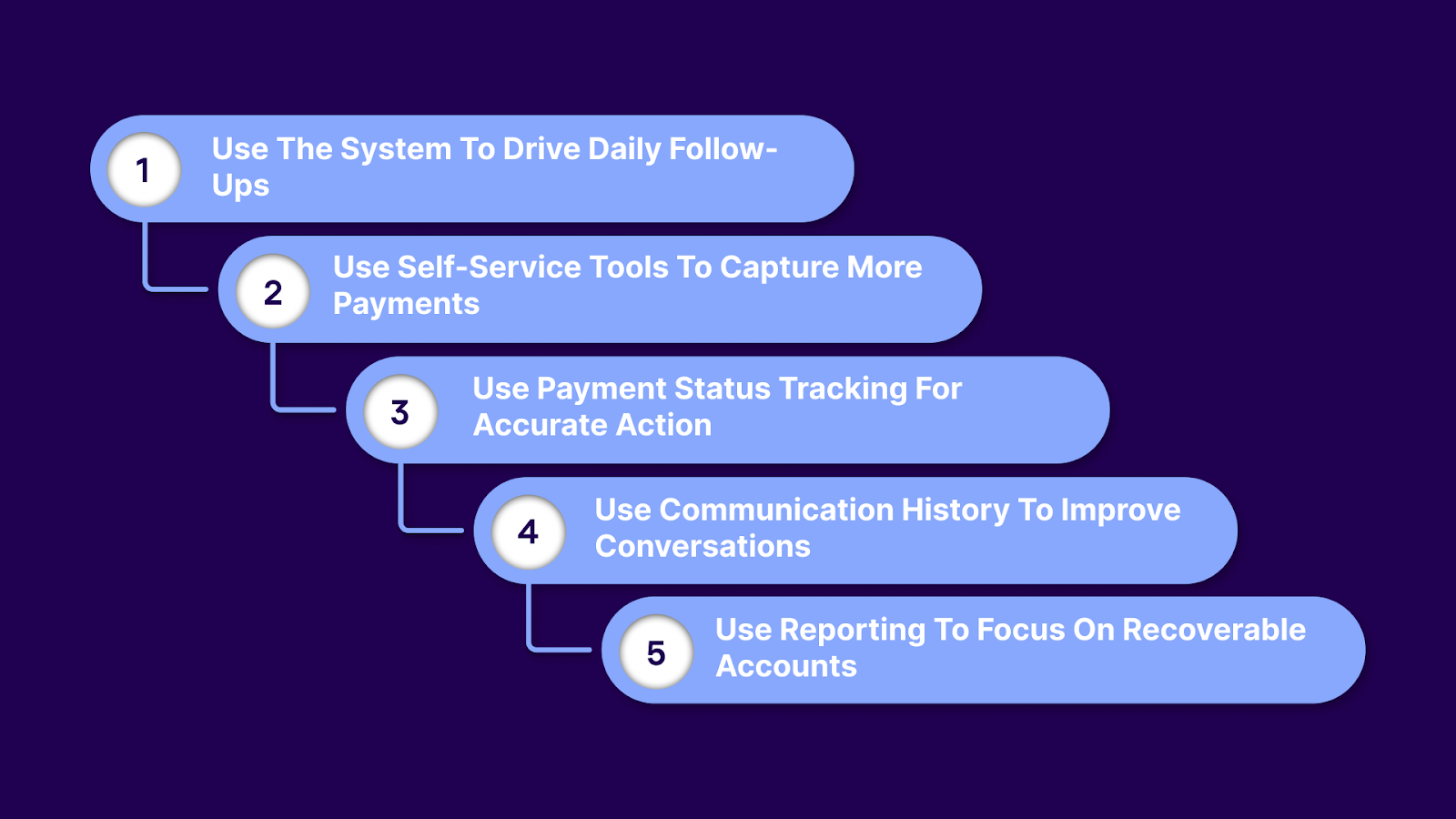
5 Ways to Increase Agency Debt Recovery Rates

These are a few practical tips to increase collection rates:

1. Use The System To Drive Daily Follow-Ups

Agents should work from system-generated task lists instead of personal notes or memory. This ensures every promise, failed payment, or new account triggers action automatically. The software becomes the source of daily priorities.

To do this effectively, agencies should:

  • Configure task queues based on account status
  • Route promises and failed payments into follow-up workflows
  • Review task dashboards at the start of each shift

2. Use Self-Service Tools To Capture More Payments

Consumers often prefer paying without speaking to an agent. The platform’s portal, SMS links, and IVR should be used as primary payment channels. This captures payments even outside the agent's working hours.

To do this effectively, agencies should:

  • Include payment links in every communication
  • Encourage portal and IVR usage during calls
  • Send automated reminders with payment access

3. Use Payment Status Tracking For Accurate Action

Do not treat authorization as payment completion. The system’s payment stages should guide when accounts are marked resolved and when follow-ups are needed. This prevents surprises from returns.

To do this effectively, agencies should:

  • Monitor authorized vs settled vs returned statuses daily
  • Trigger workflows based on settlement, not authorization
  • Act quickly on returned payments

4. Use Communication History To Improve Conversations

Agents should review the full communication timeline before contacting a consumer. This prevents repetitive conversations and improves credibility. The platform keeps all interactions in one place.

To do this effectively, agencies should:

  • Train agents to check account history before calls
  • Log every interaction inside the system
  • Maintain consistent messaging across channels

5. Use Reporting To Focus On Recoverable Accounts

Reports should guide where effort is spent each day. The software shows which accounts are active, stalled, or ready for follow-up. This keeps attention on accounts most likely to pay.

To do this effectively, agencies should:

  • Review daily reports on pending and failed payments
  • Track follow-up response times
  • Monitor recovery trends across agents and channels

These practices become far more effective when supported by automation. In the next section, we look at how automation shortens recovery cycles in collections.

Suggested Read: Debt Collection Software For Banks To Streamline Processes

Shorten Recovery Cycles in Collections Through Automation

Automation helps in eliminating the time lag between what happens on an account and how the agency responds. When workflows automatically move accounts, recovery does not depend on manual tracking.

This is how automation reduces recovery delays:

  • Status-Based Workflow Movement
    Accounts automatically shift to the next stage as their status changes. This prevents them from sitting idle while waiting for manual review.
  • Queue Prioritization
    Agents receive work based on urgency and likelihood of recovery rather than static lists. This ensures attention is always directed to accounts that need action first.
  • Timed Escalations
    Accounts that remain inactive for defined periods are automatically pushed into new workflows. This prevents stalled cases from being forgotten.
  • Event-Driven Task Creation
    System events, such as failed payments or broken promises, trigger tasks instantly. Agents do not need supervision to know what to do next.
  • Consistent Process Execution
    Every account follows a predefined recovery path inside the system. This removes dependency on individual habits or memory.

With fewer pauses between stages, accounts move through the recovery cycle faster. In the next section, we examine how payment visibility improves cash flow forecasting for agencies.

Suggested Read: 12 Best Debt Management Platforms for Agencies and Creditors in 2026

Improve Cash Flow Forecasting with Payment Visibility

Authorizations, pending payments, settlements, and returns are often treated the same in reports. Clear visibility into each stage of the payment lifecycle enables agencies to more accurately predict incoming funds.
Improve Cash Flow Forecasting with Payment Visibility

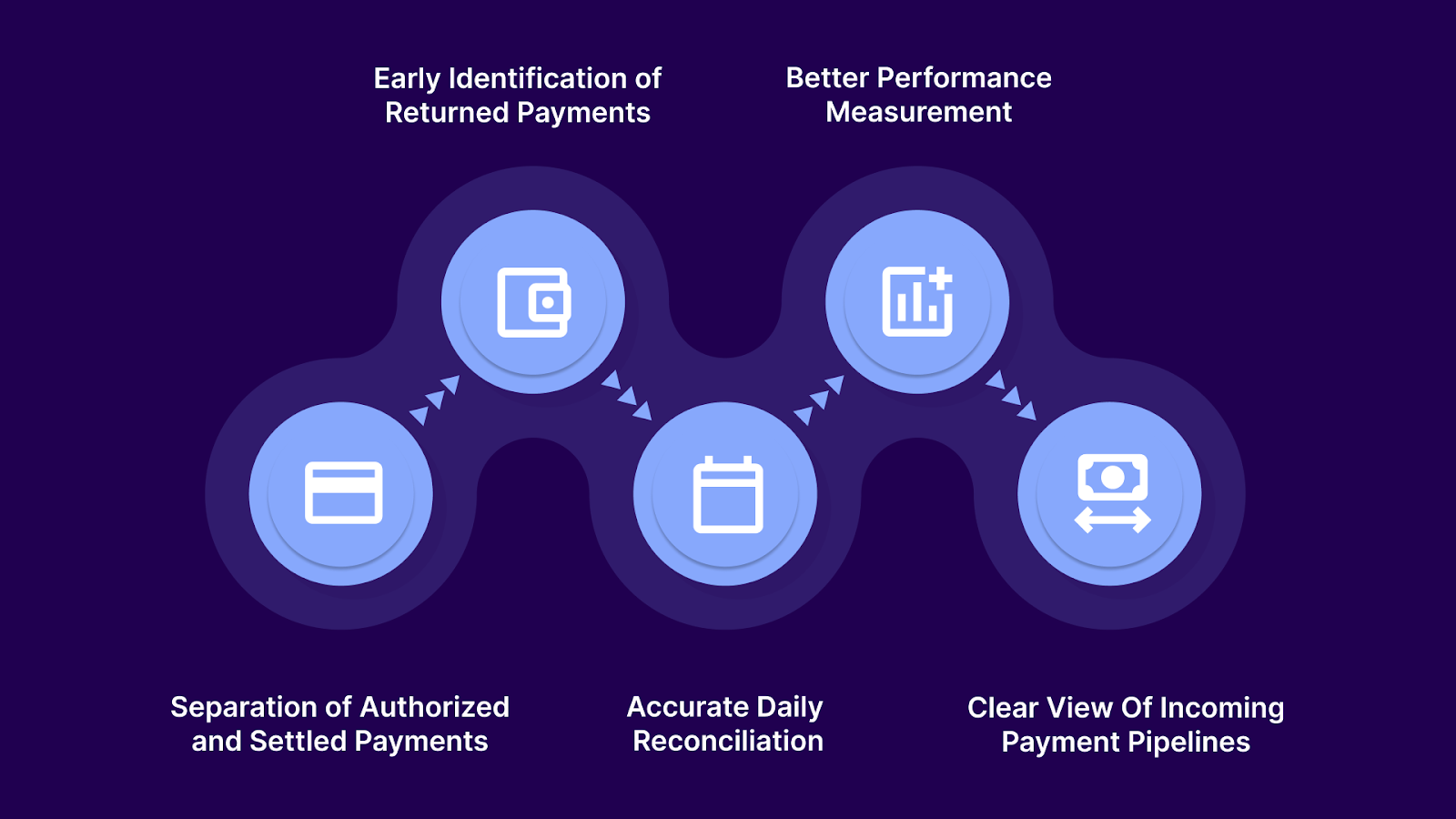
What payment visibility enables for forecasting:

  • Separation of Authorized and Settled Payments
    Agencies can distinguish between payments initiated by consumers and funds actually received. This prevents overestimating expected deposits.
  • Early Identification of Returned Payments
    Returns are visible as soon as they occur rather than days later during reconciliation. This allows faster recovery action and more realistic forecasting.
  • Accurate Daily Reconciliation
    Accounting teams can match system reports to actual bank deposits without manual investigation. This reduces end-of-day uncertainty.
  • Better Performance Measurement
    Agent and team metrics reflect settled funds instead of promised or pending payments. This gives leadership a true view of recovery effectiveness.
  • Clear View Of Incoming Payment Pipelines
    Agencies can see how much money is in progress, how much is settled, and what is at risk. This improves short-term cash flow planning.

Tratta provides this visibility by tracking every payment from authorization through settlement and return inside one system. With real-time reporting and embedded payments, your team does not rely on processor portals or guesswork. Talk to our team.

Role of Consumer Self-Service in Increasing Collection Payments

Consumers often postpone action when payment requires live interaction, extended conversations, or limited access windows. Self-service channels shift control to the consumer, enabling payment at the moment of intent without requiring an agent.

Self-service influences payment outcomes in the following ways:

  • Reduces Contact Avoidance: Consumers who are reluctant to engage verbally are more likely to complete payments through digital channels.
  • Enables After-Hours Resolution: Payments can occur outside agency operating hours, giving consumers greater flexibility and privacy.
  • Shortens Intent-To-Payment Time: Immediate access to payment options reduces delays between decision and action.
  • Supports Settlement Authorization Comfort: Consumers are more willing to authorize higher amounts without conversational pressure.
  • Improves Completion Rates: Fewer steps between communication and payment reduce abandonment.

When payment access aligns with consumer behavior, agencies capture revenue that would otherwise be deferred. In the next section, we examine the metrics agencies should track inside their software to measure these improvements.

Suggested Read: How Does Debt Collection Work?

Metrics Agencies Should Track with Collection Management Software

Software improves recovery only when agencies measure the right indicators. Many teams track calls made or promises collected, but those numbers do not always reflect actual cash recovery.

Table showing the right metrics that connect system activity to real payment outcomes:

Metric

What It Shows

Formula

Settlement Rate

Percentage of initiated payments that successfully settle

Settled payments / Initiated payments

Promise Fulfillment Rate

How often do consumers honor their promises to pay

Payments made / Promises to pay

Return Rate

Frequency of ACH or card returns after authorization

Returned payments / Initiated payments

Follow-Up Response Time

How quickly agents act after payment failure or the promise date

Time to action / Total events

Channel Conversion Rate

Which communication channel leads to actual payments

Payments per channel / Total attempts


These measurements help agencies understand whether their system is improving recovery or simply organizing data. However, you need the right software system for correct data.

In the next section, we look at what to evaluate when selecting the best collection management software.

Suggested Read: Why Collection Agencies Are Turning to Fintech Debt Collection

What to Look for in the Best Collection Management Software?

The right platform should reduce operational friction, remove manual tracking, and make it easier for consumers to pay while giving agents clear direction on what to do next. Agencies should evaluate software based on how well it supports real recovery workflows, not just how much data it can store.

Features that matter in a collection management system:

  • Consumer Self-Service Portal
    Consumers should be able to view balances, enter banking details, authorize payments, and resolve accounts without waiting for an agent. This captures payments at the moment of intent, reducing call dependency.
  • Embedded Payment Processing
    ACH and card payments should move through the system directly, without sending agents to external processor portals. This reduces delays between authorization, submission, and tracking.
  • Multilingual Payment IVR
    Consumers should be able to complete payments through IVR in their preferred language. This removes friction that often delays authorization.
  • Omnichannel Communications
    SMS, email, and other channels should operate through a single interface, with payment links built into every interaction. This ensures communication always leads to an opportunity to pay.
  • Campaign Management
    Reminders, follow-ups, and re-engagement efforts should trigger automatically based on account activity. This removes reliance on manual monitoring.
  • Reporting & Analytics
    The system should clearly distinguish between authorized, pending, settled, and returned payments. This gives operations and accounting teams accurate visibility into recovery progress.
  • Customization & Flexibility
    Workflows, rules, and task routing should adapt to the agency’s processes rather than forcing teams to change how they work.
  • Integrations / API
    Payment and account data should flow seamlessly into existing systems to prevent manual exports and reconciliation issues.
  • Security & Compliance Controls
    Banking and consumer data must be handled securely while aligning with regulatory requirements and audit readiness.

Tratta brings all of these features together in one collections-focused platform built specifically for debt recovery operations. You gain continuous visibility into account status and payment progress, as payments, communication, tasks, and reporting operate within a single connected system.

Integrations ensure data flows seamlessly into your existing systems, while strong security controls protect sensitive information. The platform actively helps your agency recover more dollars with less operational effort.

To see how these functionalities translate into real operational results, it helps to look at how an established agency applied them during a period of rapid growth.

Case Study: FMA Alliance

FMA Alliance, Ltd., a Houston-based receivables management firm with 600+ employees, faced a 5X increase in account volume after the pandemic.

Their decade-old proprietary system could not scale, failed to align with SOC 2 Type II expectations, and made secure consumer payment processing difficult. They transitioned to Tratta and completed onboarding in approximately 30 days.

Key improvements FMA experienced with Tratta:

  • Scaled to handle a five-fold increase in accounts without system downtime
  • Migrated their consumer self-service portal into a more secure, stable environment
  • Met evolving SOC 2 Type II and data security expectations
  • Reduced reliance on agent-heavy payment handling through self-service adoption
  • Gained reporting insights into when and how consumers were most likely to pay
  • Improved operational confidence during rapid growth and regulatory change

This shift to Tratta allowed FMA to continue expanding while maintaining payment reliability, security standards, and recovery effectiveness.

Conclusion

When accounts, payments, communication, and workflows are managed in one system, teams spend less time coordinating tools and more time collecting. This shift directly improves ROI by reducing manual effort, shortening recovery cycles, and increasing successful payment outcomes.

Tratta is built to support exactly this kind of connected recovery operation. By bringing consumer payments, agent workflows, communication, and reporting together, we help agencies turn daily activity into measurable improvements in recovery.

Start using software that works as hard as your collections team does. Book a demo to understand how your current workflows can be optimized for better results.

Frequently Asked Questions

1. How long does it take to implement a debt collection management system?

Implementation timelines vary by agency size and integrations, but most platforms can be configured and operational within a few weeks. Cloud-based systems reduce IT dependency and speed up deployment.

2. Can collection software integrate with existing dialers and CRMs?

Yes. Most modern platforms offer API integrations that allow data to flow between dialers, CRMs, and payment systems. This prevents duplicate data entry and keeps account information synchronized.

3. Does collection software help with regulatory record-keeping?

Collection platforms automatically log communication, payment activity, and account history. This creates an audit trail that supports documentation requirements and internal reviews.

4. Is collection management software suitable for small agencies?

Yes. Smaller agencies often benefit the most because software replaces manual tracking and reduces the need for additional administrative staff as volumes grow.

5. How do agents adapt to using collection software daily?

Most platforms are designed around task queues and account timelines, making it easier for agents to know what to do next. Training typically focuses on workflow use rather than technical complexity.

Related stories

Ready to Get Started?
Schedule a personal tour of Tratta and see our debt collection software in action.
Request a Demo