Rising compliance pressure, falling contact rates, and growing consumer resistance have made traditional debt collection workflows increasingly ineffective. Static call schedules, disconnected communication channels, and manual compliance controls now create operational drag, regulatory risk, and inconsistent recovery performance.
As a result, many agencies struggle to scale recoveries without increasing costs or exposure. A study found that digital engagement channels achieve full-payment success rates of up to 46%, compared to just 12% for phone-based outreach. This shift underscores that debt recovery now depends on intelligently engineered recovery flows, not higher contact volume.
In this blog, we outline thirteen recovery flow optimization strategies that help agencies convert fragmented operations into high-performance, compliant recovery systems.
Quick look:
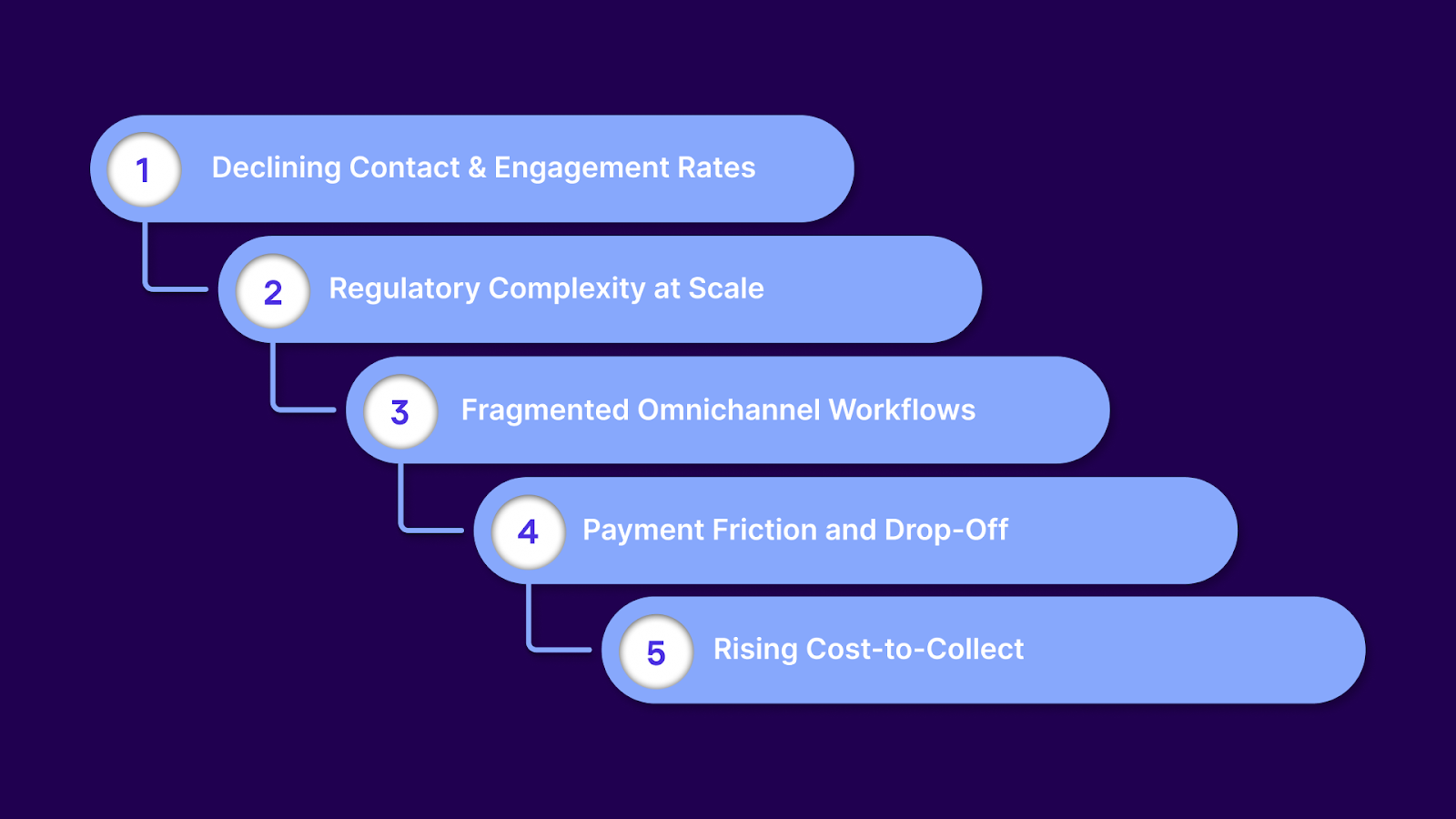
Debt collection is shaped by shrinking consumer attention, expanding regulatory oversight, and rising operational complexity. Agencies are navigating digital-first consumer behavior, regulatory micro-compliance, fragmented engagement channels, and margin pressure.
Key challenges reshaping recovery performance:
These pressures demand a shift from manual, contact-driven collections to intelligently orchestrated recovery systems, which are discussed in the next section.
Suggested Read: Steps to Improve Debt Collection Optimization Strategies
Recovery flows shape timing, messaging, settlement logic, compliance controls, and payment execution. When those elements work together, conversion improves. When they operate independently, recovery fragments.
These thirteen strategies focus on engineering high-velocity resolution paths that convert intent into payment.
Payment-first recovery flows restructure engagement so that consumers encounter resolution options immediately, without unnecessary steps. This reduces abandonment, accelerates resolution, and improves overall conversion.
The points below show how payment-first design improves recovery execution:
Static segmentation based on balance, age, or portfolio type fails to reflect real recovery probability. Recovery flows perform better when they adapt based on behavioral data such as response timing, portal activity, and payment attempts.
The points below show how behavioral segmentation improves recovery precision:
Most agencies deploy SMS, email, IVR, and calls independently, leading to inconsistent messaging and declining engagement. Recovery flows improve performance when channels follow a structured sequence based on response behavior and conversion probability.
The points below show how structured channel sequencing improves outcomes:
Fixed settlement matrices ignore timing, engagement context, and consumer financial capacity. Recovery flows perform better when settlement terms adjust dynamically based on real-time behavior and portfolio trends. This improves acceptance rates without eroding recovery margins.
The points below show how adaptive settlement improves liquidation:
Manual compliance processes slow recovery and increase audit risk. Recovery flows operate more efficiently when regulatory logic is embedded directly into engagement and payment workflows. This ensures compliance enforcement happens automatically, without disrupting resolution momentum.
The points below show how automated compliance improves operational safety:
Complex payment processes remain a primary source of abandonment. Recovery flows must simplify authentication, scheduling, and transaction execution to maximize completion rates. Payment design directly determines recovery yield.
The points below show how payment execution improves resolution performance:
Recovery strategies lose effectiveness when left static. High-performing agencies refine recovery flows continuously using performance data, cohort behavior, and engagement feedback. This allows recovery systems to adapt to changing consumer patterns and regulatory conditions.
The points below show how continuous optimization sustains performance:
Tratta enables continuous recovery flow optimization through real-time reporting and performance analytics across every stage of the resolution journey. Its dashboards provide visibility into engagement behavior, conversion patterns, settlement performance, and payment outcomes at both account and portfolio levels. Learn more.
Timing plays a larger role in recovery success than message volume. Consumer responsiveness varies sharply by hour, day, and interaction context. Recovery flows perform better when timing adjusts dynamically based on engagement behavior rather than static schedules.
The points below show how timing optimization improves recovery efficiency:
Suggested Read: Understanding the 7-in-7 Rule for Debt Collection
Most recovery leakage occurs in the early stages of delinquency. Recovery flows that prioritize fast engagement and resolution during this window capture higher payment intent and prevent balance aging. Early-stage acceleration directly improves liquidation velocity.
The points below show how early-stage focus strengthens recovery:
Not all accounts require agent involvement. Recovery flows perform better when escalation is driven by behavioral signals rather than fixed timelines. This preserves agent capacity while improving conversion where human intervention adds real value.
The points below show how intent-based escalation improves efficiency:
Recovery strategies that perform well in one portfolio often fail in another. Medical, financial services, telecom, and utilities each exhibit distinct payment behaviors. Recovery flows must adapt to portfolio characteristics rather than apply uniform logic.
The points below show how portfolio-specific design improves performance:
Disputes significantly impact recovery timelines and compliance exposure. Recovery flows must adapt automatically once a dispute is initiated, ensuring regulatory alignment while preserving resolution momentum.
The points below show how dispute-aware flows improve outcomes:
Higher recoveries lose value when operational costs escalate faster than returns. Recovery flows should actively control labor, infrastructure, and compliance expenses while preserving payment yield.
The points below show how cost-focused flow design improves profitability:
Tratta allows agencies to design, deploy, and manage these recovery flows within a single, compliance-driven platform. Its architecture integrates engagement logic, payment execution, compliance enforcement, and performance analytics into structured resolution paths that adapt in real time. Schedule a demo today.
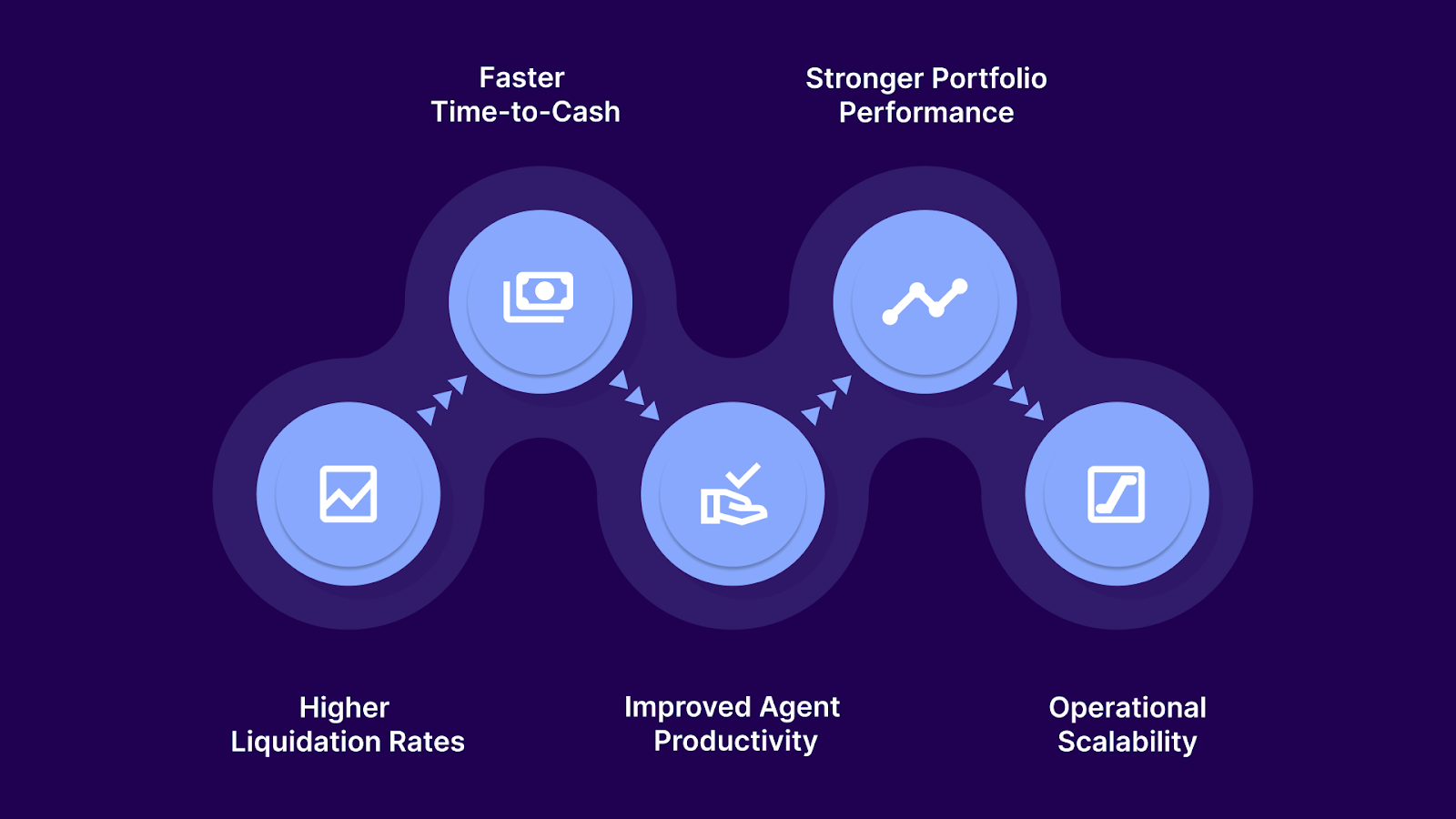
Instead of relying on volume, labor, and manual oversight, agencies gain predictable resolution velocity, lower compliance exposure, and tighter cost control. The impact is systemic, affecting engagement efficiency, agent productivity, portfolio performance, and regulatory risk.
Key operational benefits:
High-performing agencies use technology to increase conversion efficiency across the entire recovery lifecycle. However, disconnected systems, rigid automation, and manual compliance checks create operational drag across recovery teams.
In the next section, we look at the best practices that ensure recovery flows remain resilient, compliant, and conversion-driven at scale.
Suggested Read: How Optimized Payment Portals Boost Debt Recovery Rates
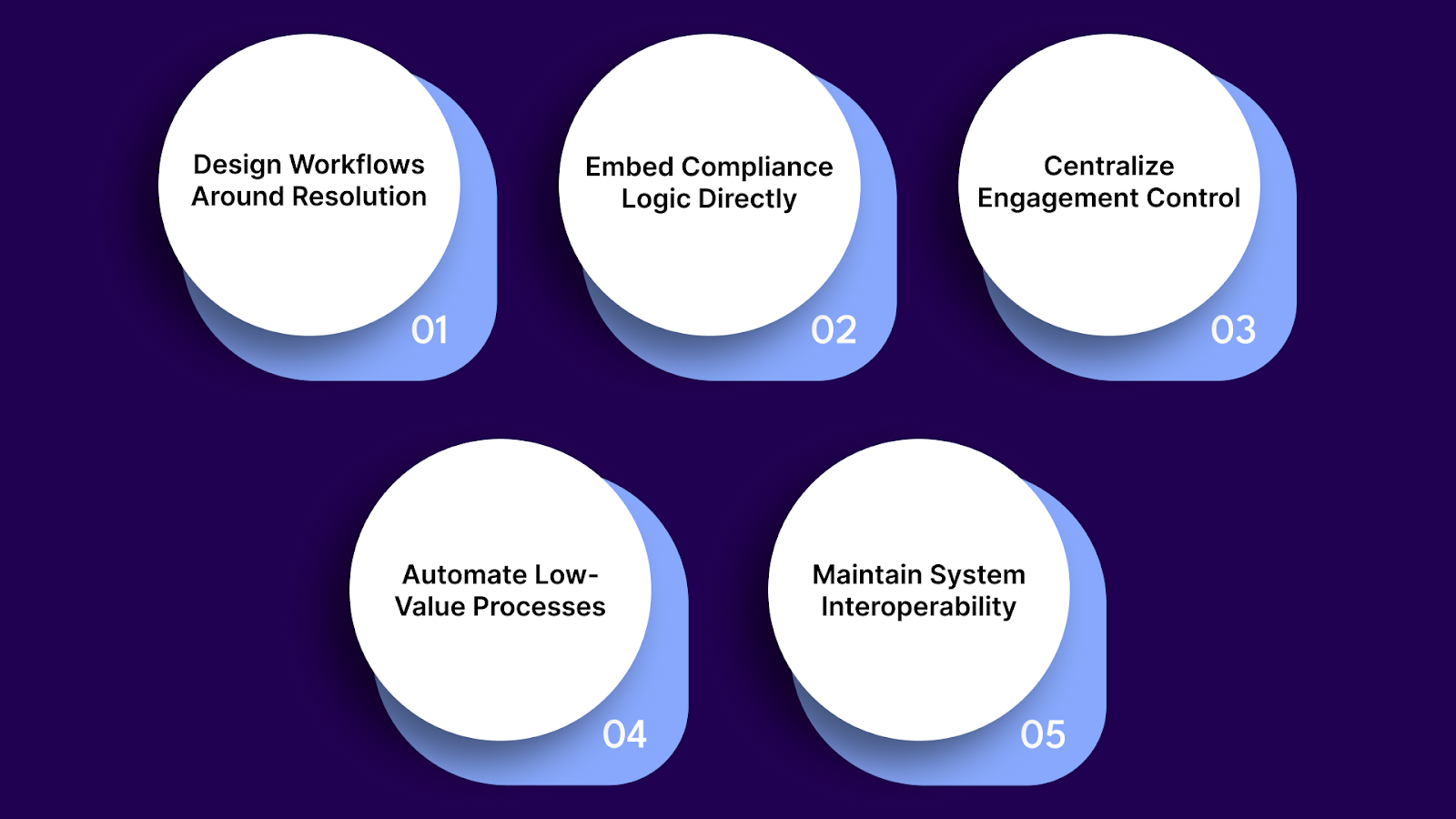
Technology improves recovery only when it is applied with operational discipline. Isolated tools, disconnected automation, and rigid workflows often add complexity without improving outcomes.
Best practices that drive measurable recovery improvement:
These best practices become significantly easier to implement when recovery flows are managed through a compliance-driven platform. In the next section, we look at how Tratta enables high-performance recovery execution at scale.
Tratta is a payments-first, compliance-driven debt recovery platform built for agencies that need speed, control, and scale. It unifies engagement, settlement logic, compliance enforcement, payments, and analytics into a single operational framework.
The result is faster execution, fewer handoffs, and recovery flows that convert intent into completed resolutions. Core features include:
The Consumer Self-Service Portal serves as the primary resolution channel, allowing consumers to review balances, select payment options, set up installment plans, submit disputes, and complete transactions without agent involvement. It shortens resolution cycles, reduces call volume, and improves completion rates by removing friction from the recovery journey.
Tratta embeds ACH, debit, credit, and digital payment methods directly into recovery workflows, eliminating handoffs and processing delays. Payment execution becomes part of the engagement flow rather than a separate backend function, improving speed, reliability, and settlement acceptance.
The Multilingual Payment IVR enables automated voice-based payments across multiple languages, expanding accessibility while reducing agent workload. It supports high-volume recovery environments by allowing consumers to resolve balances securely without live interaction.
Omnichannel Communications centralizes SMS, email, IVR, and digital messaging inside a single control layer, ensuring consistent engagement logic and regulatory alignment. This allows agencies to manage communication timing, sequencing, and frequency without channel conflict or redundancy.
Campaign Management enables agencies to configure, deploy, and automate engagement workflows across portfolios, segments, and behavioral cohorts. It supports dynamic engagement strategies that adapt based on response patterns, resolution timing, and payment outcomes.
Reporting & Analytics provides real-time visibility into engagement behavior, settlement performance, conversion metrics, and payment completion trends. These insights enable continuous recovery flow optimization by identifying friction points, performance gaps, and high-yield engagement paths.
Tratta integrates seamlessly with leading collection management systems, CRMs, and payment processors, enabling real-time data synchronization across operational platforms. This ensures recovery flows operate with accurate balances, account updates, and engagement signals at all times.
Enterprise Security safeguards sensitive consumer and payment data through SOC 2 Type II compliance, PCI Level 1 certification, encryption, tokenization, and access control. This provides the infrastructure needed to support regulated, high-volume recovery environments without increasing risk exposure.
Customization allows agencies to fully white-label the consumer experience, including portal branding, messaging tone, communication templates, payment pages, and domain presentation. This ensures consistent brand identity across every engagement and reinforces trust throughout the resolution journey.
Tratta changes debt recovery from a collection activity into a structured resolution system. It enables agencies to operate with higher precision, lower risk, and predictable recovery outcomes.
Without recovery flow optimization, debt collection operations become reactive, inefficient, and increasingly expensive. Fragmented engagement, rigid workflows, manual compliance processes, and payment friction lead to declining conversion, rising cost-to-collect, regulatory exposure, and unpredictable portfolio performance.
Tratta replaces fragmented collection workflows with structured recovery systems designed for speed and control. Its platform centralizes engagement, compliance enforcement, settlement execution, and payment processing. Built-in reporting provides continuous visibility for rapid strategy refinement.
If you are ready to optimize your recovery operations, Tratta offers a structured path forward. Schedule a demo to see how the right workflow can improve your recovery results.
Most agencies deploy foundational recovery flows within weeks. Advanced segmentation, automation, and optimization mature over several months through phased implementation, data refinement, performance monitoring, and iterative improvement.
Yes. Automated engagement, self-service resolution, and intent-based escalation reduce agent workload, allowing smaller teams to manage larger portfolios while maintaining or improving liquidation and compliance performance.
Embedded compliance logic standardizes rule enforcement, generates automated audit trails, reduces human error, and significantly improves documentation accuracy, leading to fewer violations, smoother audits, and lower remediation costs.
Yes. Different portfolios exhibit distinct payment behaviors, risk profiles, and regulatory sensitivities, requiring tailored engagement logic, settlement structures, timing strategies, and compliance controls to optimize recovery performance.
Agencies track improvements in liquidation rates, time-to-cash, cost-to-collect, agent productivity, reductions in compliance exposure, and portfolio-level performance trends, compared against historical recovery benchmarks and baselines.