9 Reasons to Offer Flexible Payment Terms With Interest to Boost Collections
Payment Processing
9 Reasons to Offer Flexible Payment Terms With Interest to Boost Collections
Published on:
August 3, 2026
Most repayment plans do not fail at the agreement stage. They fail a few weeks later when the numbers stop working for the consumer. A plan that seemed acceptable quickly becomes unsustainable, leading to missed payments, broken arrangements, and accounts slipping back into collections.
This repeated cycle slows recovery, increases operational effort, and makes outcomes unpredictable. It also reflects a broader market shift, with payment plan management solutions projected to reach an estimated USD 6.47 billion by 2033 as agencies move toward more adaptive strategies.
This is where flexible payment terms with interest become critical. Instead of locking accounts into rigid structures, they allow you to align repayment with consumer affordability and financial situation while preserving recovery value. In this article, we break down when to offer these plans, why they improve outcomes, how to structure them effectively, and what compliance considerations you need to consider.
Brief look:
Flexible repayment increases completion rates and reduces drop-offs. Rigid plans fail when they do not align with actual consumer affordability, leading to missed payments and broken agreements. Flexible structures keep consumers engaged and paying over time.
Interest-based plans protect total recovery without forcing settlements. Instead of accepting discounted lump sums, agencies can spread payments while maintaining or increasing overall recovery value by applying controlled interest.
Strategic timing improves recovery outcomes across account types. Flexible terms are most effective for high-balance, aging, or stalled accounts where standard repayment demands no longer work, helping convert low-probability accounts into active repayment streams.
Well-structured plans balance flexibility with control and compliance. Clear interest rules, minimum payment thresholds, and periodic reassessments ensure repayment remains predictable, enforceable, and aligned with legal requirements.
Scalable execution depends on automation and real-time visibility. Technology-driven workflows, segmentation, and self-service tools allow agencies to apply flexible repayment strategies consistently across large portfolios without increasing operational burden.
What Do Flexible Payment Terms Imply in Debt Collection?
Flexible payment terms move collections away from fixed, one-size-fits-all repayment structures toward plans that adjust based on a consumer's financial situation. Instead of enforcing uniform schedules, agencies can offer varied installment amounts, timelines, and interest-bearing options that make repayment more achievable without compromising total recovery value.
The need for flexibility becomes clearer when you look at where rigid approaches typically fail:
Fixed Installments Break Quickly: Standard monthly amounts often become unsustainable within weeks, leading to missed payments.
No Room for Adjustment: Static plans do not account for changing financial situations, leading to higher drop-off rates.
Low Engagement Levels: Consumers are less likely to commit when options feel unrealistic or inflexible.
Higher Rework for Teams: Broken plans require repeated outreach, renegotiation, and manual effort.
Inconsistent Recovery Outcomes: Rigid structures lead to unpredictable payment behavior and delayed resolution.
These gaps highlight a larger issue. Flexibility is not just a better experience. It is a more effective recovery strategy. The next question, then, becomes not whether you should offer it, but when it will have the most impact.
When Should Agencies Offer Flexible Payment Terms With Interest?
The impact of flexible repayment strategies depends on timing, account behavior, and the likelihood of recovery under standard terms. These are a few situations in which flexible terms can help you stabilize repayment without immediately reducing the account's overall value:
High-Balance Accounts Larger balances are harder to recover through lump-sum demands. Structured plans with interest make repayment more manageable while preserving total recovery over time. They also reduce the risk of accounts going completely dormant.
Early Signs of Financial Strain Missed payments, partial payments, or delayed responses often indicate affordability issues. Introducing flexibility early prevents accounts from deteriorating further. It also improves the chances of maintaining consistent engagement.
Stalled or Non-Responsive Accounts When outreach efforts stop producing results, rigid terms are often the barrier. Flexible options can re-engage account holders by offering a more realistic path forward. This helps revive accounts that might otherwise remain unresolved.
Long-Tail or Aging Debt Older accounts typically have lower recovery probabilities under standard strategies. Extended timelines with interest allow you to extract value gradually rather than write off balances. This approach improves recovery across aging portfolios.
Accounts with Partial Payment History Consumers who have already shown willingness to pay are strong candidates for structured plans. Flexibility helps convert irregular payments into consistent repayment behavior. It also builds momentum toward full resolution.
Managing these scenarios manually can quickly become inconsistent and difficult to scale. Tratta helps optimize decision-making and execution. With automated workflows, dynamic segmentation, and self-service payment options, you can deploy flexible, interest-based repayment strategies at scale while maintaining control and consistency. Schedule a free demo.
9 Reasons Flexible Payment Terms With Interest Drive Better Collections
Flexible repayment models change how repayment behavior unfolds, making it easier for consumers to stay engaged while allowing agencies to recover more value with less friction. When repayment aligns with affordability, collections become more consistent, scalable, and predictable.
These are 9 reasons to offer such plans to debt-ridden consumers:
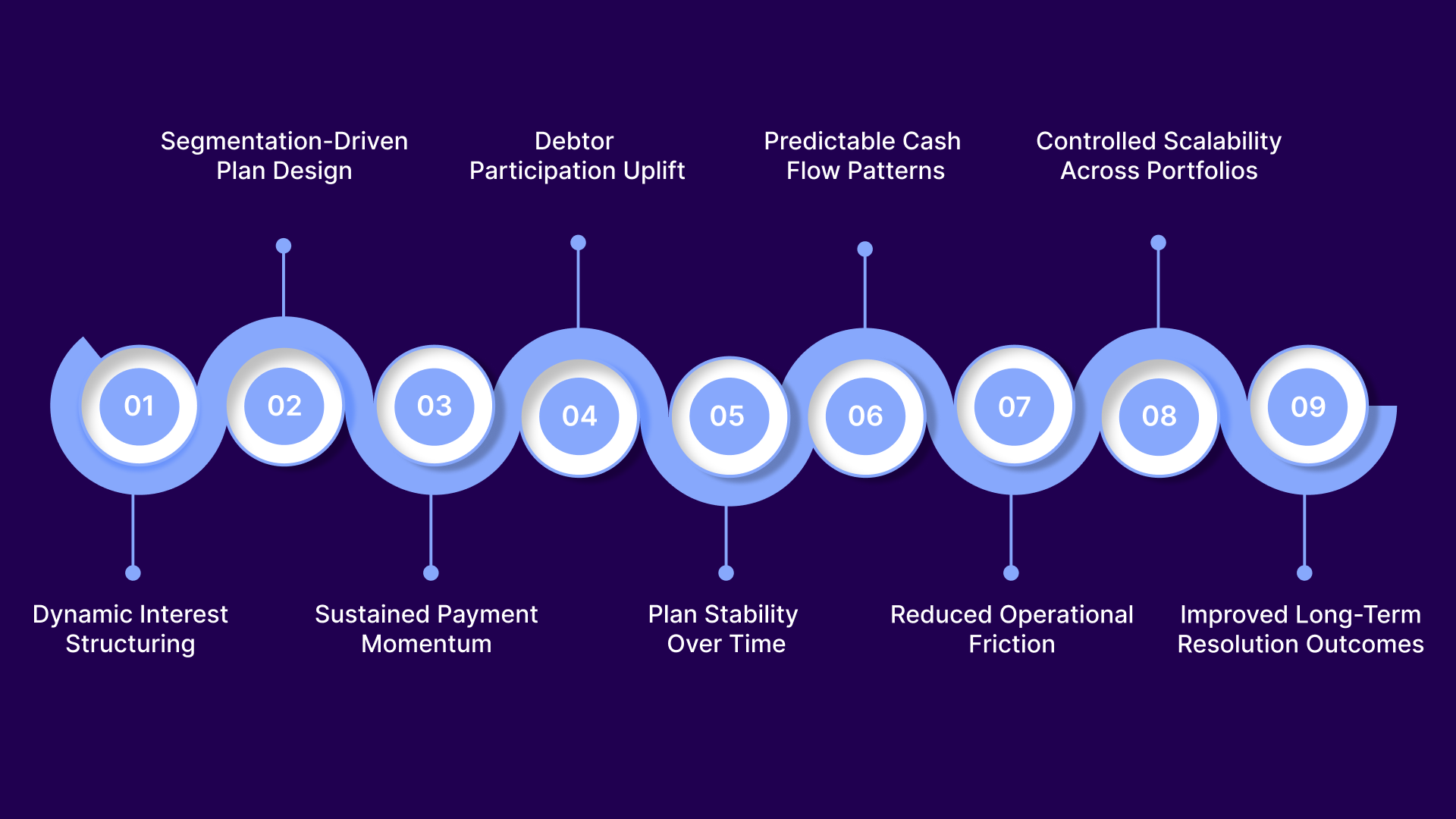
1. Dynamic Interest Structuring
Interest is not just a static add-on in flexible repayment models. It can be structured around timelines, balances, or payment behavior to maintain recovery value without overwhelming the consumer.
This is how dynamic interest structuring improves recovery control and sustainability:
Preserves total recovery value without forcing immediate full payment
Encourages continued repayment through manageable cost distribution
Reduces reliance on discounted settlements for resolution
2. Segmentation-Driven Plan Design
Flexible repayment works best when plans are tailored, not standardized. Segmenting accounts by balance, risk, and behavior ensures that each plan is aligned with recovery potential.
This is how segmentation-driven plan design improves repayment effectiveness at scale:
Higher plan acceptance rates across different account segments
Better alignment between repayment terms and consumer capacity
More consistent performance across diverse portfolios
3. Sustained Payment Momentum
Accounts stall when repayment expectations are unrealistic. Flexible plans keep payments moving, even if smaller, preventing accounts from going inactive over time.
This is how sustained payment momentum improves resolution consistency:
Reduced idle periods between payments
Quicker progression through repayment stages
Improved resolution timelines across portfolios
4. Debtor Participation Uplift
Consumers are more likely to respond when repayment options feel achievable. Flexibility removes the “all or nothing” barrier that often prevents meaningful engagement.
This is how flexibility increases participation and engagement in repayment:
Higher response rates to outreach efforts
Increased willingness to enter repayment plans
Stronger interaction across communication channels
5. Plan Stability Over Time
Most repayment plans fail midway due to financial strain. Flexible structures reduce that pressure, making plans more sustainable across longer repayment cycles.
This is how flexibility improves repayment plan stability and continuity:
Fewer broken arrangements requiring rework
Lower frequency of mid-plan drop-offs
Greater consistency in repayment behavior
6. Predictable Cash Flow Patterns
Irregular payments create uncertainty in collection performance. Structured flexibility ensures a steady flow of payments, even if smaller and distributed over time.
This is how flexibility improves recovery consistency and forecasting:
Broken plans and rigid structures increase manual intervention. Flexible repayment reduces repeat work by making plans more sustainable from the start.
This is how flexibility reduces operational friction and repetitive effort:
Fewer plan failures, reducing renegotiations and follow-ups
Lower agent involvement as consumers stay on track independently
More efficient resource allocation across collection workflows
8. Controlled Scalability Across Portfolios
Manual customization does not scale, but structured flexibility does. With the right frameworks, agencies can apply adaptive strategies to high-volume accounts.
This is how flexibility enables scalable and consistent recovery execution:
Standardized yet adaptable repayment frameworks
Easier management of high-volume portfolios
Consistent execution across account segments
9. Improved Long-Term Resolution Outcomes
Sustainable repayment leads to better resolution quality and fewer repeat delinquencies. Flexibility supports completion rather than short-term compliance or partial recovery.
This is how flexibility improves long-term recovery success and outcomes:
Higher likelihood of full account resolution
Improved consumer engagement and cooperation
Lower recurrence of unpaid balances
Each of these reasons points to a clear shift. Recovery improves when repayment is built around sustainability rather than rigidity. The next step is understanding how to structure these flexible models without losing control or consistency.
How Should Agencies Structure Open-Ended Repayment Plans?
Open-ended repayment plans require a careful balance between flexibility and control. While they allow consumers to repay based on changing financial situations and ability to pay, they must still be structured to protect recovery value and maintain consistency across accounts.
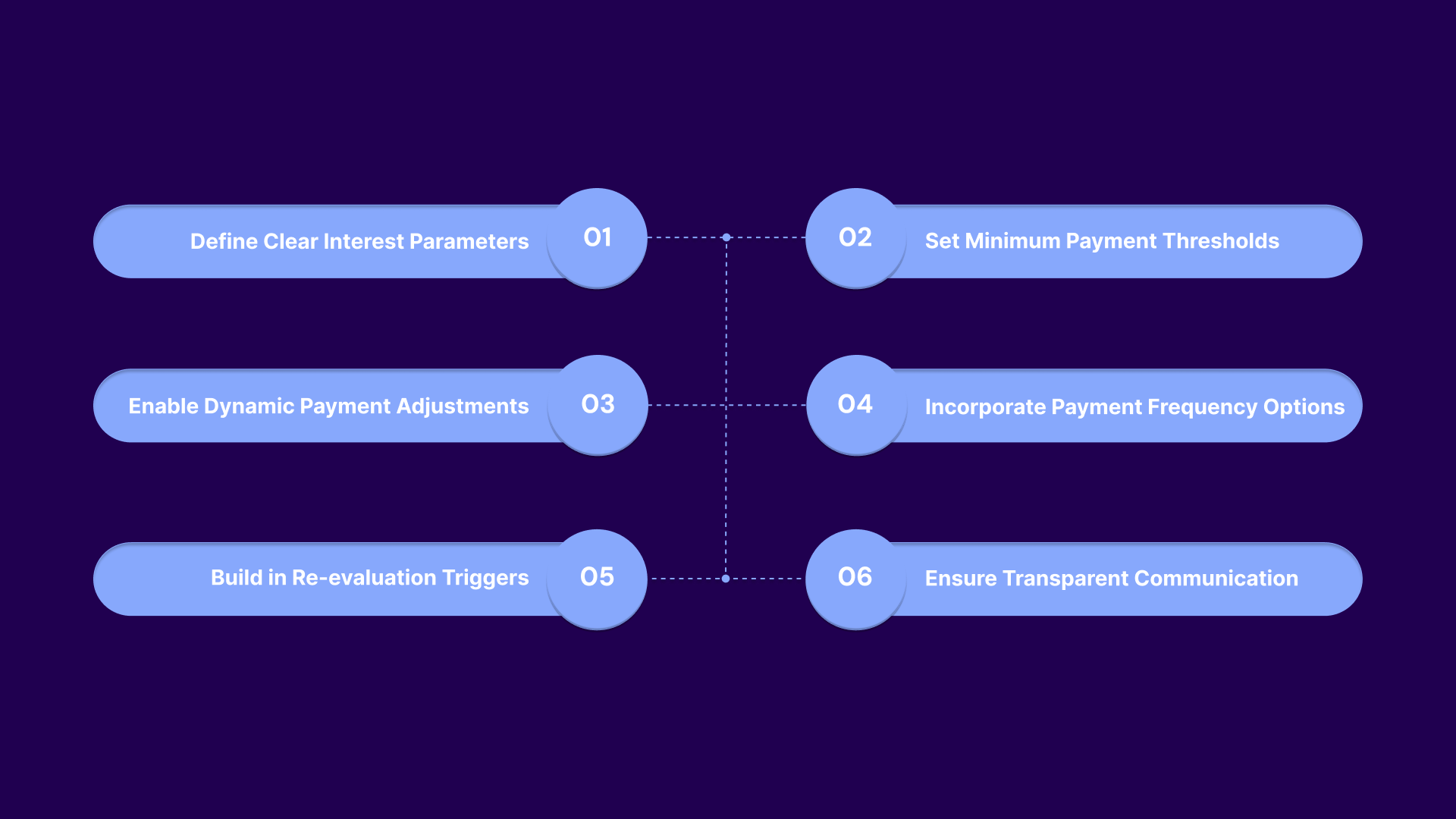
To ensure these plans remain effective and scalable, agencies should focus on the following:
Define Clear Interest Parameters: Establish how interest is calculated, applied, and adjusted over time to avoid ambiguity and ensure transparency.
Set Minimum Payment Thresholds: Allow flexibility while enforcing baseline payment expectations to maintain repayment momentum.
Enable Dynamic Payment Adjustments: Allow installment amounts to increase or decrease based on consumer behavior and financial situation.
Incorporate Payment Frequency Options: Offer weekly, biweekly, or monthly payment schedules to align with consumer income cycles.
Build in Re-evaluation Triggers: Periodically reassess plans based on missed payments, partial payments, or improved ability to pay.
Ensure Transparent Communication: Clearly outline terms, interest implications, and remaining balances at every stage.
Tratta enables agencies to design, automate, and scale these plans with accuracy through configurable workflows, embedded payments, and real-time monitoring. This ensures that flexibility remains controlled, compliant, and consistently effective across the entire portfolio. Call us to learn more.
Compliance Considerations for Debt Collectors When Charging Interest
While interest can improve recovery value, it must be applied within clearly defined regulatory boundaries to avoid disputes, penalties, or litigation. For agencies, this means ensuring that every interest-bearing plan is supported by proper authorization, accurate calculation, and transparent communication.
To stay compliant, debt collectors must account for the following:
Authorization Requirement (15 U.S.C. § 1692f(1) – FDCPA): Interest or fees can only be charged if expressly authorized by the agreement creating the debt or permitted by law.
Truth in Lending Considerations (15 U.S.C. § 1601 et seq. – TILA): May apply if a repayment plan creates a new extension of credit. In such cases, interest terms must be clearly disclosed.
State Usury Laws (Varies by State): Interest rates must not exceed state-specific caps, which vary by jurisdiction and debt type. For instance, in California, the general usury limit is 10%per year for many non-exempt loans under the California Constitution (Article XV).
Fair Credit Reporting Act (15 U.S.C. § 1681): Reported account balances must accurately reflect any interest applied to avoid disputes and compliance risks.
Unfair, Deceptive, or Abusive Acts or Practices (UDAAP – 12 U.S.C. § 5531): Interest structures must not be misleading, excessive, or unfairly applied.
Compliance in interest-based repayment is not just about avoiding risk. It is about building a process that is consistent, auditable, and defensible. This is where using the right technology becomes essential, enabling agencies to apply interest accurately, maintain transparency, and enforce compliance at scale.
Tratta is a cloud-based debt collection and recovery platform that brings together payments, communication, and automation into a single system. It helps agencies execute recovery strategies with greater precision while maintaining consistency and compliance.
It also gives agencies the ability to structure repayment in a way that consumers can realistically sustain, turning stalled or high-risk accounts into steady, recoverable revenue streams.
To support flexible repayment strategies, Tratta enables:
Consumer Self-Service Payment Portal: Consumers can access balances, choose repayment options, and manage plans without agent involvement. This shifts repayment from reactive follow-ups to continuous, self-directed resolution, improving plan adherence.
Payments and Merchant Services: Integrated payment infrastructure supports multiple methods and seamless transactions within a single flow. This removes friction at the point of payment and increases the likelihood of consistent installments.
Multilingual Payment IVR: Automated voice-based payment access allows consumers to make payments and manage plans without logging into a portal. This expands accessibility and keeps repayment active even outside digital channels.
Omnichannel Communications: Outreach spans phone, SMS, and email, ensuring consumers receive timely reminders and updates across preferred channels. This keeps repayment top of mind and reduces missed or delayed payments.
Campaign Management: Campaigns use segmentation, scheduling, and trigger-based workflows to guide repayment behavior. This allows you to deploy flexible repayment strategies at scale while maintaining control over timing and engagement.
Reporting and Analytics: Every interaction, payment, and plan performance metric is tracked in real time. This makes it easier to identify which flexible repayment strategies are working and optimize them continuously.
Customization and Flexibility: Workflows, policies, and repayment structures can be configured to match your collection strategy. This ensures flexible payment terms are applied consistently without losing control over collection rules and compliance requirements.
Integrations: REST API connectivity ensures repayment data flows easily across your existing systems. This keeps flexible repayment strategies aligned with your broader collections and financial operations.
Security and Compliance: Built-in safeguards ensure that repayment plans, interest application, and communication remain secure and compliant. This reduces risk while maintaining transparency across all accounts.
Contact Center: A unified console supports two-way messaging, ticketing, and interaction tracking between agents and consumers. This ensures repayment discussions, adjustments, and agreements are documented and managed efficiently.
Flexible repayment strategies only work when they can be executed consistently at scale. Tratta makes that possible by combining automation, payments, and control into a single platform. It simplifies complexity, strengthens recovery performance, and gives consumers a smarter way to manage debt.
Conclusion
Rigid repayment strategies often fail not because consumers refuse to pay, but because the structure does not hold over time. Fixed plans break, engagement drops, and accounts cycle through repeated follow-ups without meaningful progress. This leads to inconsistent recovery, higher operational effort, and missed opportunities to maximize long-term value.
Tratta helps agencies move beyond these limitations by enabling flexible, interest-based repayment strategies that are structured, automated, and scalable. With self-service payments, dynamic plan configuration, automation, and real-time tracking, it ensures that flexibility does not come at the cost of control or compliance.
Build smarter repayment strategies that actually hold. Get in touch with us to scale collections with flexibility and control.
Frequently Asked Questions
1. How long should a flexible payment plan last?
Flexible payment plans should balance affordability and recovery speed, typically lasting between 3 and 12 months. Longer terms may improve completion rates but can delay full recovery and increase default risk.
2. What interest rate is reasonable for collection payment plans?
Interest rates must comply with state usury laws and underlying agreements. Many agencies apply modest, clearly disclosed rates that encourage repayment while remaining fair, transparent, and legally enforceable.
3. Can collection agencies legally charge interest on debt?
Yes, agencies can charge interest if it is authorized by the original agreement or permitted by state law. The Fair Debt Collection Practices Act requires clear disclosure and prohibits unauthorized or excessive charges.
4. Do flexible payment terms improve debt recovery rates?
Yes, flexible payment terms can improve recovery rates by making payments more affordable and reducing default risk. They also increase consumer engagement and willingness to resolve outstanding balances over time.
5. When should agencies offer flexible payment terms with interest?
Flexible terms with interest are most effective for high-balance, aging, or stalled accounts where standard repayment structures fail. They help maintain engagement while preserving total recovery value. When applied strategically, they turn low-probability accounts into structured, recoverable revenue.
Note: This information is not legal advice. Tratta recommends that you consult with your legal counsel to make sure that you comply with applicable laws in connection with your collection and outreach activities.
Sign up for our monthly newsletter
Debt collection insights that keep you compliant and competitive.
Thank you! Your submission has been received!
Oops! Something went wrong while submitting the form.