5 Best White Label Debt Collection Portals With Custom Domain in 2026
Industry & Trends
5 Best White Label Debt Collection Portals With Custom Domain in 2026
Published on:
August 3, 2026
Consumers are less likely to trust generic payment links and unfamiliar collection portals when resolving sensitive financial obligations. That shift is pushing agencies to invest in more branded and digital-first recovery experiences.
The global debt collection software market is projected to grow to USD 13.77 billion by 2034. For third-party collection agencies, white-labeled portals with custom domains can help improve consumer trust, payment completion rates, and overall engagement.
In this article, we compare the best white-label debt collection portals with custom domain support in 2026 for U.S. collection agencies.
In brief:
White-labeled collections portals improve consumer trust. Branded domains and customized payment experiences can create more consistent digital interactions during debt resolution.
Platforms like Tratta, Artiva RM, Collect!, Debt Manager, and Quantrax support different collections workflows. Some focus on consumer self-service and payments, while others prioritize enterprise automation and operational scalability.
Custom-domain support helps agencies maintain stronger brand visibility. Many platforms allow agencies to replace third-party URLs with branded consumer-facing portals.
Compliance and integration capabilities matter during platform selection. Agencies should evaluate audit controls, communication oversight, APIs, and payment infrastructure before choosing a solution.
Agencies should compare customization flexibility and deployment requirements carefully. The right platform depends on operational complexity, recovery strategy, and long-term scalability needs.
What Is a White Label Debt Collection Portal With a Custom Domain?
A white-label debt collection portal with a custom domain is a consumer-facing payment and account management platform that collection agencies can brand as their own.
Instead of sending consumers to a third-party software URL, agencies can use branded domains like payments.agencyname.com or portal.agencyname.com to create a more consistent and trustworthy recovery experience.
Most white-labeled debt collection portals include features such as:
Custom Domain Hosting: Use branded URLs instead of third-party software domains.
Consumer Self-Service Portals: Allow consumers to view balances, manage accounts, and make payments online.
Branded Payment Experiences: Customize logos, colors, emails, and portal interfaces.
Payment Plan Management: Support installment plans, settlements, and recurring payments.
Omnichannel Communication: Connect SMS, email, voice, and digital outreach within one platform.
Compliance and Audit Controls: Maintain communication records, payment tracking, and workflow visibility.
API and System Integrations: Connect with CRMs, payment processors, dialers, and collections systems.
Agencies are increasingly using white-labeled portals to improve trust, increase collections, and simplify payment workflows. In the next section, we will look at the key benefits of using white-labeled portals in debt collection.
Benefits of Using White-Labeled Portals in Debt Collection
A cross-generational debt collection study argues against “one-size-fits-all” communication strategies and supports more personalized consumer engagement approaches. That shift has made white-labeled portals and custom domains increasingly important for third-party collection agencies looking to improve trust, engagement, and payment completion rates.
Some of the biggest benefits of using white-labeled debt collection portals include:
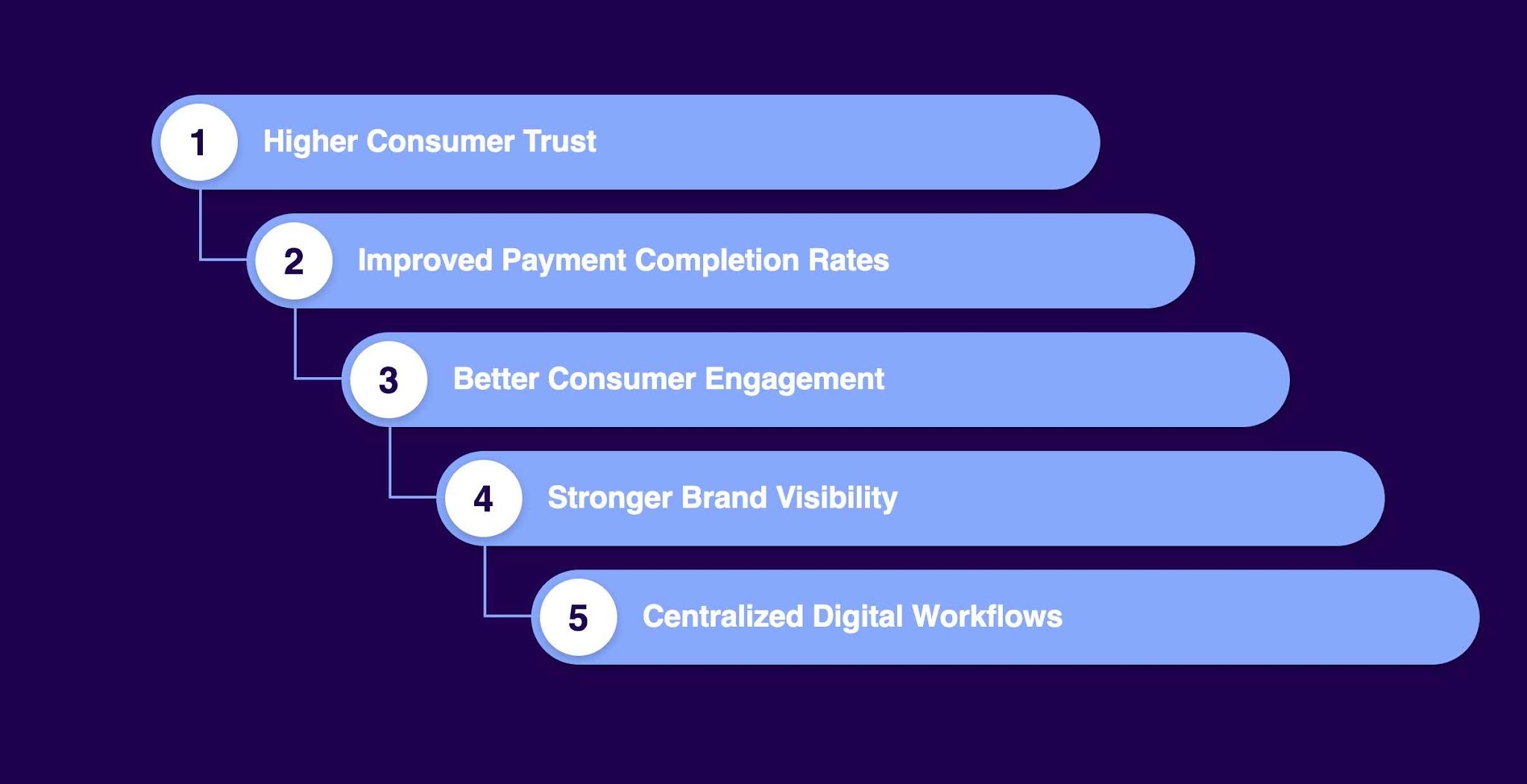
Higher Consumer Trust: Branded domains and customized portals help reduce confusion around payment links and account access.
Improved Payment Completion Rates: Familiar branding can create a smoother and more credible payment experience.
Better Consumer Engagement: Agencies can deliver more personalized digital interactions across portals, SMS, email, and payment workflows.
Stronger Brand Visibility: White-labeled environments keep the agency’s branding consistent throughout the collections process.
Centralized Digital Workflows: Agencies can manage communication, payments, and account activity from a single platform.
As demand for digital-first collections infrastructure continues to grow, many platforms now offer varying levels of white-label customization, custom-domain support, and consumer self-service functionality. In the next section, we will compare some of the best third-party debt collection portals offering just that.
Top White Label Debt Collection Platforms: Quick Comparison
The table below compares some of the top platforms based on their ideal use cases, branding capabilities, and core differentiators.
Platform
Best For
White-Label & Domain Support
Key Differentiator
Tratta
Digital-first third-party agencies
Explicit white-labeled portals and branded domains
Embedded payments with compliance-focused consumer self-service
Artiva RM by Finvi
Enterprise-scale recovery operations
Configurable branded engagement environments
Advanced workflow automation and portfolio segmentation
Collect! by Comtech Systems
Agencies needing infrastructure flexibility
Explicit white-label portals with custom-domain hosting
Cloud and on-premise deployment flexibility
Debt Manager by C&R Software
Large multi-portfolio recovery ecosystems
Configurable digital engagement environments
Enterprise recovery orchestration and operational analytics
Quantrax
Communication-heavy collections operations
Configurable collections environments
Integrated outbound workflow and dialer infrastructure
Each platform approaches white-label collections differently, with varying strengths across consumer engagement, workflow automation, infrastructure flexibility, and operational scale. These are compared in more detail in the next section.
Top White Label Debt Collection Portals for Third-Party Agencies
These platforms help agencies create branded self-service environments while supporting compliance, omnichannel communication, payment workflows, and operational scalability. Below are some of the top debt collection platforms offering white-label capabilities and custom-domain support for U.S. third-party agencies.
1. Tratta
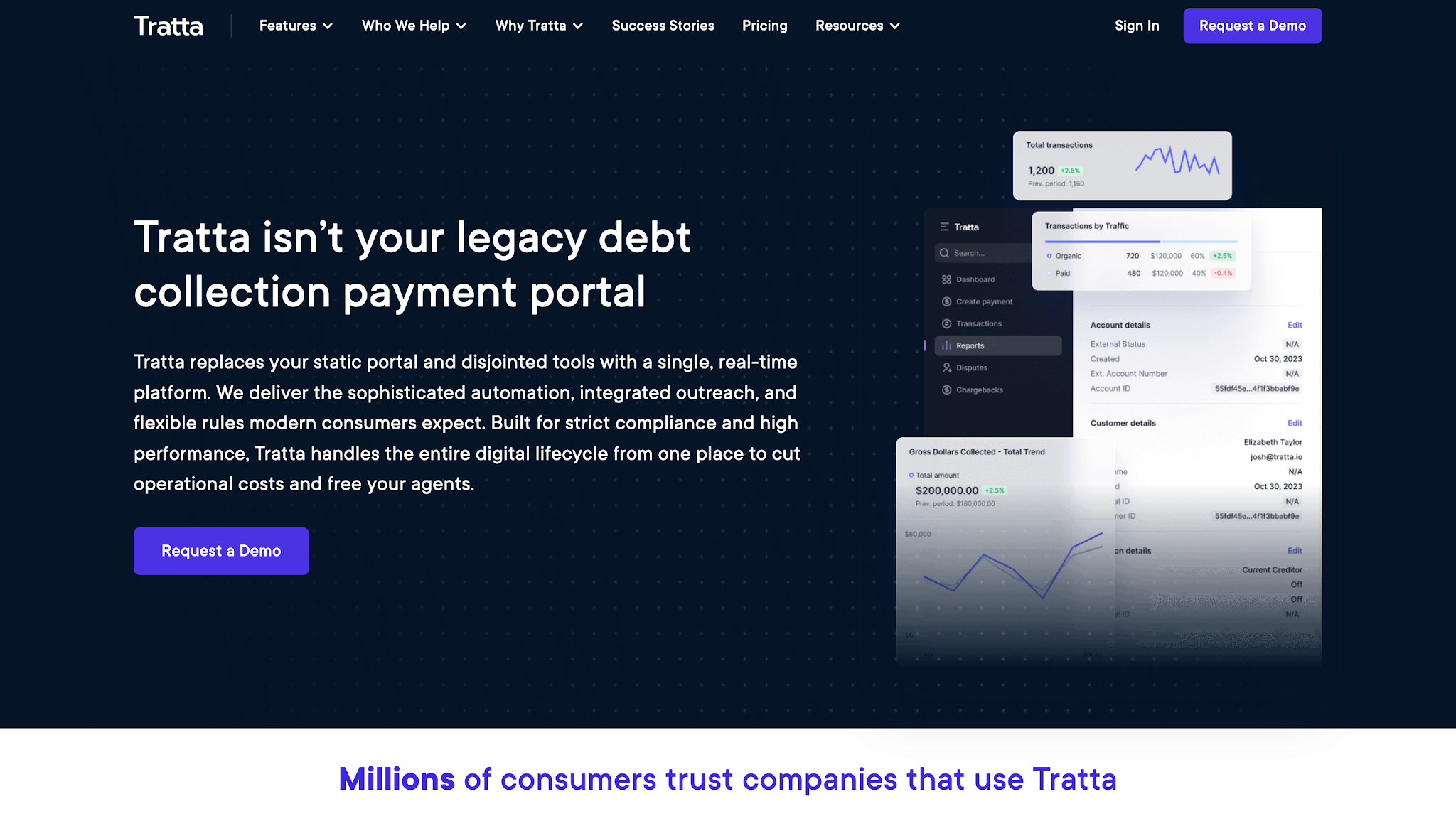
Tratta is an advanced collections platform designed specifically for collection agencies, debt buyers, and collection law firms. The platform differentiates itself through fully white-labeled consumer portals, custom-domain support, and embedded payment infrastructure built directly into the collections workflow. Its REST APIs and open integration support make it suitable for agencies building digital-first recovery environments.
Advanced implementations may require onboarding support
Better suited for mid-size and enterprise agencies
Some integrations depend on API configuration
2. Artiva RM
Artiva RM by Finvi is an enterprise debt collection platform widely used across healthcare recovery, financial services, and third-party collections environments. The platform is known for large-scale workflow automation, portfolio segmentation, and operational orchestration across complex recovery operations.
Key Features
Workflow Automation: Automates account routing, prioritization, and recovery strategies.
Portfolio Segmentation: Supports targeted workflows across different account categories.
Digital Consumer Engagement: Enables email, SMS, and digital communication workflows.
Enterprise Scalability: Designed for high-volume recovery operations and large portfolios.
Compliance Oversight: Supports permissions, tracking, and operational reporting.
Expanded Capabilities
Enterprise analytics dashboards
Multi-client operational environments
Payment processing integrations
Omnichannel communication management
Custom reporting tools
Cons
Enterprise deployments can increase implementation time
Smaller agencies may not use all available functionality
Some customizations may require vendor involvement
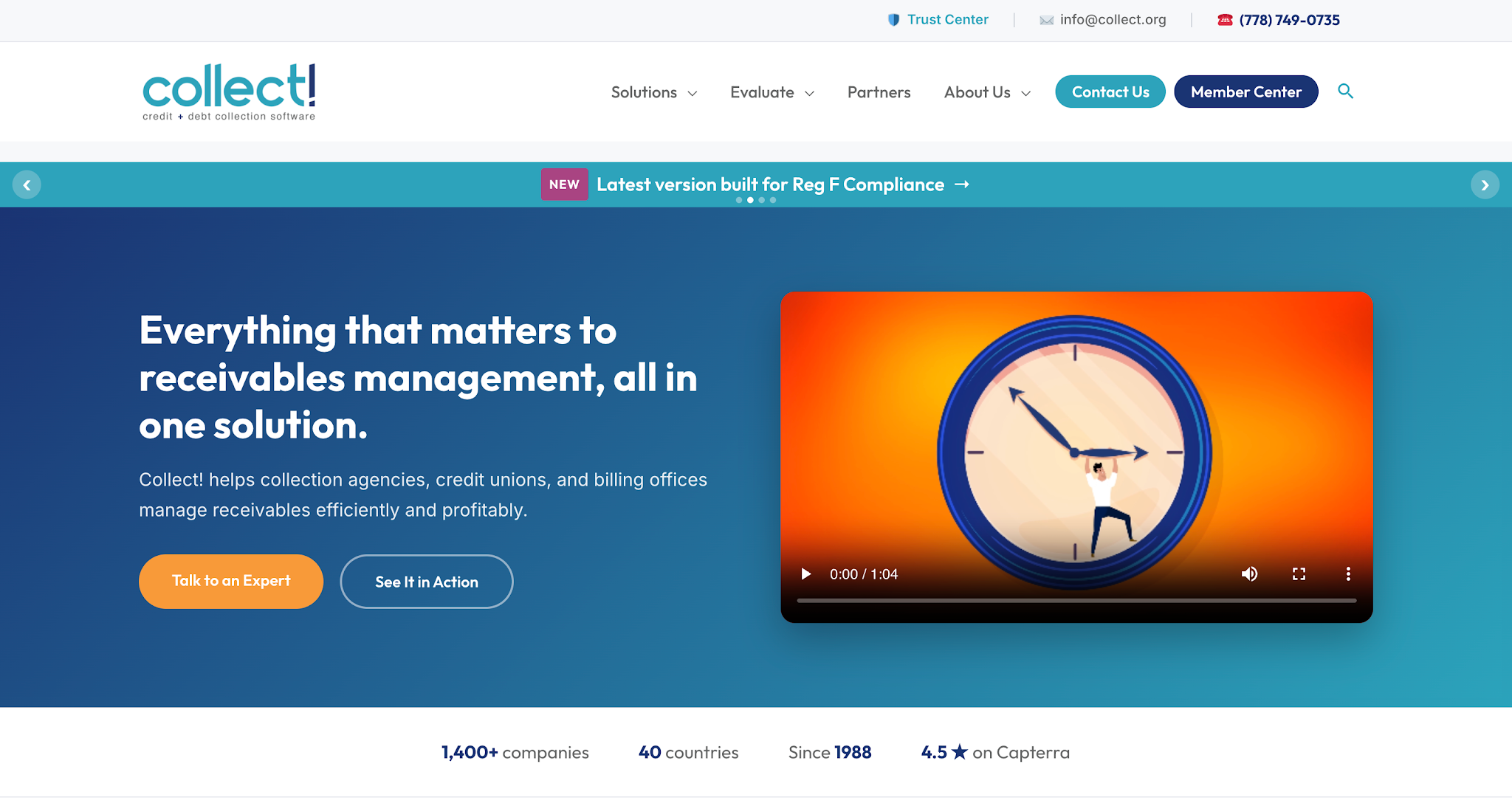
3. Collect!
Collect! is a long-standing collections platform used by third-party agencies across the United States. The software explicitly supports white-label branding and custom-domain deployment for debtor-facing portals and payment workflows. Its flexible deployment options also make it attractive for agencies that want deeper operational and infrastructure control.
Key Features
White-Label Branding: Supports customized portals, emails, and agency branding.
Custom Domain Hosting: Allows agencies to host portals under branded domains.
Debtor Self-Service Tools: Enables online payments and account management.
Flexible Deployment Models: Supports cloud and on-premise environments.
Workflow Customization: Allows agencies to tailor collections processes and automation.
Expanded Capabilities
Payment gateway integrations
Multi-office operational support
Reporting and analytics tools
Automated task scheduling
User permission management
Cons
Older interface compared to newer digital-first collections platforms
Custom deployments may require internal IT involvement
Some modern consumer engagement tools depend on third-party integrations
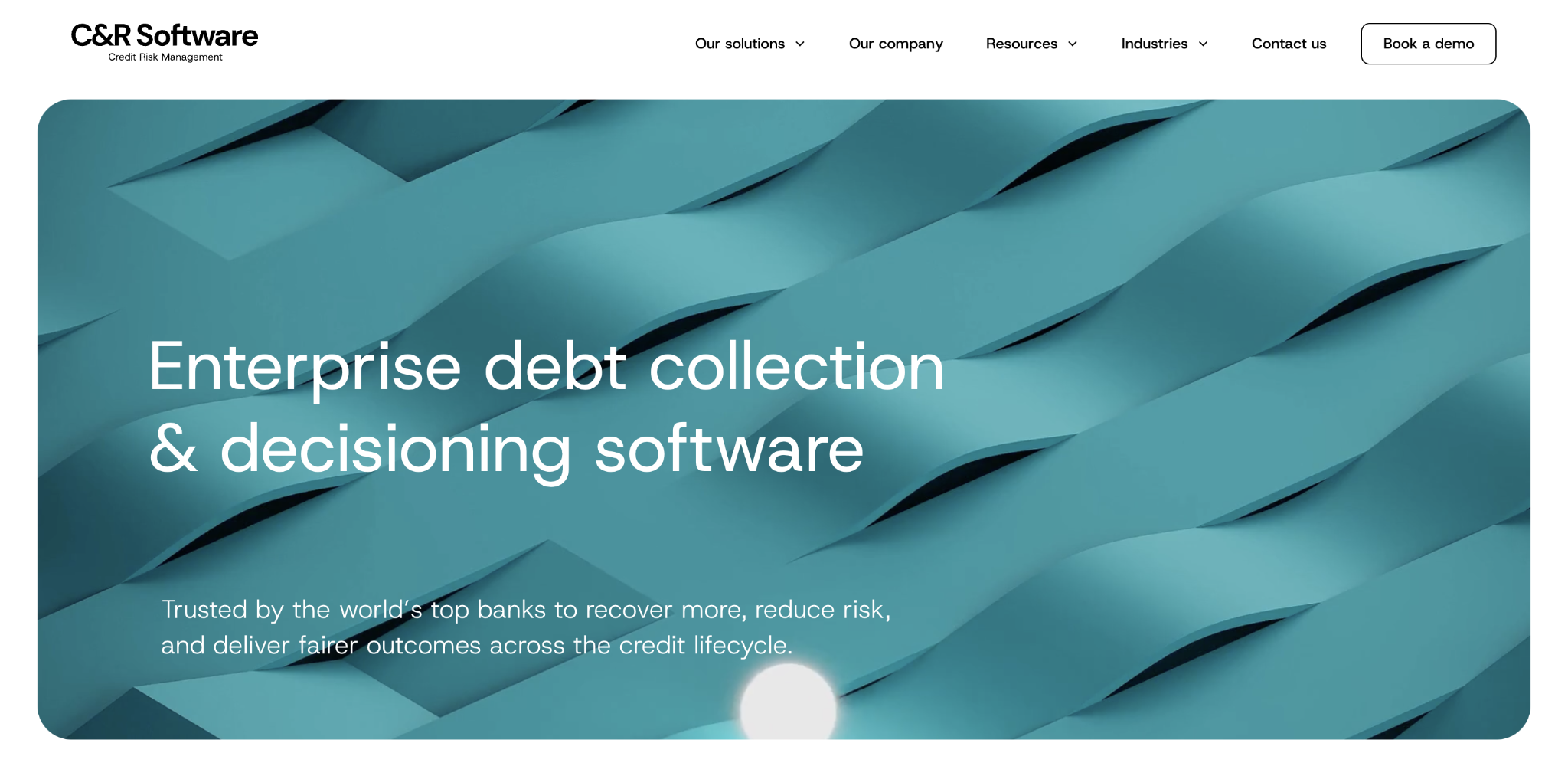
4. Debt Manager
Debt Manager by C&R Software is an enterprise collections and recovery platform focused on large-scale operational orchestration. The platform is commonly used across financial services and recovery environments requiring configurable workflows, omnichannel engagement, and centralized recovery management. Debt Manager stands out for its enterprise-scale recovery strategy management and operational visibility tools.
Key Features
Enterprise Recovery Orchestration: Manages complex recovery workflows across multiple portfolios, business units, and collection stages.
Strategy-Based Collections Management: Allows agencies to configure recovery paths, prioritization rules, and account treatments.
Omnichannel Consumer Engagement: Supports coordinated outreach across digital and traditional communication channels.
Operational Intelligence and Analytics: Provides performance visibility into recovery operations, workflows, and account activity.
Scalable Multi-Region Infrastructure: Supports large-scale collections environments operating across teams and jurisdictions.
Expanded Capabilities
Multi-region operational support
API connectivity options
Digital payment integrations
Compliance monitoring workflows
Enterprise reporting dashboards
Cons
Enterprise-focused structure may feel excessive for smaller agencies
Implementation and workflow configuration can take longer
Pricing and deployment complexity may not suit lean operations
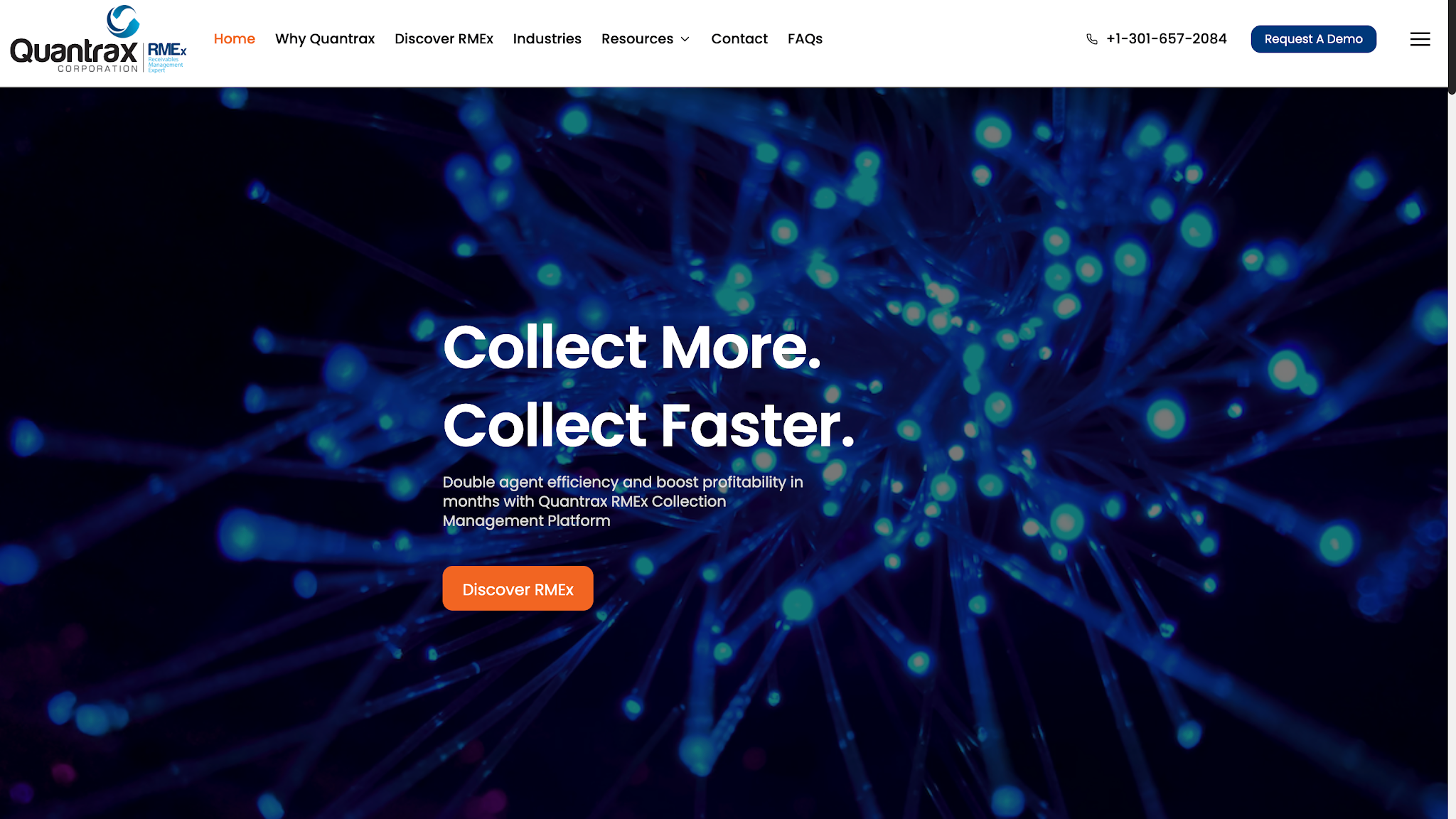
5. Quantrax
Quantrax is a U.S.-based collections platform focused heavily on operational workflow management and outbound recovery activity. The platform is widely used by third-party collection agencies that require integrated communication infrastructure alongside account management workflows. Quantrax is particularly suited for agencies managing communication-heavy collections environments and large outbound operations.
Key Features
Integrated Communication Infrastructure: Combines outbound engagement with collections workflows.
Operational Workflow Management: Centralizes account activity and recovery operations.
Third-Party Agency Focus: Built specifically for ARM and collections environments.
Collections Automation: Streamlines account tracking and workflow management.
Operational Reporting: Provides visibility into account and team performance.
Expanded Capabilities
Dialer integrations
Portfolio management tools
Multi-user access controls
Payment workflow support
Workflow configuration tools
Cons
Consumer self-service experiences are less emphasized than operational workflows
UI prioritizes functionality over modern visual design
Advanced reporting and customization may involve additional setup effort
Each platform approaches white-label collections differently. In the next section, we will look at how to determine which white-label debt collection portal is right for your organization.
Which White-Label Debt Collection Portal Is Right for You?
Third-party agencies need to assess how well a platform supports consumer engagement, payment workflows, operational scalability, compliance management, and long-term customization needs. The best fit often depends on your agency size, portfolio complexity, communication strategy, and preferred recovery workflows.
When comparing platforms, here are some important factors to evaluate:
Custom Domain Flexibility: Check whether the platform explicitly supports branded URLs, white-label hosting, and customizable consumer-facing environments.
Compliance and Audit Controls: Look for features like communication tracking, permissions, audit trails, and regulatory workflow support.
Integration Capabilities: Review whether the platform integrates with your CRM, dialers, payment processors, and existing collections infrastructure.
Workflow Customization: Consider how much control you have over recovery strategies, communication flows, and operational configurations.
Deployment Requirements: Some platforms are easier to implement, while others may require deeper onboarding or enterprise configuration support.
Some agencies may prioritize modern self-service experiences and branded portals, while others may focus more on workflow orchestration, operational depth, or enterprise scalability. Assessing your recovery goals, operational structure, and consumer engagement priorities can help narrow down the right white-label collections platform for your organization.
Conclusion
Choosing the wrong debt collection portal can create operational bottlenecks and fragmented communication workflows. It can also lead to inconsistent consumer experiences and lower payment completion rates. Platforms without customization flexibility or scalable infrastructure may make compliance oversight and consumer engagement harder to manage.
Tratta combines white-labeled consumer portals, custom-domain support, embedded payments, compliance-focused workflows, and REST APIs and open integration flexibility. Its digital-first infrastructure helps agencies create consistent consumer experiences while maintaining visibility across communication, payment, and recovery workflows.
Looking to improve your collections infrastructure with branded consumer experiences and custom-domain flexibility?Schedule a demo today.
Frequently Asked Questions
1. How do white-labeled debt collection portals improve consumer trust?
Branded portals and custom domains create a more familiar digital experience for consumers. They can also reduce uncertainty around payment links and account verification.
2. Can collection agencies customize outreach workflows inside white-label portals?
Many platforms allow agencies to configure automated outreach sequences across SMS, email, reminders, and account notifications based on recovery strategies.
3. Do white-label collections platforms support installment plans and settlements?
Yes. Most collections platforms allow consumers to manage recurring payments, settlement offers, and flexible repayment arrangements online.
4. What security capabilities should agencies evaluate in a white-label collections portal?
Agencies should look for encryption standards, audit logs, access controls, multi-factor authentication, and regulatory oversight tools when comparing platforms.
5. Can white-label debt collection portals support multiple creditor portfolios?
Many third-party agencies use white-labeled platforms to manage separate creditor accounts, engagement strategies, and consumer experiences within one environment.
Note: This information is not legal advice. Tratta recommends that you consult with your legal counsel to make sure that you comply with applicable laws in connection with your collection and outreach activities.
Sign up for our monthly newsletter
Debt collection insights that keep you compliant and competitive.
Thank you! Your submission has been received!
Oops! Something went wrong while submitting the form.