7 Custom Branded Debt Collection Portal Tools for Agencies in 2026
Strategies for Debt Collection
7 Custom Branded Debt Collection Portal Tools for Agencies in 2026
Published on:
August 3, 2026
Managing multiple creditor clients with rigid collection software can quickly turn into an operational headache. Agencies today need branded consumer experiences, flexible workflows, and compliance controls that adapt to different portfolios without slowing teams down.
The global debt collection software market size is projected to grow from USD 6.56 billion in 2026 to USD 13.77 billion by 2034. This shows how rapidly agencies are investing in collections technology. If you are struggling to balance customization, scalability, and consumer engagement, you are not alone.
In this article, we review the best custom-branded debt collection portal tools for third-party agencies in 2026, including their customization capabilities, ideal use cases, and standout features.
Brief look:
Third-party collection agencies now require branded consumer experiences, configurable workflows, and scalable recovery operations from one platform.
Customization goes beyond branding. The best platforms support workflow automation, repayment configuration, client-specific rules, and operational adaptability alongside white-label experiences.
The top platforms vary by focus. Tratta, Latitude by Genesys, Velosidy by Finvi, Collect!, C&R Debt Manager, InterProse ACE, and RMEx by Quantrax each prioritize different operational strengths.
Operational fit matters most. Agencies should evaluate how well a platform supports their recovery structure, compliance requirements, account volumes, and creditor relationships.
Branding and workflows both matter. Agencies need systems that balance consumer-facing experiences with internal operational flexibility and recovery process control.
What Is a Custom Branded Debt Collection Portal in Third-Party Recovery?
A custom-branded debt collection portal is a consumer-facing payment and communication platform that third-party collection agencies can tailor to their operational and client requirements.
In third-party recovery, agencies often manage accounts for multiple clients with varying compliance obligations, settlement structures, and consumer engagement strategies. A customizable portal helps agencies create more consistent, scalable, and consumer-friendly collection experiences while maintaining operational control.
Customization is no longer just a convenience feature in debt collection software. In the next section, we will look at why branding and personalization have become increasingly important for third-party debt collection agencies in 2026.
Importance of Branding for Third-Party Debt Collection
Third-party debt collection has become increasingly consumer-experience driven. Around 70% of consumers now prefer digital self-service options for resolving debt, including online portals and self-managed payment experiences.
For agencies, this means the collections process can no longer feel disconnected, outdated, or difficult to navigate. A customizable branded portal helps agencies create more consistent and trustworthy interactions while maintaining flexibility across portfolios.
Strong branding and customization can help agencies:
Support Multi-Client Operations: Agencies can configure different workflows, disclosures, and portal experiences for different creditor accounts.
Adapt to Compliance Requirements: Flexible configurations make it easier to manage jurisdiction-specific disclosures and workflows.
Enhance Payment Experiences: Personalized repayment options can improve engagement and reduce friction during collections.
Scale Without Rebuilding Processes: Agencies can adjust workflows and branding without constantly relying on developers or system overhauls.
Tratta helps third-party agencies customize branded consumer portals, repayment workflows, disclosures, and communication templates from a single platform. Its flexible configuration supports multi-client operations without requiring extensive development resources. Request a free demo today.
Best Custom Branded Debt Collection Portal Tools for Third-Party Recovery
The right platform should support branded consumer experiences, configurable workflows, compliance flexibility, self-service repayment options, and operational scalability across multiple creditor clients. Some platforms focus heavily on consumer engagement and white-label experiences, while others prioritize enterprise workflow customization and flexible account management.
The comparison table below highlights various differences in the top debt collection platforms for third-party recovery.
Platform
Best For
Strongest Customization Area
Administrative Strength
Consumer Portal Branding
Tratta
Agencies needing branded consumer experiences
No-code workflow and portal customization
Multi-client operational control
Strong
Latitude by Genesys
Enterprise recovery operations
Workflow automation and account routing
Large-scale workflow oversight
Moderate
Velosidy by Finvi
Agencies modernizing collection operations
Configurable collection processes
Cloud-based operational scalability
Moderate
Collect!
Mid-sized collection agencies
Adaptable collection workflows
Simplified operational management
Moderate
C&R Debt Manager
Large recovery organizations
Structured recovery strategy configuration
Cross-department recovery management
Limited
InterProse ACE
Agencies managing growing account inventories
Client-specific account management setup
Centralized collections oversight
Moderate
RMEx by Quantrax
Collection law firms and legal recovery teams
Litigation workflow configuration
Legal recovery coordination
Limited
Each platform is explained in more detail below, including its standout features:
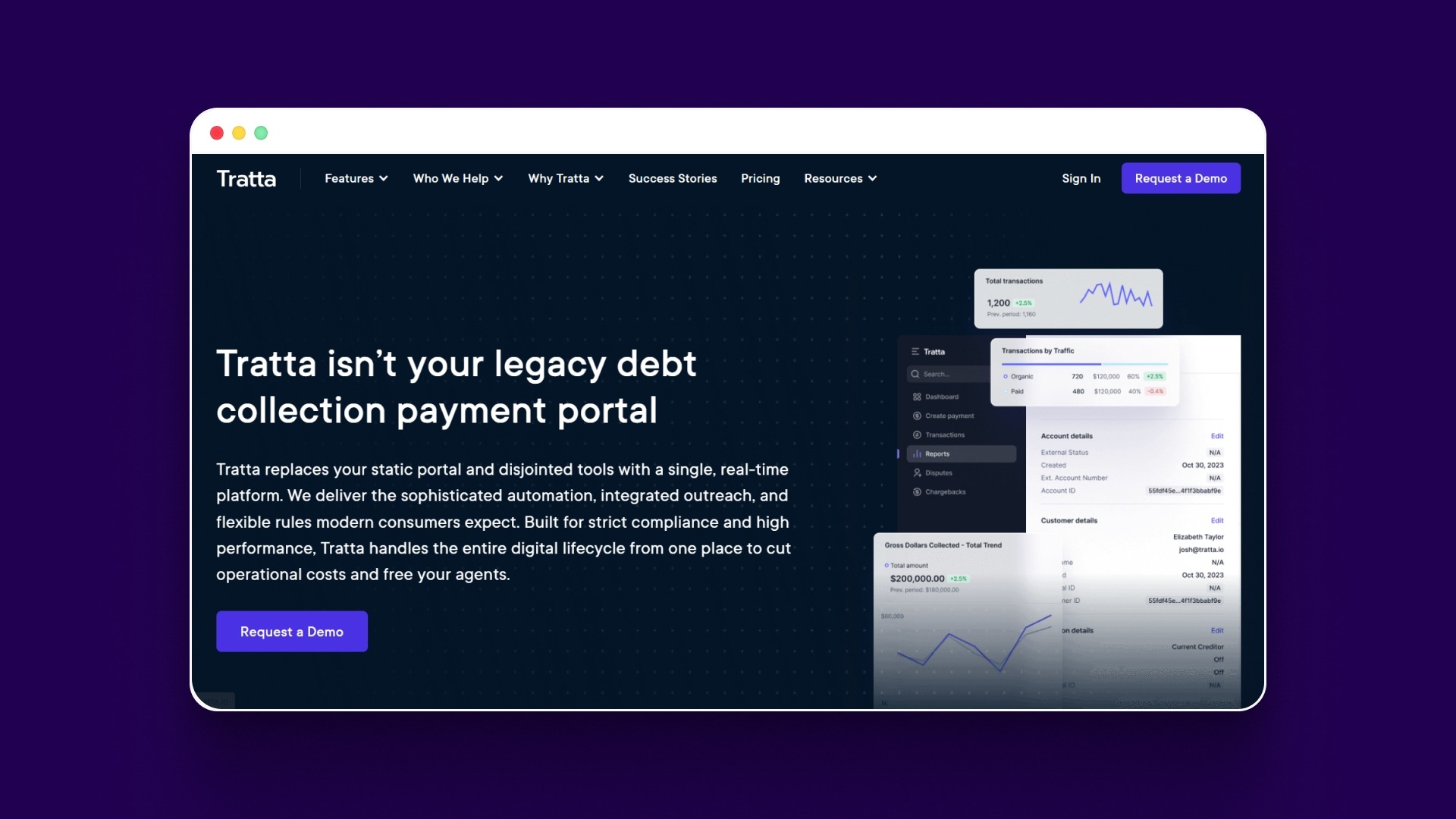
1. Tratta
Tratta is a cloud-based debt collection platform designed for US third-party collection agencies, law firms, and debt buyers operating in highly regulated US recovery environments. The platform stands out for combining consumer-facing personalization with deep operational configurability.
It allows agencies to customize nearly every aspect of the repayment experience without relying heavily on developers. Rather than forcing agencies into rigid workflows, Tratta is designed to adapt to different portfolios, creditor requirements, compliance obligations, and consumer engagement strategies.
Customization Features
White-Labeled Consumer Portals: Agencies can customize logos, colors, domains, field labels, and portal layouts to create branded repayment experiences aligned with their own identity or creditor clients.
Dynamic Consumer Journeys: Workflows, payment options, disclosures, and settlement experiences can change automatically based on account status, portfolio, jurisdiction, or client rules.
Granular Payment Configuration: Teams can configure flexible payment plans, settlement parameters, verification rules, and repayment logic for different recovery scenarios.
Branded Communication Templates: Email and SMS campaigns can be tailored with custom messaging, disclosures, branding, and engagement flows for different consumer segments.
Front-End Adaptability Without Coding: Tratta’s self-service admin interface allows operational teams to adjust workflows, notices, policies, and portal experiences without extensive engineering support.
Administrative Flexibility
Client and Portfolio-Level Overrides: Agencies can apply different rules, workflows, and experiences across creditor clients, asset classes, and account groups from one centralized system.
Role-Based Administrative Controls: Teams can manage permissions, user access, operational visibility, and workflow responsibilities with granular internal controls.
Centralized Workflow Management: Payment settings, notifications, legal policies, account logic, reporting, and communication workflows can all be managed from a unified dashboard.
What Makes It Different
Tratta feels far more operationally personal than many traditional collection platforms because the system is built to tailor the consumer flow rather than simply process payments. Its combination of no-code configurability, client-specific overrides, branded self-service experiences, and compliance-aware workflow flexibility makes it especially strong for agencies managing complex recovery environments.
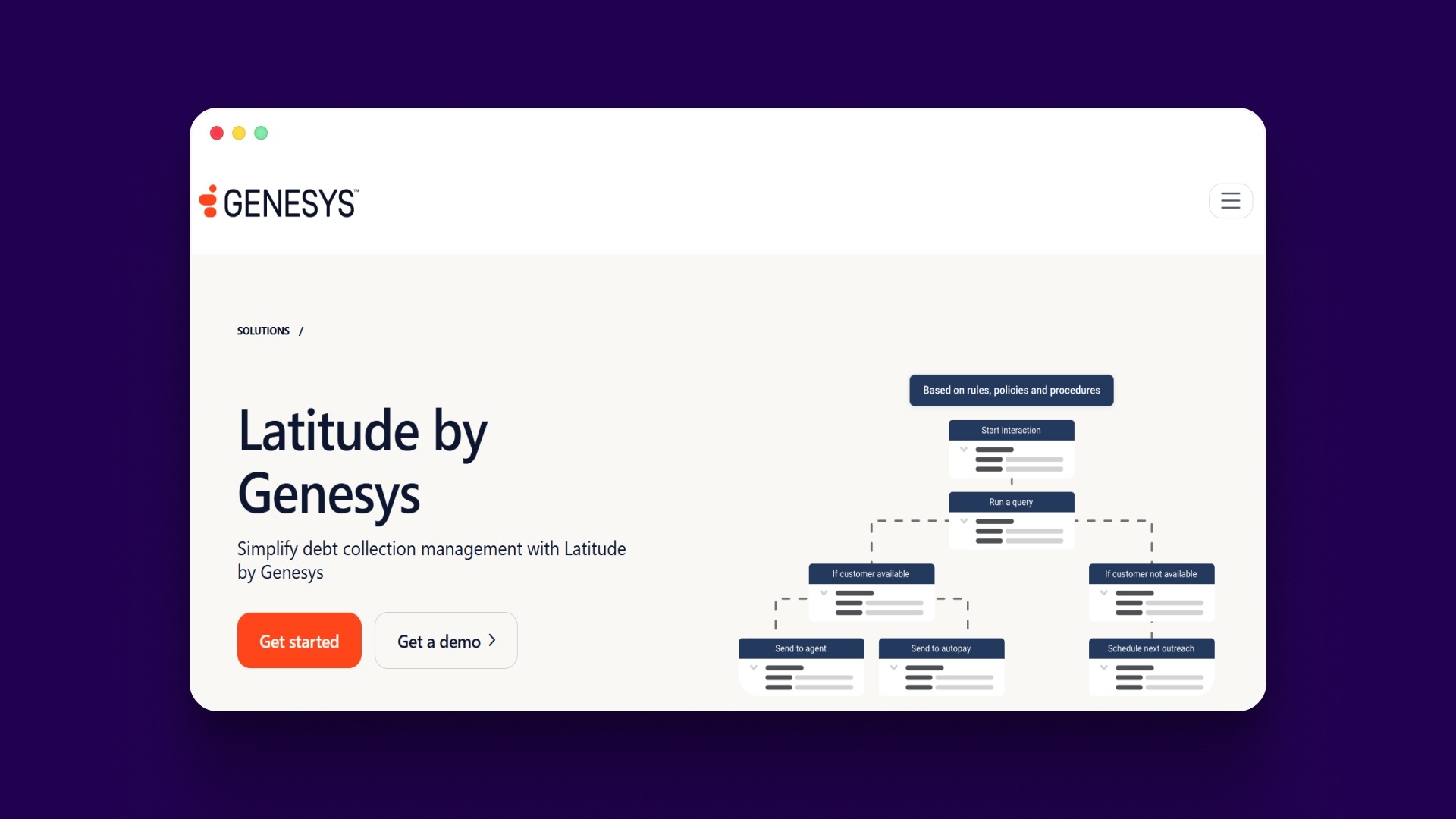
2. Latitude
Latitude by Genesys is an enterprise recovery platform built for large collection operations and debt buyers. The platform focuses heavily on workflow automation, account management, and operational control across recovery environments. It is best suited for agencies handling high account volumes and structured recovery processes.
Customization Features
Workflow Automation Rules: Teams can configure account handling, routing, and recovery actions using business rules.
Custom Collector Interfaces: Agencies can tailor dashboards, account views, and desktop layouts for different teams.
Account Segmentation Logic: Workflows can adapt based on account status, portfolio type, or recovery stage.
Configurable Reporting Dashboards: Teams can customize operational reporting and performance visibility.
Multi-Channel Strategy Support: Agencies can manage communication strategies across SMS, email, IVR, and live agents.
Administrative Flexibility
Automated Account Distribution: Accounts can move between collectors or workflows using predefined assignment logic.
Centralized Process Management: Teams can manage collections, litigation, and recovery workflows from one environment.
Operational Monitoring Tools: Supervisors can track workflow activity, agent performance, and account movement centrally.
What Makes It Different
Latitude focuses more on operational control than consumer-facing branding. Its strongest capabilities support large-scale workflow management and structured recovery operations.
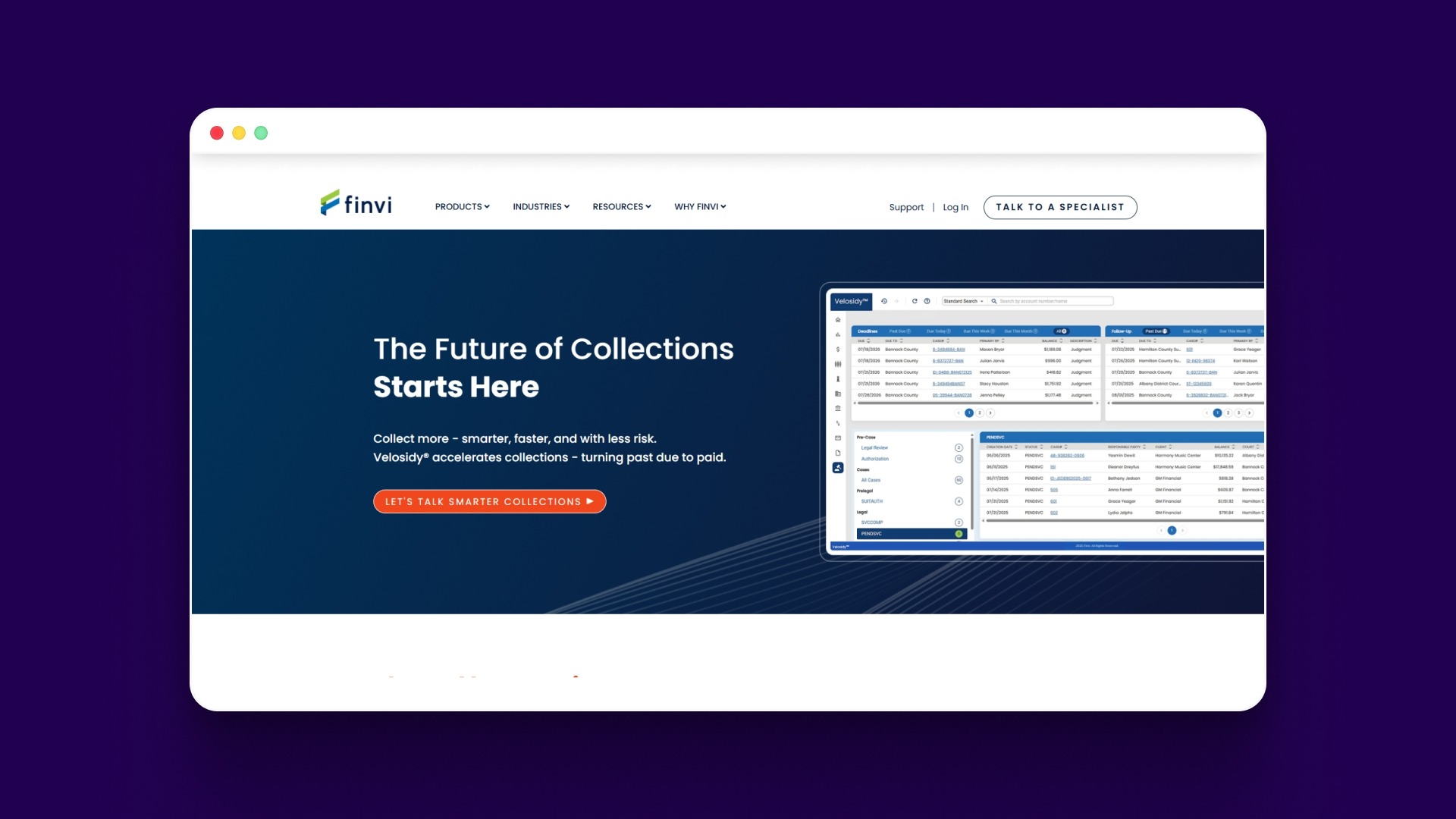
3. Velosidy
Velosidy by Finvi is a cloud-based collections platform designed for third-party collection agencies and recovery operations. The platform focuses on operational efficiency, collector productivity, workflow visibility, and scalable account management. It is best suited for agencies looking to modernize collection operations without relying on heavily customized legacy systems.
Customization Features
Configurable Workflow Rules: Agencies can customize account handling processes, communication timing, and recovery workflows.
Flexible Collector Dashboards: Teams can tailor account views, task layouts, and operational screens for different users.
Configurable Collection Processes: Agencies can adjust account workflows, operational steps, and communication activity sequences.
Portfolio-Based Account Management: Agencies can configure workflows based on client portfolios and account categories.
Cloud-Based System Configuration: Teams can update operational settings and workflows without extensive infrastructure management.
Administrative Flexibility
Centralized Agency Management: Supervisors can manage accounts, workflows, and collector activity from one platform.
Performance Monitoring Tools: Teams can track collector productivity, account activity, and operational performance centrally.
Scalable Operational Controls: Agencies can expand workflows and account management processes as recovery volumes grow.
What Makes It Different
Velosidy focuses on simplifying and modernizing agency operations through a cloud-based collections environment. Its biggest strength is operational scalability without the complexity often associated with legacy recovery systems.
4. Collect!
Collect! is a debt collection software platform built for third-party collection agencies, attorneys, and recovery teams. The platform focuses on configurable agency operations, workflow management, and adaptable recovery processes. It is well-suited for agencies that want operational flexibility without the complexity of large enterprise recovery platforms.
Customization Features
Adjustable Collection Workflows: Agencies can configure recovery stages, account handling processes, and collection activity flows.
Custom Letter Templates: Teams can personalize notices, letters, and communication documents for different clients and recovery scenarios.
Flexible Account Management Rules: Workflows can adapt based on creditor requirements, account types, and recovery status.
Integration Support: The platform supports integrations with payment systems and other collection technologies.
Configurable Operational Settings: Agencies can tailor system behavior and workflow preferences around internal recovery processes.
Administrative Flexibility
Centralized Account Oversight: Teams can manage account activity, communication workflows, and recovery operations from one environment.
User Access Management: Administrators can control permissions and staff access across operational functions.
Performance Reporting Tools: Supervisors can monitor collector activity, operational progress, and recovery performance centrally.
What Makes It Different
Collect! focuses on adaptable operational workflows instead of highly structured enterprise recovery systems. Its flexibility makes it appealing for agencies that want configurable collection processes with a simpler implementation approach.
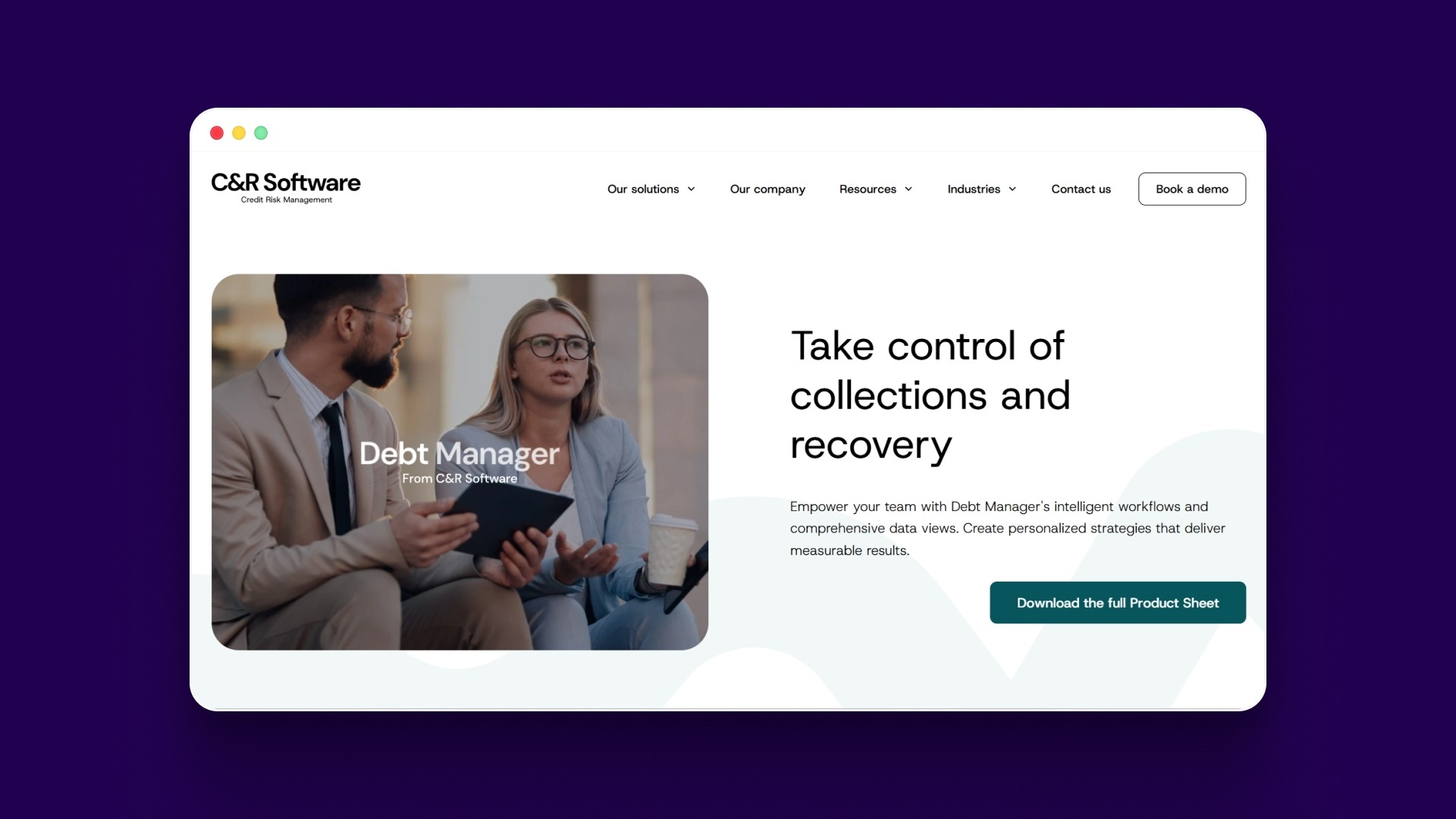
5. C&R Debt Manager
C&R Debt Manager is an enterprise collections and recovery platform designed for financial institutions and large recovery operations. The platform focuses on structured recovery strategies, operational standardization, and large-scale account management. It is best suited for organizations managing complex collections environments with high account volumes and layered recovery processes.
Customization Features
Strategy-Based Workflow Configuration: Teams can configure recovery strategies, treatment paths, and collection processes around operational requirements.
Flexible Account Handling Logic: Workflows can adapt based on repayment behavior, account status, or recovery stage.
Multi-Channel Collection Support: Organizations can manage communication activity across multiple outreach channels.
Configurable Reporting Dashboards: Teams can customize reporting visibility for operational and management needs.
Adaptable Recovery Frameworks: The platform supports customized recovery structures across different business environments.
Administrative Flexibility
Centralized Recovery Oversight: Supervisors can monitor workflow activity, account movement, and recovery operations centrally.
Cross-Department Workflow Management: Different operational teams can work within one connected recovery environment.
Scalable Process Controls: Organizations can expand account strategies and operational workflows without rebuilding systems.
What Makes It Different
C&R Debt Manager focuses on structured enterprise recovery management rather than lightweight collection workflows. Its strongest capabilities support large organizations with complex operational requirements.
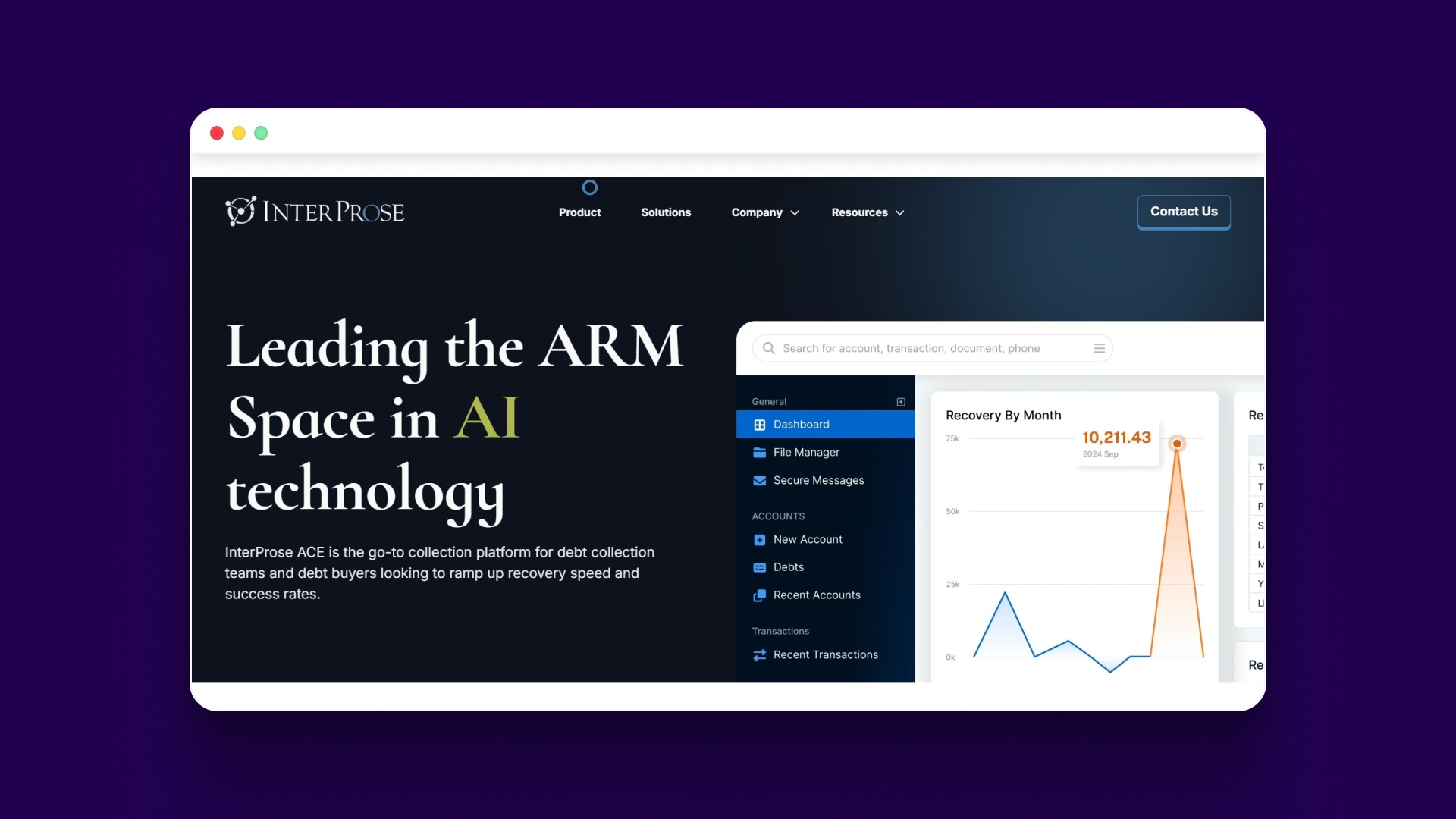
6. InterProse ACE
InterProse ACE is a collections management platform built for third-party collection agencies and debt buyers. The platform emphasizes account organization, recovery tracking, and long-term operational scalability. It is best suited for agencies managing expanding account inventories across multiple recovery programs.
Customization Features
Client-Specific Recovery Setup: Agencies can configure different collection structures for separate creditor clients and account groups.
Custom Account Data Fields: Teams can add and manage account information fields based on operational requirements.
Flexible Letter Series Management: Organizations can create customized notice sequences for different recovery timelines.
Adjustable Payment Processing Rules: Agencies can configure payment handling preferences and account update behaviors.
Tailored Reporting Categories: Teams can organize operational reporting around internal business structures and recovery programs.
Administrative Flexibility
Large Account Inventory Management: Teams can manage high account volumes across centralized recovery operations.
Multi-User Operational Coordination: Different departments can work within the same collections environment while maintaining separate responsibilities.
Recovery Activity Tracking: Supervisors can monitor account movement, collector actions, and operational progress centrally.
What Makes It Different
InterProse ACE focuses heavily on structured account organization and long-term recovery management. Its strongest advantage is supporting agencies handling growing account inventories across multiple collection programs.
7. RMEx by Quantrax
RMEx (Receivables Management Expert), Quantrax’s flagship Intelligent Collection System, is designed for third-party collection agencies and collection law firms. The platform focuses heavily on legal recovery workflows, litigation support, and case management coordination. It is best suited for organizations handling accounts that move between collection activity and legal recovery processes.
Customization Features
Legal Workflow Configuration: Teams can customize litigation stages, recovery processes, and legal account handling workflows.
Court Document Template Management: Agencies can personalize legal notices and recovery documentation for different workflows.
Attorney Assignment Rules: Workflows can adapt based on creditor requirements, attorney assignments, or legal recovery conditions.
Settlement Tracking Configuration: Organizations can configure repayment tracking and settlement management processes.
Case Organization Controls: Teams can tailor legal account organization around operational and recovery requirements.
Administrative Flexibility
Centralized Legal Oversight: Supervisors can monitor legal recovery workflows and account progress from one environment.
Cross-Team Coordination: Legal staff and collection teams can operate within the same recovery system.
Case Activity Monitoring: Managers can oversee legal documentation, account movement, and recovery activity centrally.
What Makes It Different
RMEx by Quantrax stands out for its legal collections focus and litigation workflow depth. Its strongest capabilities support agencies and firms managing accounts across both collections and legal recovery operations.
While all of these platforms support customization to some extent, they do not approach flexibility the same way. In the next section, we will break down the difference between white-label branding and workflow customization, and why both matter in third-party debt collection operations.
Automating workflows by account status or portfolio
A branded portal may improve consumer trust, but operational inefficiencies can still slow recovery performance. Similarly, strong workflow automation alone may not create the consistent digital experiences consumers now expect.
The most effective platforms usually help agencies:
Support multiple creditor clients from one system
Adjust workflows without major development work
Simplify repayment and settlement management
Choosing the right balance depends heavily on your agency’s operational structure, recovery workflows, and client requirements. In the next section, we will look at how to choose the right debt collection portal for your agency.
How to Choose the Right Debt Collection Portal for Your Agency
Some agencies prioritize branded consumer experiences, while others need stronger workflow automation, legal recovery support, or large-scale operational oversight. Before choosing a platform, it helps to evaluate how well the system aligns with your current recovery processes and long-term operational goals.
Questions to ask:
Can the platform support multiple creditor clients with different workflow requirements?
How much control do you have over repayment plans, settlements, and communication workflows?
Does the platform support branded consumer experiences and self-service payments?
Can your team modify workflows without relying heavily on developers?
How well does the system handle compliance-related communication and disclosure management?
Does the system fit your agency’s recovery structure, including legal or post-charge-off workflows?
The best platform is not always the one with the most features. It is the one that aligns most closely with your agency’s operational structure, recovery strategy, and consumer engagement needs.
Conclusion
Many debt collection platforms still force agencies to work around rigid workflows, inconsistent consumer experiences, and limited operational flexibility. This can create inefficiencies across account management, client onboarding, compliance handling, and consumer engagement.
Tratta stands out for combining branded consumer experiences with deep operational configurability for third-party recovery environments. Its balance of consumer personalization, compliance flexibility, and no-code configuration makes it one of the strongest options for agencies managing complex recovery operations at scale.
If your agency is struggling with rigid workflows or disconnected consumer experiences, it may be time to rethink your collections infrastructure. Schedule a free demo today to explore how your agency can build more flexible and consumer-friendly recovery workflows.
Frequently Asked Questions
1. What industries commonly use custom-branded debt collection portal platforms?
Custom-branded debt collection portal platforms are commonly used by collection agencies, debt buyers, healthcare recovery teams, financial institutions, and collection law firms managing digital repayment operations.
2. Can debt collection portals support multiple payment methods?
Yes. Many modern collection platforms support ACH payments, debit cards, credit cards, installment plans, and scheduled repayment options through consumer self-service portals.
3. Are cloud-based debt collection platforms better than on-premise systems?
Cloud-based platforms usually provide easier scalability, faster updates, remote accessibility, and lower infrastructure management requirements compared to traditional on-premise systems.
4. Do debt collection portals support consumer self-service?
Most modern collection platforms include self-service capabilities that allow consumers to review balances, manage repayment plans, and complete payments without agent assistance.
5. How long does it take to implement a debt collection portal?
Implementation timelines vary based on workflow complexity, integrations, compliance requirements, and data migration needs. Some platforms can be deployed in weeks, while enterprise environments may require longer onboarding periods.
Note: This information is not legal advice. Tratta recommends that you consult with your legal counsel to make sure that you comply with applicable laws in connection with your collection and outreach activities.
Sign up for our monthly newsletter
Debt collection insights that keep you compliant and competitive.
Thank you! Your submission has been received!
Oops! Something went wrong while submitting the form.