7 Collections Automation Platform Picks to Increase Debt Recovery in 2026
Debt Collection & Recovery Software
7 Collections Automation Platform Picks to Increase Debt Recovery in 2026
Published on:
August 3, 2026
Recoveries slow down when agents chase follow-ups manually, payment links break the flow, and compliance checks lag behind outreach. What should be a structured process turns reactive, costing time and revenue. The shift is already underway.
The global collections digitization platforms market is projected to reach$4.87 billion by 2033, growing at a CAGR of 14.6%, signaling rapid adoption of automation. If your team is stretched between outreach, payments, and compliance, the strain is real.
Agencies are rethinking how collections should work in a digital-first environment. In this article, we explain what a collections automation platform does, when you need one, and seven platforms to consider in 2026.
Brief look:
Collections automation platforms streamline recovery workflows. They reduce manual effort by managing outreach, payments, and account progression through structured, rule-based processes.
Agencies adopt automation to improve efficiency and consistency. Missed follow-ups, payment friction, and compliance gaps are key drivers behind the shift.
Seven platforms compared include Tratta, Latitude by Genesys, C&R Software, InterProse ACE, Debtrak, Collect!, and Katabat. Each differs in automation depth, payments, and consumer experience.
Choosing the right platform depends on operational needs. Factors like scalability, ease of use, payment integration, and compliance support determine long-term fit.
Modern platforms combine automation with a better consumer experience. Technology now enables faster resolutions through self-service, embedded payments, and data-driven decision-making.
What Does a Collections Automation Platform Do for Agencies?
A collectionsautomation platform centralizes how you manage outreach, payments, and compliance, replacing fragmented tools and manual follow-ups with structured, rule-driven processes. It ensures that every account follows a defined journey, reducing gaps, delays, and inconsistencies that affect recovery.
These features automate regular collection processes:
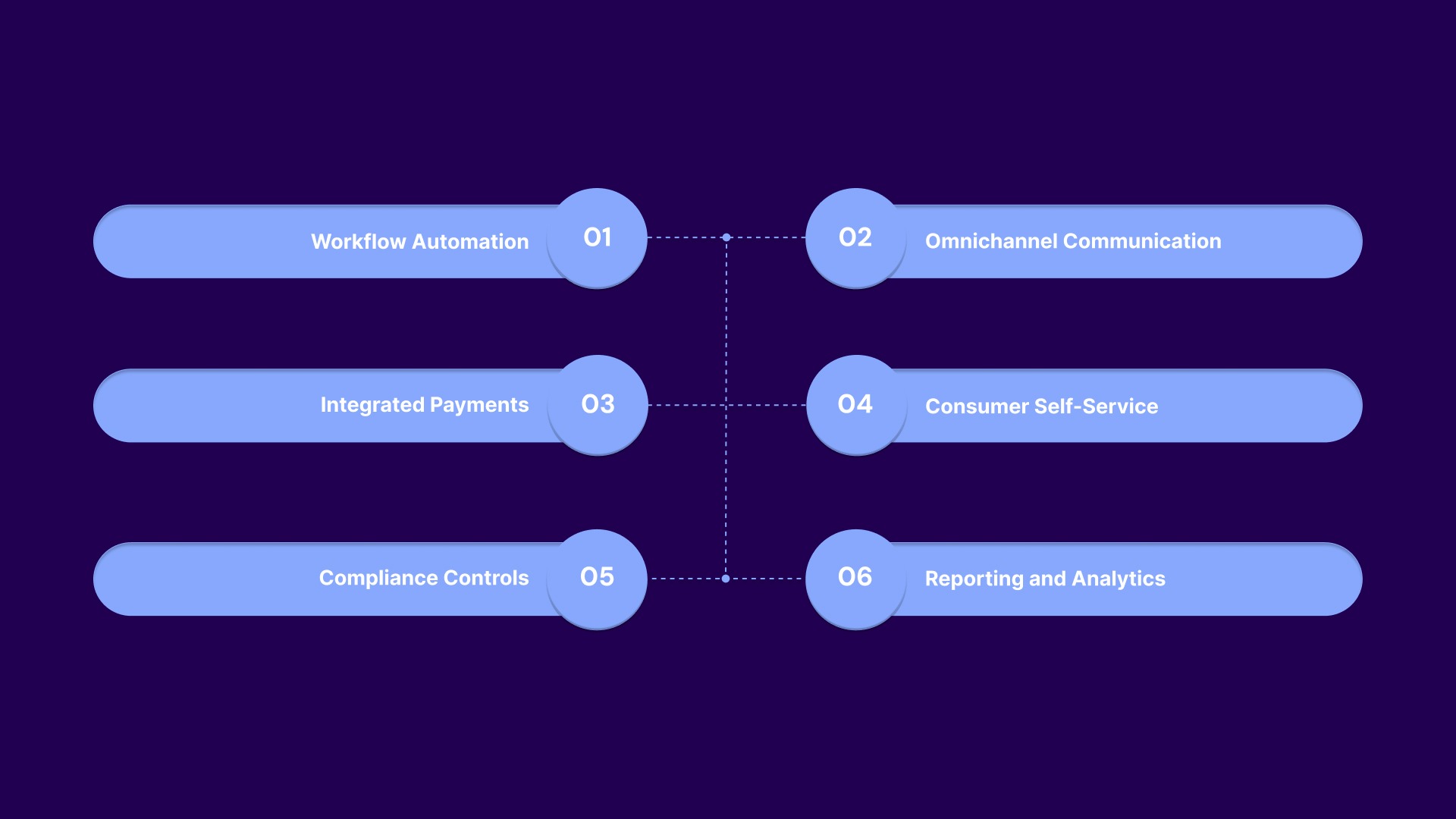
Workflow Automation: Automatically assigns next steps based on account status, payment behavior, or time triggers, ensuring no account is missed or delayed.
Omnichannel Communication: Coordinates SMS, email, and voice outreach from one system, so consumers receive timely, consistent messages without manual intervention.
Integrated Payments: Embeds payment options directly into the journey, reducing friction and increasing the likelihood of immediate resolution.
Consumer Self-Service: Allows consumers to access their accounts, choose payment plans, and resolve balances without speaking to an agent.
Compliance Controls: Automatically applies rules, tracks consent, and maintains audit logs, helping reduce risk from human error or inconsistent processes.
Reporting and Analytics: Tracks performance across campaigns, channels, and recovery stages, giving clear insight into what is working and where to optimize.
These features create a more predictable and scalable recovery process, where outcomes are driven by systems rather than manual effort. In the next section, we will look at the signs that indicate your agency may need to automate debt recovery processes.
Signs Your Agency Needs to Automate Debt Recovery Processes
If your team is spending more time managing tasks than improving outcomes, it is a clear signal that your current approach is not scaling. Automation becomes necessary when operational gaps start affecting both revenue and compliance.
Other signs include:
Inconsistent Follow-Ups: Accounts are not contacted at the right time or frequency, leading to missed recovery opportunities.
Low Consumer Engagement: Messages go unanswered because outreach is not timely, personalized, or delivered through preferred channels.
Payment Friction: Consumers face multiple steps to complete payments, causing delays or drop-offs in recovery.
Compliance Risks Increasing: Manual processes make it harder to track consent, communication logs, and regulatory requirements consistently.
Limited Visibility into Performance: You lack clear insight into which strategies, channels, or campaigns are actually driving recoveries.
These challenges often indicate that your agency has outgrown manual workflows and needs a more structured, automated approach. In the next section, we will compare the top options for collections automation platforms to help you evaluate what fits your agency best.
7 Collections Automation Platform Options to Consider in 2026
Platforms are increasingly differentiated by how effectively they integrate automation, payments, and the consumer experience. Some focus on operational control and compliance, while others prioritize data-driven decisioning or self-service engagement.
Below are seven collections automation platform options that reflect where the industry is heading.
1. Tratta
Quick Overview:
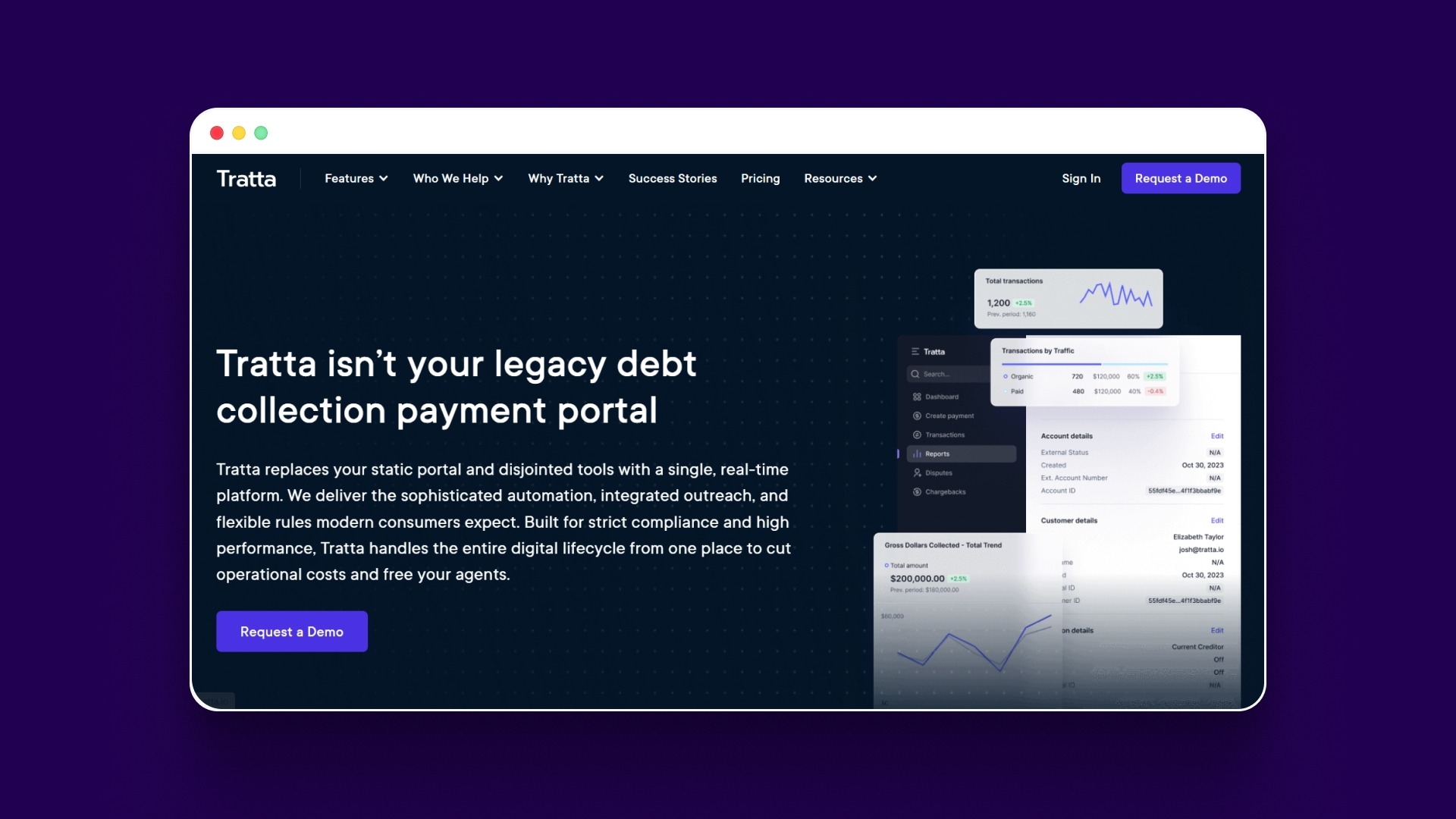
Tratta is a payments-first collections automation platform that centralizes communication, payments, and workflows into a single system. It is designed to help agencies, creditors, and law firms move from manual processes to structured, automated recovery. By combining self-service, automation, and compliance, it enables faster resolutions with less agent dependency.
Key Features:
Consumer Self-Service Payment Portal Enables consumers to view balances, dispute accounts, and complete payments independently through a branded interface. This reduces inbound calls while giving consumers a faster, more convenient way to resolve debts.
Payments and Merchant Services Supports secure payment processing across cards, ACH, and recurring plans within the platform. Embedding payments directly into the journey removes friction and speeds up resolution.
Multilingual Payment IVR Allows consumers to make payments through an IVR system with multiple language options. This expands accessibility and reduces the need for agent-assisted transactions.
Omnichannel Communications Centralizes outreach across SMS, email, and voice into a single system. This ensures consistent messaging and timely engagement across preferred consumer channels.
Tratta Campaigns Enables segmentation, scheduling, and targeted outreach based on account behavior and predefined rules. This helps ensure accounts are engaged at the right time with minimal manual effort.
Reporting and Analytics Provides real-time visibility into campaign performance, recovery rates, and account activity. These insights help teams refine strategies and improve outcomes.
Customization and Flexibility Allows teams to configure workflows, messaging, and policies based on operational needs. This ensures the platform adapts to your processes rather than enforcing rigid structures.
Integrations Connects with CRMs, payment systems, and other tools through APIs and native integrations. This keeps data aligned across systems without manual syncing.
Security and Compliance Includes built-in controls, audit trails, and data protection measures to support regulatory requirements. This helps reduce risk while maintaining consistent, compliant operations.
Contact Center Combines agent tools with structured workflows to manage consumer interactions efficiently. This supports higher volumes while maintaining visibility and control over each interaction.
Pros and Cons:
Pros
Cons
Payments-first architecture improves conversion and recovery speed
Maybe more advanced than needed for very small agencies
Tratta is best for mid-size to large collection agencies, creditors, and law firms that want to reduce manual effort, improve payment completion rates, and move toward a digital, self-service-first collections model.Schedule a free demo.
2. Latitude
Quick Overview:
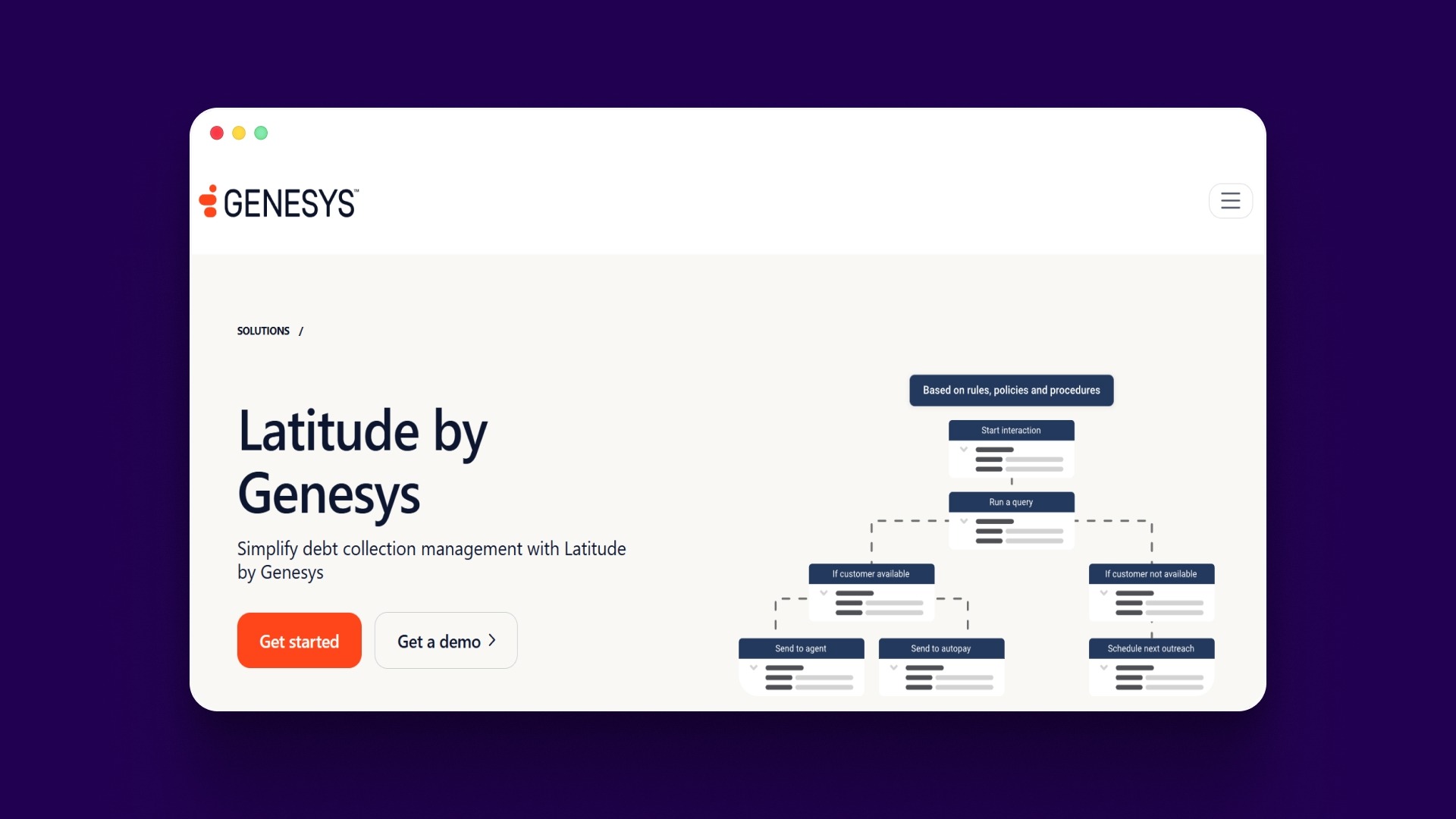
Latitude by Genesys is a collections platform designed for agencies, law firms, and debt buyers. It focuses on structured workflows, compliance, and omnichannel engagement within a unified system. The platform is widely used by organizations that need operational control and scalability in regulated environments.
Key Features:
Account Workflow Management: Organizes accounts through defined lifecycle stages with configurable workflows. This ensures consistent handling and reduces missed or delayed actions.
Omnichannel Communication: Supports voice, SMS, email, and letter-based outreach within one system. This helps agencies maintain consistent communication across multiple touchpoints.
Compliance Management: Includes built-in controls, audit trails, and regulatory safeguards. This helps agencies operate within strict compliance requirements without relying on manual checks.
Payment Processing Integration: Connects with payment providers to facilitate transactions within the workflow. This reduces friction and supports faster resolution.
Reporting and Dashboards: Provides visibility into agent performance, recovery rates, and operational metrics. This enables better decision-making and process optimization.
Pros and Cons
Pros
Cons
Strong compliance and audit capabilities
A function-first interface may feel less intuitive for modern UX expectations
Designed specifically for agencies and law firms
Customization can require technical support
Scales well for high-volume environments
Implementation timelines vary by complexity
Reliable workflow and account management
Self-service is not a primary design focus
Best For:
Latitude by Genesys is best for collection agencies, law firms, and debt buyers that need structured workflows, strong compliance controls, and scalable operations in regulated environments.
3. Debt Manager
Quick Overview:
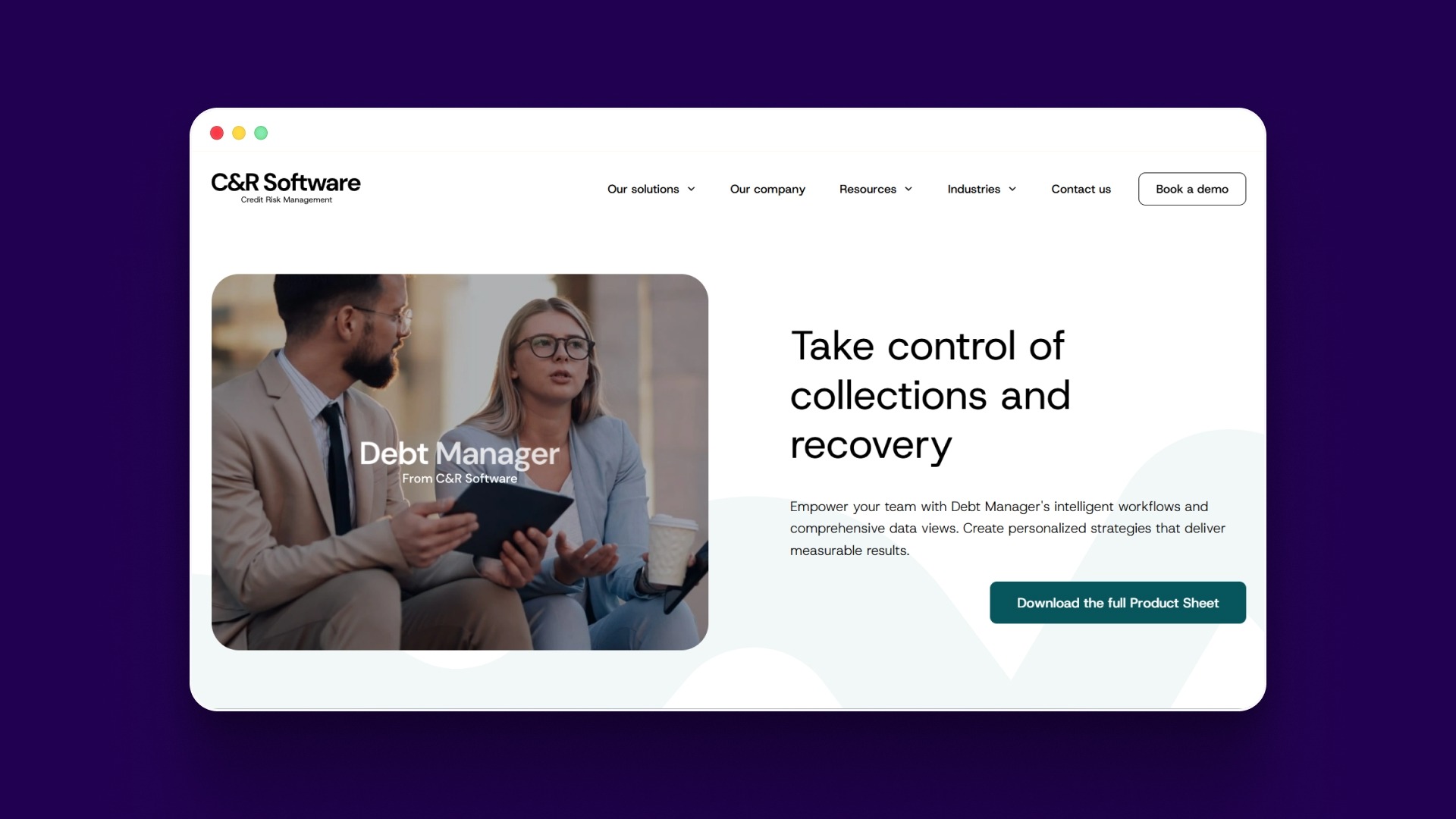
C&R Software’sDebt Manager is an enterprise-grade collections platform designed for large financial institutions and agencies. It focuses on end-to-end debt lifecycle management with strong analytics and configurable workflows. The platform is known for its depth, but it often requires structured implementation and ongoing management.
Key Features:
End-to-End Debt Management: Covers the full lifecycle from early-stage collections to recoveries and legal processes. This provides centralized control but can introduce complexity in setup and usage.
Decisioning Engine: Uses rule-based logic to guide account treatment strategies and next steps. This helps standardize processes, though fine-tuning requires expertise and ongoing adjustments.
Workflow Configuration: Allows teams to design and manage detailed workflows across different account types. This offers flexibility but can become resource-intensive to maintain.
Omnichannel Communication: Supports multiple communication channels, including SMS, email, and voice. While functional, it may lack the seamless consumer experience seen in newer platforms.
Analytics and Reporting: Provides detailed reporting on performance, segmentation, and recovery trends. Extracting actionable insights may require additional configuration and training.
Pros and Cons
Pros
Cons
Comprehensive coverage across the debt lifecycle
Designed primarily for large, structured collection environments
Strong decisioning and workflow capabilities
Requires technical expertise to configure and maintain
Scalable for large, complex portfolios
Platform depth may exceed the needs of simpler workflows
Robust analytics and reporting depth
Custom workflows depend on how the system is configured
Suitable for enterprise environments
Higher operational overhead compared to newer platforms
Best For:
Debt Manager is best for large, enterprise-level organizations that can support complex implementations and ongoing system management. It may not be ideal for agencies seeking faster deployment, simpler workflows, or consumer-first engagement.
4. InterProse ACE
Quick Overview:
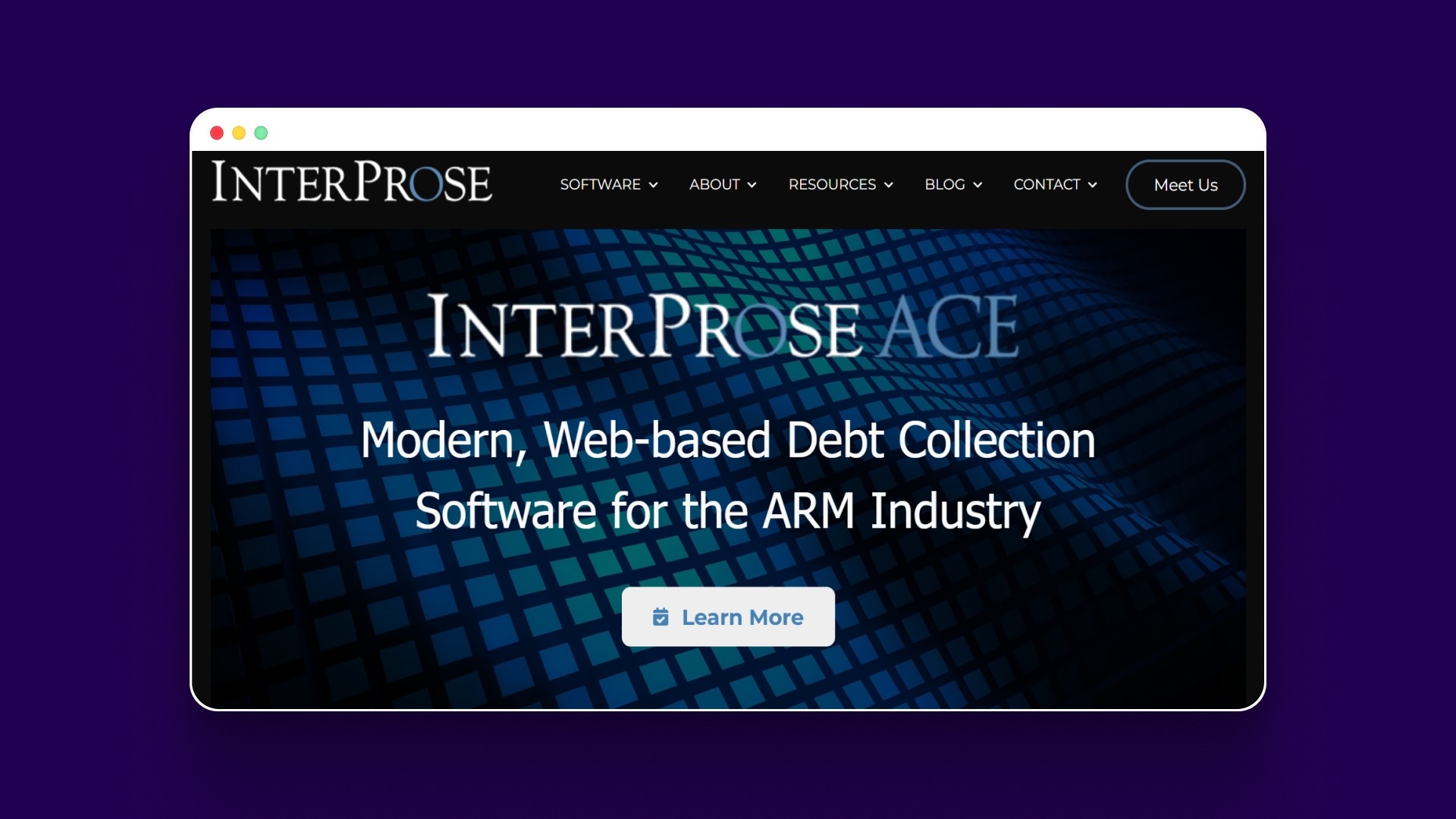
InterProse ACE is a collections platform designed for agencies that need structured workflows and account management capabilities. It focuses on organizing collection activities through configurable processes and reporting tools. The platform is reliable for standard operations but leans more toward traditional, agent-driven workflows.
Key Features:
Account Management System: Centralizes account data, notes, and activity tracking in one interface. This helps maintain organization, though navigation can feel less streamlined in high-volume environments.
Workflow Automation: Supports rule-based task assignment and follow-ups across accounts. While effective for consistency, it may require manual oversight for more dynamic strategies.
Payment Processing Integration: Connects with payment providers to enable transactions within the system. The experience may not be as seamless or consumer-driven as newer platforms.
Reporting Tools: Provides standard reports on agent performance and recovery metrics. Custom reporting can require additional setup and may not offer real-time flexibility.
Compliance Support: Includes audit trails and activity logs to support regulatory requirements. However, enforcement often depends on correct configuration and user adherence.
Pros and Cons
Pros
Cons
Strong account organization and tracking
Designed around structured, agent-led collection workflows
Reliable workflow structuring for agencies
Automation depth may not match more strategy-driven platforms
Supports compliance through audit logs
Reporting is geared toward standard operational visibility
Integrates with payment systems
Established solution with industry familiarity
Best For:
InterProse ACE is best for agencies that prefer structured, traditional workflows and do not require advanced automation or consumer self-service. It may not be the right fit for teams aiming to modernize and scale efficiently.
5. Debtrak
Quick Overview:
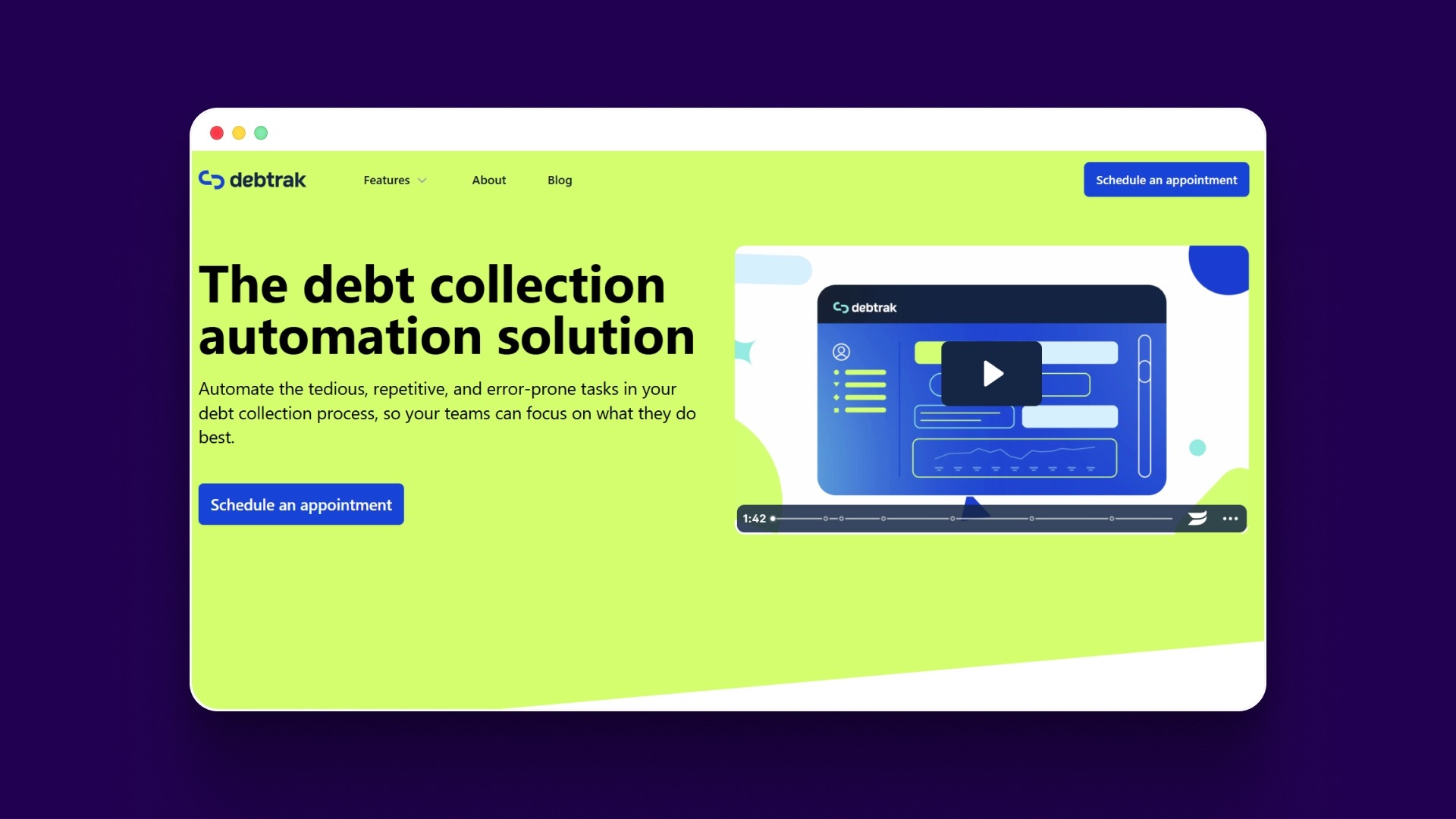
Debtrak is a cloud-based collections platform designed for large agencies and enterprises managing complex portfolios. It emphasizes analytics, automation, and integration across the debt lifecycle. The platform is powerful but often requires significant setup and technical alignment.
Key Features:
Strategy-Based Collections: Allows teams to assign treatment strategies based on account segmentation and predefined rules. This improves consistency, though ongoing optimization can require dedicated resources.
Advanced Analytics: Provides detailed insights into recovery performance, segmentation, and trends. Interpreting and acting on these insights may require experienced teams.
Workflow Automation: Supports automated task assignment and follow-ups across the account lifecycle. Complex workflows can take time to configure and maintain effectively.
Integration Capabilities: Connects with external systems, including CRMs, data sources, and payment tools. Implementation may require technical support and coordination across systems.
Compliance and Controls: Includes audit trails and controls to support regulatory requirements. Proper usage depends on accurate configuration and internal processes.
Pros and Cons
Pros
Cons
Strong analytics and data-driven capabilities
Reporting depth can require interpretation to translate into action
Supports large-scale, multi-portfolio operations
Strategy changes are not always immediate across workflows
Flexible strategy-based collections approach
Navigation can feel dense for teams managing high volumes daily
Scalable for enterprise environments
Not the most easy option for quick, out-of-the-box use
Robust integration options
Best For:
Debtrak is best for large agencies and enterprises with technical resources to manage complex systems. It may not suit teams looking for simpler deployment, faster adoption, or a more consumer-focused approach.
6. Collect! (Comtech)
Quick Overview:
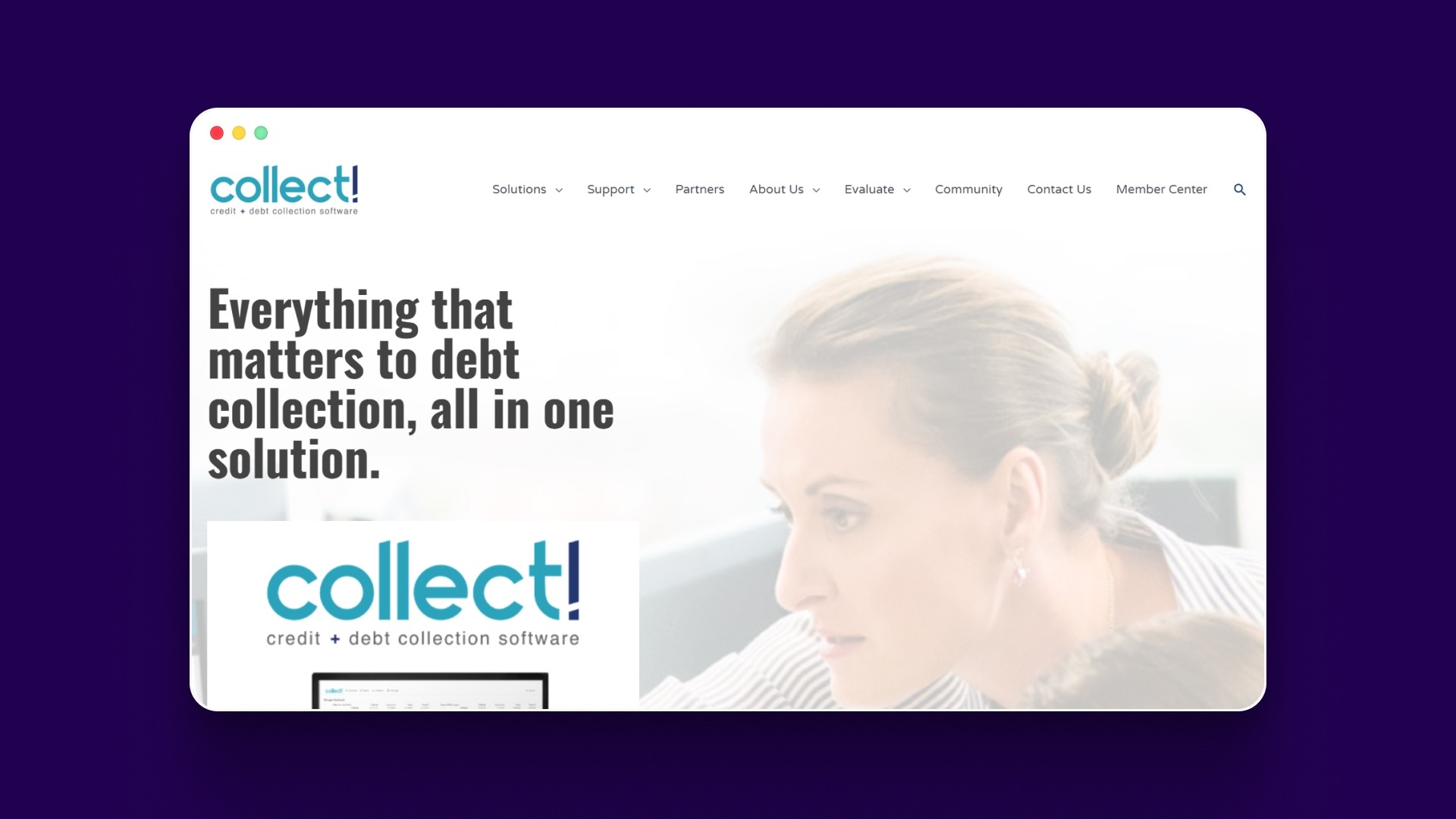
Collect! by Comtech Systems is a long-standing collections platform used by agencies to manage accounts and workflows. It focuses on task automation, account tracking, and process standardization. While it supports automation, much of its functionality remains centered on agent-driven operations.
Key Features:
Task Automation Engine: Enables rule-based task assignment and follow-ups across accounts. This helps reduce missed actions, though workflows may require manual tuning over time.
Account Management: Centralizes debtor information, notes, and activity history in one system. This improves organization but still relies heavily on agent interaction for progress.
Payment Processing Integration: Connects with payment gateways to facilitate transactions within workflows. The payment experience may not be as embedded or seamless as newer platforms.
Reporting and Dashboards: Provides insights into agent performance, account status, and recovery metrics. Customization options exist but may require additional setup.
Compliance Tools: Includes audit trails and communication logs to support regulatory requirements. Ensuring compliance still depends on consistent usage and configuration.
Pros and Cons
Pros
Cons
Established platform with industry familiarity
Workflow changes are not always immediate
Supports basic workflow and task automation
Heavy reliance on agent-driven processes
Strong account tracking and data organization
Limited consumer self-service capabilities
Flexible deployment options
Payment experience is not fully embedded
Suitable for traditional agency setups
May not support advanced automation at scale
Best For:
Collect! is best for agencies operating with traditional, agent-led workflows that need basic automation support. It is generally not ideal for teams aiming to adopt a more advanced, automation-first, or self-service-driven collections model.
7. Katabat by Finvi
Quick Overview:
Finvi'sKatabat is a customer engagement and collections automation platform designed for agencies, lenders, and debt buyers. It focuses on strategy-driven collections using automation, decisioning, and omnichannel communication. The platform is known for its flexibility, though it often requires significant configuration to fully leverage.
Key Features:
Strategy and Decision Engine: Enables rule-based treatment strategies that guide account handling and next actions. This improves consistency, though building and maintaining strategies can be resource-intensive.
Workflow Automation: Supports automated task assignment, follow-ups, and account progression based on predefined logic. Complex workflows may require ongoing tuning to remain effective.
Omnichannel Engagement: Provides communication across SMS, email, and voice channels. While comprehensive, creating seamless consumer journeys may require additional configuration.
Segmentation and Targeting: Allows accounts to be grouped and prioritized based on behavior and risk. This helps improve outreach effectiveness but depends on data quality and setup.
Analytics and Reporting: Offers insights into performance, strategy outcomes, and recovery trends. Extracting actionable insights may require experienced users.
Pros and Cons
Pros
Cons
Strong strategy and decisioning capabilities
Configuration depth can slow down initial rollout
Flexible and highly customizable
Strategy changes may take time to reflect across workflows
Supports omnichannel engagement
User experience may not be intuitive
Scales for large portfolios
Reporting often requires refinement for specific use cases
Good for data-driven collections strategies
Best For:
Katabat is best for large agencies and enterprises that need deep customization and strategy control. It is not preferred by teams looking for faster deployment, simpler workflows, or a more consumer-first experience.
Each of these platforms brings a different approach to automation, from workflow-driven systems to more strategy-led or consumer-focused solutions. In the next section, we will break down how to evaluate and choose the right collections automation platform for your agency.
Which Collections Automation Tool Is Right for Your Agency?
Choosing the right platform depends on how well it aligns with your workflows, recovery strategy, and level of automation maturity. For this comparison, we evaluated each solution based on automation depth, payment experience, consumer self-service, compliance support, and ease of deployment.
Table showing the right fit by agency size and type:
Tratta (built-in compliance + workflows), Latitude by Genesys
Traditional Agencies Transitioning to Digital
Gradual shift from manual to automated processes
Tratta (easy transition with self-service + payments), InterProse ACE, Collect!
The right choice depends on whether you prioritize speed, control, scalability, or consumer experience. Before making a decision, it is important to evaluate how the platform will perform in your real operating environment.
Key questions to ask before choosing:
How much of your workflow can be automated without manual intervention?
Are payments fully embedded, or do they rely on external systems?
Does the platform support consumer self-service, or is it agent-dependent?
How easy is it to configure and scale workflows as your volume grows?
What level of compliance support is built into the system by default?
How long does implementation take, and what resources are required?
A platform may look strong on paper, but the real value lies in how quickly it improves recovery outcomes without adding operational complexity. Choosing the right system means balancing automation capabilities with ease of use, so your team can adopt it effectively and scale with confidence.
Wrapping Up
Choosing the wrong collections platform can slow down recovery, increase compliance risk, and create operational bottlenecks that compound over time. When workflows remain manual, payments are disconnected, and reporting lacks clarity, agencies struggle to scale efficiently or maintain consistent outcomes.
Tratta addresses these gaps by combining automation, embedded payments, consumer self-service, and compliance into one unified system. Instead of layering multiple tools, it enables agencies to simplify operations, improve engagement, and drive faster, more predictable recovery.
If you are looking to modernize your collections process, it may be time to rethink your current setup.Call us to learn more.
Frequently Asked Questions
1. What are the top collections automation platforms?
Top collections automation platforms include solutions like Tratta, Katabat, Latitude by Genesys, Debtrak, C&R Software, InterProse ACE, and Collect!. Each varies in the depth of automation, payment capabilities, and consumer experience capabilities.
2. How do you automate debt collection processes?
Debt collection can be automated by using platforms that manage workflows, trigger communications, enable self-service payments, and track compliance. This reduces manual effort while ensuring consistent, timely engagement across accounts.
3. What are the top automation tools for collection agencies?
The best automation tools for collection agencies combine workflow automation, omnichannel communication, payment integration, and reporting. Platforms that unify these capabilities help agencies improve recovery rates and operational efficiency.
4. Can small collection agencies benefit from automation platforms?
Yes, small agencies benefit from reduced manual workload, improved follow-ups, and faster payments. Automation helps them scale operations without increasing headcount or compromising compliance and consistency.
5. What features should agencies prioritize in a collections automation platform?
Agencies should prioritize workflow automation, embedded payments, consumer self-service, compliance controls, and real-time reporting. These features directly impact recovery performance, operational efficiency, and the ability to scale sustainably.
Note: This information is not legal advice. Tratta recommends that you consult with your legal counsel to make sure that you comply with applicable laws in connection with your collection and outreach activities.
Sign up for our monthly newsletter
Debt collection insights that keep you compliant and competitive.
Thank you! Your submission has been received!
Oops! Something went wrong while submitting the form.