Is your agency spending too much time chasing payments across disconnected tools?
For many debt collection agencies, scaling outreach is difficult when agents handle repeat follow-ups, payment questions, and account updates manually. As account volumes grow, limited reporting and fragmented systems can make it harder to see which consumers are engaging, which accounts are inactive, and where follow-up is needed.
A report found that 56% of U.S. small businesses are owed money from unpaid invoices, with an average of $17,500 in outstanding payments. This shows how unpaid balances can quickly create pressure and why agencies need automated and more consistent collection workflows.
This blog explores what the automated debt collection process is, what agencies can automate, and how the right software can support payments, reporting, and compliance-aware recovery workflows.
What is Automated Debt Collection?
Automated debt collection is the use of software to manage repeatable collection tasks such as payment reminders, account updates, payment routing, reporting, and follow-up workflows. For debt collection agencies, it helps reduce manual work while giving teams a clearer way to manage overdue accounts on behalf of creditors.
For agency owners, COOs, and operations leaders, automation can support better account coverage, stronger reporting visibility, and more efficient agent workflows. It also gives compliance, IT, and payment operations teams a more organized way to manage communication, payment activity, and system connections.
Once the meaning is clear, the next step is understanding why more agencies are moving away from manual processes and disconnected tools.
Also Read: Effortless Payment Collection with Automated Software Solutions
Once the meaning is clear, the next step is understanding the real operational gaps automation should address for agencies.
Automation should help agencies fix the workflow issues that make debt collection harder to manage at scale. It should reduce manual work, connect fragmented tools, improve visibility, and support more controlled processes in a compliance-sensitive environment.
Here are the main operational problems automation should help agencies address:
After identifying the problems, agencies can look at where automation fits across the day-to-day collection workflow.
Automation fits across the collection workflow wherever agencies handle repeatable tasks, account updates, payment activity, and follow-up decisions. It helps teams reduce manual effort while keeping outreach, payments, reporting, and routing more organized.
Here are the main areas where automation can support debt collection agencies:
Automated workflows can help agencies send approved reminders, notifications, and follow-ups through channels such as email, SMS, portal messages, or IVR. This helps teams maintain consistent communication without requiring agents to manage every touchpoint manually.
Automation can guide consumers to available payment options, send payment confirmations, update payment status, and connect payment activity to the right account. This gives payment operations teams a clearer way to track transactions and reduce avoidable handoffs.
A self-service payment flow allows consumers to review account details, select payment options, and complete payments without always calling an agent. For agencies, this can reduce routine call volume and improve account coverage.
But how can agencies make self-service simple enough for consumers to use without creating more work for agents?
Tratta’s Consumer Self-Service Platform gives consumers real-time access to balances, payment history, documents, disputes, and available payment options. It also supports guest payments, flexible payment plans, settlement offers, secure document upload/download, notification preferences, and mobile-friendly access, helping agencies offer a clearer payment experience while reducing avoidable agent involvement.
Automated reporting helps owners, COOs, and operations leaders track payment completion, active and inactive accounts, campaign activity, consumer engagement, and follow-up needs. This visibility helps agencies make better decisions about where teams should focus.
Automation can route accounts based on status, behavior, payment activity, or the need for agent review. This helps agencies prioritize work, escalate sensitive cases, and keep agents focused on accounts that need human attention.
Once the main workflow areas are clear, it becomes easier to see how the automated debt collection process works.
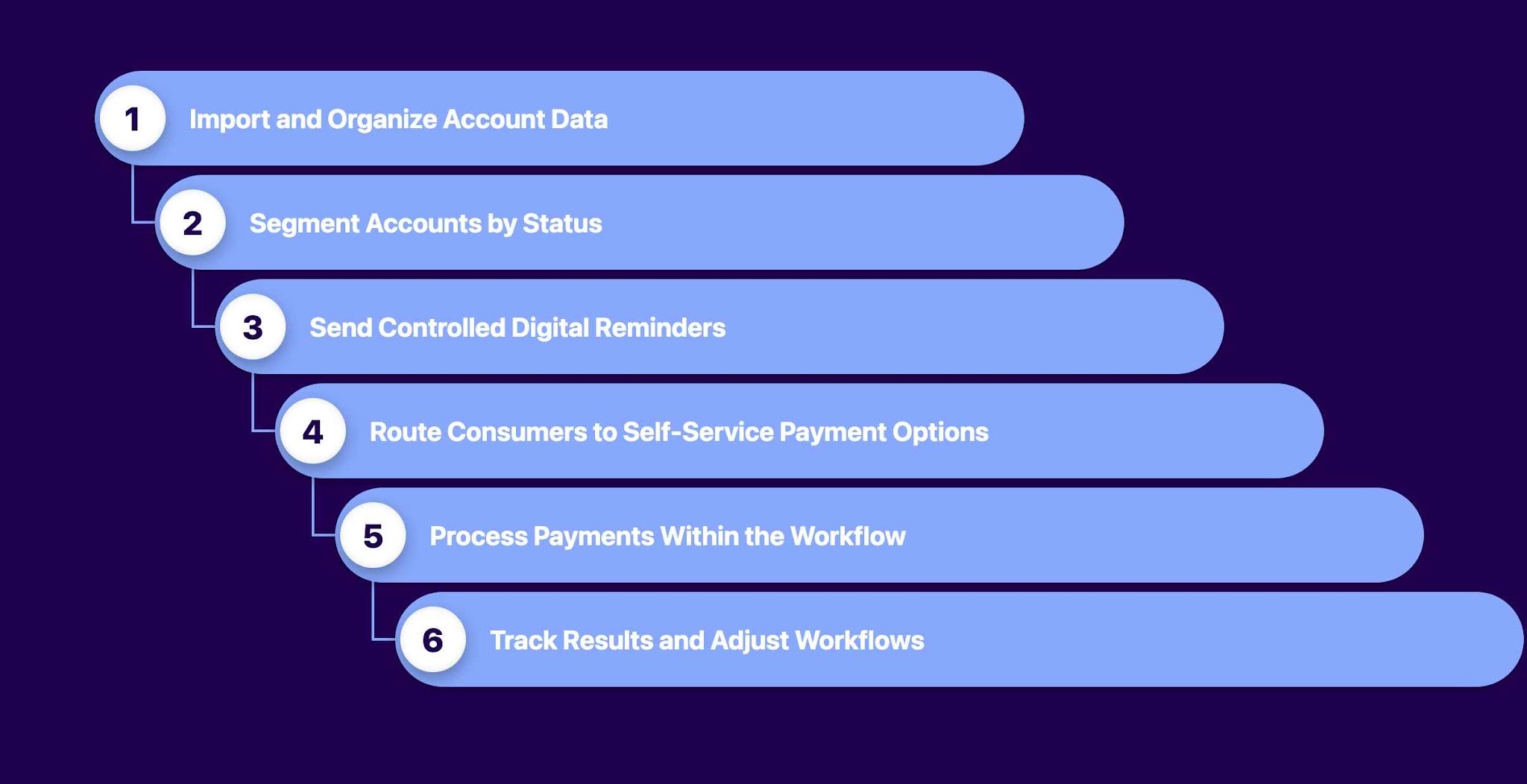
The automated debt collection process helps agencies manage outreach, payments, reporting, and follow-up with fewer manual steps. It connects account data, reminders, self-service options, and payment activity into one more organized workflow.
Here are the main steps in an automated debt collection process for agencies:
Automation starts with accurate account data. Agencies need clear details such as account balance, consumer contact information, account status, payment history, communication history, and any settlement or payment plan rules.
But how can agencies keep this data accurate when it lives across multiple systems?
Tratta’s REST APIs and debt collection integrations help agencies connect existing systems, internal tools, voice platforms, and data workflows. With open REST APIs, secure SFTP flat-file exchange, flexible import mapping, and system-of-record connectors, agencies can maintain more consistent account data without relying on manual updates.
Agencies should not treat every account the same. Recently overdue accounts, inactive accounts, accounts with prior payment activity, and accounts that opened a message but did not pay may each need a different workflow.
Segmentation helps agencies prioritize follow-up, use agent time better, and identify accounts that need human review.
Automated reminders can help agencies maintain consistent outreach through approved channels, such as email, SMS, portal notifications, or IVR, in accordance with agency policies and applicable requirements.
This reduces repetitive agent work while giving compliance reviewers clearer rules, records, and controls around communication.
A self-service payment platform allows consumers to review their accounts, choose available payment options, and complete payments without always calling an agent.
For agencies, this can reduce call volume, improve account coverage, and give agents more time for accounts that need personal attention.
Embedded payments help keep payment activity connected to the account workflow. Instead of sending consumers to disconnected systems, agencies can support a smoother payment process and track transactions more clearly.
This helps payment operations teams connect each payment to the right account and reduce avoidable handoffs.
Automation should give agencies visibility into what is working. Reporting dashboards can show payment completion, active and inactive accounts, campaign performance, self-service usage, and agent follow-up needs.
With these insights, agency leaders can adjust workflows and focus teams where they can have the most impact.
Once the core process is in place, agencies can build on it with smarter strategies that improve control, prioritization, and workflow quality.
Agencies can improve debt collection with smarter controls, better prioritization, and stronger workflow governance. These strategies help to achieve greater value from automation without losing control of sensitive recovery tasks.
Here are advanced strategies agencies can use to strengthen automated debt collection:
AI chatbots can help agencies respond to common consumer questions about balances, payment options, account access, and next steps. They can also guide consumers toward self-service payment flows without requiring an agent for every routine interaction.
For collection agencies, the key is control. Chatbots should operate within approved scripts, defined payment rules, and clear escalation paths, so that sensitive questions, disputes, or hardship-related cases can be escalated to an agent when needed.
Predictive analysis can help agencies identify which accounts are more likely to pay through self-service, which need a reminder, and which require agent follow-up. This helps operations teams assign work based on account behavior instead of treating every account the same.
For agency leaders, this can support better use of agent time and clearer task planning across large portfolios.
Voice bots and IVR systems can help agencies support phone-based payment interactions, especially when consumers prefer not to wait for an agent. A multilingual payment IVR can also make payment access easier for consumers who prefer another language.
This can help agencies reduce call center pressure while still giving payment operations teams a clearer way to connect phone-based payments to account workflows.
Some agencies may use automation to flag delinquent accounts, update account status, and support credit reporting workflows. This can help reduce manual tracking and make reporting-related steps more organized.
Because credit reporting is compliance-sensitive, agencies should use defined rules, documentation, and review controls based on creditor requirements, agency policies, and applicable regulations.
Many agencies manage payments, communication, reporting, and account workflows across separate systems. A debt collection platform can help bring these functions into one more connected environment.
For agencies, this can reduce system switching, improve workflow control, and give teams a clearer view of recovery activity.
So, how can agencies bring these workflows together without adding more disconnected tools?
Tratta helps agencies replace multiple systems with a single real-time platform. Our debt collection software supports self-service payments, omnichannel communications, embedded payments, reporting and analytics, integrations, customization, and multilingual payment IVR, helping agencies manage more of the recovery process from one place.
Automation is only valuable when agencies can measure whether it is improving the recovery process.
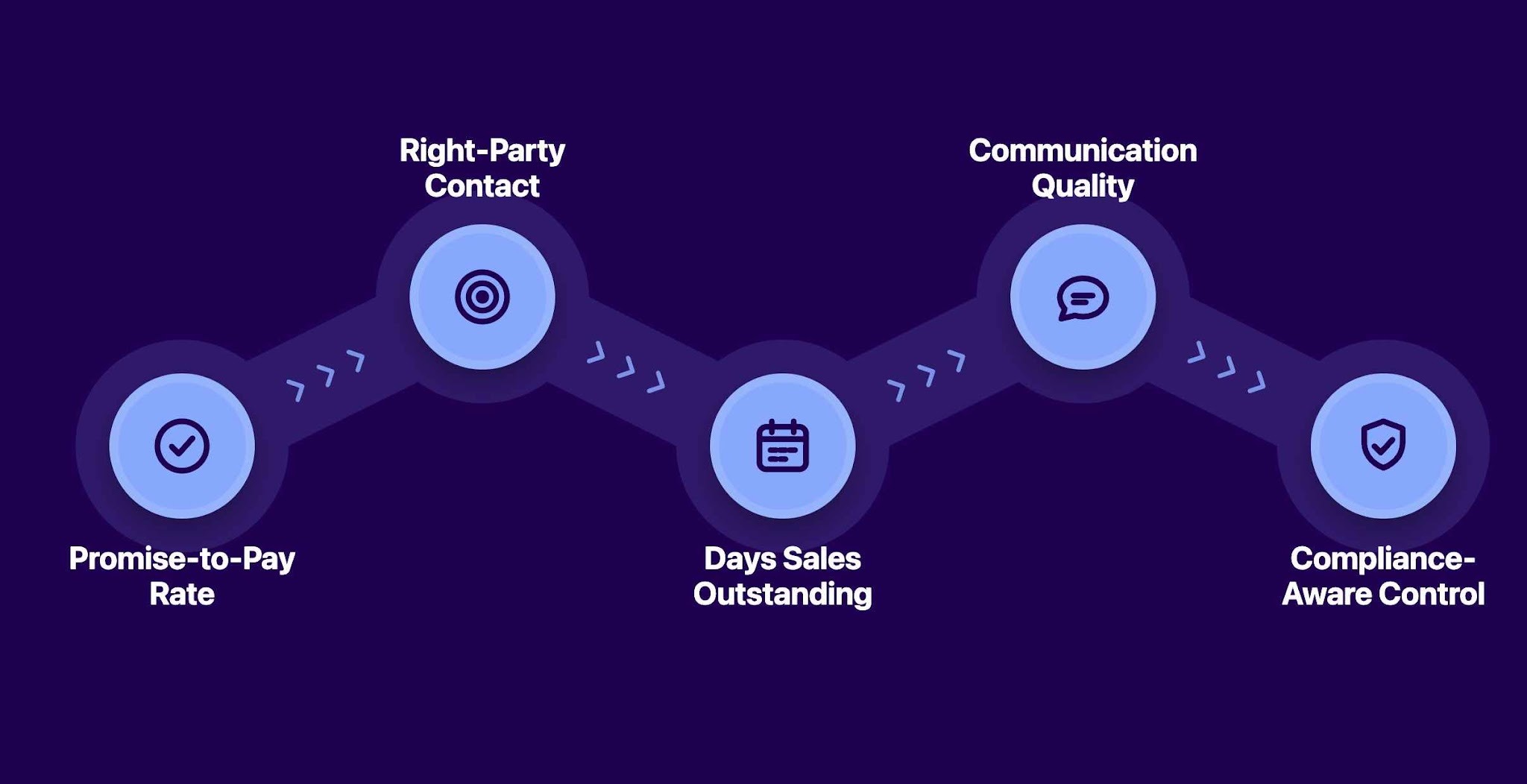
Automated debt collection performance should not be measured only by how fast agencies recover payments. Agencies also need to track process consistency, consumer communication quality, reporting visibility, and compliance-aware workflow control.
Here are the key performance areas agencies should measure:
The promise-to-pay rate indicates how many consumers commit to making a payment after receiving outreach or using a self-service option. For collection agencies, this helps show whether automated reminders, payment options, and communication flows are moving accounts toward resolution.
Right-party contact shows whether the agency is reaching the correct consumer through the right channel. This matters because better contact accuracy can reduce wasted outreach, improve agent efficiency, and support more controlled communication workflows.
Days sales outstanding, or DSO, helps agencies understand how long it takes to collect overdue balances. When reviewed with other metrics, it can show whether automation is helping move accounts through the recovery process more efficiently.
Agencies should also review whether automated communication is clear, consistent, and aligned with approved workflows. The goal is not to send more messages, but to send the right messages through the right channels while maintaining a professional consumer experience.
Automation should give compliance leads and operations teams better visibility into message templates, payment records, escalation steps, and workflow changes. This helps agencies maintain more documented processes in a compliance-sensitive environment.
To choose the right solution, agencies also need to know which capabilities matter most in automated debt collection software.
Automated debt collection software should help agencies connect the main parts of the recovery workflow without adding more complexity. The goal is to choose a platform that supports scale, visibility, consumer self-service, and controlled operations.
Here are the core capabilities agencies should check for:
For agencies looking to connect these workflows in one place, the right software can make automation easier.
Also Read: 7 Ways Automated Dashboards for Collectors Drive Debt Recovery
Tratta is debt-collection software for collection agencies that simplifies every stage of the recovery process, from outreach to consumer payments. It replaces disconnected legacy systems with one platform for consumer payments, automated outreach, and compliance-aware recovery workflows.
Here is how Tratta supports:
With these tools, Tratta gives collection agencies, law firms, and creditors the power to recover more with less effort.
Automated debt collection gives agencies a more organized way to manage outreach, payments, reporting, and follow-up across large account volumes. Instead of relying on manual reminders and disconnected tools, agencies can use automation to reduce repetitive work, improve account visibility, and guide consumers toward available payment options.
Tratta supports automation with debt collection software built for agencies, law firms, credit issuers, and debt buyers. Our platform helps agencies connect consumer self-service payments, omnichannel communications, embedded payments, reporting, REST API integrations, multilingual payment IVR, and customizable workflows in a single platform.
So, schedule your demo today to reduce manual work and bring more control to automated debt collection workflows!
For agencies, the most important part is control. The process should integrate account data, communication, payments, reporting, and human review into a single, clear workflow.
No. Automated debt collection can support agencies of different sizes. Smaller agencies may use it to reduce manual follow-ups, while larger agencies may use it to manage higher account volumes, multiple clients, and more complex workflows.
Yes, when it is set up correctly. Automation can reduce routine tasks such as sending reminders, handling payment questions, and basic account routing, giving agents more time to handle disputes, complex cases, special payment questions, and accounts that require human judgment.
No. Automated debt collection should support agents, not replace them. The best process uses automation for repeatable workflows and keeps agents involved for sensitive conversations, disputes, hardship situations, exceptions, and client-specific requirements.
Agencies should look for self-service payments, reporting dashboards, communication tools, embedded payments, integration options, customization, role-based controls, audit trails, and compliance-aware workflow support. The software should fit the agency’s process instead of forcing teams to work around disconnected tools.