Credit decisions now happen at speed, scale, and under constant scrutiny. In the U.S., lenders process millions of credit decisions each year, and even small delays or inconsistent judgments can quickly turn into lost recoveries and compliance risk. According to McKinsey, more than 80% of lenders and credit firms already rely on automation and AI in credit decisioning as delinquency rises and oversight tightens.
For collection agencies and credit issue companies, waiting is no longer an option. How credit decisions are made today determines which accounts get prioritized, which consumers self-resolve, and which situations escalate into complaints or enforcement scrutiny.
Automated credit decisioning is no longer just about speed. It is becoming a way to control risk, apply fair treatment, and meet regulatory expectations across the credit lifecycle.
In this blog, we’ll explore what automated credit decisioning means in practice, how it works, and why it matters for modern collections and credit teams.
Automated credit decisioning uses rules-based systems and data models to evaluate credit-related decisions without manual review. Instead of relying on case-by-case judgment, these systems analyze multiple data inputs, apply predefined logic, and produce outcomes in seconds.
At its core, automated credit decisioning answers three practical questions:
While automated credit decisioning is often associated with origination, its impact extends far beyond that point. Collection agencies and credit issue companies rely on these decisions after origination, when accounts enter delinquency, recovery, or dispute workflows.
In this context, automated credit decisioning determines actions such as payment plan eligibility, account prioritization, risk segmentation, and approved communication methods. By applying the same criteria across every account, teams gain faster decisions, consistent treatment, and documentation that stands up to audit and regulatory review. Let’s see why it matters in day-to-day collection operations.
Manual credit decisioning struggles to keep up as volumes grow. Reviews take longer, outcomes vary from agent to agent, and compliance gaps become harder to detect and control.
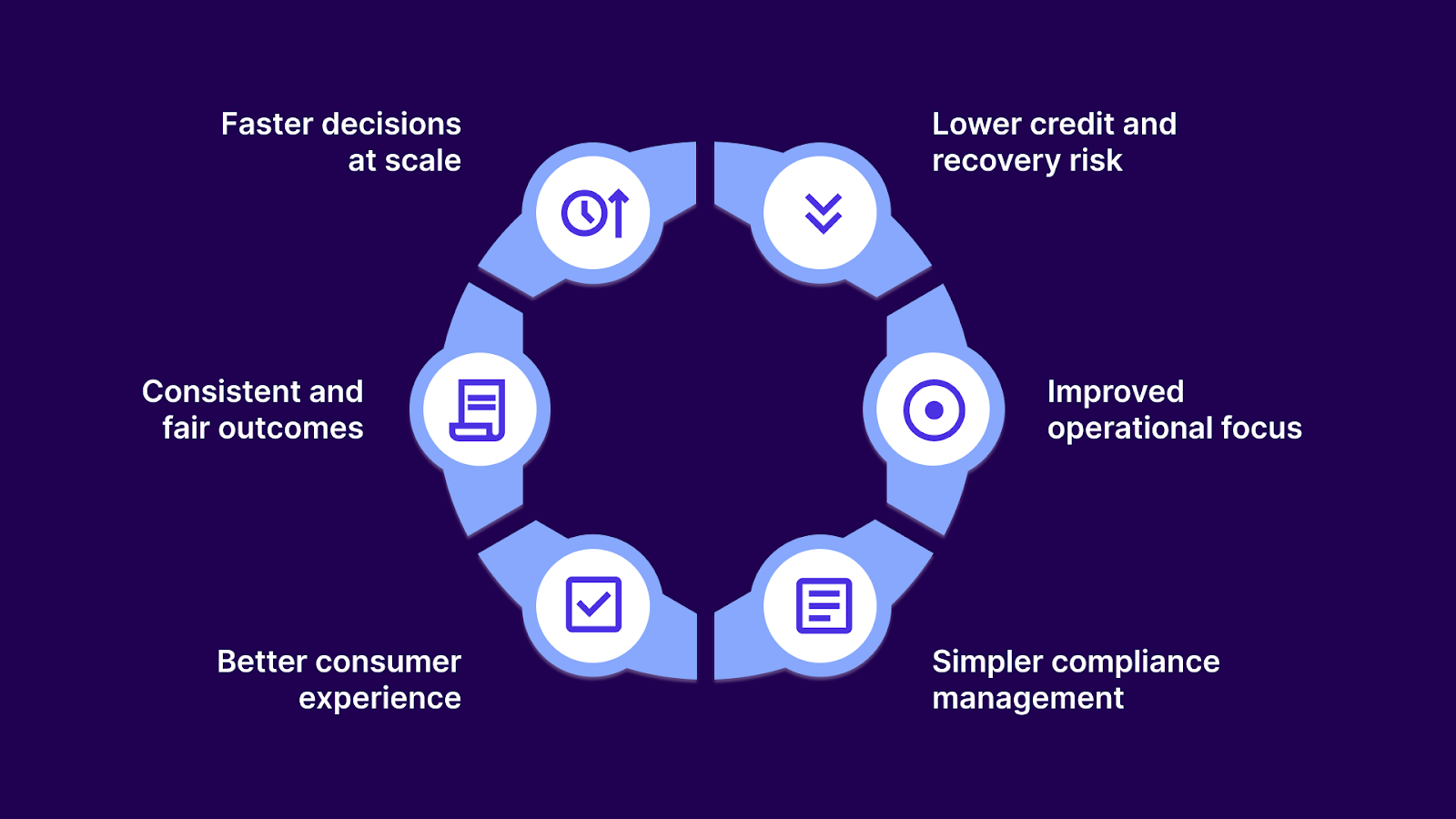
In many collection agencies, thousands of accounts are handled across multiple creditors. When payment plans, outreach priority, and escalation paths are decided manually, inconsistency creeps in. Some accounts are contacted too often, others are missed entirely, and documentation is uneven. Over time, this increases operational risk and drives consumer complaints.
Automated credit decisioning replaces subjective judgment with predefined rules applied consistently across every account. Research shows that inconsistent credit decisions are a major driver of consumer disputes and regulatory scrutiny. Automation reduces this variability and restores control.
As credit and collection operations continue shifting toward digital-first models, automated credit decisioning supports processes that run continuously, across channels, and with minimal manual intervention.
Suggested read: High-Impact Collection Strategies for U.S. Agencies in 2025
To understand why automation has become necessary, it helps to look at how credit decisions were traditionally made.
Before automation, credit decisions relied heavily on manual review and disconnected systems. The process was slower by design and difficult to manage at scale.
This approach worked for smaller volumes and complex edge cases. As volumes increased, its limitations became clear.
The Consumer Financial Protection Bureau has noted that inconsistent underwriting and credit practices raise fair lending risk and complicate regulatory oversight. As account volumes grew, these weaknesses became increasingly difficult to manage.
Also read: Automated Payment Reminders
These limitations set the stage for a different approach. As credit volumes increased and regulatory expectations tightened, manual processes could no longer keep pace. This is where automated credit decisioning began to take hold.
Modern automated credit decisioning follows a structured process designed to deliver consistent, explainable decisions at scale. Each step builds on the previous one, ensuring outcomes remain compliant and auditable.
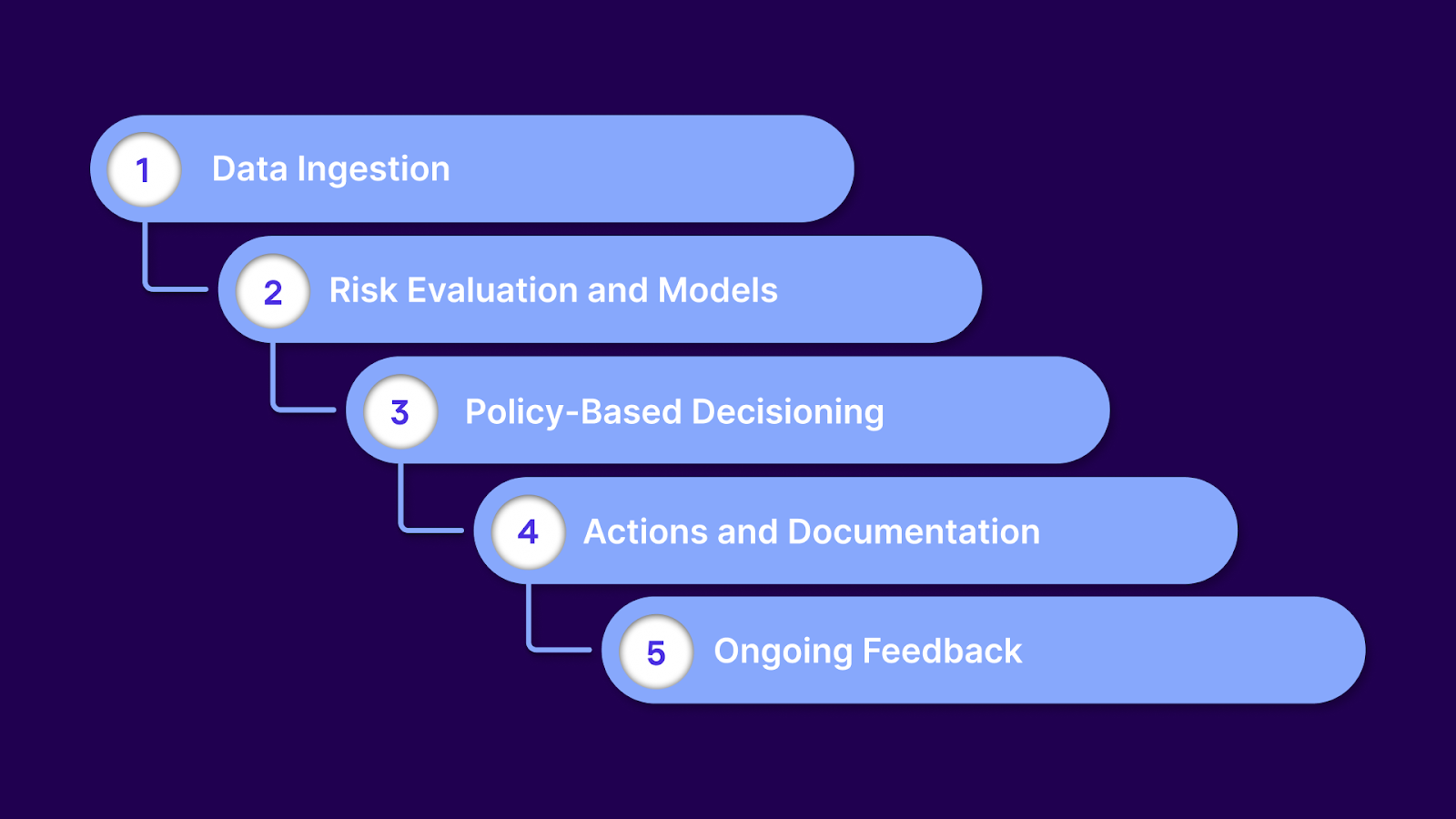
The system first assembles a complete account view using approved data sources, such as:
For collection agencies and credit issue companies, this information typically comes from CRMs, payment systems, and communication platforms. Combining multiple data sources improves predictive accuracy when supported by proper governance.
Once data is collected, risk is evaluated using a combination of models and rules. These may include:
Some platforms use purely rules-based logic, while others incorporate machine learning. In both cases, regulators expect the underlying logic to remain transparent and well-documented.
Decision engines then apply predefined policies to determine the appropriate action. This may involve:
All decisions follow the same rules set to ensure consistency.
Once a decision is made, the system carries out the action and records:
This record supports audits, dispute resolution, and regulatory reviews.
As consumers make payments, respond to outreach, or change account status, the system updates its inputs automatically. Decisions adjust in real time without restarting the process, keeping outcomes aligned with current behavior.
This end-to-end approach enables automated credit decisioning to deliver speed, consistency, and accountability across modern credit and collection environments. To put it in context, it’s important to distinguish automated credit decisioning from a related but different concept: credit scoring.
These two terms are often used as if they mean the same thing. They don’t. The distinction matters, especially in regulated collection environments where decisions must be consistent and explainable.
For example, a credit score may signal elevated risk. Automated credit decisioning determines whether an account qualifies for a payment plan, requires agent review, should follow a different outreach path, or needs escalation.
For collection agencies and law firms, this distinction is critical. Decisioning logic determines how accounts move into early intervention, self-service resolution, or legal workflows, and ensures those outcomes follow consistent, documented rules rather than individual judgment.
Suggested Read: How to Use Fair Debt Collection Practices Act for Demand Letters
With this distinction clear, the focus shifts to how automated credit decisions must operate within regulatory boundaries and meet compliance expectations in the U.S.
In the U.S., automated credit decisioning operates under close regulatory oversight. These systems are expected to deliver speed while maintaining consistency, consumer protection, and transparency.
Automated credit platforms must comply with key federal regulations, including the Fair Credit Reporting Act (FCRA), the Equal Credit Opportunity Act (ECOA), and FDCPA and Regulation F. Together, these laws govern how credit data is used, how decisions are made, and how consumers are contacted during the collection process.
The Consumer Financial Protection Bureau has made one point clear: automation does not reduce accountability.
Regulators expect organizations to demonstrate control over automated credit decisions by ensuring:
When designed correctly, automated credit decisioning strengthens compliance. Predefined rules ensure decisions are applied uniformly. Audit trails capture both logic and outcomes. And explainable decision paths reduce reliance on individual judgment, lowering the risk of inconsistency or bias.
The CFPB has consistently emphasized the importance of traceable and explainable credit decisions across the credit lifecycle, particularly in automated environments. In regulated credit and collection operations, automated credit decisioning works best when treated as a compliance control first and an efficiency tool second.
Suggested Read: Debt Collection Compliance Regulations.
With compliance expectations clear, the focus shifts to how automated credit decisioning can also improve the consumer experience without sacrificing control or oversight.
A common concern is that automation removes the human element from credit and collection processes. In reality, it often improves how consumers interact with those systems.
Automated credit decisioning gives consumers clearer options and faster responses while keeping firm controls in place. Well-designed systems support:
Consumers are more likely to engage when they understand their options and can act without pressure. For credit issue companies and collection agencies, this leads to higher consumer participation and resolution rates without increasing agent workload or compliance risk.
Now, let’s explore where automated credit decisioning delivers the most practical impact inside day-to-day collection operations.
Automated credit decisioning works best when applied to high-volume decisions that demand speed, consistency, and clear controls. In collection and credit operations, it supports daily actions that directly affect recovery, compliance, and consumer experience.
Rules-based logic determines which payment plans are appropriate based on account risk and behavior. Plan terms can adjust automatically after missed payments, while higher-risk accounts are limited to stricter options. This reduces renegotiation and improves completion rates.
Outreach methods are selected based on consent, engagement history, and account status. Systems route communication through SMS, email, or agent outreach, reducing unnecessary contact and supporting digital-first resolution. Federal Reserve research shows that most consumers prefer digital repayment options when available.
Automated limits ensure outreach stays within defined thresholds across all accounts. This lowers complaint risk, reduces regulatory exposure, and removes pressure from agents to make judgment calls in real time.
Automated credit decisioning helps teams focus effort where recovery is most likely. Accounts are prioritized based on balance, engagement patterns, and payment behavior, preventing resources from being spent on low-probability outcomes.
When an account enters dispute or requires a hold, automated systems apply status changes immediately. Outreach pauses without manual intervention, ensuring compliance and consistent handling across all accounts.
All of these capabilities depend on how well decision logic, data, and execution are connected. This is where platforms purpose-built for modern collections play an important role. One example is Tratta, which is designed to support automated credit decisioning within regulated collection environments.
Tratta is a digital-first platform built to help collection agencies, law firms, and credit issue companies apply automated credit decisioning in a controlled and compliant way. It connects decision logic, consumer engagement, and payments within a single system, allowing teams to act consistently at scale.
Tratta is built to support collection agencies and credit issue companies at different stages of growth, from smaller operations to complex, high-volume portfolios. You can explore how automated credit decisioning connects with consumer access, payments, compliance, and reporting.
Automated credit decisioning is no longer a tool reserved for large lenders. It is now important for collection agencies and credit issue companies that need to manage volume, meet regulatory expectations, and respond to changing consumer behavior.
When used with clear rules and proper oversight, automated credit systems improve consistency, reduce risk, and create more predictable outcomes for both operations teams and consumers.
If you want to understand how automated credit workflows fit into a digital-first collections environment, explore how Tratta brings decisioning, consumer access, payments, and compliance together in one platform.
Schedule a demo with Tratta now!
Automated credit decisioning in collections refers to using predefined rules and data models to determine actions such as payment plan eligibility, outreach timing, account prioritization, and dispute handling without manual review. It helps agencies apply decisions consistently while maintaining compliance.
Credit scoring measures risk by producing a numeric score or risk band. Automated credit decisioning uses that score, along with policy rules and compliance constraints, to decide what action should be taken, such as approving a payment plan or limiting outreach.
No. Automated credit decisioning reduces manual execution, but human oversight remains essential. Teams still define rules, review outcomes, test for bias, and adjust policies as regulations or business needs change.
Automated systems apply rules uniformly, record decision logic, and maintain audit trails. This makes it easier to explain decisions to regulators, respond to disputes, and demonstrate compliance with laws such as FCRA, ECOA, and FDCPA.
No. Automated credit decisioning is valuable for any collection agency or credit issue company managing recurring decisions at scale. Even mid-size teams benefit from faster decisions, fewer errors, and clearer documentation.