Collection agencies often struggle with high inbound call volumes, long wait times, and limited self-service payment options. These issues can frustrate consumers and increase pressure on collection teams. At the same time, consumers now expect faster and more convenient payment experiences across inbound support channels.
The Interactive Voice Response market size is projected to reach USD 9.26 billion by 2032, showing the growing role of automated voice systems in modern collections. Without effective IVR optimization, agencies may face rising operational inefficiencies and lower payment completion rates.
In this article, we explore inbound IVR challenges, optimization strategies, advanced features, and best practices for collection agencies in 2026.
Brief look:
An Interactive Voice Response (IVR) system is an automated phone technology that allows consumers to interact with a collection agency through voice prompts or keypad inputs. IVR optimization refers to improving the performance, usability, routing logic, and self-service capabilities of these systems.
How does IVR optimization improve debt recovery?
As inbound call volumes continue increasing, many collection agencies still struggle with outdated IVR systems and disconnected payment workflows. In the next section, we examine the most common inbound IVR challenges affecting debt recovery operations.
Suggested Read: Advanced IVR Systems for Debt Collection: Complete Guide
Many agencies still rely on outdated systems with limited routing logic, poor payment flows, and disconnected communication channels. These limitations can increase operational pressure and create friction during inbound account resolution.
Challenges in legacy systems:
The right IVR technology can help agencies reduce inbound friction and improve payment accessibility across collection operations. Advanced platforms also support better routing logic, centralized visibility, and more efficient self-service payment workflows.
Tratta offers a Multilingual Payment IVR that supports menu-driven (DTMF) inbound payment workflows, rules-based payment routing, and real-time account updates. It also provides an SMS handoff option that sends consumers a passwordless portal session link when they prefer to complete payment online, supporting cross-channel continuity and secure self-service. Schedule a free demo.
Third-party collection agencies using outdated routing logic, disconnected payment systems, and weak authentication flows can increase call abandonment and reduce self-service payment completion.
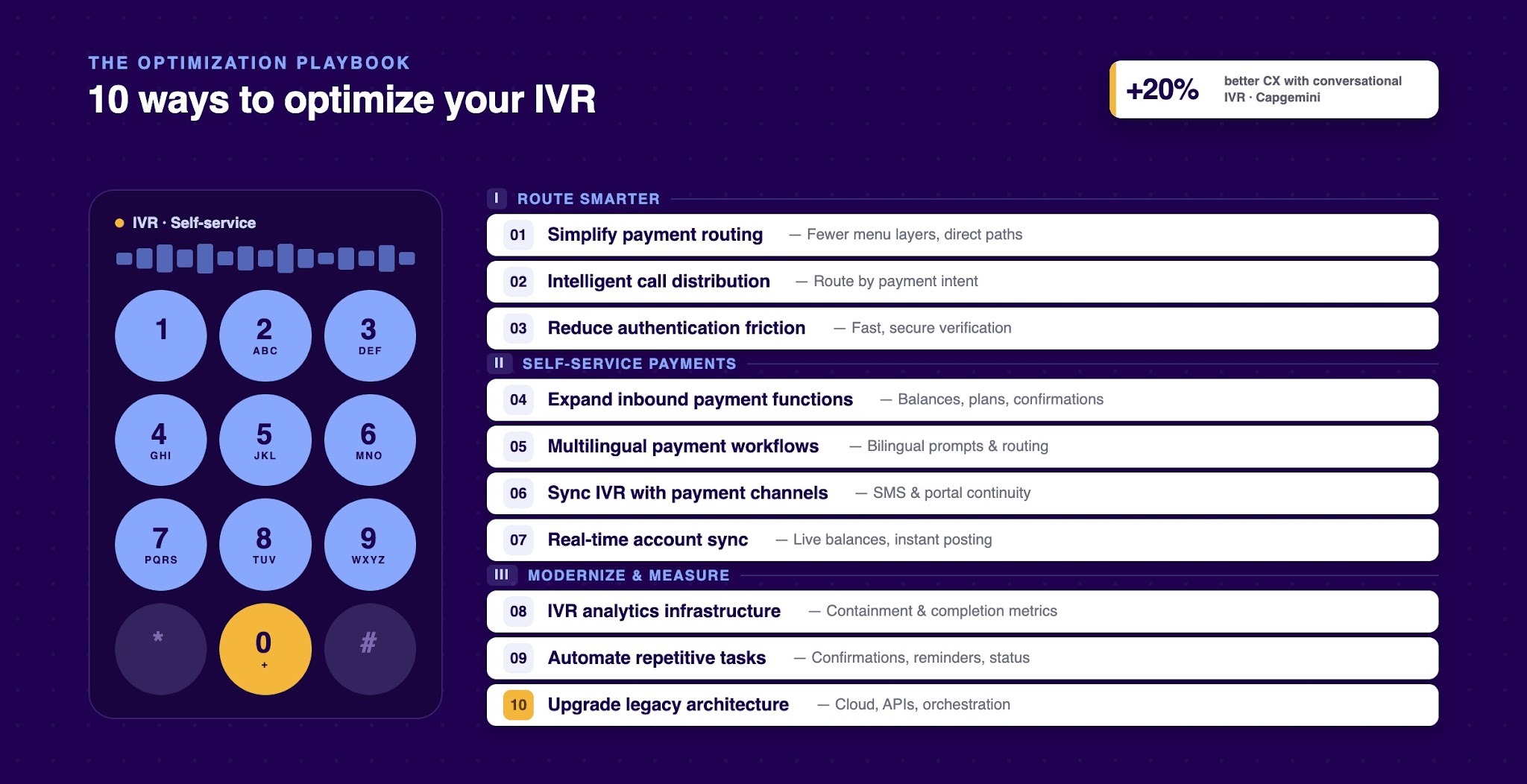
These are a few strategies to optimize your IVR systems and increase recovery rates:
Complex IVR decision trees increase authentication latency and inbound call abandonment. Streamlined routing structures improve payment accessibility during delinquent account servicing workflows.
Optimization priorities include:
Inbound payment calls should route dynamically based on payment intent and account conditions. Intelligent routing reduces unnecessary transfers during payment resolution workflows.
Technical improvements may include:
Lengthy identity verification workflows can interrupt inbound payment completion. Secure authentication should minimize IVR interaction time without weakening compliance controls.
Optimization measures include:
Inbound IVR systems should support complete payment servicing workflows without agent escalation. Limited payment functionality increases inbound operational pressure.
Important capabilities include:
Language friction can slow inbound account resolution and increase failed payment interactions. Multilingual IVR systems improve accessibility across delinquent account servicing operations.
Optimization strategies may include:
Disconnected payment systems create inconsistent payment-state visibility across collection workflows. Integrated infrastructure improves inbound payment continuity.
Integration priorities include:
Delayed account updates can disrupt inbound payment servicing workflows. Real-time synchronization improves payment-state accuracy during IVR interactions.
Useful capabilities include:
Collection agencies need operational visibility into inbound IVR performance and payment completion behavior. Analytics help identify routing inefficiencies and containment issues.
Important metrics include:
Manual handling of routine inbound payment workflows increases operational inefficiency. Automation reduces agent dependency during repetitive servicing interactions.
Automation opportunities include:
Older IVR environments often lack API flexibility and centralized payment orchestration capabilities. Modern infrastructure improves routing control and inbound workflow scalability.
Technology upgrades may include:
Many third-party collection agencies still operate inbound IVR systems with fragmented routing logic and limited payment servicing functionality. In the next section, we examine the most common indicators that an inbound collections IVR environment requires optimization.
Suggested Read: The IVR Payment Gap: What Most Debt Collectors Are Missing in 2026

As inbound payment interactions become more digital, outdated IVR systems can create routing inefficiencies, lower containment rates, and increase operational pressure across collection operations.
Common warning signs include:
Identifying these operational gaps early can help agencies improve inbound payment workflows before inefficiencies begin affecting recovery operations. In the next section, we examine the advanced IVR capabilities modern collection agencies use to support scalable self-service payment infrastructure.
Third-party collection agencies now require payment-focused infrastructure that supports inbound account servicing, authentication workflows, payment-state visibility, and operational scalability across digital collection environments.
Conversational AI is becoming more common in customer service IVRs, with Capgemini reporting customer experience improvements of up to 20%. However, conversational interfaces are not required for every payment workflow.
For most third-party collection operations, well-designed menu-driven (DTMF) IVR flows remain a practical fit for structured payment completion. Tratta’s Multilingual Payment IVR is DTMF/menu-driven and designed for high-volume inbound payment workflows rather than conversational customer service interactions.
These are a few other features you should look for:
Important routing capabilities include:
Critical synchronization features include:
Strong authentication controls include:
Important integration capabilities include:
Useful operational metrics include:
Tratta combines self-service payment functionality, inbound workflow orchestration, centralized reporting visibility, and secure payment handling within a unified collections ecosystem. Its inbound contact center also helps agencies reduce operational friction while maintaining scalable payment resolution workflows across digital servicing channels. Talk to us today.
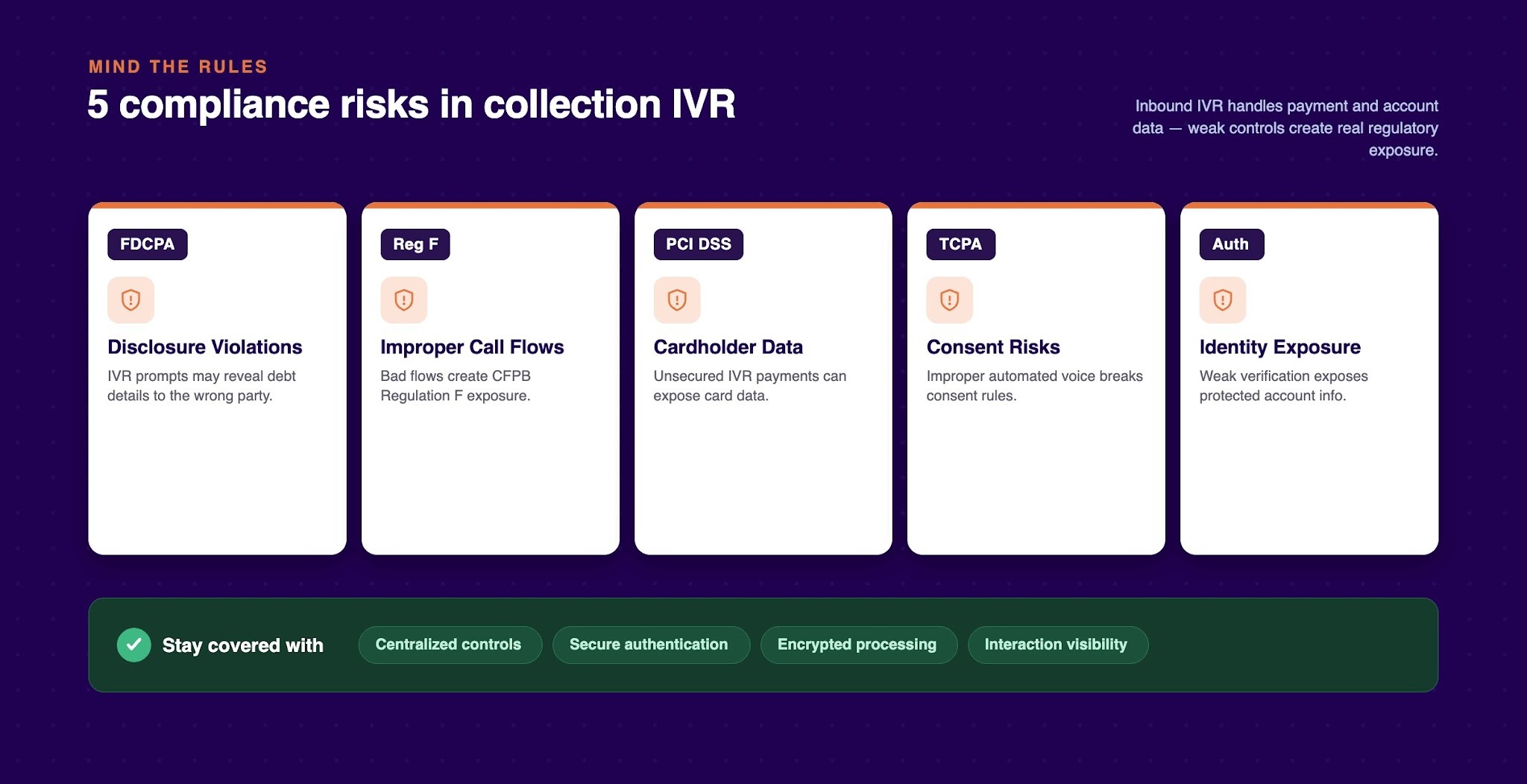
Inbound IVR systems process payment data, account information, and consumer interactions across debt recovery operations. Without proper controls, third-party collection agencies can face compliance exposure under federal consumer protection and payment security regulations.
Common compliance risks in IVR debt collection include:
Managing these risks requires centralized workflow controls, secure authentication infrastructure, encrypted payment processing, and detailed interaction visibility across inbound collection environments.
Suggested Read: IVR Best Practices for Collection Agencies in the US: 5 Core Design Principles
Outdated inbound IVR systems can increase operational pressure across third-party collection environments. Poor routing logic, limited self-service functionality, fragmented payment workflows, and weak authentication controls may reduce payment completion and increase compliance exposure.
Tratta provides inbound payment IVR infrastructure designed for demanding collection operations. Its platform combines multilingual payment servicing, secure payment workflows, omnichannel continuity, and centralized reporting within an inbound collections environment.
Learn how Tratta supports scalable self-service IVR operations for third-party collection agencies in 2026. Schedule a demo today
IVR containment measures how many inbound interactions are resolved within the IVR system without live-agent escalation. Higher containment rates can reduce operational pressure across collection call centers.
Multilingual IVR systems reduce language friction during inbound payment servicing and account resolution workflows. They can also improve accessibility across diverse consumer populations.
Self-service IVR payments allow inbound callers to complete payment-related tasks without agent involvement. This can reduce queue volumes and improve payment workflow efficiency.
Important IVR metrics include containment rates, call abandonment rates, authentication failures, payment completion rates, and average inbound handling time.
Legacy IVR environments may create routing inefficiencies, fragmented payment workflows, limited reporting visibility, and poor integration across digital servicing channels.