Collection agencies face growing pressure to improve recovery performance while meeting changing consumer expectations. Traditional outreach methods often struggle to deliver the same results they once did.
Research cited by McKinsey found that 73% of consumers in late-stage delinquency made a payment after receiving digital communications. The message is clear.
Modern collection strategies now depend on technology, data, automation, and consumer-centric engagement. This article explores eight technology-driven strategies that can help collection agencies improve efficiency, strengthen engagement, and enhance collection outcomes in 2026.
Brief look:
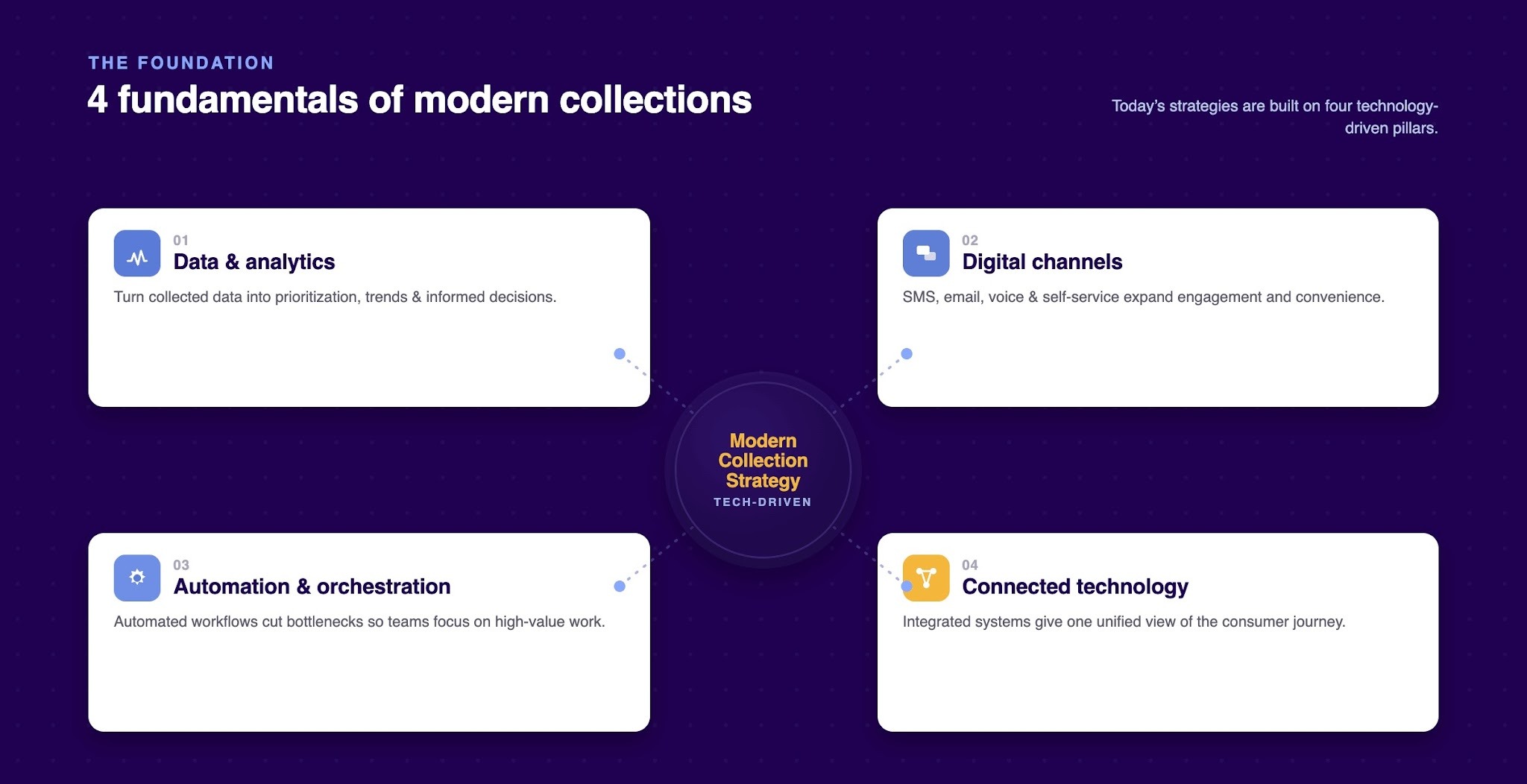
Technology now sits at the center of successful collection operations. Collection agencies are using digital tools to improve efficiency, increase consumer engagement, and gain better visibility into performance. As a result, modern collection strategies are increasingly built around four technology-driven pillars.
The four fundamentals of modern debt collection strategies are:
These pillars have reshaped how collection agencies approach recovery in 2026. Traditional collection methods often struggle to deliver the same level of efficiency and engagement. In the next section, we examine why traditional collection strategies are no longer enough.
Suggested Read: Collections Strategy in 2026: 15 Useful Tips to Improve Debt Recovery
Traditional collection strategies were designed for a different operating environment. Most relied on agent-driven outreach, limited consumer data, and disconnected systems. Today's collection operations require greater speed, visibility, and adaptability than those approaches can typically provide.
These are a few gaps in archaic and innovative strategies:
These limitations explain why many collection agencies are rethinking how recovery operations are designed. Technology is no longer a supporting tool. It has become a core component of the collection strategy itself. In the next section, we explore eight debt collection strategies to improve your recovery rates.
Suggested Read: Average Collection Success Rates and Industry Insights
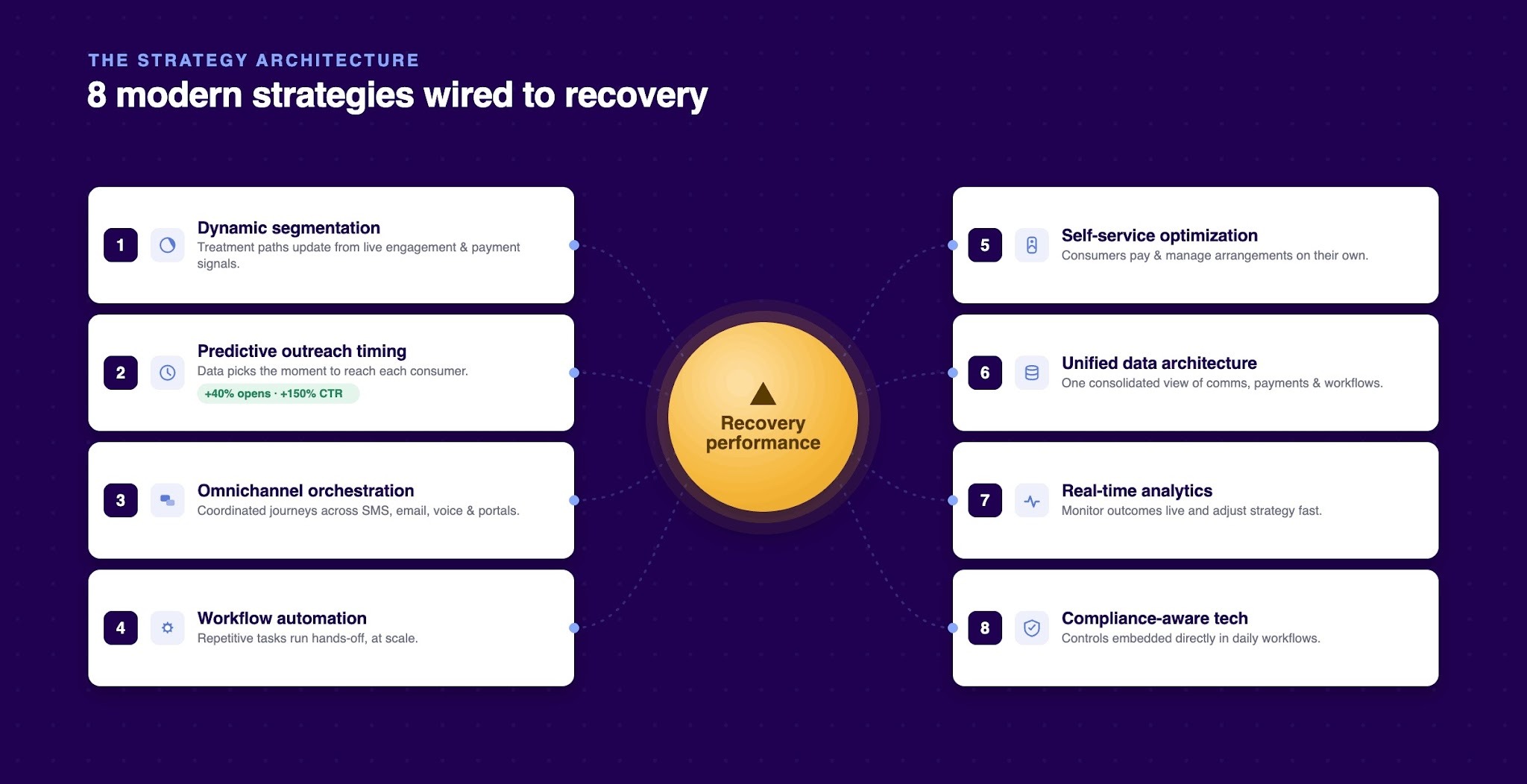
Technology has shifted from supporting collections to shaping them. Modern collection agencies increasingly rely on data, automation, and connected systems to improve outcomes.
The following strategies focus on the technological capabilities driving collection performance in 2026.
Traditional segmentation relies on static variables such as balance size or delinquency age. Modern segmentation continuously updates account treatment paths using engagement signals, payment behavior, and communication activity. This allows collection resources to be allocated more efficiently across portfolios.
Key benefits include:
Execution requires continuous data ingestion and segmentation models that adapt as consumer behavior changes. Static portfolio groupings should be replaced with dynamic decision frameworks.
Communication timing often influences engagement as much as message content. A McKinsey case study found that a redesigned digital collections process increased email open rates by 40% and click-through rates by 150%. These improvements demonstrate how data-driven outreach strategies can significantly improve consumer engagement.
Key benefits include:
Execution depends on analyzing historical communication and payment data. Timing optimization should be evaluated continuously as consumer behavior evolves.
Modern consumers move between channels rather than remaining within a single communication path. Collection strategies should coordinate interactions across SMS, email, voice, portals, and payment channels. This creates a more consistent consumer experience.
Key benefits include:
Execution requires centralized communication management and synchronized consumer records. Channel activity should inform future outreach decisions automatically.
Tratta helps collection agencies centralize SMS, email, voice, and self-service interactions within a single platform. This provides greater visibility into consumer engagement across the collection lifecycle. Schedule a free demo.
Collection operations generate large volumes of repetitive administrative tasks. Automation reduces manual intervention while increasing process consistency and scalability. Teams can then focus on higher-value collection activities.
Key benefits include:
Execution should begin with high-volume workflows that create bottlenecks. Automation initiatives should be measured against operational efficiency metrics.
Tratta includes workflow automation features that help agencies simplify tasks, communication processes, and operational workflows. This can improve consistency while reducing manual administrative effort. Contact us to learn more.
Consumers increasingly expect to resolve obligations independently. Self-service capabilities allow payments, account reviews, and arrangement management without agent involvement. This supports both convenience and operational efficiency.
Key benefits include:
Execution requires seamless access across devices and communication channels. Self-service experiences should remain simple and intuitive.
Collection performance suffers when operational data exists across disconnected systems. Unified data environments create a consolidated view of communications, payments, workflows, and consumer interactions. Better visibility improves decision-making.
Key benefits include:
Execution requires integration across collection technologies and data sources. Consistent governance standards should support long-term data quality.
Traditional reporting often identifies issues after performance declines occur. Real-time analytics allow collection teams to monitor outcomes as they happen. This enables faster strategy adjustments and operational improvements.
Key benefits include:
Execution depends on accessible dashboards and actionable metrics. Reporting should focus on decision support rather than historical summaries alone.
Compliance management increasingly relies on technology-enabled controls. Modern platforms can support communication governance, documentation, audit readiness, and policy enforcement. This helps reduce operational risk while maintaining efficiency.
Key benefits include:
Execution should embed compliance controls directly within operational workflows. Compliance activities should become part of daily collection processes rather than separate review exercises.
Success depends not only on adopting new tools but also on aligning them with organizational goals. In the next section, we examine the role of the right technology in realigning existing collection structures to meet current needs.
Suggested Read: Key Performance Indicators for Debt Collection Metrics
Many collection agencies already possess skilled teams, established processes, and years of operational experience. The challenge is often structural rather than strategic. Technology helps agencies redesign how decisions, information, and work move throughout the organization.
The right technology can support this transformation in several ways:
Technology should not simply automate existing processes. It should help collection agencies rethink how work is organized, managed, and measured. The next section explores how Tratta provides the tools needed to support that transformation across modern collection operations.
Suggested Read: Key Steps for Accounts Receivable Collection Strategy
The strategies discussed throughout this article depend on more than planning and execution. They require technology capable of connecting communications, data, workflows, payments, and performance management within a single operational framework.
Tratta is a cloud-based debt collection software platform designed for third-party collection agencies. Its features help agencies implement technology-driven collection strategies while creating a more connected and scalable operating environment.
Core features include:
Digital transformation requires creating a collection environment where information, decisions, and consumer interactions work together more effectively. Tratta provides the infrastructure needed to support that shift while helping agencies build more connected, efficient, and scalable collection operations.
Collection agencies that continue relying on outdated operating models risk falling behind changing consumer expectations and industry requirements. Disconnected systems, limited visibility, and manual processes can reduce efficiency, weaken engagement, and restrict recovery performance.
Tratta helps collection agencies improve operations by bringing communications, payments, workflows, reporting, and consumer engagement into a single platform. Its technology supports the data visibility, operational efficiency, and scalability needed to execute modern collection strategies more effectively.
The right collection strategy requires the right technology framework. Schedule a free demo to explore how Tratta can help improve collection operations for 2026 and beyond.
Modern collection strategies use technology, data, automation, and digital engagement to improve recovery performance. They focus on operational efficiency, consumer experience, and informed decision-making.
Technology helps collection agencies automate workflows, centralize information, optimize communications, and analyze performance data. These capabilities can improve both efficiency and recovery outcomes.
Digital communication channels allow collection agencies to engage consumers through SMS, email, self-service portals, and other preferred methods. These channels can improve accessibility, engagement, and operational efficiency.
Many agencies are investing in workflow automation, analytics, omnichannel communications, self-service portals, embedded payments, and integrated collection platforms. These technologies support more efficient operations and consumer engagement.
Successful implementation typically starts with a clear operational assessment and the right technology foundation. Collection agencies should focus on integrating data, communications, workflows, and performance management into a connected operating environment.