.jpg)
Recovery teams face constant pressure to improve collections while navigating strict compliance requirements and changing consumer expectations. Even small process gaps can increase risk, delay account resolution, and impact recoveries.
Unfortunately, the average law firm only collects about 85% of amounts billed, highlighting how difficult it can be to maximize recovery performance. As collection workflows become more digital, maintaining both compliance and operational efficiency is increasingly important.
In this article, we explore legal collections best practices that can help reduce risk, strengthen consumer interactions, and improve recovery outcomes.
Brief look:
Legal collections refer to debt recovery activities performed within the boundaries of applicable laws and regulations. These activities focus on recovering outstanding balances while maintaining compliance with requirements such as the FDCPA, Regulation F, state collection laws, and payment security standards.
Strong compliance practices can help reduce disputes, improve documentation quality, strengthen consumer interactions, and support more consistent recovery outcomes.
Legal collections typically involve:
As collection operations become more digital, maintaining compliance across communications, payments, and account servicing workflows becomes increasingly complex. In the next section, we examine the most common compliance risks third-party collection agencies and law firms face during debt recovery operations.
Suggested Read: Importance of Compliance Management System in Debt Collection
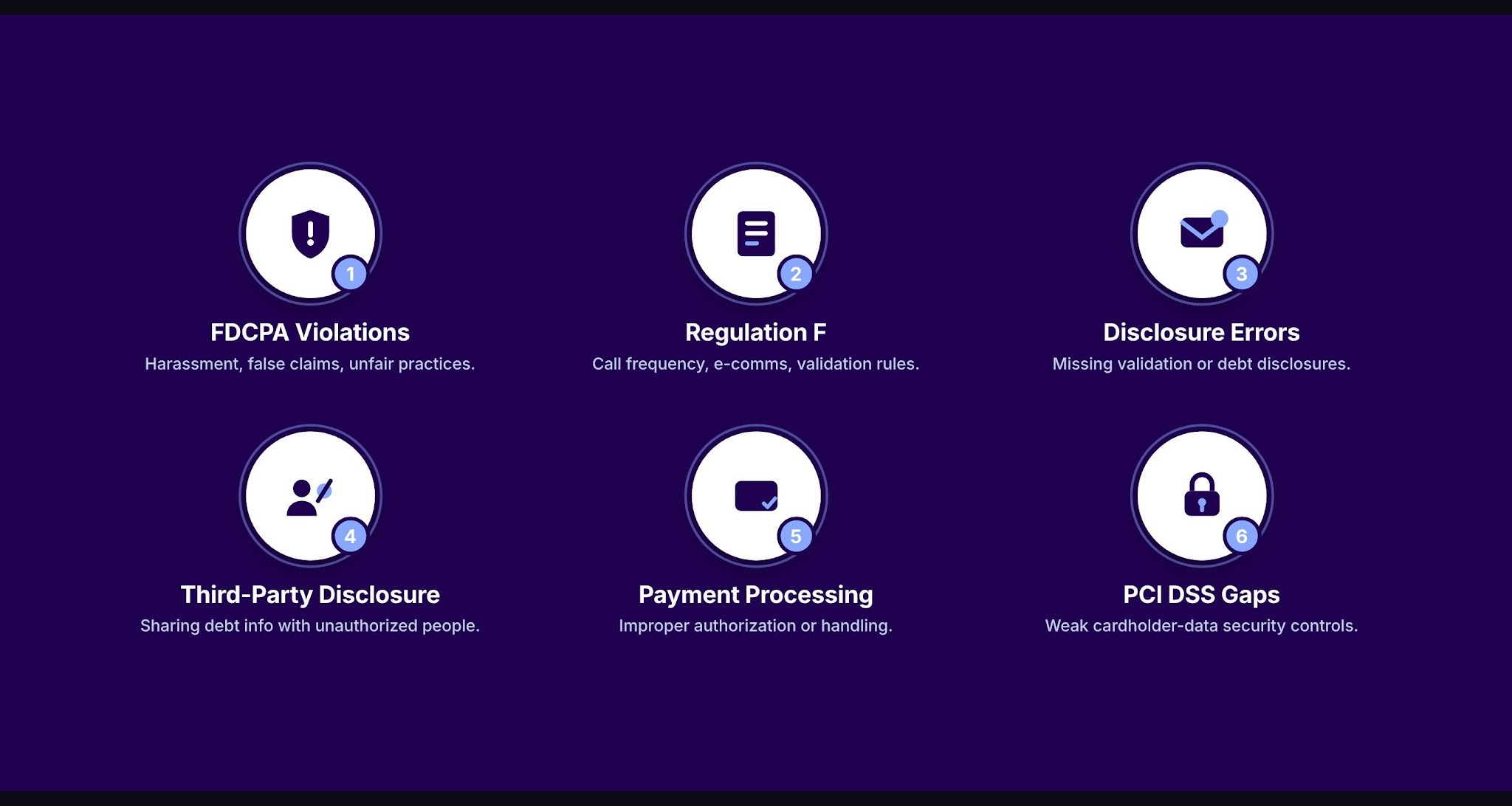
Compliance failures can result in consumer complaints, regulatory scrutiny, litigation exposure, reputational damage, and operational disruption. As collection activities expand across digital channels, agencies must manage compliance obligations across communications, payments, documentation, and consumer servicing workflows.
Common compliance risks include:
Tratta helps agencies manage compliance risk through centralized communication tracking, secure payment infrastructure, audit-ready reporting, and consumer interaction visibility. The platform supports documentation management and workflow consistency across digital collection operations. Request a free demo.
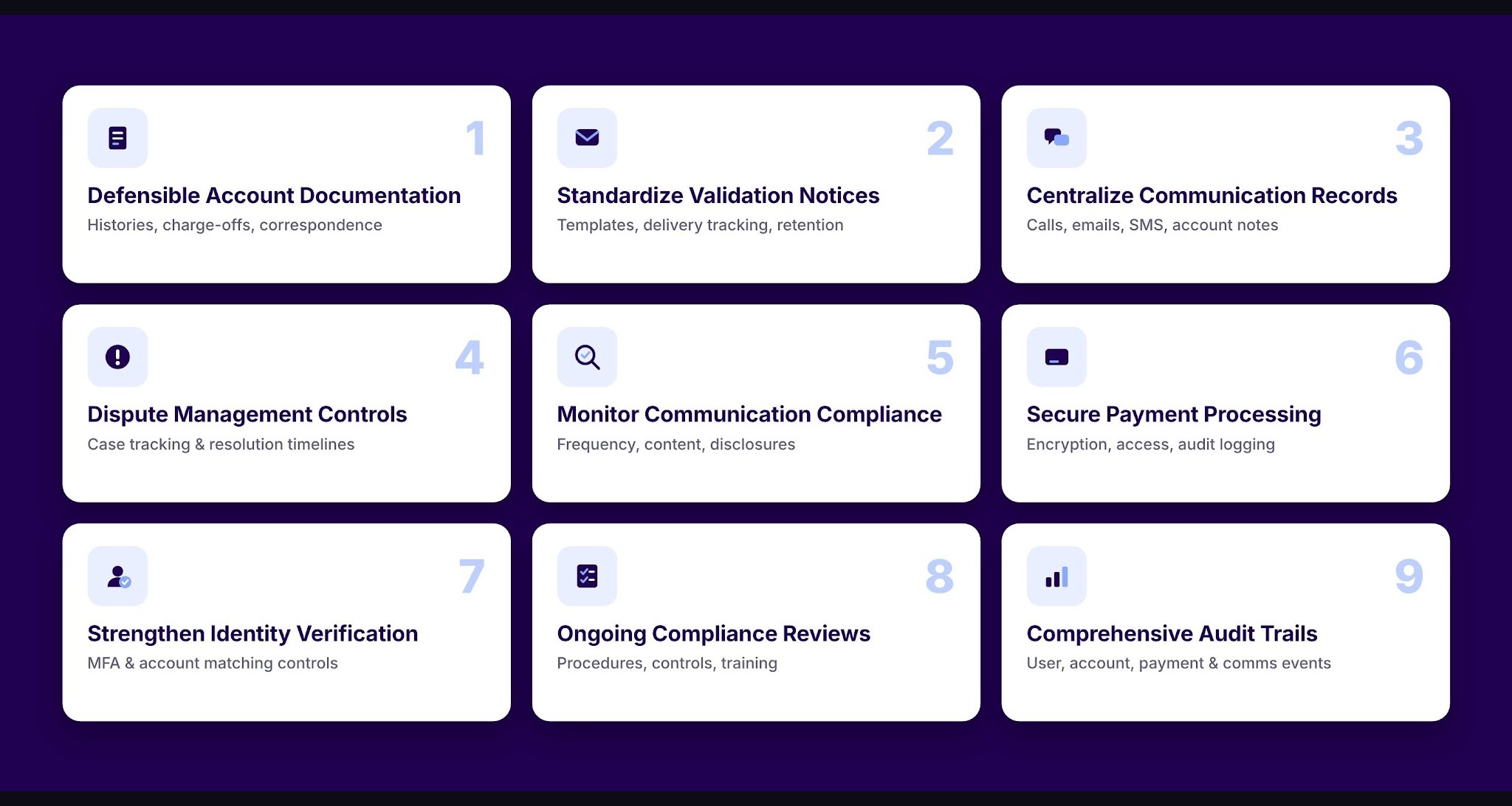
Legal collections require documented controls, defensible processes, and consistent compliance oversight. Whether managed by a law firm or collection agency, recovery workflows should withstand audits, disputes, litigation, and regulatory review.
Tips to ensure smoother and compliant recovery operations:
Documentation forms the evidentiary foundation of collection activity. Incomplete records can weaken recovery efforts and increase dispute exposure.
Maintain records such as:
Example: A consumer disputes a debt after receiving a collection notice. The agency produces the original account agreement, charge-off statement, payment history, and account transfer records. The dispute is resolved without escalation because the documentation establishes a complete ownership and account history trail.
Validation notices must comply with FDCPA and Regulation F requirements. Inconsistent delivery practices can create significant compliance risk.
Key controls include:
Example: During a CFPB review, an agency is asked to demonstrate compliance with validation notice requirements. Because notices are automatically generated, tracked, and archived, the agency can show delivery dates, notice content, and account-specific records. This reduces regulatory exposure during the examination.
Collection teams should maintain a unified communication history across channels. Fragmented records often create compliance blind spots.
Maintain centralized records for:
Example: A consumer alleges that multiple collectors provided conflicting account information. A centralized communication record shows every call, email, and SMS interaction associated with the account. The agency quickly reconstructs the account history and resolves the complaint.
Tratta helps legal collections teams centralize consumer communications across digital channels, creating a single record of account interactions. The platform provides visibility into communication history, payment activity, and consumer engagement within a single environment. Call us to learn more.
Disputes require structured handling procedures and documented resolution workflows. Delays or inconsistent responses can increase legal exposure.
Dispute workflows should include:
Example: A consumer submits a dispute through an online portal. The account is immediately coded as disputed and collection activity pauses automatically. Supporting documentation is reviewed before the account returns to the active recovery workflow.
Consumer communications must align with federal and state requirements. Ongoing monitoring helps identify compliance deviations before they become violations.
Review areas such as:
Example: Internal monitoring identifies accounts receiving communication attempts that approach Regulation F call-frequency thresholds. Supervisors intervene before additional activity occurs. This prevents potential regulatory violations and consumer complaints.
Payment systems should protect consumer information and support PCI DSS compliance. Weak controls can create both security and regulatory risks.
Important controls include:
Example: A consumer challenges a payment authorization months after a transaction. The agency retrieves authorization records, payment logs, and transaction details from the payment system. The documentation confirms authorization and resolves the dispute.
Identity verification helps prevent unauthorized disclosures and payment errors. Verification controls should be consistently applied across all channels.
Verification methods may include:
Example: A caller requests account details but fails verification requirements. The collector withholds account information and directs the caller through the approved verification process. This prevents a potential third-party disclosure violation.
Collection regulations continue evolving across jurisdictions. Regular reviews help organizations identify gaps before regulators or clients do.
Review programs should assess:
Example: A compliance review identifies workflow gaps related to updated Regulation F communication requirements. The agency updates procedures, retrains staff, and adjusts system controls before any consumer complaints arise.
Audit trails provide accountability and operational transparency. They are essential during litigation, client reviews, and regulatory examinations.
Audit records should capture:
Example: During litigation, opposing counsel challenges collection activity on an account. The agency produces a complete audit trail showing account changes, communication events, payment activity, and user actions. The detailed records help support the agency's position and reduce evidentiary disputes.
Even well-documented collection programs can develop operational gaps over time. In the next section, we examine the warning signs that may indicate a legal collection process requires improvement.
Suggested Read: Debt Collection Compliance Checklist: An Essential Guide for Debt Collectors
Even established recovery programs can develop compliance and operational weaknesses over time. Identifying these issues early can help law firms and collection agencies reduce risk before problems escalate into complaints, disputes, audits, or litigation.
Common warning signs include:
These warning signs often indicate deeper process and technology gaps within collection operations. In the next section, we examine how Tratta helps collection law firms strengthen compliance controls, improve operational visibility, and reduce legal risk across the recovery lifecycle.
Suggested Read: Legal Debt Recovery Process: Key Steps & Software Solutions
Tratta is a digital collections platform designed for collection agencies, debt buyers, and collection law firms. The platform centralizes communications, payments, consumer servicing, reporting, and workflow management across the recovery lifecycle. Its infrastructure helps organizations maintain stronger operational visibility while supporting compliance-focused collection workflows.
Core features include:
The value of these capabilities becomes clearer when viewed in a real-world recovery environment. The following example shows how a client used Tratta's compliance-focused infrastructure to support growth, strengthen security controls, and improve collection operations.
FMA Alliance wanted to modernize its recovery infrastructure while maintaining strict compliance and security standards. Its legacy systems lacked SOC 2 Type 2 readiness, multi-factor authentication capabilities, and the internal resources required for large-scale modernization. The company also needed technology that could support continued growth without increasing compliance exposure.
Tratta helped through:
FMA Alliance maintained a 99.99% customer satisfaction score while modernizing its recovery operations and compliance infrastructure. The organization also positioned itself for significant growth, ultimately scaling operations by 5X while strengthening security and compliance capabilities. According to the company, Tratta's advanced technology helped reduce risks tied to outdated systems and supported long-term client confidence across recovery operations.
Weak legal collection processes can create compliance exposure, documentation gaps, consumer disputes, audit challenges, and recovery delays. As regulations continue evolving, inconsistent workflows and fragmented systems can make it harder for organizations to maintain defensible collection operations and achieve recovery goals.
Tratta helps collection agencies and law firms centralize communications, payments, consumer servicing, reporting, and workflow management within a single platform. Its compliance-focused infrastructure supports documentation visibility, secure payment processing, audit readiness, and scalable digital recovery operations.
Want to strengthen compliance and improve recovery performance across your collection workflows? Request a free demo.
Most agencies conduct formal compliance reviews at least annually. However, policy reviews should also occur whenever significant regulatory changes affect collection operations.
Agencies should retain account documentation, communication records, payment authorizations, dispute histories, and activity logs. Retention requirements may vary based on client contracts and applicable laws.
Clear documentation, accurate account information, timely validation notices, and consistent communication practices can help reduce dispute volumes. Strong recordkeeping also supports faster dispute resolution.
Many states impose collection requirements that differ from federal regulations. Managing varying disclosure, licensing, communication, and recordkeeping obligations can be complex for organizations operating across multiple jurisdictions.
Centralized records help teams maintain a complete history of consumer interactions across channels. This improves audit readiness, complaint investigations, dispute management, and operational oversight.