Most collection agencies usually start researching the FDCPA because of a workflow problem that appears internally. An agent handles a dispute differently from another team member. Consumer communication records sit across multiple systems. Payment conversations happen through separate channels. Reporting lacks visibility into what was actually communicated and documented during the recovery activity.
That pressure is increasing as digital consumer expectations continue growing. Digital payments now account for more than 70% of consumer transaction activity across several major financial markets, increasing expectations around connected payment and communication experiences. So organizations identified operational consistency across communication channels as a major priority for customer-facing workflows.
For collection agencies, the Fair Debt Collection Practices Act (FDCPA) is not limited to phone call restrictions alone. It affects how teams manage consumer communications, disputes, payment activity, documentation, and workflow visibility across recovery operations handling consumer debt.
This guide explains the FDCPA definition, who the law applies to, common misconceptions collection agencies still face, and why communication consistency and centralized operational visibility matter in compliance-sensitive recovery workflows.
The Fair Debt Collection Practices Act (FDCPA) is a federal US law that regulates how third-party debt collectors communicate with consumers while recovering personal, family, or household debt. It was introduced to reduce abusive, deceptive, and unfair collection practices in consumer debt recovery operations.
For collection agencies, the FDCPA affects more than phone conversations alone. It influences how teams manage consumer communications, documentation, and recordkeeping across recovery workflows. The law primarily applies to consumer debt collection, not most business-to-business or commercial debt recovery activity.
The FDCPA also sets expectations around:
For agencies handling high volumes of consumer accounts, maintaining consistent communication and operational visibility across these workflows becomes increasingly important as recovery operations scale.
Read Also: Can Law Firms Collect Debt in 2026?
The FDCPA primarily applies to third-party debt collectors and collection agencies recovering consumer debt tied to personal, family, or household purposes. It is most commonly associated with collection agencies, debt buyers, and certain external recovery partners handling consumer accounts on behalf of creditors. In most situations, the law does not directly govern standard business-to-business debt collection or commercial receivables activity.
One common misconception is that the FDCPA only regulates phone calls. In reality, the law affects broader consumer communication and documentation workflows, including written notices, dispute handling, debt validation processes, and communication records tied to recovery activity.
Practices that may violate the FDCPA can include:
For collection agencies managing large recovery volumes, these operational areas often involve multiple teams, communication channels, and payment systems. Maintaining visibility into consumer interactions, documentation, and communication history becomes increasingly important in compliance-sensitive recovery workflows.
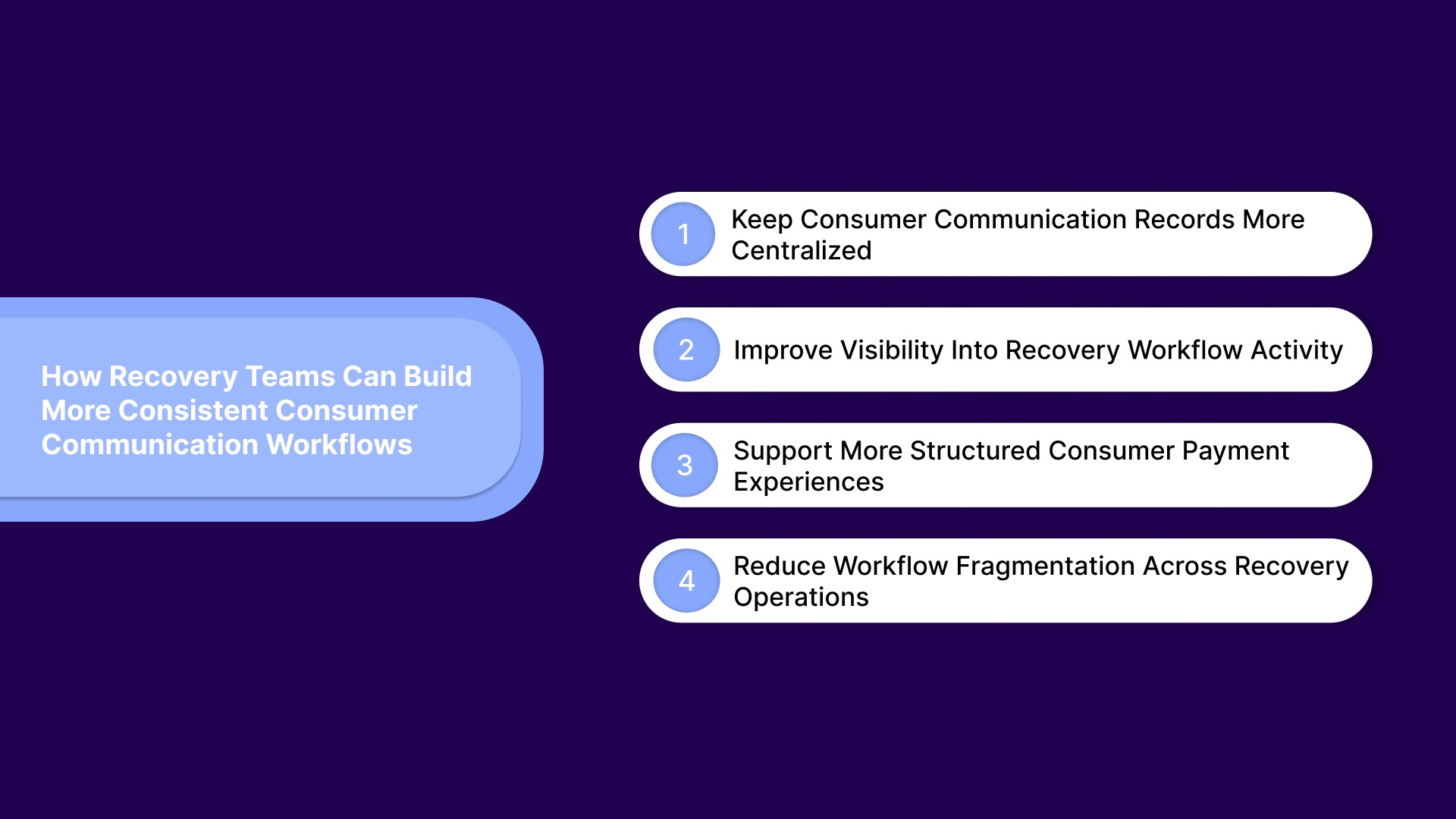
Collection agencies often understand the general purpose of the FDCPA but still face confusion around how the law applies across day-to-day recovery workflows. Many operational issues begin when communication, handling, payment activity, and documentation processes become inconsistent across teams or systems.
For collection agencies managing high recovery volumes, these misunderstandings can create operational pressure around consumer communication tracking and reporting oversight. As workflows scale, agencies often need more centralized visibility into communication activity and operational processes to support more consistent recovery operations.
Suggested Read: Understanding Regulation F's Impact on Debt Collection Practices
Many collection agencies are trying to reduce operational gaps caused by disconnected communication channels, fragmented reporting systems, and inconsistent payment coordination. Maintaining clearer workflow visibility across these processes can support more structured recovery operations over time.
Recovery teams often manage communication activity across calls, emails, payment discussions, and inbound IVR interactions. Tratta helps agencies centralize these communication workflows in one platform so teams can maintain clearer visibility into consumer interactions across recovery operations.
Its inbound Multilingual Payment IVR functionality also helps agencies support consumers across different language preferences while keeping communication activity connected to broader recovery workflows.
Disconnected reporting systems can make it difficult for operations leaders to monitor account activity, dispute handling, payment trends, and communication consistency across teams. Tratta helps recovery teams access centralized Reporting and Analytics that provide clearer operational visibility into recovery workflows.
This can help teams review workflow activity and maintain more structured oversight across consumer debt collection operations.
Consumers increasingly expect flexible and accessible payment options. Tratta helps agencies support self-service payment experiences through Embedded Payment workflows that allow consumers to manage payment activity more independently.
By connecting payment activity with communication and account workflows, recovery teams can maintain more consistent coordination across consumer interactions and payment processes.
As recovery operations scale, disconnected systems can create workflow silos between payment activity, communication records, reporting data, and operational processes. Tratta helps agencies connect these workflows through centralized operational infrastructure and Rest APIs designed for consumer debt recovery environments.
Suggested Read: Debt Collection Compliance: Essential Regulations and Guidelines to Know
The FDCPA definition goes beyond understanding a federal debt collection law on paper. For collection agencies handling consumer debt, defining the FDCPA also means understanding how consumer communications and operational workflows connect across day-to-day recovery operations.
As recovery environments become more digital, maintaining consistent communication records and operational visibility becomes harder when systems remain disconnected. Collection agencies increasingly need workflows that support clearer oversight across consumer interactions, reporting activity, inbound communications, and payment coordination.
How much operational visibility does your recovery team actually have across consumer communications and payment workflows? Schedule a free Tratta demo to find out.
Centralized communication visibility can help recovery teams review interaction history, dispute activity, payment discussions, and account updates more consistently across consumer debt recovery workflows.
Yes. Inbound IVR systems can help consumers access payment information, account updates, and communication pathways more independently while reducing manual coordination across recovery teams.
Reporting visibility helps operations leaders monitor communication activity, payment trends, workflow bottlenecks, and operational consistency across recovery teams handling consumer debt accounts.
Disconnected systems can create communication gaps, fragmented reporting visibility, duplicated operational work, inconsistent account records, and reduced visibility into consumer interactions across recovery operations.
Self-service payment workflows can help consumers manage payment activity more independently while helping recovery teams reduce manual payment coordination and maintain more structured operational workflows.
As account volumes, communication channels, and payment activity increase, agencies often face greater operational complexity around workflow visibility, reporting coordination, documentation management, and consumer communication tracking.