Third-party collection agencies handle thousands of consumer payment transactions across digital channels every day. One security gap can expose sensitive financial data, trigger compliance violations, and damage consumer trust.
A study found that payment card fraud losses are projected to rise to $41.06 billion by 2030. This means you need to strengthen your payment infrastructure. As payment ecosystems become more digital and omnichannel, protecting consumer transactions is no longer optional.
In this article, we cover electronic payment security risks, best practices, implementation challenges, and the technologies shaping secure collections in 2026.
Quick look:
As per a recent study, an electronic payment system (e-payment system) is a means of making transactions or paying for products and services without using cheques or currency.
Electronic payment security in debt collection refers to the systems, controls, and compliance safeguards used to protect consumer payment data during digital transactions. It covers everything from payment encryption and authentication to secure portals, payment gateways, IVR systems, and omnichannel payment workflows.
For collection agencies, a secure payment infrastructure is critical because payment interactions often involve sensitive financial and personally identifiable information across multiple consumer touchpoints.
Why should collection agencies care?
As collection operations become increasingly digital, agencies also face growing risks tied to payment processing, data handling, and consumer communication channels. In the next section, we examine the most common security threats that can expose payment data and disrupt collection workflows in 2026.
Suggested Read: 5 Reliable Payment Gateways for Debt Collections in 2026
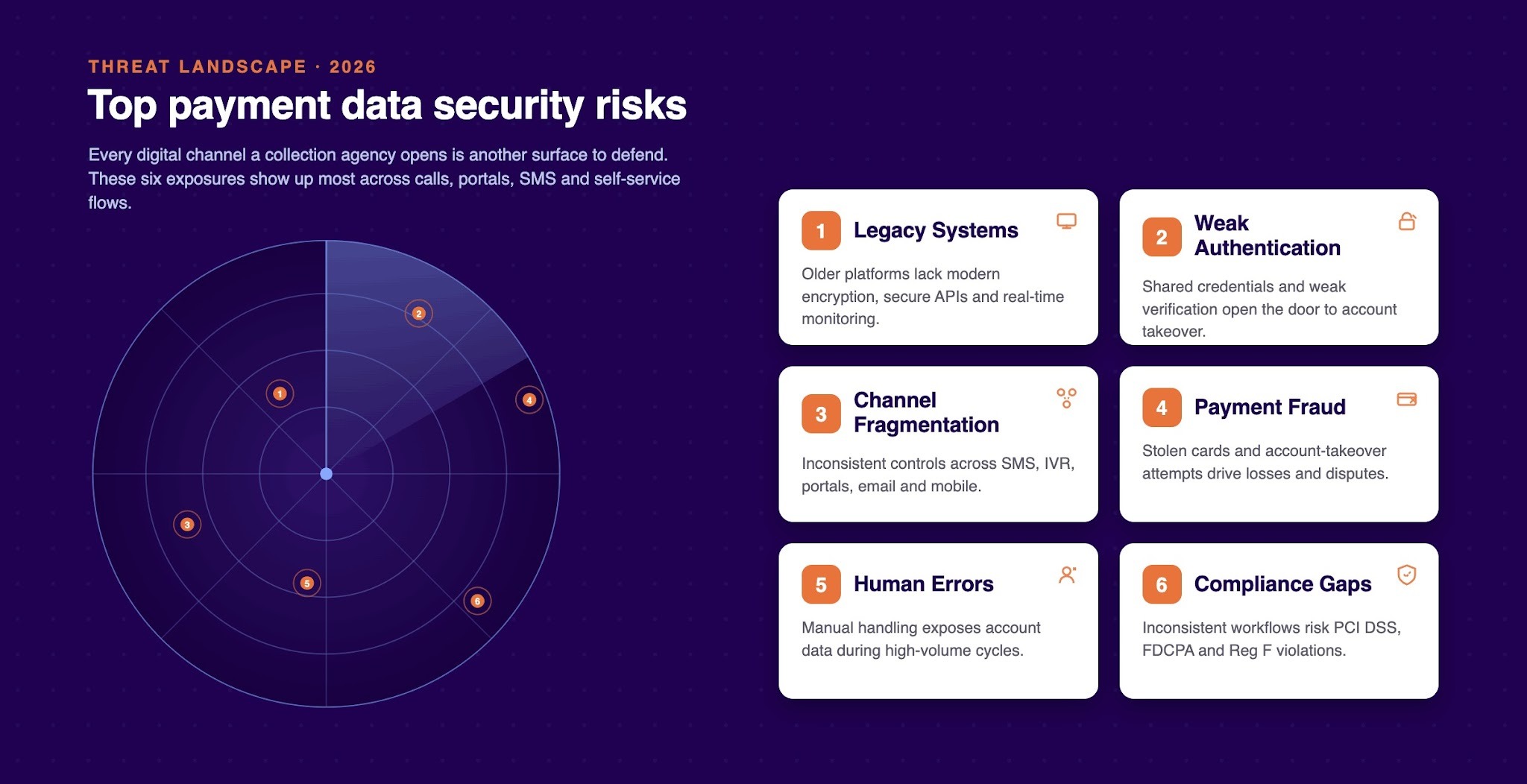
Third-party collection agencies manage large volumes of sensitive consumer payment data across calls, portals, SMS links, emails, and self-service channels. Without strong payment security controls, even a small vulnerability can lead to fraud exposure, compliance violations, operational disruption, and reputational damage.
Common security risks include:
Tratta includes encrypted payment workflows, consumer self-service portals, and an omnichannel communication infrastructure for digital collection operations. The platform also supports centralized payment visibility and compliance-focused payment management across multiple consumer channels. Schedule a demo today.
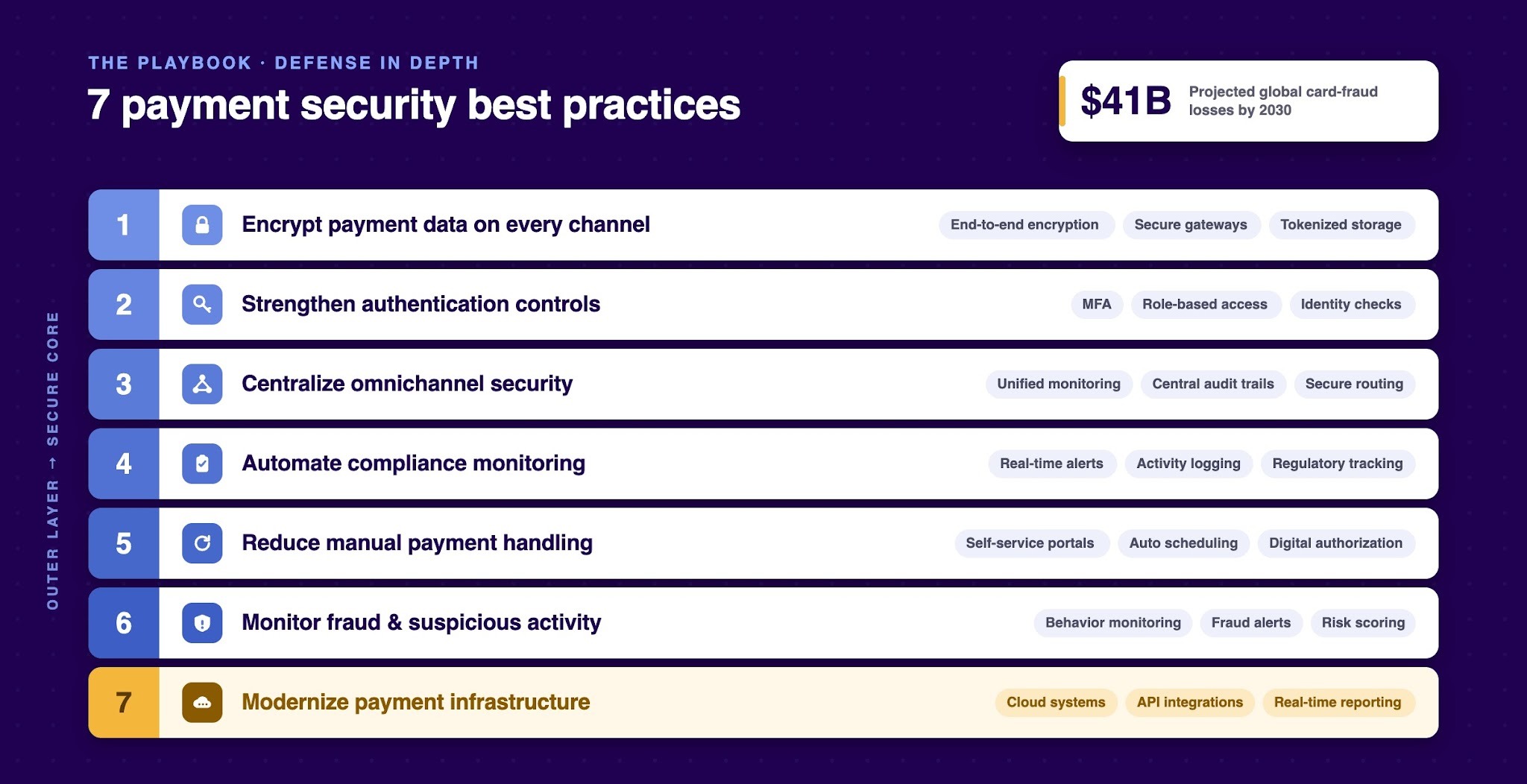
Collection agencies cannot rely on basic payment protections alone. You need stronger security controls that protect consumer data, support compliance, and reduce operational risk across every payment interaction.
Best practices for security schemes in electronic payment systems include:
Encryption helps protect sensitive consumer payment information during processing, storage, and transmission. This reduces the risk of unauthorized access across portals, payment links, IVR systems, and agent-assisted workflows.
Key measures include:
Weak authentication processes increase the likelihood of account compromise and payment fraud. Strong access controls help collection agencies secure both consumer-facing systems and internal agent workflows.
Important controls include:
Collection agencies often manage payments across SMS, email, portals, phone systems, and mobile channels. Centralized security controls improve visibility and help maintain consistent compliance standards across every touchpoint.
Security strategies may include:
Manual compliance oversight becomes difficult as payment operations scale across multiple digital channels. Automated monitoring helps agencies identify policy violations, suspicious activity, and workflow gaps more efficiently.
Agencies should prioritize:
Manual payment collection processes can increase operational errors and data exposure risks. Self-service payment systems and automated workflows help reduce unnecessary human interaction with sensitive payment information.
Operational improvements include:
Payment fraud continues evolving across digital financial ecosystems. Collection agencies need real-time visibility into transaction anomalies, unusual payment behavior, and unauthorized activity patterns.
Fraud prevention efforts may involve:
Outdated collection systems may not support modern payment security requirements or compliance expectations. Modern infrastructure improves scalability, integration flexibility, and protection across digital collection operations.
Technology upgrades may include:
In the next section, we explore the most important capabilities collection agencies should evaluate when choosing a secure payment infrastructure.
The right platform should protect payment data across every interaction while helping agencies streamline digital collection workflows.
These are a few important features to look for:
Look for capabilities such as:
Prioritize systems with:
Essential functionality includes:
Strong platforms should support:
Key controls may include:
Important security capabilities include:
Look for features such as:
Modern systems should provide:
Tratta helps collection agencies centralize secure payment operations through encrypted payment workflows, omnichannel communication infrastructure, and compliance-focused automation. Its consumer self-service portals, payment processing capabilities, and audit-ready reporting tools support secure digital collections across multiple channels. Get in touch with us today.
Secure payment processing does more than protect consumer financial data. It also helps collection agencies reduce payment friction, improve transaction completion rates, and strengthen digital recovery operations.
These are a few other benefits:
Secure payment processing is increasingly becoming a recovery optimization strategy rather than just a compliance requirement. In the next section, we examine how intelligent technologies are reshaping payment security across modern collection operations.
Suggested Read: Online Payment Processing Solutions for Small Law Firms
Implementing a secure payment infrastructure is not always straightforward for third-party collection agencies. Many organizations must balance compliance requirements, operational efficiency, consumer convenience, and legacy technology limitations while modernizing payment workflows.
Table showing common implementation challenges:
Collection agencies can reduce implementation risks by prioritizing scalable, compliance-focused payment platforms with centralized visibility and automation capabilities. Advanced infrastructure also helps agencies improve operational consistency across digital payment channels.
To overcome these challenges:
As payment threats become more sophisticated, agencies are also adopting intelligent technologies that can detect risks faster and improve operational security. In the next section, we examine how machine learning is transforming payment protection across modern collection environments.
Suggested Read: 6 Proven Digital Collections Strategies to Recover More Debt
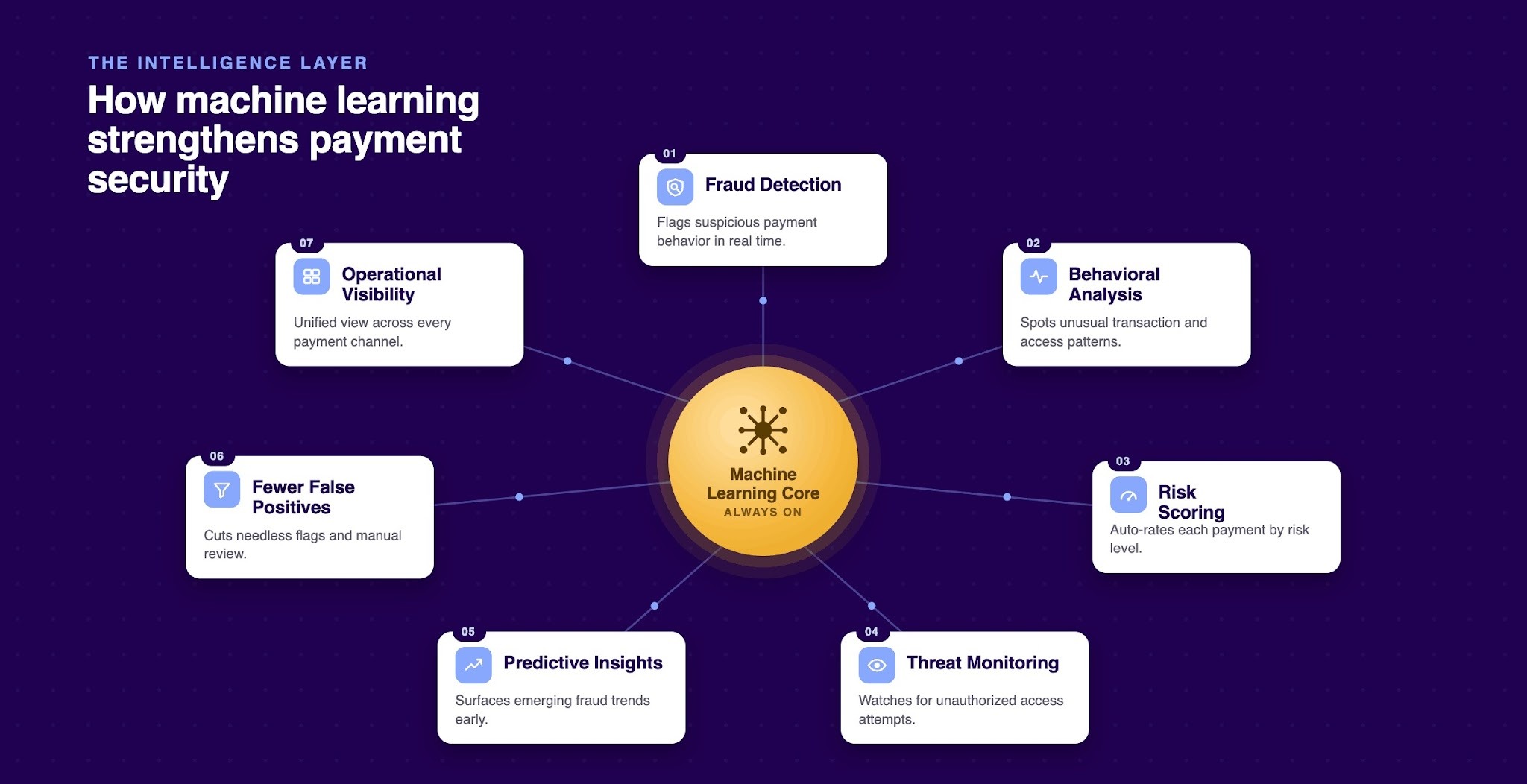
As payment ecosystems become more complex, intelligent systems can analyze large volumes of transaction and behavioral data in real time to detect unusual activity patterns.
Machine learning supports payment security through:
Machine learning also helps agencies scale payment security operations without relying entirely on manual oversight. By combining automation, behavioral intelligence, and real-time monitoring, collection agencies can improve both payment protection and operational efficiency across modern digital collection environments.
Poor payment security infrastructure can create long-term operational risks for collection agencies. Without centralized controls, secure payment workflows, and real-time visibility, agencies may struggle with fraud exposure and inconsistent consumer payment experiences.
Tratta helps collection agencies combine payment operations through consumer self-service tools, omnichannel engagement systems, automated workflows, and compliance-focused payment infrastructure. Its platform supports secure digital payment experiences while improving operational visibility, workflow efficiency, and payment accessibility across modern collection environments.
Looking to improve payment security across your collection operations? Schedule a demo today to learn more about secure, scalable, and compliance-driven digital payment ecosystems for 2026.
E-payment security refers to the technologies and controls used to protect digital payment transactions and consumer financial data. In debt collection, it helps agencies reduce fraud exposure, maintain compliance, and secure omnichannel payment workflows.
Electronic payment and security measures help collection agencies create safer payment experiences across portals, SMS links, IVR systems, and mobile channels. Strong payment protections can improve consumer confidence and reduce payment abandonment.
A secure payment gateway helps protect payment data during digital transaction processing. It supports encryption, authentication, fraud prevention, and secure payment routing across collection payment environments.
Common security schemes in electronic payment systems include encryption protocols, tokenization, multi-factor authentication, fraud monitoring systems, secure payment gateways, and compliance-based access controls.
The most effective solutions to security issues in electronic payment system environments include centralized payment monitoring, automated compliance tracking, encrypted payment workflows, real-time fraud detection, and secure self-service payment infrastructure.