In collections, callers usually do not want a menu. They want progress. They are trying to check an account, respond to a notice, understand the next step, or make a payment without being pushed through a chain of options that slows them down and sends them back to an agent.
That is where voice workflows start breaking trust.
The call reaches the system, but the system does not carry the caller far enough to get something done.
That is why conversational IVR matters in debt resolution workflows. The issue is not whether the voice layer sounds more modern. It is whether the path can understand intent early, support self-service cleanly, and keep payment or next-step actions moving without unnecessary handoffs.
This article explains what conversational IVR means in a collections context, how it differs from traditional IVR, and what operations teams should review if they want more controlled voice workflows in the U.S.
Conversational IVR in collections means callers can speak in natural language and move through a voice path built to support action, not just routing.
Conversational IVR is a voice system that lets callers respond in their own words rather than move only through fixed keypad choices. Rather than forcing every caller through the same numbered path, it listens for intent and uses that input to guide what happens next.
In collections, that changes the role of IVR. The system is no longer only sorting callers into queues. It is helping them complete account-related actions more directly. That can include understanding why they called, identifying the right path sooner, and guiding them toward the next step without making them restart the journey through rigid menu layers.
So in this context, conversational IVR should be understood as voice-guided self-service inside a debt resolution workflow. The caller is not just trying to reach someone. They may be trying to review, decide, or act, and the voice path needs to support that.
Traditional IVR follows a preset structure. The caller hears a menu, selects an option, and moves through the path the system has already laid out. That works when the reason for the call fits neatly into a fixed set of choices.
Conversational IVR starts with a spoken prompt and responds to the caller's input. Instead of moving step by step through a keypad tree, the caller describes the reason for the call, and the system uses that response to shape the next part of the interaction.
It can clarify the request, route the caller to the right path sooner, or escalate when the situation requires human support.
The operational difference looks like this:
The difference matters most when voice technology is expected to improve more than the front end of the call.
Conversational IVR should improve the parts of the call where progress typically slows.
That includes:
In practice, that means the call should require less effort from the caller and less recovery work from the team.
It also gives callers more control in situations where they already know why they are calling and want the system to respond without forcing them through extra steps.
Those outcomes matter only if conversational IVR helps callers do more than just reach the right queue.
When the caller is already ready for a meaningful next step, conversational IVR should take the next step.
That can include:
At that stage, another queue often creates more friction than progress. The system has already captured the reason for the call. The better path is to use that context to carry the interaction forward, with the task clear enough to support it without an agent.
This matters most around payment and next-step handling. If the caller is ready to act, breaking the flow at that point can create avoidable drop-off. A stronger setup keeps the interaction moving long enough to support resolution, not just route the caller elsewhere.
By this point, the question is no longer whether conversational IVR sounds better than a menu. The real question is whether the setup can hold up once real collection activity depends on it.
A useful review should stay focused on how well the system supports the work after intent is captured:
The strongest setup is the one that remains usable when call volume rises, workflows become more complex, and teams need a clear view of what the voice path is actually helping callers complete.
That is usually the point where teams start asking a more practical question: how the voice path connects to payments, reporting, and the rest of the recovery workflow once real account activity begins.
Once voice interaction starts affecting account activity, the workflow needs to stay connected beyond the call opening.
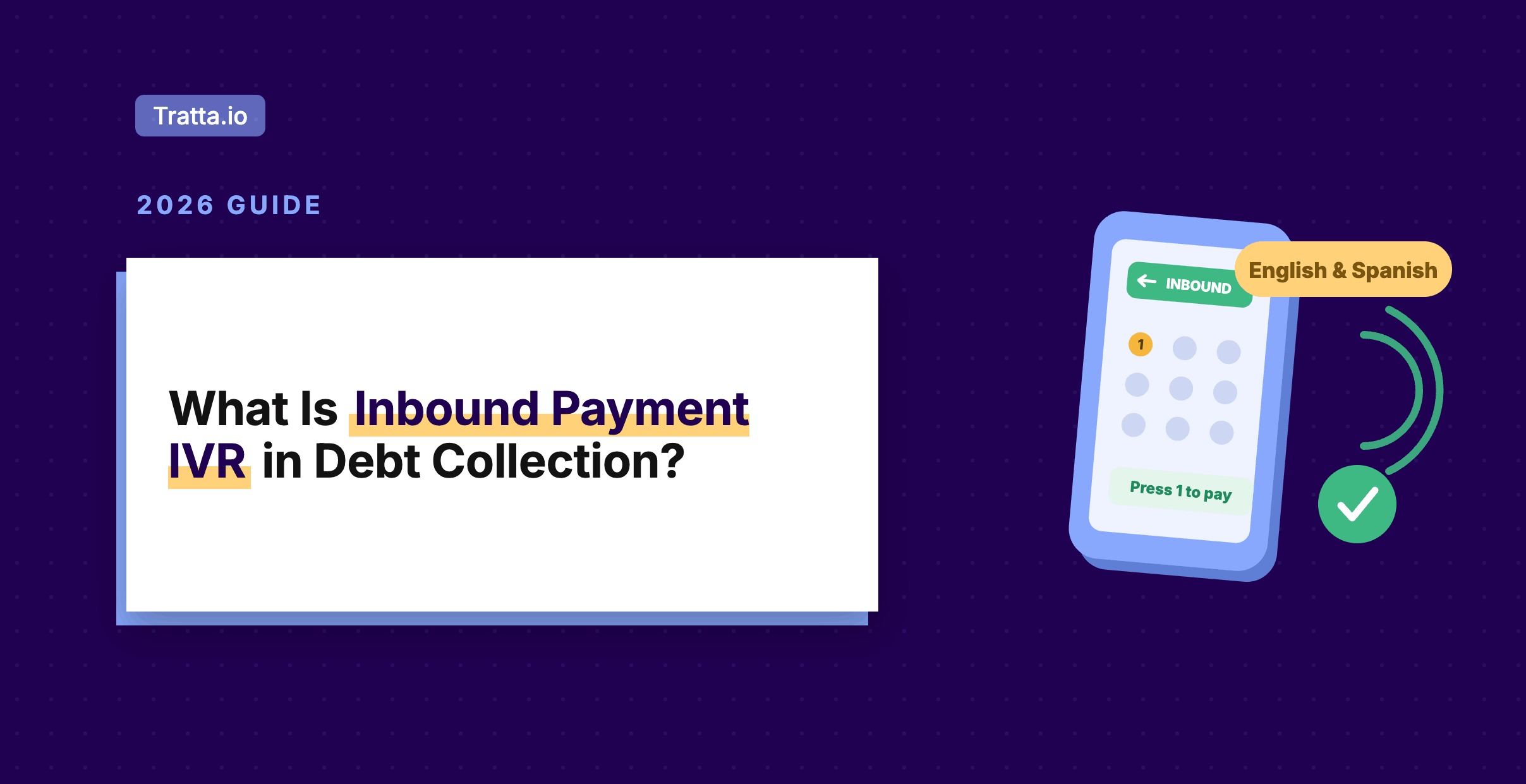
Tratta provides a menu-driven, multilingual Payment IVR designed for inbound self-service and connects that voice path to digital communications, consumer self-service, payment handling, reporting, and integrations across the broader recovery workflow.
For operations teams, the value is practical. Callers who use voice can still move toward a more controlled next step without the IVR sitting apart from the rest of the recovery workflow. That can make payment-related handling easier to support while giving teams better visibility into what happened and what needs attention next.
Conversational IVR matters in collections when it helps the caller move toward a real next step, not just a different queue.
That is the standard worth using: whether the voice path supports review, action, and continuity without adding avoidable friction.
Explore how Tratta’s multilingual Payment IVR supports controlled next steps in debt resolution workflows.
It is a voice system that can respond to what the caller says, rather than relying solely on fixed menu choices. In collections, that matters when the call needs to support account-related handling rather than just route the caller elsewhere.
The main difference is flexibility. Traditional IVR depends on preset menu paths, while conversational IVR can respond to spoken input and handle a wider range of caller phrasing. In collections, this can reduce friction when the caller’s reason for calling does not match a rigid menu structure.
Yes, where the voice path is designed to carry the interaction into repayment or payment selection. The key question is whether the payment step remains part of the same caller journey rather than breaking into a separate handoff.
It can reduce dependence on agents in situations where the call involves repetitive account handling. The effect depends on how much the workflow can support without escalation, not on the voice layer alone.
They should look at whether the setup supports real collections activity, whether outcomes are visible after the call, whether payment-related steps stay connected, whether the system stays current with account data, and whether the workflow remains manageable as usage grows.