Collection agencies are under constant pressure to handle rising call volumes while keeping costs and response times under control. The Interactive Voice Response market is growing rapidly, expanding from about $5.56 billion in 2024 to a projected $9.26 billion by 2032, reflecting how critical this technology has become.
Yet many agencies still treat IVR as a basic routing tool, missing its real operational impact. If that sounds familiar, you are not alone. In this article, we break down the advantages of IVR, how it improves collections, and what agencies often overlook when implementing it.
Interactive Voice Response (IVR) is an automated phone system that allows callers to interact using voice or keypad inputs without speaking to an agent. In debt collection, IVR enables consumers to check balances, make payments, and navigate account options in a controlled, self-service environment.
Common types of IVR systems used in debt collection:
In the next section, we move from functionality to impact by breaking down the key advantages of IVR systems in debt collection and how they improve recovery outcomes.
Suggested Read: Advanced IVR Systems for Debt Collection: Complete Guide
The real value of IVR lies in how it reshapes decision-making and payment behavior, not just call handling. It introduces structure, timing, and control into interactions that are otherwise unpredictable and agent-dependent.
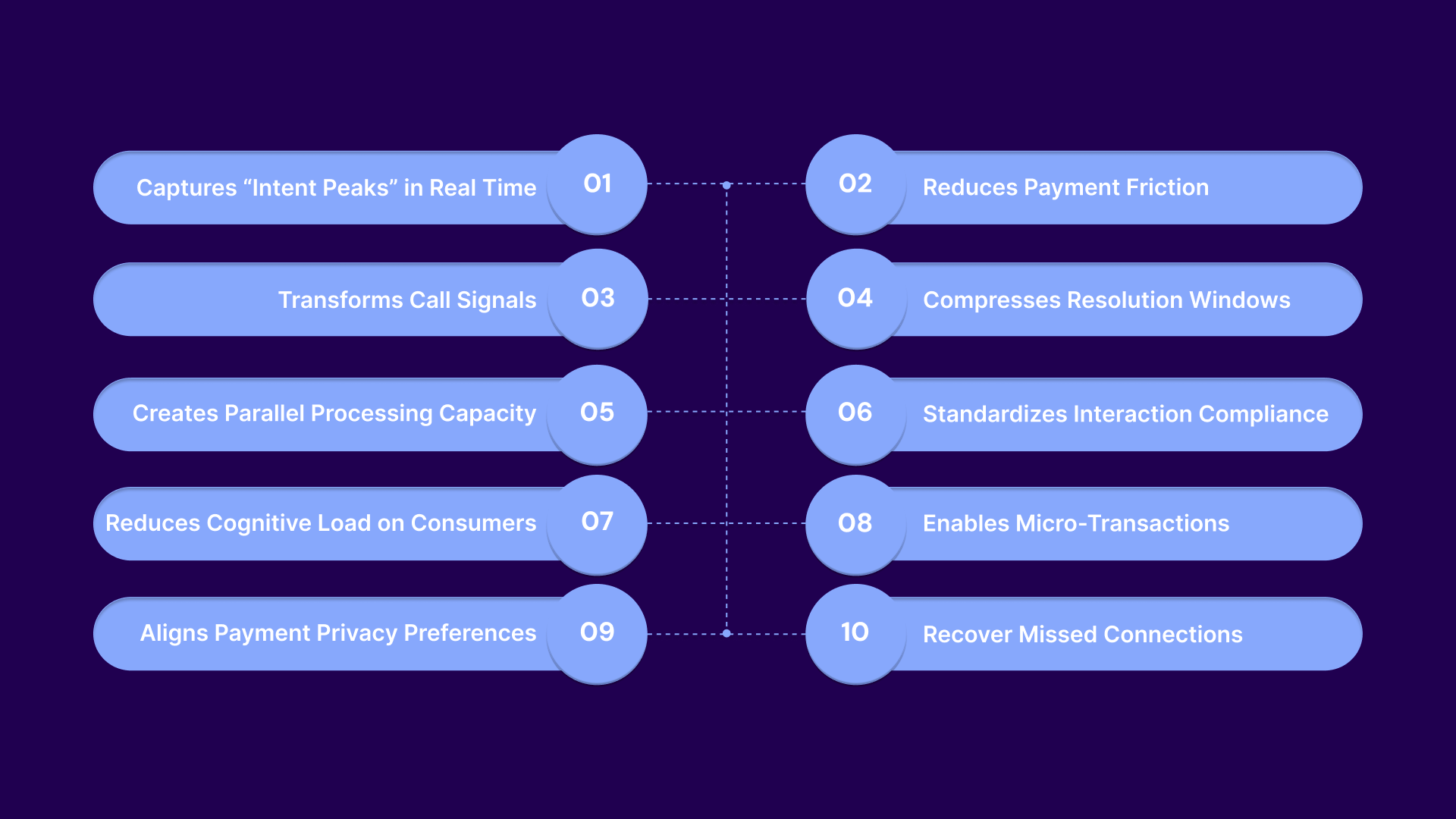
These are the top benefits of IVR systems in collections:
Consumers often call when they are most ready to act, but delays or friction can cause that intent to fade quickly. IVR removes waiting time and converts that peak intent into immediate payments.
Here is what this advantage looks like in practice:
When a consumer is ready to pay, even a few seconds of friction can cost you the transaction. Tratta offers inbound payment IVR to capture these high-intent moments instantly, without delays or agent dependency. This ensures you convert more calls into completed payments when it matters most. Request a free demo today.
Speaking to an agent can introduce hesitation, negotiation, or emotional resistance. IVR creates a neutral environment where consumers are more likely to complete payments without overthinking.
Here is how this plays out operationally:
Every IVR interaction generates clean, structured data about consumer behavior, preferences, and outcomes. This data is far more actionable than unstructured agent notes.
Here is how this shows up in operations:
IVR shortens the gap between contact and resolution by removing intermediate steps. This compression directly impacts recovery velocity.
Here is what this advantage looks like in practice:
Unlike agents, IVR can handle multiple callers simultaneously without degradation in performance. This allows agencies to scale instantly during spikes.
This is reflected in:
IVR ensures every interaction follows predefined scripts and logic, reducing the risk of non-compliant communication. This is especially critical in regulated environments.
Here is what this benefit looks like in practice:
Too many options or unclear guidance can overwhelm callers and lead to drop-offs. IVR simplifies decision paths, making it easier to complete actions.
In execution, this looks like:
Consumers who hesitate to commit to full payments are more likely to complete smaller, immediate transactions through IVR. This improves overall recovery over time.
Here is how this plays out operationally:
Many consumers prefer not to discuss financial matters with another person. IVR offers a private, judgment-free way to resolve accounts.
What this looks like in practice:
When agents are unavailable, traditional systems lose the opportunity entirely. IVR ensures every inbound call still has a resolution path.
This is reflected in:
These advantages show that IVR is not just a support tool, but a strategic layer that influences behavior, timing, and outcomes across the collection process. In the next section, we break down the specific features agencies should assess when selecting an IVR system to fully realize these benefits.
Suggested Read: The Power of IVR in Simplifying Debt Collection
Feature depth often determines whether the system actually improves recovery outcomes. The focus should be on capabilities that directly support payments, compliance, and easy consumer interactions.
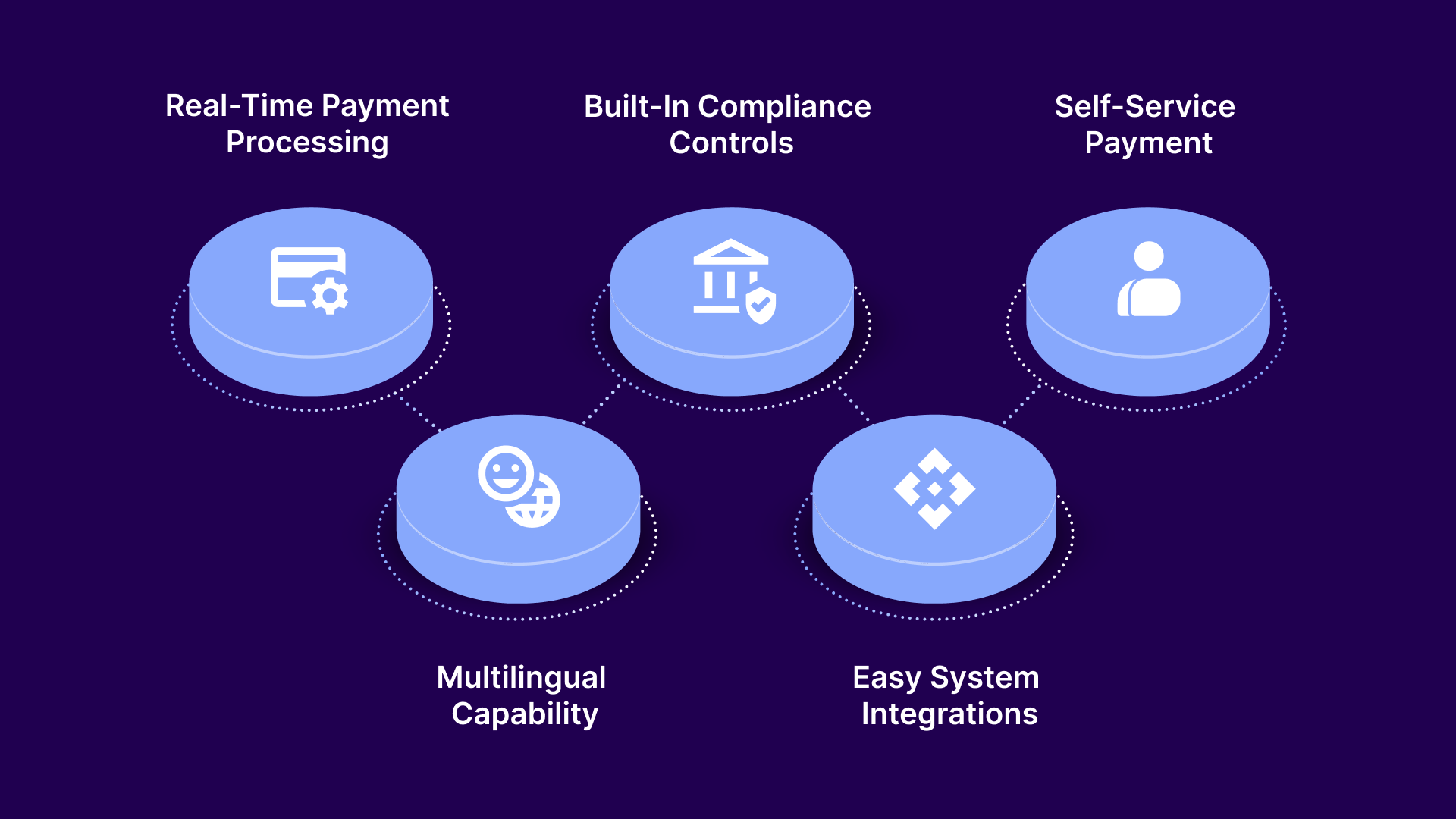
Core features to look for:
Look for capabilities such as:
This should include:
Key elements typically involve:
A strong setup will offer:
Core functionality should cover:
These features determine whether your IVR functions as a basic call handler or as a true self-service payment channel. In the next section, we break down inbound versus outbound IVR and what actually works in collection operations.
Suggested Read: The IVR Payment Gap: What Most Debt Collectors Are Missing in 2026
IVR can be deployed in two fundamentally different ways, but they serve very different roles in collections. While both have value, their impact depends on how and when they are used within the recovery process.
A table giving a clear comparison to understand where each approach fits:
Inbound IVR captures consumers when they are already motivated to resolve their accounts, making it a direct driver of recovery. Outbound IVR, on the other hand, is more effective as a supporting tool for nudging engagement rather than closing payments.
To decide which approach works best for your operations, ask:
In most collection setups, inbound IVR becomes the primary recovery channel, while outbound IVR plays a secondary, support role.
Tratta offers inbound, payment-driven IVR designed to capture high-intent consumer interactions in real time. By combining self-service payments, multilingual support, and built-in compliance, it turns inbound calls into completed transactions. Call us to learn more.
IVR benefits are most effective when they are aligned with the stage of the collection lifecycle, rather than used as a one-size-fits-all tool. Different stages require different levels of urgency, messaging, and interaction design.
Here is how IVR fits across key stages of debt collection:
IVR can be used to provide balance information, due date reminders, and easy payment options before accounts become delinquent. At this stage, the goal is to make repayment simple and frictionless, not aggressive. This helps prevent rollovers by capturing early intent through convenient self-service.
As accounts move into delinquency, IVR becomes more action-driven, guiding consumers toward payments or structured repayment options. The focus shifts to resolving accounts quickly while reducing dependency on agents. This stage benefits from clear payment pathways and faster resolution flows.
In later stages, IVR supports resolution by offering payment options such as settlements, partial payments, or structured plans. The interaction design must balance urgency with flexibility to maximize recovery. This allows agencies to close accounts efficiently without increasing operational strain.
After payments are made, IVR can handle confirmations, receipts, and follow-up interactions without involving agents. This ensures consistency while maintaining a positive consumer experience. It also reduces unnecessary inbound volume for completed accounts.
IVR delivers the most value when it is mapped strategically across these stages, rather than deployed in isolation. In the next section, we connect IVR performance directly to recovery outcomes and what agencies should be measuring.
Tratta is a collections platform built to help agencies recover more by connecting payments, communication, and workflows into one system. It is designed to support inbound, self-service interactions while maintaining control over compliance and data. This allows agencies to turn consumer activity into completed payments without adding operational complexity.
It's multilingual payment IVR supports English and Spanish and is designed for inbound payment calls. It verifies account details in real time before processing payments and reflects updates across systems instantly. This reduces errors, removes language barriers, and increases the likelihood of completed transactions.
Tratta also provides a broader set of features that support collection performance beyond IVR. These are:
Tratta offers free and quick onboarding to get agencies live without disrupting existing operations. Setup includes system configuration, integrations, and guided training tailored to your workflows. This shortens the time to value and ensures your team can start driving results without a long implementation cycle.
IVR can easily become a missed opportunity if it is treated as a basic call-routing tool instead of a recovery channel. Poor design, lack of real-time payments, and disconnected systems often lead to drop-offs, compliance risks, and lost revenue. When IVR is not aligned with how consumers actually behave, it adds friction instead of removing it.
Tratta solves this by turning IVR into a fully connected, inbound payment experience that captures intent and converts it into completed transactions. With real-time processing, multilingual support, and quick integration across systems, it ensures that every interaction contributes to recovery outcomes rather than operational overhead.
Get started quickly with structured onboarding designed to minimize disruption and accelerate results. Book a demo to see how Tratta can improve your IVR performance and recovery rates.
The benefits of IVR include faster call handling, 24/7 payment access, reduced agent workload, and improved consistency. It helps collection agencies increase recovery while maintaining operational efficiency.
IVR is not being replaced but enhanced with AI and voice automation. These improvements make interactions more intuitive while preserving structured workflows needed for payments, compliance, and controlled consumer interactions.
IVR can create friction if poorly designed, with long menus or unclear options. Without real-time payments and integration, it may lead to drop-offs, lower engagement, and missed recovery opportunities.
IVR is not outdated but has evolved into a self-service payment channel. Modern systems focus on real-time processing, better user flows, and integration with digital collection strategies.
IVR improves performance by capturing inbound intent and converting it into immediate payments. It reduces delays, lowers dependency on agents, and ensures consistent handling of high-volume interactions.
Yes, modern IVR systems support secure payment processing with encryption, authentication, and compliance protocols. This ensures sensitive consumer data is protected throughout the payment process.
IVR reduces costs by automating routine interactions like payments and balance inquiries. This lowers call center workload and allows agents to focus on more complex, high-value accounts.
Multilingual IVR allows consumers to interact in their preferred language, reducing confusion and hesitation. This improves engagement and increases the likelihood of successful payment completion.
Agencies should prioritize real-time payments, compliance controls, integrations, and self-service capabilities. These features ensure IVR supports both operational efficiency and higher recovery outcomes.
IVR supports scalable, self-service collections by handling high call volumes efficiently. The advantages of IVR include improved recovery rates, lower costs, and consistent consumer interactions across channels.