


The ACH Network remains one of the most widely used payment rails in the United States. It processed 8.9 billion payments worth $24.1 trillion in Q1 2026, according to Nacha.
However, many debt collection agencies still experience slow settlement times, often waiting one to three business days for funds to clear. These delays create cash-flow challenges, complicate reconciliation, and reduce operational predictability.
This blog explains why ACH takes so long and offers strategies to help agencies manage timelines and improve overall payment efficiency.
Quick look:
Automated Clearing House (ACH) payments are electronic bank-to-bank transfers. Unlike wire transfers or card payments, ACH transactions are batch-processed. This makes them cost-effective for recurring settlements, payment plans, and high-volume recovery workflows.
Typical ACH timelines for debt collection payments are:
In the next section, we look at the step-by-step process that drives ACH movement before exploring the causes of delay.
ACH transfers move money between bank accounts using a centralized system governed by the National Automated Clearing House Association (NACHA) and the Federal Reserve.
Instead of being processed instantly, they follow a structured sequence of steps that ensures accuracy, security, and compliance.
Key Steps in an ACH Transfer:

Each step can introduce timing uncertainty through bank cut-offs, risk reviews, and validation holds. These are explained in the next section.
Suggested Read: Legal Debt Recovery Process: Key Steps & Software Solutions
ACH is designed for security and accuracy, not speed. Unlike instant transfers, it relies on scheduled windows and multiple checkpoints across banks and the clearinghouse. This tends to keep transactions compliant, but it also introduces delays.
Key Reasons for ACH Delays:
These factors collectively slow the movement of funds and complicate recovery operations.
Tratta helps mitigate these challenges by offering real-time payment visibility and automated reconciliation tools, allowing teams to act faster and maintain operational accuracy. Schedule a free demo today.
ACH payments move securely but not instantly. The key is to manage timing, automation, and consumer communication so ACH delays do not interrupt your cash flow.
These are a few strategies you can use:
Same-day ACH can shorten clearing windows from days to hours, provided the transaction meets NACHA limits and submission cut-off times.
These steps help agencies maximize same-day eligibility:
Consumer payments submitted after bank cut-offs are processed on the next business day, extending recovery timelines. Aligning reminders and settlement offers with these windows can reduce rollover delays.
Key adjustments include:
Earlier submission gives banks more time to process entries while avoiding delays associated with evenings, weekends, and federal holidays.
Collection agencies can adjust timing using these best practices:
Banks often hold or scrutinize entries that appear risky, causing additional delays. Proactively segmenting these accounts allows collectors to validate details early and reduce unexpected returns.
Helpful segmentation practices include:
Manual steps introduce processing gaps that add up to avoidable delays. Automation ensures consistent submission timing, faster return handling, and fewer reconciliation backlogs.
Automation tools work best when they support:
Failing to manage ACH timing effectively can create operational bottlenecks that ripple across forecasting, compliance, and day-to-day recovery workflows. This is explained in the next section.
The U.S. debt collection industry generates over $12 billion annually, with the average turnaround time for a successful recovery hovering around 90 days. Payment delays in settling workflows can lead to missed follow-ups, reporting gaps, and slower recovery velocity.
These are the main ways ACH delays impact debt collection and cash flow:

Tratta’s self-service payment portal helps collection agencies reduce friction, improve payment success, and maintain smoother operations. It gives consumers a faster, more convenient way to resolve balances without relying on manual outreach. Contact us to learn more.
Suggested Read: Key Steps for Accounts Receivable Collection Strategy
Diversifying payment options can improve consumer flexibility, increase completion rates, and shorten the time between outreach and successful resolution.
Key payment methods that reduce dependency on ACH include:
Since ACH remains the backbone of debt collection, the real question is not replacing it but improving how you manage and reconcile workflows. 52% of debt collection agencies are investing in tech to improve margins, and for good reason.
Tratta is among the leading debt collection platforms to optimize recovery workflows. The following section outlines the features that set Tratta apart.
Suggested Read: Understanding Debt Recovery Resources And Collection Agencies
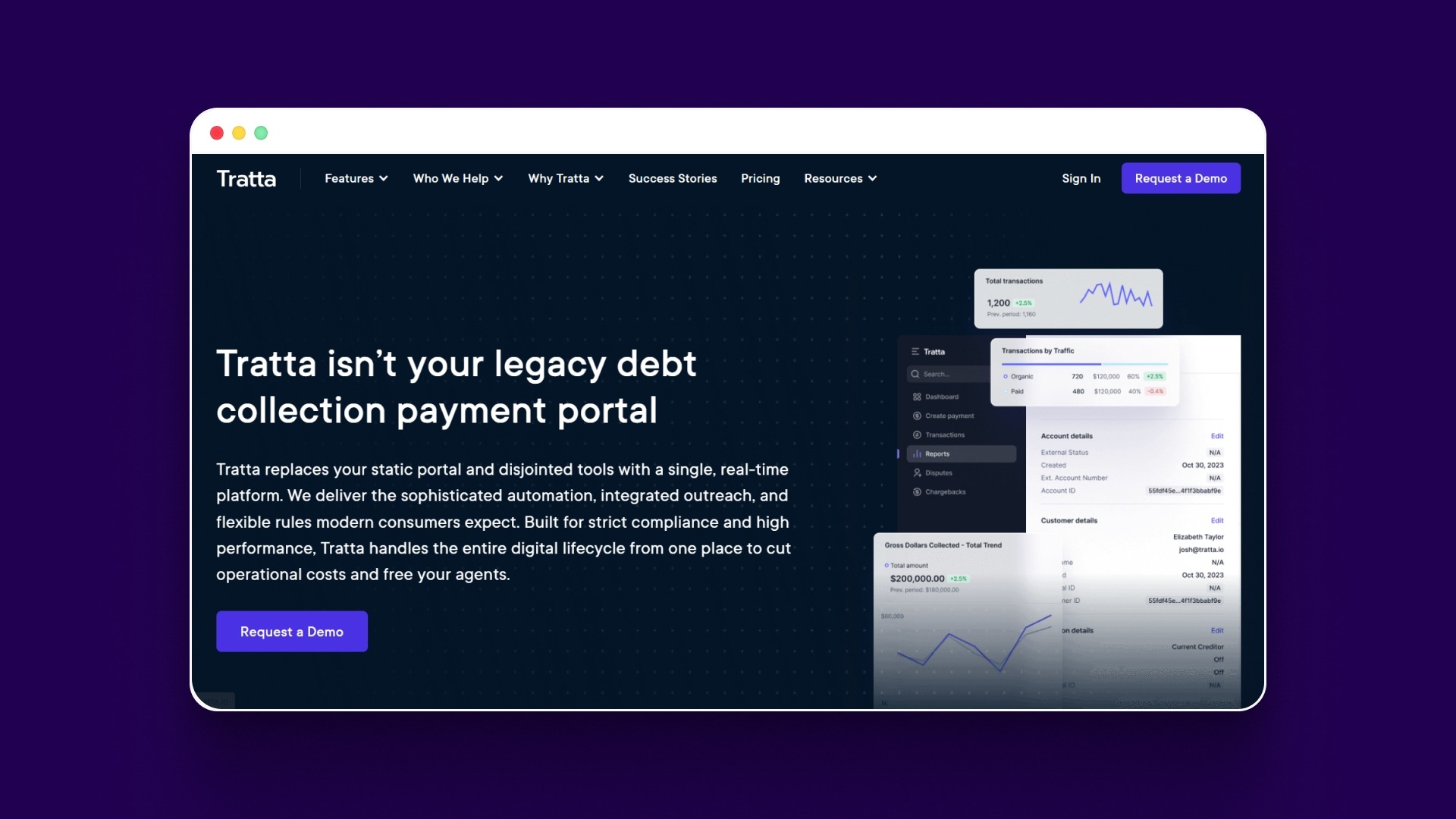
Tratta helps turn regular debt recovery challenges into manageable workflows. The platform combines automation, analytics, and consumer engagement features to improve recovery outcomes.
Key features include:
Tratta allows agencies to reach consumers via email, SMS, phone calls, and chat. Multiple touchpoints mean fewer missed payments, and automated follow-ups keep workflows efficient without extra staffing.
Agencies can design recurring campaigns for collections, reminders, or follow-ups that run automatically. These workflows can be timed to coincide with ACH processing windows, reducing delays caused by missed or late notifications.
Tratta enables agencies to tailor dashboards, reports, and workflows to their unique processes and account types. Customization ensures ACH-related metrics, such as pending settlements or failed transfers, are highlighted, helping teams respond quickly.
Tratta’s APIs allow easy connection with CRM, accounting, and banking systems. This integration ensures ACH transactions are automatically logged and reconciled, reducing manual entry errors and improving cash flow visibility. Data flows directly into workflows, keeping operations synchronized with ACH settlements.
Tratta includes built-in safeguards to protect sensitive consumer data and comply with industry regulations. For ACH payments, this means reduced risk of errors, fraud, and regulatory breaches. You can manage settlement approvals, track payment histories, and produce audit-ready reports with confidence.
Tratta provides live dashboards that visualize collection performance and ACH success rates. Managers can identify bottlenecks instantly and make informed decisions to enhance recovery timelines.
Consumers can view balances, schedule payments, or set up ACH transfers securely through branded self-service portals. This autonomy increases engagement and decreases agent dependency.
Tratta’s payment IVR supports multiple languages, allowing consumers to interact and make payments in their preferred language. This feature increases accessibility and improves completion rates among diverse consumer groups.
Payment links and portals are embedded directly within Tratta’s communications, reducing friction and simplifying the payment process. Consumers can complete transactions in just a few clicks, improving conversion rates and minimizing abandoned payments.
Tratta can change ACH management from a slow, manual process into a predictable, efficient part of debt recovery. Real-time insights, secure tracking, and quick communication help in reducing uncertainty.
Ensuring ACH payments clear smoothly is essential for predictable cash flow and accurate forecasting. Delays disrupt reconciliation, compliance, and daily collection pacing. Collection agencies that manage ACH timing well protect both margins and operational stability.
Tratta gives agencies the tools to handle these challenges with confidence. Its self-service payment portal improves consumer completion rates, while real-time reporting and automated workflows reduce friction caused by slow settlement cycles.
Take control of your ACH collections today. Book a free demo to see Tratta in action.
Standard ACH payments typically take 1–3 business days to settle. Same-day ACH is faster but limited by bank cut-off times and transaction size. Weekends, holidays, and compliance checks can also delay the process.
Standard ACH is batch-processed, but you can use same-day ACH for quicker settlement. Ensuring payments are submitted before bank cut-off times and using platforms that provide real-time tracking can help minimize delays and improve visibility.
ACH relies on batch processing and scheduled settlement windows, which inherently take time. Additional factors, such as bank cut-offs, fraud checks, compliance holds, and non-business days, contribute to delays compared to instant payment methods.
ACH debit pulls funds from a payer’s account, while ACH credit pushes funds from the sender to the recipient. Both follow the same processing windows, but the direction of the transaction affects initiation responsibility and timing.
Delays in ACH settlement impact recovery pacing, cash flow forecasting, and compliance reporting. Agencies must track pending payments, adjust workflows, and often reconcile manually, which increases operational effort and can slow overall collections efficiency.


