2026 Agency Strategy Guide to Avoid TCPA Unsolicited Text Messages
Industry & Trends
2026 Agency Strategy Guide to Avoid TCPA Unsolicited Text Messages
Published on:
August 3, 2026
A single undocumented or invalid consent record can expose your entire messaging program to liability. TCPA class actions surged95.20% in 2025, highlighting how quickly litigation can scale when outreach practices lack control.
For agencies managing high-volume communications, even minor gaps in consent validation, opt-out processing, or data accuracy can lead to compounding risk. This is especially critical when handling TCPA unsolicited text messages, where compliance depends on precise execution across systems.
This guide explains what qualifies as a violation, where agencies commonly fail, and how to build a structured approach that supports compliant, controlled, and auditable messaging practices.
Quick look:
Unsolicited text risk is measurable. TCPA violations are tied to each message, making small gaps highly scalable.
Third-party workflows increase exposure. Agencies rely on inherited data and operate across fragmented systems.
Execution gaps cause most failures. Issues arise when data, timing, and system logic are not aligned.
Infrastructure determines compliance outcomes. Real-time validation, suppression, and auditability are critical at scale.
What Counts as TCPA Unsolicited Text Messages in Debt Collection?
The Telephone Consumer Protection Act (TCPA) governs how businesses, including collection agencies, may contact consumers by phone and text message. Courts and regulators, including the Federal Communications Commission (FCC), treat text messages as “calls” under the statute, which means they are subject to the same consent requirements.
At its core, unsolicitedtext messages refer to messages sent without the required level of prior consent. In debt collection, this typically involves outreach to mobile numbers using automated systems or pre-set workflows where consent is unclear, invalid, or not properly documented.
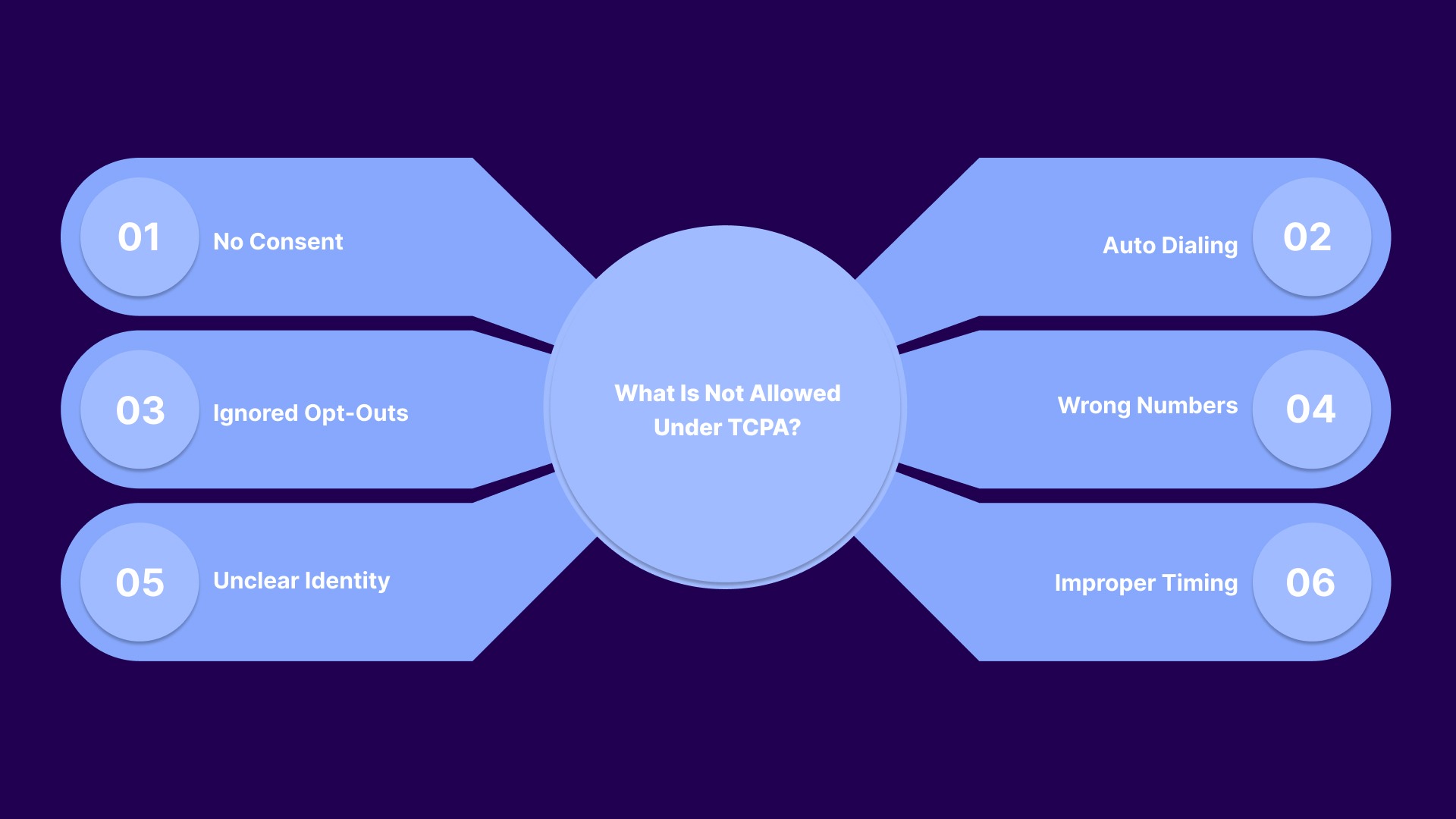
What Is Not Allowed Under TCPA?
The following scenarios highlight common practices that are considered non-compliant under the TCPA and can expose agencies to liability:
No Consent: Sending text messages without prior express consent for non-emergency communication to mobile numbers (47 U.S.C. § 227(b)(1)(A)).
Auto Dialing: Using automated dialing or messaging systems without valid consent, even for informational outreach (47 U.S.C. § 227(b)).
Ignored Opt-Outs: Failing to honor opt-out or revocation requests promptly, regardless of how consent was initially obtained (FCC rulings).
Wrong Numbers: Contacting reassigned or incorrect numbers without proper verification, which can still result in liability.
Unclear Identity: Not clearly identifying the sender or purpose of the message, as required under47 U.S.C. § 227(d).
Improper Timing: Sending messages at inappropriate hours that do not align with regulatory expectations and industry standards.
Regulatory Expectations Agencies Must Meet
To remain compliant, agencies are expected to follow specific operational and documentation standards that govern how text messaging is conducted:
Maintain clear, documented consent records tied to each consumer
Ensure consent is specific to the communication channel (SMS)
Enable easy and immediate opt-out mechanisms
Retain audit trails of all outreach and responses
For third-party agencies, this becomes more complex. In the next section, we examine why this creates significantly higher exposure for collection agencies.
Why Third-Party Collection Agencies Face Higher Exposure to Violations
Agencies operate on data received from creditors, manage multiple accounts simultaneously, and rely on systems that must scale across large outreach volumes. This creates conditions where small inconsistencies in data, consent, or workflow logic can increase exposure.
The following factors contribute to higher risk in third-party collection operations:
Account Transfers: Accounts may pass through multiple parties, making it difficult to verify whether consent remains valid and transferable.
High Volume: Large-scale outreach increases the likelihood of errors if validation and controls are not consistently enforced.
System Fragmentation: Disconnected tools for messaging, account management, and reporting create gaps in oversight and control.
Manual Overrides: Reliance on agent judgment or manual processes introduces inconsistency in how compliance rules are applied.
Multi-Channel Coordination: Managing communication across SMS, email, and calls requires synchronized controls to avoid conflicting or non-compliant outreach.
Tratta supports this by centralizing messaging workflows, enabling consistent application of communication rules, and maintaining visibility across interactions. This helps agencies operate with greater control while reducing reliance on manual processes.Schedule a free demo today.
TCPA Consent Management Requirements for Collection Agencies
Consent must be traceable, specific, and consistently enforced across systems. For agencies, this requires structured processes that ensure consent can be verified at the exact moment a message is sent.
Key consent control requirements:
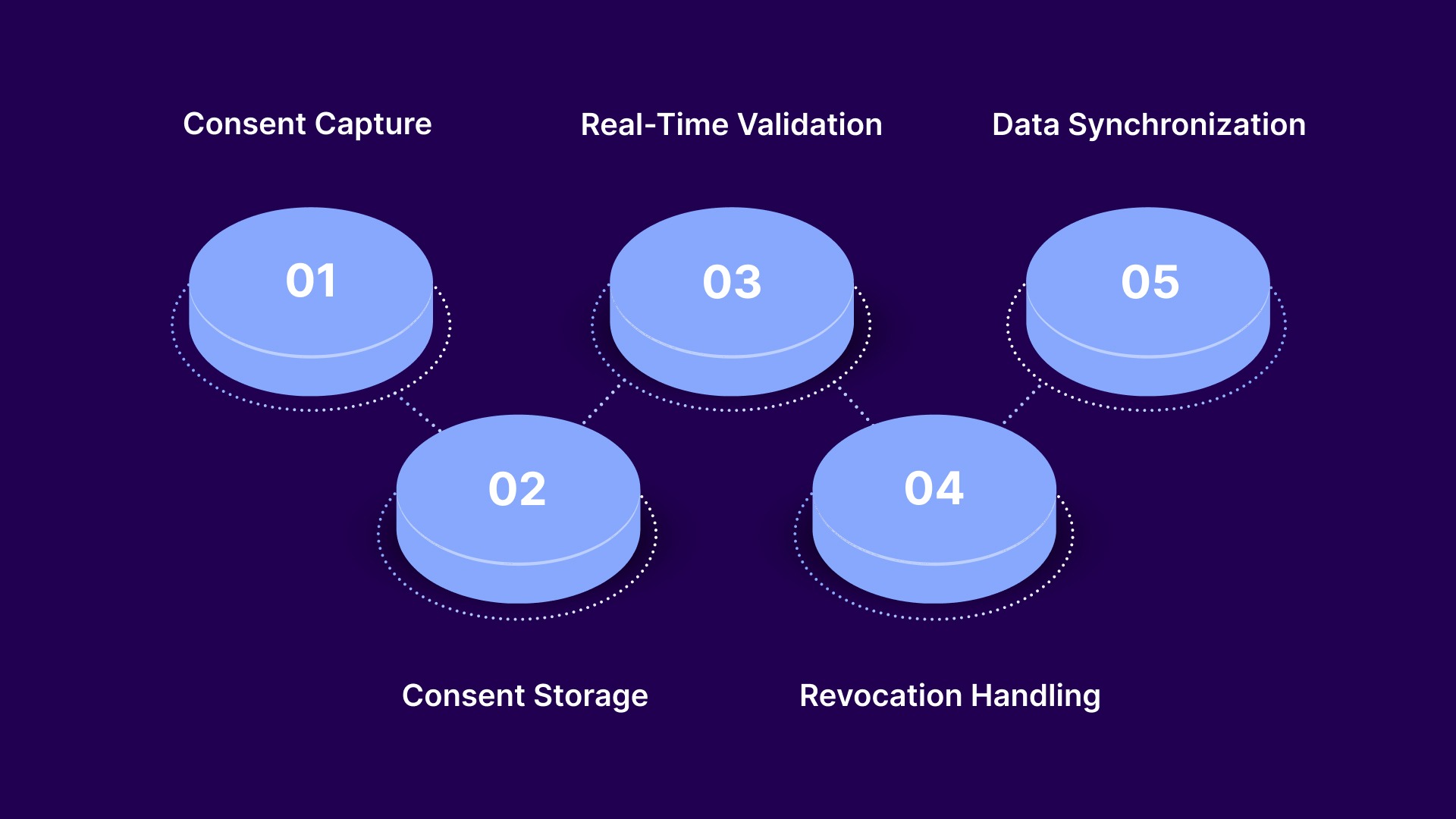
1. Consent Capture
Consent must be collected with enough context to prove validity.
Record consent with source metadata (web form, IVR, agent entry) and timestamping to establish when and how consent was obtained.
Capture the exact disclosure language presented at the time of consent to prove it was clear and specific to SMS.
This is critical because regulators assess whether consent was informed, specific, and properly documented.
2. Consent Storage
Consent records must remain consistent and retrievable across systems.
Store consent in a centralized, immutable system of record to prevent duplication or loss.
Maintain version-controlled records to reflect any updates or changes over time.
This matters because fragmented storage creates gaps where consent cannot be verified during audits or disputes.
3. Real-Time Validation
Consent status must be confirmed at the point of sending each message.
Implement pre-send validation checks before every outbound message.
Use automated suppression logic to block messages when consent is missing or unclear.
This is necessary because consent can change at any time, and unvalidated outreach creates immediate liability.
4. Revocation Handling
Opt-outs must be processed instantly and consistently across systems.
Trigger automated updates to consent status across all platforms upon opt-out.
Maintain event logs capturing the time and method of eachrevocation request.
This ensures compliance because delayed or inconsistent handling is a frequent cause of violations.
5. Data Synchronization
Consent data must remain aligned across all integrated systems.
Sync data across CRMs, dialers, and messaging tools using real-time or near-real-time updates.
Prevent data drift where outdated records trigger unauthorized outreach.
This is essential because inconsistent data states can result in non-compliant messaging.
Consent management is only one layer of compliance. Preventing violations consistently requires a broader framework that governs how messaging decisions are structured and enforced.
Building a Structured Compliance Framework to Prevent TCPA Violations
Preventing TCPA violations requires a defined structure that aligns data, messaging rules, and execution. For third-party agencies, this means ensuring that every outbound message can be justified under the TCPA and related federal requirements at the time it is sent.
Steps to take:
1. Policy Standardization
Agencies need clear, organization-wide rules that define when messaging is permitted. These rules must reflect statutory limits governing automated outreach and consumer contact.
Channel authorization rules ensuring SMS is only used where appropriate consent exists
Time-of-day restrictions aligned with15 U.S.C. § 1692c(a)(1)(8 a.m. to 9 p.m. local time under FDCPA)
Frequency limits to avoid harassing or repetitive contact under15 U.S.C. § 1692d
2. Pre-Send Validation
Each message should be evaluated against the current account and contact data before it is sent. Under TCPA, liability attaches to the act of sending a message, making pre-send checks critical.
To support this, agencies should implement:
Automated checks before message delivery to confirm eligibility
Blocking logic for accounts lacking the required consent or flagged as restricted
Verification of number status, including reassigned or invalid numbers
Confirmation that SMS is permitted based on available consent records
3. Opt-Out Enforcement
Consumers have the right to revoke consent at any time, and continued messaging after revocation can create liability. FCC interpretations of TCPA reinforce that opt-outs must be honored without delay.
To manage this effectively, agencies should ensure:
Immediate updates to the communication status after opt-out requests
Suppression of further messaging once revocation is recorded
Consistent application across all systems handling outreach
Accurate logging of opt-out events for compliance review
4. Data Integrity
Messaging decisions rely on accurate and current data. TCPA enforcement does not provide exceptions for errors caused by outdated or incorrect records, including reassigned numbers.
To maintain accuracy, agencies should focus on:
Validation of contact data before use
Monitoring for reassigned numbers, as prior consent does not transfer
Consistency across integrated systems to prevent conflicting records
Resolution processes for data discrepancies before outreach occurs
5. Audit and Oversight
Agencies must be able to demonstrate the basis for each message sent. TCPA litigation often turns on whether the sender can produce verifiable records supporting the outreach.
Tratta enforces pre-send eligibility checks using consent status and account conditions, ensuring messages are only sent when criteria are met. It applies real-time suppression and maintains centralized audit logs for traceable messaging decisions.Contact us to learn more.
What Happens When an Agency Violates TCPA Rules?
TCPA violations carry direct financial and legal consequences, especially for agencies operating at scale. Because liability is tied to each individual message, even small gaps in messaging practices can result in significant exposure when multiplied across accounts.
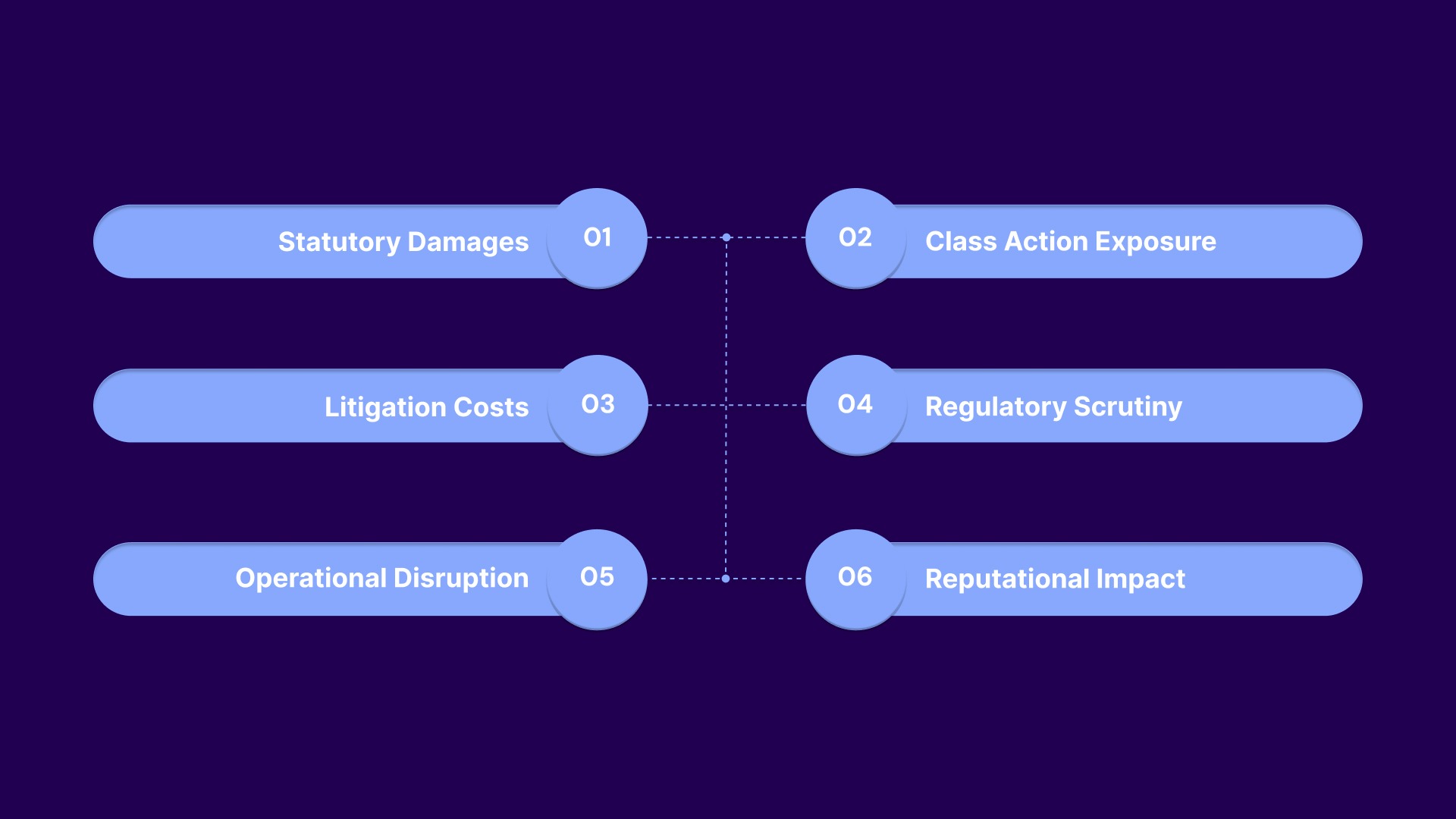
The consequences of non-compliance can include:
Statutory Damages: Agencies may face $500 per violation, which can increase to $1,500 per willful violation under47 U.S.C. § 227(b)(3).
Class Action Exposure: Violations are often pursued as class actions, significantly increasing total liability due to aggregated claims.
Litigation Costs: Legal defense, settlements, and associated costs can escalate quickly, even before damages are awarded.
Regulatory Scrutiny: Repeated violations may trigger investigations or enforcement actions by regulators such as the Federal Communications Commission.
Operational Disruption: Agencies may need to suspend messaging programs, review workflows, and implement corrective measures under pressure.
Reputational Impact: Non-compliance can affect relationships with clients and impact future business opportunities.
Because these risks scale with messaging volume, identifying gaps before they lead to violations becomes critical. In the next section, we examine how to audit your current infrastructure to detect and address compliance weaknesses.
How to Audit Your Current Infrastructure for Compliance Gaps
For third-party agencies, auditing infrastructure means verifying whether messaging decisions are based on accurate data, applied rules, and real-time checks at the point of execution.
Table showing the signs to look for:
Area
What to Check
Why It Matters
Consent Data
Is consent stored centrally and tied to each account?
Disconnected records make validation unreliable
Pre-Send Logic
Are messages evaluated before sending?
Liability is triggered at the point of contact
Opt-Out Handling
Are opt-outs applied instantly across systems?
Delays can result in unauthorized messaging
Number Accuracy
Are reassigned or invalid numbers filtered out?
Prior consent does not transfer to new users
Channel Rules
Is SMS usage restricted based on consent type?
Incorrect channel use can violate TCPA
Audit Logs
Can you trace each message to supporting data?
Required to defend messaging decisions
System Integration
Are platforms synchronized in real time?
Data mismatches can trigger non-compliant outreach
A structured audit should focus on identifying where systems fail to consistently apply these checks. Gaps often exist in how rules are executed across platforms.
To assess your infrastructure effectively, focus on:
Messaging rules should apply uniformly across all systems and channels.
Every message should be linked to supporting data and decision logic.
Updates such as opt-outs and data changes must reflect immediately.
All communication channels should follow the same compliance standards.
Addressing these gaps requires more than manual review. Systems must be able to apply rules consistently, validate data in real time, and maintain visibility into every interaction without relying on fragmented processes. The benefits of using the right technology, such as Tratta, are explained in the next section.
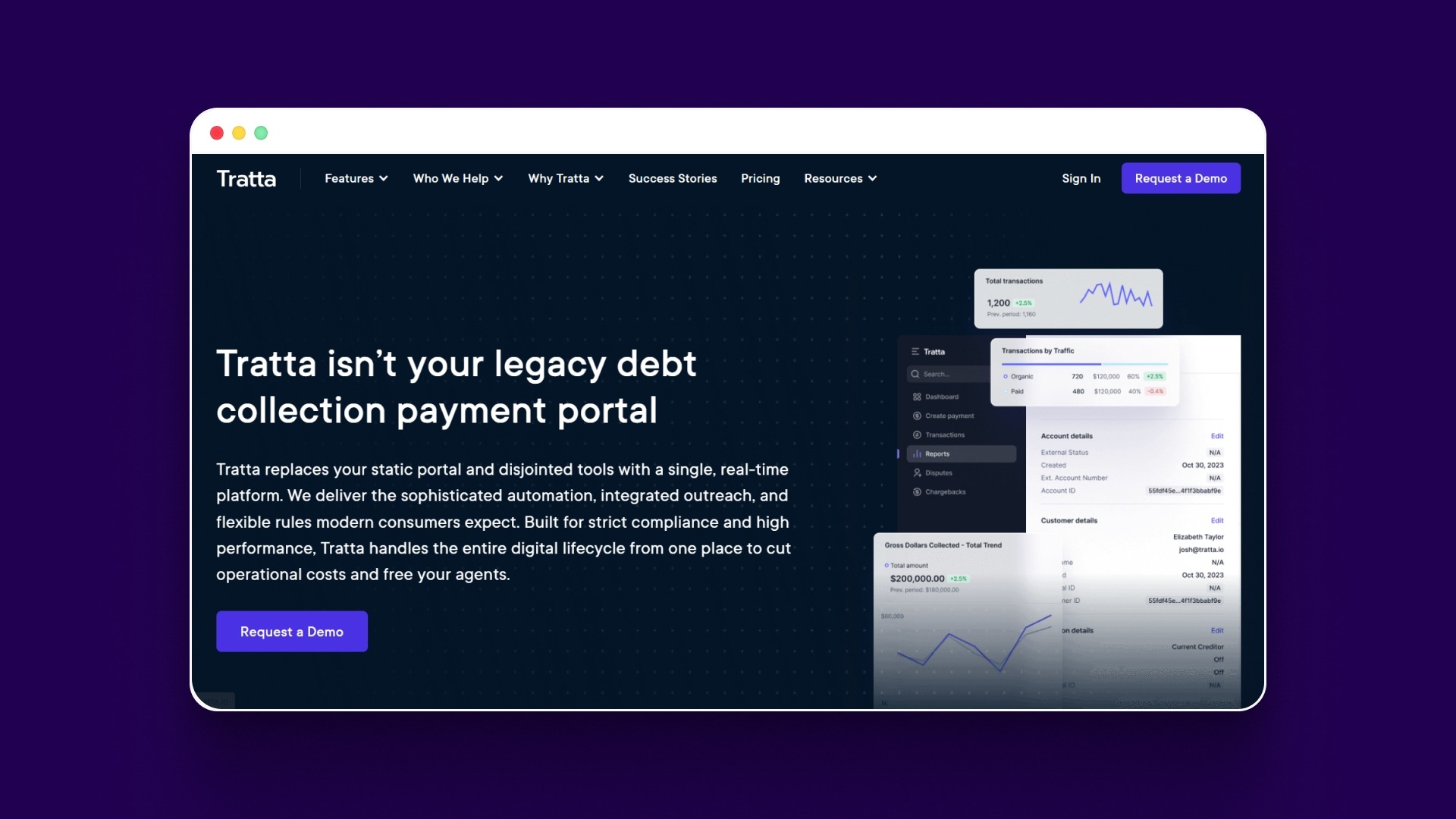
Tratta is a collections platform designed to centralize payments, communications, and workflows into a single system. For agencies, this matters because risk depends on how consistently rules are applied across every outbound interaction.
These features directly support compliant messaging execution:
Consumer Self-Service Payment Portal Enables consumers to access accounts, make payments, and manage actions independently, reducing the need for outbound messaging that could trigger TCPA exposure.
Omnichannel Communications Supports coordinated messaging across SMS, email, phone, and IVR with channel-specific routing, helping ensure communication aligns with consent and context.
Campaign Management Uses rule-based automation and event-driven triggers to control when and why messages are sent, reducing manual errors in outreach.
Multilingual Payment IVR Verifies users and routes them to secure payment flows, including SMS-enabled access, minimizing unnecessary outbound contact.
Reporting and Analytics Provides visibility into messaging activity, engagement, and outcomes, allowing agencies to monitor patterns and identify compliance risks.
Customization and Flexibility Enables configuration of workflows, communication settings, and system behavior, allowing agencies to manage how messaging and processes are executed.
Integrations (REST APIs) Ensures data consistency across systems, reducing the risk of outdated or conflicting information triggering outreach.
Security and Compliance Built-in safeguards support adherence to TCPA, FDCPA, and related regulations, helping agencies maintain audit readiness.
Messaging decisions are tied to real-time data, structured workflows, and centralized visibility, reducing reliance on fragmented systems. You do not need to wait to fix compliance gaps. Tratta enables teams to move quickly from manual execution to a system that supports controlled, scalable messaging.
Conclusion
Most compliance breakdowns begin with small inconsistencies across systems. Data that does not sync, rules that are applied differently, or actions that are not logged. These gaps create patterns that are difficult to detect until they result in legal exposure.
Tratta addresses this by bringing structure to how messaging is executed, not just defined. It connects data, workflows, and communication in a way that makes decisions consistent and observable across the entire process. This allows agencies to operate with greater clarity, where each action is supported by the same underlying logic.
Identify whether your systems can enforce rules at the point of execution rather than after the fact. Schedule a demo to see how structured messaging workflows can reduce TCPA risk.
Frequently Asked Questions
1. Can a third-party agency rely on consent obtained by the original creditor?
Yes, but only if the consent is valid, properly documented, and transferable. Agencies must verify that the consent explicitly allows contact by third parties and covers the intended communication channel, including SMS.
2. Does prior consent carry over if a phone number is reassigned?
No. Consent applies to the intended recipient, not the phone number itself. If a number is reassigned, contacting the new user without fresh consent can result in TCPA liability.
3. Are manual text messages exempt from TCPA requirements?
Not entirely. While TCPA restrictions are stricter for automated systems, manual messaging can still create risk, especially if it violates consent requirements or other regulations like the FDCPA.
4. Can agencies send informational texts without explicit consent?
Only in limited cases. Most text messages, even informational ones, require prior express consent under TCPA if sent to mobile numbers using automated systems.
5. How long should agencies retain consent and messaging records?
There is no fixed duration under TCPA, but agencies should retain records long enough to defend against potential claims, which often means several years, depending on applicable statutes of limitations.
Note: This information is not legal advice. Tratta recommends that you consult with your legal counsel to make sure that you comply with applicable laws in connection with your collection and outreach activities.
Sign up for our monthly newsletter
Debt collection insights that keep you compliant and competitive.
Thank you! Your submission has been received!
Oops! Something went wrong while submitting the form.