Most businesses still treat multilingual IVR like a courtesy feature.
Press 1 for English. Press 2 for Spanish. Problem solved.
Not quite.
Because the caller is rarely coming in with extra patience and a mild question. They are calling when a payment is due today, a case update cannot wait, an account has been flagged, a notice has created panic, or a family decision is now sitting on hold music.
In those moments, the problem is the delay. Repetition. Wrong turns. Rejection. Separation from the one action the caller actually needs to complete.
That is where the usual multilingual IVR advice falls short.
In 2026, U.S. businesses face sharper pressure here. Language is no longer a soft CX concern. It affects access, clarity, risk, and control. In a more charged language-policy environment, the margin for confusion is smaller, and the stakes are higher when callers misunderstand critical instructions.
So the better question is not whether your IVR offers multiple languages.
It is this: can a caller with a real problem get from language selection to resolution without getting lost, delayed, or pushed into another queue?
Multilingual IVR is an interactive voice response system that lets callers navigate the same phone workflow in multiple languages. That can include menu prompts, instructions, routing paths, and, in more advanced setups, self-service actions such as account access, status checks, or payments.
A basic setup may translate the opening menu and then transfer the caller to a team. A stronger setup supports the caller’s selected language for more of the journey, rather than limiting language support to the first few prompts.
A multilingual IVR only works when each supported language leads to a usable path, not just a translated opening menu.
In simple terms, multilingual IVR is a phone experience built to help callers interact with the system in their preferred language rather than forcing every caller through a single default path.
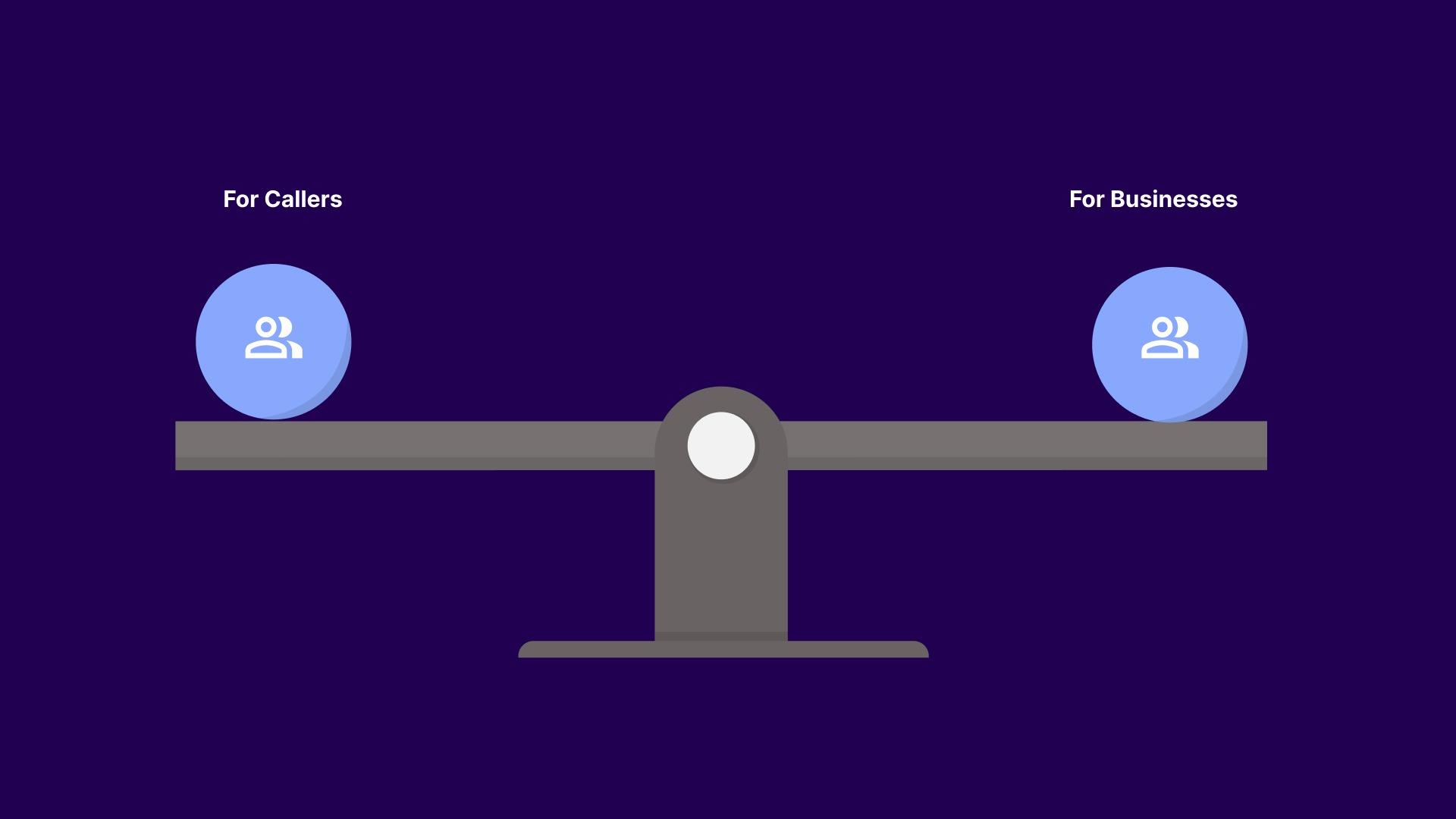
A multilingual IVR should do more than expand language coverage on paper. It should make the phone journey clearer, more usable, and more reliable under pressure.
Two Things Should Improve First
1. Access
More people should be able to understand the options in front of them without guessing, restarting, or waiting for an agent just to get basic direction. That matters even more when the call is urgent, and the caller does not have time for trial and error.
2. Clarity
A stronger multilingual IVR reduces wrong selections, repeated prompts, and the confusion caused by partial language support. The experience should stay understandable beyond the opening prompts, not break down deeper into the call.
Three Outcomes Matter Most
1. Fewer avoidable transfers
Better clarity should lead to more consistent handling across inbound calls. Teams spend less time correcting preventable misunderstandings, and callers are less likely to bounce between queues because they could not move through the system properly the first time.
2. Better containment
Routine requests should have a better chance of staying within self-service rather than spilling into live support because the path was unclear or incomplete. That does not remove the need for human help, but it does reduce the number of interactions that reach an agent only because the IVR created friction.
3. More consistent service quality
Businesses serving multilingual audiences need a system that does not treat one language path as complete and the others as secondary. Service quality should remain consistent across supported languages, not strong in one path and weaker in another.
In practical terms, a multilingual IVR should improve five things: access, clarity, containment, consistency, and completion. If those outcomes are not improving, the system may offer multiple languages, but it is not doing enough of the real work.
A multilingual IVR works best when the caller can navigate the system without losing direction after selecting a language.
The flow usually starts with an incoming call and an early language choice. From there, the caller enters the menu path tied to that language instead of being pushed back into a default-language system.
If the task involves account-specific information, the next step may include identity or account verification. After that, the caller either completes a self-service action, receives the right instructions, or is routed to the right team if live support is needed.
At a basic level, the flow usually depends on six working parts:
A multilingual IVR stays usable when a few basics are done well:
What makes a multilingual IVR effective is not complexity. It is whether callers can move through the flow without friction.
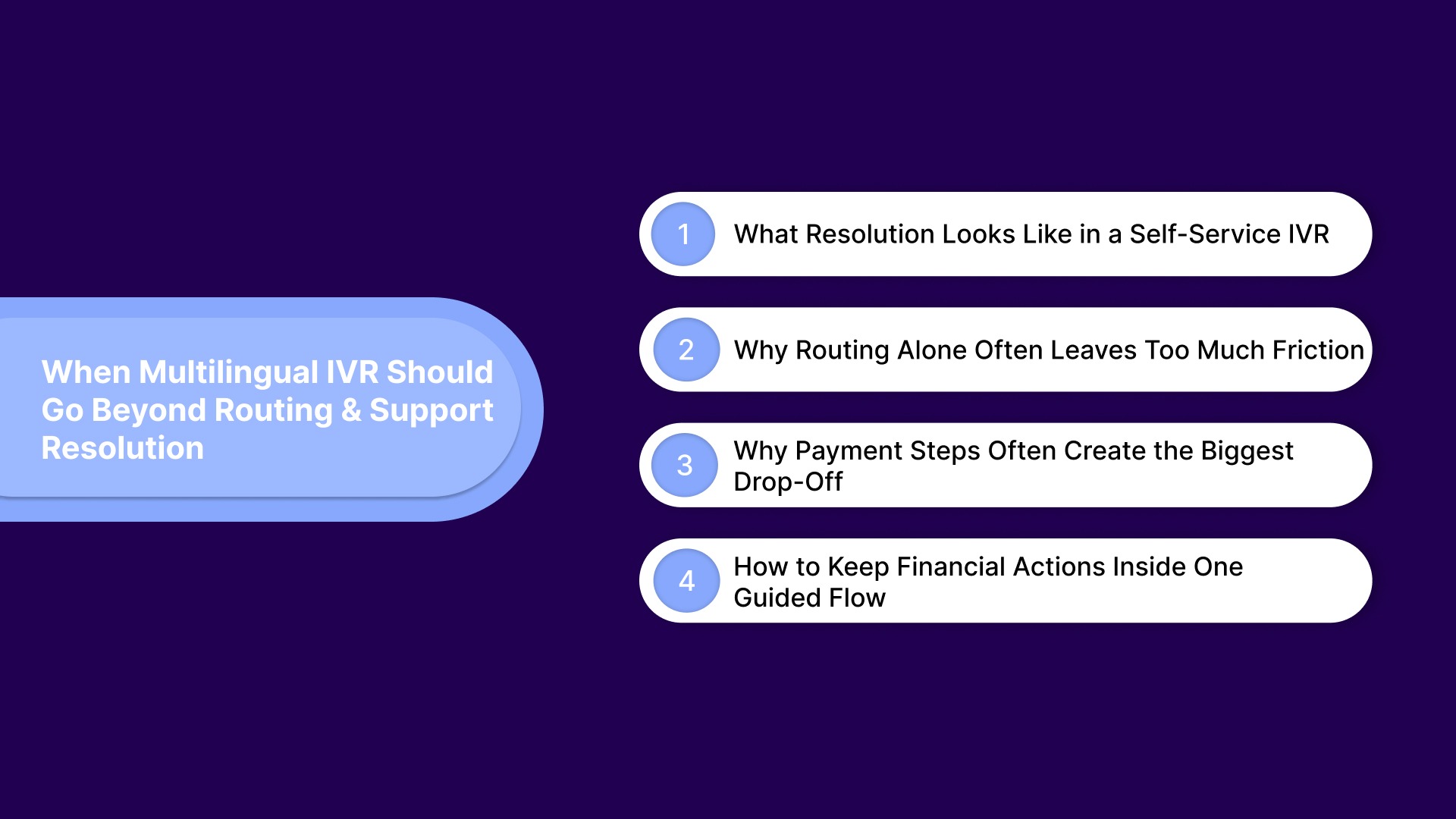
There is a point where routing is no longer enough.
Think about it: the caller has reached the right language path; the next question is whether the system can actually help them move something forward. In many cases, that matters more than the transfer itself. The caller does not want a better handoff. They want progress.
In a stronger multilingual IVR, resolution means helping the caller complete a meaningful step during the call instead of stopping at menu navigation.
That can include:
The value comes from helping the caller complete a useful step in the same interaction.
A caller can understand the menu and still leave without solving the problem.
That is the weakness in routing-only setups. They may succeed at getting the caller to the right department, but still fail to create momentum. Every extra handoff adds delay. Every restart increases the chance of abandonment.
That gap matters most for high-intent calls. When someone is calling to act on an account, make a payment, respond to a notice, or confirm the next step, they are usually not looking for another queue. They are looking for a direct path to action.
Payment is often the moment where progress stalls.
The reason is not always technical. It is often structural. A caller may reach the right place, understand the issue, and decide to act, only to hit a payment handoff that breaks continuity. They may be asked to switch channels, wait for another team, repeat information, or interpret instructions that suddenly feel less clear than the rest of the journey.
That is where trust starts to slip. The willingness to act is there, but the path becomes harder at the exact point where confidence needs to be highest.
The stronger approach is to keep financial actions within a single guided path where possible.
That means the caller should be able to move from decision to action without unnecessary switching. Prompts should stay calm and specific. Amounts, payment methods, confirmation steps, and retry options should be explained in a way that feels easy to follow in the moment, not something the caller has to decode under pressure.
It also helps to handle incomplete actions well. If a payment cannot be completed, the next step should still be clear. The caller should know what to do next, where they stand, and how to continue without starting from zero.
This is where the system starts to support real in-call progress instead of another handoff.
As soon as multilingual IVR starts handling account actions or payments, launch decisions become governance decisions as well.
With multilingual IVR starting to handle account actions, sensitive information, or payment-related steps, launch decisions become more than just workflow decisions. They also make control decisions.
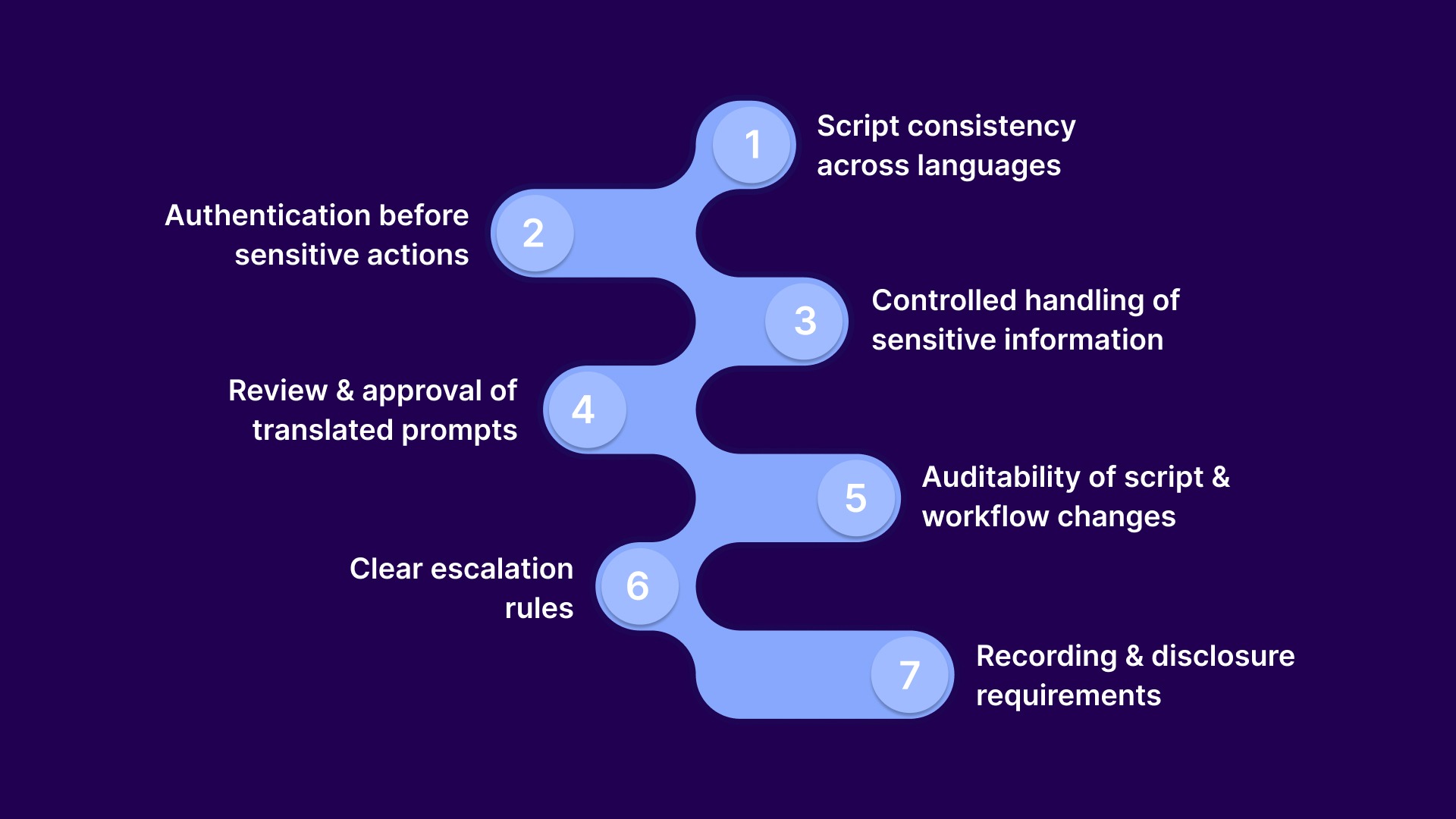
This is where businesses need a readiness review before rollout. Not to make the system heavier than it needs to be, but to make sure the flow stays reliable when the stakes are higher.
Before launch, review the following:
A practical launch question is not just whether the multilingual IVR works. It is whether the flow stays controlled once callers begin taking real actions inside it.
Some service environments place more pressure on language access than others. Multilingual IVR tends to matter most where callers need to verify information, act on an account, or complete a next step without delay.
The strongest use cases are those in which callers need to take action rather than just reach a department.
To understand whether a solution can support the caller journeys, the business actually needs an evaluation that goes beyond language count.
The stronger test is whether the system can support real workflows, stay manageable in daily operations, and fit the business without creating new friction behind the scenes.
A strong multilingual IVR may look capable in a demo. The better question is whether it supports the specific workflows, languages, and operational demands that matter after launch.
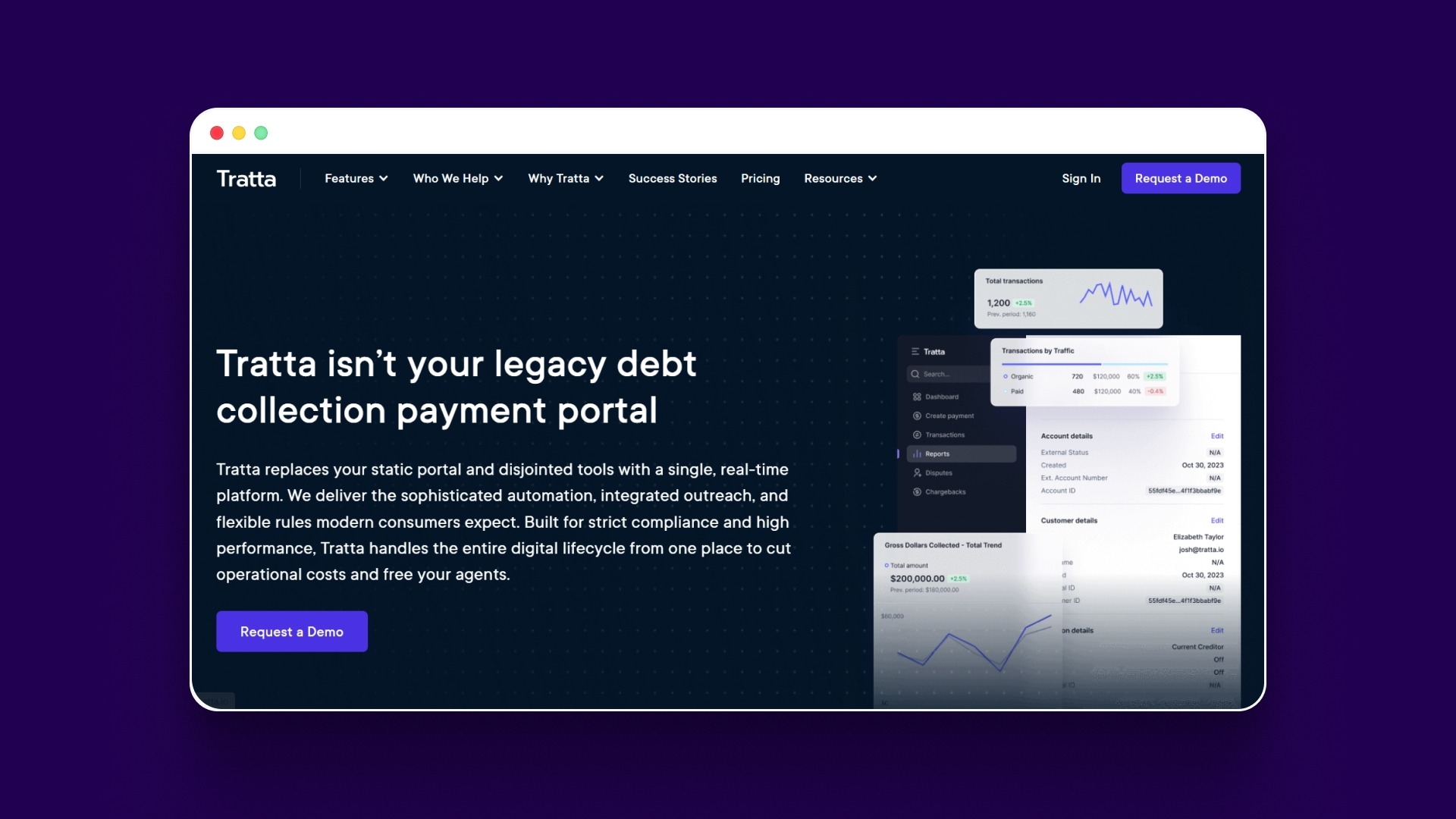
In collections and similar servicing environments, multilingual IVR may need to do more than guide callers to the right queue. It may need to support account-level actions inside the same interaction.
That is where Tratta comes into the picture. The focus is not limited to language access at the front of the journey. It extends to multilingual account workflows, where callers may need to review account information, select repayment options, or complete payment-related steps without losing momentum.
This matters most in environments where transfer-heavy journeys create avoidable drop-off.
In those cases, the stronger approach is not just better routing.
It is a multilingual experience that stays connected to the action the caller is trying to complete.
AI can make multilingual IVR more flexible by helping systems interpret intent, handle natural language better, and respond less rigidly than fixed menu trees.
But AI is not a substitute for strong flow design. If the structure is weak, unclear, or hard to manage, adding AI will not solve the real problem.
The better approach is to get the basics right first, then use AI where it genuinely improves the experience.
A multilingual IVR is not doing its job just because it offers more languages.
What matters is what happens after the language choice. Can the caller stay on track? Can they understand the next step? Can they actually get something done without the journey falling apart halfway through?
That is the standard worth using. Not language count. Not menu depth. Not how impressive the setup looks in a demo.
If multilingual IVR is becoming part of your recovery workflow, explore how Tratta supports multilingual payment IVR, consumer self-service, and more controlled account-level workflows.
A standard IVR usually runs in a single default language and expects every caller to follow the same path. A multilingual IVR provides language-specific paths, making the interaction more usable for different audiences. The difference is not only the number of languages offered, but whether callers can continue the journey properly in the language they selected.
There is no fixed number. The right mix depends on who your callers are, where they are located, and which languages show up often enough to affect service quality. Adding more languages only helps when those paths are maintained well and used often enough to justify them.
Yes, in many cases it can. The setup works better when payment prompts are specific, the caller knows what step they are on, and the flow does not force unnecessary switching midway. The goal is to make payment actions feel guided rather than fragmented.
It can reduce the need for a live agent for routine, repeatable tasks. That usually happens when the IVR can handle common actions cleanly without creating confusion. It does not remove the need for agents altogether, but it can reduce the volume of calls that reach them for avoidable reasons.
The most useful measures are tied to outcomes. That can include completion rate, transfer rate, drop-off by language path, repeat-call volume, and payment completion, where relevant. The better question is not whether the IVR is being used, but whether it is helping callers finish what they called to do.
No. A multilingual IVR can work well without AI when the flow is properly designed and each language path is well maintained. AI becomes more useful when the business needs more flexible intent handling, less rigid caller interactions, or broader language adaptability.