
Collections are becoming harder to manage as more financial responsibility shifts to patients. Payments are often delayed, partial, or missed entirely, making revenue less predictable for healthcare providers. Nearly 3 in 10 people report that they or someone in their household had difficulty paying for healthcare in the past year.
For collection teams, this is not just a volume problem; it is a conversion challenge. You are dealing with patients who want to pay but need clearer, faster, and more flexible ways to do so. This creates pressure to improve recovery without disrupting the patient experience.
In this blog, we outline practical medical revenue recovery strategies to reduce delays, improve payment rates, and strengthen collection performance.
In brief:
Medical revenue recovery is the process of collecting patient balances after insurance adjudication, when financial responsibility shifts fully to the patient. It determines how much of the billed revenue is actually realized.
For collection agencies, it involves managing aging accounts, prioritizing recovery efforts, and converting patient intent into completed payments. Unlike traditional collections, medical debt comes with smaller balances, higher volumes, and more sensitivity around communication.
Patients are often willing to pay but face confusion, delays, or limited payment options, which directly affects recovery outcomes. The purpose of medical revenue recovery is to:
It is about structuring the payment experience to make resolution easier, faster, and more likely. In the next section, we break down the exact points where payments drop off in the healthcare collection process and how those gaps impact recovery.
Suggested Read: 8 Proven Strategies for Accounts Receivable Recovery in Healthcare
Most collections break down at specific points in the process. These are not random failures, but predictable gaps where friction, delay, or confusion reduces the likelihood of payment.
Here are the most common drop-off points in healthcare debt collections:
Tratta addresses these drop-off points by aligning payment access, communication, and data into a single system. Its debt collection platform supports agencies managing healthcare accounts with automated reminders, secure payment processing, and real-time account visibility to reduce delays and improve engagement. Request for a free demo.
Improving patient collections is tied directly to financial pressure across healthcare. As McKinsey & Company notes:
“the US healthcare system continues to face considerable financial strain, although there are pockets of opportunity.”
This means aligning payment strategies with key regulations such as the Fair Debt Collection Practices Act (FDCPA), Telephone Consumer Protection Act (TCPA), and Health Insurance Portability and Accountability Act (HIPAA), while maintaining efficiency across high-volume accounts.
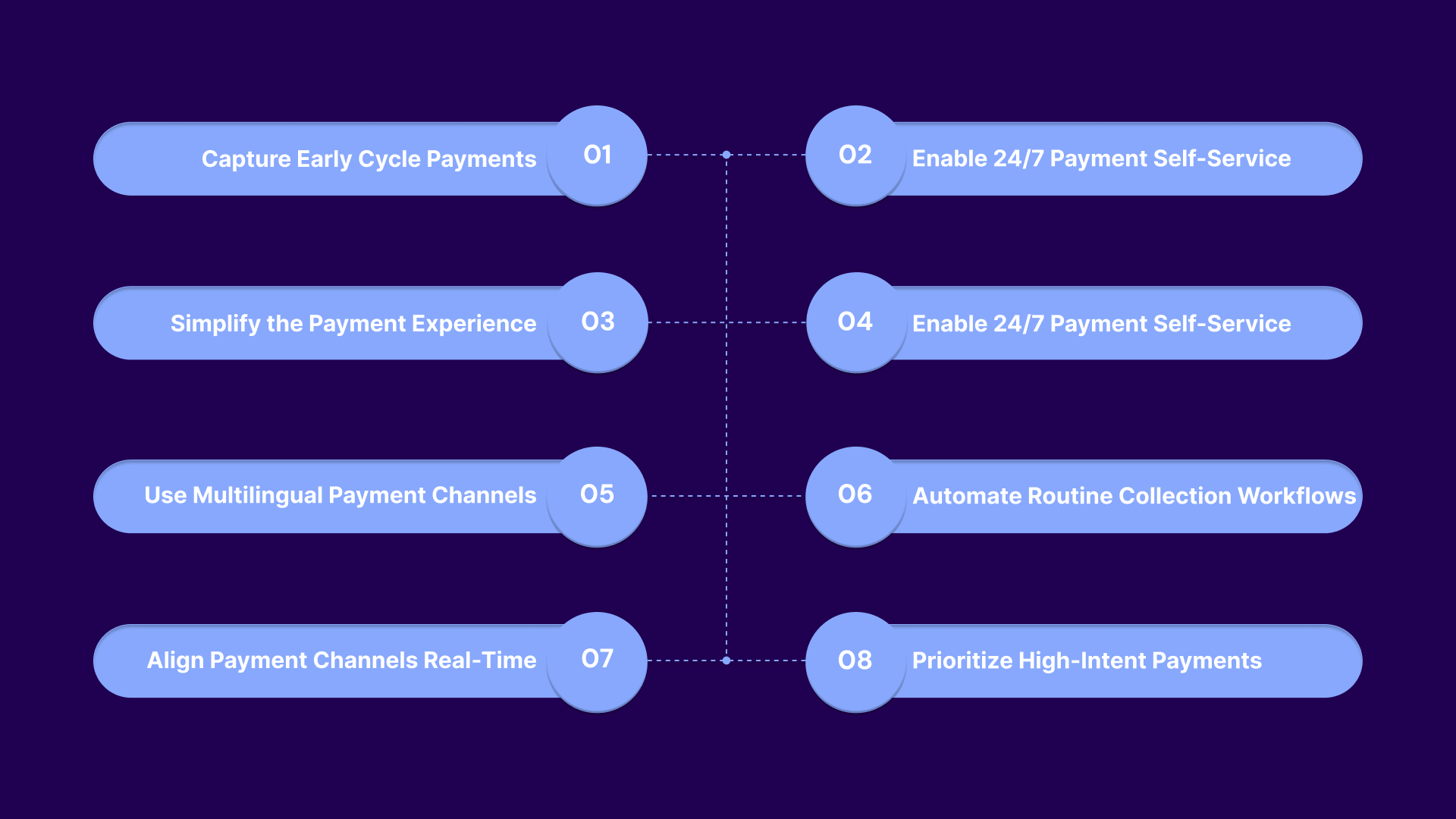
The strategies below focus on improving recovery outcomes while staying within compliant, scalable collection frameworks:
Early placements consistently yield higher liquidation rates, while delayed engagement reduces recovery probability. Agencies must act quickly without violating timing and disclosure requirements under FDCPA.
These actions focus on early-stage recovery:
Impact: Improves early-stage liquidation rates and compresses days-to-collection. It also reduces downstream recovery dependency on aged accounts.
Consumers often engage outside standard contact windows, especially when avoiding live conversations. Self-service channels must remain compliant with TCPA consent and communication rules.
These steps ensure continuous access:
Impact: Expands temporal coverage of payment capture and increases off-cycle transaction volume. It also improves channel utilization without additional staffing.
Complex workflows increase abandonment and reduce recovery efficiency. Simplification must still maintain compliance with required disclosures and validation steps.
These changes reduce friction:
Impact: Lowers transaction abandonment rates and improves payment path efficiency. It also reduces friction-induced drop-offs across digital and IVR channels.
Rigid payment expectations reduce participation, especially for aged accounts. Structured options must align with disclosure and agreement requirements.
These options improve recovery flexibility:
Impact: Increases recovery across non-liquid accounts through structured payment distribution. It also improves yield from balances that would otherwise remain uncollected.
Language gaps can impact comprehension and compliance. Providing consistent messaging across languages reduces risk and improves engagement.
These features improve accessibility:
Impact: Improves engagement across linguistically diverse segments and reduces comprehension-related delays. It also increases conversion consistency across demographics.
Manual processes introduce inconsistency and increase compliance risk. Automation ensures standardized execution aligned with regulatory requirements.
These automations improve consistency:
Impact: Standardizes outreach execution and reduces variability in follow-up cycles. It also improves coverage across accounts without increasing operational load.
Disconnected systems create discrepancies that affect both recovery and compliance. Accurate, real-time data is critical for maintaining trust and audit readiness.
These integrations ensure consistency:
Impact: Ensures data integrity across payment channels and reduces reconciliation discrepancies. It also improves real-time visibility into account status and payment activity.
Not all interactions deliver equal value, and prioritizing the right ones improves efficiency. Agencies must ensure these interactions remain compliant and properly documented.
These actions improve conversion focus:
Impact: Increases conversion efficiency by prioritizing high-probability interactions. It also improves allocation of resources toward revenue-generating touchpoints.
These strategies help agencies improve recovery while maintaining compliance and operational control. In the next section, we examine how to measure healthcare revenue recovery performance and track what is actually improving outcomes.
Suggested Read: Why Do Debt Collection Agencies Need a Business Associate Agreement?
Improving collections is only effective if performance is measured with the right context. While these are standard collection KPIs, their interpretation changes in healthcare due to smaller balances, higher volumes, and more sensitive patient interactions.
Table showing key metrics used by healthcare collection agencies:
These metrics should not be assessed in isolation. In healthcare collections, small inefficiencies at each stage can compound into significant revenue loss.
To assess performance effectively, ask:
Tratta helps agencies operationalize these metrics by tying every payment, interaction, and account update back to measurable performance outcomes. Instead of relying on fragmented reports, teams can monitor recovery trends, identify inefficiencies, and adjust workflows in real time. Get in touch with us to learn more.
The challenge lies in structural gaps across payment access, timing, and patient engagement that reduce the likelihood of recovery. The following factors continue to impact collection performance:
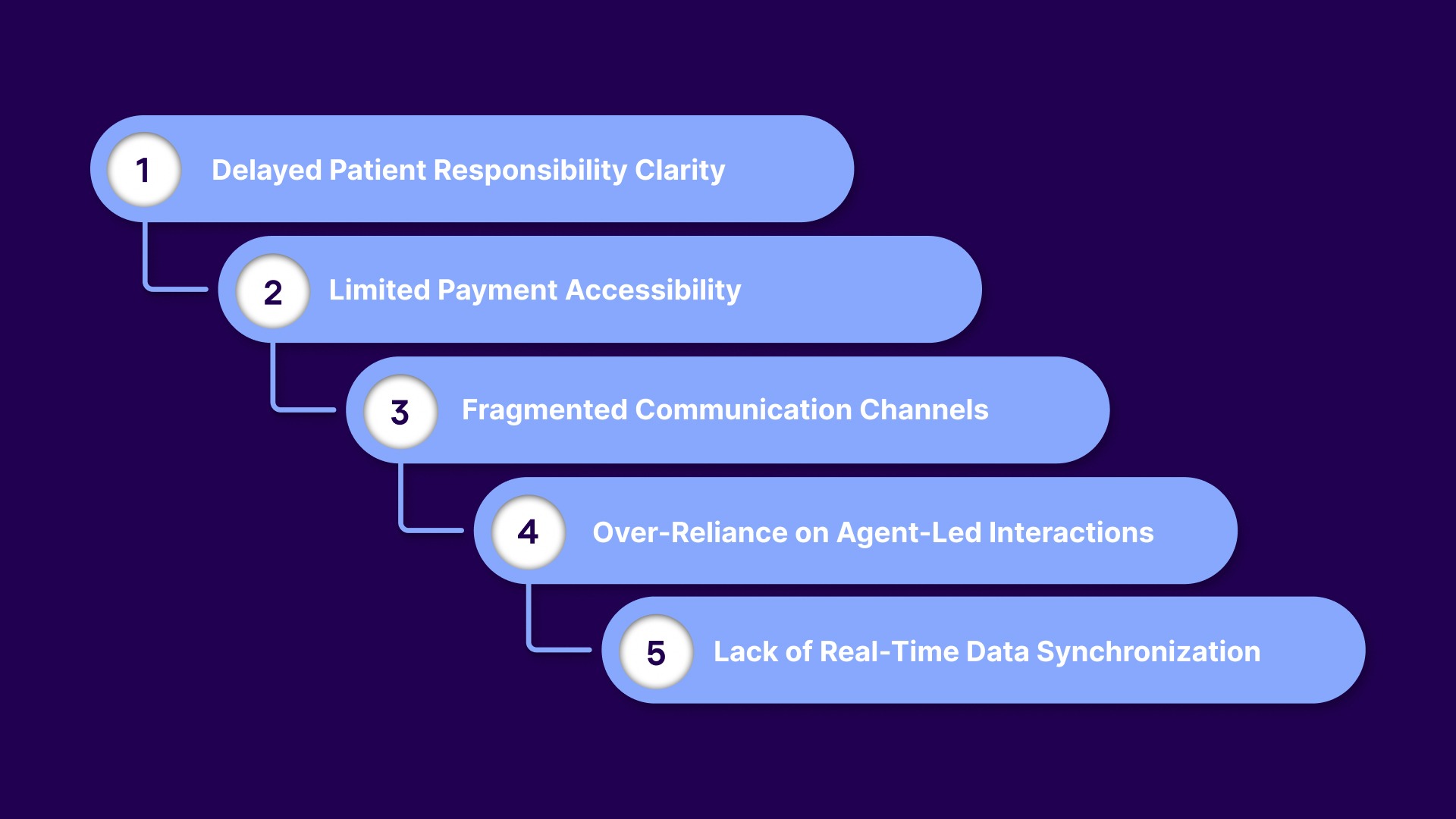
These challenges highlight the need for a more structured and accessible approach to collections. In the next section, we break down the features needed in a medical revenue recovery solution that directly addresses these gaps.
Suggested Read: How Automated Patient Debt Collections Boost Revenue Cycle
Healthcare collections operate differently from traditional debt recovery. Smaller balances, higher volumes, and patient sensitivity require solutions that prioritize accessibility, clarity, and speed without compromising compliance.
Key features to look for include:
Tratta is built for this environment, enabling agencies to manage patient collections with real-time data, self-service payment channels, and compliance-driven processes. This allows healthcare-focused collection teams to improve recovery outcomes while maintaining a patient-centered approach.
Healthcare collections are becoming harder to manage as patient responsibility grows and payment behavior becomes less predictable. Delays, friction in payment processes, and limited access to self-service options continue to reduce recovery rates and increase operational pressure on collection teams.
Tratta addresses these challenges by bringing payments, communication, and workflows into a single system built for healthcare collections. With real-time processing, self-service payment channels, and compliance-driven infrastructure, it helps agencies improve recovery while maintaining efficiency and control.
Get started quickly with structured onboarding designed to minimize disruption and accelerate results. Book a demo to see how Tratta can improve your medical revenue recovery performance.
Medical revenue recovery refers to collecting patient balances after insurance payments. For collection agencies, it involves managing healthcare debt, improving payment conversion, and resolving accounts efficiently across different stages of delinquency.
Revenue recovery in healthcare focuses on collecting payments owed after billing and insurance adjudication. It ensures providers receive payment for services while agencies manage overdue accounts and improve recovery rates.
A healthcare revenue recovery group typically refers to agencies or teams responsible for collecting patient balances. They handle post-billing collections, payment facilitation, and account resolution for healthcare providers.
Collection agencies improve recovery by enabling self-service payments, optimizing communication, and reducing payment friction. They focus on converting patient intent into completed transactions while maintaining compliance and operational efficiency.
Medical debt is harder to collect due to smaller balances, high volumes, and patient sensitivity. Confusion around bills and limited payment flexibility also reduces engagement and slows down recovery rates.