Missed or poorly managed follow-ups can quickly create compliance risks for collection agencies. An outreach attempt outside permitted hours, repeated contact during an active dispute, or inconsistent follow-up practices can lead to consumer complaints and regulatory scrutiny.
In fact, reports show that complaints about debt collection calls surged in 2025. Per-capita complaints rose about 200% from the previous year, according to data from the Federal Trade Commission. For agencies managing thousands of accounts across calls, emails, and text messages, maintaining compliant follow-up processes is not always straightforward.
Teams must balance consistent outreach with strict regulatory requirements while ensuring that every interaction is properly documented. In this article, we explore nine benefits of compliance-first follow-up systems and how they help collection agencies manage outreach while maintaining regulatory oversight.
Follow-ups provide a structured way to track consumer interactions, document outreach attempts, and maintain operational continuity.
Many consumers do not respond to the first outreach attempt, making structured follow-ups necessary to maintain engagement and move accounts toward resolution. However, without clearly defined follow-up processes, agencies may struggle to maintain consistency across accounts and communication channels.
Follow-up processes support collection operations in several ways:
While follow-up communication is essential to maintaining collection activity, agencies also need systems that help ensure these interactions remain structured and compliant with regulatory requirements. The next section highlights the benefits of compliance with first systems.
Suggested Read: Debt Collection Compliance Checklist: An Essential Guide for Debt Collectors
Compliance-first follow-up systems help agencies organize outreach activities, maintain clearer documentation, and monitor communication practices more effectively.
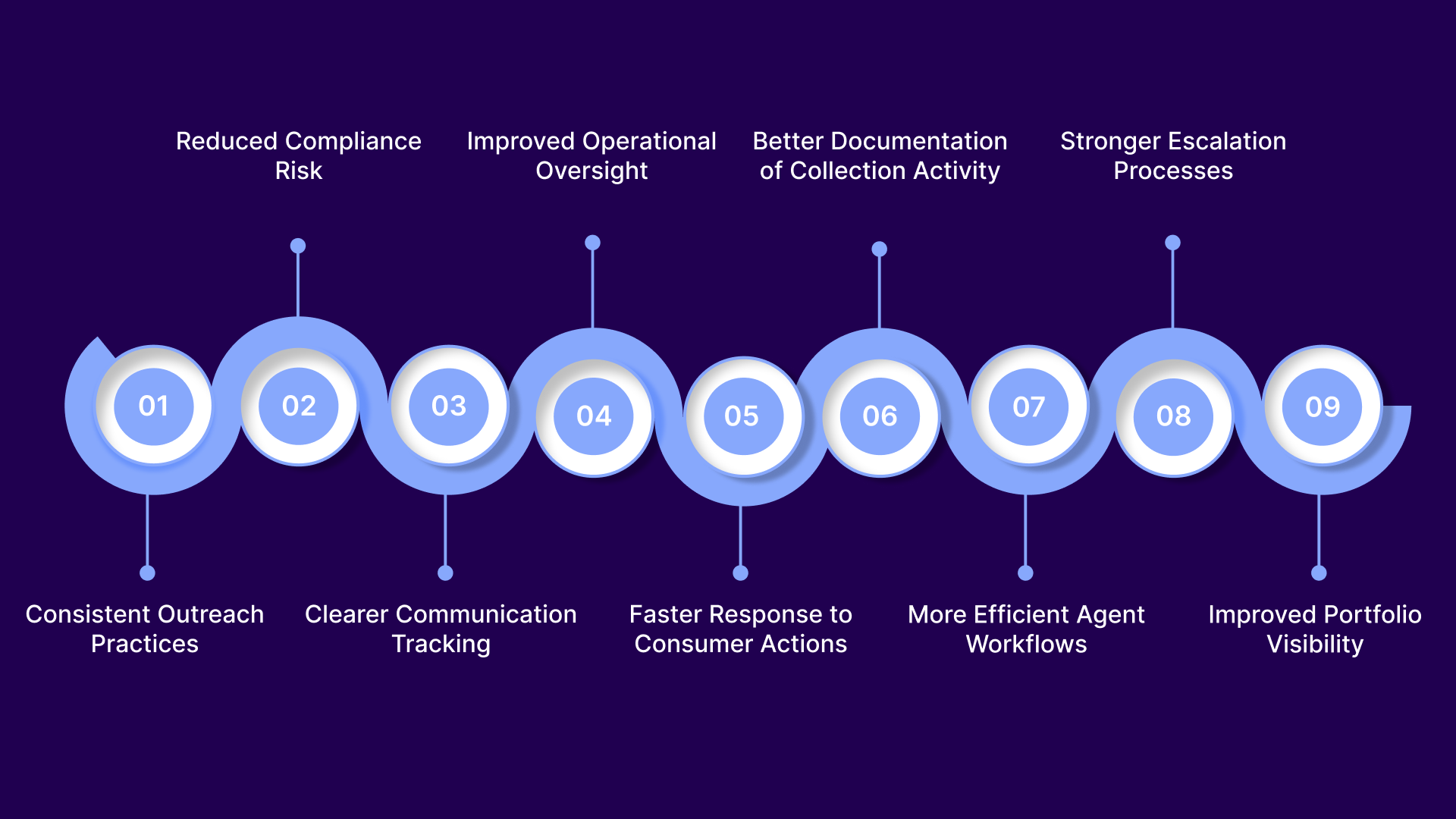
These are a few other advantages:
Structured follow-up systems help ensure that outreach attempts follow defined schedules and communication guidelines. This consistency helps reduce operational confusion and supports more predictable collection workflows.
These systems typically support consistent outreach by providing:
Compliance-first systems help agencies apply regulatory rules more consistently during follow-up communications. By structuring outreach workflows, teams can reduce the risk of accidental violations.
These systems help reduce compliance exposure through mechanisms such as:
Follow-up systems allow agencies to maintain structured records of consumer interactions. This helps teams review communication histories and understand how outreach activity evolves over time.
Communication tracking is supported through features such as:
Structured follow-up systems help supervisors and compliance teams review outreach activity more effectively. This oversight helps agencies identify patterns or practices that may require attention.
Operational oversight can be improved through capabilities such as:
Consumers may respond to outreach with disputes, payment questions, or requests for clarification. Structured follow-up systems help agents track these responses and adjust outreach accordingly.
These systems help teams respond to consumer actions by enabling:
Maintaining clear records of outreach attempts is critical for compliance reviews and operational audits. Follow-up systems help ensure communication activity is documented consistently.
Documentation capabilities may include:
Agents managing multiple accounts benefit from systems that organize follow-up tasks and communication schedules. Structured workflows help reduce manual tracking and administrative work.
Agent workflows can be improved through features such as:
Some accounts require escalation to supervisors, compliance teams, or legal review. Follow-up systems help identify accounts that may require additional oversight.
Escalation workflows can be supported through mechanisms such as:
Structured follow-up systems allow agencies to maintain clearer oversight across large account portfolios. This visibility helps teams track outreach progress and account movement more effectively.
Portfolio visibility can be improved through tools such as:
Tratta helps agencies manage follow-up workflows within structured collection operations. The platform supports outreach management through tools such as omnichannel communications, campaign workflows, contact center capabilities, and operational reporting. Schedule a free demo.
Collection agencies must follow strict regulatory requirements when communicating with consumers during follow-up outreach. These rules govern when agencies can contact consumers, how communication should occur, and what disclosures must be provided.
The following requirements help agencies structure follow-up processes that support compliant communication practices:
Regulatory requirements set the boundaries for how agencies conduct follow-up communications. To apply these rules consistently, agencies often rely on structured systems that help organize outreach workflows and track communication activity.
Suggested Read: How to Stay Compliant With the Fair Debt Collection Practices Act
Structured follow-up systems help collection agencies organize outreach activities, track consumer interactions, and maintain operational consistency across accounts. These systems support agents by structuring communication workflows and maintaining records of follow-up activity.
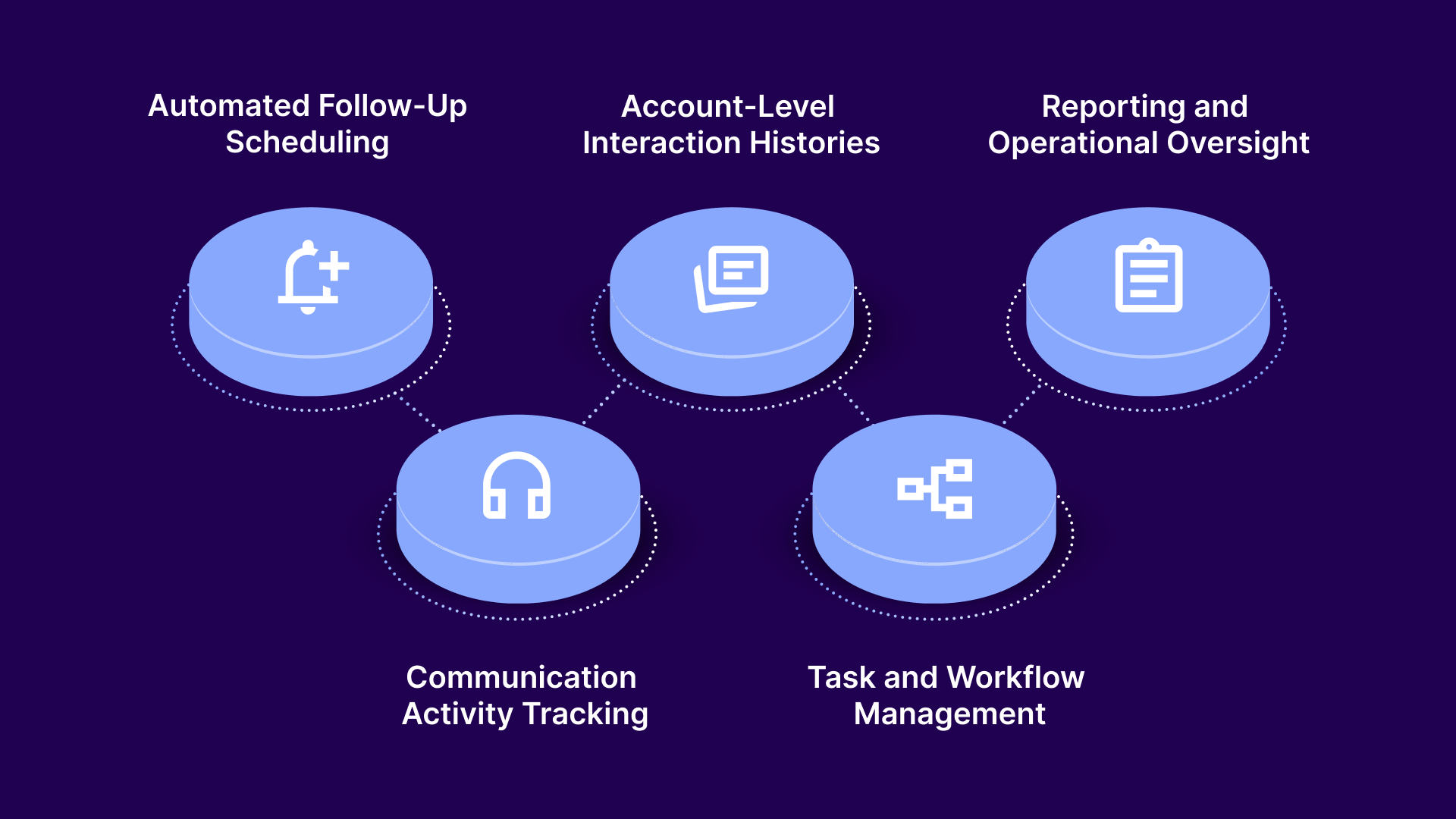
Common features include:
Automated scheduling helps agents maintain consistent outreach timelines across accounts. Key capabilities typically include:
Communication tracking helps agencies maintain clear records of outreach attempts across channels. These systems typically track:
Interaction histories allow agents and supervisors to review previous communication attempts before initiating follow-ups. These histories often include:
Task management tools help agents organize follow-up responsibilities across multiple accounts. These systems typically support:
Reporting tools help supervisors review follow-up activity and monitor collection operations. Common reporting capabilities include:
Tratta helps agencies optimize how follow-ups are executed across accounts. With tools for automated outreach campaigns, consumer self-service payments, centralized interaction management, and operational analytics, teams can manage follow-up activity more efficiently while maintaining structured collection workflows. Learn more.
By integrating compliance considerations into follow-up processes, agencies can maintain clearer oversight of communication activity and reduce the risk of inconsistent outreach practices.
Compliance-first systems typically support follow-up workflows in areas such as:
Agencies also need clear implementation strategies to ensure follow-up processes remain organized and consistent. These are listed in the next section.
Suggested Read: 5 Ways Automated Payment Follow‑Up Services Can Improve Debt Recovery
Implementing structured follow-up processes requires more than simply scheduling outreach attempts. Agencies must establish clear procedures, monitoring practices, and documentation standards to ensure follow-up communications remain organized and compliant.
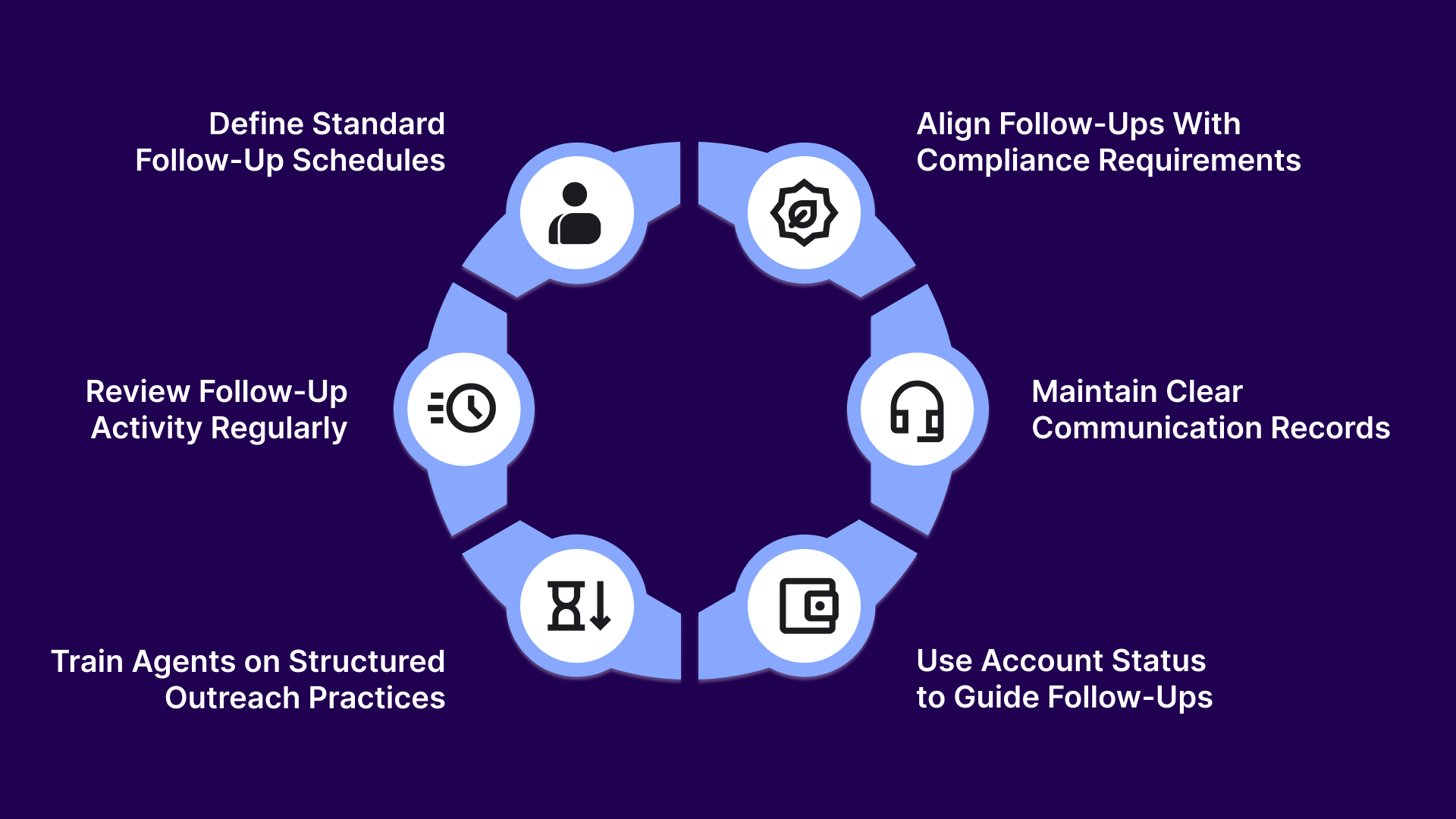
When follow-up workflows are implemented thoughtfully, teams can manage outreach more consistently while maintaining clearer oversight of consumer interactions.
Implementing these practices becomes easier when agencies use technology designed to support structured outreach workflows and operational oversight.
Suggested Read: Accounts Receivable Collections: Practical Tips That Improve Cash Flow
Tratta is a digital debt collection and account resolution platform built for collection agencies, creditors, and collection law firms. The platform helps organizations manage consumer interactions, outreach workflows, and operational processes within a structured environment.
Key features include:
Campaign workflows allow agencies to schedule and manage structured outreach sequences for follow-up communications. These campaigns help maintain consistent communication timing across accounts. Teams can track outreach progress and monitor follow-up performance within organized workflows.
Tratta enables agencies to manage consumer outreach across SMS, email, and voice channels in a single system. This helps teams track follow-up activity across communication channels. Maintaining unified communication records supports clearer oversight of consumer interactions.
The contact center interface allows agents to manage follow-up conversations while reviewing account information. Agents can access communication histories and account details during consumer interactions. This helps ensure follow-up conversations are informed by prior outreach activity.
Reporting tools help agencies monitor outreach patterns and follow-up performance across portfolios. Supervisors can analyze communication activity and review engagement trends. Operational reporting helps identify accounts that require additional follow-up attention.
The consumer portal allows individuals to review account details and resolve debts independently. Consumers can access payment options, account balances, and settlement offers online. Self-service capabilities can reduce the need for repeated follow-up communications.
Embedded payment capabilities allow consumers to complete payments directly through digital channels. These tools support payment plans and one-time payments through secure payment options. Faster payment processing can reduce the need for additional follow-up outreach.
The automated IVR system allows consumers to make payments through phone interactions without speaking to an agent. This feature provides additional payment access points for consumers. Automated payments can help resolve accounts without additional follow-up contact.
Tratta allows agencies to configure workflows according to operational requirements. Teams can adjust communication processes and outreach strategies based on portfolio needs. Flexible configurations help agencies maintain structured follow-up practices.
API integrations allow Tratta to connect with existing collection systems and operational tools. This enables agencies to synchronize account data across platforms. Integrated workflows help ensure follow-up activity reflects current account information.
Tratta includes security safeguards and operational protections designed for collection environments. These protections help agencies manage consumer data securely while maintaining operational records. Secure operational processes support consistent handling of collection activity.
Your team can monitor outreach activity, review account interactions, and maintain more organized collection operations. As collection environments continue to change, Tratta provides agencies with tools to support efficient, scalable workflows.
Poorly managed follow-ups can create serious challenges for collection agencies. Inconsistent outreach, missed consumer responses, or communication outside regulatory limits can increase the risk of complaints and disrupt collection workflows. Without structured systems in place, agencies may struggle to maintain clear oversight of follow-up activity across growing portfolios.
Tratta helps agencies manage follow-up processes more efficiently and at scale. With tools for structured outreach workflows, centralized consumer interaction management, and operational reporting, the platform supports consistent follow-up activity across accounts.
See how Tratta can help your agency manage follow-ups with greater structure and efficiency. Call us today to optimize outreach workflows and improve operational oversight.
The 5 C’s of compliance commonly refer to Commitment, Culture, Communication, Controls, and Continuous monitoring. For collection agencies, these principles help guide compliant communication practices, documentation standards, and operational oversight across outreach activities.
Most compliance frameworks include leadership oversight, clear policies, employee training, monitoring and auditing, and corrective action procedures. These elements help agencies establish structured compliance programs that guide collection operations and communication practices.
The first step in the compliance process is identifying the regulatory requirements that apply to collection operations. Agencies must understand applicable laws such as the Fair Debt Collection Practices Act and related communication rules before defining internal policies.
Structured follow-up processes help agencies manage outreach consistently while maintaining documentation of consumer interactions. These systems allow teams to track communication activity, review follow-up timing, and maintain clearer operational oversight.
Agencies maintain compliance by adhering to communication timing rules, honoring consumer requests, such as cease-and-desist notices, documenting outreach attempts, and regularly reviewing account activity for potential compliance concerns.