Guide to Debt Services for Collection Agencies to Improve Recovery
Debt Collection & Recovery Software
Guide to Debt Services for Collection Agencies to Improve Recovery
Published on:
March 25, 2026
Managing recovery today involves far more than contacting consumers about overdue balances. Collection agencies must coordinate communication, payments, compliance requirements, and reporting across thousands of accounts, often using fragmented systems that slow operations and limit visibility.
The growing demand for better infrastructure reflects this challenge. The global debt management software market is projected to reach $10.1 billion by 2032, growing at a CAGR of 9.2%. Many agencies recognize this pressure firsthand as portfolios grow and recovery expectations increase.
Delivering effective debt services now requires better technology, structured workflows, and clearer performance insights. In this article, we explain what debt services are, the types of agencies that provide them, the technologies supporting them, and how agencies can deliver these services more efficiently.
Brief look:
Debt services support the full recovery lifecycle. They include consumer communication, payment processing, repayment plan management, and account tracking across delinquent portfolios.
Collection agencies rely on structured debt services to scale operations. Standardized processes help manage large volumes of accounts while maintaining consistent outreach and payment workflows.
Modern debt services increasingly rely on technology. Digital payments, self-service portals, reporting tools, and automation help agencies deliver services more efficiently.
Operational and compliance challenges can affect service delivery. Fragmented systems, manual workflows, and regulatory requirements can complicate how agencies manage debt services.
Unified collections platforms help streamline debt services. Integrating communication, payments, reporting, and compliance tools improves operational visibility and efficiency.
Why Are Debt Services Essential for Collection Agencies?
Collection agencies manage large portfolios that require consistent communication, payment processing, compliance tracking, and performance monitoring. Debt services provide the operational framework that allows agencies to manage accounts, interact with consumers, and resolve balances in a more organized and scalable way.
Debt services support collection operations in several important ways:
Improve Recovery Efficiency: Structured services help agencies manage outreach, payment processing, and account tracking more efficiently across large portfolios.
Support Consumer Payment Resolution: Debt services provide consumers with multiple ways to review balances, communicate with agencies, and complete payments.
Strengthen Operational Consistency: Standardized workflows ensure that accounts move through recovery processes in a predictable, organized manner.
Enable Performance Monitoring: Structured services allow agencies to track payment activity, campaign performance, and portfolio trends more effectively.
Support Regulatory Compliance: Documented communication processes and transaction records help agencies maintain compliance with regulatory requirements.
Understanding why these services matter provides a strong foundation for exploring how agencies deliver them in practice. The next section examines the types of debt collection services that collection agencies commonly provide.
Types of Debt Services That Collection Agencies Provide
Collection agencies provide a range of services to help creditors recover overdue balances and consumers resolve outstanding debts. These services combine operational processes, communication systems, and payment infrastructure that support the entire recovery lifecycle.
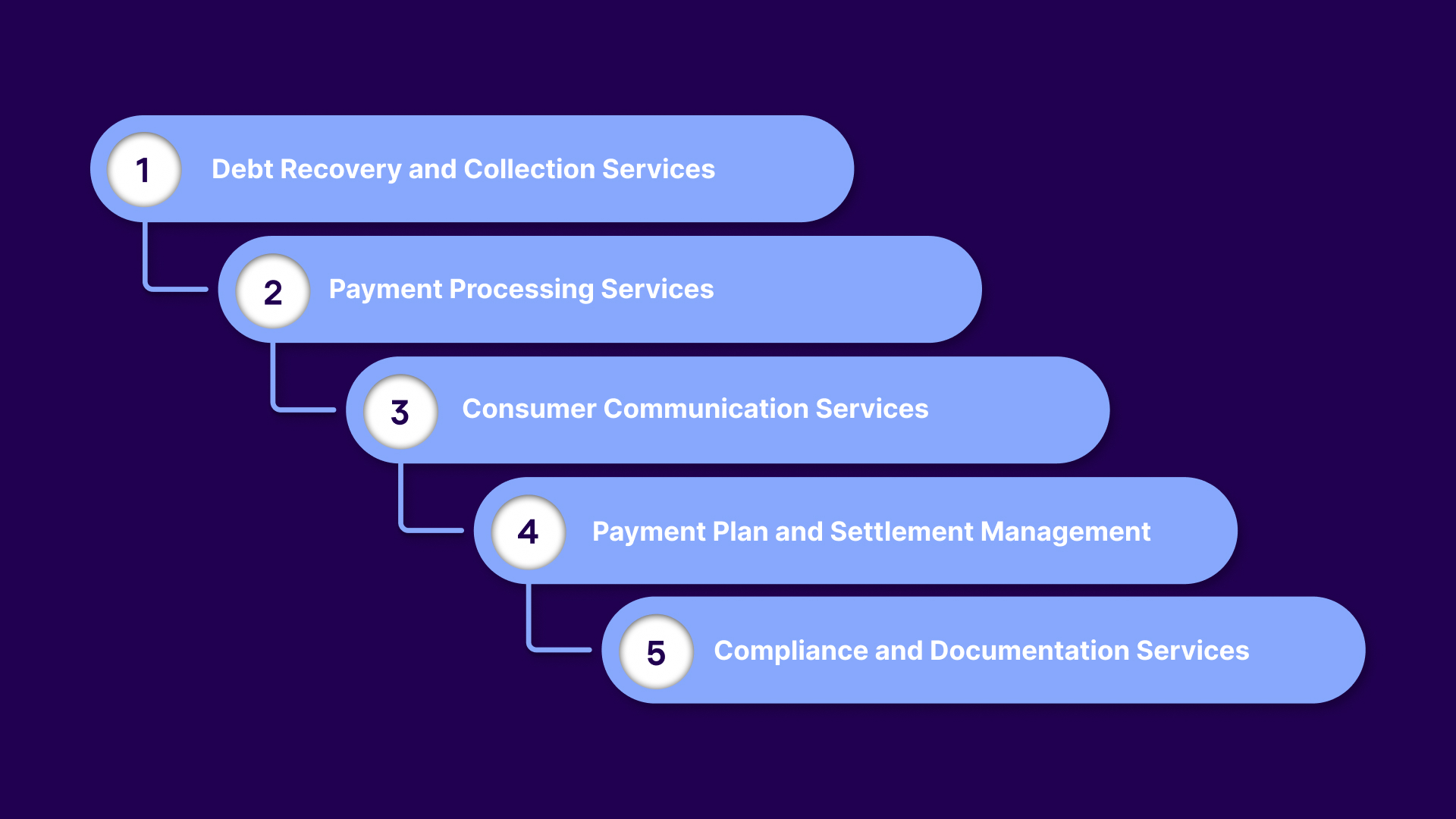
The following debt services form the basis of most collections operations:
1. Debt Recovery and Collection Services
Debt recovery services focus on contacting consumers and managing accounts with outstanding balances. Agencies use structured outreach strategies to encourage repayment while maintaining regulatory compliance.
These services typically include:
Consumer outreach through phone, email, SMS, and digital communication.
Account management for delinquent balances across assigned portfolios.
Negotiation of payment arrangements or settlement offers.
2. Payment Processing Services
Payment processing services enable agencies to securely collect payments from consumers through multiple payment channels. Modern agencies increasingly rely on digital payment infrastructure to simplify repayment and reduce friction in the payment process.
These services often include:
Secure processing of card, ACH, and digital payments.
Support for online payment portals and automated payment systems.
Transaction tracking and payment reconciliation.
3. Consumer Communication Services
Consumer communication services support the outreach strategies agencies use to engage consumers and resolve outstanding balances. Effective communication helps ensure consumers understand their account status and available payment options.
These services generally involve:
Multichannel communication through SMS, email, and phone calls.
Notification systems that inform consumers about balances or payment options.
Campaign-based outreach strategies for account engagement.
4. Payment Plan and Settlement Management
Payment plan and settlement services allow agencies to work with consumers who may not be able to repay balances immediately. Structured repayment options help consumers resolve accounts while improving overall recovery rates.
These services typically include:
Negotiation and management of installment payment plans.
Settlement offers that allow consumers to resolve balances at negotiated amounts.
Monitoring of payment plan performance and completion.
5. Compliance and Documentation Services
Compliance services help agencies maintain accurate records of account activity and consumer interactions. These processes ensure agencies meet regulatory requirements while maintaining operational transparency.
These services usually include:
Documentation of communication history and account interactions.
Storage of payment records and transaction data.
Maintenance of audit trails for regulatory compliance.
Tratta supports many of these debt services through a single digital collections platform. The system combines payment infrastructure, communication tools, and reporting capabilities that help agencies manage accounts and monitor recovery performance more efficiently. Schedule a free demo today.
How Can Agencies Service Debt More Efficiently
Agencies must coordinate communication, payment infrastructure, reporting, and operational workflows across large account portfolios. Improving efficiency often depends on adopting processes and technologies that reduce manual effort while improving visibility into recovery performance.
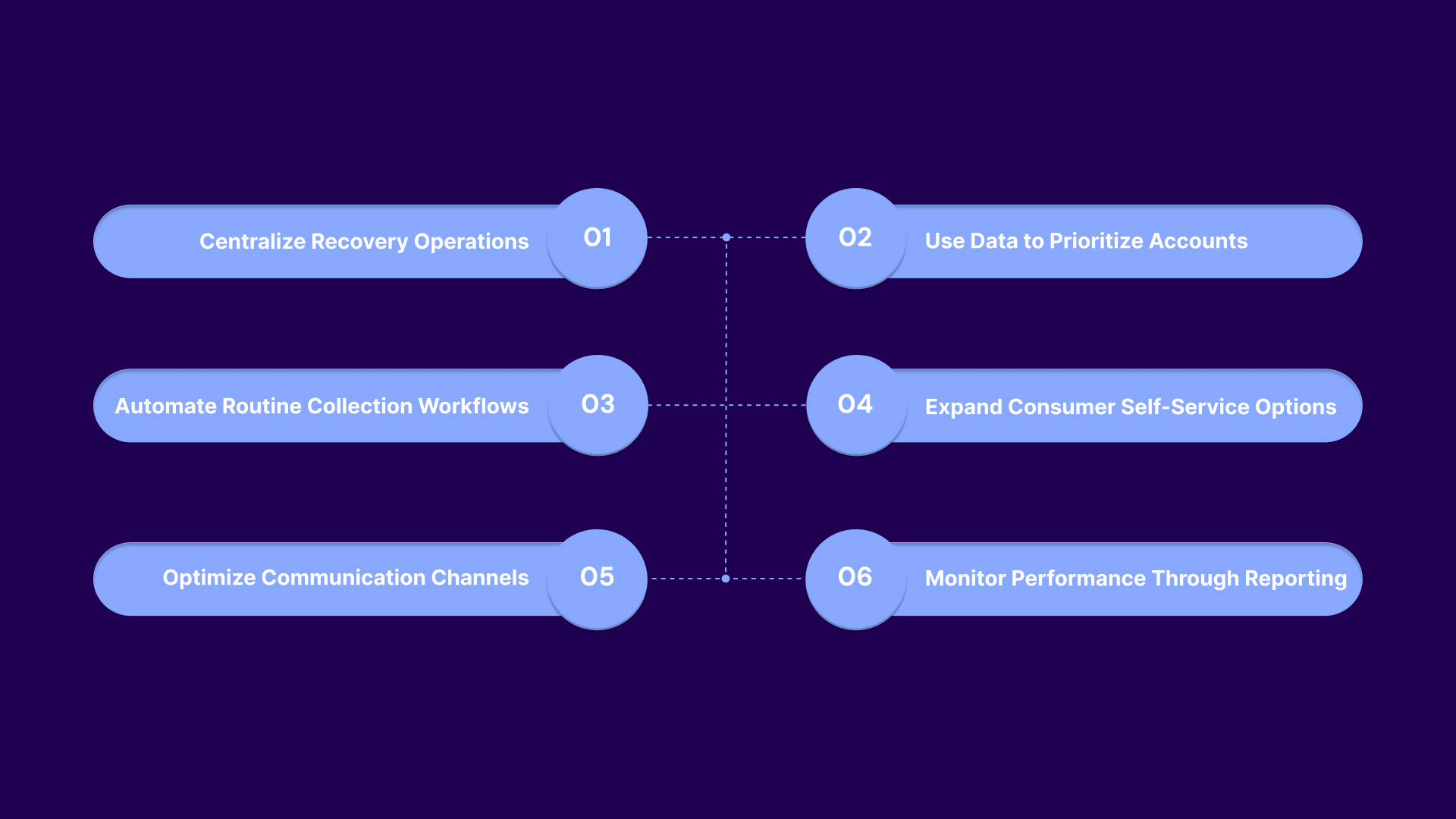
Several strategies help agencies optimize debt service operations and improve recovery outcomes:
Centralize Recovery Operations
Managing payments, communication, and account activity through a unified platform reduces operational fragmentation. Centralized systems help agencies access portfolio data, payment activity, and outreach performance from one place.
Use Data to Prioritize Accounts
Analytics and data help agencies identify accounts with higher payment probability or greater potential for faster resolution. Prioritizing these accounts allows collectors to focus effort where recovery opportunities are strongest.
Automate Routine Collection Workflows
Automation can handle repetitive tasks such as payment reminders, account notifications, and campaign scheduling. This reduces manual workload while ensuring consistent communication across large portfolios.
Expand Consumer Self-Service Options
Providing digital payment portals and automated payment systems allows consumers to resolve balances independently. Self-service options reduce inbound inquiries and accelerate payment completion.
Optimize Communication Channels
Monitoring performance across SMS, email, phone calls, and digital outreach helps agencies focus on channels that generate higher engagement and payment responses.
Monitor Performance Through Reporting
Real-time reporting and analytics allow agencies to track payment activity, campaign performance, and portfolio trends. Continuous monitoring helps teams detect issues early and refine recovery strategies.
While improving operational efficiency is important, agencies must also ensure that debt services are delivered in a way that meets regulatory requirements and protects consumers. Understanding compliance considerations is, therefore, a critical part of managing debt service operations.
Compliance Considerations for Agencies When Providing Debt Services
In the United States, several federal laws and regulations define acceptable debt collection practices and protect consumers from abusive or misleading conduct. Agencies that structure their debt services around these statutes reduce regulatory risk while maintaining transparent recovery operations.
These are a few regulations that agencies need to adhere to:
The FDCPA is the primary federal statute governing third-party debt collectors. It prohibits abusive, deceptive, or unfair collection practices and establishes clear rules around communication with consumers. For example, the statute requires collectors to send a debt validation notice within five days of initial contact and gives consumers the right to dispute the debt or request verification.
Federal law limits when and how collectors can contact consumers. Collectors generally cannot contact consumers before 8:00 a.m. or after 9:00 p.m. and must avoid contacting them at places known to be inconvenient. Collectors must also stop communication if a consumer sends a written request asking them to cease contact.
Regulation F implements the FDCPA and clarifies how collectors may communicate via modern channels, such as email, text messages, and voicemail. The rule also includes the “7-in-7” call limit, which presumes a violation if a collector places more than seven calls about a debt within seven days.
The FCRA governs how debt information can be reported to credit bureaus. Agencies must ensure that any reported debt data is accurate and up to date when disputes or corrections arise.
Tratta helps agencies maintain regulatory compliance through features such as Compliance by Code, which embeds regulatory rules directly into communication and workflow processes. This approach helps ensure that outreach activities, documentation, and payment interactions comply with requirements under laws such as the FDCPA and Regulation F. Call us to learn more.
How Can Debt Collection Services Improve Consumer Payment Resolution
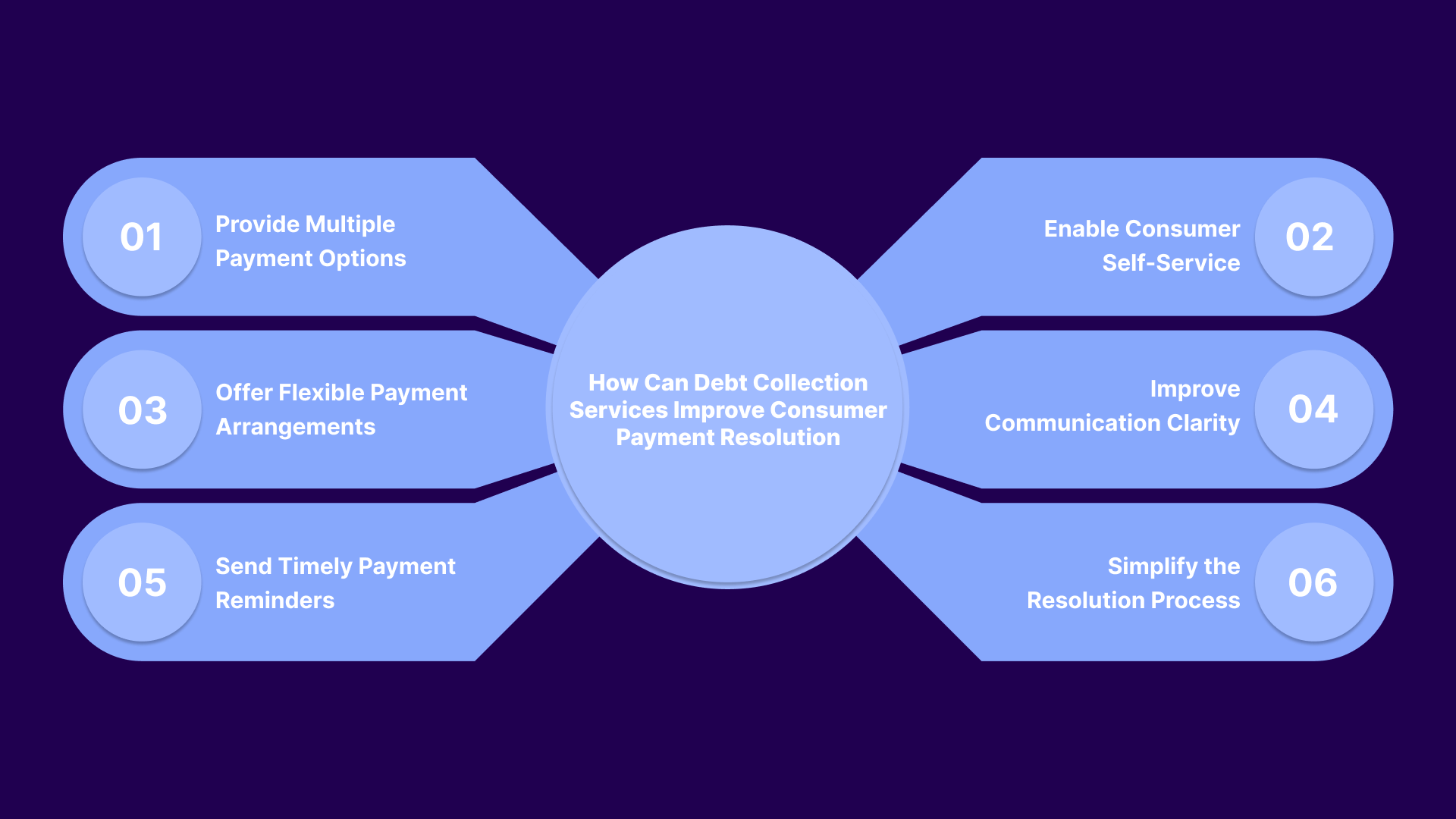
Debt collection services play a critical role in helping consumers resolve outstanding balances in a structured and manageable way. When agencies provide clear communication, flexible payment options, and accessible support, consumers are more likely to engage and complete repayment.
Several approaches help agencies improve consumer payment resolution:
Provide Multiple Payment Options: Offering card, ACH, and digital payment methods allows consumers to choose the most convenient way to repay balances.
Enable Consumer Self-Service: Online portals and automated payment systems allow consumers to review balances and make payments without waiting for direct contact.
Offer Flexible Payment Arrangements: Installment plans and settlement options help consumers resolve debts even when immediate full repayment is not possible.
Improve Communication Clarity: Clear explanations of balances, payment options, and deadlines help consumers understand how to resolve accounts.
Send Timely Payment Reminders: Automated notifications remind consumers of upcoming payments or outstanding balances, helping prevent missed payments.
Simplify the Resolution Process: Reducing friction in payment workflows encourages consumers to complete repayment quickly and efficiently.
Agencies often face operational challenges when managing multiple debt services across large portfolios. Understanding these challenges highlights where improvements in technology and workflows can make the biggest impact.
Top Challenges Agencies Face When Managing Debt Services
Managing debt services requires agencies to coordinate communication, payment processing, compliance oversight, and performance monitoring across large portfolios of accounts.
Several common operational challenges can affect the effectiveness with which agencies deliver debt services:
Fragmented Operational Systems: Many agencies rely on separate tools for communication, payment processing, and reporting. This fragmentation can create data silos and limit visibility into overall recovery performance.
Fix: Implementing integrated platforms helps consolidate operational data and streamline workflows.
Limited Visibility Into Recovery Performance: Without centralized reporting, agencies may struggle to track campaign performance, payment trends, or portfolio activity. This lack of visibility makes it difficult to identify underperforming strategies or emerging recovery opportunities.
Fix: Advanced reporting and analytics tools help agencies monitor performance more effectively.
Manual and Time-Intensive Workflows: Routine tasks such as sending reminders, managing campaigns, or generating reports often require manual effort. These processes can slow operations and reduce collector productivity.
Fix: Workflow automation can help reduce manual workload and improve operational consistency.
Communication Channel Complexity: Managing outreach across phone, email, SMS, and digital channels can become difficult without structured systems. Inconsistent communication tracking may also create compliance risks.
Fix: Omnichannel communication platforms help agencies coordinate outreach more effectively.
Maintaining Regulatory Compliance: Debt services must follow strict legal requirements governing consumer communication and recordkeeping. Ensuring that all interactions remain compliant can be challenging when processes are not standardized.
Fix: Compliance-driven workflows and documentation tools help agencies manage these requirements.
Addressing these challenges often requires agencies to adopt technology designed specifically for collections operations. Using the right technology can help agencies centralize operations, improve visibility, and streamline the delivery of debt services across portfolios.
How Tratta Supports Debt Services for Collection Agencies
Tratta is a digital collections platform designed to help agencies manage communication, payments, compliance, and reporting within a unified system. Agencies can centralize key debt service operations, including outreach campaigns, payment processing, consumer interactions, and performance monitoring.
It supports contemporary debt services through:
Consumer Self-Service Payment Portal: This portal allows consumers to securely view balances, review payment history, and resolve accounts independently. Self-service tools reduce agent workload while improving payment completion and consumer engagement.
Payments and Merchant Services: Tratta processes secure ACH, card, and digital payments within a unified payment infrastructure. Integrated payment handling simplifies reconciliation and helps agencies collect payments faster.
Multilingual Payment IVR: This feature allows consumers to interact with automated payment systems in multiple languages. Multilingual IVR improves accessibility and makes it easier for consumers to complete payments without agent assistance.
Omnichannel Communications: Agencies can reach consumers through multiple channels, including SMS, email, and phone. Centralized communication ensures consistent messaging and better engagement across outreach campaigns.
Campaign Management: Campaign tools allow agencies to segment accounts, automate outreach, and schedule communication workflows. These campaigns help agencies scale engagement while targeting accounts with tailored recovery strategies.
Reporting and Analytics: Real-time dashboards track payments, interactions, and recovery performance across the entire collections lifecycle. These analytics help agencies identify successful strategies and refine recovery operations.
Customization and Flexibility: The platform allows administrators to configure policies, messaging, and workflows to match agency operations. Flexible configuration ensures the system adapts to different portfolio requirements and collection strategies.
Integrations: REST API integrations allow Tratta to connect with existing case management systems and operational tools. These integrations synchronize data across platforms and eliminate manual data transfer.
Security and Compliance: Built-in security controls protect sensitive consumer information and support regulatory compliance requirements. The platform includes encryption, secure access controls, and monitoring to safeguard payment and account data.
Contact Center: The integrated contact center centralizes agent-consumer messaging, ticketing, and interaction tracking. This ensures all communication is documented and easily accessible for operational oversight and audit readiness.
The platform brings together the systems that collectors rely on every day, making it easier to manage accounts, monitor performance, and maintain compliance. For agencies looking to modernize debt services, Tratta provides the operational visibility and flexibility needed to scale recovery efforts effectively.
Conclusion
When debt services are managed through disconnected tools or inconsistent workflows, agencies risk losing visibility into how accounts move through the recovery process. Payments may be delayed, communication can become inconsistent, and operational inefficiencies can quietly reduce recovery performance.
Tratta helps agencies avoid these challenges by bringing together payment infrastructure, communication systems, and operational oversight on a single platform. This environment helps teams manage debt services with greater clarity while maintaining consistent processes across portfolios.
If your agency is evaluating ways to modernize debt service delivery, the right platform can make a significant difference. Explore how Tratta helps agencies simplify operations while maintaining visibility into performance. Schedule a call today.
Frequently Asked Questions
1. What does service debt mean?
Servicing debt refers to the process of managing and resolving outstanding balances through communication, payment processing, and account management. For collection agencies, debt servicing typically involves contacting consumers, facilitating payments, monitoring repayment plans, and maintaining account records.
2. What are four common types of consumer debt?
Four common categories of consumer debt include credit card debt, auto loans, student loans, and medical debt. These debts differ in terms of repayment structures, interest rates, and regulatory considerations that agencies must manage during the recovery process.
3. What two debts cannot be erased through bankruptcy?
Certain debts are generally not dischargeable in bankruptcy, including most student loans and certain tax obligations. These debts typically remain legally enforceable even after bankruptcy proceedings unless specific legal exceptions apply.
4. How do agencies service debt effectively?
Agencies service debt by managing communication with consumers, facilitating payments, offering repayment options, and maintaining compliance with applicable regulations. Structured workflows and digital tools help agencies manage these activities more efficiently.
5. What technologies help agencies deliver debt services more efficiently?
Modern collections platforms support debt services through digital payment systems, communication tools, reporting analytics, and compliance tracking. These technologies help agencies coordinate recovery operations across large portfolios of accounts.
Note: This information is not legal advice. Tratta recommends that you consult with your legal counsel to make sure that you comply with applicable laws in connection with your collection and outreach activities.
Sign up for our monthly newsletter
Debt collection insights that keep you compliant and competitive.
Thank you! Your submission has been received!
Oops! Something went wrong while submitting the form.


.jpg)