Third-party collection agencies tend to sit on large amounts of account, payment, communication, and performance data but struggle to turn it into meaningful action. Without clear insights, teams can spend valuable time on low-priority accounts, miss recovery opportunities, and make decisions based on assumptions rather than evidence.
The impact can be significant. McKinsey found that analytics-driven collection strategies can reduce charge-offs by 10% to 20% through better account treatment and settlement decisions.
In this article, we explore data driven collections insights, the components behind effective collection analytics, and seven practical strategies agencies can use to improve debt recovery performance.
Brief look:
Data-driven collection insights are actionable findings derived from collection data, including account activity, payment history, communication outcomes, collector performance, and recovery trends. Unlike standard reports that simply show what happened, these insights help agencies understand why outcomes occur and what actions may improve future performance.
These insights help collection agencies:
Or, as FICO puts it:
The collection industry is experiencing fundamental transformation as data-driven strategies replace traditional intuition-based approaches. Organizations embracing analytical frameworks, optimization technologies, and customer-centric digital engagement are creating sustainable competitive advantages that extend far beyond simple recovery rate improvements.
The value of collection insights depends on the quality of the data, processes, and systems behind them. In the next section, we will examine the core components that make an analytics-based debt collections program effective.
Suggested Read: Data Analytics in Enhancing Debt Collection Strategies
Effective collection insights do not come from reporting alone. They are created when agencies combine quality data, performance measurement, operational visibility, and decision-making processes into a structured analytics program.
The following components help turn raw information into actions that support better recovery outcomes:
Tratta supports these components through configurable reporting, portfolio visibility, campaign performance tracking, workflow monitoring, and centralized account management capabilities. Agencies can gain more actionable insights without relying on multiple disconnected reporting systems. Schedule a free demo.
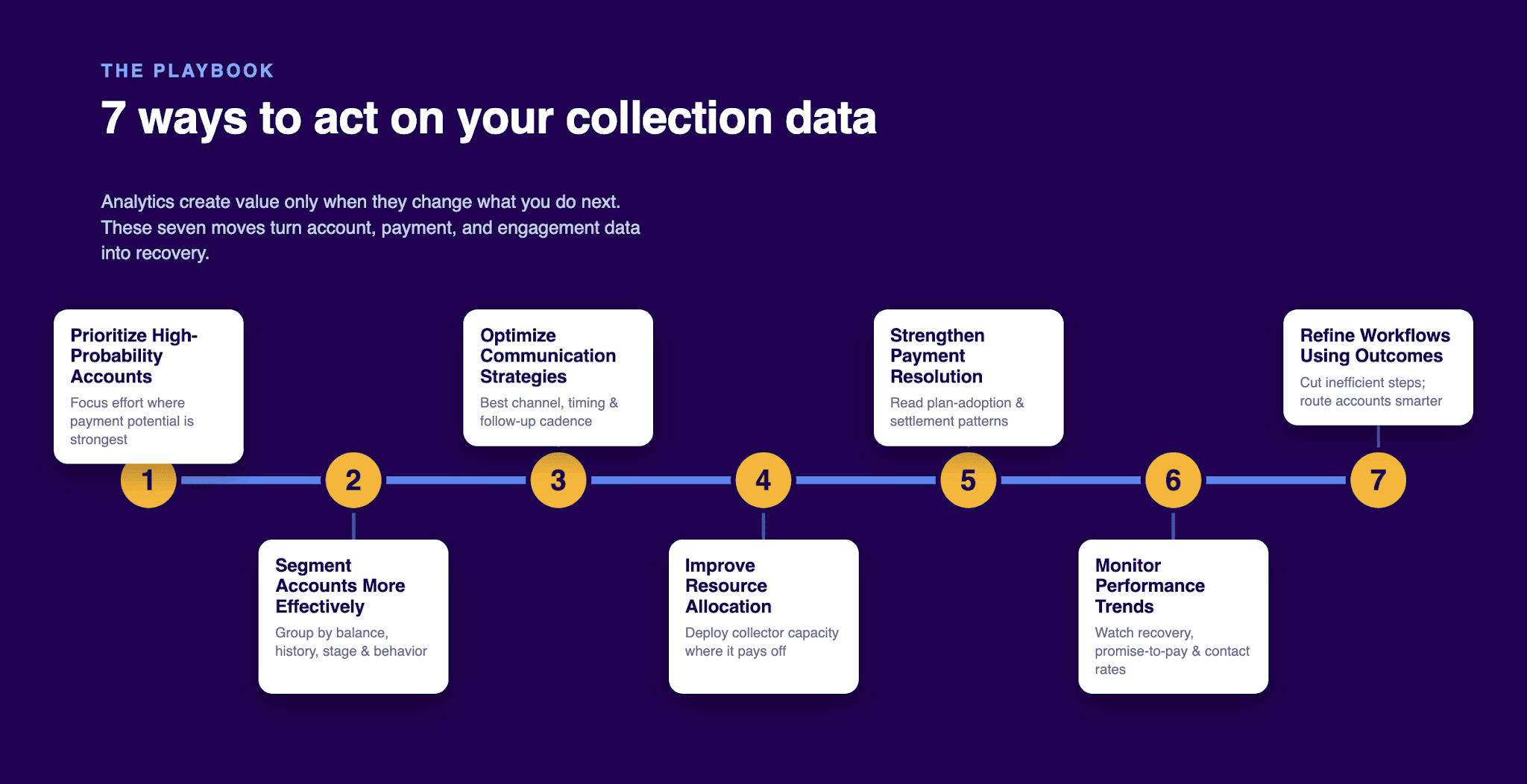
Collection analytics create value only when agencies use them to influence operational decisions. The most successful organizations use insights to guide account treatment, resource allocation, communication strategies, and workflow optimization rather than simply tracking performance metrics.
These strategies are explained better below:
Not all accounts have the same likelihood of resolution. Analytics can help agencies identify where collector effort is most likely to generate results.
Use insights to:
McKinsey found that advanced self-cure identification models can increase collector capacity by 5% to 10% by helping agencies focus effort on accounts that require intervention.
Different account groups often respond to different collection approaches. Segmentation helps agencies move beyond one-size-fits-all treatment strategies.
Analytics can support segmentation based on:
Communication performance data can reveal which outreach approaches produce better engagement. Agencies can use these findings to refine collection efforts.
Evaluate factors such as:
Analytics can help managers identify where staffing and operational resources generate the greatest impact. This supports more efficient deployment of collector capacity.
Insights may reveal:
Payment activity often contains valuable information about consumer behavior and resolution preferences. Agencies can use this data to refine recovery approaches.
Look for trends involving:
Collection performance can change over time due to portfolio shifts, economic conditions, and operational factors. Continuous monitoring helps agencies respond more quickly.
Track trends related to:
Historical performance data can help agencies identify which processes contribute to stronger results. Workflow optimization becomes more effective when guided by evidence rather than assumptions.
Use outcomes data to:
The most effective collection programs treat analytics as an ongoing process rather than a one-time project. In the next section, we will examine the stages of a data-driven collections process in third-party operations and how insights move from raw data to recovery actions.
Suggested Read: Machine Learning Tools for Customer Risk Assessment in Collections
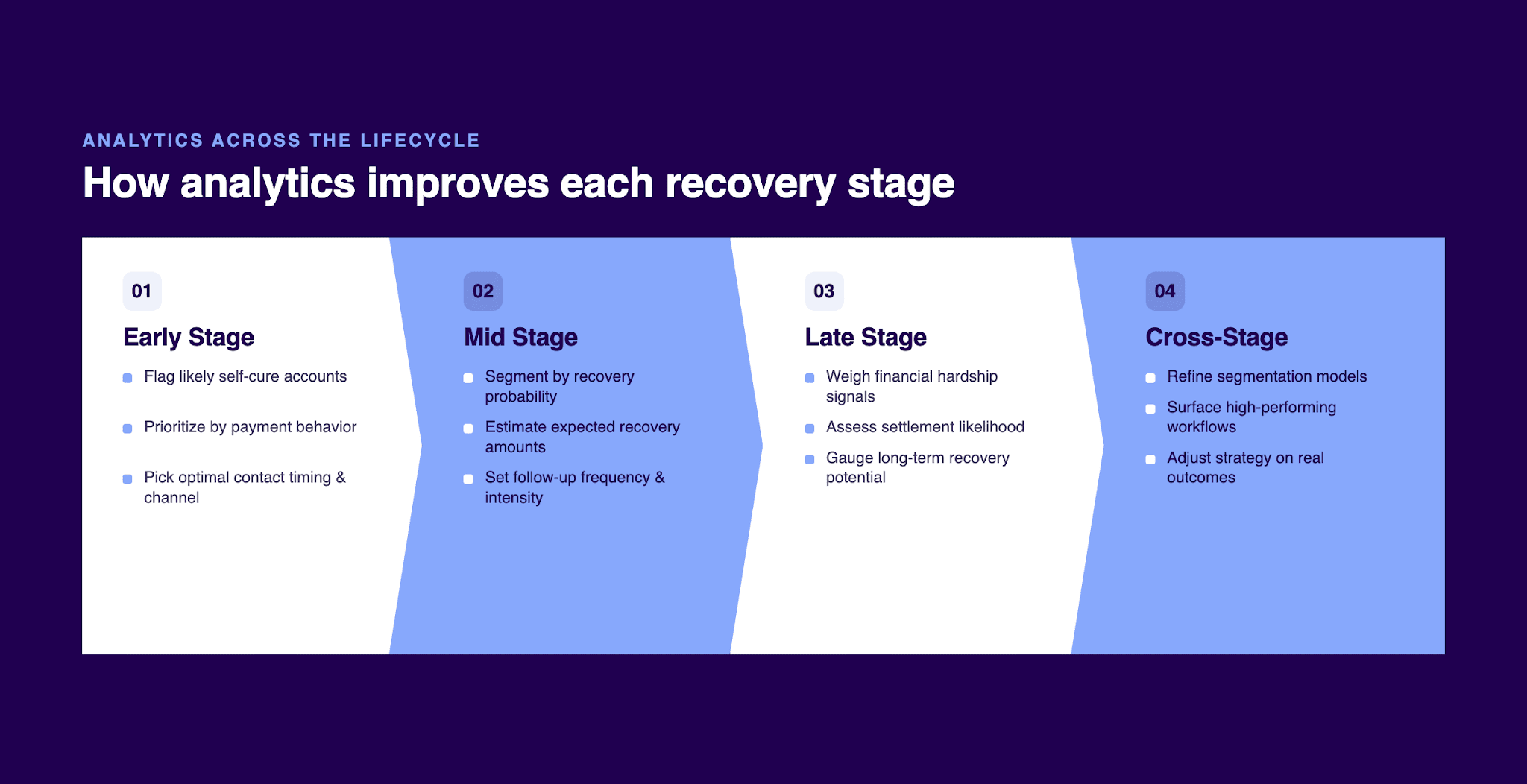
Most third-party collection operations move through four key stages where analytics can influence decisions and improve outcomes.
Debt collection data insights help in the following ways:
Analytics can support early-stage collections by helping agencies:
Collection analytics can help agencies:
Many agencies use measures such as risk scores and collection scores to support these decisions. More advanced segmentation strategies can also improve settlement decision-making and account treatment approaches.
Analytics can help agencies evaluate:
Agencies can use cross-stage insights to:
Effective collection analytics depend on having access to reliable operational data across every stage of recovery.
Tratta helps agencies gain visibility into portfolio performance, account activity, campaign results, and recovery trends through centralized reporting capabilities that support more informed decision-making. Call us to learn more.
Collection agencies collect large amounts of operational data but struggle to translate that information into day-to-day recovery decisions. Agencies must establish processes that connect insights directly to account treatment strategies, resource allocation, and workflow execution.
You can implement a collection analytics policy with:
1. Audit Existing Data Sources
Identify where collection data currently resides, including collection software, payment systems, communication platforms, client feeds, and reporting tools. Understanding the data landscape is the first step toward building a reliable analytics program.
2. Establish Consistent Performance Metrics
Define the KPIs that will be used across portfolios, teams, and reporting processes. Consistent measurement helps ensure insights are actionable and comparable over time.
3. Create Data Governance Standards
Establish clear processes for data quality, ownership, validation, and reporting. Reliable insights depend on accurate and consistent information.
4. Integrate Insights Into Daily Workflows
Ensure analytics influence account prioritization, segmentation, outreach strategies, collector activities, and management decisions rather than existing solely within reports.
5. Build a Continuous Improvement Process
Regularly review outcomes, validate assumptions, and refine collection strategies based on performance trends. Analytics should support an ongoing cycle of measurement, action, and optimization.
The greatest value comes when insights influence real recovery outcomes. In the next section, we will explore practical examples of how collection agencies apply data-driven insights to address common collection challenges and improve recovery performance.
Suggested Read: API Connectivity for Debt Collection Insights
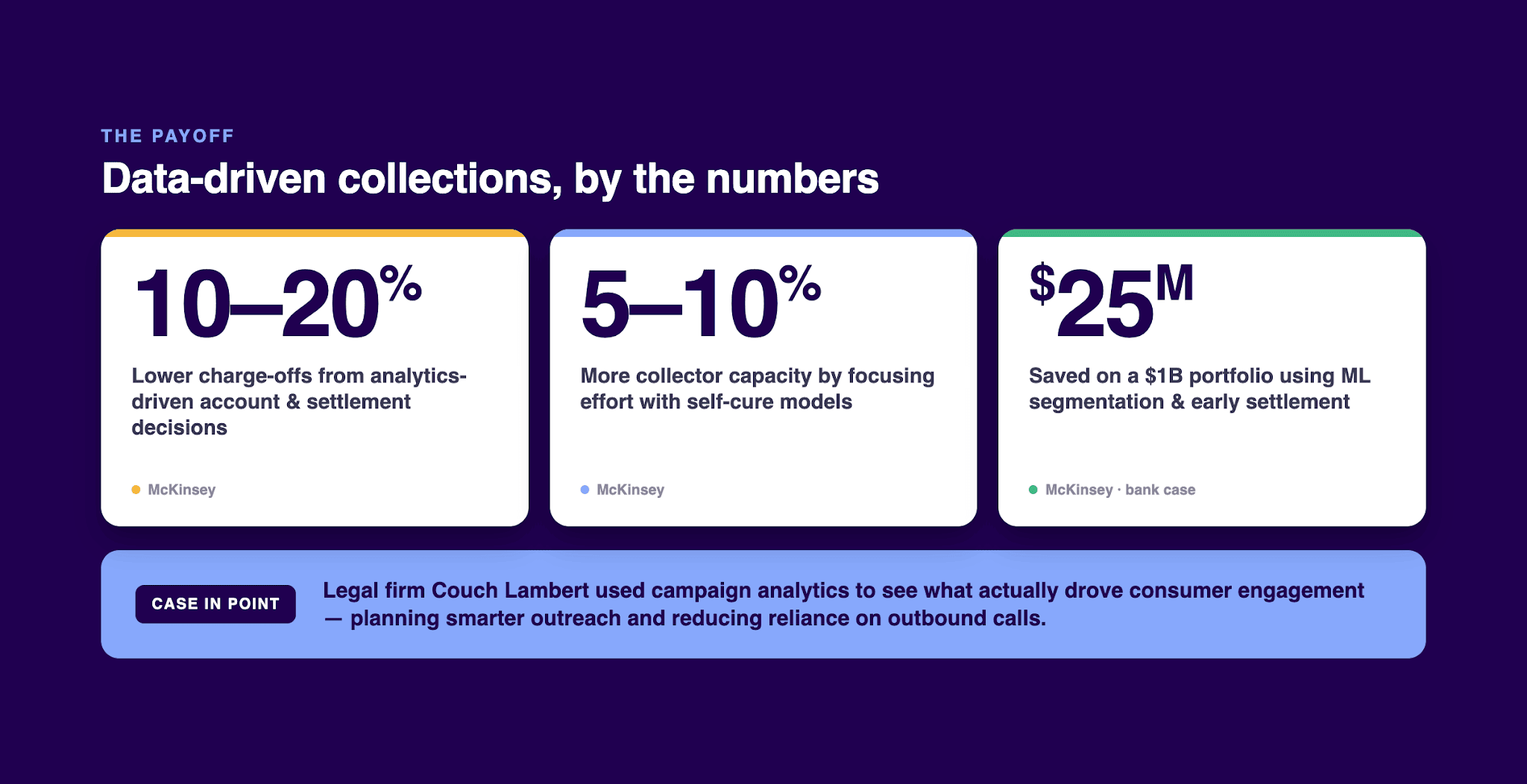
The value of collection analytics becomes clearer when insights are applied to real operational challenges. The following examples illustrate how organizations have used data, segmentation, reporting, and performance analysis to improve recovery outcomes and operational efficiency.
Legal collections firm Couch Lambert wanted greater visibility into how consumers interacted with digital outreach efforts. By using data from compliant email campaigns and tracking which messages generated engagement, the firm gained a better understanding of what drove consumer action and payment activity.
The results included:
This demonstrates how campaign-level analytics can help agencies refine communication strategies rather than relying on assumptions about consumer behavior.
A leading North American bank implemented machine-learning models to identify self-cure customers and determine which delinquent accounts were most suitable for early settlement offers. Rather than relying on static delinquency classifications, the bank used analytics to support more targeted account treatment decisions.
The initiative helped the organization:
According to McKinsey, these analytics initiatives helped the bank save approximately $25 million on a $1 billion portfolio.
These examples highlight a common theme: collection data creates value when it influences operational decisions. In the next section, we will examine the features agencies should assess when selecting data-driven collection software.
The effectiveness of a collection analytics program depends heavily on the technology supporting it. The right platform should not only generate insights but also help agencies act on those insights through reporting, segmentation, consumer engagement, and operational visibility.
When assessing collection software, look for capabilities such as:
Data only becomes valuable when it influences recovery decisions. Many collection platforms tell you what happened.
Tratta helps agencies understand why it happened and where the next recovery opportunity exists. With visibility into consumer behavior, campaign performance, payment activity, and portfolio trends, teams can make faster adjustments and continuously improve collection outcomes.
Without a structured approach to collection analytics, agencies can struggle to identify recovery opportunities, allocate resources effectively, and adapt strategies as portfolio conditions change. Valuable operational data often remains trapped in reports, leading to missed insights, inefficient workflows, and decisions based on intuition rather than performance evidence.
Tratta helps agencies turn collection data into operational action. By connecting consumer activity, recovery outcomes, portfolio performance, and engagement trends within a single recovery ecosystem, agencies can uncover actionable insights that support smarter decisions and continuous performance improvement.
Explore how better visibility into recovery performance can support stronger collection results. Schedule a free demo today.
Data-driven collections insights are actionable findings derived from account activity, payment behaviour, communication outcomes, and recovery performance data. Collection agencies use these insights to improve decision-making, prioritize accounts, and optimize recovery strategies.
Collections data insights help agencies identify high-potential accounts, refine outreach strategies, improve segmentation, and allocate collector resources more effectively. These actions can lead to stronger recovery performance and better operational efficiency.
Common collection analytics metrics include recovery rate, promise-to-pay rate, payment conversion rate, right-party contact rate, collector productivity, and average resolution time. The most valuable metrics are those directly tied to recovery outcomes.
Most agencies benefit from reviewing key performance metrics regularly, with many monitoring operational data daily and conducting broader performance reviews weekly or monthly. Frequent analysis helps identify trends and opportunities before they impact results.
Reporting focuses on presenting historical performance data, while analytics examines that data to identify patterns, trends, and opportunities for improvement. Analytics helps agencies understand why outcomes occur and what actions may improve future recovery performance.