
Debt collection agencies are dealing with growing account volumes, strict compliance requirements, and inefficient manual processes. These challenges make it harder to maintain recovery rates while controlling operational costs.
The demand for better technology is rising quickly. The debt collection software market is projected to grow at a CAGR of 8.8% from 2024 to 2029.
This shift is pushing organizations to invest in accounts receivable solutions that automate workflows and simplify payments. In this guide, we review 15 AR software solutions and compare their features, compliance safeguards, and recovery performance to help agencies choose the right fit.
According to the Federal Reserve Bank of New York, U.S. household debt reached $18.80 trillion in 2025. Larger portfolios mean more accounts to track, more consumers to contact, and greater compliance risk. Agencies relying on spreadsheets, disconnected systems, or manual outreach quickly fall behind.
Accounts receivable software helps collection teams manage scale, reduce risk, and improve payment outcomes. Key reasons agencies invest in these platforms include:
With these benefits in mind, it becomes easier to evaluate which platforms actually deliver value. The next section compares the top AR software solutions for agencies and how they stack up.
Suggested Read: Main Benefits of Accounts Receivable Automation
Before comparing individual platforms in detail, it helps to look at how they stack up across the features that matter most in accounts receivable operations. Agencies typically evaluate software based on how effectively it supports payments, automation, portfolio oversight, analytics, and integrations with existing systems.
The table below provides a quick snapshot of where leading platforms stand across these areas:
The next section looks at each solution in more detail to help you understand where it fits within modern accounts receivable operations.
Suggested Read: Solving Common Accounts Receivable Challenges and Problems
Many solutions used in accounts receivable environments originate from accounts receivable management (ARM) and collections technology. In practice, agencies rely on these platforms to manage delinquent receivables, track payments, automate workflows, and monitor recovery performance.
Below are some of the top AR software solutions used by collection agencies in 2026, starting with one of the most useful platforms in the industry.

Tratta is an accounts receivable and debt recovery platform designed to help agencies manage outstanding balances, automate payment workflows, and improve performance. It gives teams better visibility into receivables while making it easier for account holders to resolve balances digitally.
Best For: Collection agencies that want to improve receivable recovery through automation, digital payments, and structured engagement workflows.
Standout Features:
Limitations: Tratta focuses primarily on receivable recovery and payment resolution rather than early-stage invoicing or billing. Agencies typically integrate it with their existing infrastructure to support the full accounts receivable lifecycle.
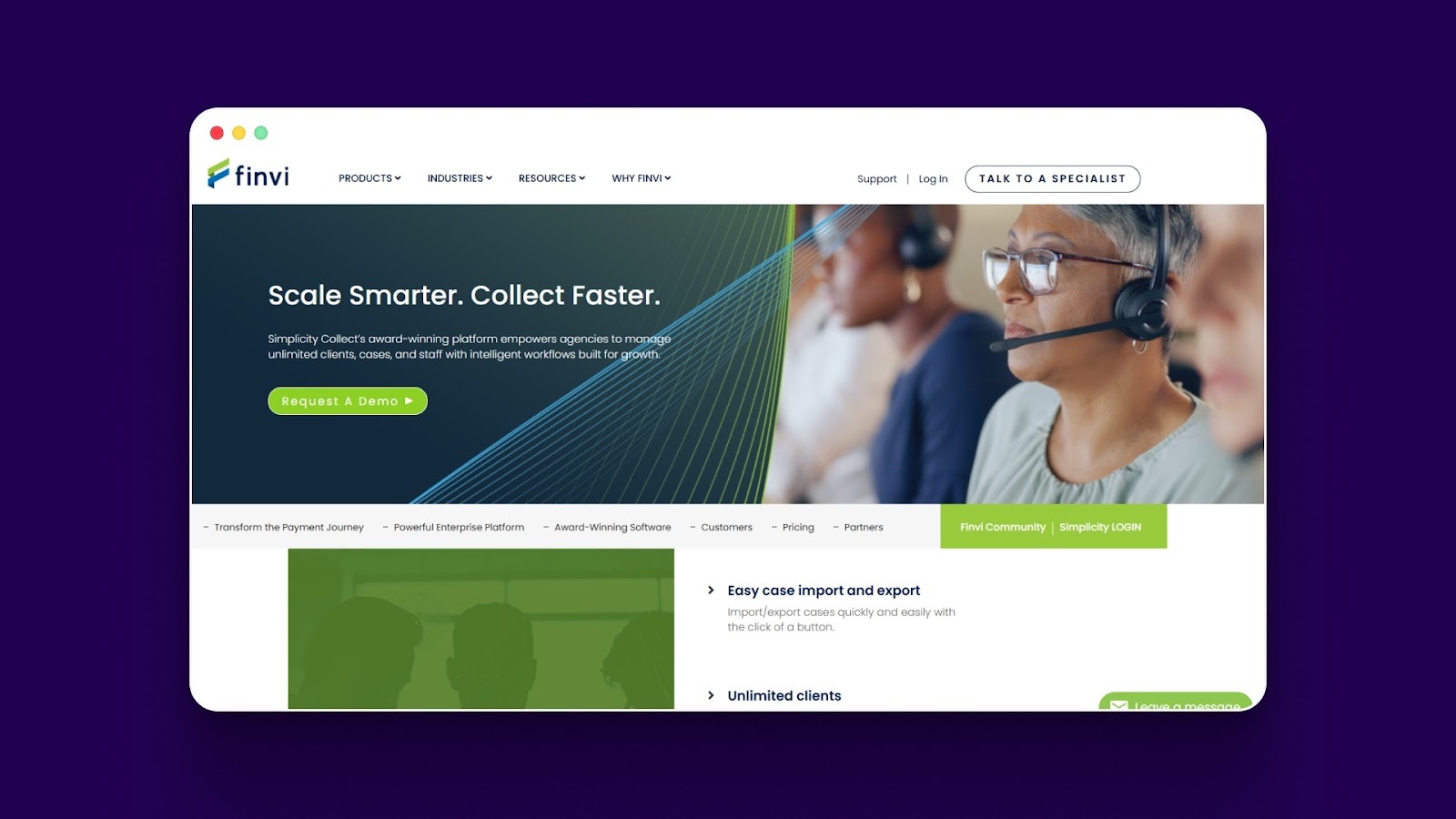
SimplicityCollect is a cloud-based accounts receivable and collections management platform built for agencies that need a straightforward system to track accounts, process payments, and manage recovery activity. Its focus is on keeping receivables organized while giving teams practical tools to monitor balances and payment activity.
Best For: Small to mid-size collection agencies that want a practical AR and collections platform without the complexity of enterprise systems.
Standout Features:
Limitations: SimplicityCollect focuses on core receivables and collections management rather than advanced analytics or large-scale AR automation found in newer platforms. Agencies with complex digital engagement strategies may need additional tools alongside them.
Collect! is a long-standing accounts receivable and collection management platform used by agencies to track accounts, manage recovery workflows, and process payments. The system helps teams organize large portfolios and monitor payment activity from a single platform.
Best For: Collection agencies seeking a proven receivables management system capable of handling high-volume accounts.
Standout Features:
Limitations: Collect! is known for reliability, but follows a more traditional collections software model. Agencies seeking highly modern digital payment experiences may require additional integrations.
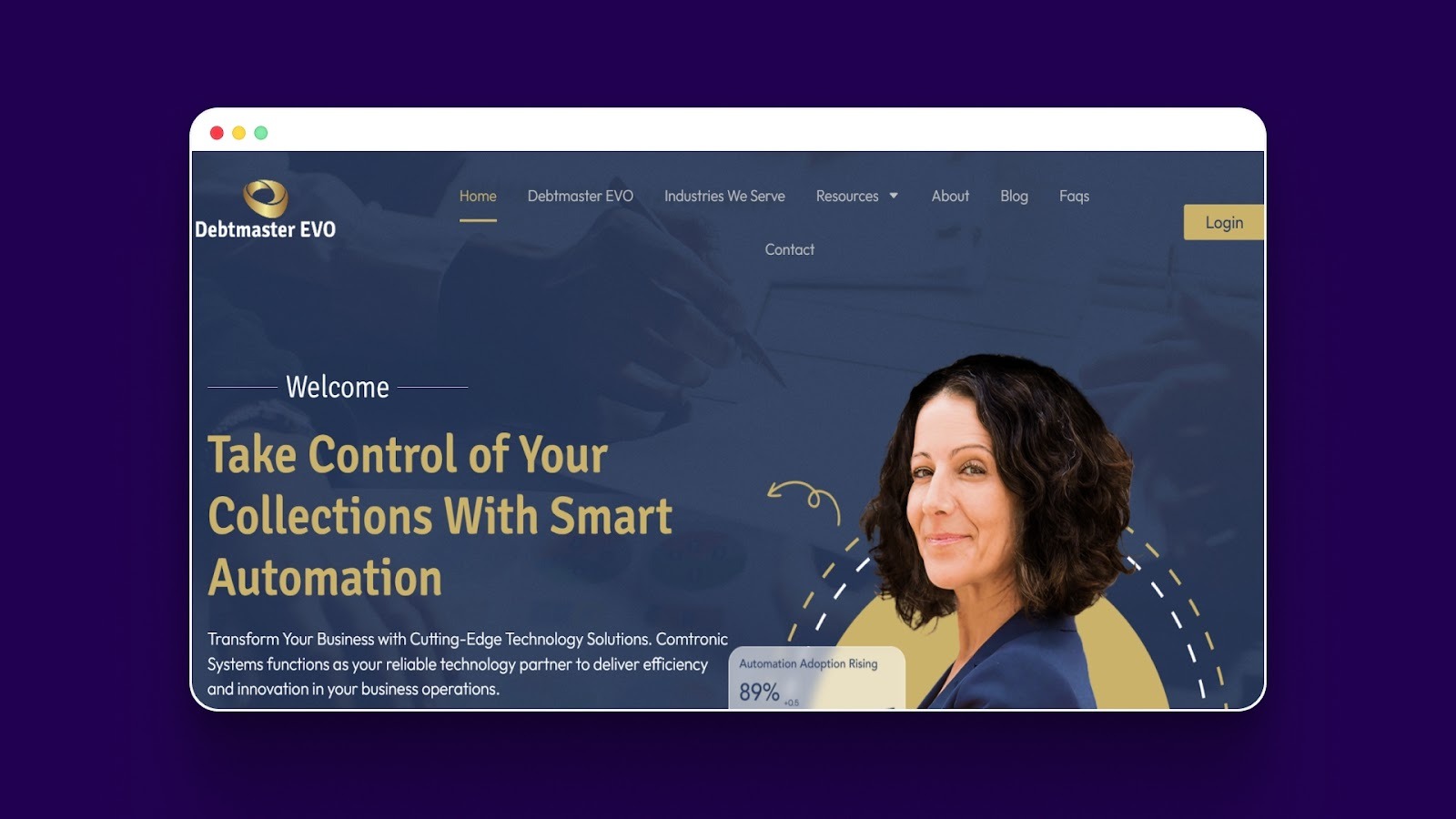
DebtMaster is an accounts receivable management platform designed to help agencies organize portfolios, automate workflows, and improve recovery outcomes. The platform provides tools to manage accounts, communicate with debtors, and monitor payment activity.
Best For: Agencies that want a scalable AR platform with strong operational controls.
Standout Features:
Limitations: DebtMaster is built for operational depth, which may require a structured implementation process. Agencies focused heavily on digital self-service may supplement it with specialized engagement tools.
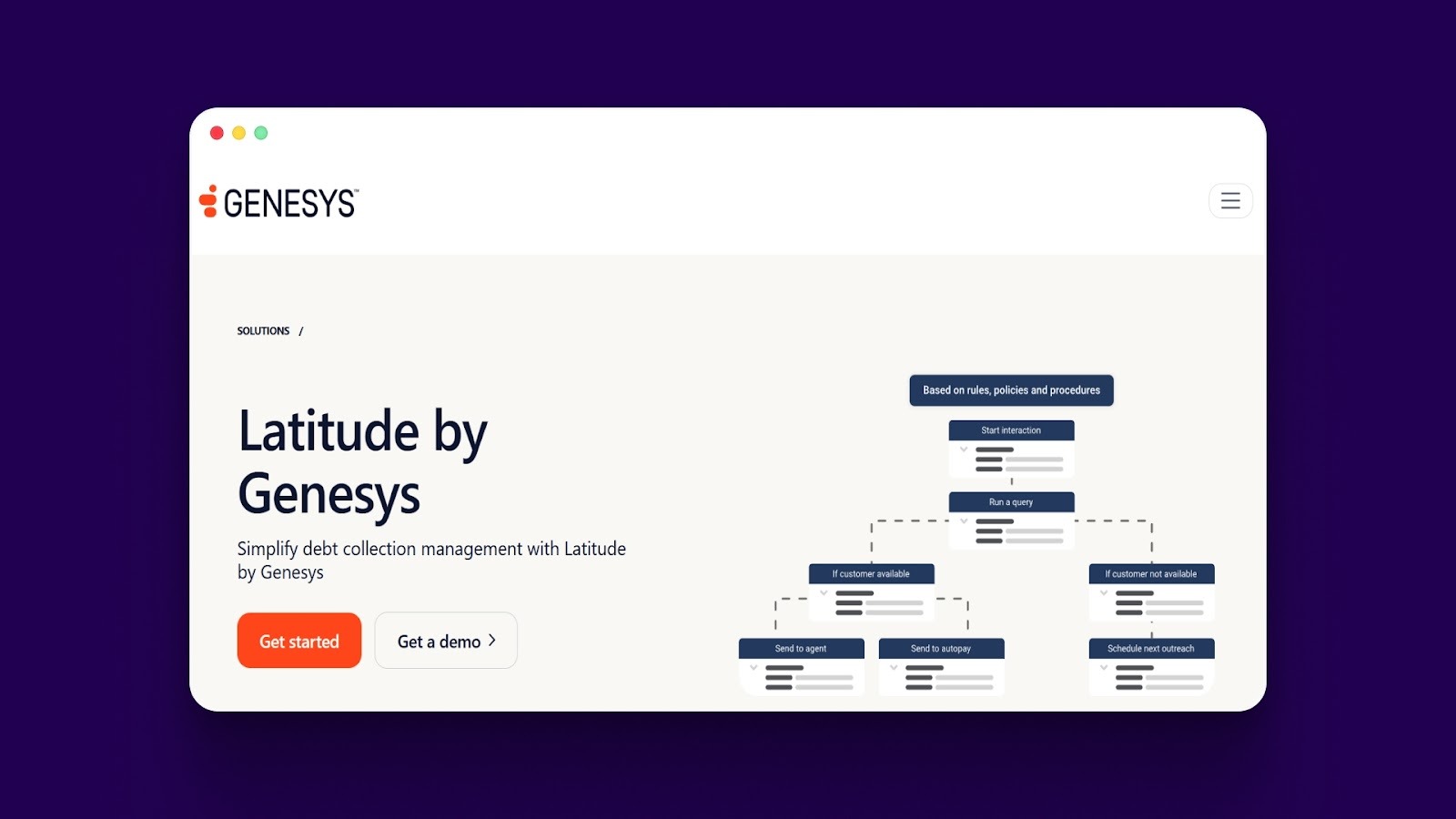
Latitude by Genesys is an enterprise accounts receivable and collections management platform used by creditors, agencies, and debt buyers. It helps organizations manage delinquent accounts, automate workflows, and gain visibility into recovery performance.
Best For: Large agencies or enterprises managing complex receivables portfolios.
Standout Features:
Limitations: Latitude is designed for large-scale operations and may require more configuration than smaller agencies expect. Implementation typically involves aligning workflows with the platform’s capabilities.
C&R Software provides enterprise collections and receivables management technology used by financial institutions and large recovery teams. The platform focuses on helping organizations manage complex portfolios while maintaining compliance and operational control.
Best For: Financial institutions and large collection operations that manage high-volume receivables.
Standout Features:
Limitations: C&R Software is typically implemented within larger enterprise environments. Smaller agencies may find the platform more robust than necessary for their needs.

InterProse ACE is a web-based accounts receivable and debt collection platform built for the ARM industry. The system focuses on automation, integrations, and tools that help agencies manage accounts and accelerate payments.
Best For: Agencies that want a modern, web-based AR and collections platform.
Standout Features:
Limitations: Because ACE offers advanced automation capabilities, agencies may need time to fully configure workflows. Once implemented, however, the platform supports significant operational efficiency.

JST CollectMax is a collection management platform designed to help agencies manage receivables, monitor accounts, and process payments. The system focuses on keeping account data organized while improving operational visibility.
Best For: Collection agencies looking for a structured AR management platform with operational reporting.
Standout Features:
Limitations: JST CollectMax emphasizes core receivables management functions rather than advanced digital engagement features. Agencies seeking modern consumer payment experiences may integrate additional tools.
Quantrax provides an intelligent receivables and collections management platform designed to help agencies automate account handling and improve recovery efficiency. Its RMEx system focuses on workflow automation, analytics, and operational control across receivable portfolios.
Best For: Collection agencies that rely heavily on performance tracking and automated collection workflows.
Standout Features:
Limitations: Quantrax follows a more traditional collections-system architecture. Agencies prioritizing digital consumer payment experiences may integrate additional engagement tools.
Kuhlekt is a cloud-based receivables and collections platform designed to help organizations manage overdue accounts, automate workflows, and improve payment recovery. The platform emphasizes automation and operational visibility for finance and recovery teams.
Best For: Organizations looking for a modern platform to manage receivable collections and streamline recovery workflows.
Standout Features:
Limitations: Kuhlekt is designed as a flexible platform that often integrates with existing financial systems. Organizations may configure the platform extensively to align with internal processes.

Codix iMX is an enterprise accounts receivable management and debt collection platform used by financial institutions and recovery teams worldwide. The system uses event-driven workflows and expert-system rules to manage collection processes across multiple stages.
Best For: Large organizations and agencies managing complex receivable portfolios and legal recovery processes.
Standout Features:
Limitations: iMX is designed for large-scale operations and complex workflows. Smaller agencies may require time to configure the system for their needs.
Katabat is a digital collections and accounts receivable management platform designed for financial institutions and collection organizations. The platform focuses on automation, decisioning, and improving engagement across the collections lifecycle.
Best For: Agencies and lenders that want to automate receivables management while improving recovery strategies.
Standout Features:
Limitations: Katabat is commonly implemented within financial institutions and large recovery operations. Smaller agencies may adopt only selected capabilities depending on operational needs.
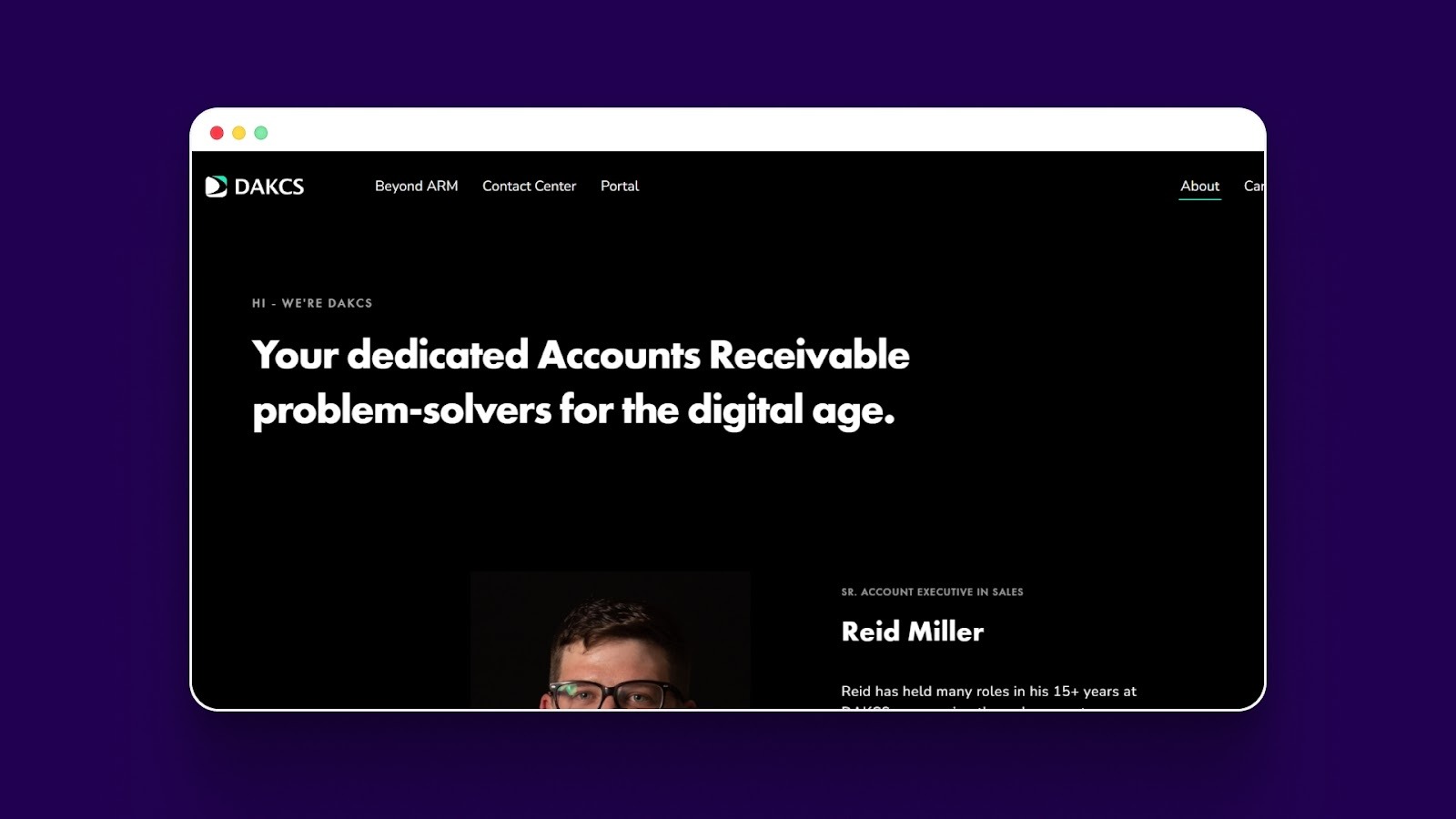
DAKCS is a collections management platform built specifically for collection organizations and recovery teams. The platform focuses on portfolio management, automation, and tools that help agencies monitor accounts throughout the recovery lifecycle.
Best For: Collection organizations that want a purpose-built collections management system to manage accounts and recovery workflows.
Standout Features:
Limitations: DAKCS focuses primarily on operational portfolio management. Agencies seeking advanced digital payment experiences may integrate additional engagement tools.

Debtrak is a collections management platform used by collection organizations and recovery teams to manage debtor accounts, automate workflows, and monitor repayment activity. The platform helps agencies organize receivable portfolios while maintaining visibility into collection operations.
Best For: Collection organizations that want a structured platform to manage debtor accounts and recovery workflows.
Standout Features:
Limitations: Debtrak focuses primarily on operational account management rather than advanced analytics or digital engagement capabilities.
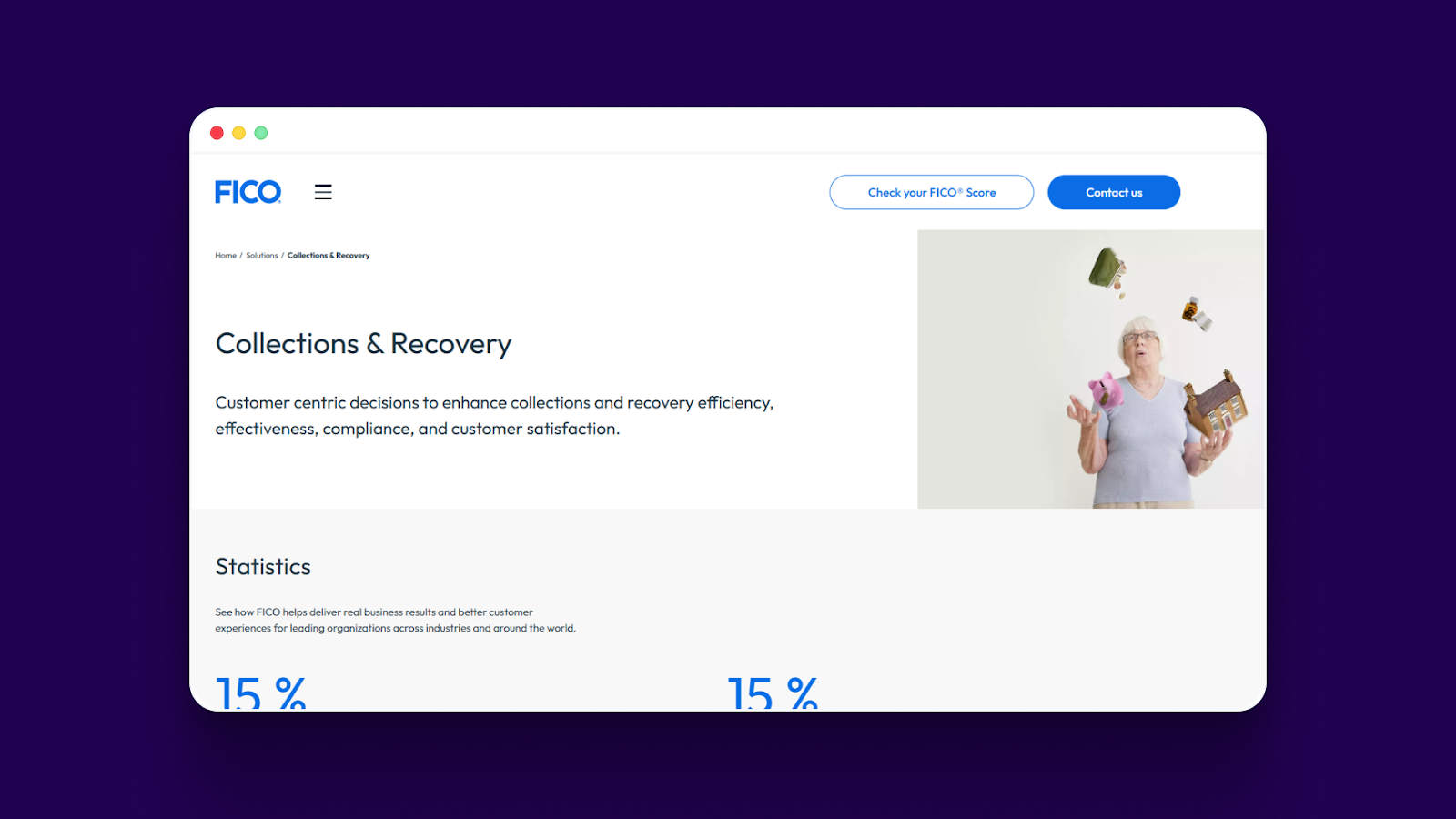
FICO Debt Manager is a collections and receivables management platform to manage delinquent accounts, automate recovery strategies, and monitor repayment performance. The platform focuses on analytics-driven decisioning and workflow automation across the collections lifecycle.
Best For: Collection organizations and financial institutions that want data-driven receivables management and automated collection strategies.
Standout Features
Limitations: FICO Debt Manager is typically implemented in larger financial institutions and enterprise recovery environments, which may require significant configuration during deployment.
With so many platforms offering automation, analytics, and payment tools, choosing the right AR software can quickly become complicated. The next section outlines the key factors you should consider.
Suggested Read: Accounts Receivable Dashboard: Examples And Benefits
The right solution should support recovery performance, simplify operations, and adapt to growing portfolios. Before committing to a platform, it is important to evaluate several practical factors.
These are:
Choosing accounts receivable software is ultimately about finding a platform that supports both operational efficiency and long-term growth. Agencies that evaluate these factors carefully are better positioned to adopt tools that improve recovery outcomes and streamline day-to-day workflows.
Choosing the wrong accounts receivable platform can quietly damage operations. Teams end up juggling disconnected systems, manually chasing payments, and losing visibility into what is actually happening across portfolios. Those gaps slow recovery, increase compliance risk, and make it harder to manage growing volumes of receivables.
Tratta is a strong option for agencies looking to improve their receivables workflows. The platform brings payments, automation, reporting, and integrations into a single system. It helps teams optimize the payment process while improving operational visibility.
If your agency is reviewing accounts receivable software this year, it is worth seeing how Tratta fits into your workflow. Schedule a free demo today.
Accounts receivable (AR) solutions are software tools that help organizations track outstanding balances, manage payments, and monitor receivable performance. Collection agencies use them to organize portfolios, automate workflows, and improve payment recovery.
AR software helps businesses and agencies manage unpaid balances, payment activity, and account records. It centralizes receivable data, supports payment processing, and provides reporting that helps teams monitor recovery performance.
The best AR software depends on an agency’s portfolio size, automation needs, and integration requirements. Many agencies evaluate platforms such as Tratta because they support payments, reporting, and workflow management.
Most agencies rely on accounts receivable or ARM platforms that track accounts, process payments, automate workflows, and generate reports. These systems often integrate with payment processors, accounting tools, and internal databases.
Collection agencies use AR software to manage debtor accounts, monitor balances, record payments, automate follow-ups, and analyze recovery performance across portfolios. It helps teams organize large volumes of receivables efficiently.