Collection agencies are under pressure to recover more accounts while maintaining compliance and delivering a better consumer experience. At the same time, the market for AI-driven collection technologies is expanding rapidly. Research estimates the AI for debt collection market will grow to $15.9 billion by 2034.
If you are struggling to balance efficiency, compliance, and recovery performance, you are not alone. Many agencies are exploring how artificial intelligence can help them make smarter collection decisions without increasing operational complexity.
In this article, you will learn how to build an AI-based debt collection strategy, the key components involved, and best practices for successful implementation.
Brief look:
An AI-based debt collection strategy uses artificial intelligence technologies to improve how collection agencies prioritize accounts, engage consumers, allocate resources, and optimize recovery efforts. AI analyzes large volumes of account, payment, and communication data to identify patterns and recommend actions that can improve collection outcomes.
AI is an area of computer science that emphasises on the creation of intelligent machines that work and perform tasks like humans. These machines .... have become an essential part of technology in the Banking, Financial Services and Insurance (BFSI) Industry, and is changing the way products and services are offered.
- Deloitte
For collection agencies, the value of AI lies in its ability to support smarter decision-making at scale. As portfolios grow and consumer preferences change, agencies need ways to work more efficiently without sacrificing compliance or customer experience.
Some of the key benefits include:
While the benefits are compelling, successful implementation depends on selecting the right technologies and understanding how they fit into your collection process. In the next section, we will explore the core technologies that power modern AI-driven collection strategies.
Suggested Read: AI and Data Transforming Debt Collection Methods
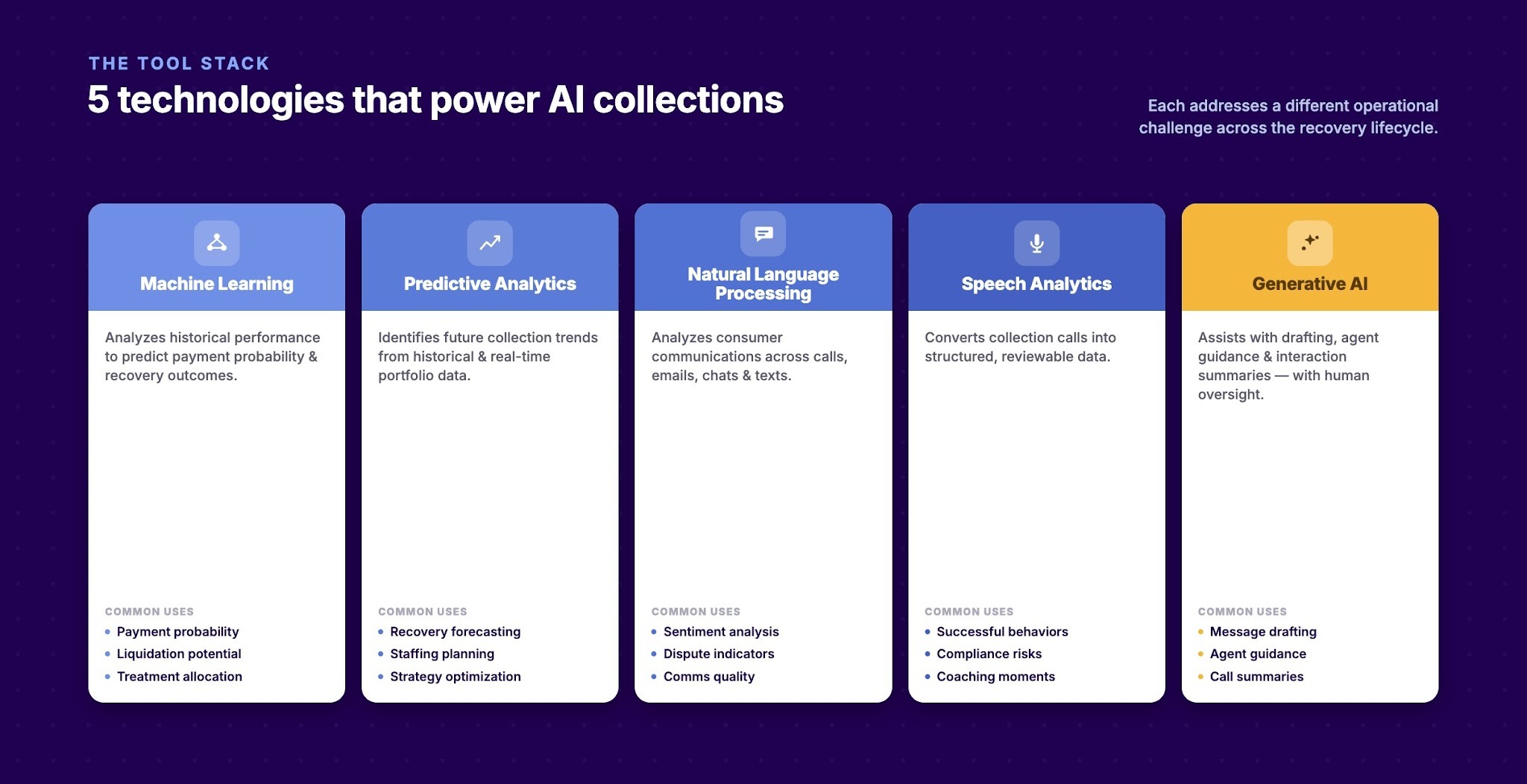
AI-driven collection programs rely on multiple technologies working together. Each technology addresses a different operational challenge within the recovery lifecycle.
Some of the most common technologies include:
Many agencies use specialized AI tools to generate these insights. However, successful execution requires operational systems that can act on those recommendations.
Tratta helps agencies operationalize collection strategies through configurable workflows, omnichannel communications, payment channels, and performance analytics. This allows collection teams to translate strategic insights into consistent, scalable recovery actions. Schedule a free demo today.
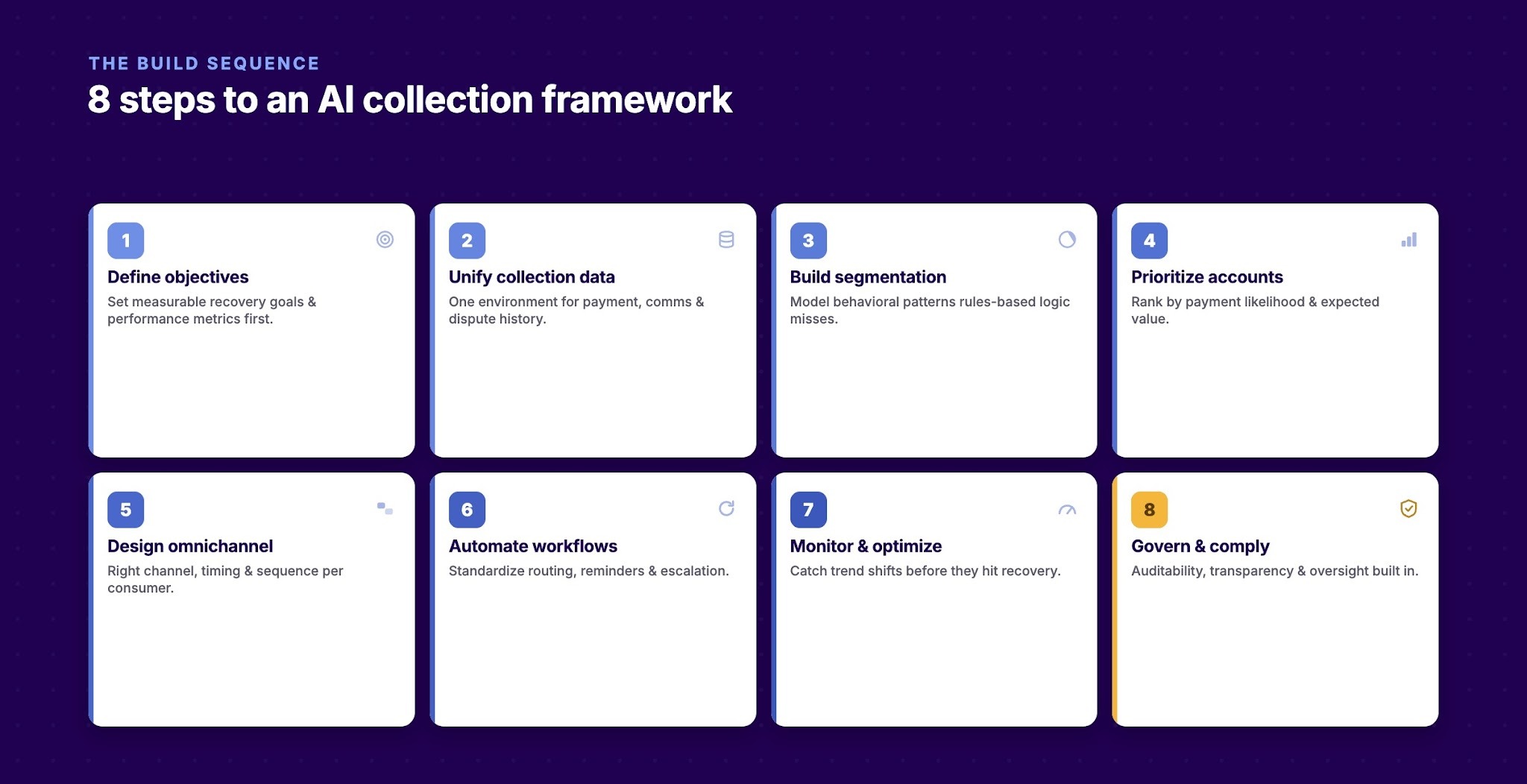
Implementing AI requires more than purchasing software. Agencies need a structured framework that aligns technology investments with recovery objectives, compliance requirements, and operational workflows.
Steps include:
AI initiatives should begin with clearly defined business outcomes. Without measurable objectives, agencies cannot determine whether AI investments are improving collection performance.
Focus on metrics that directly influence recovery operations:
AI models are only as effective as the data supporting them. Disconnected systems often create incomplete account profiles and limit the accuracy of predictive insights.
Agencies should prioritize the following data sources:
Not all accounts require the same treatment strategy. AI can improve segmentation by identifying behavioral patterns that traditional rule-based approaches often miss.
Segmentation models commonly evaluate:
Resource allocation significantly affects recovery performance. AI can help agencies determine which accounts should receive immediate attention and which require alternative treatment strategies.
Prioritization frameworks often consider:
Consumer communication preferences continue to evolve. AI can help agencies identify the most effective outreach channels and communication sequences.
Key engagement considerations include:
Manual decision-making creates inconsistencies across large portfolios. AI-supported workflows help standardize collection actions while maintaining operational control.
Workflow automation can support:
Collection strategies should evolve continuously. AI can identify emerging trends and performance shifts before they significantly impact recovery outcomes.
Monitoring programs should track:
AI must operate within established regulatory and organizational requirements. Strong governance prevents operational risks while supporting responsible deployment.
Governance frameworks should address:
A strong framework creates the foundation for successful implementation. The next step is understanding where AI can deliver measurable value across third-party debt collection operations.
Suggested Read: AI's Role in Enhancing Customer Communications in Financial Services
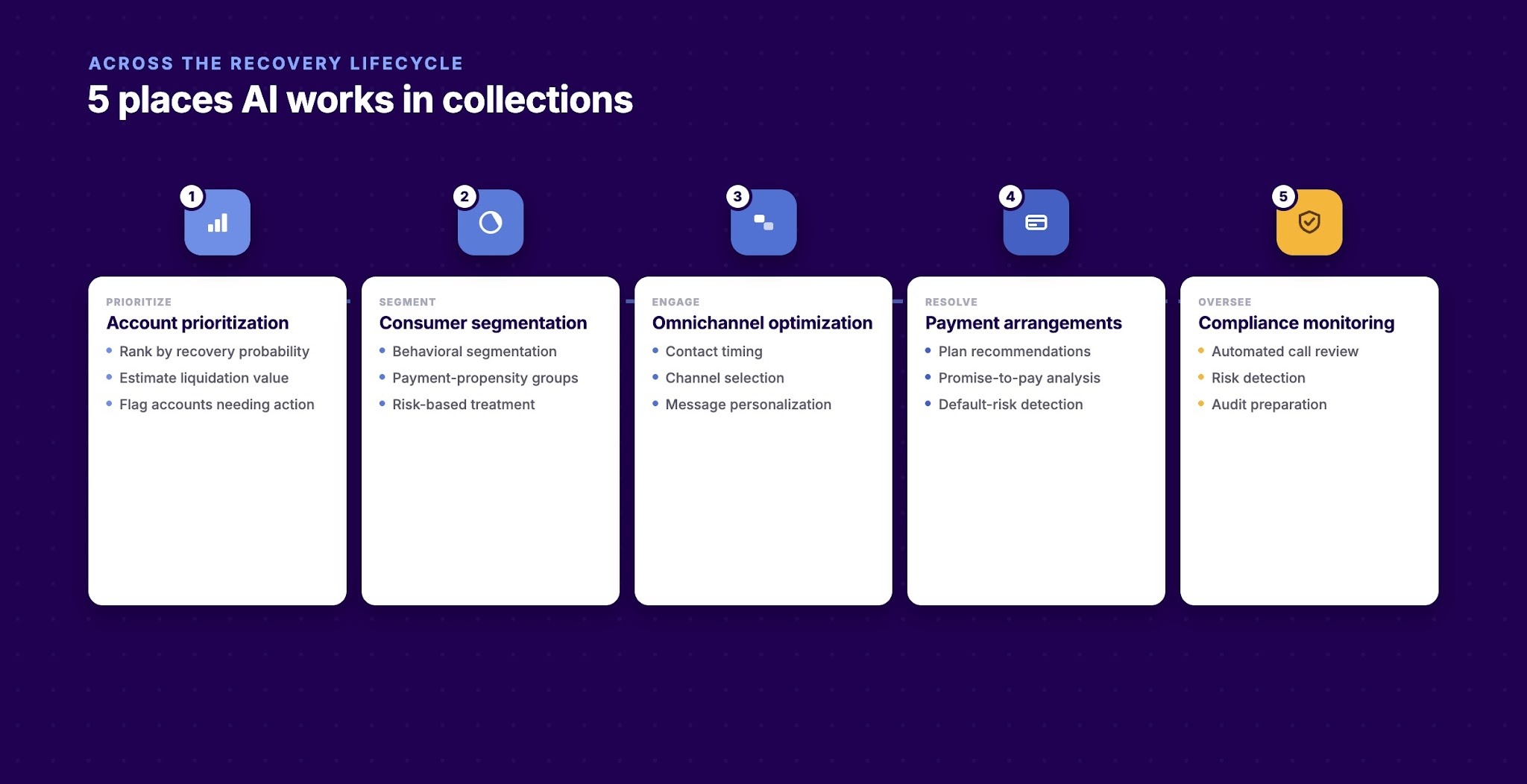
AI delivers the greatest value when applied to specific operational challenges. Rather than replacing existing collection processes, it strengthens decision-making across the recovery lifecycle.
According to McKinsey, leading institutions are using advanced analytics and machine learning to improve segmentation, optimize contact strategies, and enhance collections performance.
Common applications include:
AI can support:
AI can improve:
AI can assist with:
AI can support:
AI initiatives are only as effective as the collection infrastructure supporting them. Data fragmentation, disconnected communication channels, and inconsistent workflows often limit the value agencies can extract from AI-generated insights.
Tratta helps centralize collection operations through integrated communications, payment channels, workflow management, and performance visibility. This creates a more structured operational environment for agencies adopting data-driven collection strategies. Contact us to learn more.
AI implementation often fails because agencies focus on technology before operational readiness. Successful adoption requires clean data, structured workflows, governance controls, and scalable collection infrastructure.
Table showing common challenges:
Overcoming these challenges requires more than technical implementation. Agencies must also align people, processes, and governance structures with their AI objectives.
Best practices include:
The right debt collection software can help address many of these operational challenges. Platforms that centralize workflows, communications, payments, compliance controls, and reporting create a stronger foundation for future AI initiatives.
Collection agencies that adopt AI without a clear framework often struggle to achieve meaningful results. Poor data quality, disconnected workflows, weak governance, and inconsistent execution can undermine even the most advanced AI initiatives.
Tratta helps build an operational foundation. The platform combines workflows, omnichannel communications, payment management, compliance controls, account management, and reporting capabilities within a single environment. This gives agencies greater visibility, consistency, and control as they improve collection operations.
Whether you are exploring AI today or preparing for future adoption, your collection infrastructure matters. Schedule a demo to see how Tratta can support your collection strategy.
An AI-based debt collection strategy uses technologies such as machine learning, predictive analytics, and automation to improve account prioritization, consumer engagement, workflow management, and recovery performance.
AI can identify accounts with the highest payment probability, optimize treatment strategies, improve resource allocation, and support more effective communication efforts.
AI can assist with compliance monitoring, call reviews, communication analysis, and risk detection. However, agencies should maintain appropriate governance and human oversight.
AI systems typically rely on payment history, communication records, account attributes, promise-to-pay performance, dispute information, and consumer engagement data.
Data quality is often the largest obstacle. Inaccurate, incomplete, or fragmented collection data can significantly reduce the effectiveness of AI-driven insights and recommendations.