Digital communication has become the primary way consumers interact with financial institutions and debt recovery teams. Yet accessibility remains a widespread challenge. According to the WebAIM Million report, 94.8% of the top one million websites still fail basic accessibility checks, creating barriers for people with disabilities.
For collection agencies, law firms, and credit issuers, this raises an important operational question. If a consumer cannot access a payment portal, read an email notice, or navigate an account page using assistive technology, can they realistically review their balance or make a payment?
ADA compliance now extends beyond physical locations. It also applies to the digital systems used to deliver notices, provide account access, and accept payments. As digital collections become standard, organizations must ensure these systems remain usable for all consumers.
In this blog, we’ll explain how ADA compliance applies to modern debt collection and how an ADA compliance debt platform can support accessible digital engagement.
The Americans with Disabilities Act (ADA) requires businesses that serve the public to provide equal access to services for individuals with disabilities. While the law was originally focused on physical accessibility, courts and regulators increasingly apply these requirements to digital services such as websites, payment portals, and online communication tools.
For financial institutions and organizations managing consumer debt, this means consumers must be able to access essential services without barriers. This includes the ability to:
These requirements have specific implications for organizations that manage consumer debt and financial communication.
Accessibility challenges affect more than regulatory compliance. They also influence how easily consumers can review account information and complete payments.
Consider a common situation. A consumer receives a payment notification and tries to log into the account portal. The portal cannot be used with a screen reader and requires a mouse to navigate forms. As a result, the consumer cannot review the balance or submit a payment.
When situations like this occur, several problems can follow:
Accessible communication and payment tools make it easier for consumers to review balances and resolve accounts without agent assistance. Platforms designed for digital collections can centralize payment portals, consumer communication, and account access in one environment.
Explore how Tratta's digital collections platform supports accessible payment portals and integrated communication workflows. See Tratta in action.
For collections teams, accessibility becomes part of delivering clear and usable digital communication.
Debt collection operations rely heavily on digital communication and online account access. Consumers commonly interact with creditors through systems such as:
If these systems are not accessible, consumers with disabilities may struggle to complete basic tasks such as reviewing balances, understanding payment notices, or submitting payments.
For example, a visually impaired consumer logs into a payment portal to review an account balance. Important details appear inside images without alternative text, making them unreadable for screen readers. As a result, the consumer cannot access the information needed to proceed.
These challenges often appear in legacy systems that were not originally designed with accessibility in mind.
Also Read: Automated Payment Reminders
Several recurring design issues create accessibility barriers in digital collections environments.
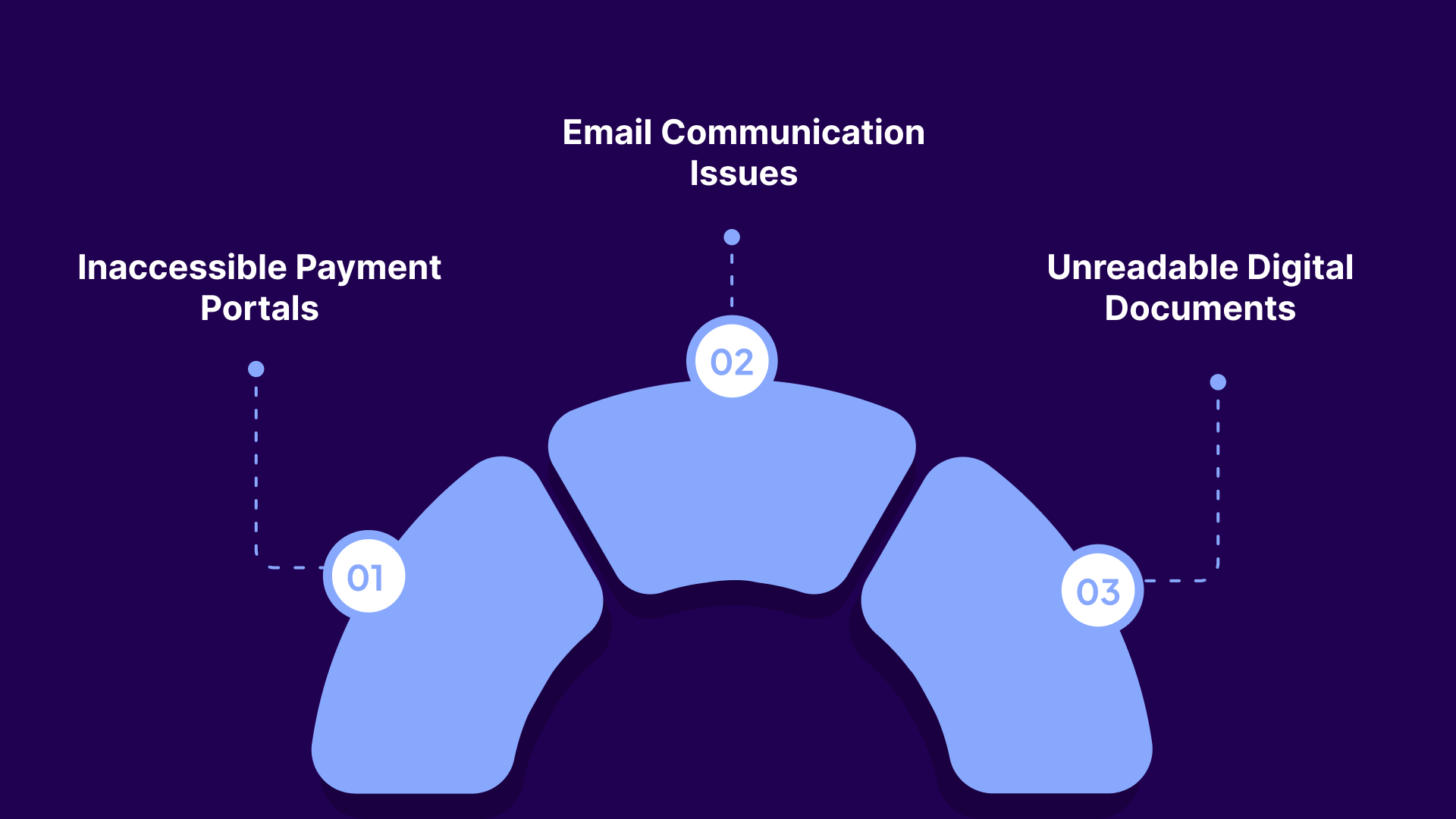
Statements or notices delivered as scanned PDFs cannot be interpreted by assistive technologies.
When these barriers exist, consumers may struggle to access account information or complete payments independently. For collection agencies and credit issuers, these issues can also increase support requests and delay payment resolution.
Although the Americans with Disabilities Act (ADA) was written before digital platforms became central to business operations, courts and regulators increasingly treat websites and online systems as part of the services organizations provide to the public.
As a result, digital platforms used in financial services must allow consumers with disabilities to:
To support these expectations, organizations commonly follow the Web Content Accessibility Guidelines (WCAG) when designing digital platforms.
The Web Content Accessibility Guidelines (WCAG), developed by the World Wide Web Consortium, provide widely accepted standards for accessible digital design.
WCAG defines four principles that help ensure digital platforms remain usable for people who rely on assistive technologies.
For collections teams, these principles translate into practical design requirements for payment portals, communication tools, and consumer account systems.
Suggested Read: Using SMS for Debt Collection Guide
Accessibility is easier to maintain when it is built into the platform itself rather than added later through manual fixes. An ADA compliance debt platform integrates accessibility across payment systems, communication tools, and consumer account access.
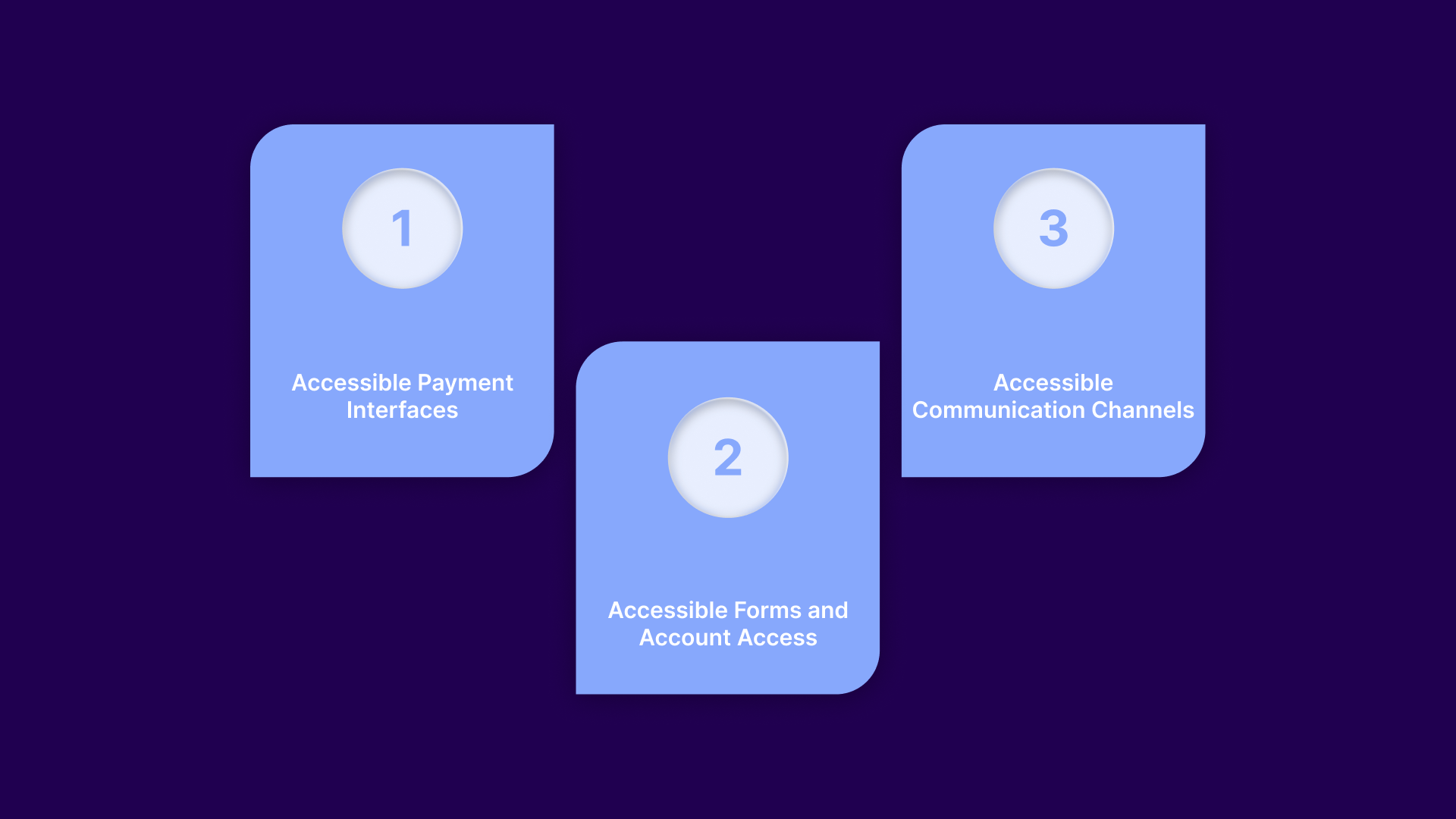
Payment systems should allow consumers to complete transactions using assistive technologies. Key capabilities include:
These features allow consumers to review balances and submit payments without barriers.
Consumer portals should be structured so users can easily review account details and complete actions such as updating information or submitting requests. Important elements include:
Accessibility should also apply to the communication channels used in collections, including:
Accessible communication helps ensure consumers can understand notices and respond to payment requests.
Maintaining accessibility across payment systems, email communication, and consumer portals can be challenging when these tools operate separately. Platforms that combine payments, communication, and account access help teams maintain consistent accessibility standards.
Explore how Tratta’s consumer self-service portal and omnichannel communication tools help agencies deliver accessible digital collection experiences.
Accessibility is often viewed as a compliance requirement, but it also improves how consumers interact with digital collections systems. When payment portals and communication channels are accessible, consumers can review account information and complete payments more easily.
For collection agencies and credit issuers, accessible systems support both operational efficiency and better consumer engagement.
Organizations that want to strengthen accessibility in their collections operations can begin by reviewing and improving their existing digital systems.
Suggested Read: Advanced Collection Software Strategies for 2026
Improving accessibility in collections operations starts with reviewing the digital systems consumers use to access account information and make payments.
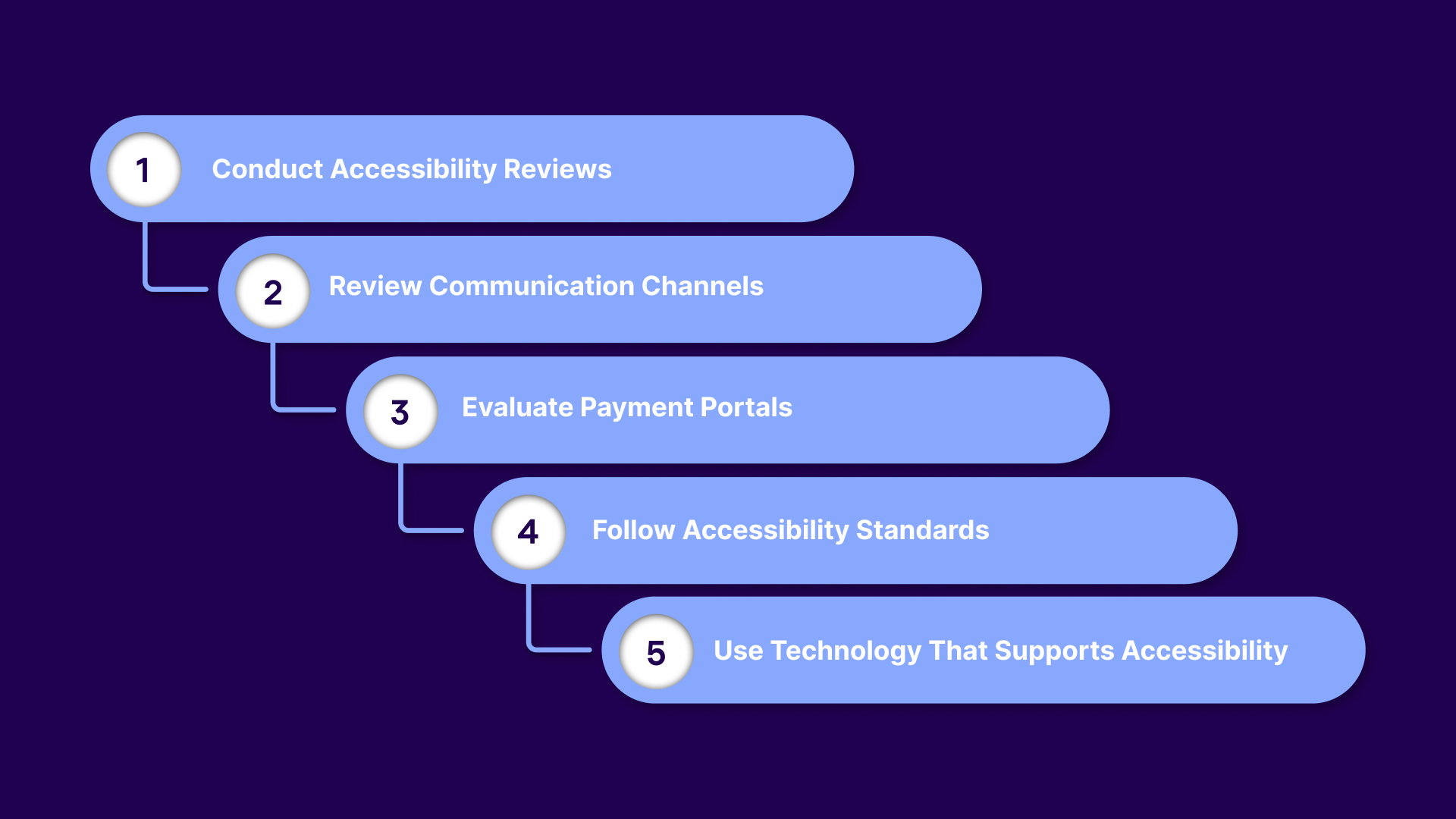
Begin by assessing consumer-facing systems to identify potential barriers. This includes payment portals, account access pages, dashboards, and communication templates. Accessibility audits and testing tools can help identify issues that affect users who rely on assistive technologies.
Collections communication often occurs through email, SMS, and automated voice systems. These channels should be reviewed to ensure messages are clearly structured and compatible with assistive technologies.
Payment portals are a critical accessibility touchpoint. Organizations should ensure these systems support screen readers, keyboard navigation, and clearly labeled form fields so consumers can review balances and complete payments independently.
Aligning digital tools with Web Content Accessibility Guidelines (WCAG) provides a consistent framework for accessible design. These standards help ensure digital interfaces remain usable for individuals with different accessibility needs.
Accessibility is easier to maintain when payment systems, communication tools, and account access are managed through a unified platform. Centralized technology allows organizations to apply accessibility improvements consistently across collections workflows.
Many organizations find accessibility easier to maintain when these improvements are supported by modern digital infrastructure.
Also Read: 7 Ways Collection Technology Solutions Improve Debt Recovery
Modern collections operations rely on platforms that combine communication, payments, and account access in one environment. This helps organizations manage consumer engagement while maintaining consistent workflows.
Tratta is a digital-first collections platform built for collection agencies, law firms, and credit issuers. It brings payment processing, consumer communication, and account management into a single system, giving teams clear visibility across collection activities.
A key feature of the platform is its consumer self-service payment portal, which enables individuals to securely view balances, access account information, and resolve debts without contacting an agent. Self-service options can improve consumer engagement while reducing manual workload for collections teams.
Tratta also supports collections operations through capabilities such as:
By bringing these capabilities together, organizations can manage collections workflows more effectively while providing clearer and more accessible digital payment experiences for consumers.
Digital accessibility is becoming a core part of modern financial services and debt collection. As more consumer interactions move online, payment portals, account access pages, and communication channels must remain usable for individuals who rely on assistive technologies.
For collection agencies, law firms, and credit issuers, accessible digital systems do more than support compliance. They also make it easier for consumers to review account information, understand payment options, and resolve balances independently. Organizations working to strengthen accessibility and modernize collections workflows often look for solutions built around an ADA compliance debt platform.
To see how accessible payment portals, integrated communication tools, and centralized workflows support compliant collections operations, learn more about Tratta and schedule a demo.
ADA compliance in debt collection platforms means ensuring digital systems like payment portals, emails, and account dashboards are accessible to individuals with disabilities. These platforms must support assistive technologies such as screen readers and keyboard navigation.
Yes. Debt collection agencies that provide services to the public generally fall under Title III of the ADA, which requires equal access to services. This includes digital tools used for communication, payments, and account management.
Most organizations follow the Web Content Accessibility Guidelines (WCAG) to design accessible digital systems. WCAG provides guidance on making websites, portals, and digital communication usable for people with disabilities.
Accessible systems allow consumers to review account information, understand payment options, and resolve balances independently. This improves consumer experience while reducing support requests for collections teams.
A debt collection platform can support ADA compliance through accessible payment portals, screen reader compatibility, keyboard navigation, and structured digital communication. These features help ensure consumers can access account information and complete payments without barriers.