6 Best SOC 2 and HIPAA Aligned Debt Collection Software for 2026
Debt Collection & Recovery Software
6 Best SOC 2 and HIPAA Aligned Debt Collection Software for 2026
Published on:
June 29, 2026
Collections break down fastest where compliance expectations are highest. When you are handling accounts that may include healthcare data, a single gap in your system can expose sensitive information, trigger audits, and stall recovery operations overnight.
As pressure builds, the global Medical Debt Collection Service market is projected to grow at a 3.3% CAGR from 2025 to 2033, making these risks harder to ignore. If your current setup is not built for this reality, you are operating on borrowed time.
That is where SOC 2 and HIPAA-compliant debt collection software becomes critical. In this article, we break down what alignment means, which platforms to consider, and how to choose the right solution.
Quick look:
SOC 2 defines structured security controls. It ensures that data access, processing, and system activity are governed through audited frameworks across collection workflows.
Six platforms assessed for compliance alignment are Tratta, InterProse (ACE), Finvi (Katabat), FICO, Finvi (Artiva RM), and RevSpring. These are evaluated based on their ability to support secure, regulated collection environments.
HIPAA applicability is context-driven. It applies only when collection workflows involve healthcare-related accounts and protected health information.
Platform architectures vary significantly. Some centralize account data as systems of record, while others operate as interaction, payment, or decisioning layers.
Selection should be operationally driven. The right platform aligns with your workflow structure, integration requirements, and compliance obligations without introducing additional risk.
What Is SOC 2 and HIPAA Compliant Debt Collection Software?
As debt collection becomes more regulated, software is evaluated on how securely it handles sensitive data and whether it can operate within strict compliance frameworks. SOC 2- and HIPAA-compliant debt collection software refers to platforms designed to support secure data management and, where applicable, healthcare-related regulatory requirements.
What Is SOC 2 in Debt Collection?
SOC 2 defines how a platform manages data security, access, and system reliability across its infrastructure. In debt collection, this applies to consumer account data, payment information, and communication records moving across workflows.
Key areas SOC 2 covers in collections include:
Data Security Controls: Encryption, monitoring, and safeguards to protect sensitive account data
Access Management: Role-based permissions to control who can view or act on information
Audit Trails: Logged records of system activity, payments, and user actions
System Availability: Stable infrastructure that supports uninterrupted collection operations
SOC 2 alignment ensures that data is handled in a structured, secure, and auditable manner throughout the collection lifecycle.
What Does HIPAA Mean for Debt Collection Software?
HIPAA applies when collection workflows involve healthcare-related accounts and protected health information. It defines how sensitive patient-linked data must be handled, stored, and accessed within a system.
Key considerations for HIPAA in collections include:
PHI Protection: Safeguards for data connected to medical accounts
Data Handling Controls: Defined processes for storage, transmission, and access
User-Level Restrictions: Controlled visibility of sensitive healthcare information
Secure Communication Standards: Compliant methods for sharing and processing data
HIPAA alignment supports secure handling of healthcare-related data within collection workflows.
These frameworks shape how securely and reliably a platform operates in a regulated collection ecosystem. In the next section, we examine the top software platforms that align with these requirements and how they compare.
Top SOC 2-Compliant Debt Collection Platforms with Healthcare-Ready Features
Collection platforms are now expected to handle sensitive financial and healthcare-linked data with structured security controls. This list highlights solutions that combine SOC 2-aligned infrastructure with healthcare-ready capabilities, making them suitable for regulated collection workflows.
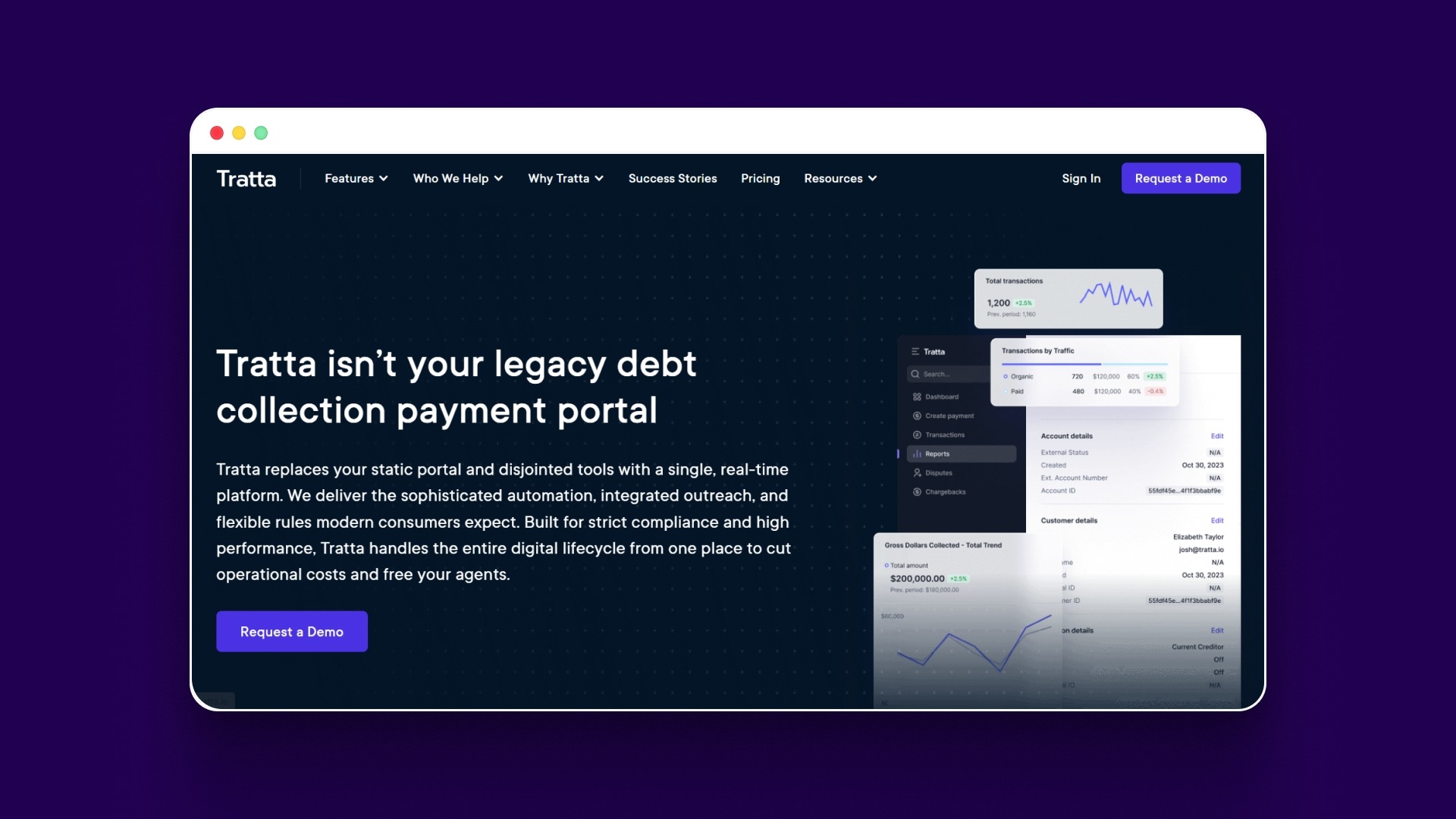
1. Tratta
Tratta is a compliance-driven collections platform built around secure payments, digital engagement, and recovery optimization. It operates as a controlled interaction layer that integrates with existing systems, improving payment completion rates and reducing manual effort. The platform supports healthcare-linked collections through structured workflows that limit exposure to sensitive data while maintaining compliant payment experiences.
Key compliance-aligned capabilities include:
SOC 2 Infrastructure: Tratta operates on SOC 2 Type II audited controls that secure user access, payment activity, and system interactions. All actions are logged to support audit readiness and operational transparency.
Healthcare-Ready Workflows: The platform supports healthcare debt collections by enabling payment and communication flows without requiring direct handling of sensitive healthcare data. This reduces operational risk while maintaining compliant workflows.
Self-Service Portal: Consumers can view balances, set up payment plans, and complete transactions without agent involvement. This shifts volume to digital channels and improves resolution speed.
Embedded Payments: Card and ACH payments, recurring plans, and settlements are handled within the platform. Tokenization ensures sensitive payment data is not stored in raw form.
Multichannel Access: Consumers can engage through web, mobile, and IVR-based payment options. This improves accessibility and reduces drop-offs across communication channels.
Audit Visibility: Every payment, interaction, and account action is recorded within the system. This creates a clear trail for compliance monitoring and internal reviews.
API Integrations: Tratta connects with existing systems through APIs to sync account data, payment activity, and workflows. This allows secure data flow without disrupting core operations.
Pros & Cons:
Pros
Cons
Built to improve payment completion and recovery rates
Not a system of record
Strong SOC 2 foundation with full audit visibility
Requires integration with core platforms
Supports healthcare collections with reduced data exposure
Self-service capabilities reduce operational load
Integrated payments and communication in one platform
Best For:
Collection teams focused on improving recovery through digital payments and structured workflows. It fits organizations that want to reduce manual effort while maintaining secure and compliant operations. It is well-suited for environments handling both financial and healthcare-linked accounts.
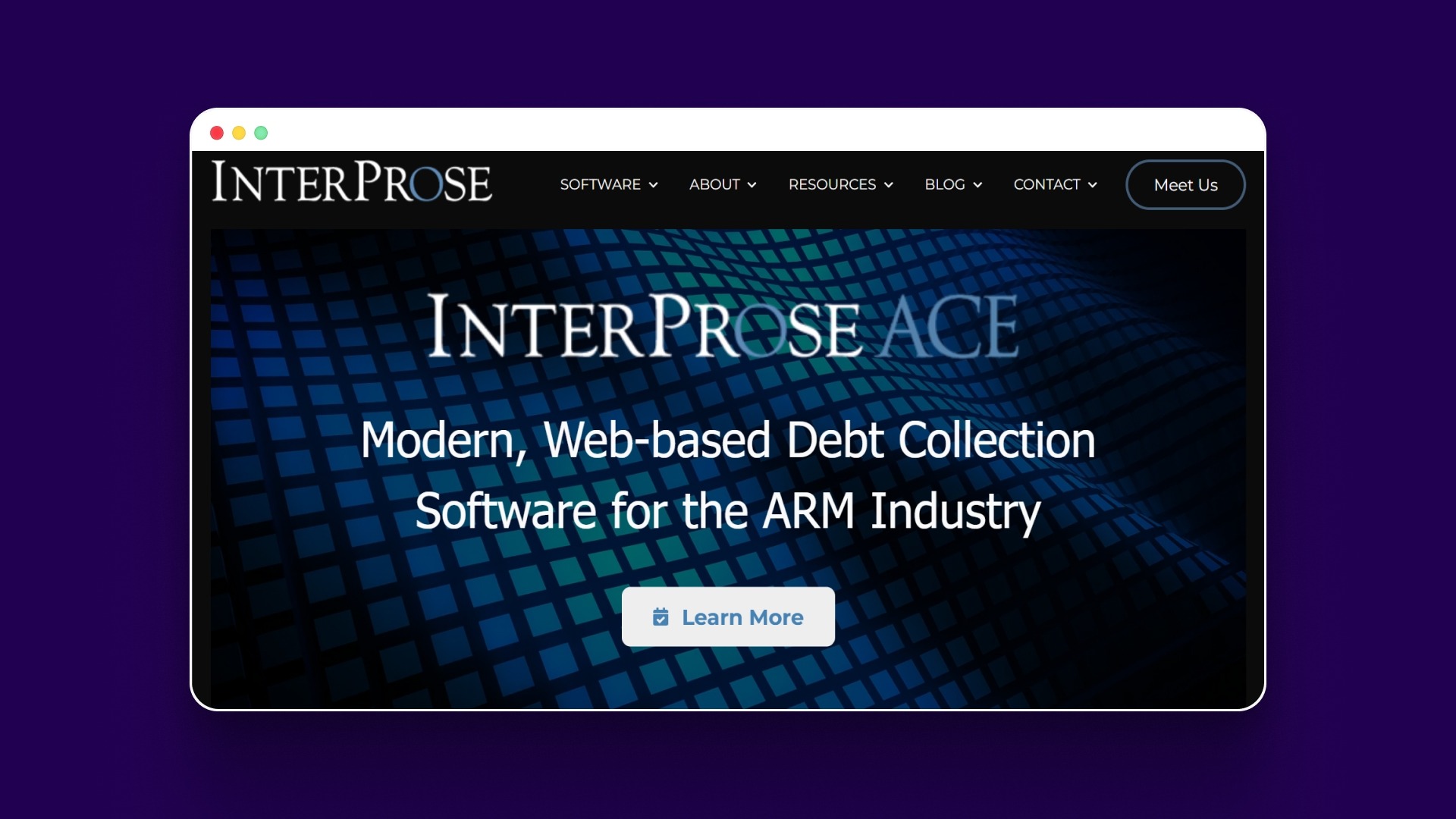
2. InterProse (ACE)
InterProse ACE is a cloud-based, end-to-end collections platform that manages accounts, payments, and compliance workflows within a single system of record. It is designed for structured, high-volume operations, including healthcare-related collections. The platform combines operational control with an inherited compliance infrastructure to support secure and auditable data handling.
Key compliance-aligned capabilities include:
SOC 2 Infrastructure: ACE operates on a SOC 2 Type II–audited cloud infrastructure, securing data access, storage, and system activity across the platform. Controls are applied at the infrastructure level to maintain consistent protection across workflows.
HIPAA-Supported Environment: The platform inherits HIPAA-aligned safeguards through its cloud environment, enabling handling of healthcare-related accounts. This supports compliant data processing within regulated workflows.
System of Record: ACE centralizes account data, payment activity, and workflow management in one platform. This reduces data fragmentation and keeps all actions within a controlled environment.
Integrated Payments: Payment processing is built into the platform, allowing transactions to be handled within the same system as account management. This reduces reliance on external tools and maintains consistency in data handling.
Access Controls: Role-based permissions restrict who can view, edit, or act on account data. This ensures sensitive information is only accessible to authorized users.
Pros & Cons:
Pros
Cons
Full system of record with centralized data control
Implementation requires structured onboarding
SOC 2 infrastructure with HIPAA-supported environment
Configuration needed for specific workflows
Integrated payments within the platform
Strong audit trails and compliance visibility
Scales for high-volume and regulated operations
Best For:
Organizations managing high-volume and regulated collections that require a centralized system. It fits teams that want full control over accounts, payments, and workflows within one platform. It is well-suited for operations prioritizing structure, compliance, and scalability.
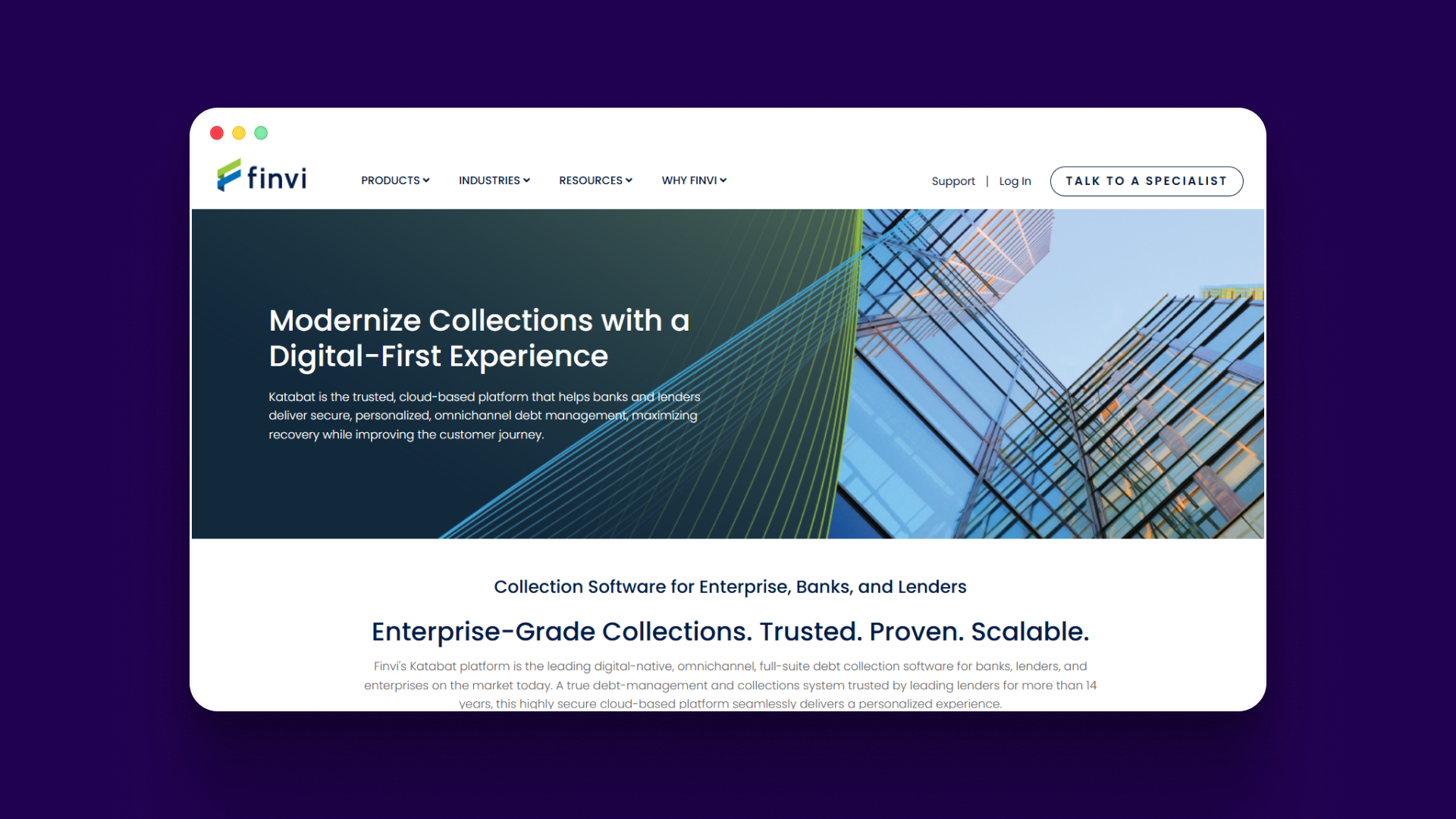
Finvi’sKatabat is an enterprise collections platform built to manage high-volume recovery operations through automation and decisioning. It focuses on structuring account treatment strategies across portfolios, including healthcare-linked accounts. The platform emphasizes control, scalability, and consistency in regulated collection workflows.
Key compliance-aligned capabilities include:
SOC 2 Controls: Katabat operates within a SOC 2–aligned environment that secures data access, processing, and system activity. This ensures consistent protection across large, distributed operations.
Healthcare Support: The platform accommodates healthcare-related collections through configurable workflows and data segmentation. This allows teams to manage sensitive accounts within structured handling rules.
Decision Engine: Katabat uses rule-based decisioning to route accounts, assign treatments, and adjust strategies dynamically. This reduces manual intervention while maintaining controlled execution.
Segmentation Logic: Accounts can be grouped based on balance, behavior, or risk profiles to apply targeted recovery strategies. This improves efficiency while maintaining compliance alignment.
Access Controls: User roles and permissions define how data is accessed and modified across teams. This limits exposure and enforces accountability.
Large collection teams managing complex portfolios that require structured automation and control. It fits environments where decisioning and segmentation drive recovery strategy. Ideal for operations that prioritize scale, consistency, and governed workflows.
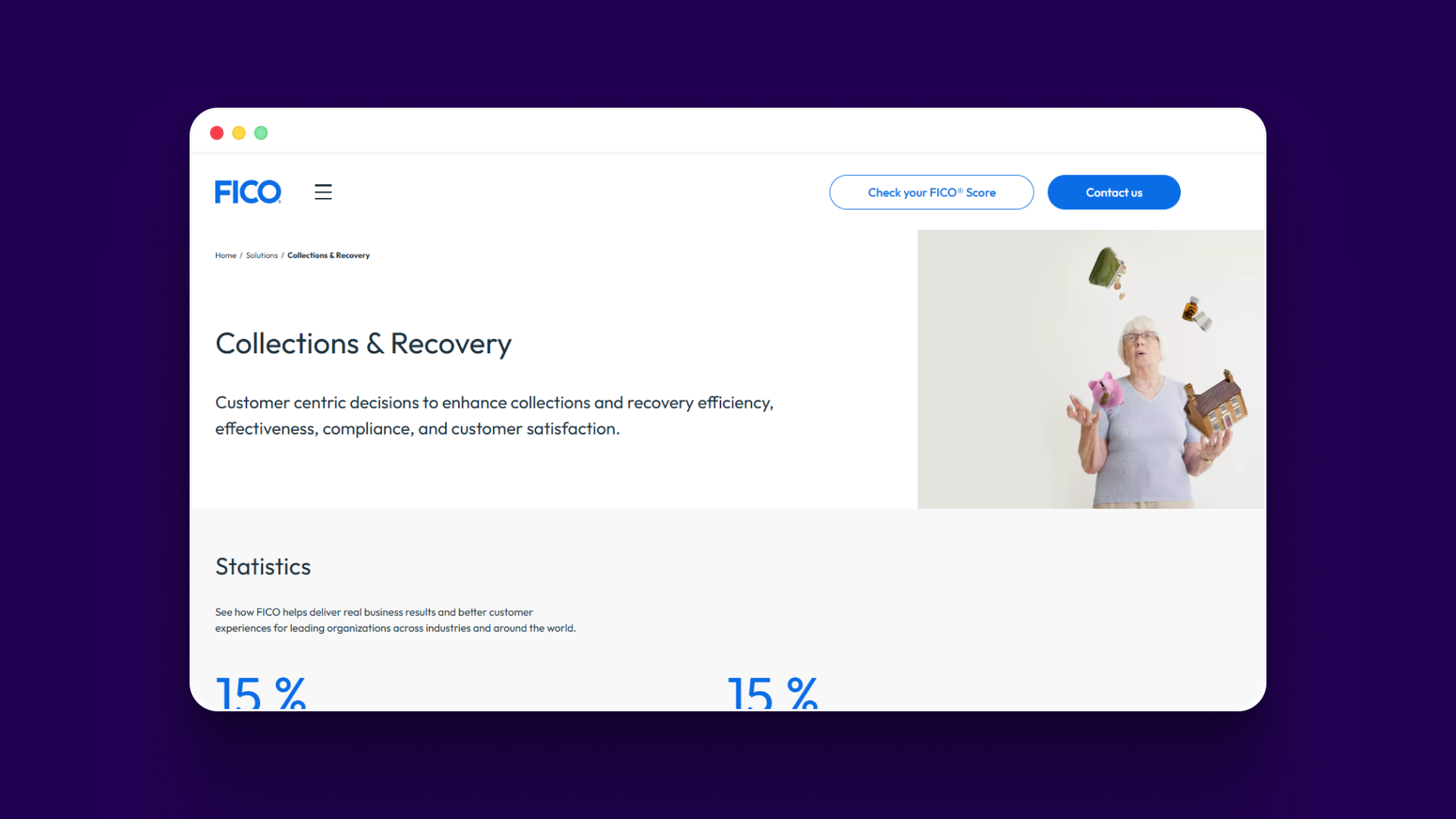
4. FICO (Debt Manager / Platform)
FICO collections platform centers on decisioning, analytics, and strategy optimization across recovery operations. It enables teams to design, test, and execute treatment strategies using data-driven models, including portfolios with healthcare exposure. The platform is built to bring structure and predictability to collections through governed decision frameworks.
Key compliance-aligned capabilities include:
SOC 2 Environment: FICO platforms operate within enterprise-grade security frameworks that protect data across processing, access, and storage. This supports consistent control in regulated collection settings.
Healthcare Adaptability: The platform supports healthcare-linked collections by enabling controlled data handling within configurable workflows. This allows sensitive account types to be managed within structured processes.
Decision Optimization: Strategies are built using rules, predictive models, and scenario testing to determine the best treatment path. This ensures decisions are consistent and explainable.
Strategy Simulation: Teams can test different approaches before deployment to evaluate outcomes and risk. This reduces uncertainty while improving performance.
Access Governance: Permissions and controls define how users interact with account data and decision logic. This ensures accountability across teams.
Pros & Cons:
Pros
Cons
Advanced decisioning and analytics capabilities
Less focused on payments and the consumer interface
Strong governance over strategy execution
Requires expertise to configure and manage
Enables testing and optimization of recovery strategies
SOC 2-aligned enterprise security framework
Scales across large and complex portfolios
Best For:
Organizations that rely on a data-driven strategy to manage collection performance. It suits teams looking to optimize decisioning rather than just executing workflows. Particularly valuable where consistency, control, and analytical precision are priorities.
5. Finvi (Artiva RM)
Artiva RM is a collections platform designed to manage account workflows, communication, and recovery operations within a single system. It supports structured collections across portfolios, including regulated and healthcare-related accounts. The platform focuses on automation, orchestration, and compliance within the recovery lifecycle.
Key compliance-aligned capabilities include:
SOC 2 Controls: Artiva RM operates within a secure environment that governs data access, processing, and system activity. This ensures consistent protection across collection workflows.
Healthcare Collections Support: The platform accommodates healthcare-related debt through configurable workflows and controlled data handling. This allows teams to manage sensitive accounts within defined operational structures.
Workflow Automation: Account handling is driven by event-based triggers that move accounts through predefined recovery stages. This reduces manual intervention while maintaining consistency.
Account Segmentation: Accounts can be grouped based on balance, behavior, or risk to apply targeted recovery strategies. This improves efficiency and prioritization.
Access Governance: Role-based permissions control how users interact with account data. This limits exposure and enforces accountability.
Supports regulated and healthcare-related collections
Best For:
Collection teams managing structured recovery workflows across regulated portfolios. It fits environments where automation and consistency drive performance. A strong option for operations prioritizing control, compliance, and scalability.
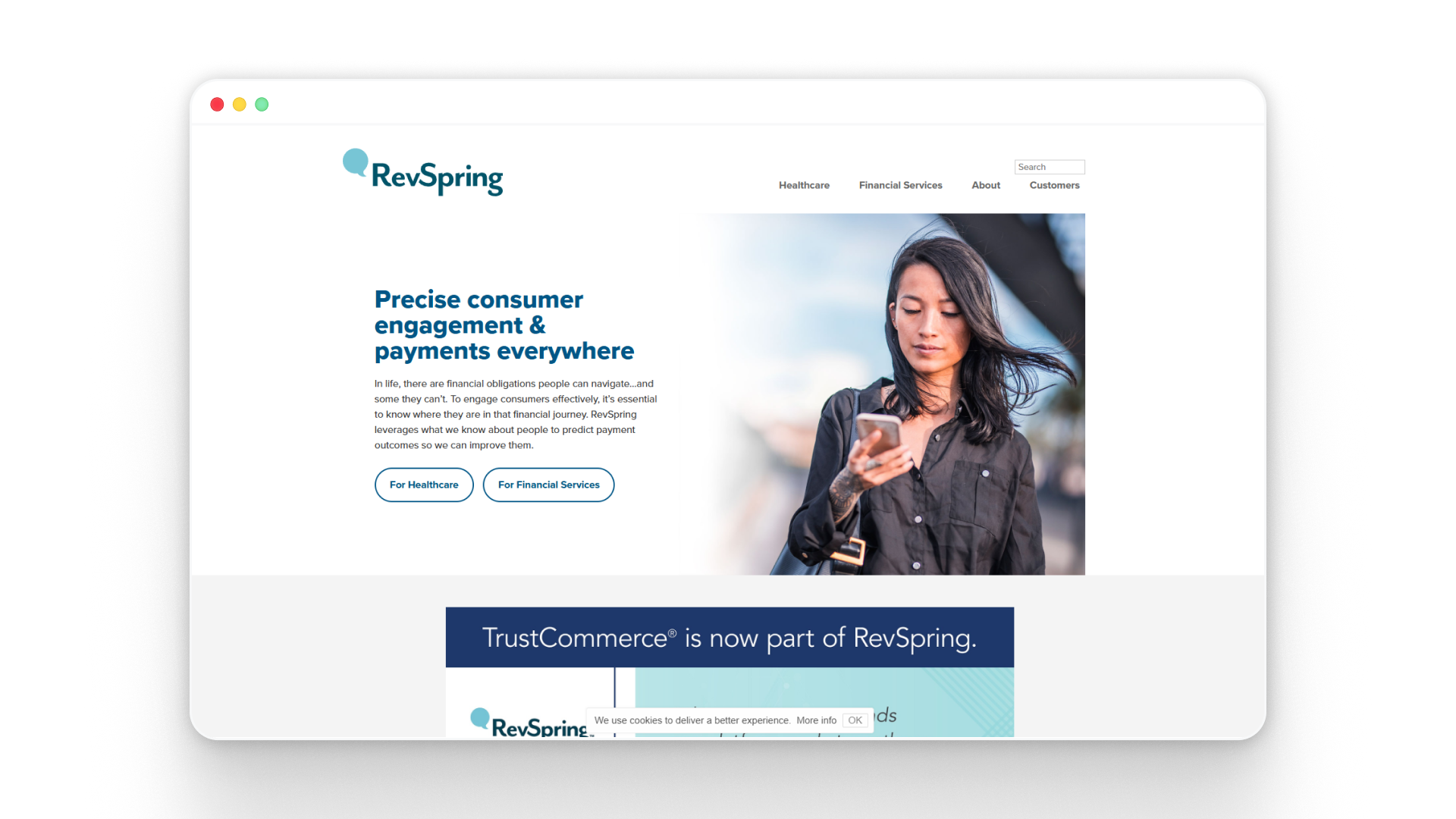
6. RevSpring
RevSpring focuses on healthcare collections, combining payment workflows, patient engagement, and compliance controls within a single platform. It is designed specifically for medical debt recovery, where communication and payment experience directly impact resolution rates. The platform aligns operational processes with healthcare data handling requirements while maintaining structured recovery workflows.
Key compliance-aligned capabilities include:
SOC 2 Controls: RevSpring operates within a SOC 2–aligned environment that secures system access, payment data, and communication flows. This ensures consistent protection across healthcare collection operations.
HIPAA Framework: The platform is built to support HIPAA compliance, including safeguards for handling patient-related financial data. This enables secure communication and payment processing in healthcare contexts.
Patient Payment Tools: Offers digital payment options, including online portals, mobile payments, and payment plans tailored to patient needs. This improves accessibility and completion rates.
Omnichannel Communication: Supports outreach through print, digital, SMS, and email within compliant communication frameworks. This ensures consistent engagement across patient touchpoints.
Data Controls: Applies structured controls around how patient and financial data is accessed and processed. This limits unnecessary exposure while maintaining usability.
Pros & Cons:
Pros
Cons
Strong alignment with healthcare collections workflows
Primarily focused on healthcare use cases
Built with HIPAA and SOC 2 compliance in mind
Less flexible outside healthcare environments
Integrated payment and communication tools
Supports patient-friendly payment experiences
Established presence in healthcare collections
Best For:
Organizations managing healthcare collections that require built-in compliance and patient engagement tools. It fits teams prioritizing communication, payment accessibility, and regulatory alignment. Particularly effective where healthcare-specific workflows drive recovery outcomes.
In the next section, we examine why SOC 2 and HIPAA alignment is no longer optional for collection agencies and what risks emerge when these standards are not in place.
Need for SOC 2 and HIPAA Compliance for Collection Agencies
As workflows become more digital and consumer-facing, the expectation is no longer just recovery efficiency. It is the ability to secure data, control access, and maintain audit readiness at all times.
Key reasons these frameworks matter in collections include:
Regulatory Pressure: Collection agencies operate under strict oversight, where gaps in data handling can lead to penalties and operational disruption. SOC 2 and HIPAA alignment help establish structured controls that reduce exposure.
Healthcare Debt Growth: As medical debt volumes increase, agencies are more likely to encounter accounts linked to sensitive data. This requires systems that can handle such workflows without increasing compliance risk.
Client Expectations: Creditors and healthcare organizations increasingly require vendors to demonstrate security standards before onboarding. SOC 2 alignment is often part of vendor due diligence.
Data Security Risks: Collections involve financial data, payment details, and personal identifiers. Strong controls ensure this data is protected across every interaction and transaction.
Audit Readiness: Agencies must be able to track actions, communications, and payments at any time. Platforms aligned with these frameworks provide structured audit trails and reporting.
Operational Consistency: Compliance-driven systems enforce standardized workflows, reducing errors and ensuring consistent handling across accounts.
Consumer Trust: Secure and transparent systems improve confidence during repayment, especially in digital and self-service environments.
Meeting these expectations is only part of the challenge. The real decision lies in selecting a platform that aligns with your workflows, scale, and compliance needs. In the next section, we break down how to choose the right SOC 2 and HIPAA-aligned debt collection software.
How to Choose the Right SOC 2 and HIPAA-Aligned Debt Collection Software?
The system must align with how your team operates, how data flows across workflows, and how interactions are managed securely. A strong choice balances security controls, operational efficiency, and adaptability to regulated environments.
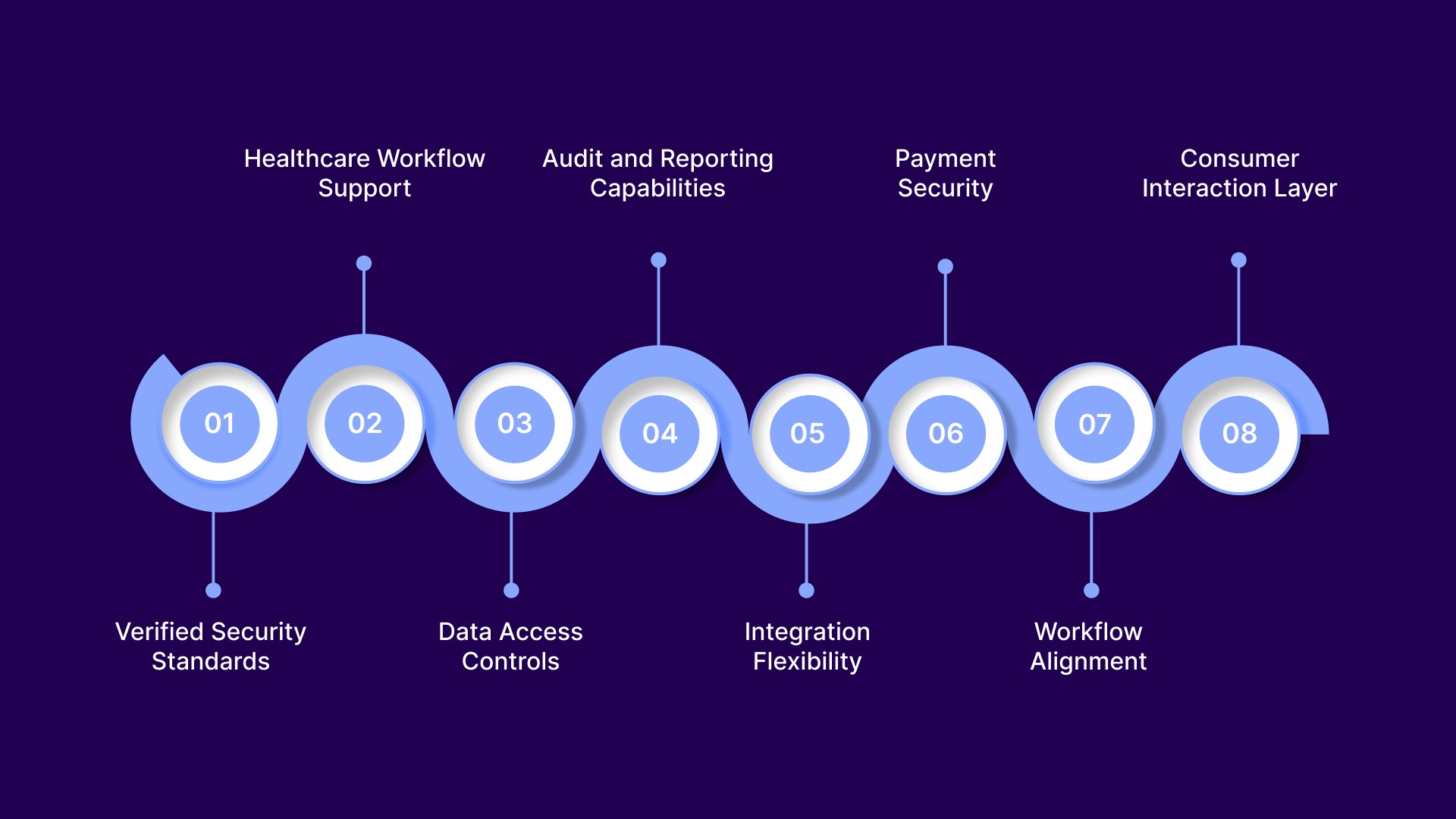
Key factors to evaluate when choosing a platform include:
Verified Security Standards: Look for independently audited frameworks like SOC 2 and clearly defined security controls. This ensures data is protected across storage, access, and processing.
Healthcare Workflow Support: The platform should support healthcare-linked collections with controlled data handling and minimal exposure to sensitive information.
Data Access Controls: Role-based permissions and authentication measures should define who can view and act on data. This reduces risk and enforces accountability.
Audit and Reporting Capabilities: The system must track actions, communications, and payments. This provides visibility for compliance checks and internal reviews.
Integration Flexibility: Ensure the platform connects with existing systems to maintain consistent data flow across workflows.
Payment Security: Encryption, tokenization, and secure processing should protect financial transactions.
Workflow Alignment: The platform should support structured handling of accounts through defined processes or automation.
Consumer Interaction Layer: Digital self-service and communication tools should improve engagement without increasing compliance risk.
Tratta aligns strongly with areas like secure payment processing, consumer self-service, audit visibility, and integration with existing systems. It is particularly effective as a controlled interaction layer where payments and communication occur within a secure, SOC 2–aligned environment. Book a free demo.
Conclusion
Gaps in compliance rarely show up as small issues. They surface as failed audits, restricted client relationships, delayed payments, or exposure to sensitive data that should never have been accessible. When your systems cannot support both SOC 2 security controls and HIPAA-aligned data handling, even routine collection activity can introduce unnecessary risk.
Tratta addresses this by providing a secure environment for payments and consumer interactions, including healthcare-linked collections. It supports SOC 2–aligned infrastructure and workflows designed to reduce exposure to sensitive data while maintaining compliant recovery processes.
See how Tratta fits into your existing systems without adding compliance complexity. Schedule a call to learn more about a secure, SOC 2, and HIPAA-aligned collection workflows in action.
Frequently Asked Questions
1. Is SOC 2 Type II HIPAA compliant?
No, SOC 2 Type II and HIPAA address different requirements. SOC 2 focuses on security controls such as access, monitoring, and data protection, while HIPAA governs how protected health information is handled. A platform can support both, but one does not replace the other.
2. Does HIPAA apply to debt collectors?
HIPAA can apply when a collection agency handles medical debt that involves protected health information. In such cases, the agency may act as a business associate and must follow HIPAA rules for data access, storage, and communication. If no healthcare data is involved, HIPAA does not apply.
3. Why is SOC 2 important for third-party collection agencies?
SOC 2 demonstrates that a platform follows structured controls to protect consumer and financial data. This is often required by creditors and enterprise clients during vendor evaluation. It also helps reduce risk across payment processing and communication workflows.
4. What features should debt collection software have to support HIPAA-aligned workflows?
The platform should include role-based access controls, audit trails, secure communication methods, and controlled data exposure. It should also support workflows that limit unnecessary handling of protected health information. These features help maintain compliance while enabling efficient collections.
5. Can third-party collection agencies use one platform for both healthcare and non-healthcare accounts?
Yes, but the platform must support different data handling requirements within the same system. This includes separating sensitive healthcare-related data from standard financial accounts and applying appropriate controls. The goal is to maintain compliance without disrupting overall collection workflows.
Note: This information is not legal advice. Tratta recommends that you consult with your legal counsel to make sure that you comply with applicable laws in connection with your collection and outreach activities.
Sign up for our monthly newsletter
Debt collection insights that keep you compliant and competitive.
Thank you! Your submission has been received!
Oops! Something went wrong while submitting the form.