Collection agencies struggle to make timely decisions when account information is delayed, incomplete, or spread across multiple systems. As portfolios grow and consumer behavior changes, relying on outdated reports can mean missed recovery opportunities and inefficient resource allocation.
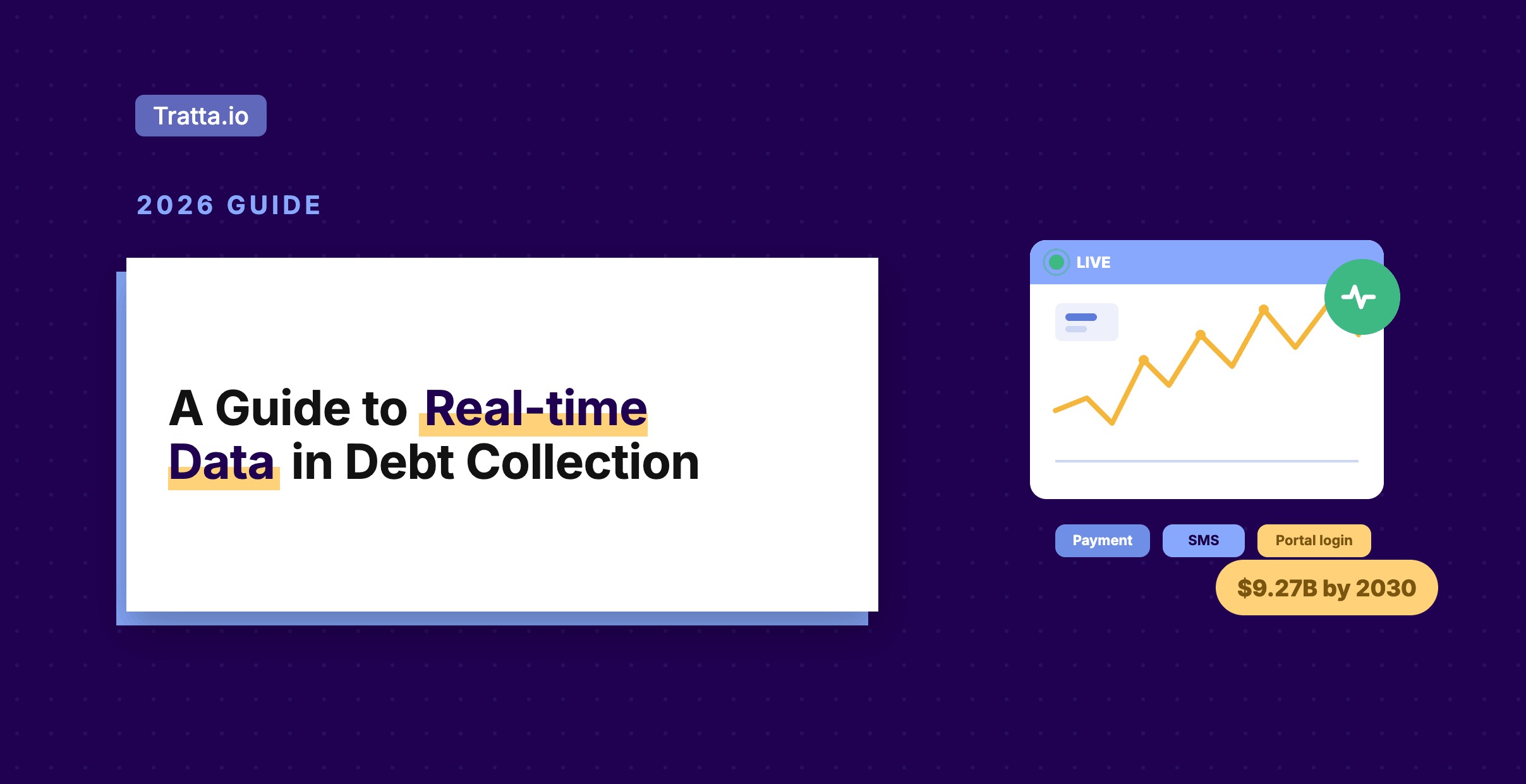
The industry's growing investment in technology reflects this challenge. The global debt collection software market is expected to grow to $9.27 billion by 2030. If you are looking to improve recoveries, visibility into account activity can be just as important as your collection strategy.
This guide explores how real-time data in debt collection helps agencies prioritize accounts, improve decision-making, and increase recoveries in 2026.
Brief look:
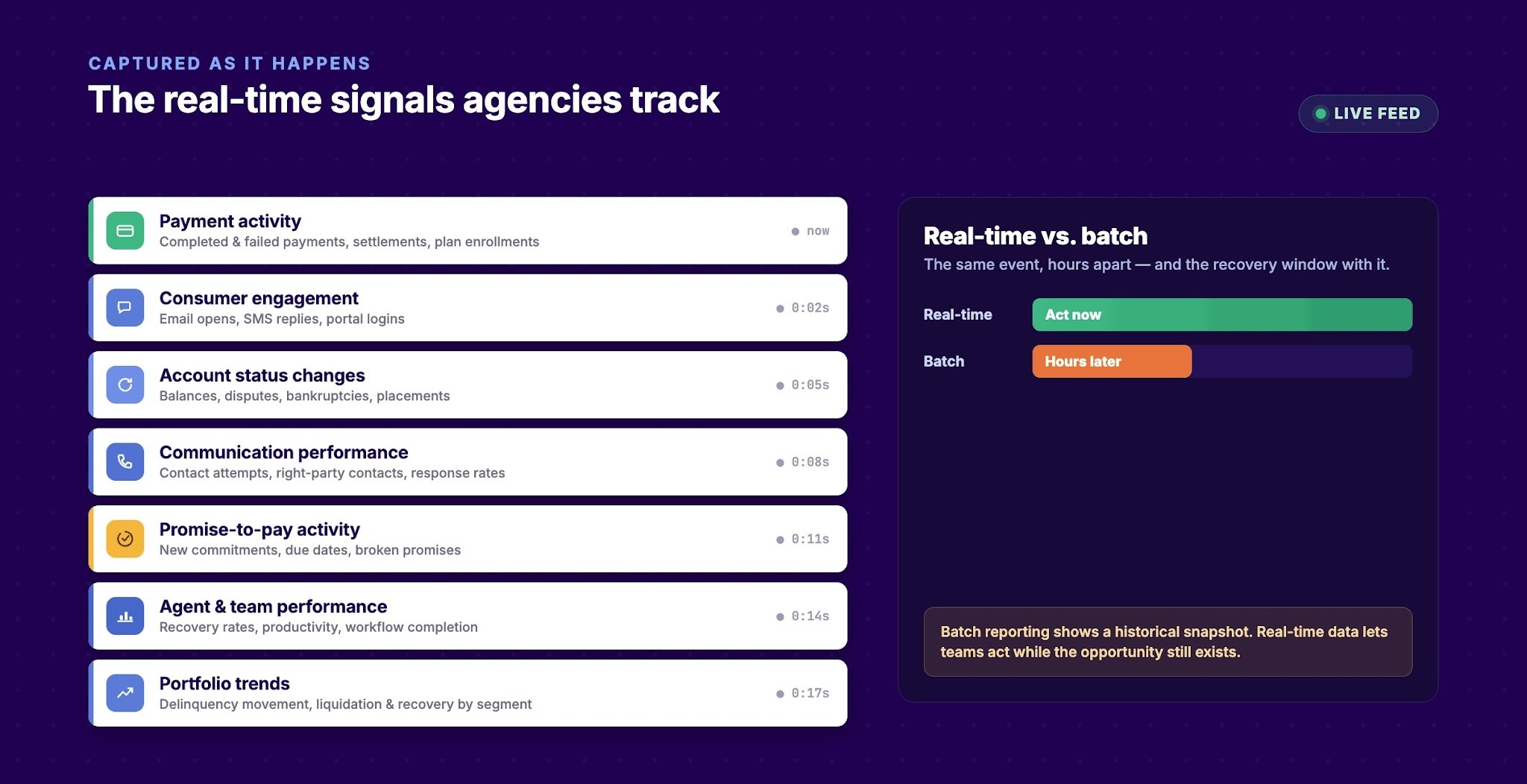
Real-time data in debt collection refers to information that is captured, updated, and made available as events occur rather than through delayed reports or batch updates. It gives collection teams a current view of account activity, consumer interactions, and portfolio performance, allowing them to respond more quickly to changing circumstances.
Real-time data can include:
Having access to this information is valuable, but the real advantage comes from how agencies use it. In the next section, we will examine why real-time data has become a critical component of modern collection operations and recovery strategies.
Suggested Read: How Data Transforms Debt Collection Strategies
Access to real-time information is only valuable when it leads to action. When collection teams can respond to payment activity, consumer engagement, and portfolio changes as they occur, they gain opportunities to improve both operational efficiency and recovery performance.
Key benefits include:
While these operational benefits are significant, their greatest value lies in their impact on recoveries. In the next section, we will explore five specific ways faster insights help collection agencies recover more debt.
Suggested Read: Machine Learning Tools for Customer Risk Assessment in Collections
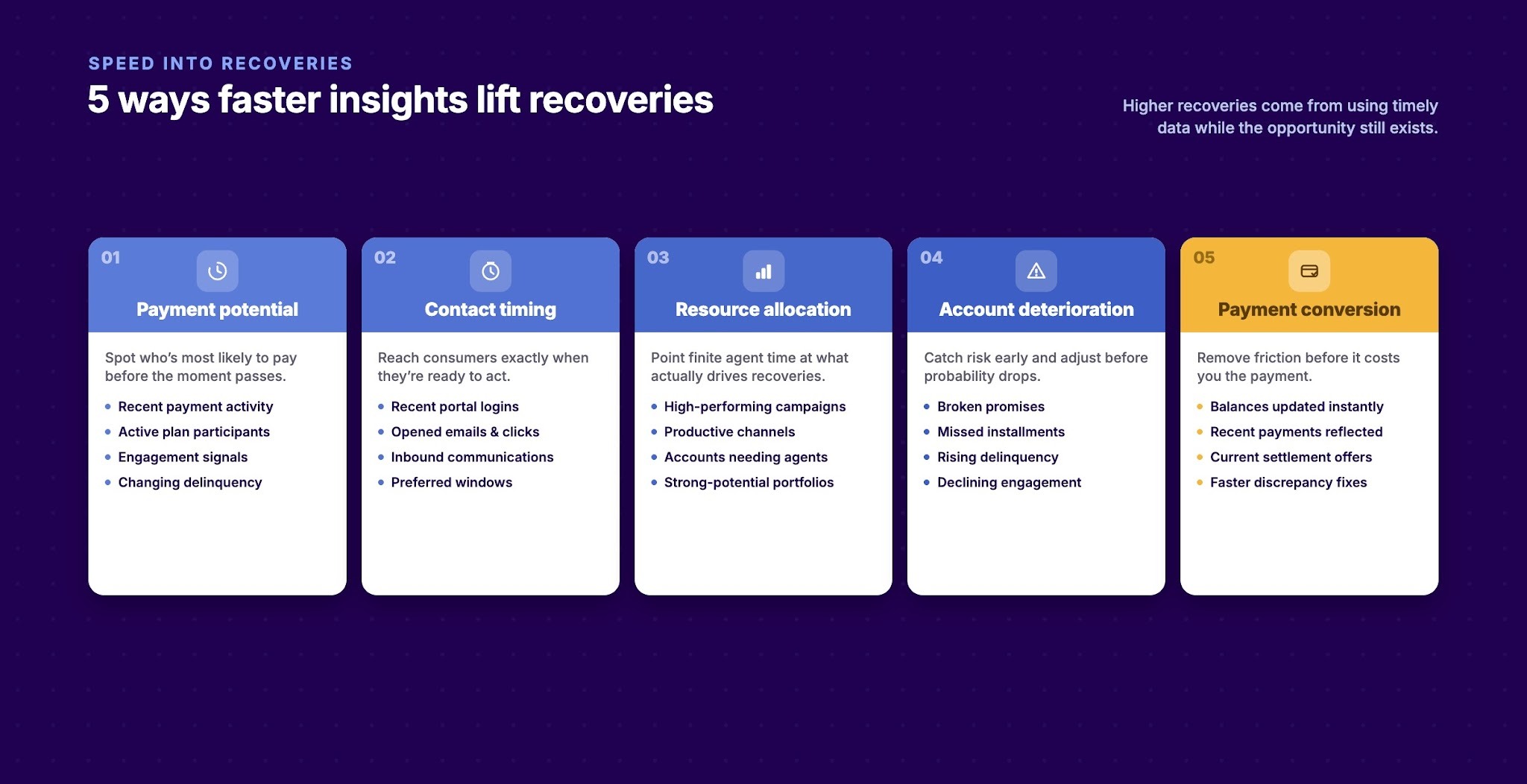
Higher recoveries do not come from having more data. They come from using timely information to make better collection decisions while recovery opportunities still exist.
This is how real-time insights lead to better collection results:
Not every account has the same recovery potential at any given moment. Faster access to account activity helps agencies identify which consumers are most likely to respond and pay before those opportunities disappear.
This allows teams to focus on:
The timing of outreach often influences whether a consumer responds. Real-time visibility into engagement activity allows agencies to contact consumers when they are most likely to take action.
Teams can use current information to identify:
Collection teams have finite time and staffing resources. Faster insights help managers continuously direct efforts toward accounts and activities that contribute most to recoveries.
This may involve prioritizing:
Tratta offers real-time reporting and analytics that provide visibility into account activity, campaign performance, and portfolio trends. Combined with automated workflows, collection teams can identify where resources are generating results and adjust collection efforts accordingly. Schedule a free demo today.
Account conditions can change quickly. Faster insights help agencies identify risk factors early and modify collection strategies before recovery probabilities decline.
Key indicators may include:
Consumers are more likely to complete payments when the process is simple and aligned with their current circumstances. Real-time information helps agencies remove obstacles before they affect conversion rates.
Examples include:
These actions become even more effective when agencies move beyond monitoring activity and start identifying patterns within their data. In the next section, we will explore how data analytics helps collection teams transform information into smarter recovery decisions.
Suggested Read: Big Data Applications and Benefits in Finance
Real-time data tells collection teams what is happening. Data analytics helps them understand what that information means and what actions are most likely to produce results.
According to FICO, collection organizations are increasingly using predictive analytics to improve recovery outcomes, lower collection costs, and create more targeted collection strategies.
Key ways analytics improves collection performance include:
While analytics helps agencies identify opportunities and risks, success ultimately depends on monitoring the right performance indicators. In the next section, we will examine the key metrics collection leaders should track to evaluate operational efficiency and recovery performance.
Suggested Read: AI and Data Transforming Debt Collection Methods
Data-driven collections depend on more than visibility. Agencies need measurable indicators that show whether strategies, campaigns, and collection efforts are producing results.
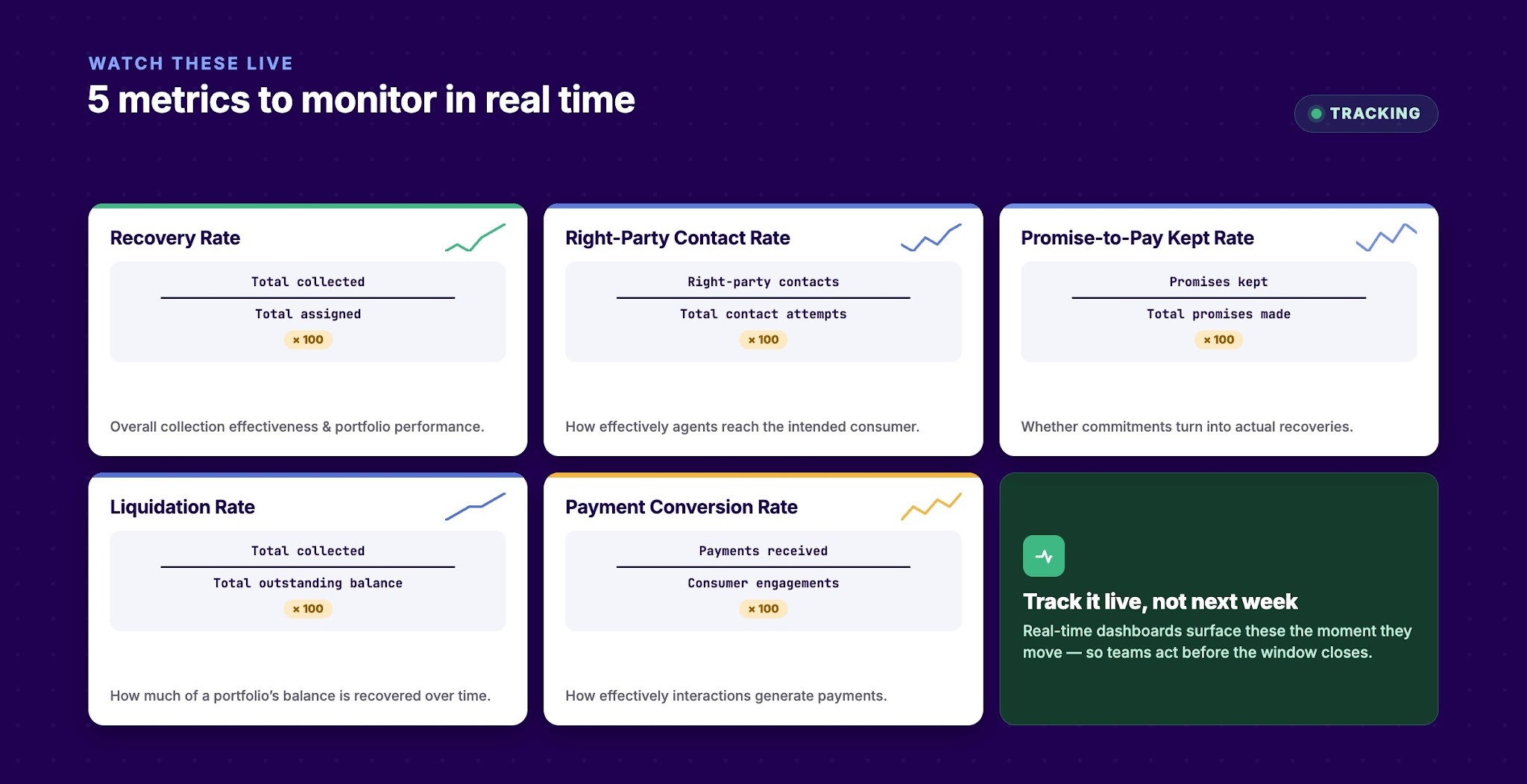
The following metrics provide a strong foundation for evaluating recovery performance and operational efficiency.
Tratta provides real-time reporting and analytics that allow agencies to monitor recovery trends, portfolio performance, and operational metrics from a centralized platform. Teams can track changes as they occur rather than relying on delayed reports. Contact us to learn more.
Most collection agencies recognize the value of real-time insights, but gaining a complete view of operations is often easier said than done. Data frequently exists across multiple systems, teams, and workflows, making it difficult to identify trends and act quickly.
Several common technology-related challenges can limit visibility and impact recovery performance.
Fortunately, these barriers can often be addressed through the right combination of technology, integrations, and reporting capabilities. In the next section, we will explore the technology agencies can use to build a more data-driven recovery strategy.
Suggested Read: Adaptive Consumer Engagement Strategies: What the Data Actually Shows
Tratta is a debt collection software platform built for collection agencies, debt buyers, creditors, and law firms. The platform combines payments, communications, analytics, automation, and compliance capabilities into a single environment. This centralized approach makes it easier to identify recovery opportunities, engage consumers, and track performance in real time.
Core features include:
Real-time data is only valuable when agencies can act on it. By bringing the entire recovery process into one platform, agencies gain better visibility, faster decision-making, and more opportunities to improve recovery performance.
Without real-time visibility, collection agencies risk making decisions based on outdated information. Delayed insights can lead to missed payment opportunities, inefficient resource allocation, ineffective outreach strategies, and slower responses to changing consumer behavior. These challenges can reduce recovery rates and make it more difficult to optimize collection performance across portfolios.
Tratta helps agencies turn data into action by combining reporting and analytics, omnichannel communications, payments, automation, and compliance tools within a single platform. Instead of piecing together information from multiple systems, teams gain the visibility needed to identify opportunities, respond faster, and make more informed recovery decisions.
Want to see how real-time insights can improve your collection strategy? Schedule a demo today.
Real-time data in debt collection refers to account, payment, communication, and consumer activity information that is updated and available immediately as events occur. It helps agencies make faster decisions and respond to recovery opportunities without waiting for scheduled reports.
Real-time data helps agencies prioritize accounts, optimize outreach timing, monitor payment activity, and identify changes in consumer behavior more quickly. These insights allow collection teams to focus their efforts where they are most likely to generate recoveries.
Real-time data is updated continuously as account activity occurs, while batch data is collected and processed at scheduled intervals. Real-time data provides immediate visibility, whereas batch reporting may delay important collection decisions.
Collection agencies should closely monitor recovery rate, right-party contact rate, promise-to-pay kept rate, liquidation rate, and payment conversion rate. Tracking these metrics in real time helps leaders identify performance trends and address issues before they affect recoveries.
Data analytics helps agencies identify payment patterns, segment accounts, optimize communication strategies, forecast portfolio performance, and allocate resources more effectively. When combined with real-time data, analytics can support more informed collection decisions and stronger recovery outcomes.