A single missed filing or misplaced document can stall an entire legal recovery case. Yet many agencies and law firms still manage cases through emails, spreadsheets, and disconnected tools. The industry is rapidly shifting away from that approach.
The global debt collection software market is estimated at $5.57 billion in 2026 and is expected to reach roughly $7.54 billion by 2031. This reflects a growing demand for more structured recovery operations.
Digital workflows for legal recovery are becoming central to that shift. Technology helps teams coordinate documentation, communication, and payments across complex cases. In this article, we look at seven practical ways collection agencies and law firms can use structured workflows to bring greater organization and control to legal recovery.
Standard collections typically focus on outreach, negotiation, and payment arrangements. Legal recovery begins when those efforts no longer resolve the account, and the matter moves into a formal legal process.
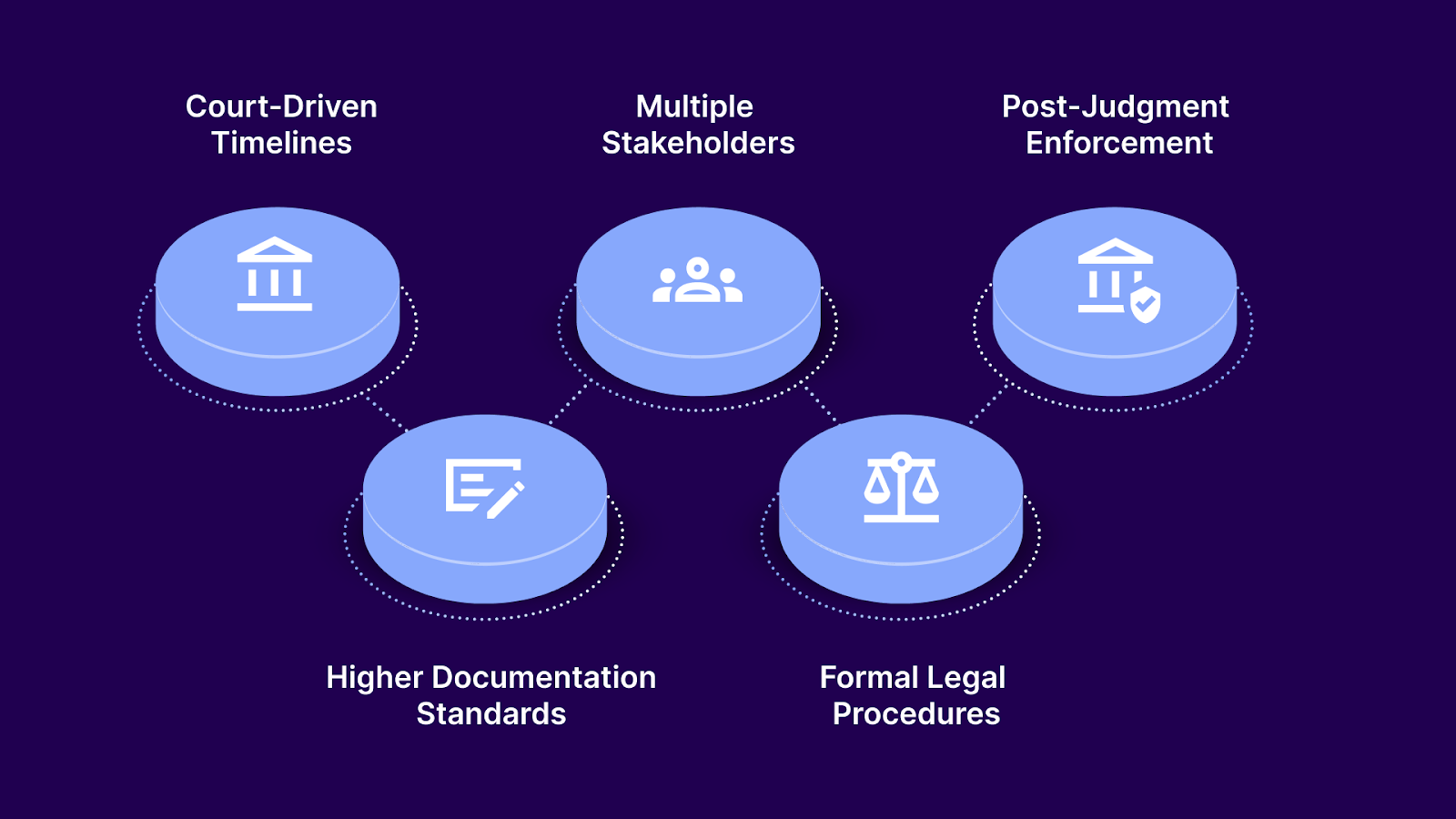
At this stage, the work expands beyond communication and payments to include documentation, filings, deadlines, and coordination between multiple parties.
Key differences between standard collections and legal debt recovery include:
As the process becomes more formal, the margin for error shrinks. Teams need clearer organization, better visibility, and more consistent coordination to keep cases moving forward. That is where more structured operational approaches start to make a noticeable difference.
Suggested Read: Collection in Law
As cases move between agencies, attorneys, and courts, information must stay accurate, accessible, and timely. Without clear workflows, small gaps quickly turn into delays or operational risk.
Manual processes commonly break down in areas such as:
Tratta helps address these operational gaps by organizing communication, payments, and account activity within defined workflows. Agencies, credit issuers, and law firms gain clearer visibility into cases while reducing the reliance on manual coordination. Schedule a free demo today.
Legal recovery involves constant movement between agencies, attorneys, documentation, and courts. When workflows are structured digitally, teams spend less time coordinating tasks and more time advancing cases.
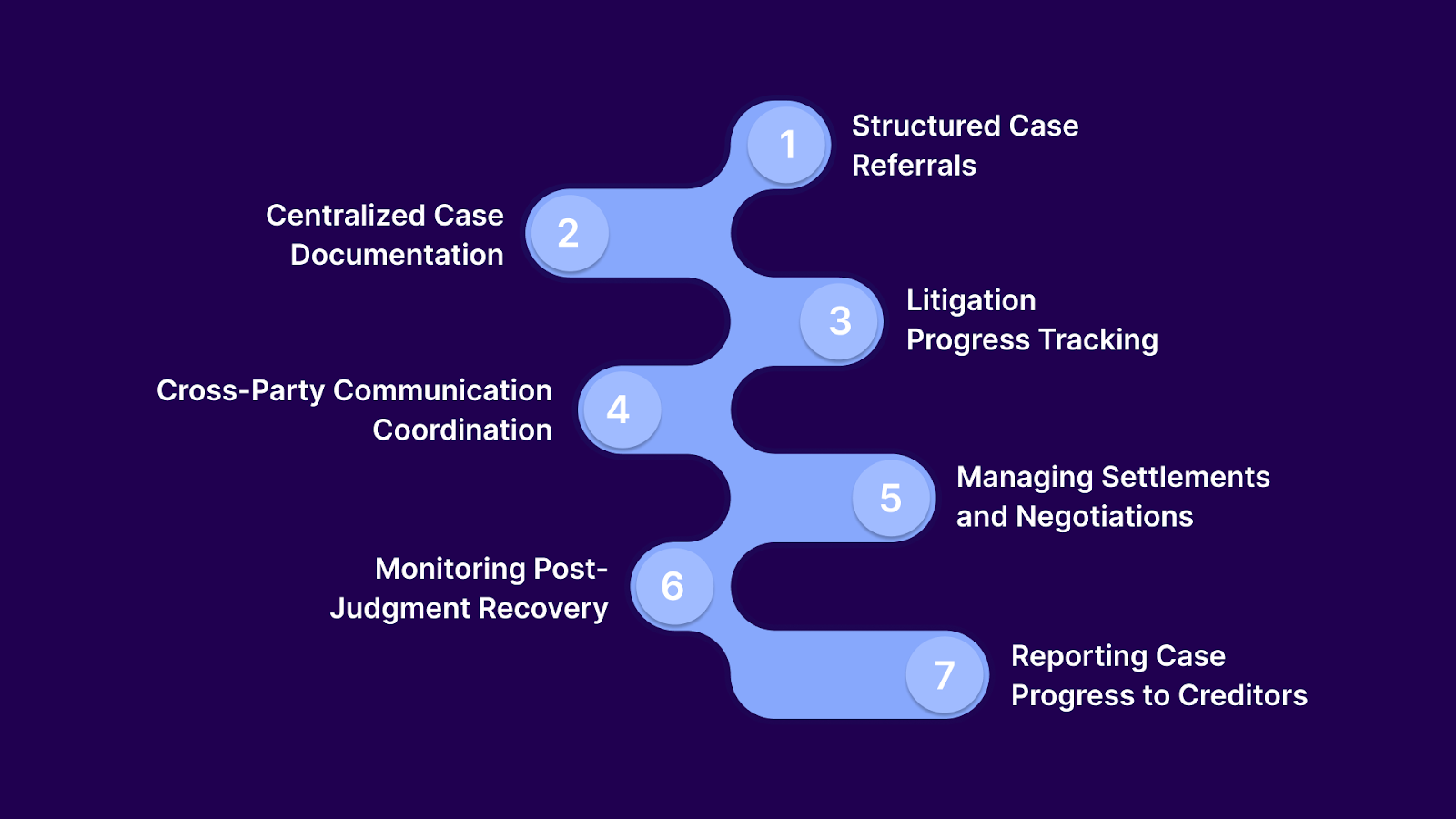
These are a few ways structured digital workflows help in legal debt recovery:
Technology can standardize how cases move from collectors to attorneys, reducing delays and missing information. Instead of manual transfers, digital workflows create consistent intake processes and immediate visibility for legal teams. This helps attorneys begin legal action faster and with more reliable documentation.
Digital workflows typically support referrals through:
Legal recovery depends on having the right documents available at the right time. Digital systems organize materials so attorneys and agencies can access them without searching through emails or folders. This reduces preparation time and prevents the loss of evidence during litigation.
Technology supports documentation management through:
Managing dozens or hundreds of legal cases requires clear visibility. Digital workflows track activity as cases move through filings, responses, and court events. This allows teams to monitor progress without relying on manual updates.
Technology enables litigation tracking through:
Legal recovery requires constant communication between agencies, attorneys, clients, and sometimes debtors. Digital workflows help keep conversations connected to the correct case. This prevents lost updates and improves coordination between teams.
Communication tools within workflows often include:
Settlement discussions often involve multiple revisions, approvals, and payment arrangements. Digital workflows help teams keep track of proposals and outcomes without confusion. This creates clearer records of how agreements were reached.
Technology supports settlement management through:
After a judgment, agencies and law firms still need to track enforcement actions and payments. Digital workflows provide visibility into long-running cases that may otherwise fall off internal tracking. This helps teams stay organized across extended recovery timelines.
Technology helps monitor post-judgment activity through:
Clients expect clear insight into the progress of legal recovery. Digital workflows make it easier to generate consistent updates without manual reporting. This improves transparency while reducing administrative work for legal teams.
Reporting features often include:
Structured workflows begin to change how legal recovery operations function day to day. That shift leads to several operational improvements worth closer examination. Real-world examples are highlighted in the next section.
Suggested Read: Legal Consultation for Effective Debt Recovery Solutions
Digital workflows are not theoretical. Many agencies and legal recovery firms already use structured systems to improve the flow of cases from intake to payment resolution.
The following examples show how organizations implemented Tratta and what changed as a result:
Couch Lambert, a multi-state collections law firm operating across nine states, needed a more modern system to handle payments, communication, and compliance requirements. Their previous platform relied heavily on manual file transfers and lacked consumer self-service capabilities. After evaluating several vendors, the firm implemented Tratta to optimize payment workflows and improve operational visibility.
Results include:
By allowing consumers to resolve accounts without speaking to staff, Tratta helped the firm shift collector time toward higher-value work while maintaining compliance across departments.
Stenger & Stenger, a Michigan-based collections law firm operating in 12 states, wanted to give consumers more ways to resolve debts without having to call the office. The firm evaluated six vendors and ultimately selected Tratta because of its flexibility and ability to support its operational requirements.
Key improvements include:
The firm reported that expanding digital capabilities improved the quality of what they could offer consumers and contributed to stronger recovery performance.
Tratta helps agencies and law firms automate communication, enable self-service payments, and maintain clearer visibility across accounts. If you want to see how these workflows work in practice, get in touch with us.
When processes rely heavily on manual work, a large portion of resources goes toward managing tasks rather than advancing cases. Technology changes that equation by helping agencies and law firms operate more efficiently while improving financial outcomes.
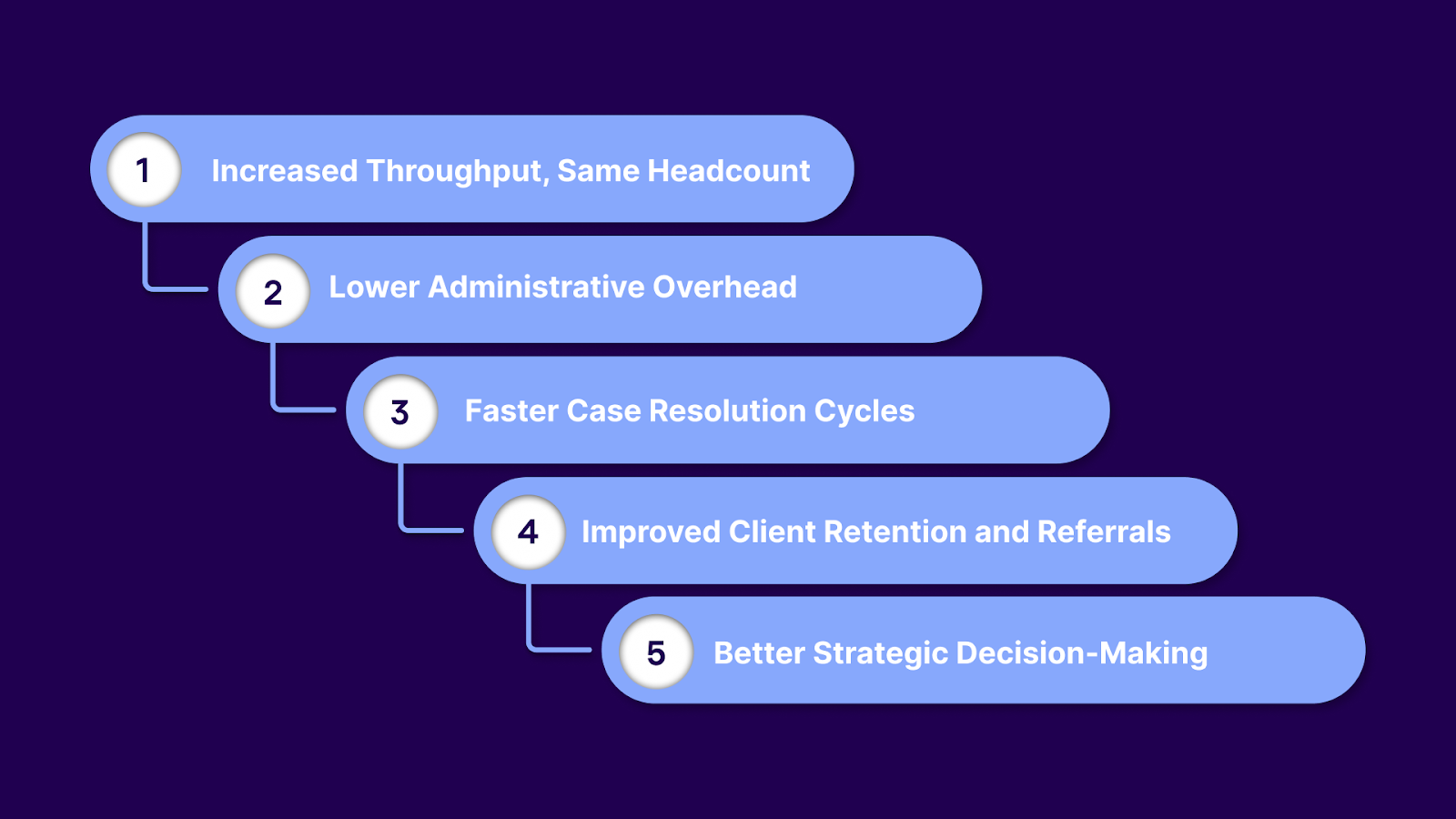
Some of the measurable returns collection agencies and law firms often see include:
Financial returns are important, but legal recovery also carries significant regulatory and procedural risk. Managing that exposure requires more than efficiency alone. The next section examines how the right tools help organizations reduce legal risk while managing debt recovery.
Suggested Read: How Debt Collectors Shape Today’s Recovery Ecosystem
Legal recovery operates under strict regulatory, procedural, and documentation requirements. A small mistake in communication, recordkeeping, or filings can lead to disputes, delays, or compliance exposure.
Key ways technology helps reduce legal risk include:
As legal requirements become more complex, relying on manual coordination alone becomes increasingly risky. This is where technology built specifically for collections and legal recovery starts to play a larger role in supporting everyday operations.
Suggested Read: 13 Recovery Flow Optimization Strategies for Higher Debt Recovery
Tratta is a digital debt collection and payment platform built for collection agencies, creditors, and legal recovery teams. It helps organizations replace fragmented tools with structured workflows that coordinate communication, payments, and account activity.
Tratta supports digital workflows through the following features:
Tratta was built specifically for the challenges of collections and legal recovery, not adapted from general payment software. That focus shows in how easily agencies and law firms can introduce digital processes while continuing to operate the way their teams expect.
Missing documents, unclear case status, delayed payments, or inconsistent communication can slow progress and create unnecessary risk. As caseloads grow, these gaps make it harder for agencies and law firms to maintain control over recovery operations.
Tratta helps bring structure to the process. By enabling organized communication, digital payments, reporting, and automated workflows, Tratta allows teams to manage debt recovery more consistently and transparently. Instead of chasing updates across tools, agencies, and attorneys can focus on moving cases toward resolution.
If your team is looking to update how legal recovery is managed, the right technology can make a measurable difference. Speak to us today.
Digital workflows are structured processes managed through software that guide how cases move from intake to resolution. They help organize documentation, communication, payments, and reporting across agencies and legal teams.
Agencies typically transfer accounts through referral systems that include account data, documentation, and case details. Digital systems help standardize these referrals and reduce delays.
Yes. Technology can apply jurisdiction-specific rules, deadlines, and documentation requirements, helping firms handle cases across different courts and states more efficiently.
They often make resolution easier by offering online payments, structured communication, and clearer account information, allowing consumers to act without lengthy phone interactions.
Creditors gain better visibility into case progress, recovery performance, and payment activity through reporting dashboards and structured updates from agencies or law firms.