Debt recovery depends on effective communication. Yet reaching consumers through traditional channels is becoming increasingly difficult. Many people ignore calls from unfamiliar numbers or delay responding to mailed notices, which makes it harder for collections teams to establish contact.
Industry estimates suggest that collection agencies recover roughly 20–30% of outstanding balances depending on account age and portfolio type. At the same time, communication habits have shifted toward digital channels.
For collection agencies, law firms, and credit issuers managing large portfolios, this creates a clear challenge. Teams spend hours calling past-due accounts and sending letters that often go unanswered while balances continue to age.
Payment communication software offers a more effective approach. These platforms enable digital messaging, automated reminders, and secure self-service payment options, helping organizations engage consumers earlier and resolve accounts more efficiently.
This article explains how payment communication platforms work and why they are becoming an important part of modern debt recovery operations.
Payment communication software is a digital platform that helps organizations communicate with consumers about outstanding balances and provide secure ways to complete payments.
Instead of relying on manual phone calls or mailed notices, these platforms bring communication tools, payment options, and compliance controls into one system. Collections teams can send reminders, share secure payment links, and allow consumers to review and resolve balances online.
For collection agencies, law firms, and credit issuers, this technology becomes the central layer that manages payment-related communication throughout the recovery process.
Most payment communication platforms include several capabilities that help organizations manage payment outreach in a structured and scalable way.
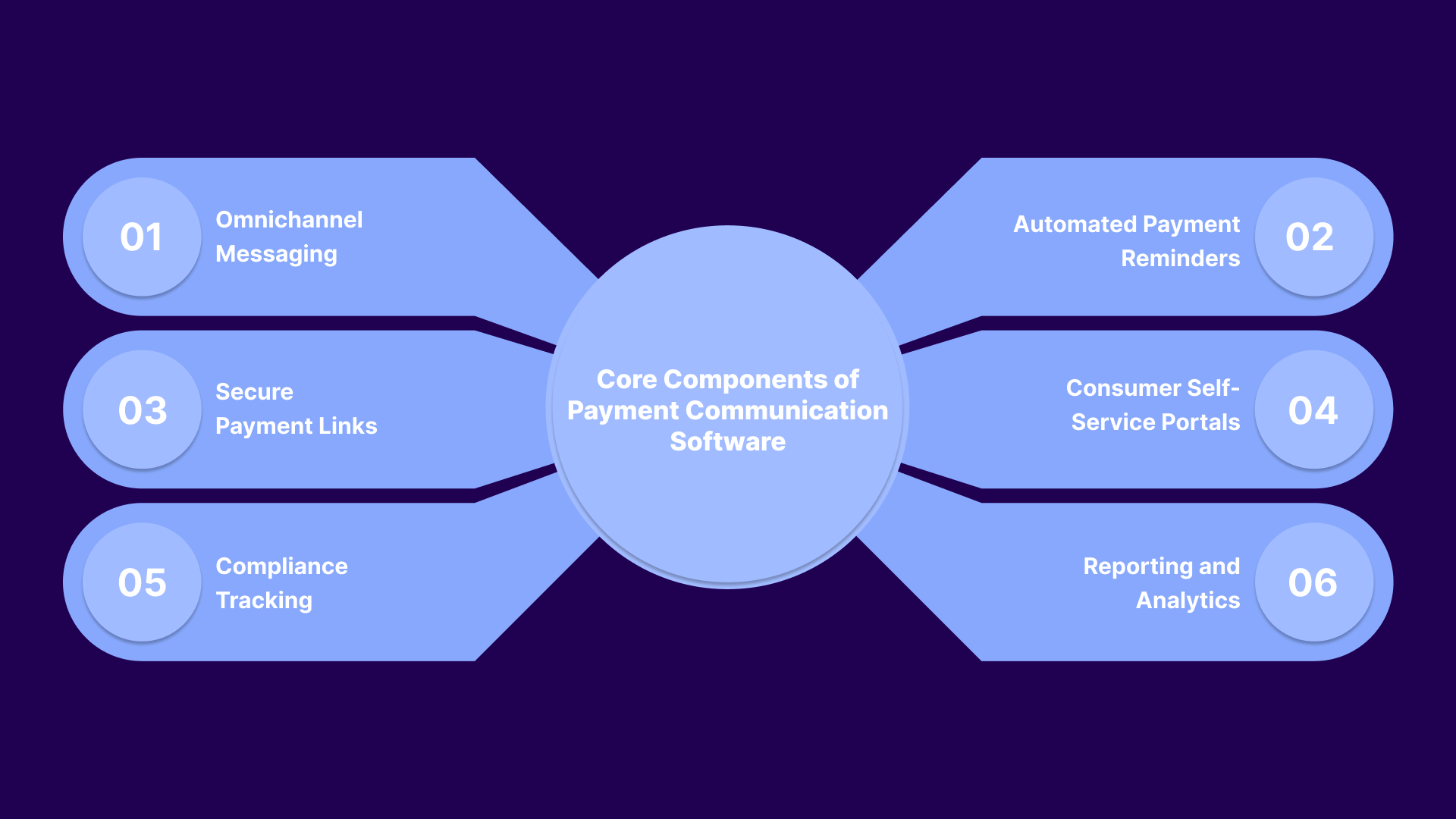
Together, these capabilities help collections teams manage payment communication more efficiently while maintaining clear visibility across the recovery process.
As organizations adopt these tools, the limitations of traditional outreach methods become more apparent. Understanding those challenges helps explain why many collections teams are shifting toward digital communication strategies.
Many collections teams still rely on phone calls and mailed notices to reach consumers. While these methods remain part of the process, they often generate low engagement and require significant manual effort.
Collections teams addressing these challenges often turn to digital communication platforms designed for debt recovery workflows. Tratta's payment communication platform, for example, helps organizations manage consumer messaging, automate payment reminders, and offer secure self-service payment options while maintaining compliance with industry regulations.
These changes highlight why many organizations are adopting digital payment communication platforms.
Collections teams have historically relied on phone calls and mailed notices to contact consumers. Digital payment communication platforms provide a more efficient alternative by automating outreach and simplifying payment resolution.
Manual processes can slow recovery efforts and increase operational workload. Digital platforms address these challenges by centralizing communication, automating reminders, and making payments easier to complete.
Suggested Read: Advanced Collection Software Strategies for 2026
Payment communication software helps organizations improve recovery outcomes by combining digital communication, automation, and self-service payment tools. These capabilities allow collections teams to engage consumers earlier and simplify the payment process.
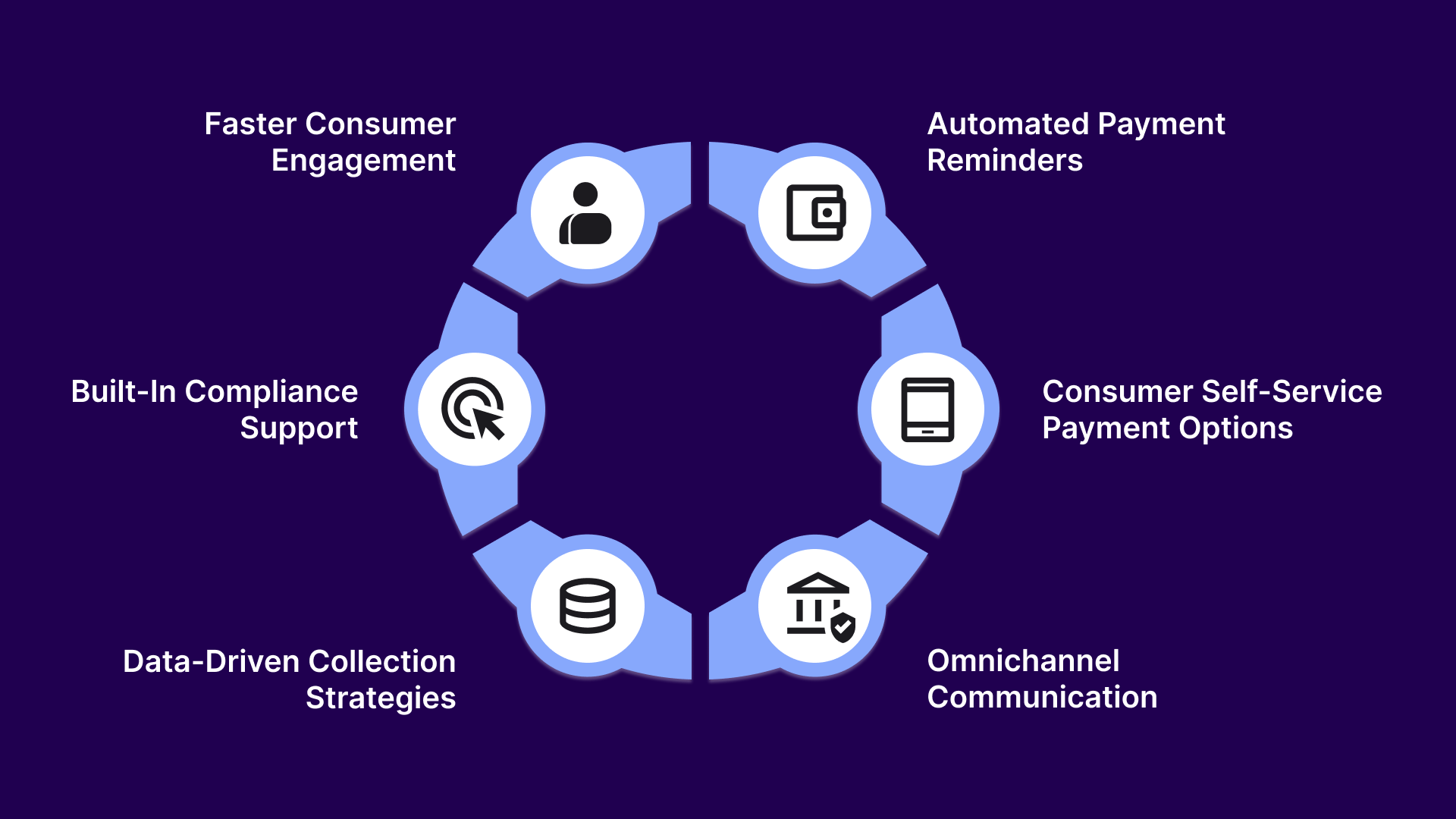
Digital communication reaches consumers instantly and encourages quicker responses. SMS messages, for example, are often read within minutes and achieve significantly higher open rates than traditional outreach.
Key benefits include:
Manual follow-ups require time and can lead to inconsistent outreach. Payment communication platforms automate reminders so consumers receive timely notifications without agent intervention.
Reminders can be triggered for:
Automation helps maintain consistent communication while reducing administrative workload.
Many consumers prefer resolving financial obligations independently. Self-service portals allow them to review balances, choose payment options, and complete transactions at their convenience.
Typical capabilities include:
These options reduce friction and allow consumers to resolve balances without direct agent interaction.
Consumers respond to different communication channels. Payment communication software enables outreach across channels such as:
Using multiple channels increases the likelihood that consumers will see and respond to payment messages.
Digital communication platforms provide analytics that help collections teams improve outreach strategies.
Teams can track metrics such as:
These insights help organizations identify effective communication channels and optimize outreach timing.
Debt collection communication must follow regulations such as the Fair Debt Collection Practices Act (FDCPA) and CFPB Regulation F.
Payment communication platforms support compliance by providing:
These features help organizations maintain compliant communication practices while documenting consumer interactions.
As digital communication becomes central to collections operations, choosing the right payment communication platform is increasingly important for improving engagement and recovery performance.
Also Read: Choosing the Right Debt Recovery Management Software
Not all payment communication platforms provide the same capabilities. For collection agencies and credit issuers, the right solution should support efficient communication while making it easier for consumers to complete payments.
Key features to consider include:
Many platforms also integrate with collection management systems, CRM tools, and payment gateways. This allows organizations to manage communication, payments, and reporting within a single workflow.
Selecting a platform with these capabilities helps collections teams maintain consistent outreach and resolve payments faster. To maximize the benefits of payment communication software, organizations also need clear communication strategies and structured implementation practices.
Suggested Read: Effortless Payment Collection with Automated Software Solutions
Organizations adopting payment communication software should follow clear practices to improve engagement and simplify payment resolution.
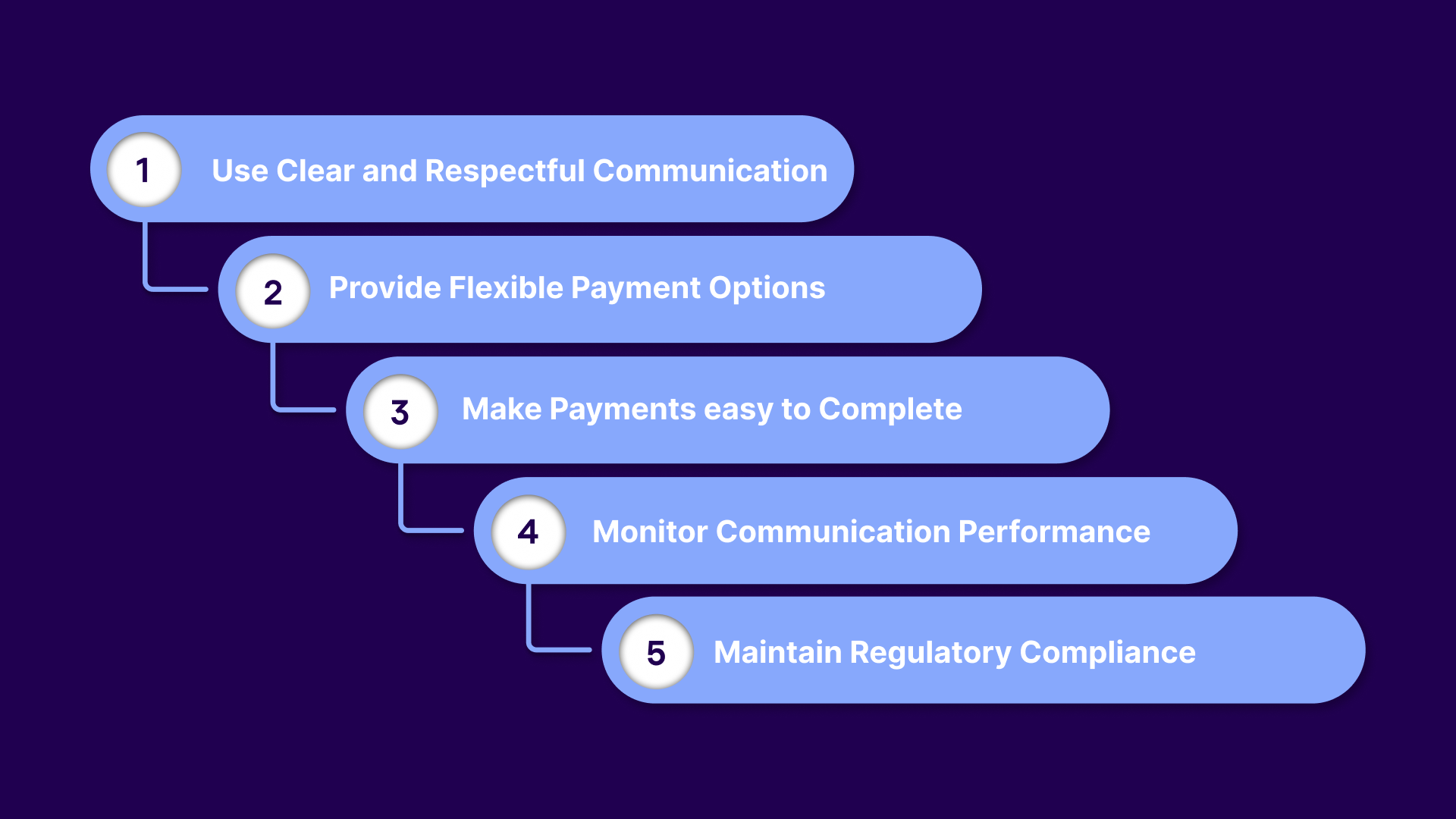
1. Use Clear and Respectful Communication: Messages should be simple, professional, and easy to understand. Clearly explaining balances, due dates, and payment options helps reduce confusion and encourages consumers to respond.
2. Provide Flexible Payment Options: Consumers are more likely to resolve balances when they can choose a payment method that fits their financial situation. Options such as installment plans, partial payments, or settlement offers make repayment more manageable.
3. Make Payments Easy to Complete: Convenience plays an important role in repayment behavior. Including secure payment links or access to a self-service portal allows consumers to review balances and complete payments quickly.
4. Monitor Communication Performance: Tracking engagement metrics helps teams understand which strategies are most effective. Key metrics include response rates, payment conversions, and channel performance.
5. Maintain Regulatory Compliance: Debt collection communication must follow regulations such as the Fair Debt Collection Practices Act (FDCPA). Payment communication systems should support consent tracking, communication records, and audit trails to maintain compliant outreach.
As more organizations adopt these practices, collections strategies are increasingly shifting toward digital communication models that align with modern consumer expectations.
Suggested Read: How Technology Is Changing Debt Collection
As digital adoption grows, payment communication platforms continue to evolve. Several trends are shaping how collections teams communicate with consumers and manage repayment workflows.
Platforms like Tratta reflect this shift by providing features designed specifically for modern collections operations. These include:
By combining communication, payments, and compliance features in one platform, solutions like Tratta help collections teams improve engagement while creating a more accessible payment experience for consumers.
Successful debt recovery depends on reaching consumers through the channels they respond to. As communication habits shift toward digital platforms, traditional methods such as phone calls and mailed notices often produce limited engagement.
Payment communication software addresses this challenge by enabling digital messaging, automated reminders, and secure self-service payment options. These tools help consumers review balances and resolve accounts more easily while giving collections teams better visibility into engagement and payment activity.
For collection agencies, law firms, and credit issuers, adopting digital communication platforms can improve recovery efficiency and support a more structured payment resolution process.
To learn how a digital-first platform supports modern payment communication and compliant collections workflows, explore how Tratta helps organizations manage consumer messaging, payment options, and engagement in one system.
Book a demo to see how Tratta supports digital payment communication and compliant debt recovery workflows.
Payment communication software is a digital platform that helps organizations communicate with consumers about outstanding balances and payment options. It supports channels such as SMS, email, and secure payment portals while allowing teams to automate reminders and track payment activity.
These platforms improve recovery by reaching consumers through digital channels and sending timely payment reminders. Features like secure payment links and self-service portals make it easier for consumers to respond and complete payments quickly.
Most platforms support multiple channels such as SMS, email, and secure payment portal notifications. Using several channels increases the chances that consumers will see payment reminders and engage with the repayment process.
Modern platforms include tools that support compliance with regulations such as the FDCPA and CFPB Regulation F. Features like consent tracking, communication logs, and audit trails help organizations maintain proper documentation of consumer interactions.
Collection agencies, law firms, and credit issuers that manage large volumes of accounts benefit the most. These platforms help them automate outreach, improve payment engagement, and manage collections communication more efficiently.