Compliance is a constant operational burden. The Consumer Financial Protection Bureau received over 207,800 debt collection complaints, as per its 2025 Annual Report. Many were tied to errors, disputes, and communication violations.
For collection agencies, this creates a familiar challenge: you are expected to scale outreach while ensuring every action meets changing regulations. Manual checks, agent training, and periodic audits are no longer enough.
An automated compliance management system addresses this gap by embedding compliance into daily operations. In this blog, we will break down how these systems work and how agencies are using them in 2026.
Quick look:
An automated compliance management system is a technology layer that embeds regulatory rules directly into your collection workflows. Instead of relying on agents to remember policies or managers to catch issues later, the system enforces compliance in real time across communications, payments, and account handling.

For agencies operating under frameworks like Reg F and changing state laws, this shifts compliance from a reactive function to an operational standard. Every action is checked, controlled, and recorded as it happens.
Key features include:
These systems operationalize compliance, ensuring consistency at scale. In the next section, we will break down how compliance automation tools actually work within day-to-day debt collection operations.
Suggested Read: Debt Collection Compliance: Essential Regulations and Guidelines to Know
Compliance automation tools operate as a control layer within your collections environment. They continuously check actions against regulatory rules. These systems guide and restrict what can happen in real time.
This is how they work in debt collection operations:
The system is configured to meet regulatory requirements, including call limits, consent rules, and timing restrictions. These rules are mapped to workflows, accounts, and communication channels.
Compliance checks are embedded in day-to-day processes such as dialing, messaging, and payment handling. Every action initiated by an agent or system trigger passes through these controls.
Before any action is executed, the system evaluates it against active rules. Non-compliant actions are blocked, modified, or flagged instantly.
Outbound calls, SMS, and emails are automatically regulated based on frequency, timing, and consent. This ensures consistent adherence without relying on manual judgment.
Every interaction, decision, and outcome is recorded with timestamps. This creates a continuous, searchable audit trail for internal reviews and external audits.
Agencies gain visibility into compliance performance through dashboards and reports. Patterns, risks, and violations can be identified and addressed proactively.
Tratta delivers compliance-related features within a broader collections platform. Compliance is embedded directly into communications, payments, and workflows. Rule-based controls govern call attempts, message timing, and consent. Payment flows and account actions are automatically checked against regulatory requirements in real time. Schedule a free demo today.
As compliance pressure increases, agencies are no longer using automation just to avoid penalties. They are using it to control operations, standardize decisions, and scale without introducing risk.

5 popular use cases include:
Agents often work multiple accounts in parallel, making it easy to exceed call attempt limits without realizing it. Compliance automation tracks every outbound attempt across accounts and channels, ensuring limits like Reg F’s 7-in-7 are not breached. It also prevents duplicate outreach when multiple agents or systems act on the same account.
This is handled through:
What this changes: Agents no longer need to track counts manually or rely on memory. The system removes the risk of accidental over-contacting, which is one of the most common sources of complaints.
In daily operations, consent data is often incomplete, outdated, or misread by agents. Compliance automation checks consent status before allowing SMS or email outreach, preventing unauthorized communication. It also accounts for opt-outs and channel-specific permissions in real time.
This is enforced through:
What this changes: Agencies avoid one of the fastest-growing sources of regulatory action. Outreach becomes permission-based by default, not dependent on agent verification.
Agents working across regions often contact consumers outside permitted hours due to time-zone differences or workload pressure. Compliance automation for collectors aligns outreach with the consumer’s local time, ensuring communication only occurs within allowed windows. It also prevents early morning or late-night messages triggered by automated campaigns.
This is controlled through:
What this changes: Time-based violations are eliminated without slowing down operations. Agencies can run campaigns at scale without worrying about when messages are delivered.
During payment conversations, agents may skip required disclosures or set up terms that do not align with compliance requirements. Automation ensures that payment flows include necessary validations, disclosures, and authorization steps before completion. It also standardizes how settlements and installment plans are structured.
This is implemented through:
What this changes: Payment processing becomes consistent across agents and channels. This reduces disputes, reversals, and compliance exposure tied to improper handling.
When disputes arise, agencies often struggle to reconstruct what happened across calls, messages, and payments. Compliance automation captures every action automatically, including what was sent, when, and under which conditions. This creates a complete, traceable history without manual documentation.
This is supported by:
What this changes: Agencies can respond to complaints and audits with precise records instead of partial reconstructions. This strengthens defensibility and reduces time spent on compliance reviews.
In the next section, we will break down the different types of automated compliance management tools used by collection agencies and how they compare.
Suggested Read: How to Stay Compliant With the Fair Debt Collection Practices Act
Agencies use different types of compliance automation tools depending on their operational structure. The right choice often depends on whether the goal is to monitor activity or to control it in real time.
Popular types of automated compliance management systems include:
These tools focus on monitoring, reporting, and audit management. They help track violations, manage policies, and prepare for regulatory reviews. Most useful for agencies that need centralized compliance visibility across multiple systems.
These are embedded into dialers, CRMs, or messaging systems to enforce rules during execution. They control actions like calls and account updates as they happen. Most useful for agencies looking to reduce real-time errors without overhauling their entire tech stack.
These tools manage outreach rules, including consent, frequency, and timing. They ensure SMS, email, and call activities align with regulatory requirements. Most useful for agencies handling high outbound volumes across multiple channels.
These focus on ensuring payment processes meet regulatory and security standards. They validate transactions, enforce disclosures, and protect financial data. Most useful for agencies processing frequent payments or managing settlement plans.
These systems combine communications, payments, workflows, and compliance into one environment. They enforce rules across all operations rather than in isolated areas. Most useful for agencies aiming to scale while maintaining consistent compliance control.
Choosing between these approaches ultimately comes down to cost, operational impact, and risk tolerance. In the next section, we will break down whether investing in these systems delivers measurable value for collection agencies.
Suggested Read: SMS Compliance Laws and Regulations
Fines, disputes, rework, audit preparation, and operational slowdowns add up quickly, often exceeding the cost of automation. Evaluating ROI means looking beyond software spend to the cost of errors, inefficiencies, and missed recovery opportunities.
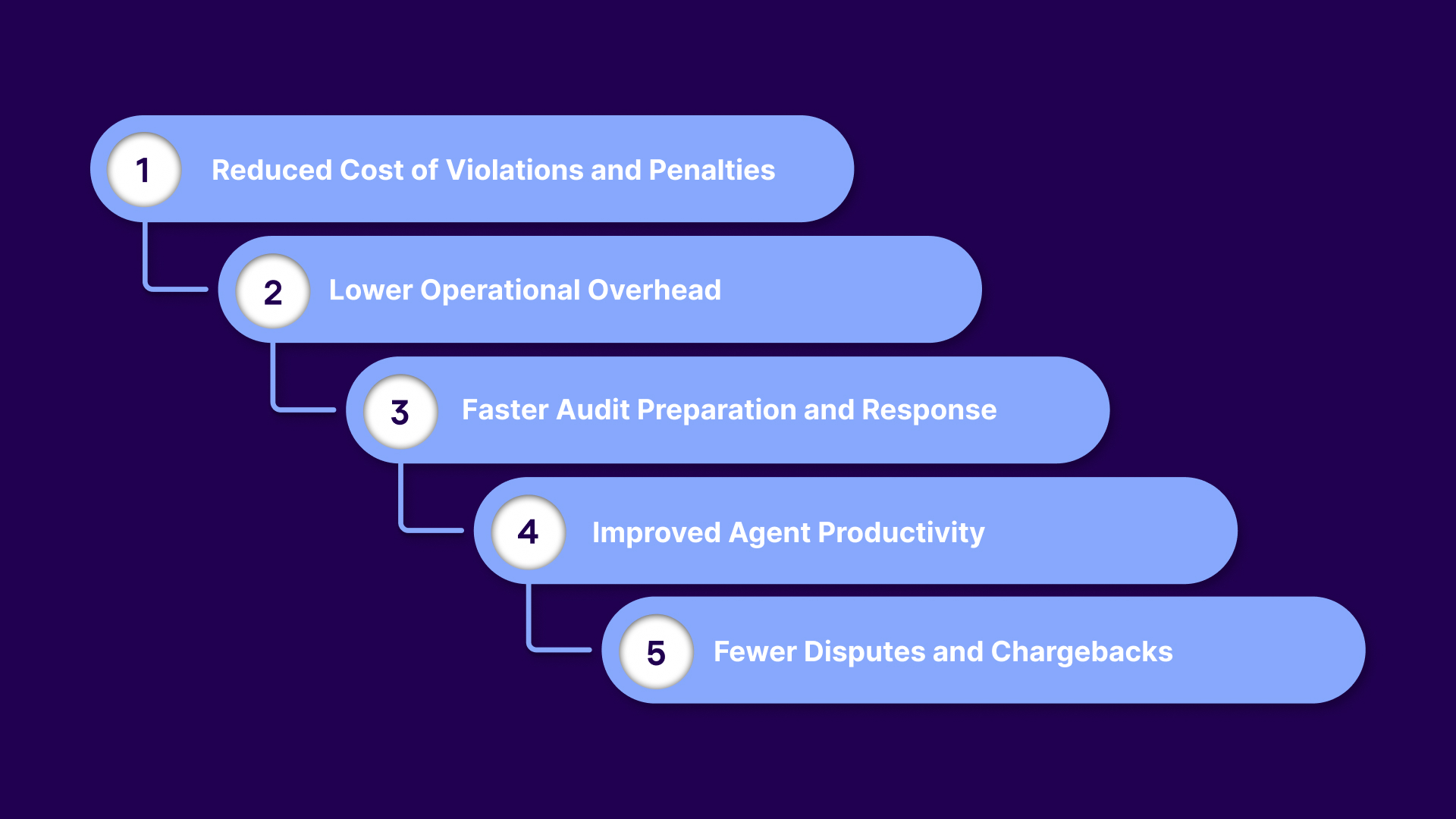
These are a few reasons that make automated compliance management systems a good investment:
Tratta is a debt collection platform that improves cost efficiency at the compliance level. Agencies can lower audit, remediation, and oversight costs by standardizing decisions and reducing exception handling. Its compliance-by-code approach minimizes violations and the downstream expenses they create. Speak with us to learn more.
While automation improves consistency and control, it is not without constraints. Many agencies face gaps in implementation, over-reliance on static rules, or difficulty aligning systems with regulations.
Table showing challenges in implementing compliance automation and their solutions:
Even with these challenges, agencies can improve outcomes by focusing on how systems are implemented and maintained. Best practices to maximize value:
The right technology can address many of these limitations by reducing fragmentation and improving real-time control. Systems designed with operational alignment in mind eliminate gaps between compliance logic and execution. This creates a more reliable and scalable approach to compliance management.
When compliance is handled through manual checks or disconnected systems, small gaps turn into costly problems. Missed call limits, outdated consent records, or incomplete audit trails can quickly lead to violations, disputes, and regulatory scrutiny.
Tratta addresses this by embedding compliance into how collection operations actually run, reducing reliance on oversight and after-the-fact corrections. Its approach aligns execution with regulatory requirements, helping agencies stay consistent while scaling.
If you are looking to reduce compliance risk without increasing operational burden, it may be time to rethink your current systems. Call us today to understand how Tratta can help you operationalize compliance while improving recovery outcomes.
An automated compliance management system can incorporate regulatory updates through rule revisions, configuration changes, or vendor-supported updates. Many systems allow compliance teams to modify rules without disrupting operations. This ensures agencies stay aligned with evolving laws without rebuilding workflows.
Document compliance automation ensures that letters, notices, and disclosures meet regulatory requirements before they are sent. It standardizes templates, applies required language, and validates content based on jurisdiction. This reduces the risk of sending non-compliant or outdated documents.
Compliance automation for affidavits helps ensure that legal documents are accurate, complete, and properly validated before submission. It can enforce data checks, required fields, and formatting standards. This reduces errors that could lead to case delays or legal challenges.
Compliance automation for collectors provides real-time guidance during calls, messaging, and account handling. It reduces reliance on memory or manual checks by enforcing rules within workflows. This allows agents to focus on recovery while staying within compliance boundaries.
Yes, smaller agencies often benefit significantly because they have fewer resources for manual compliance oversight. Automation reduces the need for large compliance teams while maintaining consistency. It also helps standardize processes as the agency grows.