How Does Centralized Compliance Alerts Help Agencies Manage Risk
Optimization
How Does Centralized Compliance Alerts Help Agencies Manage Risk
Published on:
March 26, 2026
Compliance risk is a constant concern for collection agencies managing large portfolios and multiple communication channels. A single missed restriction, delayed dispute response, or improper outreach attempt can quickly escalate into regulatory exposure.
According to the CFPB Annual Report 2025, the bureau received about 207,800 debt collection complaints. This shows the scale of consumer scrutiny facing the industry. For many agencies, the challenge is not understanding the rules but maintaining consistent oversight across thousands of accounts and interactions.
Without clear monitoring, compliance risks can remain hidden until they escalate into operational or regulatory issues. In this article, we explore how centralized compliance alerts help collection agencies manage risk and maintain stronger compliance oversight.
In brief:
Centralized compliance alerts help identify potential risks early. These alerts flag activities such as restricted outreach or dispute-related actions that may require compliance review.
Compliance monitoring is critical for modern collection operations. Agencies managing large portfolios and multiple communication channels must track activity consistently to reduce regulatory exposure.
Centralized oversight improves operational compliance management. Monitoring systems help teams review account activity, communication records, and operational events more efficiently.
Implementation requires clear processes and monitoring rules. Agencies must define alert triggers, review procedures, and escalation workflows to ensure alerts remain useful.
Operational records support effective compliance oversight. Maintaining communication histories and account activity records helps agencies review interactions and investigate potential compliance concerns.
What Are Centralized Compliance Alerts in Debt Collection?
Centralized compliance alerts are automated or system-generated notifications that help collection agencies monitor potential compliance risks across their operations. These alerts flag activities, account conditions, or communication events that may require compliance attention.
By monitoring key triggers such as account status changes, dispute activity, or outreach attempts, centralized alerts help compliance teams identify potential issues earlier.
Centralized alerts create a structured way to monitor operational activity. They allow supervisors and compliance teams to review flagged events quickly and determine whether corrective action is needed.
Pros of Centralized Compliance Alerts
Improve visibility into compliance risks across accounts and portfolios
Help detect potential violations earlier in the collection process
Reduce reliance on manual compliance monitoring
Support faster response to compliance concerns
Provide consistent monitoring across communication channels
Limitations of Centralized Compliance Alerts
Alerts depend on accurate configuration and rule definitions
Excessive alerts can create operational noise for compliance teams
Legacy systems may not support real-time monitoring
Alerts may identify issues, but still require manual investigation
Implementation may require workflow adjustments across teams
Centralized alerts can be configured to monitor different compliance triggers across collection operations. Understanding the most common alert categories helps agencies design monitoring systems that reflect real regulatory and operational risks.
Types of Compliance Alerts Used in Debt Collection
Compliance alerts can monitor a wide range of activities across collection operations. These alerts help agencies track events that may require compliance review or closer supervision.
Common types include:
Communication Timing Alerts
These alerts flag outreach attempts that fall outside permitted communication windows or violate consumer contact restrictions. They help agencies monitor outreach activity across channels and review potentially noncompliant communication attempts.
Dispute Status Alerts
Dispute-related alerts notify teams when an account has entered dispute status or requires additional documentation review. This helps ensure that accounts are handled in accordance with regulatory guidelines during the dispute resolution process.
Restricted Account Alerts
These alerts identify accounts that should not receive further outreach due to legal status, prior consumer requests, or other restrictions. Monitoring restricted accounts helps prevent accidental communication attempts that could create compliance issues.
Documentation Requirement Alerts
Documentation alerts indicate when certain account records or verification materials may be missing or require review. This helps teams ensure account documentation is available when needed for debt collection compliance checks or dispute responses.
Escalation and Review Alerts
Escalation alerts flag accounts that may require review by a supervisor or the compliance team. These alerts help agencies address higher-risk accounts before further collection actions occur.
Different types of compliance alerts can help agencies monitor specific risks across collection operations. However, many organizations find that effective compliance oversight requires more than isolated alert systems.
A broader debt management platform can provide the operational visibility and records needed to review account activity and investigate potential issues.
Tratta supports compliance oversight by maintaining communication records, account activity histories, and operational reporting tools that help agencies review collection activity. These records give teams the information they need to evaluate interactions and investigate potential compliance concerns. Schedule a free demo today.
5 Ways Centralized Alerts Help Collection Agencies Manage Compliance Risk
Managing compliance risk in debt collection requires consistent monitoring across accounts, communication channels, and operational workflows. Centralized alerts help agencies identify activities that may require compliance review before they develop into larger regulatory concerns.
These alerts allow compliance teams and supervisors to respond more quickly and maintain better oversight of collection operations. These are a few ways that centralized compliance alerts help debt collectors:
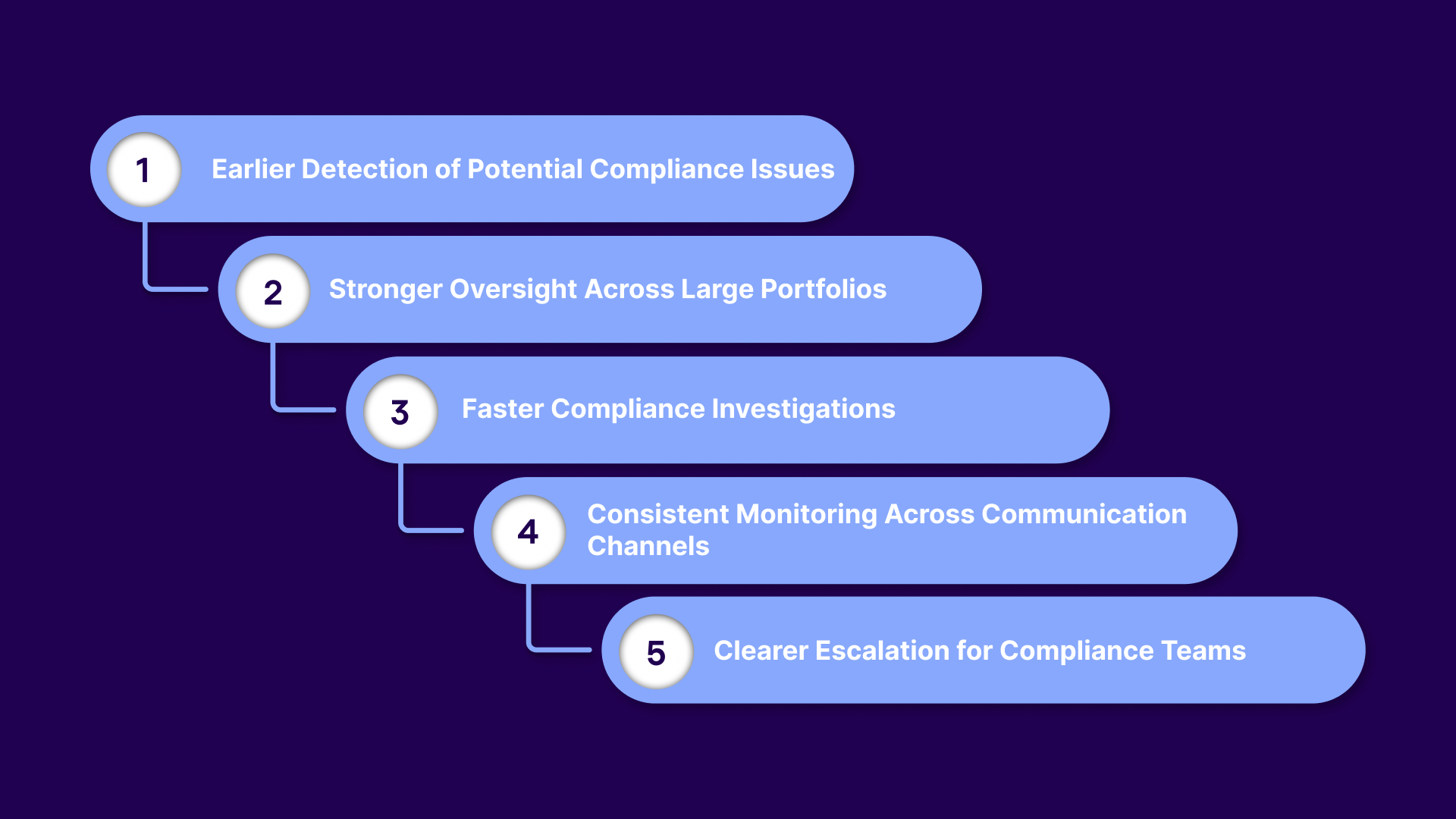
1. Earlier Detection of Potential Compliance Issues
Centralized alerts help agencies identify risky activities before they escalate into regulatory problems. Early visibility allows teams to review account activity and take corrective action sooner.
These alerts typically monitor events such as:
Outreach attempts outside permitted communication hours
Contact attempts on restricted accounts
Communication after cease-and-desist requests
Activity on accounts flagged for legal review
2. Stronger Oversight Across Large Portfolios
Collection agencies often manage thousands of accounts simultaneously, making manual monitoring difficult. Centralized alerts help compliance teams track potential issues across large portfolios more efficiently.
Alerts can help supervisors monitor activity such as:
When potential compliance issues are flagged promptly, teams can investigate them before they escalate into larger operational risks. Alerts help identify which accounts require closer review.
Alerts can trigger a review of events such as:
Dispute status updates
Consumer complaints related to account activity
Escalated communication records
Accounts requiring documentation verification
4. Consistent Monitoring Across Communication Channels
Modern collection operations rely on multiple outreach channels, which can complicate compliance monitoring. Centralized alerts help agencies monitor communication activity across channels.
Alerts may track activity such as:
SMS outreach attempts
Email communication activity
Call attempts and contact history
Channel-specific communication restrictions
5. Clearer Escalation for Compliance Teams
Alerts provide structured signals that help compliance teams prioritize which accounts require review. This helps agencies respond to higher-risk situations more effectively.
Alerts may escalate events such as:
Accounts requiring supervisor review
Accounts flagged for legal or compliance investigation
Repeated communication attempts within short periods
Accounts associated with consumer complaints
Centralized alerts are only one part of a broader compliance monitoring strategy. To support these alerts effectively, agencies also rely on specialized tools designed to track, review, and document compliance activity across collection operations.
Features of Centralized Compliance Tools in Debt Collection
Centralized compliance tools help agencies monitor operational activity and maintain oversight across complex collection environments. These systems track key events, communication activity, and account changes that may require compliance review.
Key features include:
Compliance Monitoring Dashboards
Centralized systems often provide dashboards that summarize compliance activity across accounts and communication channels. These dashboards help supervisors review flagged events, compliance trends, and operational activity in one place.
Automated Compliance Notifications
Automated notifications can flag events that require attention from compliance teams or supervisors. These alerts help identify potential issues such as communication attempts on restricted accounts or activity during dispute periods. Automation reduces the need for manual monitoring and helps agencies respond more quickly to potential risks.
Communication Activity Tracking
Compliance tools often maintain detailed records of consumer interactions across channels. These records allow teams to review outreach attempts, communication history, and contact frequency when evaluating potential compliance concerns. Maintaining clear communication logs also supports internal investigations and regulatory reviews.
Role-Based Compliance Access Controls
Access controls help ensure that sensitive account information and compliance records remain protected. Agencies can restrict access to specific compliance functions based on team roles or responsibilities. This helps maintain secure handling of consumer data while allowing compliance teams to review operational activity.
Audit and Documentation Records
Centralized systems often maintain detailed operational records that support compliance reviews. These records may include communication history, account activity logs, and documentation related to collection actions. Maintaining structured records helps agencies prepare for audits or regulatory inquiries.
Tratta helps agencies manage collection activity within structured operational workflows. By organizing consumer interactions, outreach activities, and payment actions within a single system, teams can review account activity more efficiently during routine operations. Talk to us to learn more.
Challenges of Implementing Compliance Monitoring Systems for Agencies
Implementing centralized compliance monitoring can improve oversight, but many agencies face operational barriers in doing so. Collection operations often rely on multiple systems, communication channels, and legacy workflows that make monitoring more complex.
Table showing common obstacles:
Challenge
Operational Impact
Why It Happens
Fragmented Communication Systems
Compliance teams struggle to track outreach activity across channels.
Agencies often use separate tools for calls, SMS, email, and account management.
Legacy Collection Systems
Older systems may not support automated monitoring or centralized oversight.
Many agencies rely on long-standing platforms built before modern compliance tools.
High Account Volumes
Monitoring thousands of accounts manually can overwhelm compliance teams.
Agencies handle large portfolios with constant communication activity.
Inconsistent Internal Processes
Compliance monitoring may vary between teams or departments.
Agencies may lack standardized procedures for compliance reviews.
Alert Overload
Too many alerts can reduce their effectiveness and overwhelm staff.
Poor configuration or unclear thresholds can generate excessive notifications.
These challenges often arise when compliance monitoring tools are introduced without clear processes or operational alignment. Without structured workflows and defined standards, agencies may struggle to manage alerts and maintain consistent oversight.
Best practices include:
Define clear compliance rules and monitoring triggers
Standardize compliance review procedures across teams
Establish escalation workflows for high-risk alerts
Train agents and supervisors on compliance monitoring practices
Regularly review monitoring thresholds and alert configurations
While compliance monitoring tools play an important role, effective oversight also depends on maintaining accurate operational records. The next section explores how communication records support compliance monitoring in debt collection.
Role of Communication Records in Compliance Monitoring
Communication records play an essential role in maintaining compliance oversight in debt collection operations. Because most regulatory requirements govern how and when agencies communicate with consumers, maintaining clear records of outreach activity becomes critical.
Detailed communication histories enable compliance teams to review interactions, verify outreach practices, and investigate potential concerns as needed. Communication records help in:
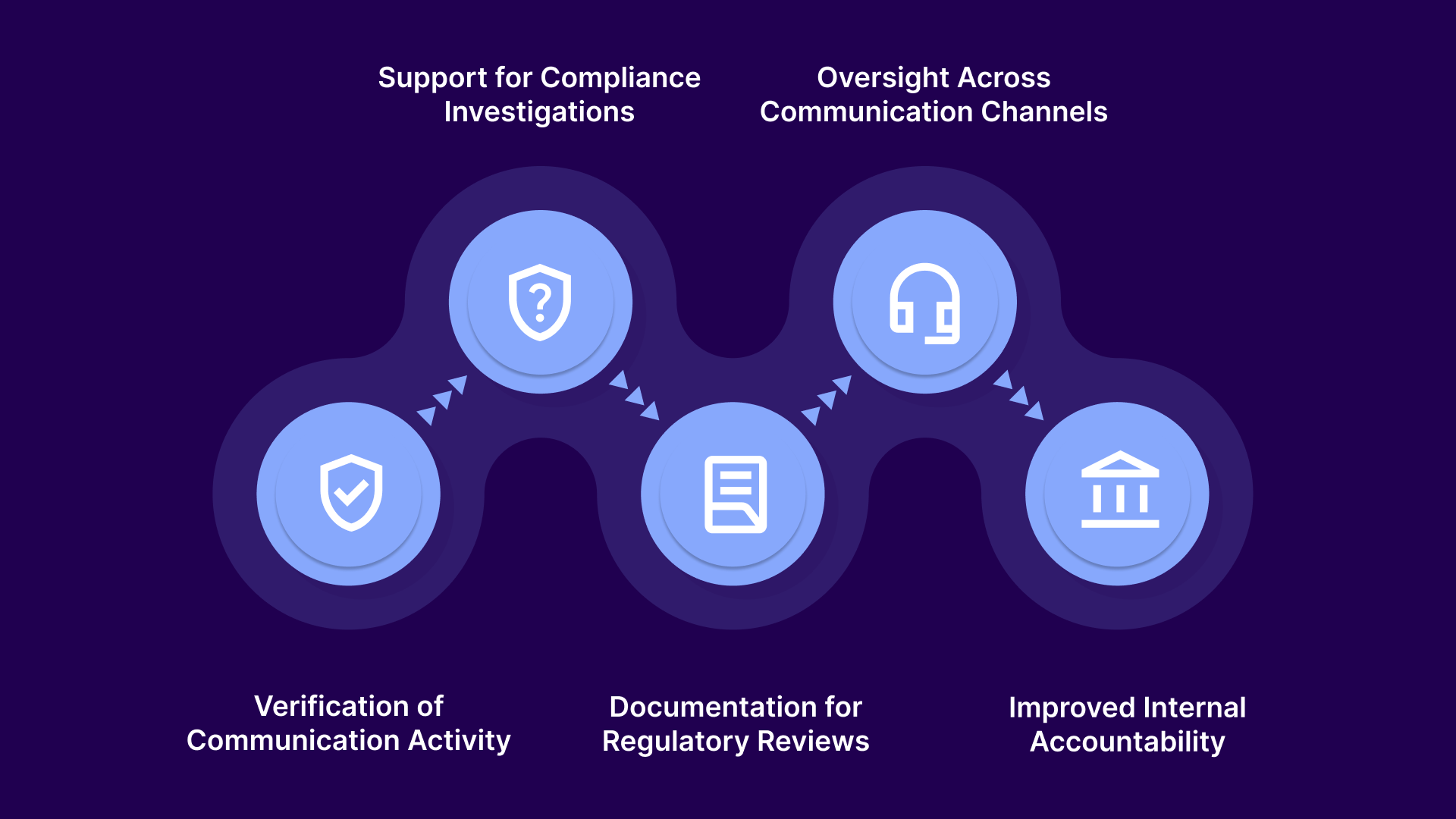
Verification of Communication Activity: Communication records allow agencies to confirm when and how outreach attempts occurred. This helps teams review whether interactions followed permitted communication rules.
Support for Compliance Investigations: When potential compliance issues arise, communication logs provide the information needed to review interactions. These records help teams understand the sequence of outreach attempts and consumer responses.
Documentation for Regulatory Reviews: Maintaining communication records helps agencies demonstrate compliance during audits or regulatory inquiries. Structured records allow organizations to show how consumer interactions were handled.
Oversight Across Communication Channels: Collection agencies often interact with consumers through calls, SMS, and email. Communication records help ensure these interactions can be reviewed consistently across all channels.
Improved Internal Accountability: Clear records of communication activity allow supervisors to review agent actions and collection practices. This visibility helps maintain consistent operational standards.
Ultimately, effective compliance monitoring depends on both structured oversight and reliable operational records. When communication histories are maintained accurately and reviewed regularly, agencies can better identify potential risks and maintain consistent compliance practices across their collection operations.
Conclusion
Without effective compliance monitoring, collection agencies may struggle to identify issues before they escalate into regulatory risks. Missed communication restrictions, inconsistent outreach practices, or delayed reviews can expose agencies to complaints, investigations, and operational disruption.
As portfolios grow and communication channels expand, maintaining consistent oversight becomes increasingly difficult. Tratta helps agencies maintain clearer operational oversight across their collection processes.
This is done through:
Omnichannel Communications helps maintain detailed records of consumer interactions across outreach channels.
Contact Center allows teams to review account activity and communication history during compliance checks.
Reporting and Analytics helps compliance teams evaluate collection activity and identify operational trends.
Campaign Management supports structured communication workflows that help maintain consistent outreach practices.
Security and Compliance supports secure operational processes and the protected handling of consumer data.
Explore how Tratta can support more structured and compliant collection operations. Schedule a free demo today.
Frequently Asked Questions
1. What is a compliance alert in debt collection?
A compliance alert is a notification that flags collection activity that may require review. In collection agencies, alerts may identify issues such as timing violations in communication, restricted account outreach, or dispute-related activity.
2. What is a centralized compliance model for collection agencies?
A centralized compliance model means monitoring regulatory obligations and collection activity from a single system or process. This approach helps agencies track outreach, disputes, documentation, and account activity consistently across teams.
3. What are examples of compliance issues in debt collection?
Common compliance issues include contacting consumers outside permitted hours, continuing communication after cease-and-desist requests, failing to pause activity during disputes, inaccurate balance disclosures, or incomplete documentation during investigations.
4. What are the five steps to compliance in debt collection operations?
Key steps include identifying applicable regulations, defining internal policies, monitoring collection activity, maintaining accurate documentation, and regularly reviewing operations to ensure agents follow compliance procedures.
5. How can collection agencies monitor compliance effectively?
Agencies monitor compliance by maintaining communication records, reviewing account activity, implementing structured monitoring processes, and conducting regular compliance reviews across portfolios and communication channels.
Note: This information is not legal advice. Tratta recommends that you consult with your legal counsel to make sure that you comply with applicable laws in connection with your collection and outreach activities.
Sign up for our monthly newsletter
Debt collection insights that keep you compliant and competitive.
Thank you! Your submission has been received!
Oops! Something went wrong while submitting the form.