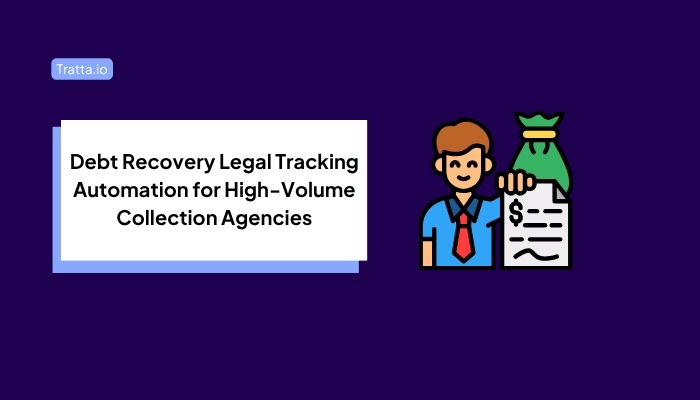
Managing legal workflows in debt recovery often feels fragmented, with missed deadlines, scattered data, and rising compliance pressure slowing everything down. As portfolios grow, this complexity only intensifies.
It is no surprise that the commercial debt collection software market is expected to reach nearly $7.80 billion by 2032, growing steadily at over 9% annually, reflecting the urgency with which agencies are turning to automation.
If you are handling high volumes, you have likely felt this strain firsthand. In this article, we break down what debt recovery legal tracking automation really means, why it matters, and how it helps agencies optimize legal processes, reduce risk, and scale recovery operations with greater control and efficiency.
Brief look:
Legal tracking automation uses technology to track, manage, and update legal activities throughout the recovery lifecycle without manual effort. It replaces fragmented systems with a structured approach that keeps every case on track.
For agencies handling growing portfolios, legal processes often become difficult to manage, leading to delays, missed actions, and compliance risks. Legal tracking automation brings consistency and visibility, ensuring every step is executed on time.
This is why it matters for debt recovery:
As legal workflows vary across account types and recovery stages, the real impact of automation becomes clearer when applied in context. This is where specific use cases across recovery portfolios come into play.
Suggested Read: Legal Consultation for Effective Debt Recovery Solutions
Legal tracking automation applies across different portfolio types, helping agencies manage legal workflows with greater consistency, speed, and control. As account complexity and volume increase, these use cases become critical to maintaining performance and compliance.

When accounts move from soft collections to legal consideration, timing and coordination become critical. Automation ensures that escalation decisions are tracked and executed without delay.
The following actions focus on streamlining how accounts enter legal workflows:
Managing ongoing legal cases requires continuous updates and coordination across multiple touchpoints. Automation keeps all case activity aligned and visible.
These features ensure that case progress is tracked accurately and without disruption:
Once a judgment is secured, recovery efforts shift toward enforcement and collection. Automation ensures these actions are timely and structured.
The following actions help maintain momentum after legal decisions are made:
Agencies managing diverse portfolios need to handle legal workflows differently across segments. Automation enables tailored approaches without increasing complexity.
These actions support scalable and consistent handling of large case volumes:
Legal tracking is closely tied to regulatory requirements and audit readiness. Automation ensures that every action is documented and traceable.
The following actions focus on maintaining transparency and regulatory alignment:
Tratta supports legal workflows by triggering compliant communication and follow-ups based on account activity. Reporting and analytics provide real-time visibility with audit-ready history, while the contact center captures and logs all interactions for compliance and review. Schedule a free demo.
To truly support agencies, the system must go beyond basic tracking and deliver features that improve control, visibility, and execution across legal workflows. The following features define what an effective legal tracking automation system should include.
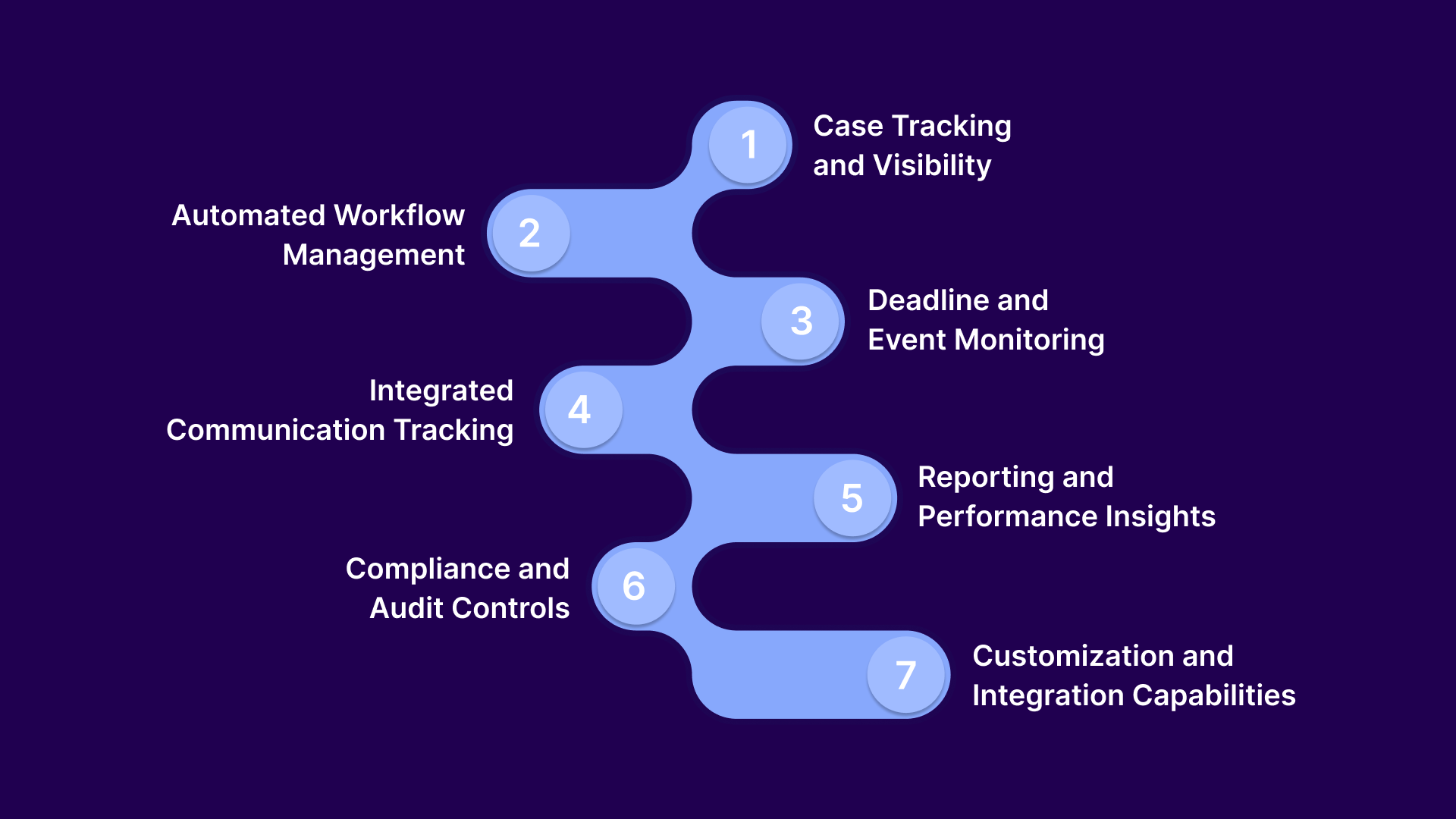
Track every case clearly:
Automate every legal step:
Never miss key dates:
Keep all interactions aligned:
Measure legal workflow outcomes:
Stay aligned with regulations:
Adapt to your operations:
Tratta combines communication controls, payments, workflows, and reporting into one system designed for regulated collections. It helps agencies stay consistent, audit-ready, and in control across high-volume operations. Call today to learn more.
Suggested Read: Collection in Law
Laws such as the Fair Debt Collection Practices Act (FDCPA), Regulation F, and state-level requirements demand precise timing, accurate disclosures, and complete records. As volumes increase, manual tracking makes it harder to consistently meet these standards.
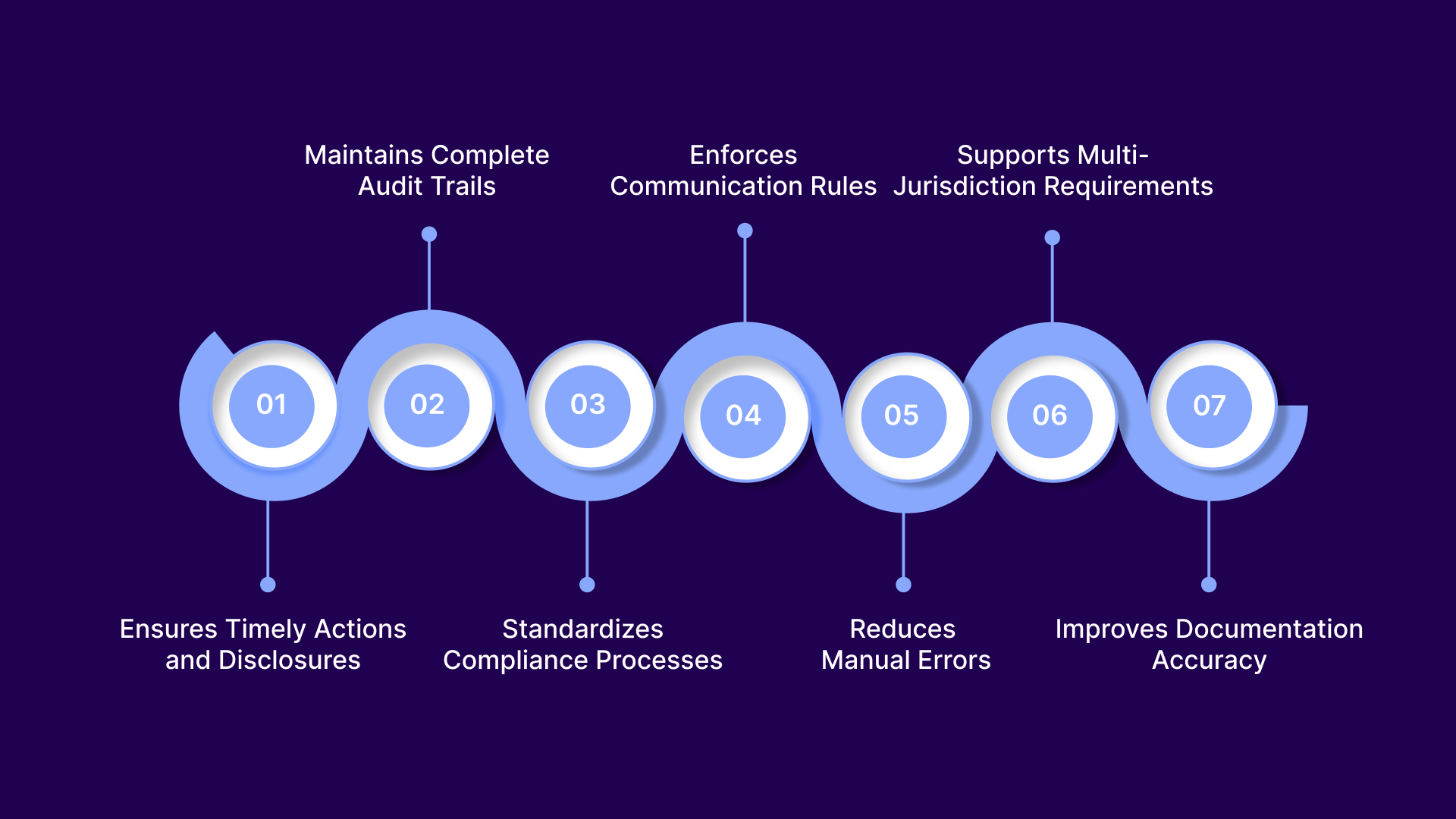
Legal tracking automation embeds compliance directly into workflows, helping agencies reduce risk while maintaining control across legal processes. This is how it helps:
The FDCPA and Regulation F require specific timelines for validation notices, follow-ups, and consumer communications. Automation tracks these deadlines and triggers actions at the right time without manual intervention. This reduces the risk of missed disclosures and late communications that could lead to violations.
Under the FDCPA and various state regulations, agencies must be able to demonstrate the actions taken and when they were taken. Automation logs every interaction, update, and workflow step in a centralized system. This creates a defensible audit trail that supports legal reviews and regulatory audits.
The FDCPA and Regulation F require consistent treatment of consumers across accounts. Automation enforces standardized workflows, ensuring that every case follows the same compliant process. This minimizes inconsistencies that often arise from manual handling.
Regulation F sets strict guidelines on communication frequency, timing, and consent. Automated systems ensure outreach adheres to these rules by controlling when and how communications are sent. This helps prevent over-contact or non-compliant messaging.
Compliance failures under the FDCPA often result from human error in tracking dates, disclosures, or account status. Automation removes reliance on manual processes by handling these steps systematically. This significantly lowers the likelihood of costly mistakes.
In addition to the FDCPA, agencies must comply with varying state laws that may impose additional requirements. Automation allows workflows to adapt based on jurisdiction, ensuring the correct rules are applied. This helps agencies manage diverse portfolios without increasing compliance risk.
Proper documentation is essential for meeting FDCPA requirements and responding to disputes or legal challenges. Automation ensures that records are consistently captured, organized, and accessible. This strengthens an agency’s ability to defend its actions if questioned.
As compliance requirements become more demanding, the limitations of existing tools become more apparent. Many systems fail to fully support these needs, which is why it is important to understand where legal tracking tools commonly fall short.
Suggested Read: Debt Recovery Process: Practical Tips, Tools, and Strategies
While many agencies rely on legal tracking tools to manage workflows, not all systems are built to handle the complexity of debt recovery.
These gaps include:
As these gaps show, many legal tracking collections software fall short in delivering the control, visibility, and scalability that agencies need. This is where Tratta takes a more integrated approach to supporting legal tracking automation within broader recovery workflows.
Suggested Read: Understanding Debt Settlement Law and Procedures
Tratta is a debt collection platform that connects workflows, communication, and reporting into a structured system. It is not a legal case management tool, but it supports legal workflows by ensuring every interaction is traceable, time-stamped, and aligned with compliance requirements.
By centralizing outreach, payment activity, and interaction data, Tratta helps agencies maintain visibility and consistency across recovery operations. This allows teams to stay aligned with legal processes while improving efficiency and reducing gaps caused by manual or disconnected systems.
This is how Tratta supports legal tracking automation:
Automates email and SMS outreach based on account activity, payment behavior, or time-based rules. Helps deliver timely, compliant communication while tracking engagement and payment outcomes.
Provides real-time dashboards, session logs, and audit history across accounts. This enables agencies to track timelines, actions, and outcomes with full visibility. It also supports audit readiness and compliance reviews.
Captures and organizes all consumer interactions in one place. Creates a complete, accessible record for compliance and internal review.
Embeds safeguards that protect data and enforce regulatory standards across workflows. This helps agencies maintain consistent compliance while managing large portfolios. It also reduces operational and legal risk.
Connects external systems and data sources to prevent siloed workflows. This allows tracking-related activity to remain consistent across platforms. It also improves data accuracy and coordination.
Enables secure, trackable payment processing across channels. Improves resolution while maintaining transparency and control.
Allows consumers to manage accounts and complete payments independently. Reduces agent involvement while keeping interactions structured and consistent.
As these features work together, they create a structured system where actions are not only automated but also documented and verifiable.
Tratta enables this by connecting workflows, data, and communication into a cohesive environment. As a result, agencies can handle complex legal processes more efficiently while improving recovery performance.
Legal tracking in debt recovery often breaks down when processes are manual, disconnected, and difficult to scale. Missed deadlines, incomplete records, and inconsistent workflows increase compliance risk and slow down recovery outcomes. As portfolios grow, these gaps become harder to control and more costly to manage.
Tratta brings automation, visibility, and structured workflows into a single system. With trigger-based actions, audit-ready reporting, and integrated communication tracking, it helps agencies stay aligned with legal workflows while improving accuracy and control. This allows teams to reduce risk while improving recovery performance.
Explore how Tratta can help you scale recovery operations with confidence. Call us to learn more.
Some platforms allow integration with external systems, but most rely on internal workflows and data tracking. Integration capabilities vary by provider. Agencies should evaluate how well the system connects with their existing legal tools.
It tracks disputes as part of the account activity and ensures they are logged, time-stamped, and routed correctly. Automated workflows can trigger appropriate responses. This helps maintain compliance and proper documentation.
Yes, but the benefits are more pronounced as volumes increase. Smaller agencies can still improve accuracy and reduce manual errors. It also prepares them for future scaling.
Implementation timelines vary depending on system complexity and integrations. Some platforms can be deployed quickly, while others require customization. Agencies should plan for onboarding, training, and workflow setup.
No, it supports them by handling tracking, documentation, and workflow management. Legal expertise is still required for decision-making and case handling. Automation improves efficiency but does not replace professional judgment.