Collection agencies deal with constant follow-ups, account reviews, reminders, and compliance checks. When these tasks rely on manual scheduling, delays occur, workloads increase, and important actions can be missed.
Research from McKinsey Global Institute shows that around 60% of occupations could automate at least one-third of their work activities using existing technologies. For collection agencies, many of those activities involve routine operational tasks.
That is where task automation becomes valuable. In this guide, you will learn 11 practical steps to implement scheduled collection task automation, helping agencies organize workflows, reduce administrative effort, and maintain consistent collection operations.
Task automation refers to using software to execute routine collection activities without manual intervention. Scheduled collection task automation goes a step further by triggering actions at specific times or account stages. This ensures follow-ups, reminders, and reviews occur consistently throughout the debt recovery process.
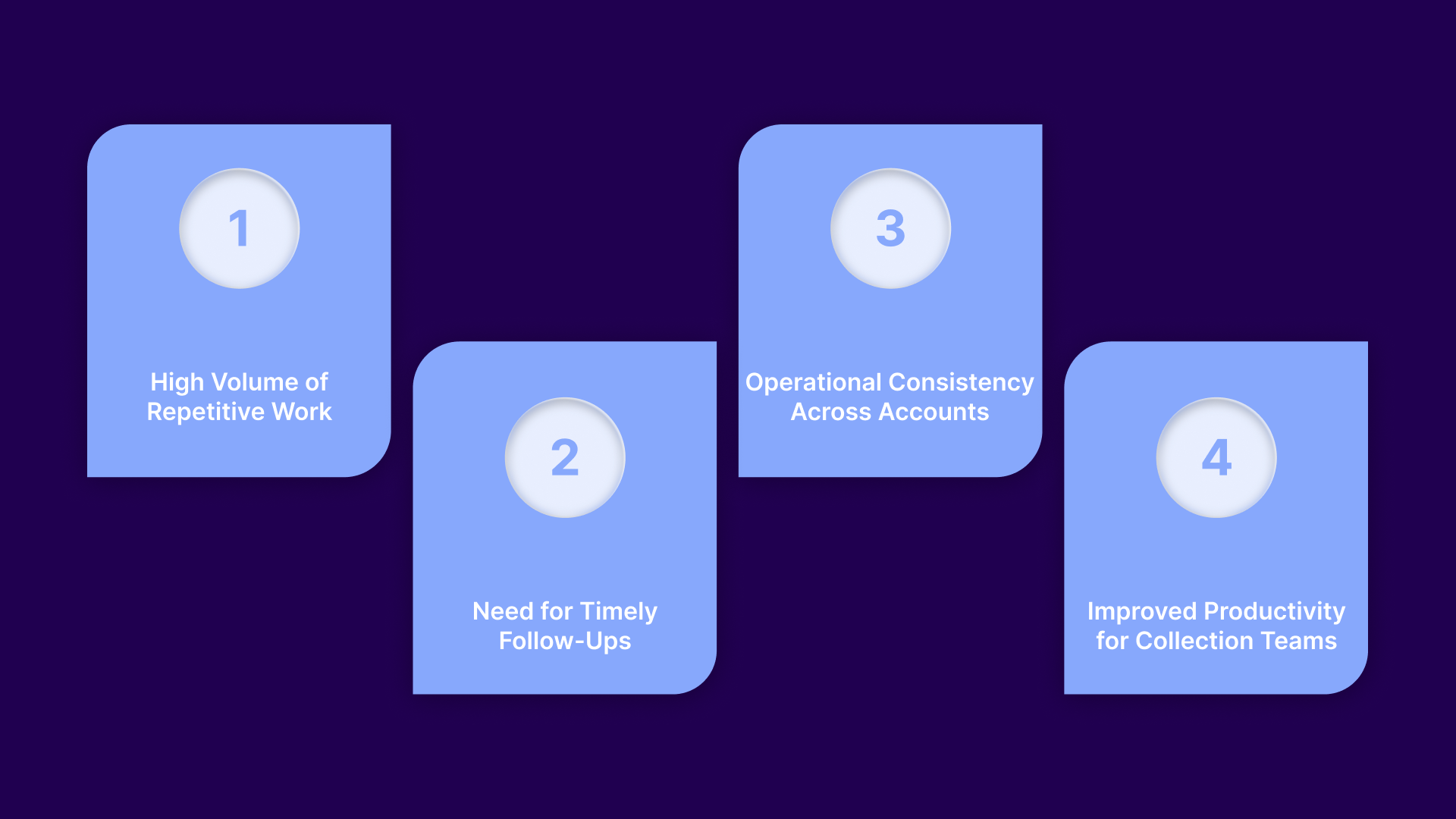
These are a few reasons why scheduled task automation is required in debt recovery:
Several routine collection activities can be scheduled for automation, making it easier for agencies to maintain structured recovery workflows. These are described in the next section.
Suggested Read: 6 Ways to Solve Recovery Gaps with Third-Party Collections Automation
Debt collection operations involve a steady flow of repetitive actions that must occur at the right time and in the right order.
Automating the following routine activities helps agencies maintain structured workflows and ensures important actions are never missed:
Tratta supports these workflows through configurable automation and rule-based scheduling. Agencies can trigger follow-ups, communications, and account actions based on timelines or account activity. Schedule a free demo.
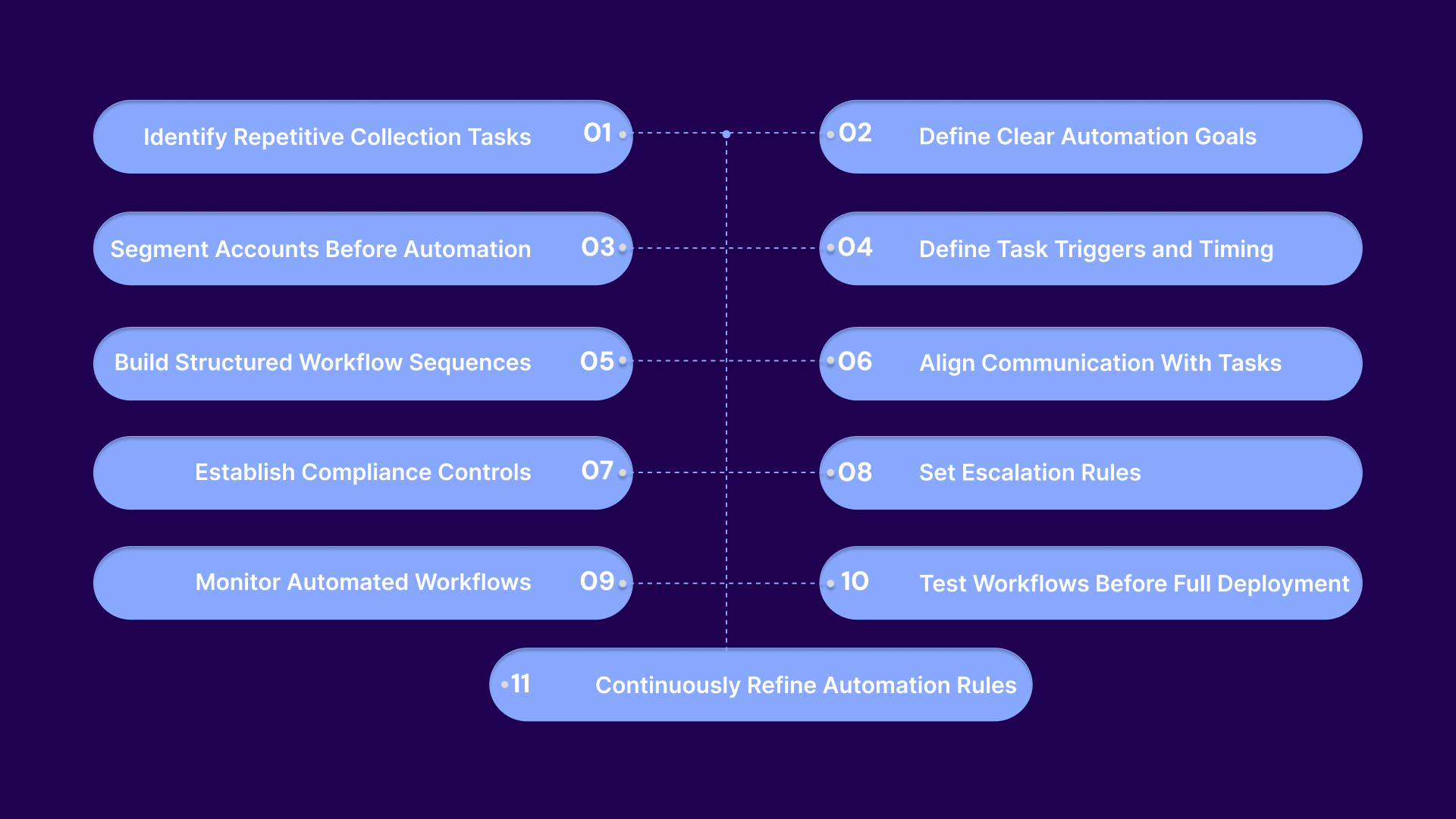
Automating collection tasks requires a structured approach rather than simply switching on software features. Agencies must identify the right activities, define triggers, and build workflows that support consistent recovery operations while maintaining oversight.
The following steps outline a practical framework for agencies to implement scheduled collection task automation effectively.
Start by identifying routine activities that collectors perform daily or weekly. These tasks usually involve reminders, follow-ups, and account checks that follow predictable patterns. Focus on tasks that are time-based or triggered by specific account events.
Typical examples include:
Automation should solve specific operational problems rather than simply adding new technology. Agencies must determine what outcomes they expect from automated tasks. Clear objectives help guide workflow design and performance measurement.
Goals may include:
Not all accounts should follow identical workflows. Segmentation ensures automation rules apply appropriately to different account types. This prevents inappropriate actions and improves recovery strategies.
Common segmentation criteria include:
Automation depends on clear triggers that determine when tasks occur. These triggers may be based on time intervals or account activity. Proper timing ensures collection actions occur consistently.
Typical triggers may include:
Automation works best when tasks are organized into structured workflows. Each step in the process should logically follow the previous one. This creates predictable recovery pathways for accounts.
Workflow sequences may include:
Collection tasks often involve consumer communication. Automation should coordinate messages with account events and scheduled actions. This ensures outreach remains timely and consistent.
Communication-related tasks may include:
Debt collection activities must follow strict regulatory guidelines. Automation workflows should incorporate compliance checkpoints and timing restrictions. This helps agencies avoid accidental violations.
Compliance safeguards may include:
Some accounts require additional attention when recovery efforts stall. Automation can identify these situations and trigger escalation procedures. This helps agencies focus resources where they are most needed.
Escalation conditions may include:
Automation should always include oversight mechanisms. Agencies must regularly review performance to ensure workflows operate as intended. Monitoring helps detect issues early.
Monitoring practices may include:
Before applying automation across all accounts, agencies should test workflows on a smaller scale. Testing helps identify unexpected outcomes and workflow gaps. Adjustments can be made before broader implementation.
Testing activities may include:
Automation should evolve as collection strategies change. Agencies must review performance data and refine rules regularly. Ongoing adjustments help improve efficiency and recovery outcomes.
Refinement efforts may include:
While automation can simplify many operational tasks, some collection activities still require human judgment and oversight. The next section explores the tasks that agencies should avoid automating.
Suggested Read: Effortless Payment Collection with Automated Software Solutions
Certain tasks require judgment, negotiation skills, or careful compliance evaluation. When these responsibilities are fully automated, agencies risk poor consumer interactions, regulatory issues, or missed recovery opportunities.
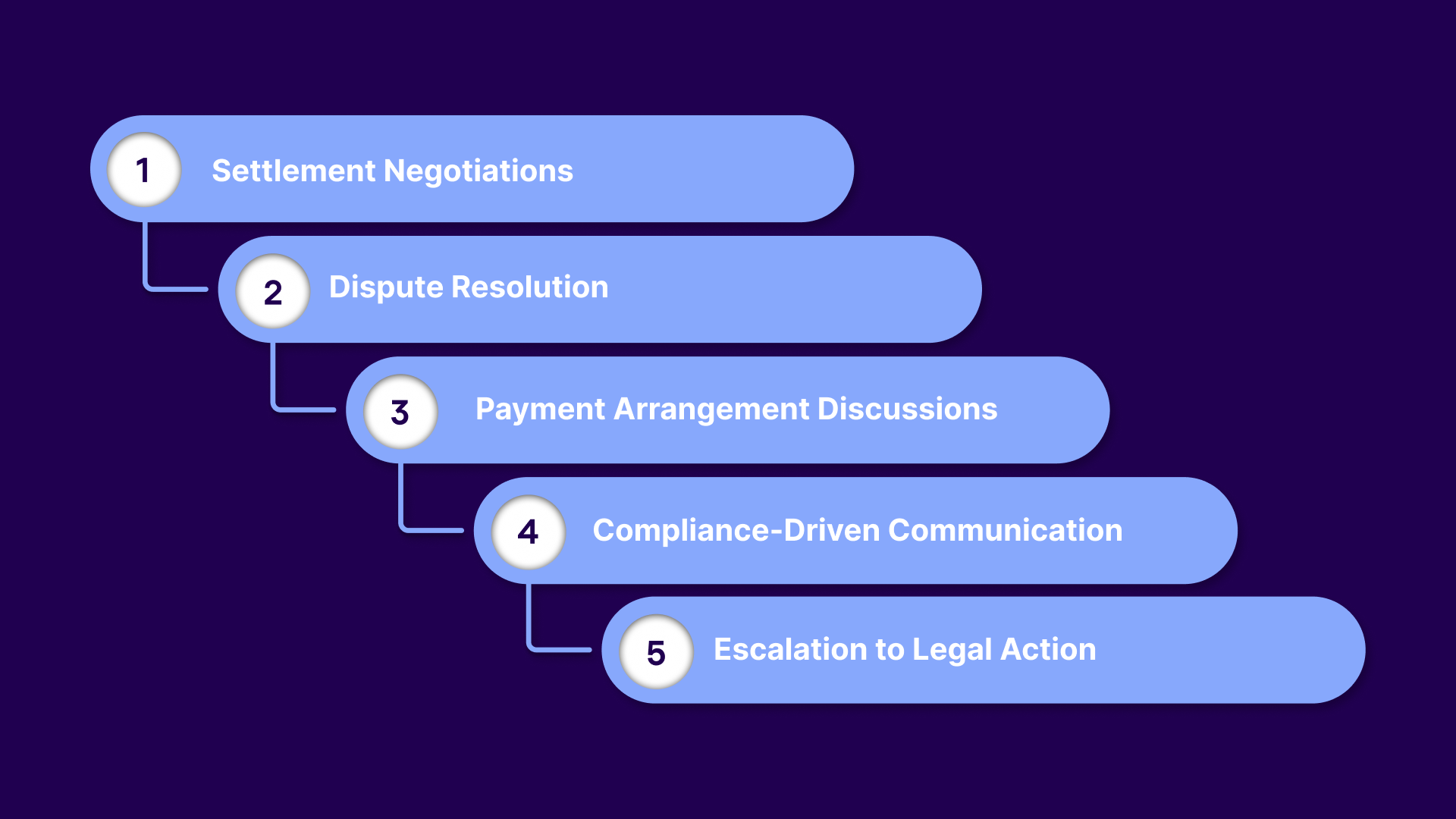
The following debt collection tasks should always have a human oversight:
Tratta offers a Compliance-by-Code framework that helps agencies build safeguards into automated workflows. Rules can be configured to ensure that collection activities comply with regulatory requirements and internal policies. Learn more today.
Many agencies rely on manual routines, fragmented systems, or loosely defined procedures that make automation difficult to structure. Without proper planning, even scheduled collection task automation can introduce operational gaps rather than solving them.
Table showing common challenges and their impact:
Recognizing these barriers is the first step toward implementing automation effectively. Agencies that address these challenges early can build structured systems that support scheduled collection tasks without disrupting operations.
Best practices that help agencies implement scheduled collection task automation successfully include:
These best practices help agencies overcome implementation barriers and build reliable automated processes. The next section examines key warning signs that debt recovery operations may need support with automation.
Suggested Read: Guide to Debt Settlement Agreement Automation Tools in 2026
Manual workflows often struggle to keep pace with operational demands. Tasks begin to pile up, follow-ups become inconsistent, and collectors spend more time managing processes than recovering balances.
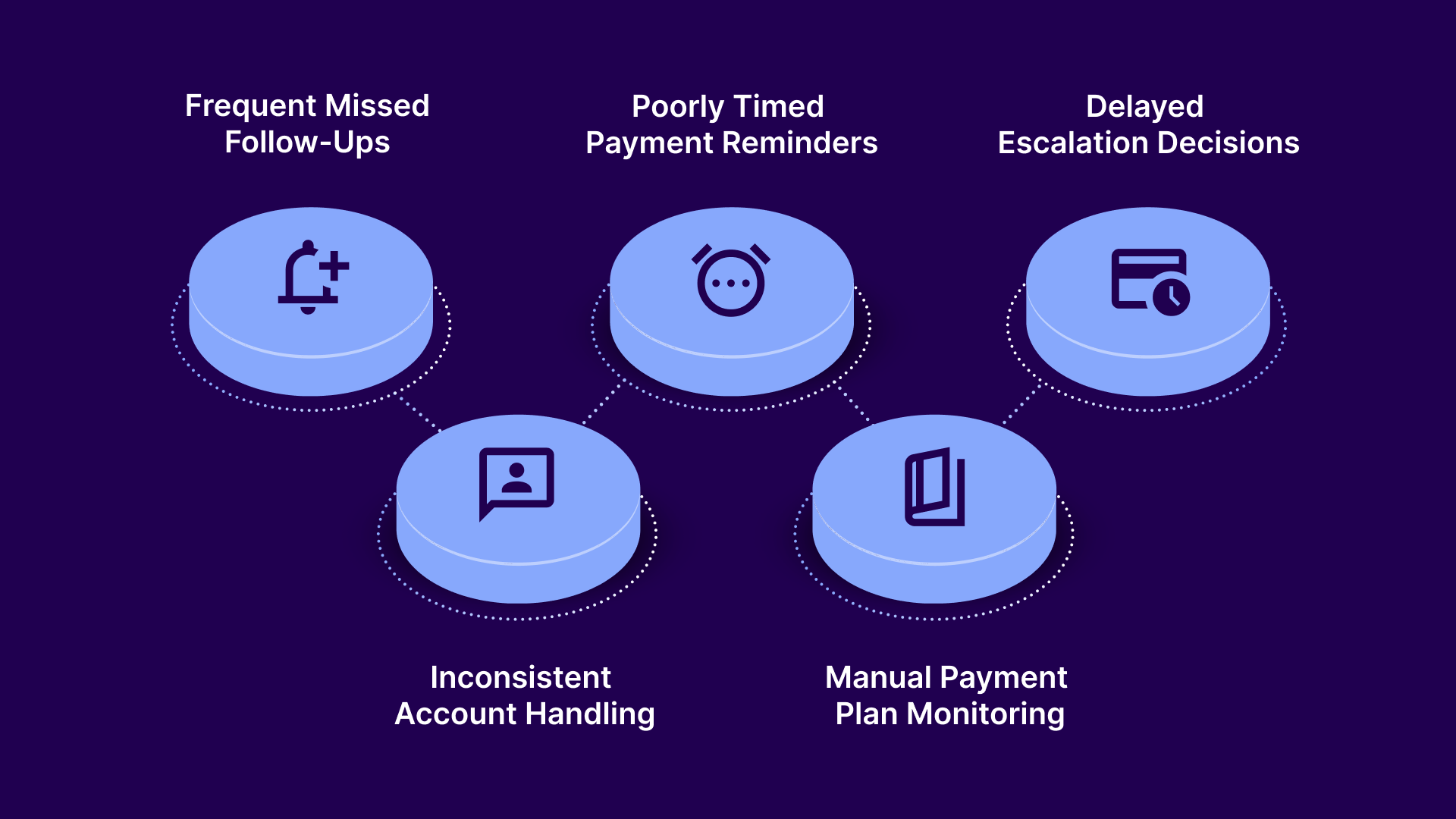
Recognizing these warning signs early can help agencies determine when scheduled collection task automation becomes necessary:
When these issues appear regularly, agencies often need systems that can schedule routine collection activities, trigger actions automatically, and maintain consistent operational workflows. The right collection platform can make that level of coordination possible.
Suggested Read: AI and Automation In Debt Collection Conversations
Tratta is a debt collection platform designed to help agencies manage communications, payments, compliance, and operational workflows from a centralized system. It enables agencies to structure recovery processes and automate routine actions across the collection lifecycle.
The following features make it easier to automate scheduled collection tasks while maintaining operational visibility.
Campaign Management allows agencies to organize structured outreach workflows across groups of accounts. Tasks such as reminders, notifications, and follow-ups can be scheduled within campaigns based on predefined timelines. This helps agencies maintain consistent communication schedules without relying on manual tracking.
The Consumer Self-Service Platform allows consumers to review account details and make payments independently. Scheduled reminders can direct consumers to the portal at specific stages of the collection process. This reduces the need for collectors to manually coordinate payment activity.
Omnichannel Communications enables agencies to engage consumers through multiple digital channels. Messages and reminders can be scheduled across these channels to maintain consistent outreach throughout the collection cycle. This helps agencies coordinate communication tasks without manual intervention.
Embedded Payments integrates payment processing directly into the collection workflow. When reminders or notifications are scheduled, consumers can immediately access payment options. This reduces friction between communication and payment completion.
Reporting & Analytics provides insight into campaign performance and operational activity. Agencies can monitor how scheduled workflows are performing and identify areas that need adjustment. These insights support ongoing optimization of automation strategies.
REST APIs allow agencies to connect Tratta with other collection systems and operational tools. Data synchronization ensures scheduled actions reflect the latest account information. This integration keeps automated workflows aligned with the broader collection environment.
Data Security protects sensitive consumer and payment information across the platform. Automated workflows often handle large volumes of account data, making secure infrastructure essential. Strong security measures help ensure automated processes operate safely.
Tratta brings these features together to support structured automation across collection operations. Agencies can schedule communications, coordinate payment activity, and monitor workflows within a single environment. This combination allows teams to automate routine tasks while maintaining clear operational control.
Collection workflows can quickly become unpredictable when routine tasks depend on manual coordination. Missed follow-ups, delayed reminders, and inconsistent account reviews can slow recovery efforts and create operational gaps. These small inefficiencies accumulate, making it harder for agencies to maintain consistent collection activity.
Tratta helps agencies bring structure to these workflows by enabling scheduled collection task automation across communications, payments, and operational processes. By coordinating tasks within defined workflows, agencies can ensure that collection actions occur at the right time while maintaining visibility and control.
If your agency is looking to simplify recovery operations, it may be time to rethink how collection tasks are scheduled and managed. Schedule a free call today to build more structured and efficient collection workflows.
The four common types are rule-based automation, workflow automation, scheduled task automation, and intelligent automation. In debt collection, these help trigger reminders, follow-ups, account reviews, and payment monitoring without manual intervention.
Agencies can automate data collection by integrating systems, capturing payment activity automatically, syncing account updates across platforms, and scheduling routine account reviews to ensure collection workflows rely on accurate, updated information.
Common automation tools include collection management platforms, workflow automation software, payment processing systems, analytics tools, and communication platforms that support scheduled reminders, account monitoring, and automated consumer outreach.
Scheduled automation ensures reminders, follow-ups, and account reviews occur at the right time. This reduces missed tasks, improves workflow consistency, and allows collectors to focus on negotiation and resolution activities.
Routine activities such as payment reminders, follow-up scheduling, payment plan monitoring, account status reviews, and escalation triggers are ideal for automation because they follow predictable timelines or account activity patterns.