Debt Collection & Recovery Software

Minnesota Debt Collection Laws Every Agency Should Understand in 2026

Published on:
March 26, 2026

Staying compliant in debt collection is getting harder. Rules change, oversight is tightening, and even a small misstep can lead to complaints, penalties, or lost accounts. If you are managing high volumes, keeping every interaction compliant can be difficult.

In fact, the Consumer Financial Protection Bureau reported 207,800 debt collection complaints in a single year, highlighting how quickly compliance failures can escalate into regulatory and legal risk.

For agencies operating in Minnesota, the stakes are even higher due to additional state-level requirements. In this article, we break down the key Minnesota debt collection laws you need to understand in 2026 and what they mean for your compliance and recovery strategy.

Brief look:

  • Minnesota collection laws are multi-layered. Agencies must comply with the Fair Debt Collection Practices Act, the Minnesota Collection Agencies Act, and consumer protection laws like the Minnesota Consumer Fraud Act.
  • Medical debt is now separately regulated. Under Minn. Stat. Ch. 332C and § 332C.03, certain medical debts cannot be reported to credit bureaus and require distinct handling.
  • Statute of limitations limits legal enforcement. Most debts become time-barred after six years under the Minnesota Statute of Limitations.
  • Violations can trigger serious consequences. FDCPA penalties include up to $1,000 per case and class action exposure up to $500,000 or 1% of net worth, plus state-level liability.
  • System-driven compliance reduces risk. Automated workflows, communication controls, and audit trails help enforce laws consistently while maintaining recovery performance.

Need for Agencies to Pay Attention to Debt Collection Laws

Compliance failures in debt collection do not stay small. They turn into financial penalties, lawsuits, and operational disruption that directly impact your bottom line. With both federal and Minnesota-specific laws in play, a single violation can trigger multiple layers of liability.

If you are handling high account volumes, the risk compounds quickly. One non-compliant script, one mistimed call, or one missing disclosure can expose your agency across hundreds or thousands of accounts.

Non-compliance can lead to the following consequences:

  • Statutory Damages (FDCPA): Under the Fair Debt Collection Practices Act, agencies can be liable for up to $1,000 per lawsuit in individual actions, plus actual damages and attorney fees.
  • Class Action Exposure: FDCPA class actions can cost up to $500,000 or 1% of your net worth (whichever is lower), in addition to legal costs.
  • Minnesota Attorney General Enforcement: Violations of the Minnesota Consumer Fraud Act or Minnesota Deceptive Trade Practices Act can result in civil penalties, injunctions, and restitution orders.
  • Actual Damages to Consumers: Consumers can recover provable financial and emotional damages, which often exceed statutory limits.
  • Attorney Fees and Legal Costs: Agencies typically pay both sides’ legal fees if found liable, significantly increasing total exposure.
  • License Risk and Operational Shutdowns: Serious or repeated violations can result in regulatory action, restrictions, or loss of the ability to operate in the state.
  • Time-Barred Debt Violations: Attempting to collect expired debt without proper disclosures can trigger lawsuits and regulatory scrutiny under Minnesota law.

The financial impact is only part of the problem. Legal disputes slow down collections, damage client trust, and reduce recovery rates. That is why understanding the specific laws governing Minnesota debt collection is necessary.

Suggested Read: Debt Collection Rights and Regulations: Understanding the Law

Minnesota Debt Collection Laws Agencies Should Know in 2026

Collection agencies need to navigate a layered legal framework that combines federal law with multiple state statutes governing licensing, conduct, disclosures, and consumer protection. Missing even one requirement can expose an organization to enforcement actions and private litigation.

Minnesota Debt Collection Laws Agencies Should Know in 2026

Understanding the following laws can help you operate compliantly and protect recovery performance:

1. Minnesota Collection Agencies Act (Minn. Stat. §§ 332.31–332.45)

The Minnesota Collection Agencies Act governs who can legally operate as a collection agency in the state. It requires agencies to obtain proper licensing, maintain financial responsibility, and follow strict operational standards. The law also outlines prohibited practices and gives regulators authority to enforce compliance.

Key requirements and implications include:

  • Licensing Requirement: Agencies must be licensed under Minn. Stat. § 332.33 to operate legally in Minnesota.
  • Bonding Obligations: Surety bond requirements under § 332.34 ensure financial accountability.
  • Prohibited Practices: § 332.37 restricts deceptive, misleading, or unfair collection tactics.
  • Regulatory Oversight: The Minnesota Department of Commerce can investigate and take action against violations.
  • Penalties for Non-Compliance: Operating without a license can result in fines, enforcement actions, and business restrictions.

2. Minnesota Fair Debt Collection Practices (State-Level Protections)

Minnesota does not have a standalone statute named exactly like the federal FDCPA, but it enforces similar standards through state provisions and incorporates federal protections. Agencies must comply with the Fair Debt Collection Practices Act alongside Minnesota statutes governing unfair practices. These combined rules regulate how, when, and how often you communicate with consumers.

Core compliance expectations include:

  • Harassment Restrictions: No repeated or abusive calls under FDCPA standards (15 U.S.C. § 1692d).
  • Misrepresentation Prohibition: False statements about debt, legal status, or consequences are prohibited (§ 1692e).
  • Validation Requirements: Written notice of debt details must be provided within five days (§ 1692g).
  • Communication Limits: Restrictions on contact timing, third-party disclosures, and workplace communication.
  • Enforcement Risk: Violations can trigger both federal liability and state-level enforcement actions.

Tratta helps agencies operationalize these requirements through automated communication controls, validation workflows, and audit-ready tracking, reducing the risk of human error. Its system ensures that every interaction aligns with regulatory expectations while maintaining consistent engagement across accounts. Schedule a free demo.

3. Minnesota Consumer Fraud Act (Minn. Stat. § 325F.69)

The Minnesota Consumer Fraud Act broadly prohibits deceptive, misleading, or fraudulent practices in consumer transactions, including debt collection. Its scope is broader than traditional collection laws, meaning agencies can be held accountable even for indirect or ambiguous misrepresentations. Enforcement can come from both the Attorney General and private lawsuits.

This law introduces additional compliance pressure through:

  • Broad Interpretation of Deception: Even unclear or misleading language can qualify as a violation.
  • Attorney General Enforcement: The state can seek injunctions, restitution, and civil penalties.
  • Private Right of Action: Consumers can file lawsuits for damages.
  • Cumulative Liability: Violations can overlap with FDCPA claims.
  • Reputational Risk: Fraud claims significantly impact agency credibility.

4. Minnesota Deceptive Trade Practices Act (Minn. Stat. § 325D.44)

The Minnesota Deceptive Trade Practices Act focuses on preventing deceptive business practices, including false representations and misleading conduct. Unlike some statutes, it allows courts to issue injunctions even without proof of intent, making it easier to enforce. This creates additional compliance exposure for collection agencies.

Key considerations under this law include:

  • False Representation Risk: Misstating debt details or consequences can trigger violations.
  • No Intent Required: Agencies can be liable even without deliberate wrongdoing.
  • Injunctive Relief: Courts can stop business practices immediately.
  • Overlap With Other Laws: Often used alongside the Consumer Fraud Act.
  • Operational Impact: Requires strict control over scripts and messaging.

5. Minnesota Statute of Limitations on Debt (Minn. Stat. § 541.05)

Minnesota law sets time limits on how long a debt can be legally enforced. Under the Minnesota Statute of Limitations, most contract-based debts have a six-year limitation period, though specifics can vary based on the debt type. Attempting to collect or litigate time-barred debt without proper handling can create serious legal risk.

This directly affects the collection strategy in the following ways:

  • Litigation Restrictions: Time-barred debts cannot be legally enforced through courts.
  • Disclosure Expectations: Misleading consumers about enforceability can trigger violations.
  • Revival Risks: Certain actions (like partial payments) may restart the limitation period.
  • High Litigation Exposure: Time-barred collection is a common basis for lawsuits.
  • Portfolio Segmentation Needs: Agencies must distinguish between active and expired debt.

Recent reforms are changing how these rules apply in day-to-day operations. These updates, particularly around medical debt, introduce new compliance expectations that agencies cannot afford to overlook.

Suggested Read: Text of Fair Debt Collection Practices Act in Federal Code

Recent Minnesota Debt Collection Reforms Reshaping Compliance in 2026

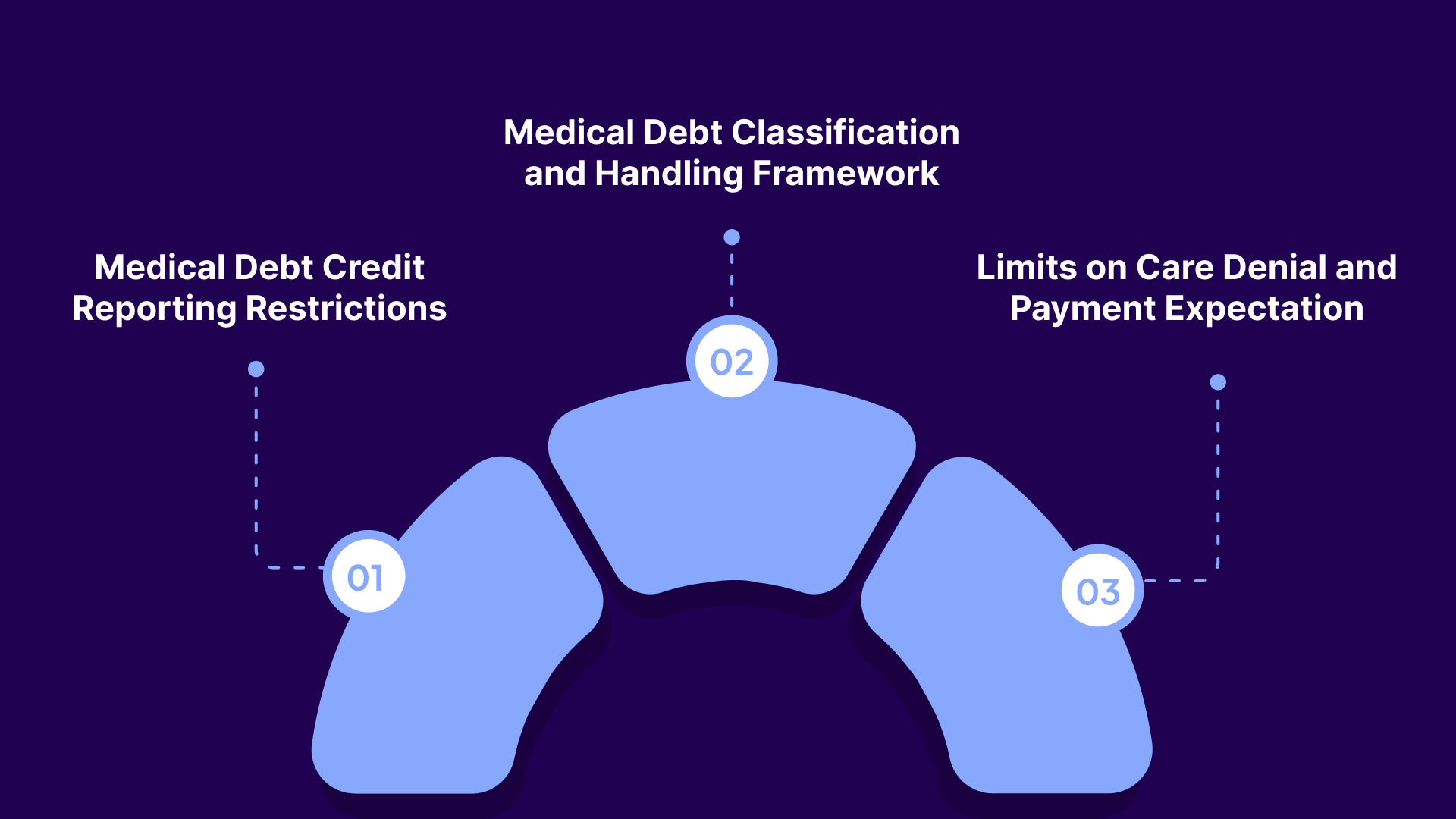
Recent reforms, especially those related to medical debt, introduce new compliance obligations that directly affect reporting, communication, and recovery strategies. These changes are not cosmetic. They alter how agencies segment accounts, apply pressure, and manage consumer interactions.
Recent Minnesota Debt Collection Reforms Reshaping Compliance in 2026

Reforms include:

1. Medical Debt Credit Reporting Restrictions (Minn. Stat. § 332C.03)

Minnesota now restricts how medical debt is reported to credit agencies, significantly reducing a long-standing collection lever. This change directly impacts recovery strategies that rely on credit visibility to drive repayment. Agencies must now rethink how they approach medical accounts without relying on reporting pressure.

Key compliance considerations include:

  • Reporting Prohibition: Medical debt cannot be furnished to consumer reporting agencies under § 332C.03.
  • Reduced Leverage: Credit impact can no longer be used to encourage repayment.
  • Portfolio Segmentation: Medical debt must be handled separately from other debt types.
  • Vendor Alignment Required: Agencies must ensure credit reporting partners comply with restrictions.

2. Medical Debt Classification and Handling Framework (Minn. Stat. Ch. 332C)

Minnesota has created a dedicated legal framework that defines and regulates medical debt. This formal classification introduces clear boundaries on how these accounts are treated throughout the collection lifecycle. Agencies must align their workflows with these definitions to avoid compliance gaps.

This framework requires agencies to:

  • Identify Medical Debt Clearly: Apply statutory definitions under Chapter 332C.
  • Adjust Workflows: Separate communication and recovery strategies for medical accounts.
  • Update Policies: Ensure internal policies reflect new regulatory treatment.
  • Train Teams Accordingly: Agents must understand differences in handling requirements.

3. Limits on Care Denial and Payment Expectations (Minn. Stat. § 62J.807)

Minnesota law (under § 62J.807) now limits how unpaid medical debt affects a consumer’s access to care. Providers cannot deny medically necessary treatment due to outstanding balances, which indirectly affects the urgency of collection and repayment behavior. This reduces the immediate pressure on consumers to resolve medical debt.

Operational implications include:

  • No Care Denial for Debt: Providers must continue treatment regardless of unpaid balances.
  • Structured Payment Plans: Consumers may be placed on reasonable repayment plans.
  • Longer Resolution Timelines: Collections may take more time due to reduced urgency.
  • Behavioral Shift: Consumers may prioritize other debts over medical obligations.

Minnesota is treating certain debt categories with heightened consumer protection and stricter oversight, requiring agencies to move beyond one-size-fits-all strategies. The next section highlights how you need to design and execute your collection strategy.

Suggested Read: Minnesota's Debt Fairness Act: Key Changes and Provisions

How Do These Laws Impact Debt Collection Strategy

Minnesota’s legal environment shifts debt collection from a volume-driven model to a control-driven, risk-aware operation. Agencies can no longer rely on uniform approaches across portfolios. Instead, laws now dictate how different account types behave, how quickly they resolve, and how much pressure can be applied.

These are a few ways debt collection laws are forcing change:

  • Portfolio Fragmentation Increases: Laws like Minn. Stat. Ch. 332C create distinct categories (for example, medical debt), forcing separation in strategy.
  • Leverage Mechanisms Are Reduced: Restrictions under Minn. Stat. § 332C.03 remove credit reporting as a pressure tool for certain debts.
  • Communication Becomes a Constraint: Outreach is no longer flexible and must operate within strict limits under the Fair Debt Collection Practices Act.
  • Recovery Timelines Extend: Consumer protections and structured repayment expectations slow down resolution cycles.
  • Legal Risk Becomes Strategy-Defining: The cost of non-compliance can outweigh recovery value, influencing which accounts are pursued and how.
  • Uniform Workflows Breakdown: A single approach across all accounts increases the risk of violations due to varying legal requirements.

Tratta supports this shift by aligning strategy with compliance at a structural level. It allows agencies to manage different account types, enforce communication boundaries, and maintain visibility across workflows without relying on manual adjustments. Call us to learn more.

Best Practices to Stay Compliant and Maintain Recovery Rates

As Minnesota regulations introduce tighter controls, compliance becomes a systems-and-process design challenge, not just a policy issue. Agencies need operational precision across communication, data handling, and workflow execution to stay compliant without slowing down recoveries.

These are a few tips to ensure your team remains compliant:

  • Rule-Based Communication Engines: Automatically enforce timing, frequency, and channel constraints aligned with the Fair Debt Collection Practices Act.
  • Automated Disclosure Triggers: Embed FDCPA § 1692g validation notices into workflows so they are sent based on event conditions, not manual action.
  • Dynamic Account Segmentation: Classify accounts in real time (for example, medical vs. non-medical under Minn. Stat. Ch. 332C) to apply correct handling logic.
  • Centralized Audit Logging: Capture every interaction, status change, and payment event in a structured, queryable format for compliance verification.
  • Workflow Orchestration Layers: Use predefined workflows to control the sequencing of actions, reducing variability in agent-level decisions.
  • Exception Handling Protocols: Flag and isolate edge cases (for example, disputed or time-sensitive accounts) for controlled processing.
  • Data Integrity Controls: Ensure synchronization across systems to prevent outdated or conflicting account information from driving actions.

At this level, compliance depends on how well your systems enforce these controls at scale. This is exactly what we explore in the next section with Tratta.

Suggested Read: Debt Collection Compliance Checklist: An Essential Guide for Debt Collectors

How Does Tratta Help Collection Agencies Stay Compliant

How Does Tratta Help Collection Agencies Stay Compliant

Tratta is a digital-first debt collection platform that unifies payments, communication, workflows, and compliance into a single system. It is built to help agencies enforce regulatory requirements at scale while maintaining efficiency and recovery performance.

Designed for modern compliance environments, Tratta enables agencies to align operations with laws such as the FDCPA and evolving Minnesota regulations through automation and centralized control.

In addition to compliance-specific capabilities, here are Tratta’s core platform features:

  • Consumer Self-Service Payment Portal: Allows consumers to view balances, manage accounts, and complete payments independently. This reduces the risk of agent interaction and ensures compliant, user-driven engagement.
  • Payments and Merchant Services: Supports secure, flexible payment options, including full, partial, and plan-based payments. This ensures transparent processing and proper documentation of transactions.
  • Multilingual Payment IVR: Enables automated voice-based payments in multiple languages. This improves accessibility while maintaining structured and compliant payment interactions.
  • Omnichannel Communications: Centralizes outreach across SMS, email, phone, and other channels. This ensures consistent enforcement of communication rules across all consumer touchpoints.
  • Campaign Management: Provides automated, rule-based campaign management with scheduling and triggers. This reduces manual errors and ensures consistent execution of compliant outreach strategies.
  • Reporting and Analytics: Offers real-time dashboards and performance tracking to monitor outcomes and compliance metrics. This helps agencies identify risks and optimize strategies quickly.
  • Customization and Flexibility: Allows agencies to tailor workflows, messaging, and operational rules. This ensures alignment with Minnesota-specific legal requirements without rigid systems.
  • Integrations: Connects to existing systems via APIs and data sync. This prevents inconsistencies and ensures accurate, up-to-date account handling.
  • Security and Compliance: Includes audit trails, consent tracking, and secure infrastructure to support regulatory adherence. This strengthens audit readiness and reduces legal exposure.
  • Contact Center: Centralizes every agent and consumer interaction in one place and automatically links each message to the correct account. This creates a complete audit trail, improves visibility across conversations, and reduces manual errors during compliance reviews and audits.

Tratta brings compliance and performance into a single operational layer. It reduces reliance on manual oversight by embedding rules directly into workflows. As regulations continue to improve, this approach helps agencies stay compliant without sacrificing recovery efficiency.

Conclusion

Failing to align with Minnesota debt collection laws can quickly lead to penalties, lawsuits, and operational breakdowns. What starts as a small compliance gap can escalate into regulatory action, financial loss, and damaged client trust. Over time, inconsistent processes and outdated strategies reduce recovery rates and make scaling nearly impossible.

Tratta helps you avoid these risks by embedding compliance directly into your operations. With automated workflows, communication controls, and centralized visibility, it ensures every interaction aligns with both federal and Minnesota-specific requirements. This allows you to maintain performance without exposing your agency to unnecessary legal risk.

Stay compliant without slowing down your collections. See how Tratta can help you simplify operations and reduce risk. Schedule a free call.

Frequently Asked Questions

1. How long before a debt becomes uncollectible in Minnesota?

In Minnesota, most debts are subject to a six-year statute of limitations (Minn. Stat. § 541.05). After this period, the debt becomes time-barred, meaning agencies cannot pursue legal action to enforce collection, though limited collection activity may still be allowed if compliant.

2. What are the “11 words” to stop a debt collector?

The commonly cited phrase is a consumer's request to stop communication, but legally it relates to rights under the Fair Debt Collection Practices Act. Once a written cease-and-desist request is received, agencies must stop most communication, except for specific permitted notices.

3. What are the collection laws in Minnesota?

Minnesota collection is governed by a combination of federal and state laws, including the Fair Debt Collection Practices Act, the Minnesota Collection Agencies Act, and consumer protection laws such as the Minnesota Consumer Fraud Act. Recent reforms also regulate medical debt under Minn. Stat. Ch. 332C.

4. Are consumers legally obligated to pay debt collectors?

Consumers are obligated to repay valid debts, but collectors must prove the debt and follow all legal requirements. If a debt is disputed, validated, or time-barred, enforcement options may be limited, and agencies must proceed carefully to remain compliant.

5. Can agencies still collect time-barred debt in Minnesota?

Yes, but with restrictions. While agencies may attempt to collect time-barred debt, they cannot threaten or initiate legal action, and any communication must not mislead consumers about enforceability under Minn. Stat. § 541.05 and FDCPA rules.

Related stories

Ready to Get Started?
Schedule a personal tour of Tratta and see our debt collection software in action.
Request a Demo