8 Ways API-Based Recovery Tracking Can Improve Debt Collection in 2026
Debt Collection & Recovery Software
8 Ways API-Based Recovery Tracking Can Improve Debt Collection in 2026
Published on:
March 26, 2026
Collection agencies often rely on multiple systems to track payments, communication history, and account updates. When these systems do not sync in real time, collectors end up working with outdated or incomplete information. Follow-ups can be mistimed, payment activity may not be visible immediately, and recovery reporting becomes harder to manage.
The broader problem of disconnected systems is widely documented. Research cited by IBM shows that 82% of enterprises say data silos disrupt critical workflows. For collection agencies, this is where API-based recovery tracking becomes valuable.
APIs allow collection platforms, payment systems, and reporting tools to exchange data automatically, keeping recovery activity synchronized. In this guide, we explore eight ways API-based recovery tracking can improve debt collection in 2026.
Quick look:
Disconnected systems slow debt recovery operations. When payment updates and account activity remain scattered across platforms, collectors often work with incomplete information and delayed reporting.
API-based recovery tracking connects collection systems automatically. APIs allow platforms to exchange payment data, account updates, and communication records in real time.
APIs strengthen operational coordination across recovery workflows. Agencies can synchronize payments, outreach activity, and reporting without relying on manual updates.
APIs also support consumer data verification and skip tracing. Integration with external data sources helps agencies retrieve updated contact information and verify consumer details.
Integrated platforms help agencies manage connected recovery operations. Systems that support APIs allow agencies to synchronize workflows, payments, and reporting across their collection infrastructure.
What Is API-Based Recovery Tracking in Debt Collection?
API-based recovery tracking refers to the use of application programming interfaces (APIs) to exchange recovery data among collection systems, payment platforms, and other operational tools. Instead of relying on manual updates or delayed batch processes, APIs allow information to move automatically between connected systems.
Key components include:
System Integrations: These connect collection platforms with external tools such as payment processors, CRMs, and analytics systems.
Real-Time Data Exchange: APIs synchronize account balances, payment activity, and communication records across multiple systems.
Automated Workflow Triggers: Specific events such as payments or account updates can automatically initiate follow-ups or operational actions.
Centralized Recovery Visibility: Agencies can monitor recovery activity across connected platforms from a unified operational view.
Data Synchronization Controls: Updates in one system are automatically reflected across other integrated platforms.
Many operational platforms in the debt recovery ecosystem rely on API integrations to maintain accurate and consistent data flows. The next section examines the types of debt collection systems that commonly use APIs to track recovery.
Debt collection operations often rely on multiple systems to manage different parts of the recovery process. APIs allow these platforms to exchange data automatically. They help agencies maintain accurate account information across tools.
These collection systems typically rely on API integrations:
Collection Management Systems
These platforms manage account portfolios, collector activities, and recovery workflows. APIs allow them to receive updates from payment processors, communication tools, and other operational systems. This ensures collectors always work with the most current account information.
Payment Processing Platforms
Payment systems handle consumer transactions and payment confirmations. API integrations allow payment activity to update account balances and recovery records automatically. This reduces delays between payment completion and account updates.
Customer Relationship Management (CRM) Systems
CRMs store consumer contact information, interaction history, and account notes. APIs allow collection platforms to sync communication records and account activity with CRM databases. This helps agencies maintain consistent consumer records across systems.
Communication Platforms
Messaging tools used for email, text, and other consumer communications can connect through APIs. These integrations help synchronize communication activity with account records. This allows agencies to track outreach and responses alongside recovery activity.
Analytics and Reporting Tools
Reporting systems analyze performance metrics and recovery trends. APIs allow them to pull real-time data from collection platforms and payment systems. This improves operational visibility and performance monitoring.
Trattahelps agencies support these integrations through its REST APIs, which allow external systems to connect directly with collection workflows. Payment activity, communication records, and account updates can move between platforms without manual data transfers. Book a free demo.
8 Ways APIs Strengthen Debt Collection Workflows
APIs play a critical role in connecting the systems that support debt recovery operations. When collection platforms, payment processors, and reporting tools exchange data automatically, agencies gain clearer visibility into recovery activity.
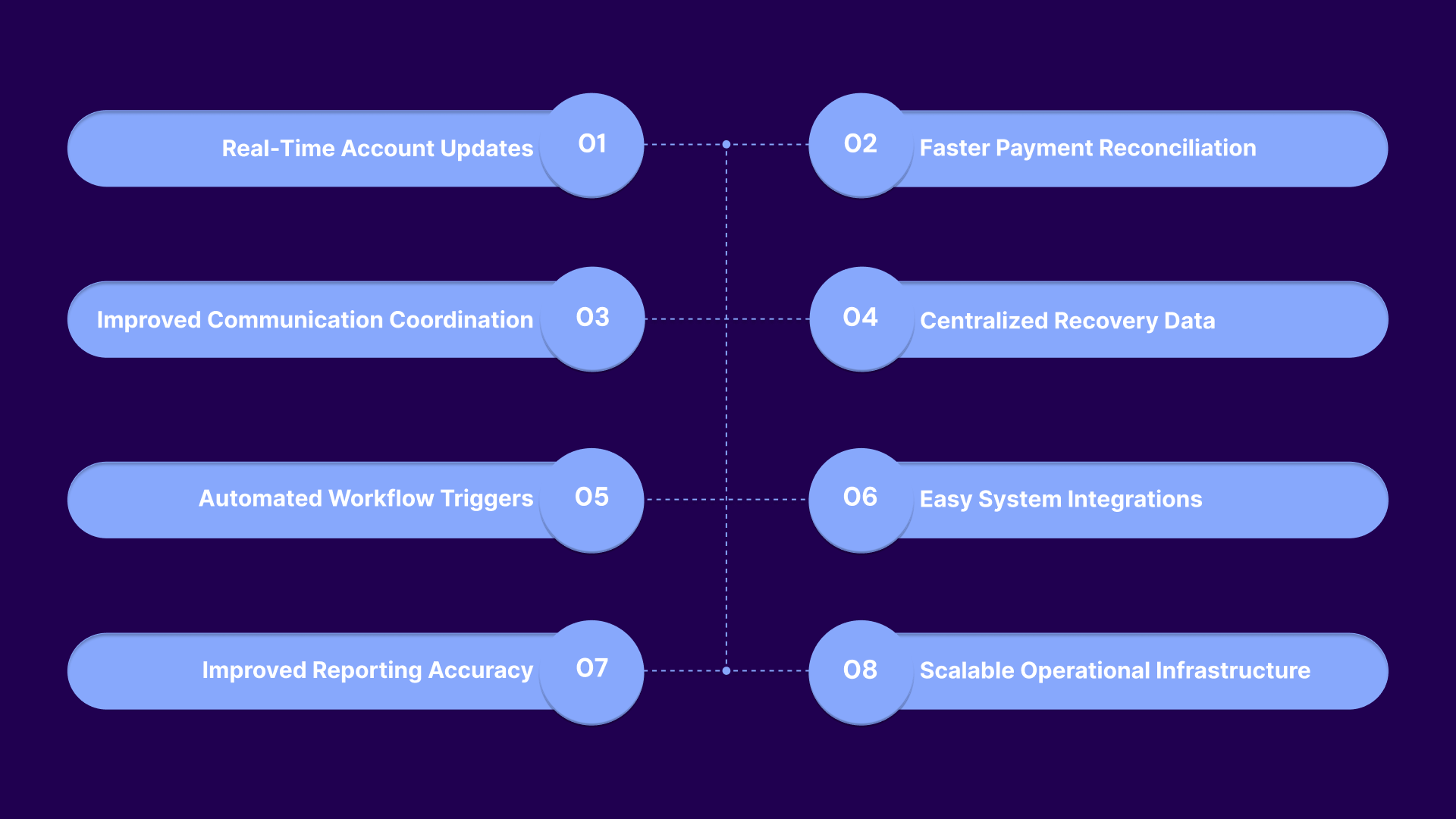
These are a few benefits of API-based recovery tracking
1. Real-Time Account Updates
APIs allow account data to update automatically across connected systems when activity occurs. Payment confirmations, balance adjustments, and account status changes can appear instantly. This ensures collectors always work with the most current information.
These improvements strengthen operational visibility in several ways:
Immediate visibility into new payments and balance changes
Reduced risk of contacting consumers after payment completion
Consistent account status across connected collection systems
Faster response to account activity and repayment updates
2. Faster Payment Reconciliation
Payment reconciliation can take time when transactions must be reviewed manually. APIs allow payment processors to send transaction updates directly to collection systems. This helps agencies record payments quickly and maintain accurate account balances.
Faster reconciliation supports more efficient operations through several benefits:
Automatic transaction updates from payment processors to collection systems
Reduced manual effort when reconciling payments and account balances
Faster payment confirmation across operational and reporting systems
Improved financial accuracy in recovery tracking and reporting
3. Improved Communication Coordination
Communication tools often operate separately from collection management systems. APIs allow communication activity to sync with account records automatically. This ensures outreach history remains visible within the collection workflow.
Coordinated communication tracking improves recovery workflows in several ways:
Centralized visibility into consumer communication history and responses
Better coordination between outreach efforts and account activity
Clear records of contact attempts across communication channels
Improved timing of follow-ups based on account updates
4. Centralized Recovery Data
Recovery data often exists across several platforms, making it difficult to monitor overall performance. APIs help consolidate information from multiple sources into connected systems. This allows agencies to track recovery activity more consistently.
Centralized recovery visibility offers several operational advantages:
Unified view of payments, balances, and communication activity
Easier monitoring of recovery progress across account portfolios
Reduced need for manual data consolidation across systems
Faster identification of trends in recovery performance
5. Automated Workflow Triggers
APIs can trigger operational actions when specific events occur within connected systems. For example, a payment update may automatically change account status or initiate a follow-up process. This helps agencies maintain structured recovery workflows.
Event-driven automation improves operational coordination in several ways:
Automatic follow-up tasks triggered by payment or account updates
Immediate workflow adjustments based on account activity
Reduced delays caused by manual task scheduling
More consistent execution of collection processes
6. Easy System Integrations
Debt collection operations often rely on multiple software platforms. APIs allow these systems to exchange information without requiring manual transfers. This improves coordination between operational tools.
Effortless integrations strengthen operational efficiency in several ways:
Direct data exchange between collection software and payment systems
Reduced manual transfer of account information across platforms
Consistent records are maintained across connected operational tools
Better coordination between systems supporting recovery operations
7. Improved Reporting Accuracy
Accurate reporting depends on timely data from multiple systems. APIs help ensure reporting tools receive updated recovery information automatically. This allows agencies to monitor performance with greater confidence.
Improved reporting delivers several operational benefits:
Real-time data feeds into collection performance dashboards
More accurate tracking of payments and recovery activity
Faster reporting cycles with fewer manual updates
Clearer insight into portfolio and collector performance
8. Scalable Operational Infrastructure
As account portfolios grow, manual processes become harder to manage. APIs allow agencies to expand operations while maintaining coordinated data flows between systems. This supports larger recovery operations without increasing administrative workload.
Scalable infrastructure provides several advantages:
Support for higher account volumes without manual workload increases
Reliable data synchronization across growing system environments
Reduced operational strain during portfolio expansion
Greater flexibility when adding new collection technologies
These features allow agencies to monitor recovery activity more effectively and coordinate collection workflows across connected platforms. The next section examines key data points that agencies can track through APIs to improve recovery visibility.
Key Debt Recovery Data Points Agencies Can Track Through APIs
API-based recovery tracking allows collection systems to monitor recovery activity across connected platforms. APIs automatically exchange operational data, helping agencies track account progress, payments, and collection performance in real time.
These are the important data points that can be tracked through the recovery-based API:
Payment Transaction Details: Track payment amounts, timestamps, processing status, and confirmation records across payment systems.
Account Balance Changes: Monitor balance updates as payments, adjustments, or settlements occur.
Payment Plan Activity: Track installment schedules, completed payments, and missed installments.
Consumer Contact Information Updates: Sync updated phone numbers, email addresses, or mailing details across systems.
Communication Event Logs: Record contact attempts, responses, and communication timestamps.
Account Status Changes: Track transitions such as active collection, repayment plan, settlement, or closure.
Collector Activity Data: Monitor task completion, account reviews, and workflow actions performed by collectors.
Recovery Performance Metrics: Track collection progress across portfolios, including payment trends and recovery rates.
Access to these data points allows agencies to maintain accurate recovery records and operational oversight. APIs can also support data retrieval from external sources, which becomes particularly useful when agencies need updated consumer information. The next section explores how APIs support skip tracing and consumer data verification.
How Do APIs Support Skip Tracing and Consumer Data Verification
Skip tracing and consumer verification require accurate and updated information about individuals associated with collection accounts. APIs help agencies retrieve and synchronize this information from external databases and verification services.
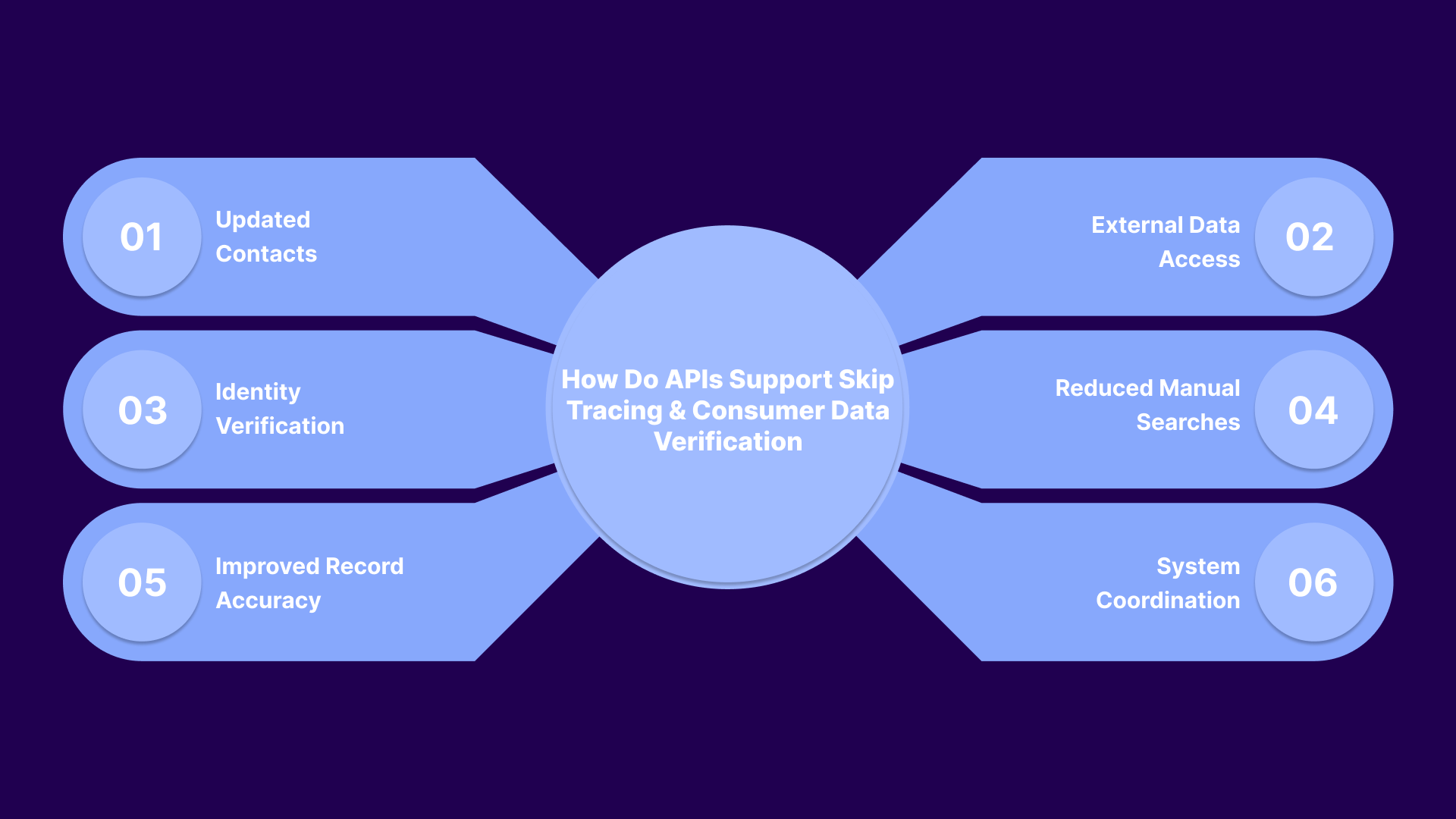
Several API-driven processes support skip tracing and consumer data verification during the recovery process:
Updated Contacts: APIs can retrieve refreshed phone numbers, email addresses, and physical address records from connected data providers. This helps agencies reach consumers using the most current contact information available.
External Data Access: APIs allow collection systems to pull consumer information directly from identity verification or third-party data databases. This removes the need for collectors to search multiple platforms manually.
Identity Verification: APIs help confirm consumer identity details, including names, associated addresses, and historical records. This supports more accurate account handling before outreach begins.
Reduced Manual Searches: Automated data retrieval reduces the time collectors spend on manual skip-tracing searches. This allows teams to focus more on recovery activities.
Improved Record Accuracy: Updated consumer information can automatically synchronize with collection systems. This helps agencies maintain more reliable account records across platforms.
System Coordination: Verified consumer data can flow directly into collection workflows through API integrations. This ensures that updated information is reflected across connected operational systems.
Tratta helps agencies monitor how updated consumer information affects recovery activity. When external data sources update contact or identity records, agencies can track communication outcomes and account progress more clearly. This visibility helps teams adjust outreach strategies based on verified consumer data. Get in touch with us to learn more.
Security Considerations in API-Based Debt Recovery Tracking
Agencies must ensure that API integrations protect data integrity, prevent unauthorized access, and maintain compliance with regulatory requirements.
Key security considerations include:
Secure Authentication: APIs should require strong authentication protocols before systems can exchange recovery data.
Encrypted Data Transmission: Data transferred through APIs should be encrypted to protect information during system communication.
Access Control Management: Only authorized systems and users should be allowed to retrieve or update recovery data.
Monitoring and Logging: API activity logs help agencies track system access and identify suspicious behavior.
Data Protection Policies: Agencies must ensure consumer information remains protected across all integrated systems.
Collection agencies need to make sure their operational systems and workflows are ready to support API connectivity. The next section examines how agencies can prepare their collection infrastructure for API integrations.
Preparing Your Collection Infrastructure for API Integrations
Implementing API-based recovery tracking requires more than simply connecting systems. Preparing systems, data structures, and operational processes in advance helps ensure API integrations function reliably.
Several steps can help agencies prepare their infrastructure for API integrations:
Review Existing System Capabilities: Evaluate whether current collection platforms, payment systems, and reporting tools support API connectivity.
Standardize Data Formats: Ensure account records, payment data, and communication logs follow consistent formats across systems.
Organize Collection Workflows: Clearly defined workflows make it easier to determine where API-driven automation can support recovery tracking.
Verify Data Accuracy: Clean, accurate account records help prevent errors as data moves between integrated systems.
Establish Access Controls: Define which systems and users are authorized to access API-driven data exchanges.
Plan Integration Monitoring: Agencies should monitor API performance to ensure data updates and workflow triggers operate correctly.
Once these operational foundations are in place, agencies can begin connecting systems that support automated data exchange, synchronized workflows, and real-time recovery tracking. The next section explores how Tratta can support your collection workflows.
How Does Tratta Support API-Based Recovery Tracking?
Tratta is a debt collection platform designed to help agencies manage consumer interactions, payments, and recovery workflows from a centralized system. The REST APIs make it easy to connect the platform with your existing tech stack, allowing payment data, account updates, and operational activity to move easily across systems.
The APIs support real-time integrations, webhooks for payment plan events, and automated data synchronization, helping agencies keep recovery workflows aligned without manual updates.
Other features that support collection workflows include:
Consumer Self-Service Platform: Allows consumers to review balances, dispute accounts, upload documents, and complete payments through a secure portal. This helps shift routine interactions away from agents while keeping recovery activity visible within the platform.
Embedded Payments: Integrates payment processing directly into collection workflows. Consumers can complete payments without leaving the platform, allowing agencies to track payment activity alongside account status.
Multilingual Payment IVR: Enables consumers to verify accounts and complete payments through a phone-based system. Payment activity through IVR updates within the platform helps maintain consistent recovery tracking.
Omnichannel Communications: Supports consumer outreach through channels such as email and SMS. Communication activity can be tracked alongside account progress and payment events.
Campaigns: Allows agencies to launch targeted outreach campaigns tied to account milestones or payment events. Campaign performance and consumer responses can be tracked within the recovery workflow.
Reporting and Analytics: Provides dashboards and reporting tools that help agencies monitor payment activity, campaign performance, and recovery trends.
Customization & Flexibility: Allows agencies to configure workflows, portal settings, communication templates, and operational rules to fit their collection processes.
Security & Compliance: Includes safeguards such as secure data handling, access controls, and compliance protections to support regulated collection environments.
These features create a platform where recovery data, communications, and payments remain connected. Agencies can track operational activity more clearly while coordinating workflows across systems. That level of visibility and control is what makes Tratta such a powerful solution for debt recovery operations.
Conclusion
Disconnected systems can create serious gaps in debt recovery operations. When payment updates, communication records, and account activity remain scattered across platforms, collectors often work with incomplete information. This lack of visibility slows follow-ups, weakens reporting accuracy, and makes it harder to coordinate recovery workflows effectively.
Trattahelps agencies address these challenges by connecting communications, payments, and recovery data within a structured operational environment. Through integrated workflows and API connectivity, agencies can maintain clearer visibility into account activity while coordinating recovery processes more efficiently.
If your agency is exploring ways to improve operational visibility and data coordination, it may be time to rethink how recovery activity is tracked. Get in touch with us today.
Frequently Asked Questions
1. What are the four types of REST API?
The four common REST API types are GET, POST, PUT, and DELETE operations. In collection systems, these methods retrieve account data, submit payment updates, modify records, and remove outdated information.
2. What is an API tracker in debt collection?
An API tracker monitors data exchanges between connected systems. In debt collection, it helps agencies track payment updates, account activity, and communication events that move automatically between integrated platforms.
3. What are the five API methods?
The five commonly used API methods are GET, POST, PUT, PATCH, and DELETE. Collection systems use these methods to retrieve data, update account records, and synchronize payment information across platforms.
4. What does API stand for?
API stands for Application Programming Interface. It allows different software systems to communicate with each other, enabling collection platforms to share payment data, account updates, and operational information automatically.
5. How do APIs improve recovery tracking for collection agencies?
APIs connect collection systems, payment processors, and reporting tools so that data updates automatically. This helps agencies track payment activity, account changes, and recovery performance without relying on manual updates.
Note: This information is not legal advice. Tratta recommends that you consult with your legal counsel to make sure that you comply with applicable laws in connection with your collection and outreach activities.
Sign up for our monthly newsletter
Debt collection insights that keep you compliant and competitive.
Thank you! Your submission has been received!
Oops! Something went wrong while submitting the form.


.png)