Debt collection teams generate huge volumes of operational data every day, yet many agencies still rely on static reports or spreadsheets to monitor performance. Without deeper insights, it becomes difficult to identify which campaigns drive payments, which accounts require attention, and where recovery strategies fall short.
The scale of the challenge is growing. The U.S. debt collection software market is valued at over $5.57 billion as of 2026, supporting thousands of agencies that handle massive portfolios of delinquent accounts. When so much revenue depends on recovery outcomes, limited reporting can quickly become a strategic blind spot.
Agencies need clearer visibility into trends, performance metrics, and recovery patterns. In this article, we explore what advanced reporting for recovery means, why traditional reporting falls short, and how modern analytics help collectors make smarter, data-driven recovery decisions.
Advanced reporting for debt recovery refers to analytics systems that help collection agencies convert raw operational data into actionable insights. Instead of relying on static spreadsheets or delayed summaries, advanced reporting platforms analyze account activity, payment behavior, communication performance, and recovery trends in real time.
For debt collectors, this means gaining a clearer understanding of how portfolios perform, which outreach strategies generate payments, and where recovery efforts should be adjusted. Rather than simply tracking totals, advanced reporting connects multiple data points across campaigns, accounts, and timelines to reveal patterns that influence recovery outcomes.
While these capabilities significantly improve visibility into recovery performance, many agencies still rely on traditional reporting systems that struggle to keep up with modern collections operations. Understanding these limitations highlights why advanced reporting has become increasingly important.
Suggested Read: Debt Recovery Case Management Software for Smarter Workflows
Regular debt collection reports provide activity summaries but rarely deliver insights that improve recovery performance. Without deeper analytics, agencies struggle to identify trends, optimize strategies, and respond quickly to changing portfolio conditions.
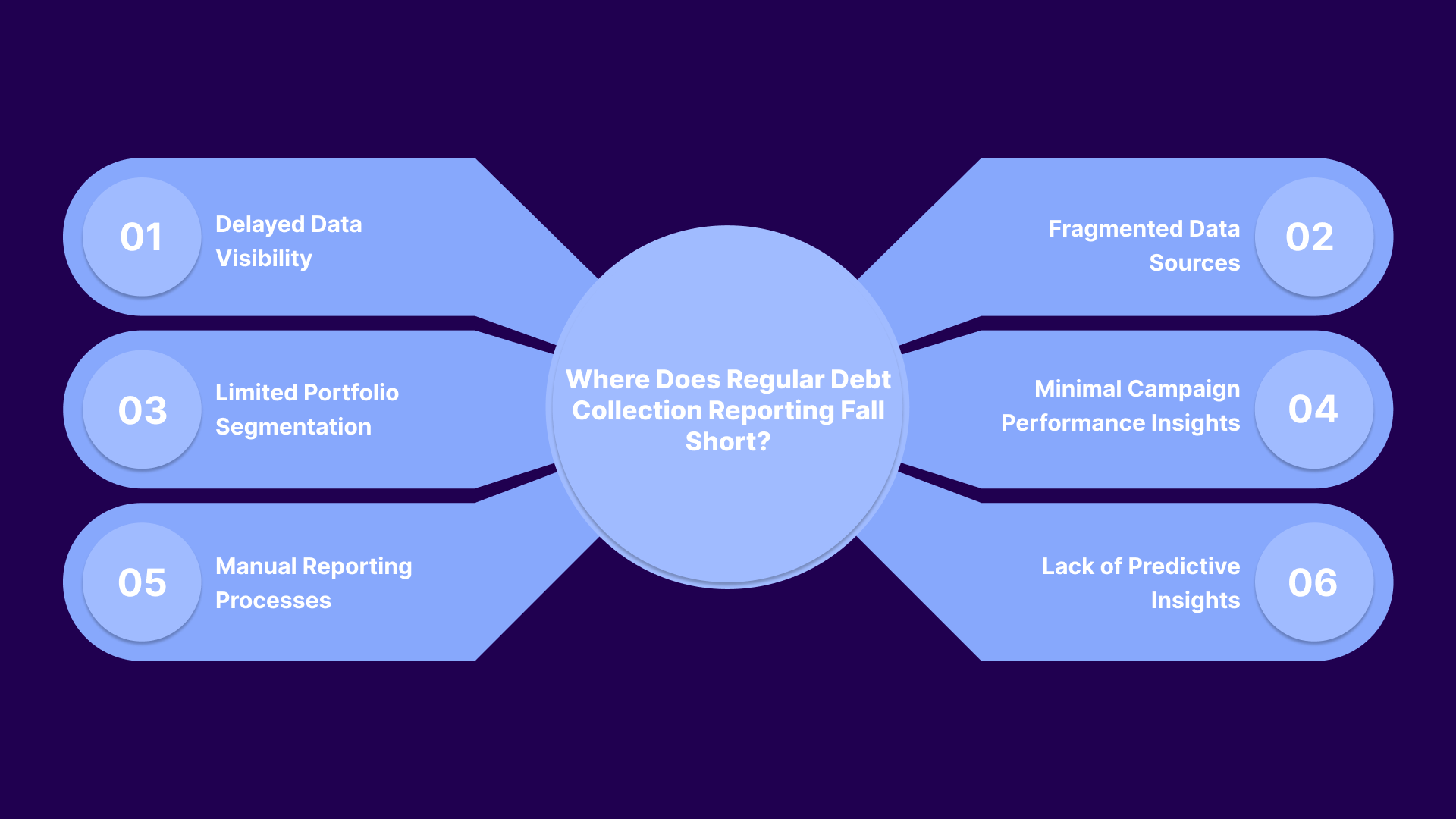
Common limitations include:
Tratta helps address many of these reporting limitations by consolidating portfolio data, communication activity, and payment performance into unified reporting dashboards. Instead of relying on disconnected reports, agencies gain clearer visibility into recovery trends and campaign outcomes. Schedule a free demo today.
Advanced reporting helps agencies turn operational data into insights that guide better recovery decisions. Instead of relying on static summaries, collectors can analyze performance trends across portfolios, outreach campaigns, and payment activity to refine their strategies and improve recovery outcomes.
Advanced reporting strengthens collection strategy in several important ways:
Advanced reporting helps agencies identify which accounts deserve immediate attention. It helps to:
Advanced reporting helps agencies determine when outreach efforts are most effective. It helps to:
Advanced reporting helps agencies evaluate which outreach methods generate stronger results. It helps to:
Advanced reporting helps agencies apply targeted strategies to different account groups. It helps to:
Advanced reporting allows agencies to respond quickly when performance changes. It helps to:
These strategic improvements highlight how reporting insights support better recovery decisions across operations. The next section explores the advanced reporting tools that track the metrics most closely tied to recovery outcomes.
Suggested Read: How Technology Is Changing Debt Collection
Advanced reporting platforms allow agencies to move beyond activity summaries and focus on performance indicators that directly influence recovery outcomes. By tracking the right metrics, collection teams can identify trends, optimize outreach strategies, and allocate resources more effectively.
Some of the most important metrics agencies should monitor include:
These metrics help agencies understand both operational performance and consumer payment behavior. When monitored consistently, they reveal patterns that can guide improvements in outreach strategies, account prioritization, and settlement negotiations.
Practical tips to use these recovery reporting metrics:
Tracking these metrics gives agencies a clearer view of portfolio performance and payment behavior. The next step is using those insights to adjust outreach strategies, prioritize accounts, and strengthen overall recovery efforts.
Suggested Read: Honest Debt Recovery Solutions: What to Look For
The real value lies in agencies applying reporting insights to daily collection workflows and operational decisions. Advanced reporting tools support several operational activities across collection teams.
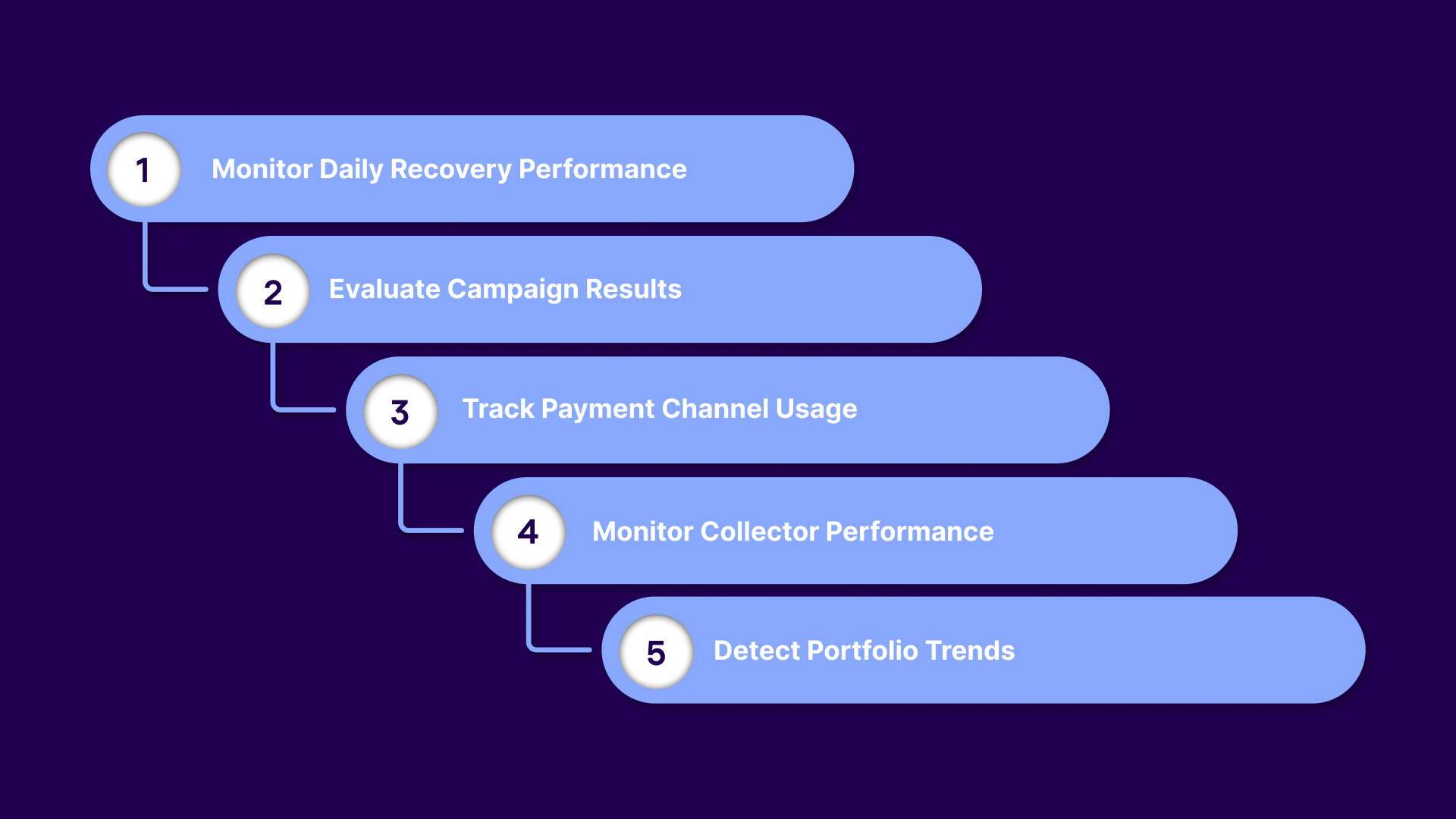
These are:
Advanced reporting helps agencies track recovery activity in real time across portfolios and campaigns. This visibility allows teams to quickly detect performance changes and respond before results decline.
Common performance indicators monitored include:
Advanced reporting helps agencies measure how different outreach campaigns perform. These insights make it easier to refine campaign strategies and improve payment conversion rates.
Reporting tools typically track:
Reporting tools reveal which payment methods consumers prefer when resolving debts. This information helps agencies promote payment options that lead to faster resolutions.
Agencies often review data such as:
Advanced reporting helps managers evaluate individual and team productivity. Performance insights help identify training needs and improve operational efficiency.
Agencies typically review metrics such as:
Advanced reporting highlights patterns that may affect recovery performance over time. Agencies can use these insights to adjust strategies before problems escalate.
Reporting tools help identify:
Tratta helps agencies apply these reporting insights by consolidating portfolio, communication, and payment data into a single analytics dashboard. With clearer visibility into campaign performance and recovery trends, teams can identify operational issues earlier. Get in touch with us to learn more.
Advanced reporting platforms help agencies convert operational data into insights that guide recovery decisions. Instead of relying on static reports, modern collections systems analyze payment activity, campaign engagement, and consumer interactions to reveal patterns across portfolios.
Tratta is a digital collections platform that combines payment infrastructure, communication tools, and analytics into a single system. By centralizing account activity, campaign engagement, and payment transactions, the platform provides clearer insights into recovery performance. This integrated data environment allows teams to monitor trends and adjust recovery strategies more effectively.
Table showing features that contribute directly to these reporting insights:
Tratta supports advanced reporting for recovery by helping agencies:
These features become even more meaningful when applied to real-world operations. The next section highlights how agencies use reporting insights in practical debt recovery scenarios.
Suggested Read: Understanding the Importance and Process of Digital Debt Collection
Advanced reporting becomes most valuable when agencies use data insights to improve recovery outcomes. By analyzing campaign engagement, payment behavior, and portfolio performance, agencies can identify patterns that help refine collection strategies.
The following case studies highlight how visibility into reporting can influence operational decisions and recovery performance.
Multi-Service Fuel Card implemented Tratta to gain better visibility into collection performance and payment activity. Centralized dashboards allowed managers to review recovery data and analyze payment trends across accounts.
The following outcomes demonstrate how improved reporting visibility supported recovery performance:
Couch Lambert used Tratta to optimize consumer communication and payment workflows while improving visibility into campaign performance. Reporting insights helped the firm analyze consumer engagement and monitor the effectiveness of outreach campaigns.
The following operational improvements were reported:
Tratta helps agencies connect reporting insights with everyday collections operations. By consolidating payment activity, communication data, and campaign performance into unified dashboards, the platform gives agencies clearer visibility into recovery trends. This allows teams to translate reporting insights into practical improvements that strengthen recovery outcomes.
Without clear reporting, collections teams risk making decisions based on incomplete or outdated information. Campaign performance can go unnoticed, payment trends may remain hidden, and recovery strategies can become inefficient over time.
Tratta helps agencies strengthen recovery operations by combining digital payments, communication tools, and analytics on a single platform. Its reporting and analytics capabilities allow teams to monitor campaign engagement, payment activity, and portfolio performance from centralized dashboards.
If your agency wants clearer insights into collections performance, the right reporting tools can make a meaningful difference. Get in touch with us today.
Effective recovery reporting combines data from payment transactions, communication activity, campaign performance, and account status updates. Integrating these sources provides a complete view of portfolio performance and consumer engagement.
Most agencies review key recovery metrics daily or weekly to monitor campaign performance and payment trends. More detailed performance analysis is typically conducted monthly to evaluate strategy effectiveness.
Yes. Advanced reporting helps agencies identify performance differences across account segments, allowing teams to prioritize high-value or high-probability accounts while monitoring slower-performing portfolios.
Reporting systems can track communication logs, payment activity, and account interactions. These records help agencies maintain audit trails and demonstrate compliance with regulatory requirements.
Reporting insights reveal which outreach channels, payment methods, and campaign strategies generate higher engagement. Agencies can use this data to refine communication strategies and promote payment options that lead to faster resolution.