As traditional, phone-centric debt collection struggles to keep pace with rising delinquency, agencies are feeling the strain. Consumer expectations have also shifted, making manual, call-heavy workflows harder to sustain.
According to McKinsey research, organizations that use advanced analytics and digital tools in collections can reduce operating costs by at least 15%. These gains come from better decision-making and stronger recovery performance compared with manual processes.
In this guide, we explore the top benefits of digital debt collection. You will see how digital workflows replace guesswork with real-time visibility, expand engagement channels, and support scalable recovery without proportional increases in headcount or risk.
Quick look:
Digital debt collection is an approach that uses technology to automate, optimize, and scale the management and resolution of delinquent accounts.
Instead of relying primarily on phone calls, manual tracking, and static reports, it connects engagement, payments, and reporting through digital workflows.
Common types of digital debt collection include:
Each of these approaches addresses a different part of the recovery process. They explain why digital debt collection delivers tangible advantages, which in turn lead directly to the key benefits agencies see when moving to digital-first collections.
Suggested Read: Digital Transformation and Its Impact on the Collection Industry
Digital debt collection delivers value by changing how recovery work is executed at scale. Instead of relying on manual effort, disconnected tools, and delayed reporting, digital workflows create consistency, speed, and control across the entire collection lifecycle.
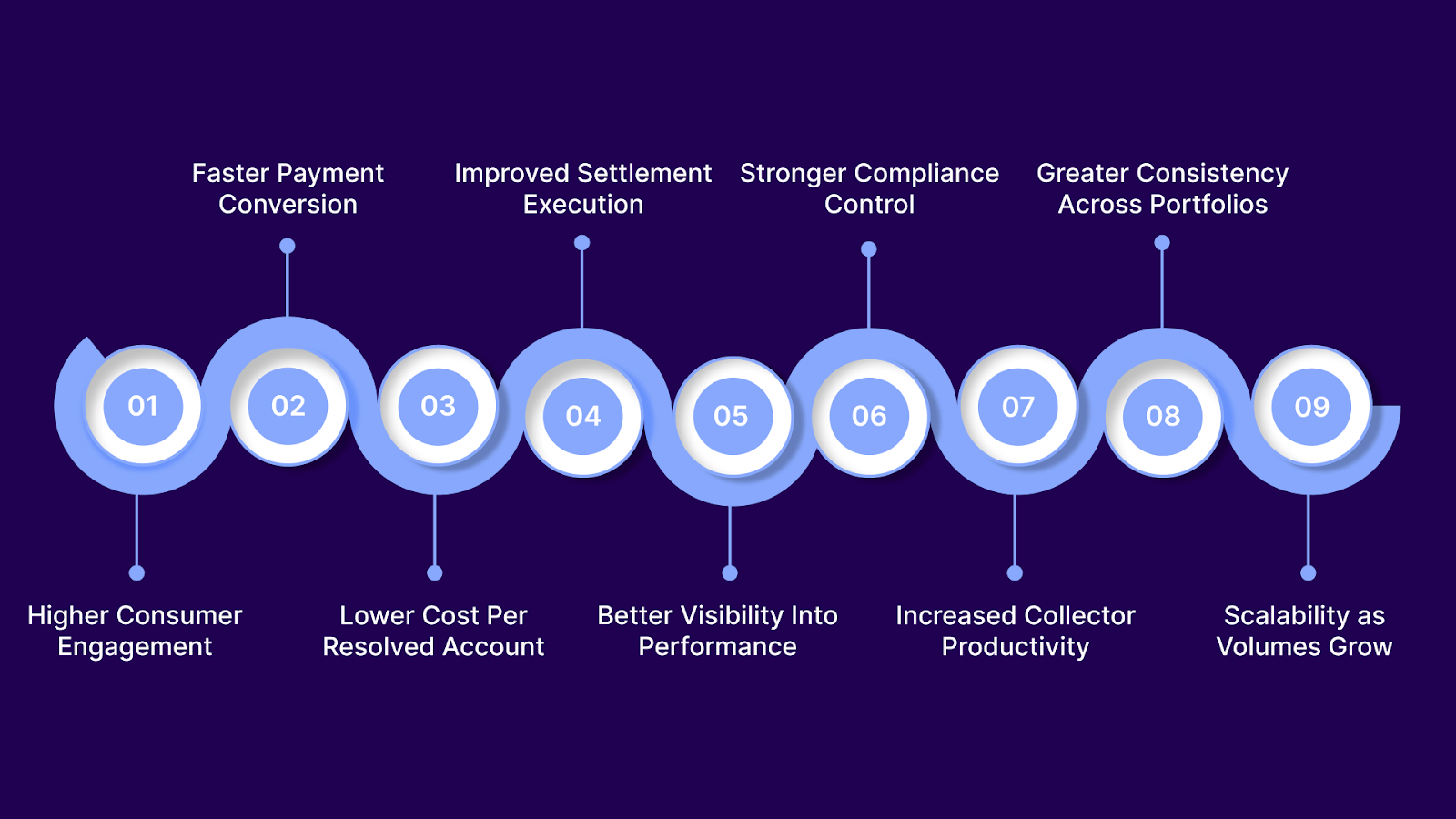
These are the top benefits of digitizing your payment collection:
Digital debt collection increases engagement by shifting outreach away from phone-only contact toward channels consumers actually use. Email, SMS, and secure web portals remove this friction by enabling consumers to view and act on repayment and settlement options on their own schedule.
This helps collection agencies by:
Traditional workflows often introduce delays because consumers receive an offer but must wait for follow-up, payment setup, or manual input, which increases the likelihood of drop-off. Digital channels eliminate much of this friction by enabling immediate action on payment options presented via email, SMS, or portals.
This helps collection agencies by:
Digital debt collection reduces the cost to resolve each account by automating repetitive tasks that once required extensive manual effort. In traditional models, collectors spend significant time on data entry, follow-ups, and manual outreach, which increases operational expenses.
This helps collection agencies by:
In the U.S., only a small fraction (about 2.5%) of medical collections accounts reported after January 2017 were ever marked paid by 2024. When settlements are handled manually, delays, miscommunication, or inconsistent follow-up cause many agreements to stall or never convert into payments.
Digital debt collections help agencies by:
Digital debt collection provides live visibility into payments, settlements, and account status across portfolios. Performance data updates automatically as activity occurs, not at the end of the day or week. Managers can see which accounts are converting and which are stalling.
This helps collection agencies by:
U.S. regulators such as the Consumer Financial Protection Bureau have repeatedly emphasized the importance of clear records, consistent communication, and accurate account handling in collections.
Disclosures, communication timing, and payment handling are applied consistently across every account. Actions are logged automatically, creating a complete record of consumer interaction. This reduces variability and limits exposure as volume increases.
This helps collection agencies by:
Digital debt collection increases productivity by removing manual tasks that do not directly contribute to recovery. Collectors no longer spend time updating spreadsheets, checking multiple systems, or tracking follow-ups manually. Work is prioritized automatically based on account status and activity.
This helps collection agencies by:
Tech-led collections enforce standardized workflows across accounts, teams, and clients. Settlement logic, outreach cadence, and payment handling follow the same rules regardless of who works the account. This reduces outcome variance caused by individual judgment or process drift.
Agencies benefit by:
Automated collections scale execution without requiring linear increases in staff or oversight. Automated workflows handle engagement, settlement delivery, and payment processing consistently as account volume rises. Performance does not degrade during delinquency spikes or portfolio growth.
This helps collection agencies by:
Tratta supports this level of scalability by automating engagement, settlement execution, payments, and reporting within a single platform. Its workflows are designed to handle increases in account volume without introducing manual bottlenecks or visibility gaps. Schedule a free demo today.
Digital debt collection delivers the greatest impact where volume, complexity, and operational pressure intersect.
It is especially effective for:
When these conditions are present, digital methods stop being an optimization and become infrastructure. The next step is recognizing the signs that your collection operation is ready for digitalization.
Suggested Read: Understanding Digital Debt Collections and Its Impact
Most collection operations do not reach digitalization because of the strategy. They reach it because manual processes stop scaling and begin to limit recovery. These signals show when digital debt collection will create immediate operational leverage.
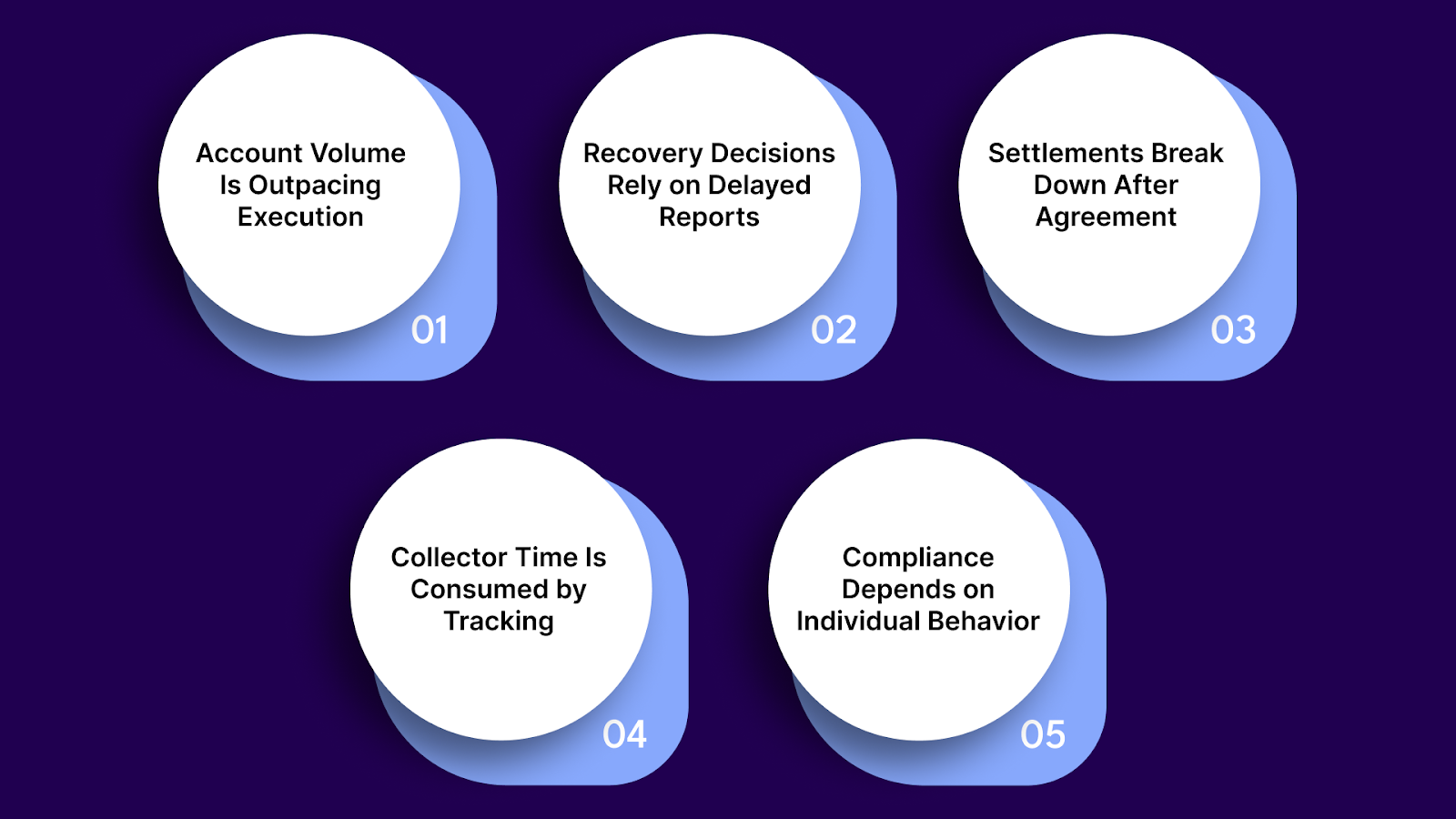
Clear indicators include:
Tratta is built for this transition point, with automated dashboards and workflow-driven execution at its core. It connects engagement, settlement, payment, and reporting into a single operational flow that updates in real time.
Digitalization promises efficiency and scale, but many agencies struggle during the transition from manual to digital workflows. The challenge is rarely intended. It is execution, integration, and change management across existing operations.
Table showing different challenges and how to overcome them:
These challenges are common when digital collection is layered on top of legacy processes instead of replacing them. To overcome them, agencies need clarity on what to fix and how to fix it.
Key issues agencies must address include:
Addressing these challenges requires more than incremental changes. It requires using technology as an execution layer that connects engagement, payments, visibility, and compliance into a single workflow.
Suggested Read: Benefits And Future Of AI In Digital Banking
Tratta is a debt collection platform built to help agencies execute recovery at volume without adding operational complexity. Instead of layering tools on top of legacy processes, Tratta connects consumer engagement, settlement execution, payments, dashboards, and compliance into a single system.
Core features include:
Tratta provides a secure digital portal where consumers can view balances, review options, and take action. Payments and settlements are initiated without agent involvement. This reduces friction and increases resolution throughput.
Automated dashboards reflect live activity across payments, settlements, and engagement. Data updates in real time without manual reporting. Teams gain immediate visibility into performance and risk.
Consumers can make payments through an automated IVR in multiple languages. Payment activity is captured instantly in the system. This expands access without increasing call center load.
Tratta supports automated outreach across digital channels such as email and SMS. Messaging is consistent and system-driven. Agencies increase reach without relying on outbound dialing alone.
Campaigns allow agencies to segment accounts and trigger targeted digital actions at scale. Scheduling and execution are automated. This improves efficiency while maintaining control over timing and content.
Payments are processed directly within the platform. Posting and reconciliation occur automatically. This reduces errors and accelerates cash flow.
Administrators can configure workflows, branding, and payment options to match agency and client requirements. The platform adapts to operational rules rather than forcing rigid processes. This supports adoption across teams.
Tratta integrates with existing systems through APIs and data pipelines. Account and payment data remain synchronized across platforms. Manual data transfer is eliminated.
Compliance controls are enforced at the system level. Disclosures, timing rules, and records are applied consistently. This supports audit readiness as volume grows.
These features position Tratta as an execution infrastructure for digital debt collection. The platform enables agencies to scale recovery operations without sacrificing control or consistency.
Without a shift to digital debt collection, agencies remain constrained by manual execution, delayed visibility, and processes that do not scale as delinquency rises. Recovery becomes reactive, collector capacity is stretched, and missed follow-ups quietly erode outcomes.
Tratta provides a path forward by treating digital collections as an execution layer rather than a set of disconnected tools. By connecting engagement, settlement, payments, dashboards, and compliance into one platform, it gives agencies the visibility and control needed to scale recovery with confidence.
If manual workflows are limiting recovery, it is time to reassess your approach. Speak to us to move from reactive collections to controlled, digital recovery.
No. Many agencies adopt digital collection incrementally by integrating digital workflows with existing systems, allowing operations to modernize without disrupting active portfolios.
Agencies often see operational improvements quickly because digital workflows reduce manual steps immediately, even before long-term recovery trends fully stabilize.
Yes. Digital platforms can apply different rules, thresholds, and workflows to clients or portfolios, allowing agencies to manage diverse requirements in parallel.
Digital systems generate consistent, system-based data that improves reporting accuracy and makes it easier to demonstrate performance and compliance to clients.
Tratta operates as an execution platform rather than a bolt-on tool, connecting engagement, payments, dashboards, and compliance so digital collections work end to end rather than in isolated steps.